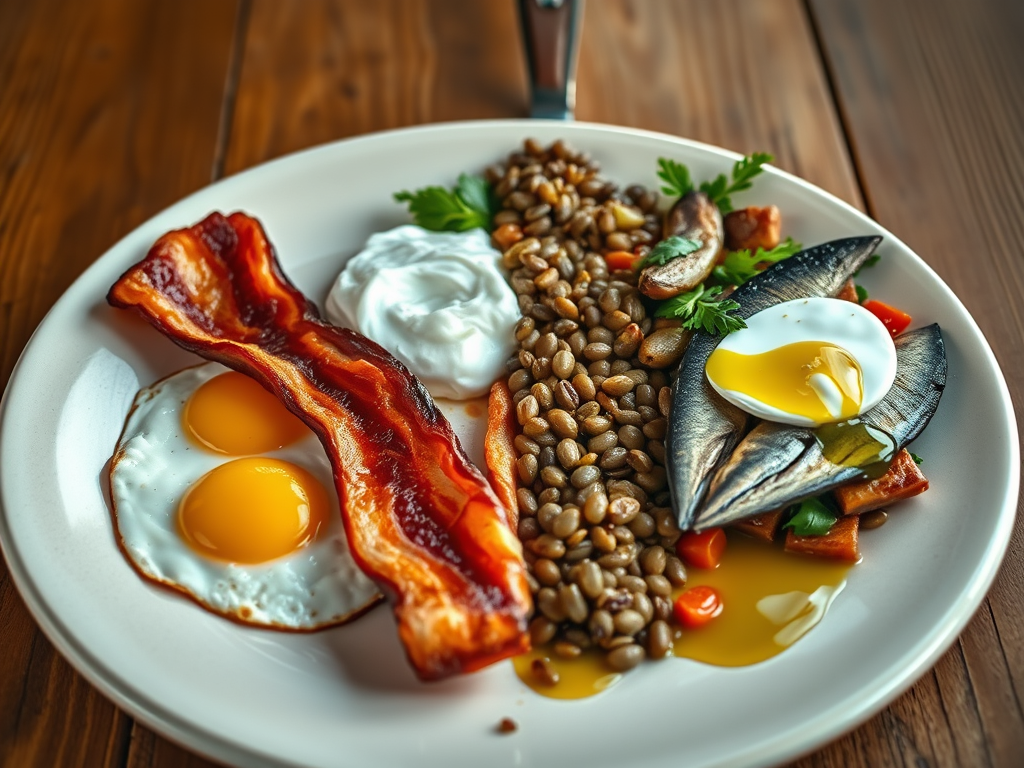
As a veteran of the appetite wars, I’ve heard dispatches from the front lines: fellow travelers claiming victory over hunger by going full carnivore. Their gospel? Two sacred meals a day—meat, eggs, cheese—and a strict excommunication of carbs, 30 grams max. They say this is the only way to stay lean, full, and sane. And for a time, I believe them.
I could probably ride that high-fat, low-carb wave for three or four months. Then, inevitably, my gag reflex would revolt. There’s only so much sizzling animal fat you can pretend is delicious before your tongue files for emancipation. And while this diet drops weight like a bad habit, I can’t shake the sense that my arteries are whispering, “This is a trap.”
Then there’s the ethical hangover. Do I really want my health tethered to a parade of livestock? Relying on bacon and beef to feel okay seems like a nutritional pyramid scheme with a side of cognitive dissonance. I’m not a full-blown vegan—spare me the lectures and turmeric lattes—but I don’t want to be dependent on a barnyard either.
Enter the Mediterranean diet. It won’t melt belly fat like a grease fire, but it doesn’t ask me to choose between wellness and sanity. I’m talking lentils, Greek yogurt, grilled sardines, a smug little splash of olive oil on everything. It’s a diet that feels lived-in, human, sustainable—not some turbo-charged biohack masquerading as a lifestyle.
Sure, I’ll lose weight slower. But I’ll do it without gagging on bacon or whispering apologies to farm animals in my dreams. Call it wellness with a conscience—or just survival with dignity.
 Cinemorphosis
Leave a comment