As I consider Cicero’s call for self-restraint in Tusculan Disputations, my thoughts return to a story that’s haunted me for over twenty years—Anton Chekhov’s “Gooseberries.” It is, in essence, the tragic fable of a Maudlin Man, told with surgical clarity and Chekhovian cruelty.
His name is Nicholai Ivanich, and he’s not merely pathetic—he’s morally revolting. He marries an aging, unattractive woman for her wealth and waits with predator patience for her to die. Once she obliges, he buys himself a country farmhouse ringed with gooseberry bushes, retreats from the world, and crowns himself a minor deity among the local peasants by handing out cheap liquor like some portly, provincial Dionysus.
Chekhov doesn’t give us Nicholai’s voice. He gives us Ivan, the disgusted brother, who sees this man for what he is: a swollen, self-satisfied corpse in waiting. Ivan calls Nicholai’s farmhouse dream a “definite disorder”—not a goal, but a fixation, a fever dream dressed up as a life plan. For Ivan, his brother’s pastoral retreat is less Arcadia and more open-casket viewing. “He looked old, stout, flabby,” Ivan observes. “His cheeks, nose, and lips were pendulous. I half expected him to grunt like a pig.”
That image sticks: Nicholai, the human piglet, grinning over his plate of gooseberries, believing he’s achieved bliss when in truth he’s just decaying in comfort.
And then comes the moment that seals it—Nicholai’s nightly ritual: he’s brought a plate of gooseberries from his estate, and upon seeing them, he literally weeps with joy. “He looked at them in silence, laughed with joy, and could not speak for excitement.” He is consumed by the performance of happiness. It’s not the berries he loves—it’s what they symbolize. In his mind, they are proof that his life is complete.
But it’s all delusion. Nicholai isn’t fulfilled—he’s embalmed in maudlin sentimentality, drunk on nostalgia for something that never really existed. His joy is cosmetic. He’s not flourishing. He’s fermenting.
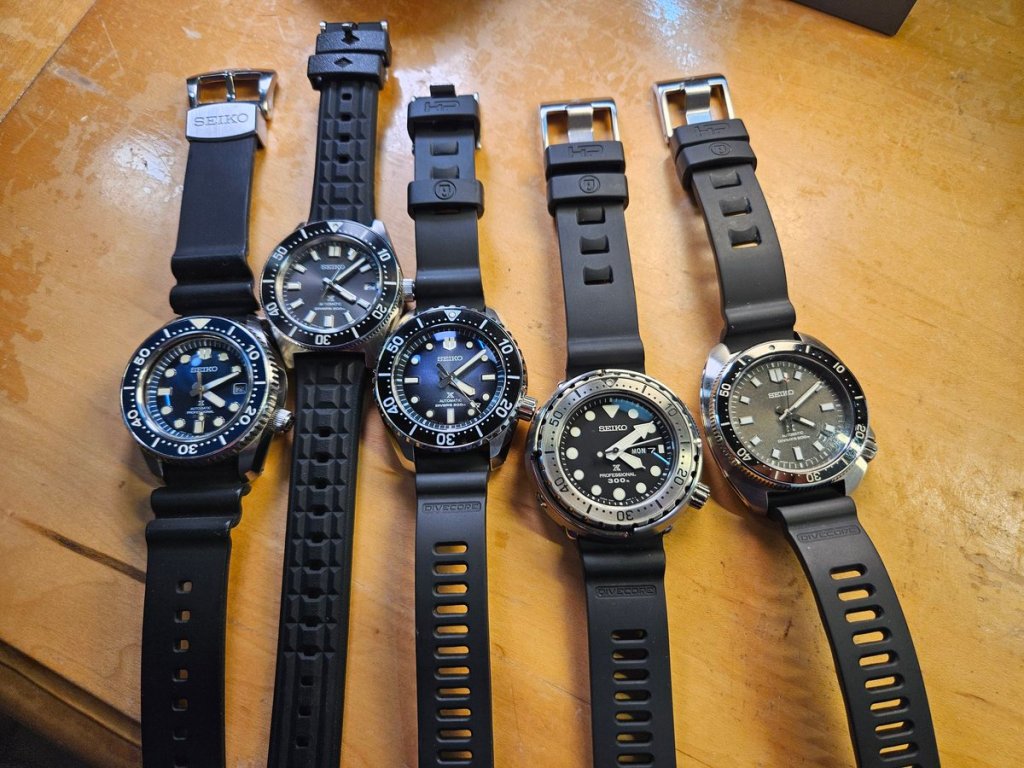
And this, I confess, reminds me of myself—and my fellow watch addicts.
We, too, have our gooseberries. Ours just happen to tick.
We post videos of our “grail watches” and glow with reverence as we hold them up to the camera like relics from a sacred shrine. We give breathless soliloquies about our “perfect” collections, our “ultimate” configurations. We praise bezels and dial textures the way Nicholai praises his berries—with trembling hands and watery eyes. And like Nicholai, we’re not convincing anyone but ourselves.
Because deep down, we know: the drama is maudlin. The joy is hollow. The entire pageantry is just a way to distract from the torment our hobby brings us. We spend hours obsessing, comparing, flipping, tweaking, always convinced that this next watch will bring balance and peace, only to find ourselves more anxious than before.
We are men who weep over gooseberries. And worse—we make YouTube thumbnails about them.
If we were honest, we’d admit that one decent, mid-priced watch would offer more peace than any “holy grail” ever could. But that would mean giving up the theater. The drama. The illusion that our fixations have meaning. And that, for the Maudlin Man, is the hardest loss of all.
 Cinemorphosis
Leave a comment