PFAS, the so-called “forever chemicals,” deserve our attention. They accumulate in the body, persist in the environment, and have been linked to cancer and organ toxicity. The question is not whether they are harmful—the science is clear enough on that—but how much risk each type of exposure carries.
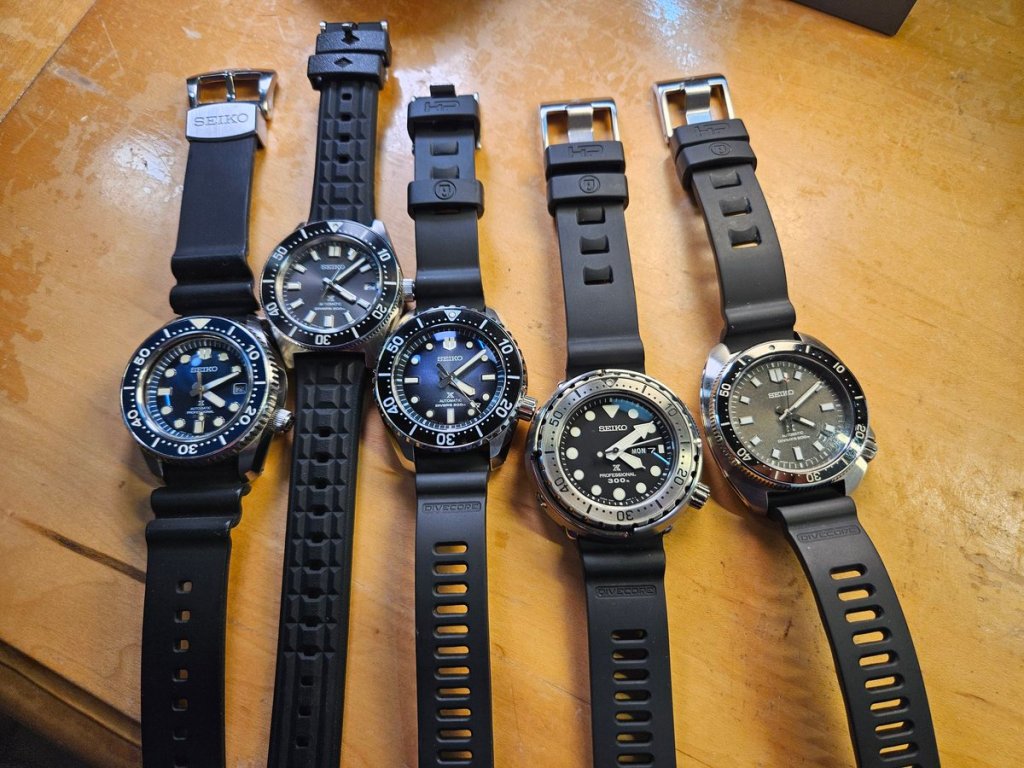
To live reasonably healthy lives in a world saturated with PFAS, we need to focus on reducing the high-risk exposures. Think of a scale from one to ten. At the top end—a full ten—you find firefighting foam, Gore-Tex fabrics, stain-resistant carpets, certain cosmetics, fast-food wrappers, fish and meat from contaminated waters, Teflon pans, unfiltered drinking water, and some dental flosses. At the bottom—a one—are minor exposures like wearing athletic clothing, sitting on treated upholstery, applying certain sunscreens, or strapping on an FKM watch band.
On this spectrum, FKM straps rank very low. The lab studies that raised alarms subjected the rubber to extreme torture—solvents, high heat, and abrasion—to force PFAS out. That doesn’t resemble daily life. Normal wear—exposure to sweat, sunlight, or water—isn’t nearly enough to release meaningful amounts of PFAS. Compared to drinking contaminated water, eating food in PFAS-coated packaging, or scraping dinner out of a Teflon pan, the risk from a strap is trivial. If the PFAS risk ladder runs from one to ten, FKM sits squarely at one: background noise against the heavy hitters.
In the end, acceptable risk is a personal calculation. For me, the sensible path is to avoid the high-risk exposures and stop fixating on the negligible ones. That means changing out my water filter, skipping fast-food packaging, and ditching old Teflon pans. But when it comes to wearing my FKM watch straps, I’m not going to lose sleep.
 Cinemorphosis
Leave a comment