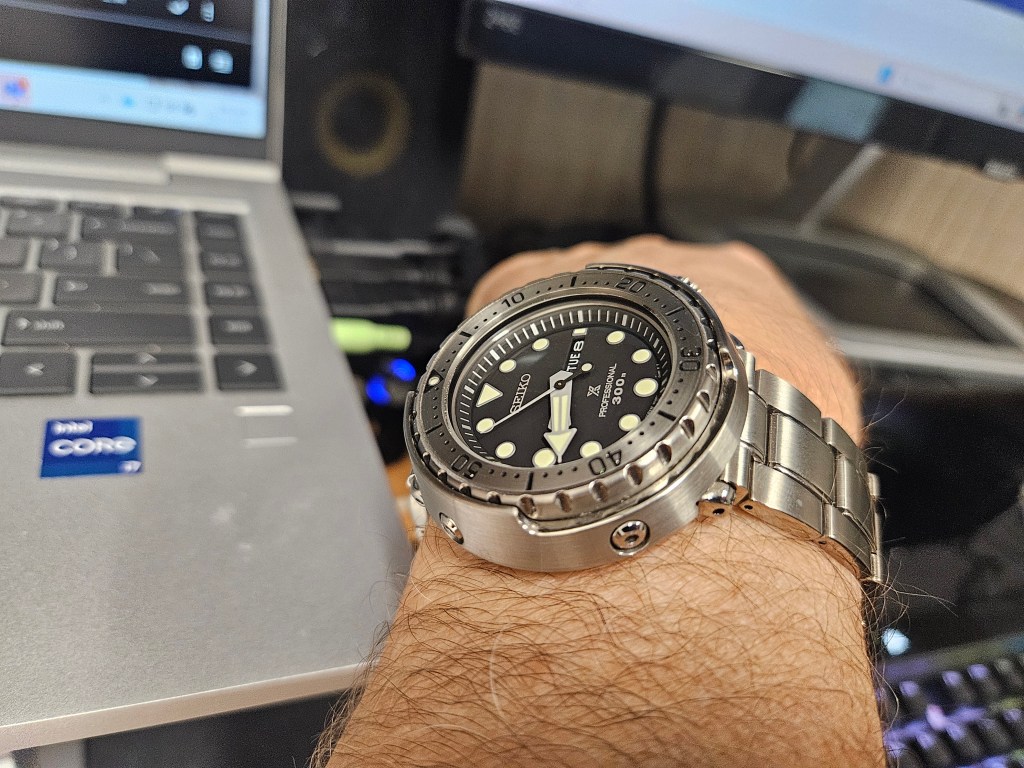
I’ve forged more friendships online over watches than I ever expected — grown adults bonded by steel bracelets, dial colors, and the feverish belief that the “perfect collection” is one watch away. It’s a strange brotherhood: half enthusiasm, half rehab circle. We compare scars from impulse buys and premature flips; we laugh at the madness and whisper, half-serious, that maybe this time we’re cured.
My own watch delirium began in 2005, when I was 43 and convinced mechanical timekeepers were little machines that could somehow fix the machinery inside me. Twenty years vanished in a blur of rotating bezels and just-in-case divers. Then, at 63, mortality tapped my shoulder. Suddenly the hobby’s siren call softened. The obsession didn’t die — it continued to burn brightly. But after 20 years, desire finally dimmed, replaced by a quiet awareness that timepieces were no match for time itself.
The feeling reminds me of a scene from Battlestar Galactica: a traitor is sealed behind glass, pleading as the airlock hisses and the crew looks on, solemn and unmovable. A ritual exile. That’s what aging feels like — not tragic, not pitiful, just inevitable. There comes a point when people still inside the warm illusion of endless tomorrows unconsciously edge away from those who’ve glimpsed life’s shrinking horizon.
A pane descends — not hostile, just real. You tap the glass and wave, wanting back into the cockpit of youth’s delusions, but the craft has sealed. No reentry. Only the quiet work of dignity: embracing your season, building meaning instead of collections, and being useful to the younger travelers who can’t yet see the void but will one day meet it too.
 Cinemorphosis
Leave a comment