Last night I dreamed I was summoned to a publisher’s office, the kind that smells faintly of dust, old paper, and deferred hope. I sat across from a man in his early sixties wearing a beige suit so aggressively neutral it seemed designed to disappear into the shelves behind him. Those shelves were packed tight with books—the visual shorthand for authority, legitimacy, and the life I was supposed to have lived.
He told me, calmly, as if delivering weather updates, that my father had written a perennial classic. A bestseller. A semi-autobiographical novel about growing up poor, raising me with my teenage mother in the Gainesville projects. The book, he said, was written with mordant wit and bruised humor and was routinely compared to Huckleberry Finn.
Then he handed me a copy.
I opened it and recognized everything immediately: Flavet Villages, the roach-infested housing complex for veterans and struggling students, where poverty clung to the walls like nicotine. The prose was first-person present tense—close, intimate, relentless. I said this out loud, the way you do in dreams when you want credit for noticing things. The publisher nodded, pleased.
“Have you ever thought about doing something like this?” he asked. “Following in your father’s footsteps?”
I shook my head. Then I asked the only question that mattered: “How come I never heard about this book before?”
“Oh, it doesn’t exist here,” he said, waving the concern away. “It exists in a parallel universe in a faraway galaxy.”
Naturally.
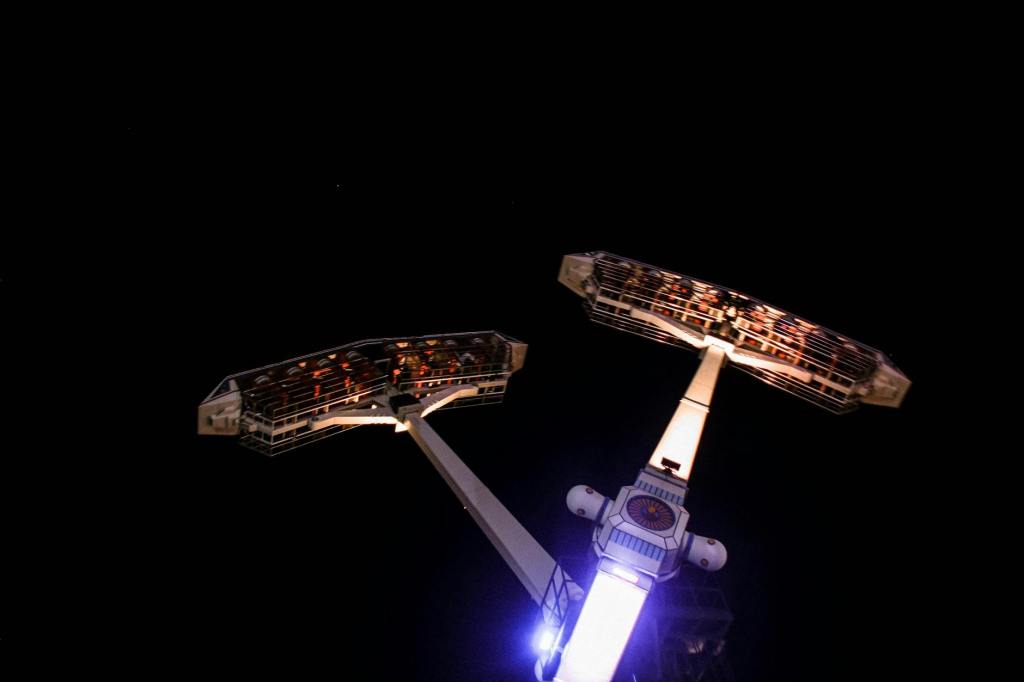
At this point, he reached into his desk and handed me a gray carbon radio shaped like a pyramid—part Cold War relic, part sci-fi prop. It had a special shortwave frequency that could lock onto that distant planet, where my father’s novel was being read aloud, endlessly, by a space alien. Anytime I wanted, I could tune in and listen. It would comfort me, he said, as if this explained everything.
I thanked him, left the office, and met my wife and twin daughters at the San Francisco Zoo. While they stared at zebras with the earnest fascination of people grounded in reality, I extended the antenna and tuned the dial. The alien’s voice crackled through—steady, patient, reverent—reading my father’s great novel for the thousandth time.
My family looked at me like I’d finally tipped over into madness. I didn’t care.
I was listening to the greatest book my father never wrote, being read forever in a universe where it mattered. And for once, that was enough.
 Cinemorphosis
Leave a comment