Tag: reading

  • The Reader I Lost, the Listener I Became

    The Reader I Lost, the Listener I Became

    In terms of reading endurance, I am another casualty of the internet.

    In my early twenties, I devoured two books a week with the discipline of a bodybuilder consuming protein to build muscle. Reading was not a hobby. It was nourishment. My brain felt perpetually hungry, and books were the only food that satisfied it. I read because I was curious. I read because I wanted to flee stupidity. Most of all, I read because life felt incomplete unless I had one foot planted in a parallel literary universe. To be deprived of that universe was to feel vaguely cheated by existence itself.

    Then the internet arrived.

    It did not destroy my appetite for ideas. It fragmented it.

    My attention was gradually colonized by factoids, clickbait, social media surveillance, and articles designed less to illuminate than to be skimmed and forgotten. None of these distractions seemed particularly dangerous on their own. Together, however, they accomplished what no enemy of books had managed before: they quietly atrophied my reading muscle.

    I still read, but my reading is now compromised. In the morning, I work through essays with a cup of coffee, forcing myself to stay engaged by taking notes and writing brief summaries or critiques. At night, I can usually manage another thirty minutes of essays or short fiction before my concentration begins to fray.

    That is a far cry from the reader I once was.

    Yet my longing for that parallel literary universe never disappeared.

    It merely changed mediums.

    Today I spend at least two hours a day listening to audiobooks. I listen before dawn, during workouts, while driving, and sometimes while drifting into an afternoon nap. My library ranges from early Christian history to sports biographies, novels, philosophical polemics, memoirs, and books on health and fitness.

    Although I mourn the loss of my youthful reading stamina, I have discovered an unexpected compensation.

    In many cases, I understand books more deeply by listening to them than by reading them.

    Take Emmanuel Carrère’s Kingdom. I have read the novel obsessively four separate times. Yet hearing it performed through Audible has transformed the experience. I am no longer merely reading about Paul and Luke as they wrestle with believers and skeptics across Greece, Syria, and Israel. I feel as though I am accompanying them. Scenes unfold with cinematic immediacy. Conversations breathe. Sentences I somehow overlooked through four careful readings suddenly reveal themselves with startling clarity. Listening has not diminished the book. It has enlarged it.

    Part of this pleasure may lie deep within our evolutionary inheritance. Human beings spent thousands of years listening to storytellers, poets, prophets, and orators before most people ever encountered literature on a printed page. Perhaps the spoken voice still reaches something ancient within us.

    Another explanation is what I call the Auditory Immersion Principle: the paradox in which a listener comprehends and emotionally inhabits a book more fully through sustained listening than through silent reading because the uninterrupted flow of the narrator’s voice prevents skimming, distraction, and premature judgment. A skilled narrator refuses to let my restless internet brain dart ahead or wander elsewhere. I surrender to the current of the story instead of constantly trying to steer it.

    That discovery has filled me with renewed excitement for books I have postponed for years.

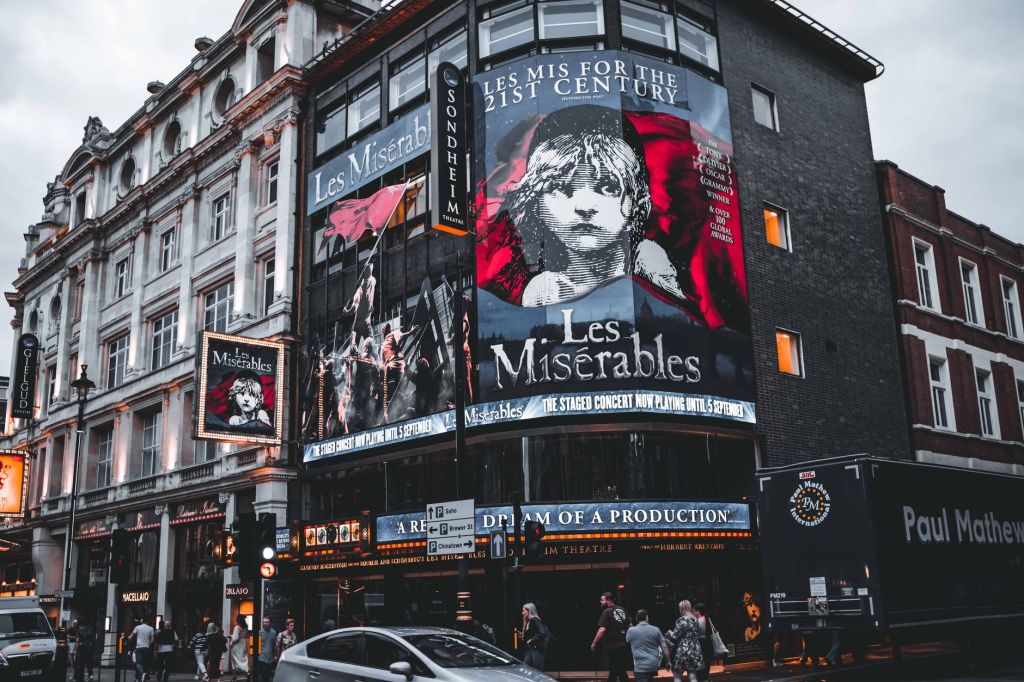
    Near the top of my Audible wish list is Victor Hugo’s Les Misérables, a novel Emmanuel Carrère has said transformed his life as a child. I have no doubt that listening to it will transport me into one of literature’s great enchanted worlds. I expect to emerge from it not merely informed but changed.

    The anticipation is almost intoxicating. It feels as though pleasures this profound ought to be reserved for another realm, not made available through a pair of headphones during a morning walk.

    Perhaps that sounds like hyperbole.

    Then again, perhaps that is simply the enduring power of great literature.

    The internet may have weakened my capacity to sit for hours turning pages, but it has not extinguished my desire to inhabit extraordinary books. If anything, audiobooks have reminded me that literature has always been larger than ink on paper. Long before stories were read in silence, they were spoken aloud, carried by the human voice from one soul to another.

    In an age that fragments our attention into thousands of disposable moments, that ancient experience may be more necessary than ever.


  • When Reading Lost to the Dopamine Feed

    When Reading Lost to the Dopamine Feed

    Rose Horowitch’s essay The End of Reading Is Here,” published in The Atlantic, chronicles more than the decline of reading. It examines the kind of mind that flourishes after reading has surrendered. Citing data from the National Endowment for the Arts, she notes that fewer than half of American adults read any kind of book in 2022. Only 38 percent read a novel or short story. By 2023, a mere 16 percent reported reading for pleasure.

    What filled the vacuum? Gambling.

    Nearly 60 percent of Americans now gamble. We have traded one form of anticipation for another. Instead of turning pages in search of revelation, we pull slot-machine levers and refresh sports-betting apps in pursuit of dopamine.

    Even the books that survive have changed. Sentences are shorter. Syntax is simpler. Apparently, asking readers to navigate a few dependent clauses before arriving at the independent clause is now considered an unreasonable burden. The modern sentence has become a microwave dinner: engineered for speed, stripped of complexity, and consumed with minimal effort.

    The same contraction has reshaped our news diet. Long-form reporting that patiently excavates facts has given way to sixty-second video clips engineered for maximum stimulation. The reward is immediate. The understanding is shallow. It requires no political science degree to imagine what happens to a democracy when its citizens lose both the patience and the habit of sustained attention.

    Horowitch argues that this decline in reading parallels a decline in critical thinking itself. Increasing numbers of adults struggle to comprehend what they read, distinguish evidence from assertion, or draw reasonable conclusions. If adulthood once implied literacy, then America is drifting toward a peculiar form of cultural infantilization—a nation increasingly vulnerable to demagogues, conspiracy peddlers, and professional grifters eager to convert intellectual laziness into political capital.

    The greatest irony is that Americans have never consumed more words.

    We read texts, emails, Slack messages, Instagram captions, TikTok comments, headlines, notifications, and endless streams of digital debris. Never has so much language been processed to produce so little contemplation. We are drowning in words while starving for thought.

    That is why Horowitch describes America as becoming postliterate—not because language has disappeared, but because sustained reading has. Literacy once demanded immersion. Postliteracy rewards interruption.

    Nor has this transformation stabilized. It is accelerating. Each generation spends less time reading books and more time marinating its attention inside algorithmically curated feeds. Television, for all its faults, never possessed this power. During the television era, people still disappeared into novels on weekends and carried paperbacks to the beach. TV occupied a room. Smartphones occupy consciousness itself. They transformed distraction from an activity into a permanent habitat.

    I have watched this transformation from a privileged vantage point. For nearly forty years, I have taught college writing.

    The curriculum my colleagues and I teach today would have been almost unrecognizable when I began. We rarely assign long books. Many instructors assign none at all. My freshman composition course still requires one short classic, Frederick Douglass’ Narrative of the Life of Frederick Douglass, an American Slave. My critical thinking course assigns no books whatsoever. Instead, students read essays from The Atlantic, The New Yorker, and The New York Times. I upload the readings into Canvas, then spend class breaking them into digestible segments through Google Slides. Each slide contains roughly one hundred words followed by a discussion question that forces students to wrestle with the author’s reasoning one piece at a time.

    Some critics insist that professors should simply assign longer books and demand compliance. That fantasy evaporates the moment it encounters reality. Students vote with their enrollment. Assign too much reading, and many will either avoid the course altogether or quietly migrate to instructors who require less. Consumer demand has entered higher education whether professors approve or not. As students’ habits change, curriculum follows. The postliterate marketplace shapes the classroom long before faculty meetings do.

    Yet calling ours a “postliterate society” risks flattening important distinctions.

    My students are mostly between eighteen and twenty years old. Yes, they grew up on TikTok, YouTube, and Instagram. Yes, many arrive having read remarkably few books. But they are also intellectually curious. They enjoy argumentation. They respond viscerally to sharp prose, elegant rhetoric, and clever turns of phrase. They relish exposing logical fallacies and dismantling weak arguments. Once you capture their attention, they often surprise you with the sophistication of their thinking.

    They are not representative of America at large.

    A first-generation college student eager to transform his life occupies a different intellectual universe than an adult who never pursued higher education, works a dead-end job, and spends every evening numbing himself with algorithmic entertainment. Both may read fewer books than previous generations, but their relationship to knowledge is hardly the same. There is no single postliteracy. There are many varieties of it.

    Technology rewires us from the inside out. I can measure the changes in my own brain. At sixty-four, I find myself fighting distractions that barely existed thirty years ago. My attention requires more vigilance than it once did. The temptation to surrender to endless scrolling is no respecter of age, education, or profession. Digital gravity pulls on all of us.

    There is no reversing this transformation. The toothpaste is out of the tube. The smartphone is not going away. Artificial intelligence is not going away. Algorithmic media is not going away. We are not marching back to 1975 carrying hardcovers beneath our arms.

    That reality, however, should make us suspicious of sweeping declarations about postliteracy. Horowitch rightly identifies genuine losses: diminished attention spans, weaker reading comprehension, and shrinking tolerance for intellectual complexity. But we have also developed new literacies. We decode memes, navigate digital ecosystems, detect online irony, understand platform cultures, and learn new technologies with astonishing speed. Our cognitive landscape has not simply shrunk. It has been reorganized.

    Whether that reorganization represents progress remains an open question.

    I doubt we will someday revolt against TikTok and rediscover Tolstoy en masse. The fantasy of 90 percent of Americans reading one hundred books a year belongs somewhere between nostalgia and science fiction.

    Still, I hesitate to declare the reading life permanently dead.

    Human beings possess an appetite that algorithms cannot completely satisfy. Endless novelty eventually becomes monotonous. Constant stimulation eventually feels empty. Even the most dedicated scroller occasionally hungers for something with weight, texture, and permanence—an idea worth wrestling with rather than merely reacting to.

    Curiosity has survived every technological revolution humanity has endured. It survived radio. It survived television. It may yet survive TikTok.

    The reading brain has been wounded.

    I am not convinced it is beyond recovery.

  • The Death of Reading and the Rise of Thrusts

    The Death of Reading and the Rise of Thrusts

    One afternoon, drifting into a post-workout nap after a particularly glorious kettlebell session, I heard a famous writer tell a popular podcaster that nobody reads books anymore.

    Nobody.

    Not even him.

    He explained that social media had colonized his attention span. Years of feeding his narcissism to the digital machine had apparently consumed whatever brain cells were once responsible for sustained reading. There was something startling about hearing this confession from a public intellectual. It was like hearing a Michelin-starred chef announce that he now survives entirely on vending-machine burritos.

    The timing could not have been worse.

    I had recently completed writing a collection of fifteen stories. I had spent years dragging them through countless revisions, rescuing them from weaker incarnations, sanding rough edges, amputating dead passages, and rebuilding them sentence by sentence until they finally resembled what they were supposed to become. I was absurdly proud of them. I glowed with satisfaction. My pecs still felt inflated from kettlebell presses, and my literary vanity was enjoying a similar state of expansion.

    Then reality barged into the room.

    Nobody reads anymore.

    A bestselling author now sells perhaps ten thousand copies and celebrates as though he has conquered Gaul. An obscure author such as myself sells precisely zero. The arithmetic was not encouraging. My glow dimmed. My pumped-up ego suffered a rapid deflation.

    That evening I climbed into bed feeling mildly bereaved. I instructed my smart speaker to play classical music. It responded by offering business reports. I asked again. It played ZZ Top. I asked a third time. More ZZ Top. By the tenth attempt, after what felt like a hostage negotiation, it finally surrendered and delivered Johann Sebastian Bach.

    As the music drifted through the room, I picked up several books.

    I didn’t care about any of them.

    I tried another.

    Nothing.

    I opened my Amazon wishlist and scrolled through hundreds of titles accumulated over years of optimism. History. Biography. Philosophy. Literature. Politics. Books I had once believed would transform my life.

    I wanted none of them.

    It wasn’t exactly boredom. It wasn’t exactly depression. It was something murkier—a kind of spiritual flatness. An intellectual anemia.

    Part of my mood may have stemmed from guilt. My wife and twin daughters were exploring London and Paris. I had stayed behind. The long flights felt intolerable, and if I was honest, my curiosity about Europe had faded. I had wandered its streets decades earlier. Returning now felt like rereading a novel whose plot I already knew. The enchantment was gone.

    I comforted myself with thoughts of an upcoming trip to Miami. A five-hour flight I could survive. Noise-canceling headphones would seal me off from humanity, and I could retreat into the biography of some legendary athlete. Sports biographies had become my literary comfort food. They soothed me while jet engines roared and the earth drifted by thirty thousand feet below.

    Seeking rescue from my malaise, I purchased a discounted book for a dollar.

    A dollar.

    Even at that price I felt overcharged.

    The subject was humanity’s search for belonging and meaning. On paper this sounded promising. In practice it felt like an essay stretched onto a medieval torture rack until it reached book length. Every chapter seemed padded with repetition and filler. The author’s central insight could have fit comfortably on a cocktail napkin.

    I abandoned it after a few pages.

    Disgusted with both the book and myself, I opened YouTube.

    Then salvation arrived.

    The algorithm presented a kettlebell instructor demonstrating an exercise called the thrust.

    The movement was brutal: a clean, followed by a squat, followed by an overhead press. It looked demanding, athletic, and slightly insane.

    My ennui evaporated instantly.

    I wrote the word “thrusts” into my Google Docs notebook.

    One word.

    That was all it took.

    Suddenly I was excited about tomorrow. I could picture myself waking before dawn, walking into the garage, and attempting this new movement. The anticipation generated more enthusiasm than hundreds of books, dozens of streaming shows, and an entire internet overflowing with content.

    This realization disturbed me.

    I was sixty-four years old. By all cultural expectations, I should have been entering the season of deep reading and contemplation. I should have been savoring great books the way aristocrats savor caviar. Instead, I was ricocheting around the house like a Labrador retriever waiting for someone to throw a tennis ball.

    The truth was difficult to deny. At this stage of my life, only a handful of things reliably pierced the fog. Discovering a beautiful chord progression on the piano. Finding a new kettlebell movement. Learning some technique that made me eager to wake up the next morning.

    Had YouTube not delivered that single word to me—thrusts—I might have spent the entire day wandering through a desert of boredom.

    That is what unsettled me most.

    Not that I couldn’t find a book I wanted to read.

    Not that Europe no longer called to me.

    Not even that writers themselves were abandoning books.

    What unsettled me was how little it took to reignite my enthusiasm. One word on a screen. One exercise. One tiny challenge awaiting me at dawn.

    At sixty-four, after all my reading, writing, teaching, traveling, and philosophizing, the thing that saved the day was not Bach, literature, or civilization.

    It was a kettlebell.

  • A Society That Has Sacrificed Interiority for the Next Dopamine Hit

    A Society That Has Sacrificed Interiority for the Next Dopamine Hit

    In “Has College Gotten Too Easy?”, Joe Pinsker notes a curious inversion: grades rise as the quality of student work declines. He borrows a distinction from a Harvard sociologist—“easy” can mean lighter material or looser grading—and suggests the latter is doing most of the work. From where I sit, it’s both. Around 2010, as reading skills began to erode, writing instructors quietly trimmed the syllabus. Fewer essays, fewer books, and almost nothing long. The last time I assigned The Autobiography of Malcolm X, a 500-page climb, the backlash was volcanic. Students weren’t being asked to read; they were being asked to endure. It felt less like instruction and more like pitting a white belt against a black belt and calling it pedagogy.

    Something fundamental shifted at the same moment. The smartphone didn’t just arrive; it reprogrammed. We moved from readers to watchers. As readers, we practiced interiority—the habit of turning language inward until it took root. Sentences weren’t skimmed; they were inhabited. Ideas weren’t collected; they were argued with, revised, made to answer to memory and conscience. Interiority is not mere comprehension; it is a private workshop where meaning is built, not downloaded.

    Around 2010, that workshop closed early. In its place came what I’ll call dopaminergic exteriority: attention pulled outward by a conveyor belt of novelty—short videos, endless scroll, perpetual interruption—until thought has no time to cohere. The mind becomes a relay station for images, optimized for reaction rather than reflection. The inner dialogue thins to a whisper; the feed does the talking.

    The consequences show up in the classroom. Interiority tends to produce patience, skepticism, and a tolerance for difficulty—the raw materials of maturity. Exteriority produces the opposite: impatience, certainty without evidence, and a preference for the quick hit. Ask for Moby-Dick and you’ll get a highlight reel about “the great whale” in thirty seconds. The novel becomes a rumor; the rumor earns the grade.

    Institutions adapt. They always do. Assignments shrink. Expectations soften. Grades inflate to meet the new baseline of attention. Students, understandably, demand high marks for low friction; colleges, increasingly, oblige. The result is not a conspiracy but a convergence: a curriculum calibrated to the scroll.

    We tell ourselves this is access, flexibility, modernization. There’s some truth in that. But there’s also evasion. A watered-down education is what you get when a culture trades interiority for the next stimulus. We begin to prefer performance to thinking, identity to argument, and ease to effort. We stop reading the world and start skimming it.

    None of this is irreversible, but it is cumulative. Interiority is a practice; it returns when practiced. Assign the long book again. Require the sustained argument. Give students something that resists them. Not because difficulty is virtuous, but because without it, the mind never learns to stay.

  • The Rise of Podcast Proxy Consumption

    The Rise of Podcast Proxy Consumption

    A few years ago, best-selling author Sam Harris delivered a blunt verdict on his own profession: writing books no longer makes sense. Not for lack of ability, but for lack of return. He can spend years drafting, revising, and shepherding a manuscript through the publishing machinery, only to reach tens of thousands of readers, many of whom will abandon the book somewhere between page 37 and a vague sense of obligation. Then comes the ritual humiliation of the book tour: airports, polite applause, the same answers to the same questions. The yield is modest; the labor is not.

    Meanwhile, his podcast–assembled in a fraction of the time–pulls in audiences that dwarf his readership. Hundreds of thousands. Sometimes millions. No printing press. No tour. No illusion that anyone needs to finish anything. Just attention, delivered efficiently.

    This wasn’t an isolated complaint. On a recent podcast, Andrew Sullivan and Derek Thompson circled the same conclusion: the book has lost its central function. The old model–write, publish, promote, be read–has been quietly replaced. Today, you don’t tour bookstores; you make podcast appearances. The book itself becomes a kind of ceremonial object, a credential you wave before entering the real arena: conversation.

    In this new arrangement, reading is optional. Talking is essential.

    Helen Lewis echoed the same skepticism in conversation with Katie Herzog. She doubts, with refreshing candor, that many people actually buy her books. What they do instead is spend time with her–listening, nodding along, absorbing the arguments in podcast form. The discussion becomes the experience. The book recedes into the background, a ghost text haunting the conversation that replaced it.

    What these writers are describing is not a decline but a substitution. We have entered an era in which books are no longer endpoints; they are pretexts. The real product is the dialogue orbiting them.

    Call it Podcast Proxy Consumption: a cultural sleight of hand in which audiences outsource the labor of reading to the author’s own commentary, then mistake that secondhand familiarity for mastery. The conversation becomes the consumption, and the book–once the main course–now sits on the table, largely untouched, like an expensive meal photographed but never eaten.

  • The Cruel Question Every Writer Must Answer

    The Cruel Question Every Writer Must Answer

    When you pitch a book, the publisher asks a question that feels less like business and more like interrogation: Why must this exist? Why this book, now, and not another? What justifies its presence in a world already swollen with print? The question has teeth. It strips away the soft fog of aspiration and leaves you standing with nothing but purpose—or the absence of it.

    A book is not a monument to your desire to “be published.” It is not your name in lights, your moment on the marquee. That impulse—vanity dressed as vocation—is the surest path to creative mediocrity. Purpose is the only defense. Without it, the work collapses under its own self-importance.

    The same cross-examination applies to everything else we produce. A blog post, a video, a channel—why does it exist? To collect attention? To be applauded by a tribe? To monetize a persona? To assemble the vague scaffolding of a “brand”? These are not answers; they are evasions.

    What, then, is my brand? Nothing coherent. I wander. I collect. I react. I move through the culture like a flâneur with a notebook, jotting down whatever strikes the nerves—ideas, trends, obsessions—and trying to distill some fragment of meaning from the debris. This is not a brand. It is a habit of attention. It resists consolidation. It refuses to become a product.

    I did write a book recently—a real one, nearly seventy thousand words. But even that resisted form. It wasn’t a narrative or an argument so much as a catalog of compulsions about watch enthusiasts: short, sharp definitions of obsessive behavior. A lexicon of affliction. Did it need to exist? I can argue that it did. The market delivered a quieter verdict. A few dozen copies moved. Meanwhile, a fifteen-minute video built from the same material drew thousands. The idea survived in video form. The book format did not.

    This is the final insult: even if you can construct an airtight case for a book’s existence, the audience may still decline to care. You can formulate the perfect product—nutrient-rich, elegantly packaged—but if no one consumes it, it sits on the shelf like expensive dog food no dog will eat. And its silence asks the only question that matters, the one you thought you had already answered:

    Why does this exist?

  • Life Inside the Chronophage

    Life Inside the Chronophage

    You can still read, technically. The eyes move. The words register. But something essential has thinned out. Years inside the chronophage—the great time-eating machine—have rewired the circuitry. You no longer take in ideas; you absorb fragments. You skim life the way you skim a feed. You prefer voices at 1.25 speed, ideas pre-chewed, narratives delivered in twelve-minute installments with thumbnails that promise revelation and deliver stimulation.

    You know what it is. The Internet is not a library—it’s a galactic food court, a neon sprawl of drive-through kiosks serving intellectual fast food. Ninety-nine percent of it is forgettable at best, corrosive at worst. You try to manage your intake. You play the piano. You lift weights. You show up for your family. You perform the rituals of a grounded life. But the residue remains. The machine has had its way with you.

    And then comes the quieter poison: self-pity. No one reads anymore, you tell yourself. Everyone is grazing from the same algorithmic trough. You feel stranded, a refugee from a literate past. You invoke the phrase “post-literate society” not as analysis but as lament. And yet, the only reason you can even diagnose the condition is because you remember something else—an earlier version of attention, slower, deeper, less contaminated. You carry that memory like a fading photograph and call it protection.

    You came across a word last week: chronophage—a system that feeds on your time while convincing you it is nourishing you. It fits too well. The system is not broken; it is functioning perfectly. Its purpose is to consume time, and it does so with industrial efficiency. In the attention economy, attention is not honored—it is harvested. Your mind is not engaged; it is extracted from. There is no mercy in this design. The only consolation is a thin, uneasy solidarity: your mind is not uniquely damaged. It is simply part of a mass casualty you are lucid enough to witness.

  • Collector’s Paradox

    Collector’s Paradox

    I sometimes imagine the perfect end state of my G-Shock hobby: four watches rotating peacefully through my week like planets in a stable orbit. The lineup is already clear in my mind. The Frogman GWF-1000. The Rescue GW-7900. The Three-Eyed Triple Graph GW-6900. And the Frogman GWF-D1000B. Four machines, each with a distinct personality, each capable of carrying the entire hobby on its shoulders without needing help from a dozen cousins.

    In theory, that sounds like serenity.

    But there’s a catch.

    A modest four-watch rotation brings peace, but it also brings something else: the end of discovery. And discovery is half the fun. The moment the collection becomes complete, the hunt quietly packs its bags and leaves town.

    This is where the trouble begins.

    Inside my head two different personalities are negotiating, and neither one intends to surrender easily. One personality wants order. The other wants novelty. One wants a finished system; the other wants an endless frontier.

    The first personality is the Curator. The Curator wants a tidy garage with four perfectly chosen machines parked inside. He wants familiarity. He wants mastery. He wants watches whose buttons, modules, and quirks are so well known they stop feeling like gadgets and start feeling like companions. In the Curator’s world, the hobby becomes calm. Predictable. Comfortable.

    But the Curator’s paradise has a downside: once the system is finished, the hunt is over.

    And the hunt is intoxicating.

    That’s where the Explorer enters the picture. The Explorer lives for discovery. He watches reviews. He compares modules. He learns about obscure models produced in tiny Japanese batches fifteen years ago. He imagines how each watch might fit into his life like a missing puzzle piece. The excitement is not really about owning the watch—it’s about the possibility of it.

    Discovery delivers a small dopamine rush.

    But discovery has a hidden clause buried in the contract: every discovery whispers the same seductive suggestion—You should own this.

    When that suggestion is obeyed too often, the collection begins to swell. And when the collection swells, the hobby begins to generate friction. Watches compete for wrist time. Drawers fill up. Decisions multiply. The collection slowly transforms from a playground into an inventory system.

    The very activity that made the hobby thrilling begins to make it stressful.

    This is the Collector’s Paradox.

    Discovery is the fuel that powers the hobby. But discovery also leads to accumulation. Accumulation eventually produces clutter, decision fatigue, and the creeping sense that the watches are managing the collector instead of the other way around.

    To escape that stress, the collector dreams of a small, perfectly balanced collection—four watches rotating peacefully like a well-tuned engine.

    But here’s the paradox: the moment the collection feels complete, the discovery that made the hobby exciting begins to disappear.

    Discovery creates excitement but leads to accumulation.
    Restraint creates peace but risks boredom.

    And the collector finds himself standing between two competing instincts: the Curator, who wants a finished system, and the Explorer, who wants endless possibility.

    One way out of this trap may be to admit that I’m actually practicing two different hobbies at the same time.

    One hobby is ownership—the watches I actually live with. The small rotation that occupies my wrist and my watch box.

    The other hobby is exploration—the endless universe of watches I can study, admire, and analyze without needing to buy them.

    Separating those two activities may be the key to keeping the hobby alive without letting it metastasize.

    This is not easy in the world of G-Shock. G-Shock culture is a discovery machine. Hundreds of models. Endless colorways. Limited editions popping up like mushrooms after rain. The watches are affordable enough that buying one rarely feels catastrophic, and the community itself celebrates acquisition like a team sport.

    The Explorer inside a collector can run wild in that environment.

    But the fact that I’m even imagining a four-watch rotation suggests something interesting about where I am psychologically. The Curator inside me is gaining strength. Many collectors never reach that stage. They remain permanently trapped in the thrill of acquisition.

    The anxiety I’m feeling may actually be a sign that I’m trying to bring the hobby under control rather than letting it control me.

    And that leads to a possible next stage of the hobby: Observational Collecting.

    In Observational Collecting, curiosity and acquisition finally separate. Watches are still studied. Still admired. Still discussed. But they are no longer automatic candidates for purchase.

    The central question of the hobby quietly changes.

    Instead of asking, “Should I buy this watch?” I begin asking, “Isn’t that an interesting watch?”

    The curiosity remains alive, but the compulsion to acquire loosens its grip.

    Discovery doesn’t disappear. It simply stops demanding ownership as the price of admission.

    And if that shift finally takes hold, the hobby may achieve something collectors rarely experience.

    Peace.

  • The Man Who Lost His Mind to Watches

    The Man Who Lost His Mind to Watches

    The Man Who Lost His Mind to Watches is not a book about watches. It is a book about obsession—the kind that begins with a single innocent purchase and metastasizes into spreadsheets, late-night forum debates, and existential dread over lume brightness. What starts as an appreciation for craftsmanship becomes a full-blown psychological expedition into masculinity, consumer desire, envy, tribal belonging, and the strange belief that the right object will fix what’s unsettled inside. If you have ever convinced yourself that one more acquisition would finally complete you, this book is already about you.

    The watch obsession is told in lexicon entries. Each term for some facet of the watch addiction exposes the watch enthusiast who descends into the glittering underworld of timepieces—divers, bracelets, straps, limited editions—only to discover that the chase for the “perfect watch” is really a chase for certainty in a world that offers none. The deeper he goes, the more absurd the quest becomes. He compares millimeters as if they were moral virtues. He debates dial legibility as if it were a constitutional right. He imagines that mastering reference numbers will somehow grant him mastery over time itself. Instead, he finds himself trapped in a hall of mirrors where identity is reflected in polished steel.

    And yet this is not merely satire. Beneath the laughter lies a serious question: why do intelligent, disciplined adults hand over their peace of mind to objects? The Man Who Lost His Mind to Watches is a confession, a cautionary tale, and a strangely hopeful map back to sanity. It exposes the machinery of obsession while refusing to sneer at it. Because in the end, the watches were never the enemy. The illusion that perfection could be purchased—that was the real complication.

    I have published this book on Amazon Kindle, but you do not need a Kindle device to read it. Once you purchase it, you can read the book directly on your computer screen using the Kindle app or the Kindle cloud reader. If the book gains meaningful traction and sells well, I will consider releasing a paperback edition as well.

  • The Sweet Tooth Age: How We Traded Depth for Dopamine

    The Sweet Tooth Age: How We Traded Depth for Dopamine

    In “The Orality Theory of Everything,” Derek Thompson makes a striking observation about human progress. One of civilization’s great turning points was the shift from orality to literacy. In oral cultures, knowledge traveled through speech, storytelling, and shared memory. Communication was social, flexible, and immediate. Literacy changed everything. Once ideas could be recorded, people could think alone, think slowly, and think deeply. Writing made possible the abstract systems—calculus, physics, modern biology, quantum mechanics—that underpin the technological world. The move from orality to literacy didn’t just change communication. It changed the human mind.

    Now the concern is that we may be drifting in the opposite direction.

    As social media expands, sustained reading declines. Attention fragments. Communication becomes faster, louder, and more performative. Thompson explored this shift in a conversation with Joe Weisenthal of the Odd Lots podcast, who draws heavily on the work of Walter Ong, the Jesuit scholar who wrote Orality and Literacy. Ong’s insight was simple but profound: when ideas are not recorded and preserved, people think differently. They rely on improvisation, memory shortcuts, and conversational instinct. But when ideas live in texts—books, essays, archives—people develop interiority: the capacity for reflection, precision, and layered analysis.

    It would be too simple to say we now live in a post-literate society. We still read. We still write. But the cognitive environment has changed. Our brains increasingly gravitate toward information that is fast, simplified, and emotionally stimulating. The habits required for what Cal Newport calls “deep work” now feel unnatural, even burdensome.

    A useful analogy is food. Literacy is like preparing a slow, nutritious meal. It requires time, effort, and attention, but the nourishment is real and lasting. The current media environment offers something else entirely: intellectual candy. Quick hits. Bright packaging. Strong flavor. Minimal substance. We have entered what might be called the Sweet Tooth Age—a culture that prefers pre-digested, entertaining fragments of ideas over sustained, solitary engagement. The concepts may sound serious, but they arrive in baby-food form: softened, sweetened, and stripped of complexity.

    After forty years of teaching college writing, I’ve watched this shift unfold in real time. In the past six years especially, many instructors have adjusted their expectations. Reading loads have shrunk. Full books are assigned less often. In an effort to get authentic, non-AI responses, more teachers rely on in-class writing. Some have abandoned homework entirely and grade only what students produce under supervision.

    This strategy has practical advantages. It guarantees original work. It keeps students accountable. But it also reflects a quiet surrender to the Sweet Tooth Age. The modern workplace—the environment our students are entering—runs on the same quick-cycle attention economy. Their exposure to slow thinking may be brief and largely confined to the classroom. When they transition to their careers, they may find that on-demand writing is no longer required or relevant. 

    Not just education but politics and culture are being swept by this new age of dopamine cravings. The Sweet Tooth Age carries a cost, and the bill will come due.

    The content that wins in the attention economy is not the most accurate or thoughtful. It is the most stimulating. It is colorful, simplified, emotionally charged, and designed to produce a quick surge of interest—what the brain experiences as a dopamine reward. But reacting to stimulation is not the same as thinking. Performance is not analysis.

    Performance, in fact, is the preferred tool of the demagogue.

    When audiences lose the habit of slow reading and critical evaluation, they become vulnerable to what might be called Kayfabe personalities—figures who are larger than life, theatrical, and emotionally compelling, but who operate more like entertainers than honest brokers. The message matters less than the performance. Complexity disappears. Nuance becomes weakness. Certainty, outrage, and spectacle take center stage.

    In such an environment, critical thinking doesn’t merely decline. It becomes a competitive disadvantage.

    This is why the Sweet Tooth Age is more than an educational concern. It is a political and cultural risk. A public trained to consume stimulation rather than evaluate evidence becomes easy to mobilize and difficult to inform. Emotion outruns judgment. Identity replaces analysis. The center—built on patience, evidence, and compromise—struggles to hold.

    When literacy weakens, the consequences do not remain confined to the classroom.

    They spread outward—into public discourse, institutional trust, and civic stability. The shift back toward orality is not simply a change in media habits. It is a shift toward immediacy over reflection, reaction over reasoning, spectacle over substance.

    And when a culture begins to prefer performance to thought, chaos is not an accident.

    It is the logical outcome.