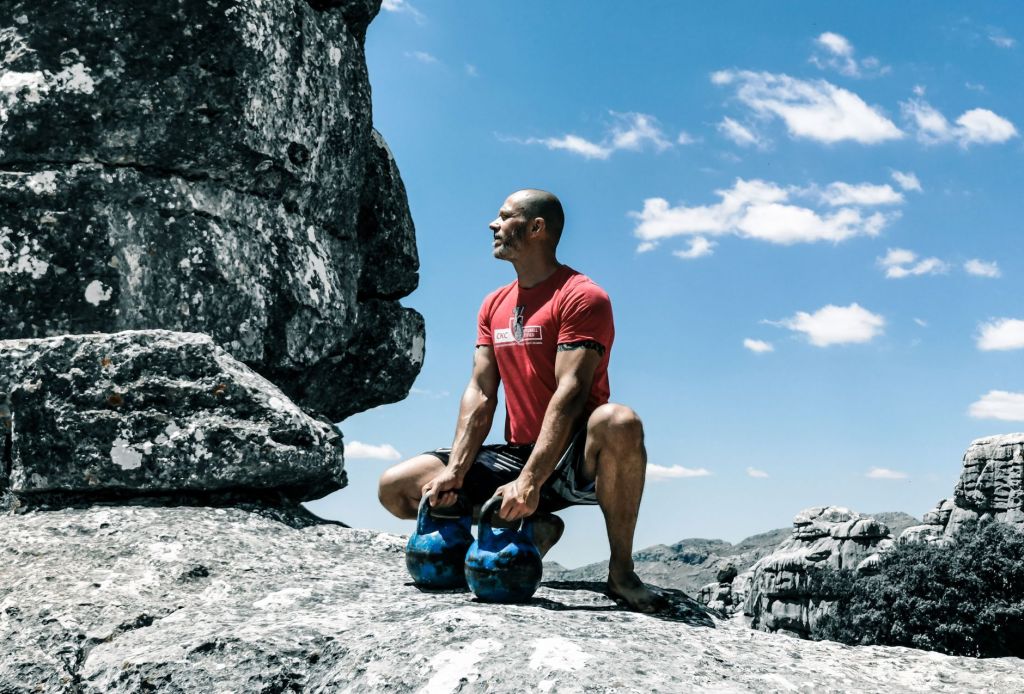
One afternoon, drifting into a post-workout nap after a particularly glorious kettlebell session, I heard a famous writer tell a popular podcaster that nobody reads books anymore.
Nobody.
Not even him.
He explained that social media had colonized his attention span. Years of feeding his narcissism to the digital machine had apparently consumed whatever brain cells were once responsible for sustained reading. There was something startling about hearing this confession from a public intellectual. It was like hearing a Michelin-starred chef announce that he now survives entirely on vending-machine burritos.
The timing could not have been worse.
I had recently completed writing a collection of fifteen stories. I had spent years dragging them through countless revisions, rescuing them from weaker incarnations, sanding rough edges, amputating dead passages, and rebuilding them sentence by sentence until they finally resembled what they were supposed to become. I was absurdly proud of them. I glowed with satisfaction. My pecs still felt inflated from kettlebell presses, and my literary vanity was enjoying a similar state of expansion.
Then reality barged into the room.
Nobody reads anymore.
A bestselling author now sells perhaps ten thousand copies and celebrates as though he has conquered Gaul. An obscure author such as myself sells precisely zero. The arithmetic was not encouraging. My glow dimmed. My pumped-up ego suffered a rapid deflation.
That evening I climbed into bed feeling mildly bereaved. I instructed my smart speaker to play classical music. It responded by offering business reports. I asked again. It played ZZ Top. I asked a third time. More ZZ Top. By the tenth attempt, after what felt like a hostage negotiation, it finally surrendered and delivered Johann Sebastian Bach.
As the music drifted through the room, I picked up several books.
I didn’t care about any of them.
I tried another.
Nothing.
I opened my Amazon wishlist and scrolled through hundreds of titles accumulated over years of optimism. History. Biography. Philosophy. Literature. Politics. Books I had once believed would transform my life.
I wanted none of them.
It wasn’t exactly boredom. It wasn’t exactly depression. It was something murkier—a kind of spiritual flatness. An intellectual anemia.
Part of my mood may have stemmed from guilt. My wife and twin daughters were exploring London and Paris. I had stayed behind. The long flights felt intolerable, and if I was honest, my curiosity about Europe had faded. I had wandered its streets decades earlier. Returning now felt like rereading a novel whose plot I already knew. The enchantment was gone.
I comforted myself with thoughts of an upcoming trip to Miami. A five-hour flight I could survive. Noise-canceling headphones would seal me off from humanity, and I could retreat into the biography of some legendary athlete. Sports biographies had become my literary comfort food. They soothed me while jet engines roared and the earth drifted by thirty thousand feet below.
Seeking rescue from my malaise, I purchased a discounted book for a dollar.
A dollar.
Even at that price I felt overcharged.
The subject was humanity’s search for belonging and meaning. On paper this sounded promising. In practice it felt like an essay stretched onto a medieval torture rack until it reached book length. Every chapter seemed padded with repetition and filler. The author’s central insight could have fit comfortably on a cocktail napkin.
I abandoned it after a few pages.
Disgusted with both the book and myself, I opened YouTube.
Then salvation arrived.
The algorithm presented a kettlebell instructor demonstrating an exercise called the thrust.
The movement was brutal: a clean, followed by a squat, followed by an overhead press. It looked demanding, athletic, and slightly insane.
My ennui evaporated instantly.
I wrote the word “thrusts” into my Google Docs notebook.
One word.
That was all it took.
Suddenly I was excited about tomorrow. I could picture myself waking before dawn, walking into the garage, and attempting this new movement. The anticipation generated more enthusiasm than hundreds of books, dozens of streaming shows, and an entire internet overflowing with content.
This realization disturbed me.
I was sixty-four years old. By all cultural expectations, I should have been entering the season of deep reading and contemplation. I should have been savoring great books the way aristocrats savor caviar. Instead, I was ricocheting around the house like a Labrador retriever waiting for someone to throw a tennis ball.
The truth was difficult to deny. At this stage of my life, only a handful of things reliably pierced the fog. Discovering a beautiful chord progression on the piano. Finding a new kettlebell movement. Learning some technique that made me eager to wake up the next morning.
Had YouTube not delivered that single word to me—thrusts—I might have spent the entire day wandering through a desert of boredom.
That is what unsettled me most.
Not that I couldn’t find a book I wanted to read.
Not that Europe no longer called to me.
Not even that writers themselves were abandoning books.
What unsettled me was how little it took to reignite my enthusiasm. One word on a screen. One exercise. One tiny challenge awaiting me at dawn.
At sixty-four, after all my reading, writing, teaching, traveling, and philosophizing, the thing that saved the day was not Bach, literature, or civilization.
It was a kettlebell.


 Cinemorphosis
Leave a comment