In terms of reading endurance, I am another casualty of the internet.
In my early twenties, I devoured two books a week with the discipline of a bodybuilder consuming protein to build muscle. Reading was not a hobby. It was nourishment. My brain felt perpetually hungry, and books were the only food that satisfied it. I read because I was curious. I read because I wanted to flee stupidity. Most of all, I read because life felt incomplete unless I had one foot planted in a parallel literary universe. To be deprived of that universe was to feel vaguely cheated by existence itself.
Then the internet arrived.
It did not destroy my appetite for ideas. It fragmented it.
My attention was gradually colonized by factoids, clickbait, social media surveillance, and articles designed less to illuminate than to be skimmed and forgotten. None of these distractions seemed particularly dangerous on their own. Together, however, they accomplished what no enemy of books had managed before: they quietly atrophied my reading muscle.
I still read, but my reading is now compromised. In the morning, I work through essays with a cup of coffee, forcing myself to stay engaged by taking notes and writing brief summaries or critiques. At night, I can usually manage another thirty minutes of essays or short fiction before my concentration begins to fray.
That is a far cry from the reader I once was.
Yet my longing for that parallel literary universe never disappeared.
It merely changed mediums.
Today I spend at least two hours a day listening to audiobooks. I listen before dawn, during workouts, while driving, and sometimes while drifting into an afternoon nap. My library ranges from early Christian history to sports biographies, novels, philosophical polemics, memoirs, and books on health and fitness.
Although I mourn the loss of my youthful reading stamina, I have discovered an unexpected compensation.
In many cases, I understand books more deeply by listening to them than by reading them.
Take Emmanuel Carrère’s Kingdom. I have read the novel obsessively four separate times. Yet hearing it performed through Audible has transformed the experience. I am no longer merely reading about Paul and Luke as they wrestle with believers and skeptics across Greece, Syria, and Israel. I feel as though I am accompanying them. Scenes unfold with cinematic immediacy. Conversations breathe. Sentences I somehow overlooked through four careful readings suddenly reveal themselves with startling clarity. Listening has not diminished the book. It has enlarged it.
Part of this pleasure may lie deep within our evolutionary inheritance. Human beings spent thousands of years listening to storytellers, poets, prophets, and orators before most people ever encountered literature on a printed page. Perhaps the spoken voice still reaches something ancient within us.
Another explanation is what I call the Auditory Immersion Principle: the paradox in which a listener comprehends and emotionally inhabits a book more fully through sustained listening than through silent reading because the uninterrupted flow of the narrator’s voice prevents skimming, distraction, and premature judgment. A skilled narrator refuses to let my restless internet brain dart ahead or wander elsewhere. I surrender to the current of the story instead of constantly trying to steer it.
That discovery has filled me with renewed excitement for books I have postponed for years.
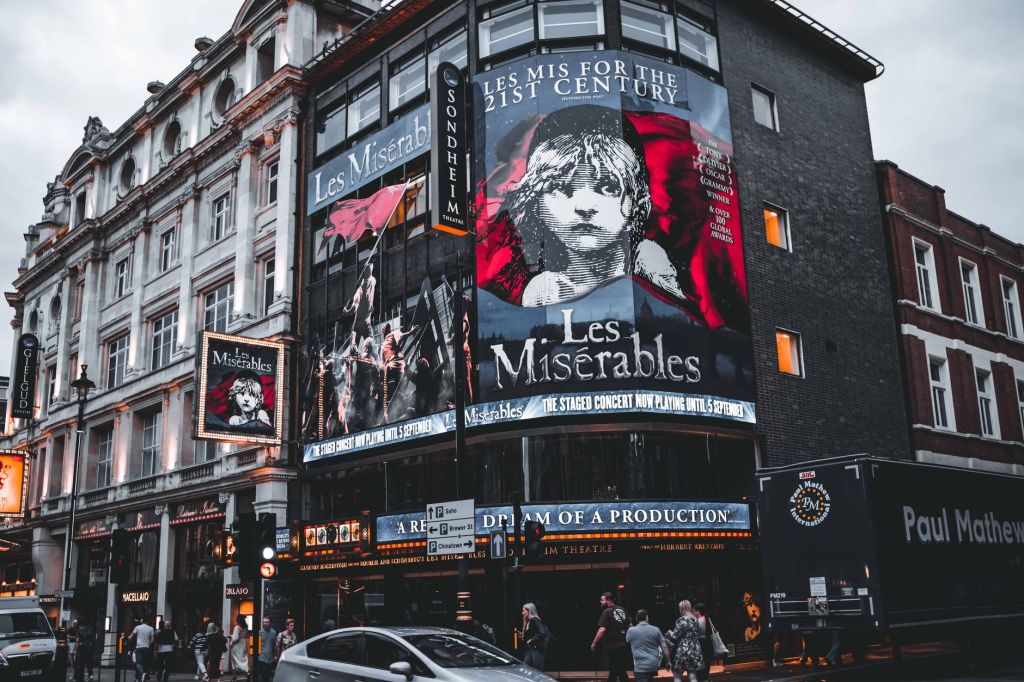
Near the top of my Audible wish list is Victor Hugo’s Les Misérables, a novel Emmanuel Carrère has said transformed his life as a child. I have no doubt that listening to it will transport me into one of literature’s great enchanted worlds. I expect to emerge from it not merely informed but changed.
The anticipation is almost intoxicating. It feels as though pleasures this profound ought to be reserved for another realm, not made available through a pair of headphones during a morning walk.
Perhaps that sounds like hyperbole.
Then again, perhaps that is simply the enduring power of great literature.
The internet may have weakened my capacity to sit for hours turning pages, but it has not extinguished my desire to inhabit extraordinary books. If anything, audiobooks have reminded me that literature has always been larger than ink on paper. Long before stories were read in silence, they were spoken aloud, carried by the human voice from one soul to another.
In an age that fragments our attention into thousands of disposable moments, that ancient experience may be more necessary than ever.


Leave a Reply