Tag: reading

  • The Greatest Book My Father Never Wrote

    The Greatest Book My Father Never Wrote

    Last night I dreamed I was summoned to a publisher’s office, the kind that smells faintly of dust, old paper, and deferred hope. I sat across from a man in his early sixties wearing a beige suit so aggressively neutral it seemed designed to disappear into the shelves behind him. Those shelves were packed tight with books—the visual shorthand for authority, legitimacy, and the life I was supposed to have lived.

    He told me, calmly, as if delivering weather updates, that my father had written a perennial classic. A bestseller. A semi-autobiographical novel about growing up poor, raising me with my teenage mother in the Gainesville projects. The book, he said, was written with mordant wit and bruised humor and was routinely compared to Huckleberry Finn.

    Then he handed me a copy.

    I opened it and recognized everything immediately: Flavet Villages, the roach-infested housing complex for veterans and struggling students, where poverty clung to the walls like nicotine. The prose was first-person present tense—close, intimate, relentless. I said this out loud, the way you do in dreams when you want credit for noticing things. The publisher nodded, pleased.

    “Have you ever thought about doing something like this?” he asked. “Following in your father’s footsteps?”

    I shook my head. Then I asked the only question that mattered: “How come I never heard about this book before?”

    “Oh, it doesn’t exist here,” he said, waving the concern away. “It exists in a parallel universe in a faraway galaxy.”

    Naturally.

    At this point, he reached into his desk and handed me a gray carbon radio shaped like a pyramid—part Cold War relic, part sci-fi prop. It had a special shortwave frequency that could lock onto that distant planet, where my father’s novel was being read aloud, endlessly, by a space alien. Anytime I wanted, I could tune in and listen. It would comfort me, he said, as if this explained everything.

    I thanked him, left the office, and met my wife and twin daughters at the San Francisco Zoo. While they stared at zebras with the earnest fascination of people grounded in reality, I extended the antenna and tuned the dial. The alien’s voice crackled through—steady, patient, reverent—reading my father’s great novel for the thousandth time.

    My family looked at me like I’d finally tipped over into madness. I didn’t care.

    I was listening to the greatest book my father never wrote, being read forever in a universe where it mattered. And for once, that was enough.

  • Maudlin Grail Syndrome

    Maudlin Grail Syndrome

    As I consider Cicero’s call for self-restraint in Tusculan Disputations, my thoughts return to a story that’s haunted me for over twenty years—Anton Chekhov’s “Gooseberries.” It is, in essence, the tragic fable of a Maudlin Man, told with surgical clarity and Chekhovian cruelty.

    His name is Nicholai Ivanich, and he’s not merely pathetic—he’s morally revolting. He marries an aging, unattractive woman for her wealth and waits with predator patience for her to die. Once she obliges, he buys himself a country farmhouse ringed with gooseberry bushes, retreats from the world, and crowns himself a minor deity among the local peasants by handing out cheap liquor like some portly, provincial Dionysus.

    Chekhov doesn’t give us Nicholai’s voice. He gives us Ivan, the disgusted brother, who sees this man for what he is: a swollen, self-satisfied corpse in waiting. Ivan calls Nicholai’s farmhouse dream a “definite disorder”—not a goal, but a fixation, a fever dream dressed up as a life plan. For Ivan, his brother’s pastoral retreat is less Arcadia and more open-casket viewing. “He looked old, stout, flabby,” Ivan observes. “His cheeks, nose, and lips were pendulous. I half expected him to grunt like a pig.”

    That image sticks: Nicholai, the human piglet, grinning over his plate of gooseberries, believing he’s achieved bliss when in truth he’s just decaying in comfort.

    And then comes the moment that seals it—Nicholai’s nightly ritual: he’s brought a plate of gooseberries from his estate, and upon seeing them, he literally weeps with joy. “He looked at them in silence, laughed with joy, and could not speak for excitement.” He is consumed by the performance of happiness. It’s not the berries he loves—it’s what they symbolize. In his mind, they are proof that his life is complete.

    But it’s all delusion. Nicholai isn’t fulfilled—he’s embalmed in maudlin sentimentality, drunk on nostalgia for something that never really existed. His joy is cosmetic. He’s not flourishing. He’s fermenting.

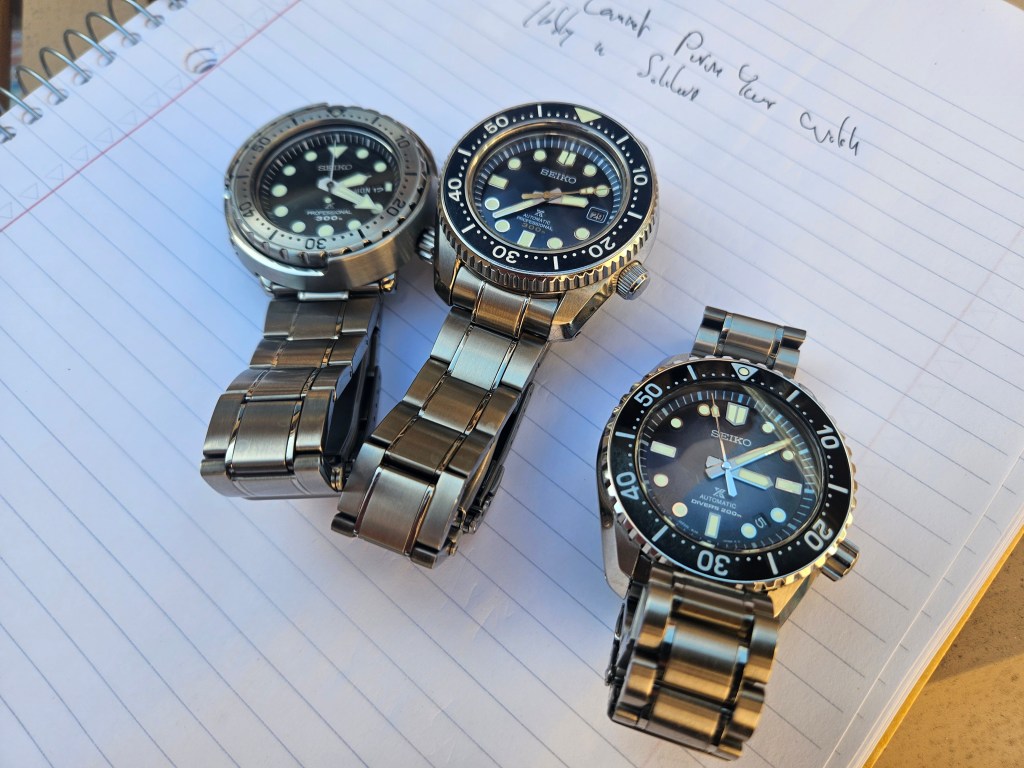
    And this, I confess, reminds me of myself—and my fellow watch addicts.

    We, too, have our gooseberries. Ours just happen to tick.

    We post videos of our “grail watches” and glow with reverence as we hold them up to the camera like relics from a sacred shrine. We give breathless soliloquies about our “perfect” collections, our “ultimate” configurations. We praise bezels and dial textures the way Nicholai praises his berries—with trembling hands and watery eyes. And like Nicholai, we’re not convincing anyone but ourselves.

    Because deep down, we know: the drama is maudlin. We have arrived at Maudlin Grail Syndrome–a condition in which the collector performs reverence rather than experiencing peace. Tears may form, voices may soften, thumbnails may glow—but the joy is theatrical, not restorative. The grail embalms rather than liberates. The joy is hollow. The entire pageantry is just a way to distract from the torment our hobby brings us. We spend hours obsessing, comparing, flipping, tweaking, always convinced that this next watch will bring balance and peace, only to find ourselves more anxious than before.

    We are men who weep over gooseberries. And worse—we make YouTube thumbnails about them.

    If we were honest, we’d admit that one decent, mid-priced watch would offer more peace than any “holy grail” ever could. But that would mean giving up the theater. The drama. The illusion that our fixations have meaning. And that, for the Maudlin Man, is the hardest loss of all.

  • Doing Everything, Feeling Nothing: The Age of Engagement Dilution

    Doing Everything, Feeling Nothing: The Age of Engagement Dilution

    In “Ebooks Are an Abomination,” Ian Bogost delivers a needed slap across the face of our collective reading habits. His charge is simple and devastating: ebooks haven’t expanded reading—they’ve hollowed it out. People believe they’re reading because their eyes are sliding across a screen, but most of what’s happening is closer to grazing. The scandal isn’t that we skim; it’s that we’ve started calling skimming “reading” and don’t even blush. Bogost nails the fraud when he points out that the word reading has become a linguistic junk drawer—used to describe everything from doomscrolling Instagram captions to actually wrestling with dense prose. If the same word covers both scanning memes and grappling with Dostoevsky, then the word has lost its spine.

    It reminds me of people who announce they’re going to the gym to “work out.” That phrase now covers a heroic range of activity—from Arnold-style flirtations with death to leaning on a treadmill while watching Jeopardy! and gossiping about coworkers. Same building, radically different realities. One is training. The other is loitering with athletic accessories.

    Reading and working out have this in common: they are not activities so much as states of engagement. And the more soaked we become in technology, the more that engagement drains away. Technology sells convenience and dependency—the kind where you feel faintly panicked if you’re five feet from a device and not being optimized by something. But being a reader is the opposite of that nervous dependence. It’s happy solitude. It’s the stubborn pleasure of being absorbed by a book, of sinking into hard ideas—the epistemic crisis, substitutionary atonement, moral ambiguity—without needing an app to pat you on the head and tell you how you’re doing. Real readers don’t need dashboards. Real lifters don’t need Fitbits. If you’re truly engaged, you feel the work in your bones.

    And yet technology keeps whispering the same seduction: optimization. Track it. Measure it. Quantify it. But what this gospel of efficiency often delivers is something uglier—disengagement dressed up as progress, laziness rebranded as smart living. The name for this decay is Engagement Dilution: the slow thinning of practices that once demanded effort—reading, training, thinking—into low-grade approximations that still wear the old labels. What once meant immersion now means mere exposure. We haven’t stopped doing these things. We’ve just stopped doing them seriously, and we’re calling that evolution.

    To help you interrogate the effects of Engagement Dilution, you will do the following writing prompt.

    600-Word Personal Narrative That Addresses Engagement Dilution

    We live in an age where everything looks like participation—but very little feels like engagement. We “read” by skimming. We “work out” by standing near machines. We “study” by copying and pasting. We “connect” by reacting with emojis. The actions remain, but the depth is gone. This condition has a name: Engagement Dilution—the process by which practices that once demanded sustained attention, effort, and presence are thinned into low-effort versions that keep the same labels but lose the same meaning.

    For this essay, you will write a 600-word personal narrative about a time when you realized you were going through the motions without being truly engaged. Your story should focus on a specific experience in which you believed you were participating in something meaningful—school, work, fitness, relationships, creativity, reading, faith, activism, or personal growth—only to later recognize that what you were doing was a diluted version of the real thing.

    Begin with a concrete scene. Put the reader inside a moment: a classroom where you nodded but didn’t think, a gym session where you scrolled more than you lifted, a relationship where you listened with your phone in your hand, a book you “read” but can’t remember, a goal you claimed to care about but never truly invested in. Use sensory detail—what you saw, heard, felt, avoided—to make the dilution visible. Don’t explain the idea yet. Show it happening.

    Next, introduce the realization. When did it dawn on you that something essential was missing? Was it boredom? Frustration? Guilt? Emptiness? Did someone confront you? Did you fail at something you thought you had prepared for? Did you suddenly notice how different real engagement feels—how tiring, how uncomfortable, how demanding it is compared to the easy version you had settled for?

    Then widen the lens. Reflect on why engagement diluted in the first place. Was it technology? Fear of failure? Desire for comfort? Pressure to appear productive? Lack of confidence? The culture of optimization? Be honest here. Avoid blaming abstract forces alone. This essay is not about what society did to you; it is about the choices you made within that environment.

    Finally, confront the cost. What did engagement dilution take from you? Skill? Confidence? Meaning? Relationships? Momentum? And what did it teach you about the difference between looking active and actually being alive inside your actions? End not with a motivational slogan but with clarity—what you now recognize about effort, attention, and the price of avoiding difficulty.

    Guidelines

    • This is a narrative, not a sermon. Let the story do the thinking.
    • Avoid clichés about “finding balance” or “doing better next time.”
    • Do not turn this into a tech rant or a productivity essay. Keep it human.
    • Use humor if it fits—but don’t hide behind it.
    • Your goal is not self-improvement branding. Your goal is insight.

    What this Essay Is Really About

    Engagement Dilution is not laziness. It is the quiet substitution of comfort for commitment, convenience for courage, motion for meaning. Your task is to show how that substitution happened in your own life—and what it revealed about what real engagement actually costs.

    Write the essay only you could write. The more specific you are, the more universal the insight becomes.

  • Stop Selling Books Like Vitamins: Reading as Pleasure, Not Duty

    Stop Selling Books Like Vitamins: Reading as Pleasure, Not Duty

    Literary Vice names the framing of reading as a private, absorbing, and mildly antisocial pleasure rather than a civic duty or self-improvement exercise. It treats books the way earlier cultures treated forbidden novels or disreputable entertainments: as experiences that tempt, distract, and pull the reader out of alignment with respectable schedules, market rhythms, and digital expectations. Literary vice rejects the language of virtue—empathy-building, résumé enhancement, democratic hygiene—and instead emphasizes immersion, obsession, and pleasure for its own sake. As a countervailing force against technology-induced anhedonia, reading works precisely because it is slow, effortful, and resistant to optimization: it restores depth of attention, reawakens desire through sustained engagement, and reintroduces emotional risk in a landscape flattened by frictionless dopamine delivery. Where screens numb by over-stimulation, literary vice revives feeling by demanding patience, solitude, and surrender to a single, uncompromising narrative consciousness.

    ***

    Adam Kirsch’s essay “Reading Is a Vice” makes a claim that sounds perverse until you realize it is completely sane: readers are misaligned with the world. They miss its rhythms, ignore its incentives, fall out of step with its market logic—and that is precisely the point. To be poorly adapted to a cultural hellscape is not a bug; it is the feature. Reading makes you antisocial in the healthiest way possible. It pulls you off screens, out of optimization mode, and away from the endless hum of performance and productivity that passes for modern life. In a culture engineered to keep us efficient, stimulated, and vaguely numb, misalignment is a form of resistance.

    Kirsch notes, of course, that reading builds critical thinking, individual flourishing, and democratic capacity. All true. All useless as marketing slogans. Those are not selling points in a dopamine economy. No one scrolls TikTok thinking, “I wish I were more civically responsible.” If you want young people to read, Kirsch argues, stop pitching books as moral medicine and start advertising them as pleasure—private, absorbing, and maybe a little disreputable. Call reading what it once was: a vice. When literature was dangerous, people couldn’t stop reading it. Now that books have been domesticated into virtue objects—edifying, wholesome, improving—no one can be persuaded to pick one up.

    You don’t eat baklava because it’s good for you. You eat it because it is an indecent miracle of sugar, butter, and culture that makes the rest of the day briefly irrelevant. Books work the same way. There are baklava books. Yours might be Danielle Steel. Mine isn’t. Mine lives closer to Cormac McCarthy. When I was in sixth grade, my literary baklava was Herman Raucher’s Summer of ’42. That book short-circuited my brain. I was so consumed by the protagonist’s doomed crush on an older woman that I refused to leave my tent for two full days during a perfect Yosemite summer. While everyone else hiked through actual paradise, I lay immobilized by narrative obsession. I regret nothing. My body was in Yosemite; my mind was somewhere far more dangerous.

    This is why you don’t tell students to read the way you tell people to take cod liver oil or hit their protein macros. That pitch fails because it is joyless and dishonest. You tell students to read because finding the right book feels like dessert—baklava, banana splits, whatever ruins your self-control. And yes, you can also tell them what Kafka knew: that great writing is an ax that breaks the frozen sea inside us. Stay frozen long enough—numb, optimized, frictionless—and you don’t just stagnate. You risk not coming back at all.

  • Zosia Mamet and My Personal Reading Revival

    Zosia Mamet and My Personal Reading Revival

    It’s rare that I fall in love with books these days, but when it happens, I’m grateful because reading reminds me of my glory days, the early 80s when I consumed books with ferocity, imaginative pleasure, and obligation like a bodybuilder taking protein powder and creatine. Three major factors have curtailed my reading of books: One, I’ve grown so cynical over the years that I’ve come to the belief that 99% of books are in actuality just a short story or essay with padding. An author has an intriguing idea, and they sit down with their agent and cook up a book that is mostly chicanery with a dash of substance. 

    Then three days ago, I heard actor Zosia Mamet talking about her memoir Does This Make Me Funny?, a collection of essays, with KCRW host Sam Sanders, and I was so struck by her depth of wit, intelligence, and moral perspective that I immediately bought her book, or I should say the Kindle eBook version of it. Even more rare than buying books as intellectual property, it is even rarer that I buy a hard copy of something, unless it is a kettlebell training book or a cookbook like Miyoko Schimmer’s The Vegan Creamery

    Getting most of my books on Kindle speaks to the second reason my reading has diminished. The physical act of reading is unpleasant. Holding the book, turning the pages, getting into a comfortable position, attenuating my eyes to the various font sizes. I find the whole thing disconcerting and unpleasant, like trying to figure out the seat positions, buttons, and levers of an unfamiliar car. The most comfortable forms of reading are either sitting at my desktop and reading the Kindle on a 27-inch screen or reading while sitting in bed with a 16-inch laptop.

    The third reason I don’t read as much is that the Internet and its attention economy have fried my brain over the decades. The attention muscles inside my cortex have atrophied to a woeful state. 

    But occasionally a rose grows out of the cracks in the cement sidewalk, and such is the case with Zosia Mamet’s memoir, as witty, deep, self-deprecating, and salient as the author speaking to Sam Sanders three days ago. Reading the memoir is to connect with someone for whom her writing voice and the core of her being are the same. The result is something distinctive and salient, something that recoils and then snaps forward to leave its literary fangs inside you. Isn’t that what writing is supposed to be about? Nabokov was like that. So was Kafka. And so is Zosia Mamet.

    I detest some confectionary celebrity memoir reeking of privilege, superfluousness, and mediocrity. None of that is in Zosia’s collection of essays. 

    As we read in Jancee Dunn’s New York Times article “At Least Zosia Mamet Can Laugh About It,” the core of her book is about her mental, physical, and spiritual health. Coming from a family that is deeply entrenched in literature and the arts is a double-edged sword with excruciating pressure to live up to superhuman expectations causing Zosia’s thorn in her side to be the constant sense that she is falling abysmally short. 

    Like the best comedia, she opts out of self-pity for humor as she does a deep dive into her anxiety, depression, body dysmorphia, anorexia, and anhedonia, and all the self-destructive behaviors she succumbed to in order to overcome these afflictions. Because she knows that body dysmorphia is a delusion that hijacks her brain, she says about herself: “I am often an unreliable narrator of my own reality.” 

    Which in a nutshell is the human condition: Can we trust ourselves or are we getting duped by our own fake narrative? 

    What tools from our emotional toolbox can we use to be more reliable? Perhaps comedy is one of them. Think of our irrational states: overcome by maudlin self-pity, vanity, and grandiosity, we spin grotesque narratives about ourselves that compel us to behave in ways that are ridiculous and often result in self-sabotage. Perhaps comedy is the antidote. Perhaps comedy distances us from our preposterous self-mythology and helps us in the arduous process of self-reinvention. That’s the sense I’m getting from Zosia Mamet’s very necessary book, a book that has no padding at all but has been made from a brilliant mind with blood, sweat, and tears. 

  • Why Reading Is the Last Romantic Act

    Why Reading Is the Last Romantic Act


    If you take my Critical Thinking class, let me set expectations up front: I will not stand at the front of the room and lecture you into becoming an intellectual. That’s not how it works. I can’t command you to read. I can’t install curiosity like a software update.

    What I can tell you is this: the default setting is mediocrity. It’s smooth, seductive, and socially acceptable. The world—especially its algorithmic avatars—is built to exploit that setting. Platforms like OpenAI don’t just offer tools; they offer excuses. They whisper: You don’t have to think. Just prompt.

    You’ll get by on it. You’ll write tolerable essays. You might even land a job—something stable and fluorescent-lit with a breakroom fridge. But if you keep outsourcing your critical thinking to machines and your inner life to streaming platforms, you may slowly congeal into a Non-Player Character: a functionally adequate adult with no self-agency, just dopamine hits from cheap tech and cheaper opinions.

    The world needs thinkers, not task-completers.

    And that’s why I push reading—not as an obligation, but as a doorway to a higher mode of existence. Reading changes the texture of your thoughts. It exposes you to complexity you didn’t ask for and patterns of mind you didn’t inherit. But here’s the inconvenient truth: no one can make you read.

    Reading isn’t a commandment. It’s a love affair—and like any love worth having, it’s irrational, wild, and self-chosen. You don’t read because it’s good for you. You read because at some point a book wrecked you—in the best way possible. It made your brain itch, or your chest tighten, or your worldview crack open like an old floorboard.

    And that’s what I want for you. Not because it makes me feel like a good professor, but because if you don’t fall in love with ideas—on the page, in the margins, in someone else’s wild, flawed sentences—you’ll live a life someone else designed for you.

    And you’ll call it freedom.

  • Hot Pockets, CliffNotes, and the Death of Deep Reading

    Hot Pockets, CliffNotes, and the Death of Deep Reading

    Before the Internet turned my brain into a beige slush of browser tabs and dopamine spikes, I used to read like a man possessed. In the early ’90s, I’d lounge by the pool of my Southern California apartment, sun-blasted and half-glossed with SPF 8, reading books with a kind of sacred monastic intensity. A. Alvarez’s The Savage God. Erik Erikson’s Young Man Luther. James Twitchell’s Carnival Culture. James Hillman and Michael Ventura’s rant against the therapy-industrial complex–We’ve Had a Hundred Years of Psychotherapy – and the World’s Getting Worse. Sometimes I’d interrupt the intellectual ecstasy to spritz my freshly tanned abs with water—because I was still vain, just literate.

    Reading back then was as natural as breathing. As Joshua Rothman points out in his New Yorker essay, “What’s Happening to Reading?”, there was a time when the written word was not merely consumed—it was inhaled. Books were companions. Anchors. Entire weekends were structured around chapters. But now? Reading is another tab, sandwiched between the news, a TikTok video of a dog on a skateboard, and an unopened Instacart order.

    Rothman nails the diagnosis. Reading used to be linear, immersive, and embodied—your hands on a book, your mind in a world. Now we shuttle between eBooks, PDFs, Reddit threads, and Kindle highlights like neurotic bees skimming data nectar. A “reading session” might include swiping through 200-word essays while eating a Hot Pocket and half-watching a documentary about narco penguins on Netflix. Our attention is fractured, our engagement ritualized but hollow. And yes, the statistics back it up: the percentage of Americans who read at least one book a year dropped from 55% to 48%. Not a cliff, but a slow, sad slide.

    Some argue it’s not worth panicking over—a mere 7% drop. I disagree. As a college instructor, I’ve seen the change up close. Students don’t read long-form books anymore. Assign Frederick Douglass and half the class will disappear into thin air—or worse, generate AI versions of Douglass quotes that never existed. Assign a “safe” book and they might skim the Wikipedia entry. We’ve entered an age where the bar for literacy is whether someone has read more than one captioned infographic per week.

    Rothman tries to be diplomatic. He argues that we’re not consuming less—we’re just consuming differently. Podcasts, YouTube explainers, TikTok essayists—this is the new literacy. And fine. I live in that world, too. I mainline political podcasts like they’re anti-anxiety meds. Most books, especially in the nonfiction space, do feel like padded TED Talks that should have stayed 4,000 words long. The first chapter dazzles; the next nine are a remix of the thesis until you feel gaslit into thinking you’re the problem.

    But now the reading apocalypse has a new beast in the basement: AI.

    We’ve entered the uncanny phase where the reader might be an algorithm, the author might be synthetic, and the glowing recommendation comes not from your friend but from a language model tuned to your neuroses. AI is now both the reader and the reviewer, compressing thousand-page tomes into bullet points so we can decide whether to fake-read them for a book club we no longer attend.

    Picture this: you’re a podcaster interviewing the author of a 600-page brick of a book. You’ve read the first 20 pages, tops. You ask your AI: “Give me a 5-page summary and 10 questions that make me sound like a tortured genius.” Boom—you’re suddenly a better interviewer than if you’d actually read the book. AI becomes your memory, your ghostwriter, your stand-in intelligence. And with every assist, your own reading muscles atrophy. You become fit only for blurbs and bar graphs.

    Or take this scenario: you’re a novelist. You’ve published 12 books. Eleven flopped. One became a cult hit. Your publisher, desperate for cash, wants six sequels. AI can generate them faster, better, and without your creative hand-wringing. You’re offered $5 million. Do you let the machine ghostwrite your legacy, or do you die on the sword of authenticity? Before you answer, consider how often we already outsource our thinking to tools. Consider how often you’ve read about a book rather than the book itself.

    Even the notion of a “writer” is dissolving. When I was in writing classes, names like Updike, Oates, Carver, and Roth loomed large—literary athletes who brawled on live television and feuded in magazines. Writers were gladiators of thought. Now they’re functionally obsolete in the eyes of the market, replaced by a system that values speed, virality, and AI-optimized titles.

    Soon, we won’t pick books. AI will pick them for us. It will scan our history, cross-reference our moods, and deliver pre-chewed summaries tailored to our emotional allergies. It will tell us what to read, what to think about it, and which hot takes to regurgitate over brunch. We’ll become readers in name only—participants in a kind of literary cosplay, where the act of reading is performed but never truly inhabited.

    Rothman’s essay is elegant, insightful, and wrong in one key respect: it shouldn’t be titled What’s Happening to Reading? It should be called What’s Happening to Reading, Writing, and the Human Mind? Because the page is still there—but the reader might not be.
  • I Have No Illusions About Converting My Students to “The Ways of Literacy”

    I Have No Illusions About Converting My Students to “The Ways of Literacy”

    My college students admit that they barely read. They avoid books. They’ll skim an article. Their “cognitive load” is taken up by texting on their phones and watching TikTok and YouTube videos. They don’t have bandwidth for doing deep reading.

    Many of them were in the eighth grade during the pandemic. They lost close to two years of school, spent time on their phones and Chromebooks, and see ChatGPT as a godsend. They can outsource college instructors’ writing assignments and no longer have to worry about grammar or formatting. 

    Teaching college writing, I have to meet students where they are. I have to teach them rhetorical skills, critical thinking skills, and the transforming power of literacy, so I show them powerful arguments, and what makes them persuasive, and people who have found their higher selves through literacy, such as Frederick Douglass and Malcolm X, and the happiness derived from Cal Newport’s notion of “deep work” as an antidote to the despair and nihilism of popular culture’s default setting for cheap dopamine hits, immediate gratification, and meretricious consumer hype. 

    The good news is that my lessons resonate with the students evidenced by their engagement with class discussions. The less than good news is that these philosophical discussions don’t turn them into readers, don’t make them want to trade their phones and social media platforms for a novel or a biography, and don’t make them want to learn the finer points of rhetoric. 

    My students are smart, decent, reasonable, and pragmatic. They learn what they feel is essential to adapt to life’s challenges. Doing a deep dive into reading and writing doesn’t seem that essential to them even though they’ll acknowledge many of the writers and writing samples I present to them are impressive and worthy of admiration. 

    My students seem to appreciate me for giving them an entertaining presentation and for having made the effort to sell literacy as an essential tool for becoming our aspirational selves, but at the end of the day, they focus on getting their homework done as efficiently as possible, working a part-time job to pay the bills, enjoying their friendships, and nurturing their romantic interest. 

    The unspoken agreement between my students and me is that I will be entertaining and enthusiastic about my subject for 90 minutes, but I will not have any delusions about converting them to The Ways of Literacy. That is a teacher’s fantasy, made even more elusive in the AI Age. 

  • Manuscripnosis: A Vexing Tale of Self-Sabotage

    Manuscripnosis: A Vexing Tale of Self-Sabotage

    I suffer from a humiliating literary affliction: when I’m not trying to write a book—when I’m simply crafting loose, witty blog posts—my prose sings. It breathes. It struts across the page like it owns the place. In those moments, I’m not an “author,” I’m just a clever diarist with decent rhythm and a nose for irony.

    But then comes the fatal whiff—that intoxicating scent of a book deal drifting in from the distance like a mouth-watering freshly-baked coconut macaroon. Suddenly, I begin to try. I sit up straighter. I structure. I strategize. I lean into “craft.” And that’s when my prose, once alive and sinewy, collapses like a soufflé that sensed it was being watched. Gone is the energy, the voice, the mischievous verve. What remains is a flaccid husk of what could have been—something that reads less like a potential bestseller and more like a workshop handout no one asked for.

    This, dear reader, is the vicious, looping paradox I call Unintended Book Syndrome. The moment I stop writing and start authorshipping, my words die on the vine.

    The clinical term, I believe, is Manuscripnosis: a trance-like state in which blog-worthy brilliance is transfigured into joyless literary taxidermy the moment the idea of a “real book” enters the room. I have lived with this disorder for decades. I’ve tried everything—lowering expectations, denying ambition, even faking indifference. Nothing works. The moment I think this could be a book, the prose curls up and dies like a Victorian heroine too delicate for publication.

    Sometimes I fantasize about quitting writing altogether. But abstinence only makes it worse. The despair of not writing eclipses even the misery of writing badly. Which means I am doomed to live forever in this creative purgatory—hovering between genius and garbage, blog post and book, dopamine and dread.

  • I Am My Own Audiobook: A Washed-Up Reader’s Redemption Arc

    I Am My Own Audiobook: A Washed-Up Reader’s Redemption Arc

    After four decades of teaching college writing, I now find myself plagued by a humiliating truth: my reading habits have withered into something more decorative than devout. In my twenties, I devoured two books a week like a literary piranha. Now, I manage a limp 30-minute bedtime reading session before drooling onto the page like a narcoleptic bookworm. Call it aging, call it digital distraction, or—as I like to tell myself in moments of flattering delusion—call it undiagnosed ADHD. Whatever the cause, my reading stamina has become a cautionary tale.

    If I want to do anything resembling real, rigorous reading, I’ve learned to prop myself between two 27-inch screens like a cyborg monk: one monitor displaying the sacred text, the other open to Google Docs so I can take notes, argue with myself, and shame my inner skimmer into paying attention. This is not pleasure reading. This is performance reading—a controlled environment designed to bully my mind into staying in the room. If a book so much as looks at me funny, I’ll click over to email.

    But something strange has happened: I’ve become a better listener than reader. I now “read” through Audible with more duration and intensity than I’ve mustered with paper in years. Especially with nonfiction, the audiobook format feels less like cheating and more like a form of literary intravenous drip—direct, efficient, and oddly intimate. That’s why a recent blurb in The New Yorker caught my eye: Peter Szendy’s Powers of Reading: From Plato to Audiobooks isn’t just an academic tour through literary history—it’s a philosophical rebranding of the audiobook experience.

    Szendy resurrects a long-lost distinction between two roles: the reader (the person decoding text) and the readee (the listener, the audience of the reading). Since antiquity, he notes, most literature wasn’t read—it was heard. We were, for most of human history, listenees. Silent, solo reading is a relatively recent phenomenon, and yet we’ve somehow crowned it the gold standard of literary engagement. Szendy isn’t buying it. In fact, he argues for the emancipation of the readee—a manifesto that practically throws confetti over the return of orality via Audible.

    And here’s the kicker: even when we read to ourselves, we’re still listenees. We are listening to our own interior narration. We are, in essence, narrating to ourselves. Szendy suggests that when we read, we play both roles: the voice and the ear, the actor and the audience. And when we listen to a book, we are doing something ancient, dignified, and sacred—not some degraded, dumbed-down version of real reading.

    So yes, maybe I’m a fallen reader, a man who used to crush Dostoevsky before breakfast but now requires high-tech scaffolding just to get through a paragraph. But thanks to Szendy, I can now see myself as a kind of restored readee—part monk, part machine, part audiobook in human form. Not a failure of attention, but a return to tradition. And if my bedtime ritual now sounds more like a podcast than a prayer, well… Plato probably would’ve approved.