Author: Jeffrey McMahon

  • Aura Farming in the Age of the Priority Pass

    Aura Farming in the Age of the Priority Pass

    Zach Helfand’s New Yorker piece “The Airport-Lounge Wars” reads like the natural sequel to John Seabrook’s “How the Sports Stadium Went Luxe.” Both writers chart America’s drift into a soft feudalism—an economy built on velvet ropes, curated vanity, and the tyranny of creature comforts. Exclusivity is our reigning civic religion. Helfand opens with a thesis as blunt as a boarding announcement: “Airport lounges are about who gets in and who does not.” In today’s America, you must cultivate an aura—what my teenage daughters call “aura farming,” the strategic cultivation of mystique, importance, and manufactured nonchalance. Airports have become the perfect stage for this theater of status. You either inhabit the drab terminal with its cracked vinyl seats and public coughing contests, or you ascend to the glowing Xanadu behind frosted glass. My own family acts out the class divide: my wife and daughters breeze through TSA with their PreCheck halos while I shuffle through the cattle chute, sacrificing my bottled water, removing my belt, and enduring laptop shaming before rejoining them, a humbler, poorer man.

    These airport Xanadus have grown so seductive that some travelers go full pilgrim. One Malaysian businessman, drunk on his Priority Pass privileges, missed his flight to Kuala Lumpur and drifted through lounges for eighteen days, forging boarding passes like a monk copying sacred texts—until he was arrested and relocated to the Prison Lounge, where the amenities are famously lacking.

    Wanting a taste of this strange devotion, Helfand spent a week touring New York’s airport lounges with his own Priority Pass. At the HelloSky Lounge at JFK, he marinated in what historian Kevin James calls “an enhanced experience of stasis.” Translation: high-thread-count boredom. Even this, Helfand notes, is aspirational—CBS travel editor Peter Greenberg says lounges aim for nothing more noble than inspiring customers to murmur, “Well, it’s better than nothing.” Indeed, the holy trinity of “better than nothing” turns out to be fruit-infused water, padded leather walls, and chandeliers in the bathroom. Civilization marches on.

    Airports are designed to grind the soul down to a nub, so perhaps this “slightly better than nothing” aesthetic is our cultural Valium. A tranquilizer bubble for people waiting to be herded onto aluminum tubes. Pay the fee, flash the pass, and anesthetize the existential dread of a three-hour layover. As Helfand puts it, “Waiting can make one feel needy, like a baby.” Maybe that’s why lounges feel like nurseries for adults: dim lighting, soft chairs, snacks within arm’s reach. The more infantile we become, the grander the titles on the door—V.I.P., Admiral, Ambassador. It’s a fantasy nobility designed to distract us from the truth: we are tired, displaced, sleep-deprived, and longing for our beds, our routines, and—let’s be honest—our blankies.

  • Skyboxes for the Last Man

    Skyboxes for the Last Man

    There’s a primitive hunger in us to feel supersized—elevated, exalted, briefly spared from our mortal smallness. We chase that sensation in crowds: at concerts, festivals, theme parks, and megachurches, all promising communion without requiring introspection. The catch is the port-o-potty, that plastic temple of human despair, which can sour the entire pilgrim’s progress. People want collective rapture without the stench of the collective. Enter the “premium experience”—fast passes, VIP wristbands, and, at sports stadiums, full-blown oligarch cosplay. That’s John Seabrook’s target in “How the Sports Stadium Went Luxe,” an essay that quietly fillets America’s economic feudalism, vanity, and reliance on sugar-spun spectacle in place of anything resembling meaning.

    The roots of this gilded circus stretch back to the 1966 Houston Astrodome: AstroTurf, orange-suited groundskeepers in space helmets, and a scoreboard colossal enough to make Orwell’s telescreen look provincial. Roger Angell attended a game there and sensed rot beneath the novelty. As Seabrook notes, Angell was already wary of skyboxes—those proto-citadels of privilege that foretold today’s “arms race” among stadium owners hell-bent on turning a public ritual into a private entitlement. Half a century later, Angell’s suspicion reads like prophecy. The luxury fever he glimpsed has metastasized into a full-blown industry. As Seabrook puts it, “An entire economy of luxury fan experiences in sports and entertainment has grown out of the sad soft caves Angell spelunked in Houston, and I wanted to have one of those experiences, too.”

    To understand the psychology of elevated fandom, Seabrook consults Lance Evans, the architect behind SoFi Stadium—Inglewood’s cathedral of curated transcendence. There, patrons select from a menu of “premium experiences,” each priced to “align with their place in the world.” That genteel phrasing hides a darker truth: class isn’t simply an economic tier; it’s a personality trait. Your place in the world becomes a performance, and the show requires props—preferably props that remind you of the people beneath you. These pleasures are petty, but they endure. In the age of performative living, they flourish. As Seabrook notes, SoFi bristles with more than two hundred sixty speakers and fifty-six 5G antennas because it’s not enough to enjoy your rarefied moment; your followers must witness your transcendence in real time. Nietzsche’s Last Man hovers here like an unwanted mascot: a society drained of belief, numbing itself with spectacle and status.

    Seabrook also channels Robert Putnam’s Bowling Alone, the great chronicle of our national loneliness. Stadiums, he argues, act as “secular megachurches”—sites where the spiritually unmoored gather to celebrate, lament, and play dress-up. I thought of his words when I dropped my wife and daughters at Camp Flog Gnaw, watching teens in eye-catching costumes that looked equal parts ritual attire and thirst-trap armor.

    But this communal longing is now fully monetized. Every inch of the stadium belongs to capitalism’s mining operation. “Stadiums may be the most rigorously monetized spaces on earth,” Seabrook writes—and he understates the point. Once the Cowboys unveiled their high-end palace in 2009, the modern luxury-experience arms race took off. The model is simple: fewer fans, more premium fans. After all, more than 95 percent of football viewers remain home with their televisions. The 5 percent who attend spend half the game staring at their phones anyway, toggling through fantasy scores. The real revenue doesn’t come from seats; it comes from broadcasting rights and the ultra-wealthy patrons willing to pay for the illusion of insider status. With twenty-four million millionaires and nearly a thousand billionaires available as clientele, teams happily offer “ultimate fan experiences”—exclusive flights on replica team jets, photo ops with executives and legends, and other Gatsby-themed hallucinations of proximity to greatness.

    This fetish for elevation isn’t confined to stadiums. Seabrook argues we now inhabit a full “Age of the Premium Experience”: luxury shopping, chauffeured rides, curated airport lounges, tiered airplane cabins, hotels engineered for flawless self-regard. The stadium is simply the loudest expression of a 24/7 lifestyle meant to insulate the affluent from the ambient dread of being ordinary.

    But the heart of Seabrook’s essay is not abundance—it’s spiritual malnutrition. These luxury patrons, wealthy as they are, drift through life with the soul-flat affect of Nietzsche’s Last Man. They mistake gaudy comforts for transcendence. They mistake proximity for identity. They mistake curated envy for connection. They are, in Seabrook’s telling, extravagantly fleeced and blissfully unaware, convinced that sitting near the machinery of professional sports confers meaning by osmosis. They pay a fortune for the privilege of being expertly duped.

  • A Slow-Motion Collapse: Reading The Emergency

    A Slow-Motion Collapse: Reading The Emergency

    George Packer’s The Emergency has been marketed as a dystopian novel. I tried to resist reading it, but after hearing Packer discuss it with Andrew Sullivan—especially the idea that democracies die not from foreign invasion but from self-inflicted wounds—I felt compelled to give it a go. The book declares its thesis on page one: The Emergency is a fading empire that decays slowly at first and then all at once. The world people once recognized disintegrates into something unthinkable. A population that once shared a common reality through the Evening Verity now lives in fractured, dopamine-soaked silos dominated by tribal influencers. The country divides into two warring classes: the educated Burghers in the cities and their resentful counterparts, the Yeomen in the hinterlands.

    In the opening chapter, this polarization erupts into “street fighting,” looting, the disappearance of law enforcement, and the flight of the ruling elite from the capital. Dr. Rustin delivers this bleak news to his family over dinner. His daughter Selva’s first concern is whether the unrest will interrupt her academic trajectory. She has worked relentlessly to climb to the top of her class, and the thought of a civil conflict jeopardizing her college prospects strikes her as the height of unfairness. In a single scene, Packer exposes the insularity of the laptop class—how they can read about national collapse yet continue to focus unblinkingly on résumé-building.

    Rustin shares his daughter’s blind spot. He believes his rationality and status shield him from whatever chaos brews outside their comfortable home, so he heads to the Imperial College Hospital as if nothing has changed. But when he arrives, he finds a skeleton staff, no leadership, and a pack of teenage looters closing in on the building, shouting about reclaiming a city stolen from them by Burghers. Their anger echoes the real-world contempt for Boomers—our generation’s hoarding of wealth, property, and opportunity, and the young’s belief that the American Dream was stolen and the ladder kicked away. The looters are led by Iver, a young man who once sat beside Selva in school. Rustin learns Iver is desperate to get medicine for his mother, who can no longer access care in the collapsing system. The gang consists of young men who failed in school and have no future—Hoffer’s True Believers in the flesh, clinging to nihilism because it’s the only story left to them.

    Their attempted looting is half-hearted; they’re too exhausted to fully ransack the hospital. Rustin placates them by promising free medical care for Iver’s mother. The moment marks a turning point for him. He once believed Burghers and Yeomen could coexist if they simply treated each other with decency, a kind of soft humanism. But Chapter One hints that civility may be dead—that the Burghers have grown complacent, valuing comfort more than democracy, drifting toward Nietzsche’s Last Man: a class so lulled by ease that it failed to maintain the institutions holding the nation together.

    It’s a bruising first chapter. As Andrew Sullivan noted, the novel “hits too close to home.” The subject matter is painful, but its resonance is undeniable. Though I haven’t been a diligent novel reader for over a decade, this one has enough voltage to keep me turning pages.

  • The Cruel Irony in Tatiana Schlossberg’s Fight to Live

    The Cruel Irony in Tatiana Schlossberg’s Fight to Live

    A few nights ago, I was tired of screens from setting up my Mac Mini desktop all day, so in bed, I put my laptop aside, reached for a print copy of The New Yorker, and read Tatiana Schlossberg’s essay “A Battle with My Blood.” On May 25, 2024, she gave birth to her daughter; on that same day she was diagnosed with acute myeloid leukemia, complicated by an especially cruel mutation called Inversion 3. She had to take in her newborn and her mortality in the same breath. Since then she has endured chemo, transfusions, and CAR-T-cell therapy—the same therapy that saved my brother from Burkitt lymphoma—while living under a prognosis that predicts she has a single year left at age thirty-four. The essay lodged itself in me, and I can’t let it go.

    Before reading her piece, I knew nothing about Schlossberg, except now I know she is the cousin of Robert F. Kennedy Jr., the newly appointed Secretary of Health and Human Services. It would be high satire if it weren’t real: she fights for her life while her cousin, a former heroin addict and tireless distributor of vaccine misinformation, dismantles the very funding streams that support leukemia research. Her mother even wrote to the Senate to block his confirmation, pointing out that he has never worked in medicine, public health, or government. It didn’t matter. He was confirmed anyway, as if spite were a qualification.

    Schlossberg wants to live long enough for her children to remember her. Her cousin’s policies seem engineered to ensure the opposite—not just for her, but for countless patients who depend on the research he’s busy defunding. Her fight is intimate; his carelessness is national. And it’s impossible not to feel the cruelty of that collision.

  • Mac Mini: Zero Drama, Unlike My Keyboard

    Mac Mini: Zero Drama, Unlike My Keyboard

    My four-day meltdown over buying a Mac Mini has finally burned itself out. After mourning the supposed death of my Windows life, wrestling two USB hubs into place, learning how to coax footage out of my Nikon Z30’s card reader, and plugging in the printer, mic, and camera without a single blood sacrifice, I’ve arrived at an unthinkable conclusion: the Mac Mini works. Beautifully. The true villain of this saga wasn’t Apple at all—it was my Asus gaming keyboard, a neon-lit diva with firmware that refused to speak the Mac’s language. I spent days wondering why my keystrokes vanished into the void before finally facing the truth: the Mac wasn’t confused; it was offended.

    So I brokered a diplomatic exchange with my daughter. I surrendered the petulant Asus and reclaimed my old Das Keyboard, a respectable mechanical slab that speaks fluent Mac with zero drama. Now everything hums along: no heat, no fan whine, no mysterious failures—just quiet competence. Will I buy another Mac someday? Ask me again in five years. For now, I’m enjoying the peace of a machine that doesn’t ask me to troubleshoot its feelings.

  • The Word of the Year Points to the Collective Loss of Our Minds

    The Word of the Year Points to the Collective Loss of Our Minds

    The Word of the Year is supposed to capture the moment we’re living in—our collective mood, our shared madness. As Amogh Dimri explains in “Rage Bait Is a Brilliant Word of the Year,” we’re no longer defined by reason or restraint but by whatever emotion the attention economy yanks out of us. Dimri reminds us that 2023 gave us rizz and 2024 bestowed brain rot. In other words, when our brains aren’t decomposing from endless scrolling, we’re wide awake and quivering with unhinged outrage. This may explain why I now hate driving more than folding laundry or going to the dentist. The roads are filled with people whose minds seem equal parts rotted and enraged—and the algorithms aren’t helping.

    Dimri cites the Oxford English Dictionary’s definition of rage bait as “online content deliberately designed to elicit anger” in order to goose traffic and juice engagement. An elegant description for something as crude as poking humanity’s collective bruise.

    Critics complain that Oxford’s online voting process indulges the very brain rot it warns us about, but I’m with Dimri. Oxford is right to acknowledge how digital speech shapes culture. Ignoring these terms would be like pretending smog doesn’t count as weather. Rage bait is influential because it packs the whole human condition—weakness, manipulation, and political dysfunction—into two syllables. And, as I’d add, it also produces drivers who treat the road like a demolition derby.

    As for predecessors, rage bait didn’t appear out of thin air. Vince McMahon practically drafted its blueprint decades ago. His wrestling empire ran on kayfabe, where performers wore the mask of rage so long they eventually believed it. Something similar has infected our online discourse. The performance swallowed the performer, and here we are—furious, fragmented, and algorithmically herded into traffic.

  • Peanut Butter Miracles by the Sea

    Peanut Butter Miracles by the Sea

    Last night I dreamed my family and I lived in a tiny coastal village, our house perched beside a sea cave forever clogged with sunburned tourists stretched across the rocks like decorative seals. My days there resembled my current life—morning workout, lunch, a restorative nap, rising around two. But at three o’clock sharp, duty called. I had to meet a melancholy, androgynous thirteen-year-old girl at the cave to help her rebuild her self-worth.

    We always met at the cave’s entrance, where an old wooden table stood like an altar, its surface coated in a strange patina of green wax, copper dust, and faint streaks of gold. I would stare at the empty table, and in the way dreams obey their own physics, a full case of peanut-butter protein bars would appear out of nothing. The girl and I sold them to the tourists, a ritual commerce that somehow fortified her confidence. They weren’t really protein bars—they were confidence bars.

    The ritual never wavered. Every day at three. I wasn’t resentful or thrilled. I accepted the task with a quiet, dutiful calm. The community expected it. My family expected it. I expected it. The girl’s fragile self-esteem felt unacceptable to me, and the fact that I could conjure a case of bars each afternoon made me responsible for using the gift. No bragging rights, no noble self-sacrifice monologue—just a job that grounded me and gave my life shape.

    I didn’t understand why selling bars to strangers healed her spirit, nor why the universe chose me as its peanut-butter conduit. But clarity wasn’t required. My role was simple: show up, help her, and let the mystery stay mysterious.

  • The Gospel According to Fran Lebowitz

    The Gospel According to Fran Lebowitz

    To stay young, I don’t just need a healthy body—I need a mind that isn’t turning into attic storage. My role model in this department is Fran Lebowitz, the humorist who travels the world armed with nothing but her brutally honest intelligence. Her worldview is diamond-cut: she adores New York and despises technology. She refuses to drive a car, touch a smartphone, or even acknowledge a laptop’s existence. Writer’s block? She treats it like a houseguest who overstays for a few decades. Talking is her chosen weapon, so potent that publishing books has become optional.

    Fran is an atheist—not the timid, hedging kind, but a certifiably confident one. She has no worries about the soul, no anxieties about the afterlife, no guilt about her misanthropy. Her biggest spiritual concern is locating a decent bagel.

    Her lack of religiosity hasn’t hindered her friendship with Martin Scorsese, the Catholic titan of cinema. They linger in New York together, trading stories about the old city and reveling in their shared devotion to art—and to complaining eloquently about everything else.

    My mind would be far less cluttered if I possessed Fran’s secular serenity, but I’m built more like Scorsese. I’m a tormented soul, forever plunging into questions about sacrifice, guilt, depravity, and redemption. I couldn’t live like Fran even with a decade of training. I’m hopelessly Marty. But at least I can imagine that if I ever met Fran, she wouldn’t dismiss me for my melancholic leanings. She might dismiss me for my mediocrity or any bland remark that escaped my mouth, but at least her reasons would be earthly.

    To spend an hour at dinner listening to Fran Lebowitz would be a balm—more philosophically satisfying than any bestselling thinker’s 700-page tome. It will never happen, of course. But fortunately, I can find Fran Lebowitz on YouTube. 

  • Prune Juice Before Midnight

    Prune Juice Before Midnight

    People have been telling me my whole life that I’d make an excellent 85-year-old, and frankly, they weren’t wrong. Even in my twenties, my idea of a raucous New Year’s Eve was a two-person rebellion against everything fun. While the world staggered toward midnight clutching cheap champagne, I’d be toasting with Prune de la Prune—prune juice in a champagne flute, chilled to the brink of respectability.

    My date and I would nibble homemade walnut bread thick with organic peanut butter and a polite ribbon of honey, the kind of snack that whispers, “We’re better than everyone else.”

    And then—lights out at nine. Because nothing thrilled me more than waking at five, smugly greeting the dawn like the early bird who not only gets the worm but probably lectures it on discipline. Even writing this gives me a warm, geriatric shiver of delight.

  • For Twenty Years, Regret Drove My Watch Hobby

    For Twenty Years, Regret Drove My Watch Hobby

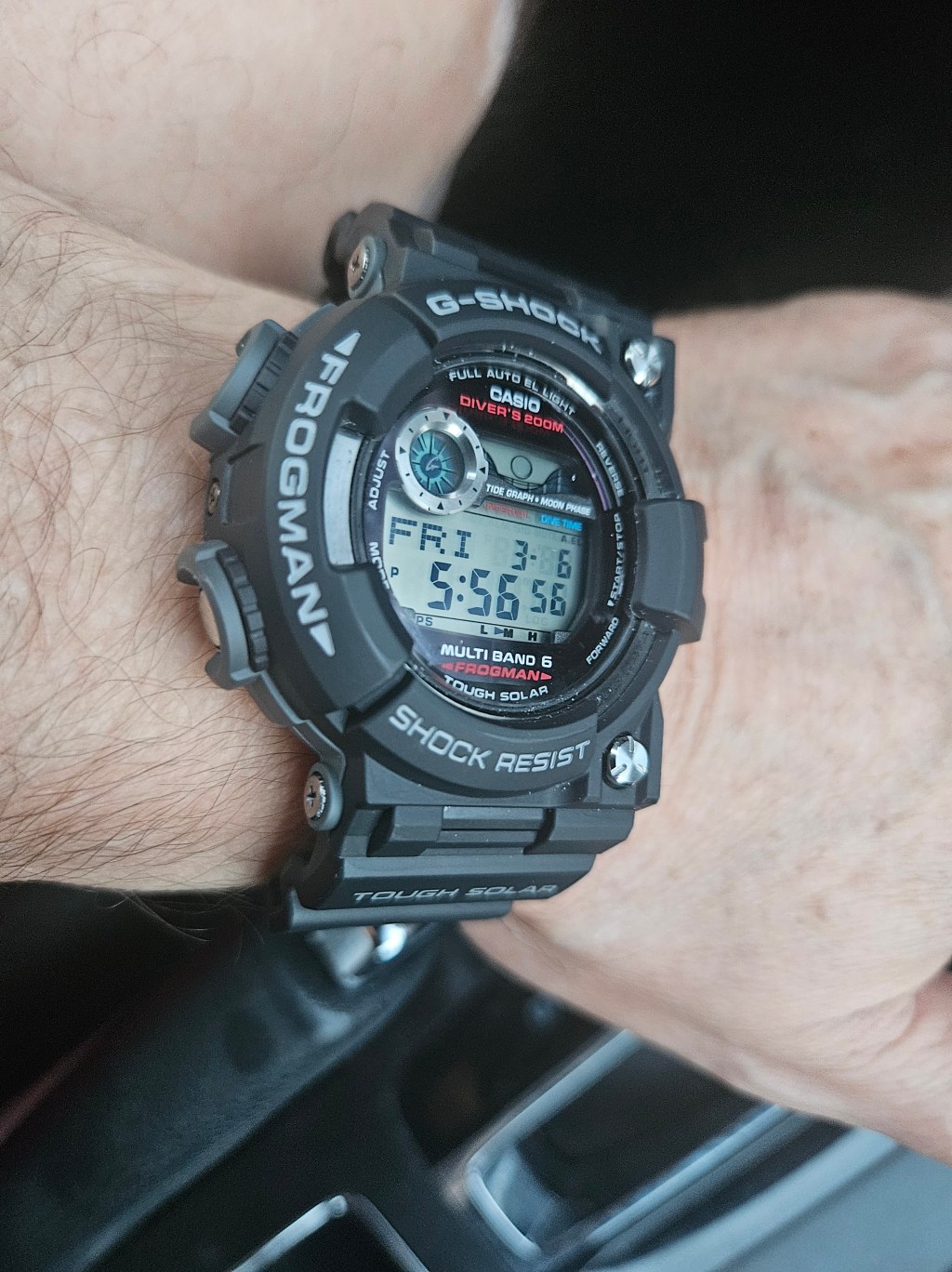
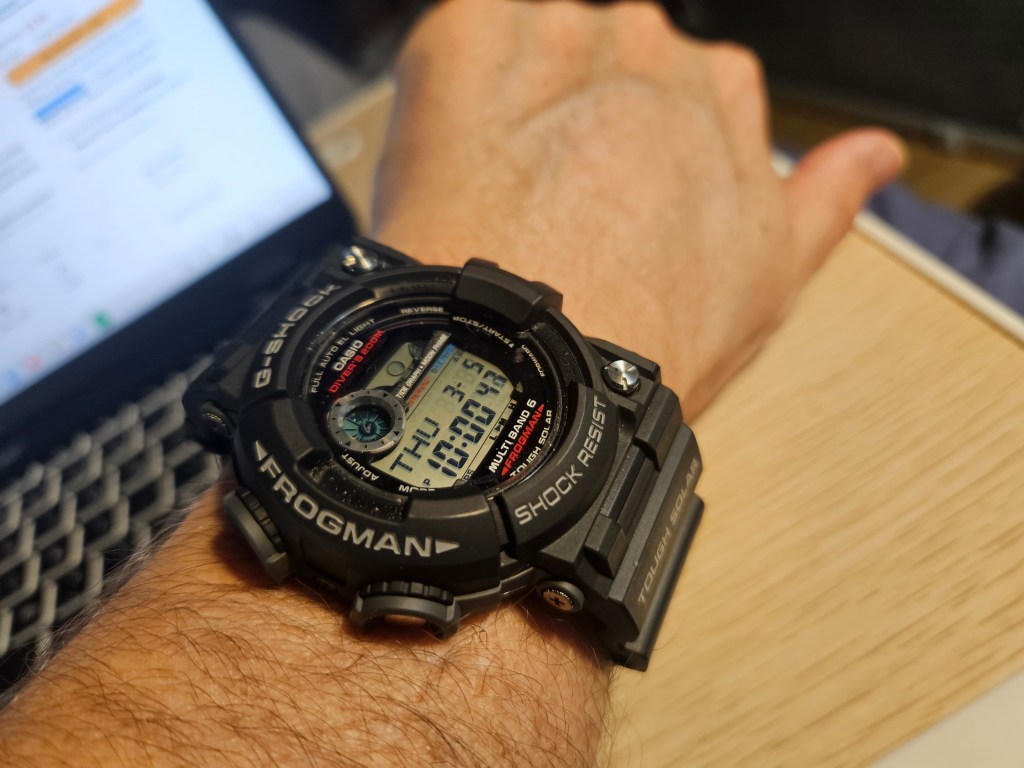
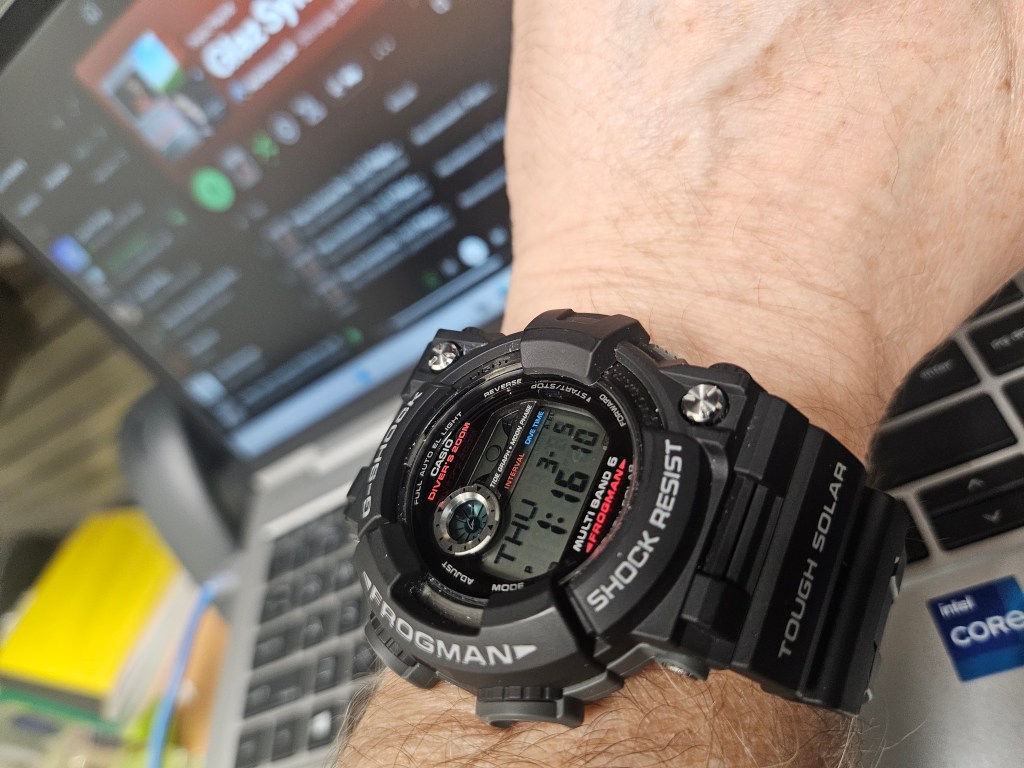
    I’m four months into shoulder rehab for a torn rotator cuff, and I’m sad to report that after laying off Motrin for 36 hours, the pain and inflammation came roaring back in my left shoulder. Not surprisingly, during these last four months of shoulder obsession, my watch obsession has taken a back seat. About a month ago, I did a brief experiment with my collection: I put bracelets on three of my Seiko divers. That lasted less than a week. All seven of my divers are back on straps.

    I’m not currently buying or selling watches, and I don’t have much left to say about my collection that I haven’t already said. But my all-consuming watch obsession has transferred to healing my shoulder, and that distance from the hobby has given me a few insights I didn’t have before. I realized I’m not just a watch addict. If I peel back the layers beneath the shiny timepieces, what I’m really addicted to is regret. For twenty years, regret drove my watch hobby. The thrill wasn’t owning a new diver; it was convincing myself I’d bought the wrong one. I always needed something better, so I’d sell the old one and replace it with a new model. Then one of two things would happen: I’d miss the old one or want to replace the new one with something even newer. Either way, regret was the engine. I was constantly second-guessing myself and spinning my wheels. My watch hobby became a soap opera with the same tired plot: What Could Have Been.

    Regardless of the purchase, I was overwhelmed with regret. I bought watches that were too big, too small, too dressy, too blinged-out—each one a personalized regret grenade.

    Letting the collection creep past seven was another fiasco. Anything over that number triggered what I call “Watch-Rotation Anxiety,” a condition where choosing a wristwatch feels like negotiating a hostage release.

    When the regret overwhelmed me, I tried to smother it with another purchase. A new watch fed my brain with fresh dopamine and adrenaline, but it was just a band-aid. Regret always returned.

    As I descended into this regret-feedback loop, I entered a phase I call Gollumification. Gollum didn’t turn into a demon overnight—his soul disintegrated over centuries. Like a Holy Grail diver watch, the Ring promised specialness, superiority, and shortcuts to power. He committed desperate acts to keep it. He murdered and then lied to himself about why. Clinging to the Ring as his last scrap of identity, he withered into a sad, lonely creature.

    That’s why Gollumification resonates today—it’s a slow-motion collapse. You don’t need the Ring to become Gollum. Any addiction will do. Isolate yourself, feed an obsession, and treat your desires as the only truth that matters. Eventually, the human being disappears and Gollum takes over.

    So has this distance from watches cured me of my inner Gollum? No, not really.

    I’m still addicted to the soap opera of regret.

    Regret addiction is very real for me. I’m going through it right now, but not with watches—this time it’s computers. I spent six months researching a desktop to replace my seven-year-old Windows laptop. Recently, I bounced back and forth between a small form factor Windows machine and a Mac Mini. I ended up buying two Mac Minis—one for me and one for my wife. She’s fine with hers because she’s used Mac OS for the last decade, but I’ve been on Windows.

    For the last three days, I’ve hated my life. The Mac Mini is a great computer, but I miss Windows. I miss the way Windows accepts all my peripherals—mechanical keyboards, printers—without any fuss. I don’t feel at home on Mac OS at all. I’m actually using Google Chrome on my Mac Mini. Why? Because I’m homesick for Windows. It’s like the American who goes to Paris and misses home so much he goes to McDonald’s just to feel normal again.

    That’s where I’m at. I’m overcome with regret.

    Here’s how bad it is: Yesterday, after my workout, I wanted to get on a computer for fifteen minutes before taking a nap, and I didn’t want to use the Mac Mini. I resented it. So instead I went into my room and used my old Windows laptop—just to get a taste of home.

    My engineering friend Pedro is coming over this weekend to help me connect my peripherals to the Mac Mini and teach me how to use the command keys on my mechanical keyboard so I can feel more comfortable. He assures me the regret is temporary, a necessary transition that will fade as I acclimate to the Mac Mini.

    We shall see. The thing is: I think I’m addicted to regret.

    All of us are. Go on watch-message boards and you’ll see watch obsessives crying for help—paralyzed by indecision, regret, self-doubt, and lost Holy Grails.

    I suspect the watch hobby is just a proxy for the human hunger for high stakes. If you’re full of regret, the drama makes you feel like you’re in a meaningful battle. You’re a man living too comfortably inside the cave with your WiFi, your Internet, your Netflix, and your Cocoa Puffs. You need adventure. You need a deep-sea diver on your wrist while navigating Google just to feel like you’re sailing the Seven Seas.

    Regret is the soap opera of suburban man. He’s trapped in his cave and wants to escape, but he also wants to avoid traffic—so he’s stuck. To escape his confinement, he creates soap operas in his mind. And in doing so, he discovers that regret is a powerful tool. It fuels his watch addiction, and when that addiction quiets down, the hunger for regret leaks into other decisions: Windows or Mac, Honda Accord or Toyota Camry, Thai or sushi.

    Regret makes inconsequential decisions feel consequential. When we confront this truth, we see how ridiculous we are.

    It’s time to turn the page and move on to the next chapter. I just hope the next chapter is one without a sore shoulder.

    That’s it. I can’t go on anymore. I’m overcome with regret.