Author: Jeffrey McMahon

  • The Yahtzee Test of a Meaningful Life

    The Yahtzee Test of a Meaningful Life

    People like to ask, “Does your life have meaning?” as if the answer can be retrieved from a drawer and presented with confidence. Most of us reach for an answer polished and forgettable: family, work, the usual suspects. But these answers have the texture of wallpaper—present everywhere, saying nothing.

    You can refine the answer and still miss the mark. You might say, “Playing the piano gives me more meaning than bingeing on confectionary pleasures online.” True enough. There is a difference between sitting at a piano and sitting in a stupor. One engages discipline, attention, and a relationship with beauty; the other numbs you into a soft, glazed anonymity. But even this comparison mistakes elevation for meaning. Music may lift you above the gutter, but altitude alone is not purpose.

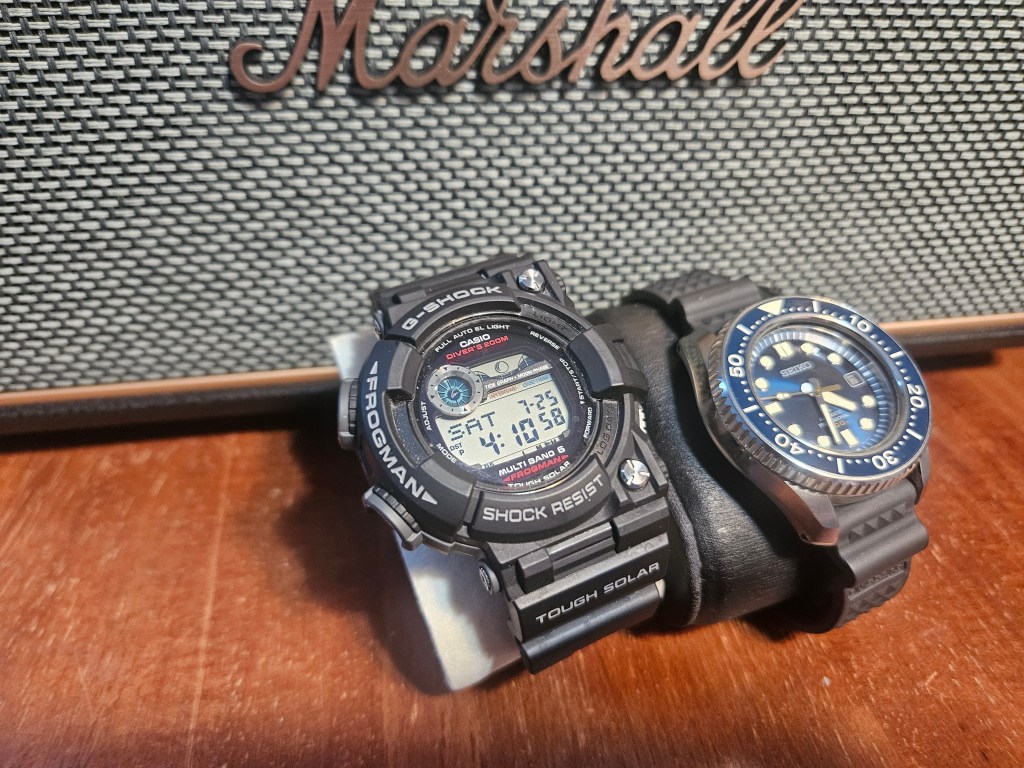
    The real question is not what you do, but who you are while doing it. Do you become the man who scrolls at expensive watch listings while his daughter waits with a box of Yahtzee and you dismiss her because you’re “too busy”? Or do you close the laptop and recognize, in that moment, that time with her is not an interruption but the point? Meaning reveals itself not in our hobbies but in our reflexes.

    This is where Viktor Frankl, the author of Man’s Search for Meaning, enters the conversation with uncomfortable authority. Writing out of the concentration camps, he did not theorize meaning from a leather chair. He embodied it under conditions designed to strip it away. His account carries weight because of his moral posture—his insistence that even in degradation, one could orient oneself toward service, toward others, toward something beyond the self. Meaning, for Frankl, was not a feeling or a hobby. It was an orientation.

    By contrast, selfishness corrodes everything it touches. A man may possess a thriving career and a loving family, but if he approaches both as instruments for his own gratification, he drains them of significance. Push that far enough and you arrive at nihilism—the quiet conviction that nothing matters, not because nothing exists, but because nothing is allowed to matter. Nihilism is not a philosophy so much as a habit of disregard.

    Stories, whether drawn from sacred texts or fairy tales, understand this intuitively. They pit the nihilistic malcontent against the purpose-driven hero. But they do not deliver meaning as a reward, neatly wrapped and handed over. Meaning is not an external prize; it is the byproduct of character—of attention, sacrifice, and the refusal to treat other people as disposable.

    The traditions diverge on how that character is formed. In Judaism, one cultivates it through action, with God’s help, through law and discipline. In Christianity, the diagnosis is harsher: we are too compromised by original sin to generate virtue on our own and must throw ourselves on divine mercy, hoping for transformation. Which account is closer to the truth remains an open question. What is not in doubt is this: meaning is not something you acquire. It is something you become.

  • Ornamental Displacement Syndrome

    Ornamental Displacement Syndrome

    My wife came home exhausted from a field trip—teachers, middle schoolers, the whole traveling circus—and she asked me to stash her suitcase in the garage. I slid it into the cabinet beside its scuffed, veteran companions and felt the familiar itch: wouldn’t it be nice to replace this tired lineup with a set of glossy, overqualified luggage, the kind that looks like it has opinions about first class? I love the look of expensive luggage—the clean lines, the quiet arrogance. The only problem is that I hate traveling. I admire the gear for a life I avoid like a delayed flight.

    The same contradiction sits on my wrist. I’m drawn to beautiful watches—polished steel, disciplined dials, the small theater of timekeeping—but I live like a polite hermit, rarely entering the arenas where such wrist presence might register. I want the props without the stage, the costume without the performance.

    It dawned on me, as I closed the cabinet on my battle-worn luggage, that I suffer from Ornamental Displacement Syndrome: a condition in which one’s appetite for beauty and refinement is outsourced to objects that require a public stage, even as one retreats from that stage, leaving the objects to perform in private, a one-man show with no audience and impeccable production values.

  • The Sacred Thud and the Beachside Alibi

    The Sacred Thud and the Beachside Alibi

    Last night I dreamed I visited a man who lived in an apartment not with furniture, but with his fleet of Lexus sedans, each one folded into suitcase-sized cardboard boxes like obscene luxury origami. When he carried them outside, they bloomed into full-sized cars—sleek, silent, and faintly smug. One in particular arrested me. It was labeled “brown,” a word that should have condemned it to mediocrity, but this was no pedestrian brown. It shimmered with a platinum undertone, a molten, aristocratic hue that made every other color feel like a clerical error.

    But the color was only the prelude. The real seduction was auditory. The man insisted I open and close the door. I obliged. The door shut with a dense, ceremonial thud—the kind of sound that suggests not merely engineering, but finality. It was the closing argument of a life well lived. I felt it in my chest, in my bones. At that moment, I understood with humiliating clarity that I would never feel complete until I owned this exact car in this exact shade and could summon that sacred thud on command. This, apparently, was my apotheosis.

    Once the demonstration concluded, he ushered me into his living room, where a large television glowed like an altar. It was tuned to CNN. On the screen: live coverage of his wife undergoing surgery for a rare and aggressive cancer. The procedure was experimental, a medical moonshot that, if successful, would not only save her life but advance the entire field. Her body lay open to the future; her survival would be a headline.

    The man watched with a peculiar intensity, not the anxious devotion of a husband, but the focused anticipation of someone waiting for a green light. He explained, almost casually, that once she was cured, he intended to meet his mistress at the beach. A public affair, he admitted, would be considered “unethical,” but surely—he reasoned—if his wife survived, the moral calculus would soften. One good outcome would offset the other. Balance restored.

    I stood there, staring at the screen. The broadcast cut between the operating table and a glowing chart tracking her biomarkers in real time—green lines twitching, rising, negotiating with fate. He leaned forward, eager, almost buoyant, rooting for her survival so he could proceed, unburdened, to his afternoon of betrayal.

    The room was quiet except for the hum of the television and, somewhere in the distance of my mind, the echo of that perfect car door closing—clean, decisive, final.

  • The Sovereign Appetite: How Wealth Devours the Soul

    The Sovereign Appetite: How Wealth Devours the Soul

    In “What I Learned About Billionaires at Jeff Bezos’s Private Retreat,” filmmaker Noah Hawley dissects the moral corrosion that accompanies extreme wealth—a corrosion fueled not by scarcity but by excess. The old adage comes to mind: the more you feed the demon, the hungrier it gets. Only now the demon eats without consequence, outside the jurisdiction of any moral law. The rules that bind ordinary people—limits, restraint, accountability—simply dissolve. In their place emerges what can only be called the Sovereign Appetite Doctrine: an unspoken creed in which desire, once backed by sufficient capital, becomes its own justification, rendering restraint unnecessary and morality negotiable.

    Hawley’s invitation to a 2018 Bezos retreat in Santa Barbara offered a front-row seat to this phenomenon. What he encountered was not insight but spectacle: a carousel of TED Talk-style presentations untethered from any coherent theme, a parade of ideas without consequence or urgency. These talks did not enlighten so much as signal—a kind of intellectual flex, as obligatory to the setting as Wagyu skewers and caviar. Surrounded by this polished emptiness, Hawley found himself asking the only honest question available: “Why am I here?”

    The retreat itself bordered on the absurd. His wife slipped on wet grass and broke her wrist; he and his children contracted hand, foot, and mouth disease, their faces erupting in red blisters. It was less a summit of visionaries than a fever dream of excess, where discomfort and decadence coexisted without irony.

    Bezos, at the time, still seemed to believe in performance. Clad in a tight T-shirt, laughing a little too hard, projecting a curated affability, he appeared invested in being seen as morally intact. There was effort in the act—a sense that the audience still mattered. He had not yet fully surrendered to the Sovereign Appetite Doctrine.

    But, as Hawley notes, that restraint has since evaporated. Today, figures like Bezos, Mark Zuckerberg, and Elon Musk no longer perform for approval. They have crossed into something colder and more insulated. In Hawley’s words, “They float in a sensory-deprivation tank the size of the planet, in which their actions are only ever judged by themselves.”

    Here lies the true seduction of wealth. It is not the acquisition of luxury goods but the eerie power of living in a world where everything is “effectively free.” Loss—the very mechanism that gives life weight—disappears. When nothing can be meaningfully lost, nothing can be meaningfully gained. Stakes vanish. Experience flattens. Life becomes curiously hollow, a theater without tension. This is the Infinite Buffer Effect: wealth so vast it absorbs every setback, neutralizing consequence and draining life of narrative shape.

    And yet, this emotional flattening coincides with a grotesque expansion of power. The wealthy, insulated from consequence, begin to experience a counterfeit omnipotence. They act without friction and, in doing so, lose the ability to perceive others as real. As Hawley writes, “If everything is free and nothing matters, then the world and other people exist only to be acted upon, if they are acknowledged at all.”

    At this point, they no longer inhabit the same moral universe as the rest of us. Cause and effect no longer apply in any meaningful way. They have become full converts to the Sovereign Appetite Doctrine.

    The word that clarifies this condition is solipsism—not as an abstract philosophy but as a lived reality. The world contracts until only the self remains vivid. Everything else fades into backdrop. Hawley shows how extreme wealth accelerates this contraction. When “everything is free and nothing matters,” the presence of other people—their inner lives, their suffering—loses its immediacy. Power without resistance breeds a dangerous illusion: that one’s actions carry no moral weight. Others become instruments, props, scenery. Empathy atrophies. Reality itself begins to feel negotiable. The self expands to fill the entire field of meaning, mistaking insulation for sovereignty.

    Hawley closes by contrasting today’s ultra-wealthy with the robber barons of the Gilded Age. However ruthless, those earlier figures “engaged with the world around them.” Today’s elite, by contrast, drift above it, severed from consequence, history, and meaning. They suffer from what Hawley calls “a disassociation from the reality of cause and effect, from meaning, and history.”

    This is not freedom but its grotesque parody—a form of plutocratic dissociation in which the individual floats outside shared reality, unbound not only from constraint but from significance itself.

    It is no accident that Hawley, the creator behind Fargo, can render this psychological landscape with such precision. He has long been fascinated by characters who drift beyond moral gravity. Here, he turns that same lens on the most powerful figures in our world—and what he reveals is not triumph, but a slow and chilling disappearance of the human.

  • The Quiet Art of Not Wasting Your Life

    The Quiet Art of Not Wasting Your Life

    If we care about the state of our souls, we have to ask a difficult question: How do we treat time as a sacred, limited gift—something to be used with urgency, yet protected by stillness? In other words, how do we move with purpose without surrendering to the chaos of perpetual hurry?

    My problem—one I can’t dodge—is how easily I waste time while convincing myself I’m doing something worthwhile. I wake up intending to write, but drift into “research”: consumer products I don’t need, fitness principles I already know, or whatever flickers across my screen and triggers FOMO. The drain is subtle but relentless. A morning that should belong to reading and writing dissolves into trivial pursuits. I justify it with a familiar lie: I am a nobody with nothing to say. What difference does it make if I squander a few hours? Why not entertain myself instead?

    These rationalizations amount to treating my life with reckless disregard. They expose something uglier beneath the surface—a low sense of self-worth and a quiet flirtation with nihilism, the belief that nothing really matters.

    Of course, talk is cheap. I can articulate all of this with precision and still change nothing. I tell myself my habits should align with my beliefs, echoing Arthur Brooks from The Meaning of Your Life: Finding Purpose in an Age of Emptiness. But knowledge without discipline is decoration. When I waste time online, it doesn’t just distract me—it diminishes me. It acts like kryptonite. I become a lesser version of myself.

    I know the alternative. When I guard my attention, I compose longer, more ambitious piano pieces. When I don’t, I squeeze creativity into leftover scraps of time and produce reheated versions of my past work—safe, derivative, forgettable.

    It is astonishing how easily we waste time and then defend the waste, even when the defense collapses under minimal scrutiny. I remember falling into this pattern around the year 2000, when the internet first began its quiet takeover. Looking back, I think of Jim Harrison’s line: “It’s so easy to piss away your life on nonsense.” The accuracy is almost cruel.

    This realization struck me again this morning. I had “nothing” to write about, yet decided to open John Mark Comer’s The Ruthless Elimination of Hurry. Within two pages, the emptiness I claimed dissolved into a torrent of thoughts—about chaos, distraction, sacred versus profane time, and the psychology of hurry itself.

    Comer has reason to feel overwhelmed. As a pastor delivering six teachings every Sunday to accommodate a growing congregation, burnout is almost inevitable. My situation is the inverse. I am a college writing instructor with an abundance of free time, and with retirement a year away, that abundance is about to expand into something even larger—and potentially more dangerous.

    Comer imagines his future: a successful pastor, bestselling author, and sought-after speaker. By every external metric, he wins. But internally, he sees something else—hollowness, irritability, exhaustion, and a life that feels “emotionally unhealthy and spiritually shallow.” He barely recognizes himself.

    So he steps away. After a decade of acceleration, he takes a sabbatical. He sees a therapist. Stripped of his role as a megachurch pastor—the centerpiece of his identity—he feels disoriented, describing himself as “a drug addict coming off meth.” He has time now, but no clarity about who he is without the machinery of constant activity.

    He frames his book simply: imagine meeting him for coffee in Portland, talking about how not to drown in the “hypermodern” world. His approach is explicitly Christian, rooted in the life and teachings of Jesus, and aimed at answering a deceptively simple question: what does it mean to rest? And more importantly, how does one rest in a culture that equates value with speed?

    I approach this with skepticism. I’ve been a Christian-obsessed agnostic since I was seventeen, and I have little patience for spiritual platitudes. Still, Comer has earned his authority through suffering, not abstraction. He anticipates my resistance and addresses it directly: “If you want a quick fix or a three-step formula in an easy acronym, this book isn’t for you either. There’s no silver bullet for life. No life hack for the soul. Life is extraordinarily complex. Change is even more so. Anybody who says differently is selling you something.”

    That alone earns my attention.

    So I’ll take the invitation. I’ll sit down for coffee and listen to what he has to say in his so-called “anti-hurry manifesto.”

  • Essay Prompt: The Seduction of a Frictionless Life

    Essay Prompt: The Seduction of a Frictionless Life

    In this assignment, you will examine how a life engineered for maximum convenience and instant gratification can lead not to fulfillment, but to misery, emotional flattening, and a diminished sense of humanity.

    To develop your analysis, you will work with two texts:

    • “Our Longing for Inconvenience” by Hanif Abdurraqib
    • Twilight Zone episode “A Nice Place to Visit”

    Both works explore the dangerous allure of a frictionless existence—one in which effort, struggle, and delay are removed in favor of ease and immediate satisfaction.


    Your Task

    Write a 1,000-word argumentative essay that develops a clear, original thesis responding to the following central question:

    How do these two works show that a frictionless life seduces us into surrendering our humanity, and why does this surrender ultimately lead to dissatisfaction or misery?


    Required Elements

    Your essay must include:

    1. A Strong Thesis

    • Make a specific, arguable claim about frictionless living
    • Avoid summary; take a position
    • Your thesis should address:
      • seduction (why we want convenience)
      • consequence (what it costs us)

    2. Comparative Analysis

    • Analyze both sources in depth
    • Show how they converge and/or diverge in their critique
    • Use specific examples:
      • Abdurraqib’s concept of convenience and authenticity
      • The protagonist’s experience in The Twilight Zone episode

    3. Conceptual Focus

    Your essay must engage at least two of the following ideas:

    • Dehumanization
    • Emotional flattening
    • Loss of meaning or purpose
    • Passive consumption vs. active engagement
    • The illusion of happiness

    4. Evidence and Commentary

    • Integrate specific references from both works
    • Explain how each example supports your argument
    • Avoid plot summary—focus on interpretation

    5. Counterargument and Rebuttal

    • Acknowledge a reasonable opposing view:
      (e.g., convenience improves quality of life)
    • Refute it with clear reasoning and evidence

    Writing Expectations

    • Length: 1,000 words
    • Tone: Analytical, precise, and assertive
    • Avoid clichés and vague generalizations
    • Prioritize clarity, specificity, and strong prose

  • Frank Sinatra Sings the Epistles

    Frank Sinatra Sings the Epistles

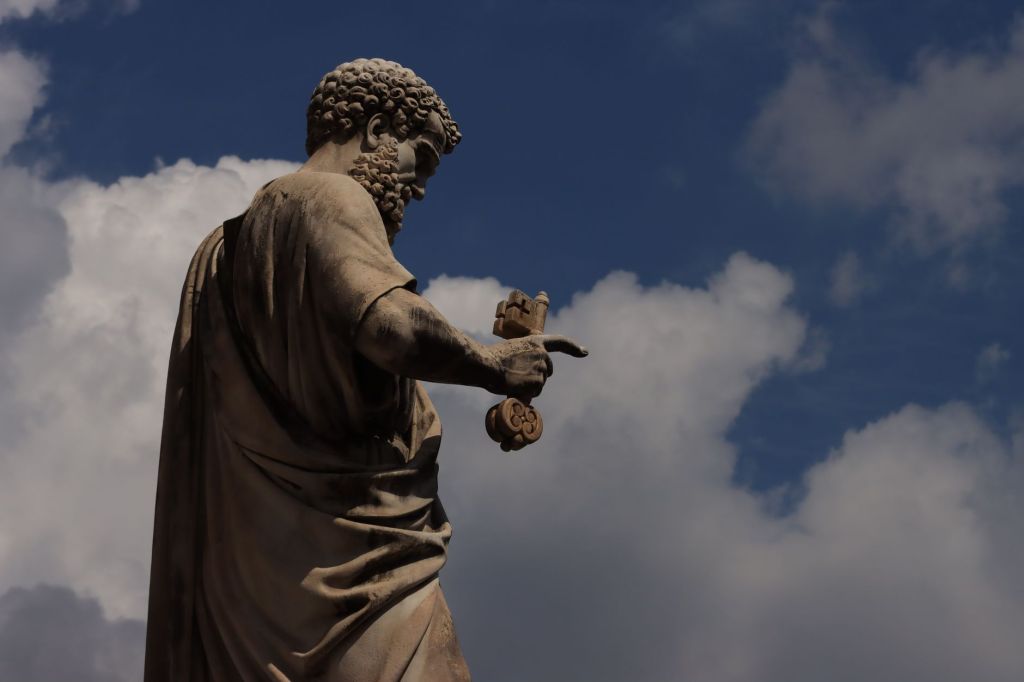
    Adam Gopnik, in “St. Paul Remade Human History. How Did He Do It?”, answers a parlor question—who matters most?—with a man who never met Jesus in the flesh and still managed to run the table. Paul, Gopnik says, is “the Most Unforgettable Character It Ever Met,” which is one way of saying he took a minor Jewish sect and scaled it into a two-millennia franchise. Not bad for a writer whose archive could fit in a carry-on.

    The record is thin and, at points, suspicious. Of thirteen letters, only seven pass the authenticity test; the rest look like fan fiction with good handwriting. The Acts of the Apostles reads less like sober history than like a travelogue pitched to Roman investors—Romans good, Jews troublesome, Christians reassuringly adjacent to Rome. It also airbrushes the argument between Paul and James, Jesus’s brother, into a polite agreement, because nothing ruins a new religion like founders who won’t share a table.

    Then comes the Roman catastrophe—the Jewish War, the Temple reduced to memory—and the scramble among sects to survive. Paul does more than survive; he pivots. He takes a local messianic movement and repackages it for export: portable, universal, and politically legible. The man who pulls off this trick also carries the best origin story in religious literature—a blinding encounter on the road to Damascus that converts a persecutor into a salesman with divine backing. If you were storyboarding a faith, you’d keep that scene.

    The letters themselves are a mood swing with footnotes. Paul boasts like a prizefighter and then calls himself “the least of the apostles.” He commands, cajoles, contradicts, confesses. He is competitive enough to crown himself and humble enough to kneel in the same paragraph. He admits a “thorn in the flesh”—a chronic deficit he can’t shake—and then turns it into a credential. He advises missionary pragmatism with the line that could double as a consulting slogan: be all things to all people. The man can pivot.

    Gopnik’s most useful correction is cinematic. Don’t picture Paul as a monk scratching doctrine by candlelight. Picture him as an action lead—shipwrecks, jailbreaks, debates that feel like bar fights in Greek. He travels, argues, survives. He makes the faith mobile—“almost single-handedly,” Gopnik writes—while the original disciples eye him like a franchisee who’s rewriting the menu. It’s the kind of role that once tempted Frank Capra to imagine a film starring Frank Sinatra—Old Blue Eyes as the apostle who sang a religion into the world.

    What Paul omits is as telling as what he proclaims. He is strangely quiet about Jesus’s earthly biography—the family, the miracles, the Nativity tableau that later Christianity will frame and hang in every living room. Gopnik suggests the omission is a feature, not a bug. Keep the myth foregrounded and the particulars backstage, and your message travels better. If you doubt it, look at how newer movements grow: the story glows brighter when the details stay conveniently out of focus.

    Then there’s the thornier matter of Paul’s rhetoric about Jews. After the Holocaust, readers have worked hard to domesticate him into a universalist who welcomes everyone to the table. Gopnik reminds us that some passages resist that makeover, cursing the old covenant with language that doesn’t sit politely at interfaith dinners. The effort to sanitize Paul tells you as much about us as it does about him.

    Scholars, understandably, keep trying on different Pauls. There’s the Roman Paul, smoothing edges for empire; the Hellenistic Paul, speaking in a philosophical key; the Jewish Paul, wrestling with a tradition he both extends and overturns. You can find these costumes neatly hung in Paul Within Paganism, edited by Chantziantoniou, Frederiksen, and Young. Try them all on; none quite fits.

    One thread, however, doesn’t fray: Paul’s apocalyptic urgency. The end is near—soon enough to matter, soon enough to act. Whether he believed it literally or deployed it rhetorically is the kind of question historians love and time refuses to answer. Urgency, after all, is useful even when it’s wrong.

    Gopnik’s final warning is against turning Paul into a greeting card. Yes, he writes the line about love that weddings can’t resist. He also draws hard boundaries with a zeal that would make a modern brand manager blush. Christianity spreads not just on the strength of its compassion but on the clarity of its lines. Inclusion, it turns out, travels well when it knows exactly what it excludes.

    Paul refuses to settle into a single portrait. He is the contradiction that works—the salesman who believes, the believer who markets, the penitent who boasts. If Capra had made that Sinatra film, it might have been the truest version: a man with a voice big enough to carry a room, and a restlessness big enough to carry a religion. Love, sung loud enough, can sound like doctrine. And doctrine, delivered with enough conviction, can change the world.

  • Frictionmaxxing in the Age of Ease

    Frictionmaxxing in the Age of Ease

    In “Our Longing for Inconvenience,” Hanif Abdurraqib diagnoses a modern sacrilege: we have streamlined the sacred. Love, once a slow collision of timing, nerve, and chance, has been repackaged as a swipe—faces flicked past like clearance items in a digital aisle. Courtship now resembles an online shopping spree, complete with filters, wish lists, and the quiet suspicion that you’re not choosing so much as being A/B tested. It raises an unflattering question: are we still falling in love, or have we become compliant participants in a well-designed experiment? Convenience has done what convenience always does—it removed the friction and took some of the humanity with it. What remains is efficient, scalable, and faintly hollow.

    The backlash has a name—call it frictionmaxxing. People, starved for something earned, are reintroducing resistance on purpose: analog rituals, delayed gratification, tasks that refuse to collapse into a tap. There’s nostalgia for the Before Convenience Times, when the self felt hammered into shape rather than 3D-printed from preference settings. The mythology is simple: meaning requires effort; effort requires inconvenience.

    I’m not moved by the usual props—turntables, VCRs, the museum of obsolete plastic. That feels like cosplay. But I do recognize the pull in two places of my own life that refuse to fake it: my acoustic Yamaha upright piano that answers only to touch and time, and my kettlebells that don’t care about my feelings or my notifications. Both demand presence. Both punish distraction. They’re small, stubborn antidotes to the screen’s narcotic ease.

    Abdurraqib’s warning is less about gadgets than about posture. Convenience doesn’t just lubricate life; it reclines it. We become passive, distractible, pleasantly numb—a polite version of Friedrich Nietzsche’s Last Man, optimized for comfort and allergic to striving. The tragedy isn’t that we have tools; it’s that the tools quietly train us to avoid anything that resists us.

    Here’s the confession that ruins the tidy narrative: I don’t need to blame screens for my preference for ease. I came that way. Given the choice between puttanesca and a bowl of oatmeal with protein powder, I will choose the path that requires fewer verbs. I love puttanesca in theory—the garlic, the brine, the argument it makes on the tongue. I do not love it enough to perform the liturgy required to summon it. Convenience didn’t corrupt me; it recognized me.

    The same instinct flared when at forty-eight I became a father–twins, no less. The prospect of nights broken into fragments, of diapers and pacing and the long choreography of care, filled me with a very modern dread: the dread of interruption. I complained. My cousin Garrett, who has the inconvenient habit of being right, told me that the friction is the bond—that the lost sleep and the repetition are not bugs but features, the forge where attachment is made. I believed him. Belief, however, did not improve my mood at three in the morning.

    None of this is going away. Convenience will continue to refine itself into invisibility, and our hunger for something earned will continue to nag at us like a conscience we can’t quite uninstall. The only workable response is not purity but partition: carve out blocks of time that refuse assistance, that insist on effort, that return you to the body and the task. Live, briefly, off the grid of your own habits.

    The irony, of course, is waiting for us with a smile. Give it six months and there will be a frictionmaxxing app to schedule your inconvenience, optimize your resistance, and remind you to be authentic at 4:30 p.m. You’ll tap “confirm,” and somewhere a server will congratulate you for choosing friction the convenient way.

  • My Life, Annotated; My Dinner, Missing

    My Life, Annotated; My Dinner, Missing

    Last night I dreamed I was back in a college dorm, the kind that confuses scarcity with philosophy. The place ran on grievance and empty shelves. The communal kitchen looked like it had been looted by graduate students—half a bottle of soy sauce, a fossilized lime, and the lingering odor of arguments. The factions were loud, doctrinaire, and permanently aggrieved; the refrigerator was quiet and permanently bare. I kept my mouth shut. Hunger is easier to manage than other people’s ideologies.

    A short walk away—dream geography is generous like that—sat my mother’s second husband, Baron, who has been dead since 2018 and therefore was very much alive. He wore a white football jersey and the expression of a man auditing eternity. He’d set up on a patio with a notebook and a stack of my YouTube videos, which he was mining for a college project. The topic: my life, the false stories I’ve told about it, the false stories about those false stories, and the small industry I’ve built turning all of it into myth. He watched, paused, rewound, took notes with clerical devotion. It was flattering in the way a tax audit is flattering.

    Part of me admired the rigor. Another part of me bristled at the freeloading. There he was, piggybacking on my past like it was a group project I didn’t sign up for. Still, the man was thorough. He unearthed old footage, journals, drawings—artifacts I’d misfiled in the archive of things I no longer had the energy to remember. If diligence were destiny, he was on his way to a summa.

    I wished him luck and went back to the kitchen, where luck goes to die. As I left, Baron called out that he’d put a beige bowl of hard-boiled eggs on the top shelf of the fridge. Help yourself. The promise of protein felt like a minor miracle. I elbowed through the crowd—everyone arguing, no one eating—opened the door, and there it was: the beige bowl, perfectly placed, impeccably empty. The eggs had been converted into theory.

    So I stood there, starving, while somewhere behind me my life was being reduced to footnotes. In the dream, as in the waking world, the analysis was abundant. The food was not.

  • The Last Man in Orthopedic Loafers and Elastic-Waist Pants

    The Last Man in Orthopedic Loafers and Elastic-Waist Pants

    Aging doesn’t ask for your permission; it revises you anyway. Somewhere in your fifties and sixties, the body starts filing small grievances—slower recovery, dimmer recall, a half-step lost where you used to be crisp. The gap between who you were at your peak and who you are now widens just enough to notice. From that gap, a familiar assumption creeps in: that the later years should be quieter, safer, smaller—that the future is no longer a frontier but a managed environment. Call it Horizon Collapse: possibility shrinks to what’s nearby and controllable, and ambition is gently escorted out as an unruly guest.

    Prudence has its place. You don’t need to flirt with injury to prove you’re alive. But push prudence a notch too far and you build a Comfort Cage—a life engineered for ease that quietly imprisons curiosity, risk, and meaning. The edges are padded, the lighting is flattering, and nothing hurts. That’s the problem. When nothing hurts, nothing demands anything of you, and the day becomes a sequence of agreeable non-events. The soul, deprived of friction, goes slack.

    What’s more troubling is how this posture has escaped the retirement brochure and gone mainstream. Convenience has metastasized into a philosophy. With enough apps, prompts, and gentle automation, you can outsource not just your errands but your thinking. The result is Existential Downsizing: a voluntary reduction of one’s life to what is safe, efficient, and easily optimized. Big aims look wasteful; difficulty looks optional; meaning becomes a luxury item you can’t quite justify. We’ve confused the removal of obstacles with the arrival of purpose.

    This is the cultural air that breeds what Friedrich Nietzsche called the Last Man in Thus Spoke Zarathustra—a figure who has traded ambition for comfort and calls the bargain progress. He isn’t villainous; he’s deflating. He prefers safety to greatness, ease to excellence, consensus to conviction. Having minimized risk, he also minimizes transformation. He is content, and his contentment is the problem: a steady, blinking satisfaction in a life that no longer reaches beyond itself.

    Age can tempt you into this posture—“I’ve done enough; let me coast”—but so can technology. You don’t need bad knees to stop striving; you just need a system that makes striving feel unnecessary. In that sense, the Last Man is not a demographic. He’s a setting.

    I can’t pretend this isn’t a bleak picture. The best parts of my life have come from the opposite impulse: sitting at a piano until something stubborn yields; writing long, obsessive pieces that refuse to resolve themselves quickly; watching comedians build an hour of precision out of years of invisible labor. None of that is compatible with a life optimized for convenience. Achievement is allergic to ease. It requires time, friction, and a willingness to look foolish on the way to something that might matter.

    At sixty-four, with retirement approaching, the question isn’t whether decline exists—it does—but whether it gets to dictate the terms. The temptation is to let a slower body and a noisier mind argue for a smaller life. The counterargument is simple and hard: keep choosing projects that resist you. Keep placing demands on yourself that comfort would veto. Otherwise, you’ll end up perfectly safe, perfectly managed, and perfectly diminished—living proof that when you optimize for ease, you don’t just remove obstacles. You remove the reasons to move at all.