Author: Jeffrey McMahon

  • The Watch Ninja and The Great Deepening

    The Watch Ninja and The Great Deepening

    If you stay in the watch hobby long enough, you must accept a hard truth: your identity will betray you.

    One morning you wake up and the mechanical divers—the watches that once defined your taste, your discipline, your personality—feel distant. Cold. Decorative. In their place sits a small, efficient triumvirate of atomic, solar G-Shocks that refuse to leave your wrist.

    You feel guilty. Disloyal. Untethered. Who are you if the romance of gears and springs no longer moves you? What kind of man replaces craftsmanship with digital certainty?

    This is not a question for forums.

    This requires the Watch Ninja.

    The fee is $1,000. Nonrefundable. Trusted members of the community blindfold you and load you into an unmarked van, because enlightenment, like limited editions, requires exclusivity.

    When the blindfold comes off, you find yourself in the stone-walled basement of a respectable hotel. Above you, restaurant workers clatter through the dinner rush. Below, time slows.

    The Watch Ninja sits on a high stool.

    He wears a white chef’s jacket, a wide-brimmed cavalry Stetson pulled low, dark aviators, and a G-Shock Frogman. The hat’s high crown gives him the posture of authority; the brim throws his eyes into shadow. He does not occupy the room. He commands it.

    Then the realization lands.

    He looks exactly like Robert Duvall as Lt. Col. Kilgore in Apocalypse Now—a man who would order helicopters for the sound alone.

    You confess your crisis. The abandonment of mechanical divers. The seduction of atomic precision. The creeping sense that you have betrayed your former self.

    He listens, stroking his chin like a man evaluating air support.

    Then he speaks.

    “There is no such thing as a single conversion,” he says. “There are only conversions within conversions. Your life as a watch obsessive is not defined by loving watches. It is defined by the subconversions that follow.”

    He leans forward.

    “A man builds a collection of mechanical divers. He exhausts their enchantment. Then he pivots—to G-Shocks, to atomic time, to solar autonomy. This is not betrayal. This is the Great Deepening.”

    He lets the words settle.

    “You did not lose your passion. You accelerated it. When one category is worn out, the serious enthusiast expands. You are not unstable. You are evolving.”

    He pauses.

    “Do not mourn the divers. Become the Expanding Man.”

    You leave the basement changed. Lighter. Forgiven. Your G-Shocks no longer feel like a betrayal. They feel like destiny.

    The Watch Ninja has taught you the central doctrine of serious collecting: The Great Deepening.

    This is the phase when the easy pleasure of broad collecting gives way to excavation. “I like dive watches” becomes metallurgy analysis, bezel resistance debates, production-year archaeology, and solemn arguments about whether the 2018 lume possessed greater emotional warmth than the 2020 revision.

    And somewhere in that tunnel, many collectors encounter an unexpected chamber: G-Shocks.

    What once looked crude now reveals its own austere beauty—atomic accuracy, solar independence, tool-first design, the moral clarity of a watch that does its job without pretending to be art.

    To outsiders, the Great Deepening looks like fixation.

    To the enthusiast, it feels like refinement.

    In truth, it is the hobby’s survival instinct.

    When breadth stops thrilling, depth takes over. When one identity fades, another emerges. And if the process works as intended, there is always one more layer to study, one more doctrine to adopt, and one more watch that finally—this time—feels exactly right.
  • The Theology of the Watch Addict

    The Theology of the Watch Addict

    You cannot understand watch obsession without understanding religious conversion. At some point, the hobby stops being about objects and starts behaving like faith.

    No one would seriously claim a timepiece is divine. And yet the devoted enthusiast approaches the hobby with the discipline, ritual, and emotional seriousness of a Trappist monk. This is not shopping. This is vocation.

    Every serious collector eventually enters the desert.

    There comes a period of withdrawal—no forums, no influencers, no hype lists—just the quiet work of figuring out what you actually like. The goal is purity. To borrow from René Girard, mimetic desire is heresy. Buying what the tribe loves is imitation. Discovering your own taste is revelation.

    But the desert is temporary. No believer practices alone forever.

    Soon enough, the enthusiast returns to the congregation: YouTube channels, forums, group chats, wrist-shot threads. What gets called “research” becomes a daily ritual. Hours pass in a fever swamp of comparisons, debates, rumors, and release speculation.

    The information is secondary.

    The real function is Research Communion—the comfort of shared obsession, the quiet reassurance that you belong to a fellowship that speaks your language and validates your concerns about case thickness and lume performance.

    Like any conversion, the watch enthusiast lives in two eras: Before Watches and After Watches.

    Before was vague. Time passed unnoticed. Evenings disappeared into the fog.

    After is different. The day has structure. The wrist has meaning. Life feels sharper, more intentional, more alive—because something small and precise is always there, quietly marking your existence.

    But faith has its trials.

    There are dark nights: compulsive buying, financial regret, obsessive comparison, the creeping suspicion that you’ve become what outsiders call a Watch Idiot Savant. Friends don’t understand. Some quietly decide you’ve become strange.

    If the devotion is real, this doesn’t weaken the believer. It deepens the bond with the tribe.

    An us-versus-them mentality emerges. Non-watch people become a separate species—citizens of a dull world where time is checked on phones and meaning is measured in convenience. Meanwhile, a private conviction grows stronger: the world doesn’t understand your discernment, your discipline, your eye.

    But beneath all the brands, movements, and materials lies the true object of devotion.

    The enthusiast is not chasing watches.

    He is chasing order.

    He is chasing the feeling that somewhere, something is precise, aligned, and under control. He is searching for the pure and absolute in the form of Sacred Time.

    This condition has a name: Sacred Time Syndrome.

    It is the quiet belief that a watch is not merely a tool but a wearable altar where chaos is subdued and existence ticks in disciplined submission. The wearer does not simply check the hour; he consults it. Atomic synchronization feels like divine correction. A perfectly regulated movement suggests moral virtue. Drift becomes an existential failure.

    Underneath the talk of lume, tolerances, and finishing lies the real motive: the hope that if time on the wrist is exact, then life itself might also be brought into alignment.

    Because the deeper fear is this:

    Time is vast.
    Time is indifferent.
    Time is not impressed by your collection.

    So the enthusiast keeps buying, adjusting, comparing—not for status, not for craftsmanship, not even for pleasure.

    He is purchasing small, precise moments of reassurance that the universe, at least on his wrist, still answers to order.

  • The Collection You Don’t Wear but Can’t Survive Without

    The Collection You Don’t Wear but Can’t Survive Without

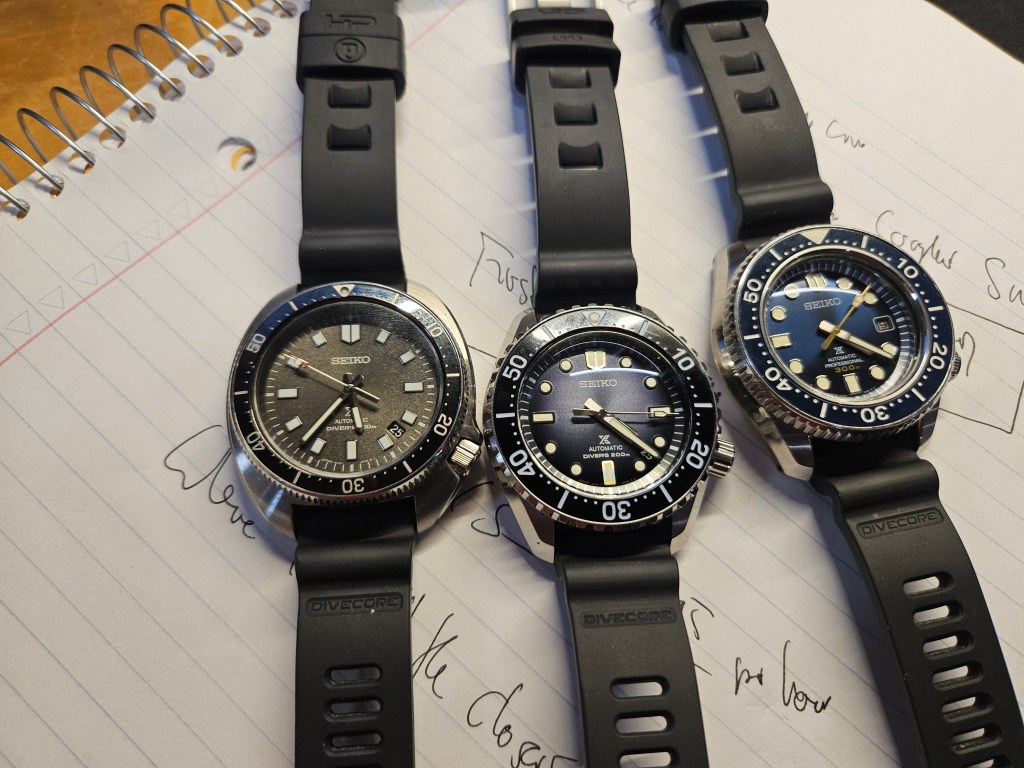
    After decades of horological torment, you finally reached a fragile state of mental stability: seven Seiko mechanical divers on straps, each a gleaming monument to discipline, restraint, and the lie that this was the last one.

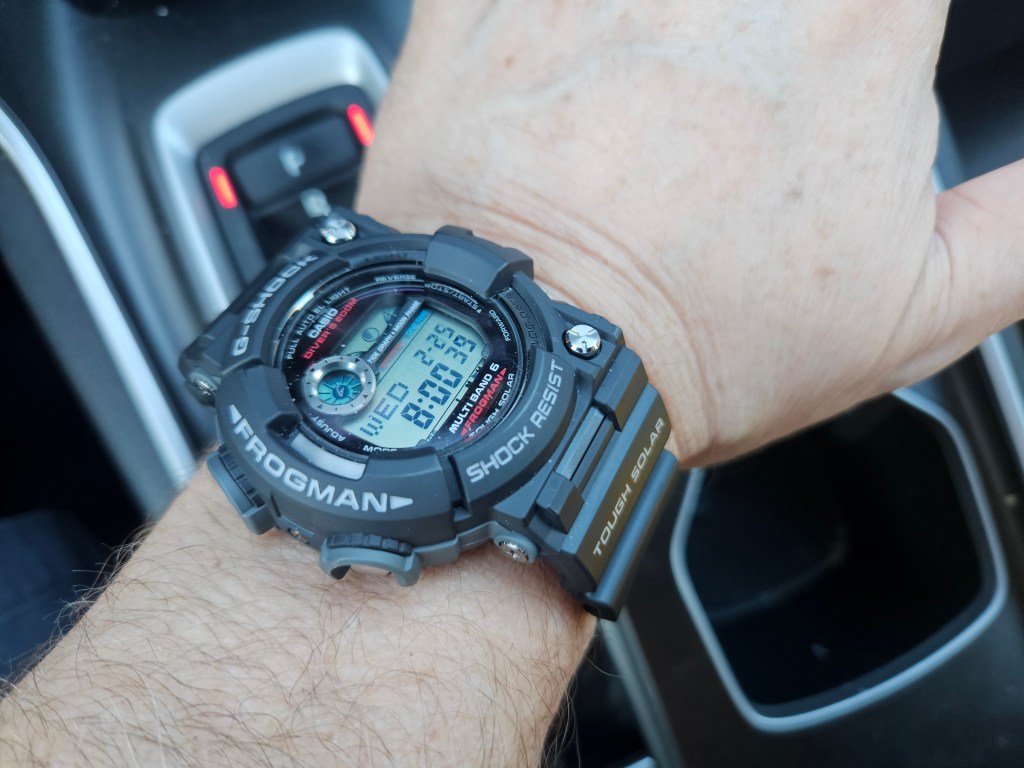
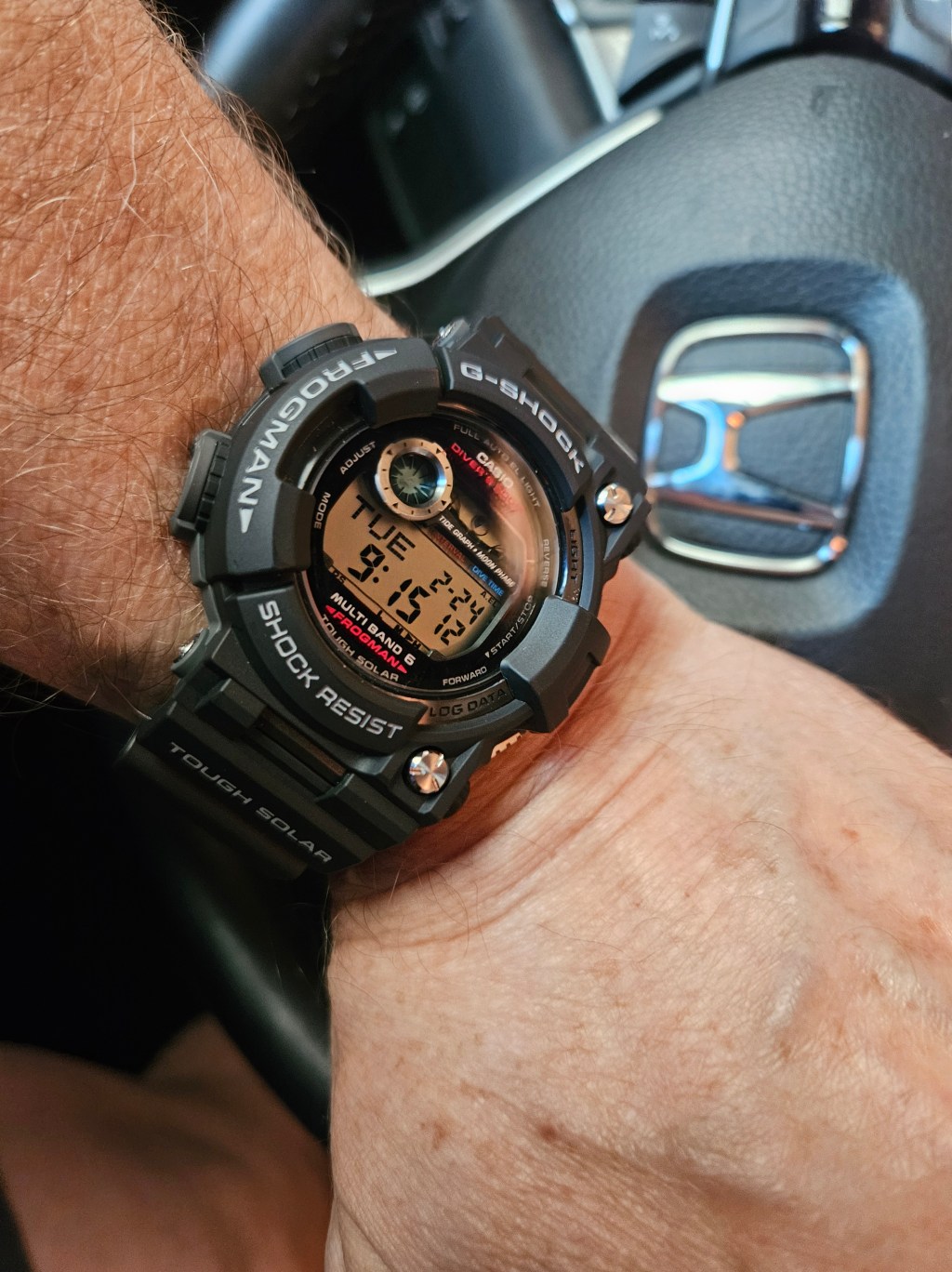
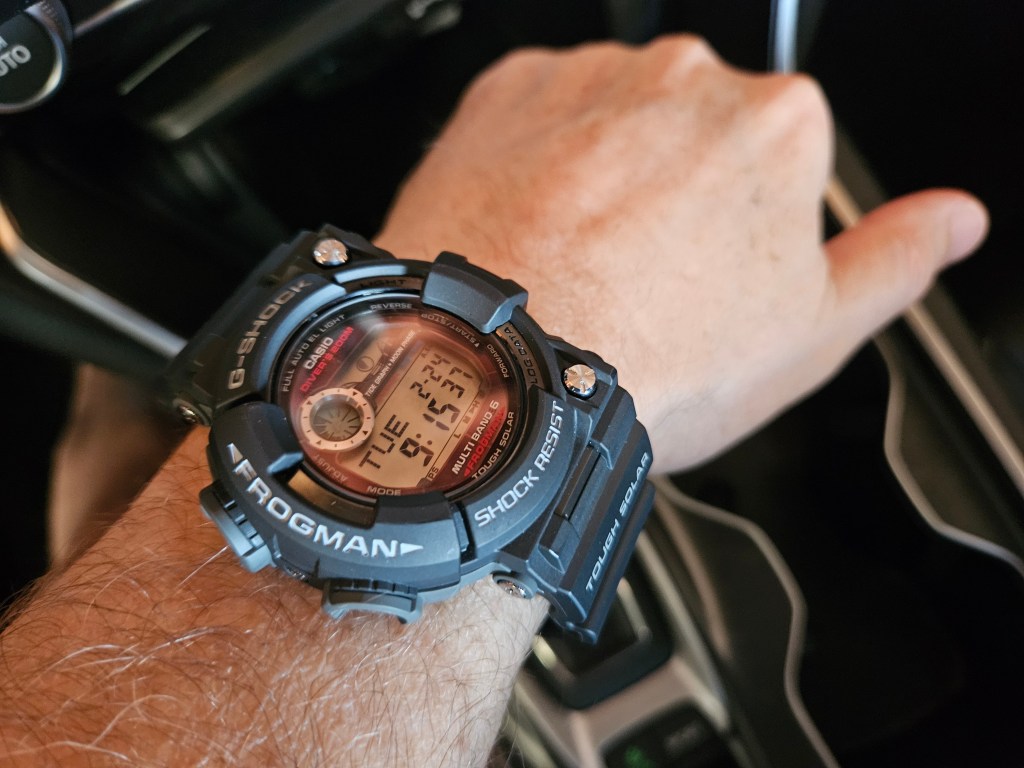
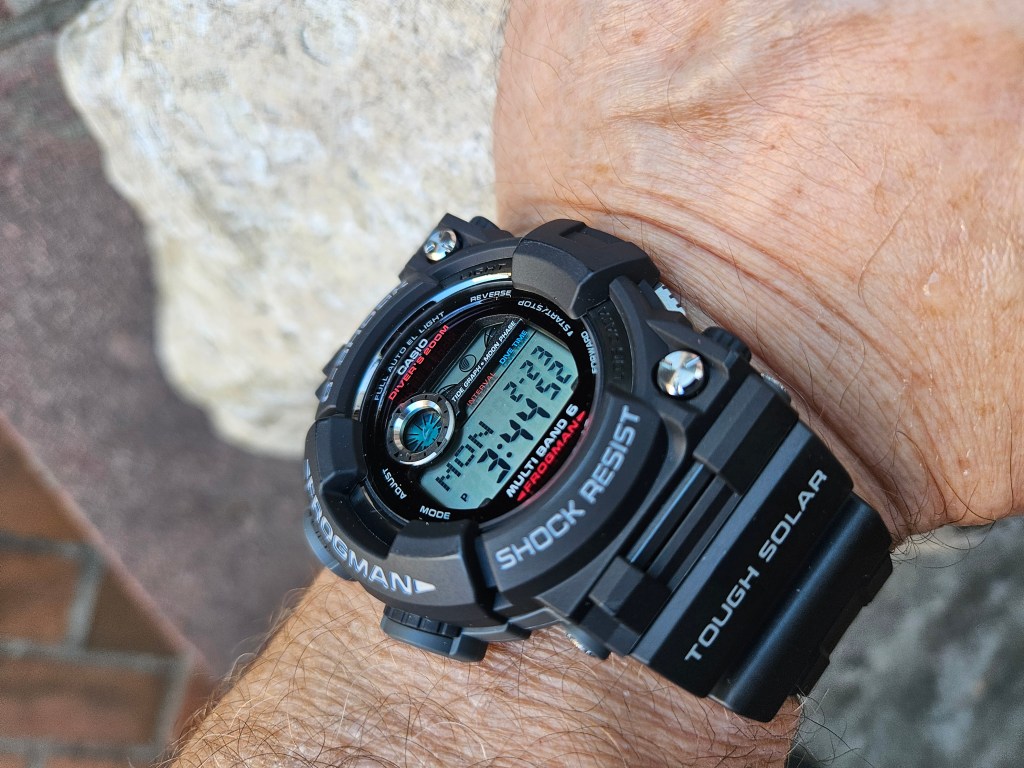
    Then, one afternoon, on a whim, you bought a G-Shock Frogman.

    It never left your wrist.

    The atomic time spoke in a language your mechanical watches never could. No drift. No romance. No negotiation. Just cold, sovereign accuracy. Precision not as craft, but as authority.

    Later, you noticed the numerals were slightly small at night. Not a real problem—just enough of a problem to justify research. The Frogman’s cousin joined your G-Shock team: the Rangeman. Bigger digits. Cleaner read. Perfect.

    And since you were already there, you finished the trilogy with the GW5000U—the square, the legend, the watch that doesn’t try to impress because it already knows it has won.

    Now you rotated three G-Shocks in quiet contentment.

    Meanwhile, the Seiko divers sat untouched.

    After a year, you asked the logical question.

    Should you sell those lonely mechanical divers?

    No.

    You told yourself the mechanical itch might return—like a dormant fever waiting for the right conditions.

    Five more years passed.

    The mechanical divers remained untouched. Still sealed in boxes like museum artifacts from a former civilization.

    You asked again.

    Now am I ready to sell them?

    Again: no.

    Because you remembered something.

    Friends with old cars that ran perfectly—until a well-meaning mechanic convinced them to do an oil change. The service was supposed to extend the car’s life. Instead, something shifted. A leak here. A vibration there. One repair triggered another. Soon the car that ran fine was on a tow truck, headed for the graveyard.

    You observe the reason for the car’s demise: Old machines develop a private ecosystem, a delicate equilibrium of wear, grime, and negotiated compromise. Sludge plugs the gaps that worn seals can no longer manage. Thickened oil cushions parts that have learned to move together like an aging married couple—no surprises, no sudden demands. Then comes the well-meaning oil change. Fresh, detergent-rich oil floods the system like a power washer through a century house. It dissolves the gunk that was quietly holding things together, exposes seals that forgot how to seal, and restores pressures that aging gaskets experience as a personal attack. The engine, once stable in its gentle decline, now leaks, ticks, hesitates, and protests as if a dam has been opened upstream and released a torrent of mechanical demons long kept asleep by dirt, viscosity, and mutual resignation. Nothing was “broken” before. The oil change didn’t create the problems—it simply removed the sediment that was hiding the truce.

    That’s what selling the Seikos feels like.

    An oil change on your soul.

    A rational act of simplification that might disturb the delicate machinery holding your psyche together. One decision leading to second thoughts. Second thoughts leading to regret. Regret leading to obsessive re-buying, late-night searches, financial damage, emotional collapse.

    You’re not afraid of losing the watches.

    You’re afraid of the cascade.

    So you leave the mechanical divers where they are.

    The three G-Shocks run your daily life. The mechanical divers sit in darkness, untouched and unnecessary—yet absolutely essential.

    They are the cork in the dam.

    Pull them out, and who knows what pressure comes rushing through.

    This is Stability Hoarding: keeping possessions not because you use them, need them, or even want them, but because their continued existence reassures you that nothing irreversible has happened. They are emotional ballast. Identity reserves. Evidence that former versions of you remain on standby.

    You’re not preserving watches.

    You’re preserving options.

    Selling them feels less like decluttering and more like closing a door you may someday need to sprint through in a panic.

    Stability hoarding isn’t about objects.

    It’s about keeping your past selves employed as an emergency backup system—just in case the life you’re living now ever crashes.

  • The Princess, the Pea, and the Frogman

    The Princess, the Pea, and the Frogman

    No watch is perfect. Not one. Even your sacred G-Shock Frogman has a flaw—if you’re motivated enough to find it.

    Take those digital numerals. A little small, aren’t they? In daylight, no issue. But at night you notice something: your wrist drifting away from your face, then inching back, hunting for that sweet spot where the time snaps into focus.

    Wouldn’t it be nice if those numbers were a little bigger?

    There it is. The opening.

    The Frogman isn’t infallible. And once that thought slips in, the machinery starts.

    You begin harmlessly enough. Just research. Just curiosity. A quick look at other G-Shocks. Models with bigger digits. Cleaner layouts. Better night readability. Nothing wrong with being informed.

    Then the tabs multiply. Comparisons. Reviews. Forum threads. You’re deep underground now, tunneling through specifications, convincing yourself you’re solving a problem.

    You almost bought two.

    Then something stopped you.

    The promise.

    You said the Frogman was the last watch this year. A spending freeze. A return to sanity. A clean break from the cycle.

    Amazing how quickly that promise evaporated. Amazing how fast you went from restraint to full-throttle research, chasing the electric thrill of the next “perfect” solution.

    And then the uncomfortable realization landed.

    The Frogman was fine.

    The numerals weren’t too small. You could read them yesterday. You’ll read them tomorrow. The problem wasn’t the watch.

    You were hunting for a flaw.

    Like the Princess and the Pea, you were scanning the mattress for a lump that didn’t exist. Because if the lump is real, the upgrade is justified. If the upgrade is justified, the purchase is reasonable. And if the purchase is reasonable, the addiction remains invisible.

    In the clinical language of watch obsession, this is the Upgrade Rationalization Loop: a mental feedback system that inflates minor inconveniences into fatal defects, all conveniently pointing toward a new acquisition.

    The loop doesn’t solve problems.

    It manufactures them.

    And here’s the harder truth: if you keep looking, every watch will fail. The standard will quietly rise until nothing you own feels complete.

    That’s how the wheel keeps spinning.

    So stop.

    No more hunting for microscopic defects. No more late-night comparisons disguised as research. No more negotiating with yourself like a lawyer working both sides of the case.

    The Frogman is the final watch of the year.

    If the urge hits, bite your lip. Clench your jaw. Sit with the discomfort. Let the craving burn itself out instead of feeding it with another browser tab.

    Because this isn’t about numerals.

    It’s about extraction.

    There’s a rotten tooth at the center of the habit, and it won’t come out gently. It takes pressure. It takes resistance. It takes the willingness to endure a little pain now so the ache stops running your life later.

    The Frogman doesn’t need an upgrade.

    Your impulse does.

  • The Hidden Gravity of the Watch Tribe

    The Hidden Gravity of the Watch Tribe

    Take a long, honest look at your fellow watch obsessives. They are not fools. They are intelligent, disciplined, frighteningly attentive to detail. These are people who can debate lume longevity like theologians parsing eternity. But like you, they wandered into the forest of horology and followed the glint of polished steel until the trail disappeared. Now they live among the trees, refreshing forums, studying release rumors, and calling it research.

    Like you, they dream of escape.

    Now imagine the impossible: you wake up one morning and the fever is gone. No urge to browse. No itch to upgrade. No late-night calculations about selling three watches to buy the one that will finally bring peace.

    It feels like ending a bad relationship you tolerated for years. One morning you look at the situation and say, quietly and without drama, “I’m done.”

    And just like that, you are.

    Now ask yourself what happens next.

    Your fellow obsessives will not celebrate your recovery. They will react like crabs in a bucket watching one of their own reach the rim. The moment you start climbing, the pincers come out. Links appear. “Just look at this one.” Wrist shots multiply. Someone whispers that a discontinued Seiko has surfaced — a rare opportunity, possibly your last chance at sanity.

    In the language of addiction, this force has a name: Bucket Gravity.

    Bucket Gravity is the invisible pull of the tribe — the group chats, the incoming posts, the shared excitement, the collective anxiety that turns private desire into social momentum. Addiction rarely operates alone. Community gives it mass, direction, and escape velocity in the wrong direction.

    And make no mistake: the community does not want you gone.

    But don’t mistake this resistance for cruelty. Your fellow collectors are not villains. They are loyal. They are affectionate. They are afraid.

    What they fear is the silence you leave behind.

    Your exit creates an emotional vacuum. Without you, there is one less person to validate the cycle — the buying, the selling, the regret, the recovery, the relapse. You were a witness to their struggle. You were a companion in the late-night rationalizations. You helped turn compulsion into culture.

    Without you, the noise drops. And in the quiet, each person is left alone with an uncomfortable question.

    You will miss them too. The camaraderie is real. The humor is real. The shared obsession creates a strange and powerful intimacy — a fellowship built from equal parts enthusiasm and mutual self-deception.

    But keep climbing.

    Because love that depends on shared compulsion is not healthy love. It is a support group disguised as a hobby and a feedback loop disguised as friendship.

    Get out of the bucket.

    Stand on solid ground. Become someone who enjoys objects without needing them, who appreciates beauty without chasing it, who measures time without being owned by it.

    Then — and only then — you can return to the world with a different kind of affection: not the anxious love of mutual enabling, but the steady kind that comes from being whole, quiet, and finally free.

  • The Horological Crime Scene and the Watch That Cleans It Up

    The Horological Crime Scene and the Watch That Cleans It Up

    Watch addiction is not a hobby. It’s a war zone.

    Sleep is collateral damage. Bank accounts bleed out quietly. Marriages endure the slow drip of “just one more package.” Therapy bills rise. PayPal notifications arrive like ambulance sirens. Somewhere along the way, the language of joy gets replaced by the language of damage control.

    What you’re left with is an Horological Crime Scene—a condition in which the collection no longer looks curated but looks processed. Boxes stacked like evidence. Straps multiplying without explanation. Tracking numbers memorized. A strong smell of financial regret in the air. The collector stands in the middle of it all, insisting everything is fine while whispering the classic defense: “I just need one consolidation piece.”

    To understand the mythical cure for this condition, we need to talk about a man who specializes in cleaning up messes.

    In Pulp Fiction, Winston Wolf doesn’t arrive with empathy. He arrives with order. Vincent and Jules have turned a routine morning into a biological disaster. The Wolf doesn’t discuss feelings. He doesn’t analyze root causes. He doesn’t ask what went wrong. He walks in wearing a tuxedo, drinks their coffee, and converts panic into logistics.

    Towels. Bags. Timeline. Move.

    In a movie full of loud personalities and terrible judgment, The Wolf is something rare: competence without drama. The adult in a room full of armed adolescents.

    Every watch obsessive eventually needs a Wolf.

    That’s where the G-Shock Frogman comes in.

    The Frogman doesn’t seduce. It doesn’t charm. It doesn’t whisper heritage stories about Swiss craftsmen and moon missions. It shows up like a tool that expects you to get back to work.

    Where the watch box is chaos, the Frogman imposes a checklist.

    Accurate.
    Indestructible.
    Always running.
    Nothing to think about.

    The endless internal courtroom—Should I rotate? Should I sell? Should I upgrade? Is this the one?—suddenly feels absurd. The argument collapses under the weight of blunt competence.

    Like The Wolf, the Frogman doesn’t fix your personality. It fixes your situation.

  • When the Search Stops: Life After the Frogman

    When the Search Stops: Life After the Frogman

    After I posted my video, I Am the Frogman, the comments came in like evangelists at a revival.

    “I have to buy one now.”
    “McMahon, welcome to G-Shock. This won’t be your last.”
    “Once you taste the G-Shock glory, you can’t go back.”

    Those voices were still echoing in my head this morning—Day Three of my Frogman conversion.

    I opened the watch box. Seven magnificent Seiko divers stared up at me, polished, dignified, loyal. I looked at the Frogman on my wrist.

    Swap?

    Not a chance.

    The Frogman stays.

    That moment clarified something uncomfortable: the true watch obsessive isn’t chasing watches. He’s chasing a bond. Not a collection—a connection. At the center of the hobby is a private hope: one day, a watch will quiet the search.

    It’s too early to declare the Frogman The One, but something has shifted inside me. The mental vibration has changed. The noise is down.

    Imagine this: a collector buys a watch that silences his cravings—not only for new pieces, but for the ones he already owns. The wishlists lose their gravity. The forums lose their pull. The late-night browsing sessions evaporate.

    In medical terms, GLP-1 drugs reduce “food noise” by recalibrating the brain’s reward system. The Frogman appears to do something similar.

    Atomic precision. Brutal legibility. Tool-watch authority.

    The brain looks at the wrist and says: Enough.

    I seem to be in a state of Horological Appetite Suppression—a condition in which one watch satisfies the reward circuitry so completely that desire goes quiet. No hunting. No fantasizing. No itch.

    Just calm.

    The analogy isn’t perfect. GLP-1 kills pleasure. The Frogman is pleasure. It’s lean protein and cheesecake at the same time—pure function wrapped in outrageous fun.

    Still, the result is the same.

    The noise is gone.

    Of course, my fellow obsessives issued a warning: maybe the Frogman hasn’t cured your watch addiction. Maybe it’s just moving you into Phase Two–G-Shock addiction. 

    So I surveyed the landscape.

    The GW-5000: perfect, but too polite.
    The red Frogman: dramatic, but too dramatic.
    The Poison Dart: spectacular—on a 22-year-old influencer.
    The Rangeman: impressive, but not my watch.
    Titanium Frogmen: beautiful, but dangerously redundant.
    Full-metal Square: disqualified—bracelet violation.

    After careful consideration, I arrived at a radical conclusion:

    One Frogman is enough.

    Now comes the unsettling question.

    If the search is over—if the appetite is quiet—what happens next?

    Seven mechanical divers sitting idle.
    Fewer reasons to buy.
    Possibly fewer stories to tell.

    Has the Frogman cured the madness?

    Or refined it?

    Because here’s the strange part: if this is insanity, it’s the best version I’ve ever had.

    Maybe no one escapes obsession. Maybe the real task is wardrobe selection—choosing the madness that hurts least.

    There is the madness of endless rotation, endless comparison, endless hunger.

    Or there is the madness of devotion.

    Between the two, I’ll take the one that lets me sleep.

    Because when I look down at the Frogman, it doesn’t whisper.

    It delivers a verdict.

    “I am the time,” it says.

    “Your search is over.”

  • The Frogman Effect: When the Algorithm Beats the Essay

    The Frogman Effect: When the Algorithm Beats the Essay

    On a good day, my blog draws between 100 and 150 readers. Each post is labored over like a piece of furniture: sanded, polished, adjusted until the grain of my interior life shows through. I wordsmith. I revise. I try to put something honest on the page.

    My readers appreciate it.

    Then they tell me to make a video.

    To them, the blog is fine—earnest, thoughtful, respectable. But what they really want is the moving version of me: voice, wrist shots, confession, immediacy. When I wrote about my G-Shock Frogman and its disruptive takeover of my watch life, the post attracted the usual slow trickle—perhaps a hundred readers over the course of a month.

    Then I made a video: I Am the Frogman.

    I talked about the asymmetrical case, the atomic precision, the way the digital display had pushed my mechanical divers into temporary retirement. I admitted I would probably oscillate between the two worlds, letting digital utility and mechanical romance take turns running my wrist.

    Within twenty-four hours, the video crossed 2,000 views.

    The message was clear. If I want reach, connection, and conversation, the camera wins. The keyboard, by comparison, is a quiet room at the back of the building.

    And yet, the blog stays.

    Because the difference between video and writing mirrors the difference between my atomic Frogman and my mechanical divers. One is immediate, energetic, communal. The other is slower, quieter, and inward. Moving between them isn’t a compromise. It’s therapy.

    I’ve come to think of this rhythm as Complementary Universe Rotation.

    The high-stimulation world—YouTube, comments, rapid feedback—makes the hobby feel alive. People react. They argue. They confess their own obsessions. The tribe gathers. Energy multiplies. A private fascination becomes a shared event, and that shared energy feeds motivation. It reminds me that this strange fixation on timepieces is, at its core, a social language.

    But energy comes with a tax.

    Too much exposure to opinions, releases, hype cycles, and algorithmic excitement slowly shifts the center of gravity. Comparison creeps in. So does FOMO. Without noticing it, enthusiasm becomes performance. The hobby stops being felt and starts being acted.

    That’s when writing rescues me.

    The blog is the low-stimulation world. No algorithm urgency. No comment storms. Just a blank page and a stubborn question: Why do I actually care about this watch? Writing forces distance. Distance restores perspective. Editing turns noise into narrative. Instead of reacting to the hobby, I interpret it. The page brings me back to myself.

    Moving between these worlds creates a flywheel. Community energy fuels interest. Solitude converts that energy into clarity. That clarity, in turn, makes the next video more grounded, less reactive, less infected by hype. Over time, this rotation produces something rare among collectors: stability. Fewer impulse decisions. Fewer mood swings disguised as strategy. A deeper attachment to the watches that survive the noise.

    The rotation also protects pleasure itself.

    Constant exposure dulls the senses. Too many releases, too many opinions, too much content—it’s palate fatigue. Writing creates absence. Absence restores appetite. When I return to the high-energy world, the excitement feels earned again rather than manufactured. Each universe cleans up the excess of the other: community drains isolation; solitude drains hype.

    This isn’t just a content strategy.

    It’s a survival strategy.

    Video answers the question: What excites people?
    Writing answers the more dangerous question: What actually matters to me?

    If I lived only in the video world, I’d drown in noise. If I lived only on the blog, I’d dry out in isolation. But rotating between them keeps the system balanced. The energy flows without overheating. The interest deepens without drifting.

    In the end, my watch hobby doesn’t thrive in a single environment.

    Like my wrist moving between atomic digital and mechanical romance, it lives best in parallel universes—where the crowd keeps the fire burning, and the quiet keeps it from burning out.

  • I Am the Frogman

    I Am the Frogman

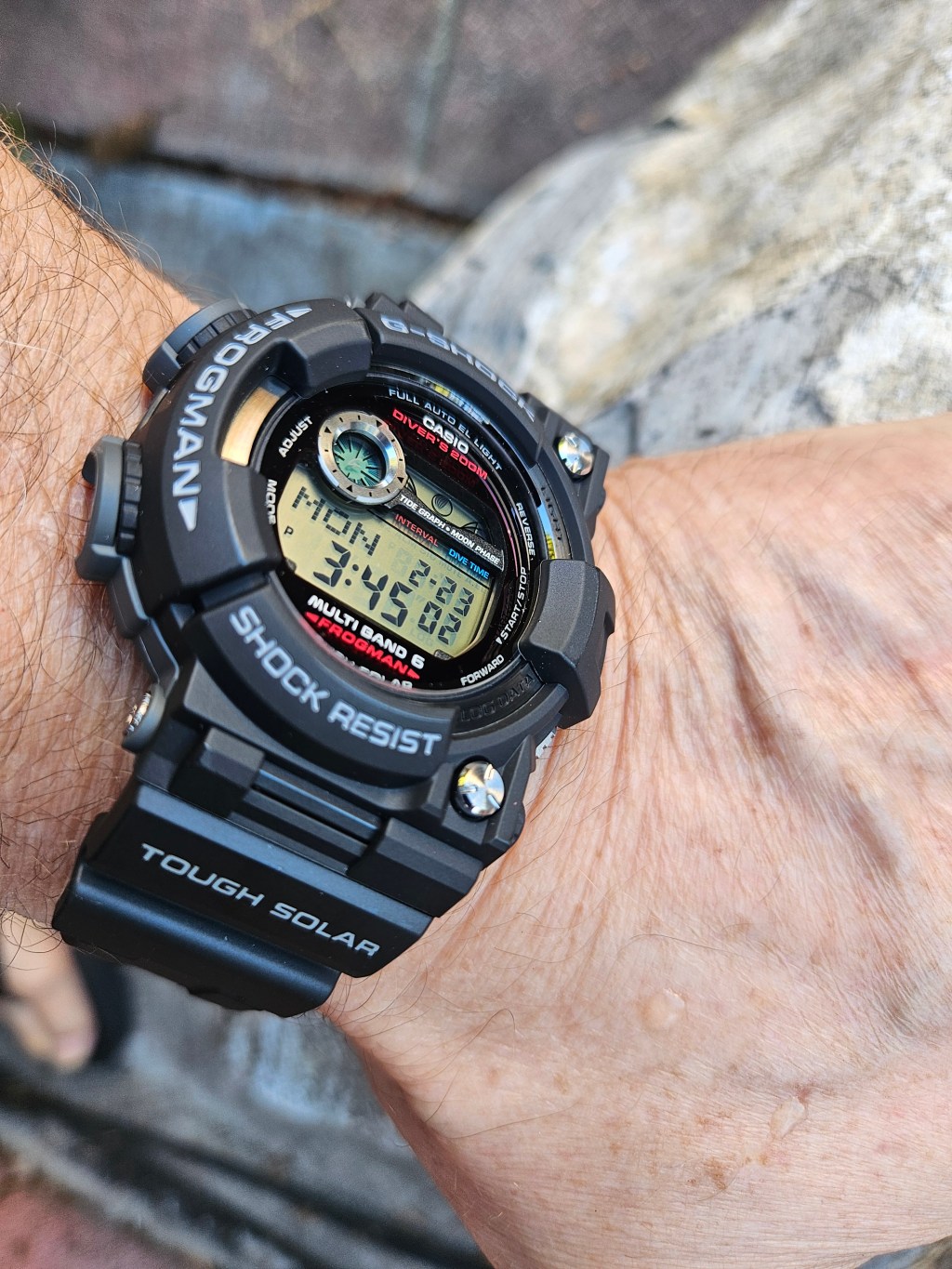
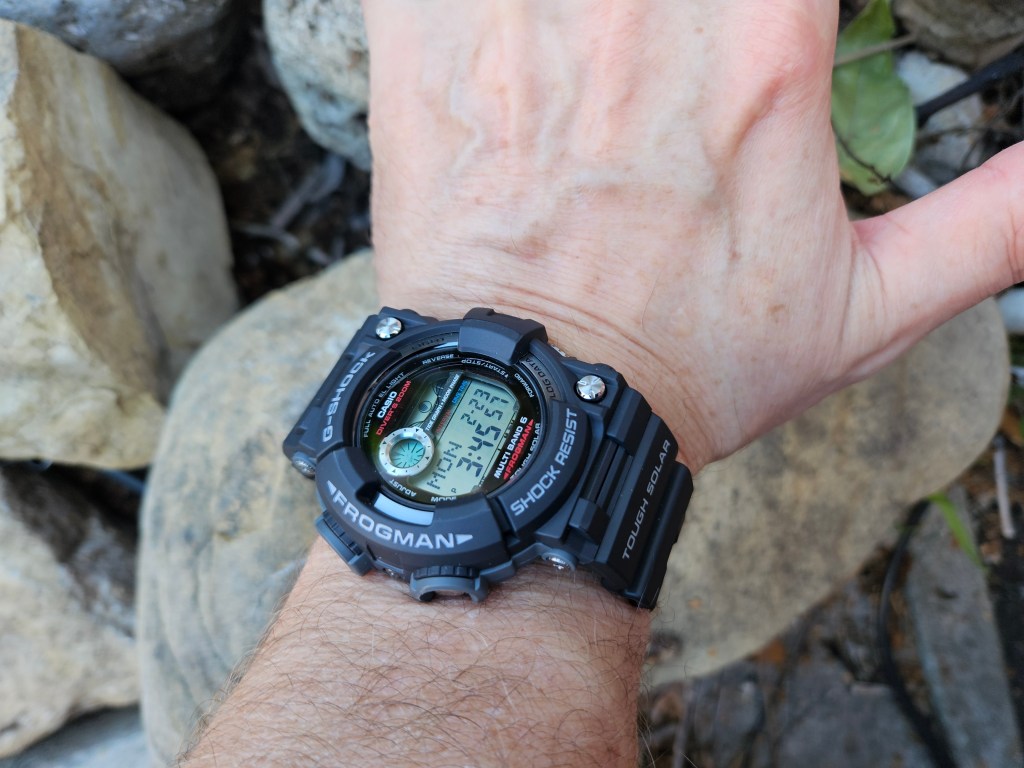
    I used to tell people I didn’t like the G-Shock Frogman GWF-1000.

    It’s oversized. It’s digital. It looks like something the wardrobe department would strap onto a second-tier superhero—Aquaman’s anxious cousin, assigned to guard the aquarium gift shop. On a 64-year-old man, it doesn’t whisper confidence. It screams midlife distress—the horological equivalent of jet-black hair dye and a motorcycle you’re afraid to start.

    And yet, for the past six months, it hasn’t left my wrist.

    My mechanical divers—polished steel, sapphire crystals, analog dignity—sit untouched, lined up in their box like former lovers trying to understand what went wrong.

    “How could you do this to us?” they seem to ask.

    “You are dead to me,” I reply.

    At this point, the relationship between my wrist and the Frogman is no longer metaphorical. It is psychological. Possibly spiritual. There may be paperwork involved.

    Let me be clear: this attachment is not based on taste. On a man my age, the Frogman doesn’t look stylish. It looks like evidence being quietly assembled by concerned family members.

    But it is not coming off.

    Because something happened.

    Not gradually. Not subtly.

    Change.

    When I started wearing the Frogman, I felt different—sharper, more contained, more adult. My appetite shrank. My focus tightened. I developed the kind of self-control normally associated with retired Marines and monks who eat lentils without complaint.

    Three meals a day. No snacks. No “kitchen reconnaissance missions.”

    Then something even stranger happened.

    My wife and daughters didn’t say a word, but their behavior shifted. The eye-rolling stopped. The subtle household demotion—from “head of family” to “eccentric roommate”—quietly reversed.

    Somehow, I had acquired gravity.

    I was no longer the suburban performance artist of half-finished plans and questionable purchases. I had become a man whose decisions suggested forethought rather than impulse.

    A man who appeared, alarmingly, to be in charge.

    But the real change was this:

    My nightmares stopped.

    Not reduced. Not improved.

    Stopped.

    For decades I lived with them—night after night, a private theater of dread that never closed. Then the Frogman arrived, and the nightmares scattered into darkness like silverfish when the lights come on.

    Now my dreams are peaceful. I run through fields of berries. In the voice of John Lennon, I sing, “I am the Frogman.”

    Explain that.

    A resin watch—battery, rubber strap, digital display—accomplished what therapy, discipline, and time could not.

    Part of me wants to leave the miracle alone. When something rescues you from overeating, ridicule, and nocturnal terror, you don’t interrogate it. You say thank you and keep your mouth shut.

    If it isn’t broken, don’t fix it.
    If you don’t understand the blessing, don’t analyze it.

    Unfortunately, I am a curious man.

    I want mechanisms. Theories. Experts. I want to understand how a mass-produced object rewired my habits, my household_toggle status, and my sleep cycle.

    That investigation is the project ahead—the study of what I can only call the Frogman Elixir Effect: a transformation so complete that the man who bought the watch no longer quite exists.

    I am no longer the wearer.

    I am the Frogman.

    Before we go further, I should correct something.

    Earlier, I said I thought the Frogman was ugly.

    That was a lie.

    Why I lied is a matter for future therapy—some mixture of denial, self-protection, and the fear of becoming the man who falls in love with industrial resin.

    The truth is this:

    The moment I saw it, I loved it.

    Not liked. Loved.

    It was, and remains, the most beautiful thing I have ever seen.

    Now that the truth is out, we can proceed honestly.

    At work, my colleague Dave noticed the change. One afternoon he suggested I attend a support group in the basement of a nearby church—men, he said, who believed they had also become Frogmen.

    Out of curiosity, I went.

    There were two dozen of us. Same age. Same watch.

    When the meeting began, we introduced ourselves the only way that felt accurate:

    “I am the Frogman.”

    Our counselor, Terry, immediately informed us that this was impossible. Only one of us could be the Frogman.

    Complicating matters, Terry was wearing the same model. There were rumors he believed he was the authentic Frogman and was using the group to establish theological authority. None of us trusted him.

    Still, we met every Wednesday.

    And something was undeniable.

    We had all changed.

    Better habits. Better focus. Better discipline. The same quiet upgrade in self-command. It was like taking creatine for the psyche. A testosterone booster for decision-making. Samson’s weapon—though one member insisted Samson actually used a donkey’s jawbone and demonstrated this point by raising his Frogman like a sacred artifact.

    The group is going well.

    Because the journey is no longer about wearing a watch.

    It is about fusion.

    What Terry eventually helped us name was Horological Identity Fusion—the state in which the boundary between wearer and object dissolves. The watch is no longer an accessory. It is a psychological extension. Removing it would feel less like changing gear and more like abandoning a role.

    Or losing a limb.

    And once that fusion occurs, something strange happens.

    You don’t wear the tool.

    You become the person the tool assumes you are.

  • Dear G-Shock: Digital Is Your Superpower—Stop Pretending Otherwise

    Dear G-Shock: Digital Is Your Superpower—Stop Pretending Otherwise

    My G-Shock Frogman is the only digital watch in my collection, and lately it has been delivering an uncomfortable truth: accuracy and legibility beat romance.

    Atomic time. Perfect clarity. No guessing. No squinting. No interpreting the vague position of a minute hand drifting between markers like a tired compass. The Frogman tells the truth instantly, and once you get used to that level of honesty, the charm of slightly inaccurate mechanical time begins to feel less like character and more like indulgence.

    This is G-Shock’s genius. Not sapphire. Not titanium. Not luxury pricing. The magic is the display—bold, clean, readable at a glance, under stress, in motion, in the dark, in real life.

    Which is why I’m baffled by the company’s recent flirtation with high-end analog Frogman and Mudmaster models.

    Analog? From G-Shock?

    No. Just no.

    The legibility is compromised. The immediacy is gone. The very thing that made the brand indispensable—clarity—gets traded for something it was never built to do well: prestige analog aesthetics. And then the price climbs north of a thousand dollars, as if sapphire can compensate for the loss of purpose.

    Why would anyone pay luxury money for second-rate analog from a company that built its reputation on digital superiority?

    This is a category error. A brand identity crisis.

    It reminds me of those hybrid fast-food experiments you see around Southern California—the Taco Bell–Pizza Hut combination. You pull into the parking lot expecting tacos. You walk inside and there’s pizza. Technically, both foods are fine. But together, something feels wrong. Confused. Compromised. Like two identities sharing a space without sharing a soul.

    An analog G-Shock feels the same way.

    For digital precision, I want my Frogman GWF-1000: atomic, solar, brutally legible.
    For analog craftsmanship, I’ll take my Seiko Tuna: bright all-night lume, visual depth, the full romance package.

    Two different worlds. Two different languages. Each excellent on its own.

    What I don’t want is a brand forgetting what made it great.

    This is the Lane Integrity Principle: a brand earns loyalty by mastering one thing and doing it better than anyone else. When a company built on uncompromising digital clarity starts chasing analog prestige, trust erodes. Enthusiasts don’t care how expensive the materials are. They care whether the product still honors the original promise.

    G-Shock’s promise was never luxury.

    It was certainty.

    And certainty, like good design, works best when it stays in its lane.