Category: Confessions

  • When Loving Watches Starts to Feel Like a Job

    When Loving Watches Starts to Feel Like a Job

    In her darkly hilarious comedy special Father, Atsuko Okatsuka shares the origin story of her career in punchlines. Her schizophrenic mother once “kidnapped” her in Japan and whisked her away to the United States without warning, severing her ties to her father in the process. The trauma was so disorienting, so profound, that Atsuko now mines laughter for survival. She tells us, with a comedian’s grin and a survivor’s twitch, that she performs to fill an infinite hole in her soul with the validation of strangers.

    That hole is not unique to her. It’s a universal pit—bottomless and demanding. Validation comes in many flavors. For some, it’s esteem and admiration. For others, it’s expertise, artistry, the warm glow of audience approval. For Atsuko, it’s laughter. For others, it’s the faint buzz of a “like” on a post about a wristwatch.

    Let us now consider the watch obsessive, a different breed of relevance-seeker, but a kindred spirit nonetheless. He isn’t doing five-minute sets at the Laugh Factory, but he is performing—on Instagram, on forums, on YouTube, in the comment sections of strangers’ macro shots. He presents his taste, his “knowledge,” his ever-shifting collection. But underneath the sapphire crystals and brushed titanium is the same primal whisper:
    Do I still matter?
    Do they still see me?

    Here’s the tragic twist: he may already have the perfect collection. It gives him joy. It’s balanced. It fits in a single watch box. By all logic, he should stop. Buying another watch would be like adding a fifth leg to a table—wobbly and unnecessary. But he doesn’t stop. He can’t stop.

    Why? Because if he stops collecting, he stops posting. If he stops posting, he stops being seen. And in a world addicted to scrolling, disappearing feels like dying.

    Relevance is the new oxygen. And social media is a machine that runs on novelty, not legacy. The digital hive forgets fast. “Gangnam Style” is now a fossil. “Call Me Maybe” is background noise at the grocery store. To stay visible, you must be new. You must be shiny. You must offer dopamine.

    And what happens when the watch addict manages his demons, reaches peace, and stops feeding the machine?

    He becomes boring. He becomes silent. He becomes irrelevant.

    And the parasocial bonds he once had—those illusory friendships, those mutual obsessions—fade. The sense of exile is real. It doesn’t matter that the exile is self-imposed. The pain still lingers.

    That fear—that primordial fear of irrelevance, of being cast out from the tribe—can be so powerful it masquerades as passion. It convinces the watch obsessive to keep flipping, keep chasing, keep posting. Not out of love, but out of fear.

    In this crazed state, the obsessive has succumbed to Performative Collecting–the transformation of a private pleasure into a public act staged for recognition. Watches are curated less for personal resonance than for their ability to sustain audience attention. Silence is interpreted as failure.

    So the question becomes: Are we collectors? Or are we hostages? Do we love horology? Or are we simply terrified of vanishing?

  • The Howard Ratner School of Watch Collecting

    The Howard Ratner School of Watch Collecting

    Watch obsessives have more in common with Howard Ratner than we care to admit. Yes, that Howard Ratner—the unhinged gem pusher played with twitchy brilliance by Adam Sandler in the Safdie brothers’ cinematic panic attack, Uncut Gems. Ratner operates in the Diamond District behind bulletproof glass, drowning in sparkle and debt. We operate behind the bulletproof delusions of horological obsession, buried in brushed steel and moonphase complications.

    Like Ratner, we gamble—not at sportsbooks, but with FedEx tracking numbers. We tell ourselves, this is the one as we refresh the delivery status of the next “grail” watch. The package might as well be glowing, Pulp Fiction-style. And like Ratner chasing a cursed Ethiopian black opal mined from the bloodied crust of the Earth, we twist ourselves into financial and emotional pretzels to score that one special piece—the wrist-mounted miracle that will finally quiet the voices.

    Spoiler: it never does. Why? Because we are trapped in an Acquisitive Panic Loop–a self-perpetuating cycle of anxiety relieved only by purchase, followed immediately by renewed anxiety. Collections expand not by intention but by momentum, like debt rolling downhill.

    Like the crazed watch collector, Ratner is a man who thinks more is the cure. More bets. More jewels. More chaos. The watch obsessive runs the same play. We soothe our midlife despair not with therapy or silence, but with spring drives, meteorite dials, and limited edition bronze cases. Our collections don’t grow—they metastasize.

    Like Ratner, our problem isn’t the world. Our problem is internal. The call is coming from inside the skull. He can’t stop because he doesn’t want to stop. The thrill is the point. Every acquisition, every wrist shot, every gushing forum post—just another hit of synthetic joy to distract from the gnawing void. We call it a hobby. Let’s not kid ourselves. It’s dopamine addiction disguised as design appreciation.

    Uncut Gems is a cinematic espresso shot laced with panic. My wife and brother couldn’t sit through thirty minutes. Too stressful, they said. Too jittery. I’ve watched it three times.

    But of course I have. I’m a watch addict.

    I live in Ratner’s world. The caffeinated chaos? That’s not discomfort. That’s home.

  • Why Your Watch Doesn’t Make You Happy Anymore

    Why Your Watch Doesn’t Make You Happy Anymore

    To understand the madness of the modern watch addict, you’d do well to consult Dopamine Nation by Stanford psychiatrist Anna Lembke, a book that should be shelved somewhere between philosophy, neuroscience, and quiet screaming. Her central thesis? In an age of relentless indulgence, the line between pleasure and pain is not only blurry—it’s the same neurological pathway. You’re not escaping pain with your latest acquisition. You’re feeding it.

    “The smartphone,” she writes, “is the modern-day hypodermic needle.” And the drug? Dopamine—delivered in neat little parcels: TikToks, tweets, memes, and yes, wrist shots of watches you don’t own (yet). If you haven’t met your poison of choice, don’t worry. It’s just a click away.

    Lembke makes the uncomfortable truth clear: The more dopamine hits we seek, the more our brain adapts by reducing our baseline pleasure response. What once thrilled you—your grail watch, your Rolex Explorer, your Seiko with the Wabi-Sabi patina—now barely registers. You’re not chasing pleasure anymore. You’re just trying to feel something.

    Watch addicts, of course, understand this intimately. The pursuit of horological perfection starts out innocent enough: a G-Shock here, a vintage diver there. But soon you’re tumbling into the abyss of boutique limited editions and message board enablement, haunted by the need to stay relevant. Because here’s the twist: It’s not just about the watches. It’s about being seen. You post, you review, you flex because if you stop, you vanish. No new watches = no new content = digital extinction.

    And extinction, in a social-media world, feels like death.

    Lembke warns us that addiction thrives in secrecy, in the exhausting double life. The watch addict may present as a tasteful minimalist to family and friends, while secretly rotating 19 watches, five straps deep, waiting for the next “drop.” The addiction is fed by access, and we live in an access economy. New releases are no longer annual events—they’re hourly temptations. The vortex is bottomless. The supply creates the demand.

    Even worse, modern society normalizes this behavior. Everyone is scrolling. Everyone is upgrading. Our addiction to novelty is passed off as taste. Our frenzied consumption masquerades as identity. Lembke borrows from Philip Rieff to explain the deeper shift: “Religious man was born to be saved; psychological man is born to be pleased.” The modern watch collector doesn’t believe in salvation. He believes in configuration.

    But here’s the cruel irony: The more you seek to be pleased, the less capable you are of being pleased. In Lembke’s words: “Hedonism, the pursuit of pleasure for its own sake, leads to anhedonia—the inability to enjoy pleasure of any kind.”

    You can understand the watch addict’s feeble quest when you look at the Horological Dopamine Loop–the self-reinforcing cycle in which acquisition, posting, validation, and anticipation replace enjoyment. The watch no longer delivers pleasure; it merely resets the craving for the next hit.

    What’s the solution? A dopamine fast. Lembke prescribes it like a bitter medicine: Remove the source. Reset the brain. Let it reestablish homeostasis. For the watch addict, this means one thing: a watch fast.

    And yes—it’s brutal. I’ve been a watch obsessive for over twenty years. My longest fast? Six months. And I nearly went feral. New releases tempt. Friends enable. Algorithms whisper. Strap swaps and vintage reissues beckon like sirens. Even the FedEx truck starts to look like a personal tormentor.

    So you get creative. You stash watches in the safe and “rediscover” them. You buy new straps instead of new watches. You try to redirect the compulsion toward something productive: fitness, music, sourdough, monkish austerity. Anything but another chronograph.

    But the real cure, oddly enough, may be conversation—actual human connection. At watch meet-ups, we start out discussing bezels and spring bars, but within ten minutes we’re talking about life: real estate, parenting, knee surgeries, emotional burnout, dinner recipes. We talk for hours. But barely about watches.

    The truth slips out in these moments: we want to be free. We crave community more than we crave sapphire crystals. What began as a shared obsession has become a trap, and these conversations, paradoxically, offer relief from the very addiction that brought us together.

    Imagine a bunch of watch enthusiasts at a watch meet-up and we’re talking about everything but watches. Wrap your head around that.

  • When Your Bodybuilding Past Still Haunts You

    When Your Bodybuilding Past Still Haunts You

    Last night I dreamed I was illegally transporting a piano.

    This was not a metaphorical illegality. It was a regulatory one. The kind involving helpers, permits, and fines. According to Dream Law, moving a piano required two assistants. I only had one. If caught, I’d be cited. Possibly shamed. I loaded the piano anyway—my beautiful, expensive ebony instrument—into the back of an open truck and drove it from the Bay Area to Southern California, white-knuckled and guilty, like a man smuggling contraband Chopin.

    I was living, temporarily, on a compound owned by a vaguely unsavory man. He was tall, pinch-faced, and always wore a blue suit, the uniform of people who know things you don’t want to know. He had the aura of a community fixer—part mentor, part hustler, part moral hazard. He gave me piano lessons, encouraged me to keep lifting weights, and introduced me to restaurants with the enthusiasm of someone laundering taste through generosity. 

    On the day I was supposed to leave, my anxiety peaked. Rain was coming. The piano sat exposed in the truck bed like a sacrificial offering. One good storm and the ebony would swell, crack, die. I panicked. The trickster waved it off. Go eat lunch, he said. By the time you’re done, the rain might stop. This was either sage advice or the kind of line uttered by men who profit from delay.

    I drove to a nearby restaurant. It was mobbed. People stood outside drinking champagne as if waiting for a table were a lifestyle choice. Inside, servers were popping bottles at a frantic pace—corks flying, foam spilling, the atmosphere halfway between celebration and collapse.

    Then I saw it.

    Mounted beside the menu was a massive poster advertising a local bodybuilding exhibition. And there I was. Not the man I am now. Not the sixty-four-year-old who qualifies for senior discounts and considers fiber intake a moral issue. This was me in my mid-twenties: thick, swollen, carved out of stubborn protein and vanity. A human monument to leg day. I was the marquee attraction.

    The trickster, it turned out, had signed me up to pose in a bodybuilding exhibition without telling me.

    How did he know I’d be staying long enough to star in this marquee event? How did he know the rain would delay me? How did he still have a photo of a body I no longer inhabited? 

    When the diners saw me standing outside, recognition rippled through the room. Glasses paused midair. Heads turned. Then applause broke out. Cheers. My name—my old name—chanted with conviction. I tried to explain. I gestured at my face, my posture, the subtle collapse of time. I wanted to tell them I wasn’t that man anymore. That I now stretch before standing. That I wake up injured. That my biggest competition is inflammation.

    They refused to listen.

    The cheering swallowed my protests. Reality bent. And I understood, I would be showing up to that exhibition—dragging with me a body, an identity, and a past I no longer owned, but which apparently still had bookings.

  • When a Strap Solved Everything—and Instagram Ruined It

    When a Strap Solved Everything—and Instagram Ruined It

    I don’t work for Divecore straps. I don’t have an affiliate link. I don’t even remember how I found them. They just appeared one day, like a cult recruiter with good posture. All I know is this: once I tried them, something clicked. The fit was right. The comfort was immediate. The look was honest. So I did what any rational watch obsessive does when he thinks he’s reached enlightenment—I stripped every watch off its bracelet, slapped on black or orange FKM Divecore straps, and declared myself finished.

    Done.
    Happy.
    At ease.

    That phrase—at ease—matters. A seven-watch collection, unified by one strap philosophy, felt merciful. There was no mental juggling, no wrist gouging from metal end links, no micro-adjustment rituals to accommodate the daily swelling and shrinking of my aging, temperamental wrist. The system was clean. Elegant. Humane. For once, the hobby felt like a hobby instead of a low-grade engineering problem.

    Then, in August of 2025, Instagram did what Instagram does best: it ruined my peace. Someone informed me—solemnly, heroically—that a study had been released about FKM straps and PFAS “forever chemicals.” The straps in the study were abused like props in a MythBusters episode—conditions so extreme they bore little resemblance to actual wrist life—but still. With plastic contamination already saturating the planet, did I really need to marinate my arteries in additional synthetic mystery?

    So off came the FKM. On went the “safe” alternatives: urethane, silicone, vulcanized rubber. They were… fine. Adequate. Technically acceptable. Emotionally inert. I wore them the way you eat airline chicken—without complaint, but without love. And yes, I feel compelled to say it again: I still don’t work for Divecore.

    Feeling vaguely bereaved, I did what many men do when they sense disorder: I tried to impose balance. I put stainless steel bracelets back on some heavy hitters. I even bought a gunmetal, monochromatic dive watch on a bracelet, as if symmetry itself could rescue me. I now had four watches on straps and four on bracelets. The collection looked fantastic. Museum-worthy. Spreadsheet-perfect.

    And yet—I was less happy.

    That’s when I recognized the familiar enemy: Cognitive Load Creep. The slow, insidious return of mental fatigue as the collection grows more complex. Straps versus bracelets. Balance logic. Adjustment rituals. The hobby quietly mutates into unpaid systems management. Every glance at the watch box now came with a background hum of decision-making. And whenever that hum gets loud enough, a voice appears.

    You lost the plot.

    And it’s right.

    The plot was never variety.
    The plot was never balance.
    The plot was happiness.

    Happiness, in the watch hobby, is hard to define—but it’s easy to identify its opposites: stress, obsession, second-guessing, wheel-spinning, FOMO anxiety, mental overload, and the constant sense that you’ve taken on more than you can metabolize. If your watches feel like a to-do list, something has gone wrong.

    I’m trying to learn from this chapter. I know, intellectually, that less really is more. I know stress is poison. I also know I have a flair for melodrama. I can turn a strap swap into a Greek tragedy. I pine. I brood. I catastrophize like an adolescent waiting for a love note reply that never comes. It’s embarrassing. It’s funny. And I’m certain I’m not alone. Watch people are wired this way—OCD-prone, sentimentally overloaded, forever narrating their own inner turmoil.

    So what’s next?

    I don’t know. There’s no blueprint. No masterplan. No illuminated exit sign pointing toward Horological Sanity. The best I can do is remain watch-agnostic, laugh at my own compulsions, and tell the truth about whatever move I make next—if I make one at all.

    The world, I assure you, is not holding its breath.

    But a fellow watch obsessive might be.

  • I Forgot the Song, But the Song Didn’t Forget Me

    I Forgot the Song, But the Song Didn’t Forget Me

    Last night I dreamed I was attending an English Department meeting held, for reasons no dream ever explains, in a recreation room with an adjoining outdoor patio. The setting suggested morale had once been a priority, sometime around 1987.

    Inside the rec room, my friend S pressed a pair of earbuds into my hand. They were attached—not metaphorically, but literally—to a CD, which already felt like an archaeological artifact.
    “Do you know this song?” she asked.

    The music was exquisite. Airy. Radiant. It carried that dangerous quality of being both unfamiliar and deeply known, as if it had once lived inside me and quietly moved out without leaving a forwarding address. I admitted I didn’t recognize it.

    She looked at me with the gentlest possible contempt.
    “You burned this for me ten years ago.”

    I felt properly humiliated. Not embarrassed—abased. As if I’d forgotten the name of a childhood friend or my own middle initial. Then she summoned the band’s leader the way dreams do—no door, no introduction, just a man appearing fully formed.

    He was in his late forties, courteous, faintly exhausted, with the posture of someone who has spent years loading gear into vans at 2 a.m. I apologized to him for not recognizing his work. I blamed streaming—how it turns music into sonic wallpaper, a perpetual ambient fog where nothing has to be remembered because everything is always available. In a fit of dream-piety, I vowed to delete every streaming account I owned and return to vinyl, to sacred listening, to LPs spinning on absurdly expensive turntables like a penitent monk.

    He nodded shyly, as if he’d heard this promise before, and vanished.

    The departmental meeting began outside on the patio, but I lingered inside the rec room instead. I changed into a swimsuit for reasons that felt urgent at the time. I ate snacks—salty, comforting, vaguely institutional—and watched my colleagues through the glass as they discussed the usual bullet points: outcomes, alignment, initiatives. I meant to join them. Truly. But the snacks induced a narcotic drowsiness, and I collapsed onto a yellow beanbag chair like a defeated child at a daycare center. I fell asleep.

    When I woke, the meeting was still going on.

    Wrapped in a towel over my bathing suit, I finally wandered outside. My younger colleagues informed me I needed to sign the attendance sheet to get my FLEX hours. Unfortunately, the sign-up sheet had already been placed in a wooden box and sent to Human Resources, which in dream logic felt ominous and final, like evidence sealed in a cold case.

    The secretary waved it off. She would “put me in the system.”

    I thanked her. The meeting droned on. Words floated by without meaning. And all I could think about was that music—its beauty, its ache, its brief visitation. And then, with a second, sharper jolt of recognition, I realized I had forgotten it again.

    The song.
    The band.

    Gone.

  • Maudlin Grail Syndrome

    Maudlin Grail Syndrome

    As I consider Cicero’s call for self-restraint in Tusculan Disputations, my thoughts return to a story that’s haunted me for over twenty years—Anton Chekhov’s “Gooseberries.” It is, in essence, the tragic fable of a Maudlin Man, told with surgical clarity and Chekhovian cruelty.

    His name is Nicholai Ivanich, and he’s not merely pathetic—he’s morally revolting. He marries an aging, unattractive woman for her wealth and waits with predator patience for her to die. Once she obliges, he buys himself a country farmhouse ringed with gooseberry bushes, retreats from the world, and crowns himself a minor deity among the local peasants by handing out cheap liquor like some portly, provincial Dionysus.

    Chekhov doesn’t give us Nicholai’s voice. He gives us Ivan, the disgusted brother, who sees this man for what he is: a swollen, self-satisfied corpse in waiting. Ivan calls Nicholai’s farmhouse dream a “definite disorder”—not a goal, but a fixation, a fever dream dressed up as a life plan. For Ivan, his brother’s pastoral retreat is less Arcadia and more open-casket viewing. “He looked old, stout, flabby,” Ivan observes. “His cheeks, nose, and lips were pendulous. I half expected him to grunt like a pig.”

    That image sticks: Nicholai, the human piglet, grinning over his plate of gooseberries, believing he’s achieved bliss when in truth he’s just decaying in comfort.

    And then comes the moment that seals it—Nicholai’s nightly ritual: he’s brought a plate of gooseberries from his estate, and upon seeing them, he literally weeps with joy. “He looked at them in silence, laughed with joy, and could not speak for excitement.” He is consumed by the performance of happiness. It’s not the berries he loves—it’s what they symbolize. In his mind, they are proof that his life is complete.

    But it’s all delusion. Nicholai isn’t fulfilled—he’s embalmed in maudlin sentimentality, drunk on nostalgia for something that never really existed. His joy is cosmetic. He’s not flourishing. He’s fermenting.

    And this, I confess, reminds me of myself—and my fellow watch addicts.

    We, too, have our gooseberries. Ours just happen to tick.

    We post videos of our “grail watches” and glow with reverence as we hold them up to the camera like relics from a sacred shrine. We give breathless soliloquies about our “perfect” collections, our “ultimate” configurations. We praise bezels and dial textures the way Nicholai praises his berries—with trembling hands and watery eyes. And like Nicholai, we’re not convincing anyone but ourselves.

    Because deep down, we know: the drama is maudlin. We have arrived at Maudlin Grail Syndrome–a condition in which the collector performs reverence rather than experiencing peace. Tears may form, voices may soften, thumbnails may glow—but the joy is theatrical, not restorative. The grail embalms rather than liberates. The joy is hollow. The entire pageantry is just a way to distract from the torment our hobby brings us. We spend hours obsessing, comparing, flipping, tweaking, always convinced that this next watch will bring balance and peace, only to find ourselves more anxious than before.

    We are men who weep over gooseberries. And worse—we make YouTube thumbnails about them.

    If we were honest, we’d admit that one decent, mid-priced watch would offer more peace than any “holy grail” ever could. But that would mean giving up the theater. The drama. The illusion that our fixations have meaning. And that, for the Maudlin Man, is the hardest loss of all.

  • Watch Abundance Anhedonia

    Watch Abundance Anhedonia

    Sometimes I wonder how technology might assassinate my love for timepieces. Picture this: a $200 spool of 3-D printer feedstock spits out your $10,000 grail watch. Eight years later, when the mechanical movement needs servicing, you don’t take it to a watchmaker—you print another.

    If watch-printing is as easy as making pancakes, I’d have thousands. Would I be happy? No. I’d be the spoiled rich kid sulking in his palatial bedroom because Mom and Dad bought him every toy but a bazooka.

    “Son, I bought you everything.”
    “But I want a bazooka.”
    “They’re illegal.”
    “I don’t care!”

    When everything is instant, the “holy grail” becomes an inside joke. The magic dies in the flood of abundance. Just ask the diamond industry. Lab-grown stones are flawless, cheap, and undetectable to the human eye—obliterating the romance of bankrupting yourself for an engagement ring. Watches could be next. As thousands of luxury timepieces materialize out of your 3-D printer, you will be overcome by Watch Abundance Anhedonia: a psychological dead zone caused by frictionless acquisition. When effort, waiting, and sacrifice are removed from ownership, pleasure flatlines. The watch collector becomes the sulking child of excess, bored by plenitude and secretly longing for denial.

    And that’s just one front. On another, tech billionaires are funding biohackers to keep us ticking for 900 years. If I’m going to live to 85, time feels urgent. If I’m going to live to 900, time is a leisurely brunch. Chronological time starts to matter less than biological time—the wear and tear written in my cells.

    In that world, your Rolex Submariner won’t tell you what matters. Your doctor-prescribed smartwatch will, tracking cardiovascular vitality, antioxidant levels, and the sorry truth of your lifestyle choices. Refuse to wear it, and your insurance premiums explode tenfold or you’re cut off entirely. Privacy? Gone. Your vitals are known to your insurer, employer, spouse, dating app matches, and the guy at your gym checking your actuarial risk.

    When the mechanical watch dies, so does your privacy. And somewhere, Dale Gribble from King of the Hill is finding the conspiracy angle.

    Give it five years. Our “watch collector meet-up” will look more like group therapy for mechanical-watch dinosaurs funding their therapists instead of their ADs. But fear not—obsession never dies, it just changes costume. Post-watch, your new drug will be optimization.

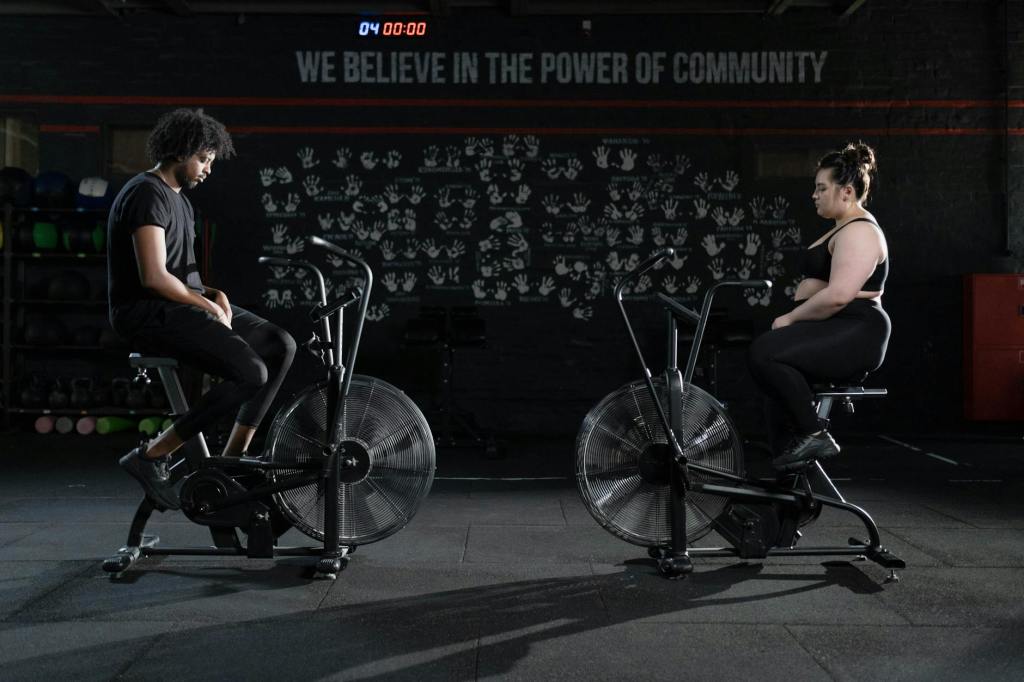
    You’ll strap on your OnePlus Watch 3, buy a $2,600 CAROL resistance bike, and simulate being chased by a saber-toothed tiger because “hormesis”—that holy word—demands mild ordeals to make you live forever. Resistance intervals, intermittent fasting, cold plunges. Goodbye winding bezels; hello gamified cell stress.

    Our poster boy? Bryan Johnson—the billionaire fasting himself pale, zapping his groin nightly to maintain the virility of a high school quarterback. Critics say he looks like a vampire who’s just failed a blood test. I say he’s the future. Picture him at 200, marrying a 20-year-old and siring a brood. Male Potency and Reproductive Success: the distilled recipe for happiness.

    Except I’m kidding. The truth: peer-reviewed science says we might beat the big killers before 90—heart disease, cancer, stroke, Alzheimer’s—but the biological ceiling is still ~100. Eventually your organs quit. All the optimization in the world won’t rewrite that.

    As a watch obsessive, I know the tyranny of time. The biohackers are fixated on biological time as if it’s the only kind that matters. But the Greeks knew a third: kairos—the moment saturated with meaning, purpose, connection. All the Bryan Johnsons in the world can’t 3-D print that.

    Live 200 years without kairos and you’re not a winner; you’re a remake of Citizen Kane with a garage full of exotic cars and no friends.

    A long time ago, a friend told me about the night cocaine hollowed him out so completely that he didn’t care his best friend was kissing his girlfriend. Then a voice in his head said, “Dude, you should care.” He went to rehab the next day. That’s soul work.

    And that’s what’s missing from the longevity cult: soul work. Without it, all the tech, watches, and optimized mitochondria in the world are just a shiny grift.

  • Why You Can’t Pursue the Watch Hobby in Solitude

    Why You Can’t Pursue the Watch Hobby in Solitude

    I should have known at thirteen that seventeen would be brutal. At thirteen, Janis Ian’s “At Seventeen” was already circulating through the house like a prophecy. I liked the song well enough, but my mother loved it. It was her time machine back to high school—loneliness, rejection, the ache of not measuring up. More than once I watched her eyes fill as the song drifted out of our Panasonic portable radio. That was her loneliness anthem. I needed my own. Mine was “Watching and Waiting” by the Moody Blues—a song for someone alone in the dark who senses there is something greater beyond himself and aches to make contact with it. Less teenage rejection, more metaphysical hunger.

    By seventeen, starting college, I was profoundly lonely. According to Erik Erikson, this is the stage defined by intimacy versus isolation, and I was losing badly. I felt it in my bones as a socially maladroit bodybuilder shuffling through classes by day and working nights as a bouncer at a teen disco called Maverick’s in San Ramon. Picture it: me at the door, arms crossed, watching a parade of thrill-seekers gyrate, flirt, and dissolve into noise. The job didn’t cure my loneliness; it distilled it. I was close enough to touch the crowd and miles away from belonging to it.

    One morning after a late shift, I dreamed I was living in the Stone Age. I was alone in a cave, wrapped in animal skins, stepping out into a gray, indifferent sky. I raised my arms toward the clouds, reaching for something—anything—that might answer me. In the background, “Watching and Waiting” played like a prayer I hadn’t yet learned how to pray. The dream was sad and beautiful, which felt like progress. As Kierkegaard noted, despair’s worst form is not knowing you’re in it. At least I knew. And as the Psalmist understood long before therapy existed, grace tends to follow sorrow once the sorrow has been fully felt.

    People hate being alone. They’ll sit through ads on YouTube rather than listen ad-free on Spotify because YouTube lets them comment, scroll, argue, agree—experience the song with others. Solitude may be cleaner, but communion is warmer. Which brings me to watches. What is the watch hobby in isolation? Nothing. A watch on a deserted island is just a lump of steel keeping time for no one. The hobby exists only because a community animates it—supports it, debates it, sometimes overfeeds it. A watch on your wrist is a semiotic flare. It says something. Others read it. You read them back. That exchange is the point.

    This is what I mean by Horological Communion: the quiet fellowship formed when watches are not hoarded as private trophies but offered as shared symbols. Meaning emerges only when the object is seen, recognized, and answered—at meetups, in forums, in comment sections, across a knowing glance from one wrist to another. Without that communion, the watch is mute. It ticks, faithfully, but it says nothing at all.

  • The Watch Miserabilist

    The Watch Miserabilist

    The Watch Miserabilist is a man determined—by temperament, guilt, vanity, and a punishing inner prosecutor—to turn a pleasurable hobby into a moral catastrophe. He stares at his collection as if it were evidence in a trial against him and sighs, “These watches mock me. I am unworthy. I have nowhere to wear them.” He glances down at his Omega Planet Ocean while seated in a windowless man cave and concludes, with theatrical despair, that the watch has exposed him as a fraud. Luxury, in his hands, becomes an accusation.

    He shuffles around his lair like a contemporary Gollum: threadbare robe, bloodshot eyes, four-day beard, posture of defeat. He looks vaguely unhoused. The contrast is brutal—this exhausted homunculus lugging around a six-thousand-dollar slab of Swiss engineering on his wrist. The watch gleams with purpose; the man does not. You can practically hear the object wondering how it ended up here. Whatever redemption the Miserabilist hoped the purchase would bring has failed spectacularly. The watch did not save him. It only sharpened the irony.

    Despite owning a dozen coveted Swiss watches, his YouTube channel limps along with fewer than fifty subscribers. His voice is saturated with despair—thick, damp, unventilated. Viewers last about five seconds before clicking away, not because the watch isn’t beautiful, but because the misery is suffocating. The sadness radiates through the screen. You can almost smell the robe. No lume shot can redeem a tone that sounds like it’s been steeped overnight in self-loathing.

    The uncomfortable truth is that every watch obsessive carries a trace of the Watch Miserabilist within. It’s the voice of guilt and nihilism that wants to poison enjoyment, to insist that pleasure is illegitimate, that beauty must be justified, that desire is suspect. This voice must be acknowledged—but never indulged. You laugh at it. You recognize it. You keep it at arm’s length. Because once coddled, it metastasizes. The Watch Miserabilist is not wisdom. It is a disease, and left unchecked, it will devour every ounce of joy in its path.