Category: Confessions

  • Echo-Chamber Fatigue: When Trusted Media Starts to Sound Like Static

    Echo-Chamber Fatigue: When Trusted Media Starts to Sound Like Static

    For years, I counted The Bulwark and The Atlantic among the few media outlets that seemed to keep their heads above water. Thoughtful, principled, and often sharp in their critique, they offered a sense of clarity during a time when the political center felt like it was collapsing under the weight of tribalism. I read The Atlantic with the same reverence people once reserved for the Sunday paper. I tuned into The Bulwark’s podcasts with eagerness, particularly the sparring matches and tag-team lamentations of Sarah Longwell and JVL.

    But lately, something’s shifted.

    I’ve been struggling to name the feeling exactly—disenchantment, disconnection, even a touch of annoyance. It’s not that they’ve suddenly started publishing bad takes (though no one’s immune to that). It’s more that I’ve come to feel like I’m listening to the same looped monologue. Their arguments are often cogent, yes, but increasingly predictable—a chorus of like-minded voices rehearsing the same concerns, circling the same drain.

    Call it echo-chamber fatigue.

    The Bulwark, once a clarion voice of principled conservatism and a fierce watchdog against authoritarianism, now often feels like a room full of smart people endlessly rehashing the same grim diagnosis: American democracy is circling the drain. The problem isn’t that they’re wrong—it’s that I already see the collapse unfolding in real time. Listening to it dissected again and again isn’t cathartic anymore. It’s just salt in the wound.

    The Atlantic, long celebrated for its intellectual breadth, increasingly feels like it’s scanning for moral alignment before publishing an idea. There’s little friction. Little surprise. Just a gentle stroking of reader confirmation bias.

    Meanwhile, I find myself gravitating to media that feels more alive—podcasts like The Gist with Mike Pesca, Blocked and Reported with Katie Herzog and Jesse Singal, The Fifth Column, Ink-Stained Wretches, and even The Remnant with Jonah Goldberg. These shows don’t always align with my politics—and that’s exactly the point. They’re not trying to usher me into ideological safety. They’re wrestling with absurdities across the spectrum. They’re skeptical. Curious. Sometimes contrarian. Always human.

    And that, I think, is the deeper issue: emotional resonance. The Bulwark and The Atlantic haven’t necessarily changed. I have. Or perhaps the times have. I need more than agreement—I need tension, exploration, contradiction. The intellectual monoculture, no matter how principled, starts to feel like a sedative after a while.

    I’ve even considered canceling my subscriptions. But there’s friction there, too: The Atlantic remains a useful classroom resource, and every now and then, The Bulwark sparks a genuinely engaging dialogue that reminds me why I once admired it so much.

    So I stay, for now. But I’ve moved my ears—and increasingly, my attention—toward media that still surprises me. That still thinks out loud, rather than reading from a polished script.

    I’m not rejecting thoughtful media. I’m just bored of watching it slowly turn into liturgy.

  • The future, we’re told, is full of freedom—unless you’re the one still cleaning the mess.

    The future, we’re told, is full of freedom—unless you’re the one still cleaning the mess.

    Last semester, in my college critical thinking class—a room full of bright minds and burnt-out spirits—we were dissecting what feels like a nationwide breakdown in mental health. Students tossed around possible suspects like a crime scene lineup: the psychological hangover of the pandemic, TikTok influencers glamorizing nervous breakdowns with pastel filters and soft piano music, the psychic toll of watching America split like a wishbone down party lines. All plausible. All depressing.

    Then a re-entry student—a nurse with twenty years in the trenches—raised her hand and calmly dropped a depth charge into the conversation. She said she sees more patients than ever staggering into hospitals not just sick, but shattered. Demoralized. Enraged. When I asked her what she thought was behind the surge in mental illness, she didn’t hesitate. “Money,” she said. “No one has any. They’re working themselves into the ground and still can’t cover rent, groceries, and medical bills. They’re burning out and breaking down.”

    And just like that, all our theories—algorithms, influencers, red-vs-blue blood feuds—melted under the furnace heat of economic despair. She was right. She sees the raw pain daily, the kind of pain tech billionaires will never upload into a TED Talk. While they spin futuristic fables about AI liberating humanity for leisure and creativity, my nurse watches the working class crawl into urgent care with nothing left but rage and debt. The promise of Universal Basic Income sounds charming if you’re already lounging in a beanbag chair at Singularity HQ, but out here in the world of late rent and grocery inflation, it’s a pipe dream sold by people who wouldn’t recognize a shift worker if one collapsed on their marble floors. The future, we’re told, is full of freedom—unless you’re the one still cleaning the mess.

  • Sometimes My Inner Adult Has to Clean Up the Mess of My Addictive Ways

    Sometimes My Inner Adult Has to Clean Up the Mess of My Addictive Ways

    I’ve lost track of how many times I’ve finished my work, promised myself a little harmless “watch browsing” as a reward, and ended up setting fire to my own peace of mind. It starts innocently enough—just a few clicks, some glossy macro shots, a limited edition here, a patina there. Eye candy, I tell myself. A visual snack.

    Then, inevitably, the spiral begins.

    Suddenly I’m convincing myself that I need another diver, another field watch, another reinterpretation of a watch I already own in three colorways. The whole endeavor, pitched as relaxation, mutates into a dopamine landmine. Each spec sheet whispers betrayal into my ear. That sapphire crystal isn’t in your current rotation. That Miyota movement ticks more accurately than your precious Seiko. Your collection, once a source of joy, now feels like a garage sale of missed opportunities.

    At this point, the adult version of me has to crawl out of whatever psychic broom closet I locked him in. He dusts himself off, adjusts his belt, and mutters: “Alright, junior. You’ve ogled enough. Shut the laptop. Go to your watch box, pull out the piece you’ve ignored for a week, strap it on, and sit with it. Feel the weight. Admire the bezel. Remind yourself why you bought it. And for God’s sake, stop self-inflicting existential crisis over a titanium caseback.”

    Because life’s too short to be haunted by the ghost of watches not bought.

  • Thank You for Your Support (and Your Gullibility): Two Corporate Con Jobs from the ’80s

    Thank You for Your Support (and Your Gullibility): Two Corporate Con Jobs from the ’80s

    I almost called this post “Memories of Manipulative Advertising,” but that’s like calling water wet. Advertising doesn’t sometimes manipulate—it’s a full-time gaslighter with a jingle and a logo. The question isn’t if it’s lying to you, but how cleverly, and with what flavor of Americana.

    Case in point: Bartles & Jaymes, the wine cooler swindle dressed up like a Norman Rockwell painting. Back in the 1980s, I worked at Jackson’s Wine & Spirits in Berkeley—a respectable shop selling overpriced Bordeaux to grad students pretending they weren’t on food stamps. Then came the Bartles & Jaymes blitz, courtesy of Hal Riney & Partners and the corporate overlords at E & J Gallo.

    Suddenly, America was smitten with two crusty front-porch philosophers in denim and flannel, sipping pastel-colored booze and thanking us for “our support,” as if we were funding their modest struggle to afford Hamburger Helper and citronella candles. They weren’t winemakers. They weren’t even real. One was a retired Air Force pilot, the other a contractor. But that didn’t stop millions from believing that these Gallo sock puppets had personally hand-crafted their strawberry kiwi elixirs under a tin roof in Appalachia.

    These weren’t ads. They were full-blown folklore, sold to a Reagan-era audience desperate to believe in something wholesome—preferably something with artificial watermelon flavor and a 5% ABV.

    But the biggest act of psychological warfare I witnessed during my wine shop tenure came not from Gallo, but from that fizzy behemoth: Coca-Cola.

    In 1985, Coke announced it was changing its iconic recipe. Cue the national meltdown. Pickup trucks rolled into the wine store like we were FEMA and this was the end times. Grown men, trembling with brand-loyalty withdrawal, bought crates of “original” Coke like it was bottled youth. I became an emergency hand truck operator, wheeling out what amounted to liquid nostalgia to wide-eyed customers who treated me like I was delivering insulin to a diabetic family.

    Then, surprise!—Coke re-released the original as “Classic Coke,” and everyone breathed a sugary sigh of relief. It was less a product relaunch and more a mass-conditioning experiment, proving that if you poke the American consumer hard enough, they’ll thank you for the bruise.

    These weren’t just ad campaigns. They were operatic manipulations of identity, trust, and memory—corporate psyops disguised as beverage options.

  • WordPress: My Kettlebell Gym of the Mind

    WordPress: My Kettlebell Gym of the Mind

    I launched my WordPress blog on March 12, evicting myself from Typepad after it was sold to a company that treats blogs the way landlords treat rent-controlled tenants: with bored disdain. Typepad became a ghost town in a bad neighborhood, so I packed up and moved to the gated community of WordPress—cleaner streets, better lighting, and fewer trolls.

    For the past ten weeks, I’ve treated WordPress like a public journal—a digital sweat lodge where I sweat out my thoughts, confessions, and pedagogical war stories from the frontlines of college teaching. I like the routine, the scaffolding, and the habits of self-control. Blogging gives me something I never got from social media or committee meetings: a sense of order in a culture that’s spun off its axis.

    But let’s not kid ourselves. WordPress isn’t some utopian agora where meaningful discourse flourishes in the shade of civility. It’s still wired into the dopamine economy. The minute I start checking likes, follows, and view counts, I’m no longer a writer—I’m a lab rat pressing the pellet button. Metrics are the new morality. And brother, I’m not immune.

    Case in point: I can craft a thoughtful post, click “Publish,” and watch it sink into the abyss like a message in a bottle tossed into a septic tank. One view. Maybe. Post the same thing on Reddit, and suddenly I’m performing for an arena full of dopamine-addled gladiators. They’ll upvote, sure—but only after the professional insulters have had their turn at bat. Reddit is where clever sociopaths go to sharpen their knives and call it discourse.

    WordPress, by contrast, is a chill café with decent lighting and no one live-tweeting your every existential sigh. It’s a refuge from the snarling hordes of hot-take hustlers and ideological bloodsport. A place where I can escape not only digital toxicity, but the wider derangement of our post-shame, post-truth society—where influencers and elected officials are often the same con artist in two different blazers.

    Instead of doomscrolling or screaming into the algorithmic void, I’ve taken to reading biographies—public intellectuals, athletes who aged with dignity, tech pioneers who are obsessed with taking over the world. Or I’ll go spelunking into gadget rabbit holes to distract myself from the spiritual hangover that comes from living in a country where charisma triumphs over character and truth is whatever sells ad space.

    In therapy-speak, my job on WordPress is to “use the tools,” as Phil Stutz says: to strengthen my relationship with myself, with others, and with the crumbling world around me. It’s a discipline, not a dopamine drip. Writing here won’t make me famous, won’t make me rich, and sure as hell won’t turn me into some cardigan-clad oracle for the digital age.

    What it will do is give me structure. WordPress is where I wrestle with my thoughts the way I wrestle kettlebells in my garage: imperfectly, regularly, and with just enough sweat to keep the madness at bay.

  • We All Have That One Band That Changed Our Lives Forever: The Sundays

    We All Have That One Band That Changed Our Lives Forever: The Sundays

    I suppose we all have one band that swept us off our feet and we are blinded at our own personal Damascus and changed by the music forever. My Damascus moment was with The Sundays. I was driving north, visiting my mother in the San Francisco Bay Area, when “Here’s Where the Story Ends” came on the radio as I wound up the dreamy green pastures and lazy windmills of The Altamont Pass. 

    The music seemed to radiate light all around me. I was careful not to crash the car. I calmed myself down and decided not to go straight to my mom’s. I drove straight to a record store and bought “Reading, Writing, and Arithmetic” and soon after heard on the radio that The Sundays were playing at Slim’s in San Francisco. I called some ex-girlfriends to see if they wanted to go, but they were too busy, so I went alone. 

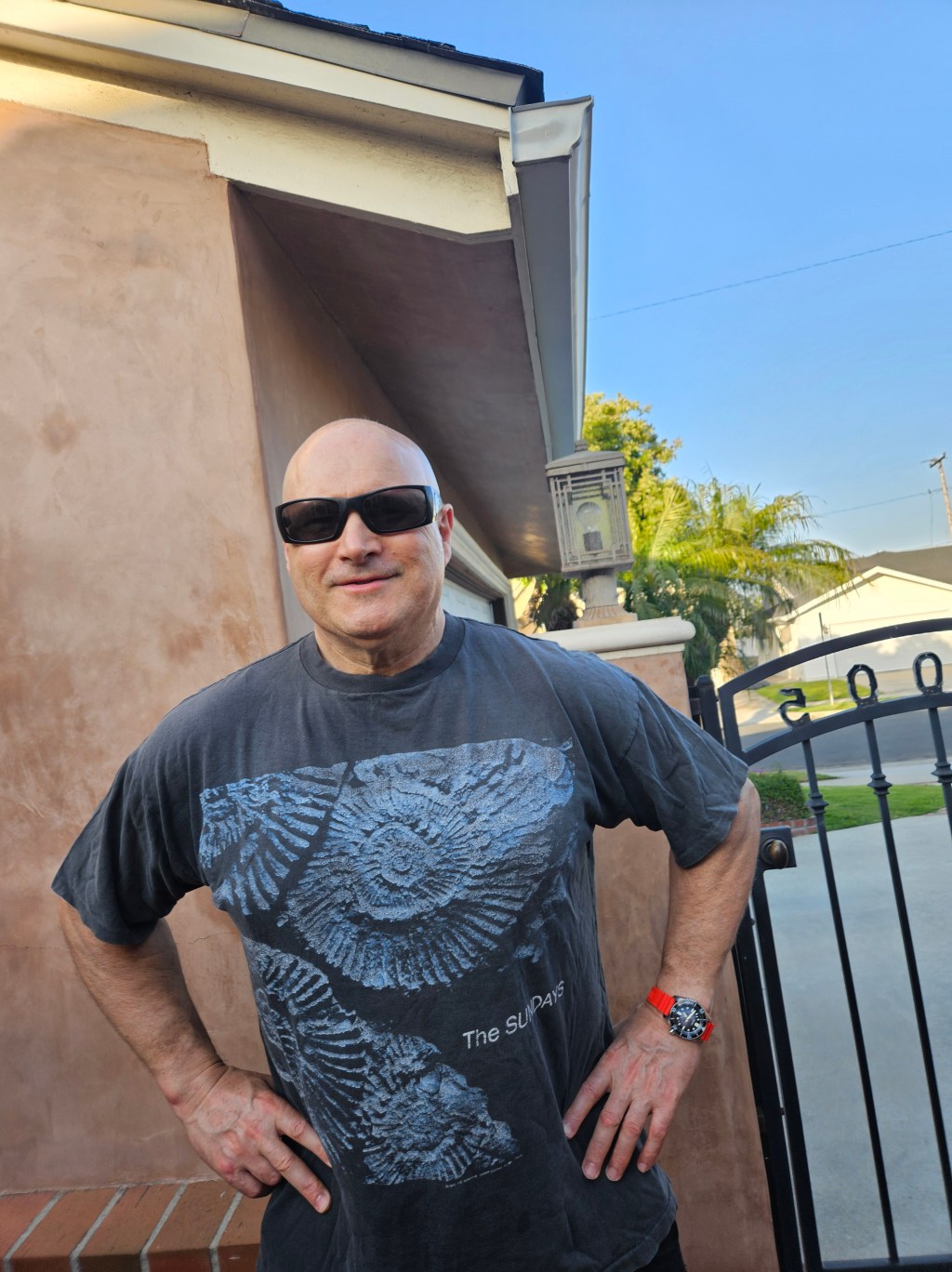
    I leaned against a pillar and watched the 4-piece ensemble play the album. “My Finest Hour” and a song I had never heard before, “Turkish,” grabbed me the most. I bought a T-shirt. I still own it and wear it from time to time. “You’re Not the Only One I Know” remains my favorite song of all time. If you love that song, I recommend you find the rare B side of the Trash Can Sinatras’ “My Mistake” for a similar vibe. In any event, The Sundays changed my life and I will always be grateful for their music. 

  • If Used Wisely, AI Can Push Your Writing to Greater Heights, But It Can Also Create Writer’s Dysmorphia

    If Used Wisely, AI Can Push Your Writing to Greater Heights, But It Can Also Create Writer’s Dysmorphia

    No ChatGPT or AI of any kind was used in the following:

    For close to 2 years, I’ve been editing and collaborating with ChatGPT for my personal and professional writing. I teach my college writing students how to engage with it, giving it instructions to avoid its default setting for bland, anodyne prose and teaching it how to adopt various writing personas. 

    For my own writing, ChatGPT has boosted my prose and imagery, making my writing more stunning, dramatic, and vivid.

    Because I have been a bodybuilder since 1974, I will use a bodybuilding analogy: Writing with ChatGPT is like bodybuilding with PEDS. I get addicted to the boost, the extra pump, and the extra muscle. Just as a bodybuilder can get body dysmorphia, ChatGPT can give writers a sort of writer’s dysmorphia. 

    But posting a few articles on Reddit recently in which a few readers were put off by what they saw as “fake writing,” I stopped in my tracks to question my use of ChatGPT. Part of me thinks that the hunger for authenticity is such that I should be writing content that is more like the natural bodybuilder, the guy who ventures forth in his endeavor with no PEDS. What you see is what you get, all human, no steroids, no AI.

    While I like the way ChatGPT pushes me in new directions that I would not explore on my own and makes the writing process engaging in new ways, I acknowledge that AI-fueled writer’s dysmorphia is real. We can get addicted to the juiced-up prose and the razzle-dazzle.

    Secondly, we can outsource too much thinking to AI and get lazy rather than do the work ourselves. In the process, our critical thinking skills begin to atrophy.

    Third, I think we can fill our heads with too much ChatGPT and live inside a hazy AI fever swamp. I recall going to middle school and on the outskirts of the campus, you could see the “burn-outs,” pot-addicted kids staring into the distance with their lizard eyes. One afternoon a friend joked, “They’re high so often, not being high must be a trip for them.” What if we become like these lizard-eyed burnouts and wander this world on a constant ChatGPT high that is so debilitating that we need to sober up in the natural world upon which we find the non-AI existence is its own form of healthy pleasure? In other words, we should be careful not to let ChatGPT live rent-free in our brains.

    Finally, people hunger for authentic, all-human writing, so moving forward on this blog, I want to continue to push myself with some ChatGPT-edited writing, but I also want to present all-natural, all-human writing, as is the case with this post. 

  • The Sundays Can’t Come Back—They Never Wanted to Be Here

    The Sundays Can’t Come Back—They Never Wanted to Be Here

    I estimate there are maybe 50,000 diehard fans of The Sundays left on Earth—middle-aged romantics who imprinted on their music in their twenties like baby ducks and have carried that delicate soundscape in their bones ever since. These are the ones still haunting Reddit threads and aging fan forums, half-pleading, half-praying for Harriet Wheeler and David Gavurin to reemerge from their English countryside exile and record something—anything—before they fully dissolve into myth.

    I count myself among them. I think “You’re Not the Only One I Know” is the most beautiful song ever written, full stop. And yes, I have complicated feelings about its sudden afterlife on TikTok. On one hand, I’m glad new ears are discovering it. On the other, I want to slam the door and shout, “Get off my lawn—it’s my song.” Like any relic of private beauty, it feels stolen once it trends.

    But here’s the thing: The Sundays aren’t coming back. And they shouldn’t. Their music is a love letter to solitude. It’s woven from the threads of retreat, quiet heartbreak, and the refusal to participate in the world’s noisy charade. Every line aches with the voice of someone who’d rather be home. A comeback would be a contradiction—like resurrecting Greta Garbo to guest on a reality show. Their brilliance was their withdrawal.

    Take “You’re Not the Only One I Know”—the narrator, calmly stationed in a chair, shooing people away like pigeons. Or “Here’s Where the Story Ends,” where every attempt at connection curdles in the air. Or “My Finest Hour,” which ends not in triumph but in a gentle surrender to domestic retreat. These aren’t anthems for a reunion tour. They’re hymns of hibernation.

    The Sundays were never built for comebacks. Their art was a form of aesthetic convalescence, a music of shy resilience. Their narrators, like the band itself, are Edward Scissorhands types—fragile, inward, best left unbothered in their Victorian turret. If they returned, they wouldn’t be The Sundays. They’d be Tuesday Afternoon.

  • Hungerphoria: Finding Comfort in the Empty Stomach

    Hungerphoria: Finding Comfort in the Empty Stomach

    Let’s get something straight: my weight-loss quest isn’t about vanity. I’m not trying to become the next shirtless fitness guru hawking collagen peptides to the dopamine-addled masses on Instagram. No, this is about survival—mental and physical, which, despite popular delusion, are not separate departments. They’re a single, tangled mess of neurons and cravings, and if one goes down, the whole system buckles.

    So, I’ve been on a high-protein, calorie-restricted diet for five weeks (15 pounds lost so far). Not the sexy kind with green smoothies and acai bowls—this is grim, disciplined, macro-tracked warfare. And yet something strange and glorious is happening: my brain is beginning to like it.

    Case in point: I used to get jittery before class, pacing my office like a caged animal and convincing myself I needed a protein bar or an apple just to face a room of disinterested freshmen. But lately? I stroll in on an empty stomach like a monk walking into a Zen garden. The hunger is there, sure, but it doesn’t bark anymore. It purrs.

    Last night, same story. Three hours after dinner, the belly murmured—but instead of scrambling for almonds or scanning the fridge for peanut butter-oatmeal “protein” balls, I smiled. That emptiness didn’t feel like punishment. It felt like progress. A signal. A secret handshake from my metabolism saying, “We’re doing it. Keep going.”

    Which brings me to what I’m now calling Hungerphoria.

    Let’s define it properly, shall we?

    Hungerphoria is the paradoxical joy one feels in the disciplined embrace of hunger—a fleeting but addictive high that replaces food anxiety with a sense of mastery and serenity. Rather than viewing hunger as a threat or an emergency, the hungerphoric individual interprets the growl of an empty stomach as applause from the body’s metabolic engine. It’s not deprivation; it’s affirmation. Hungerphoria turns a late-night craving into a badge of progress, a quiet reminder that transformation is happening invisibly, molecule by molecule. Like the runner’s high or the monk’s calm, hungerphoria isn’t about denial—it’s about the subtle euphoria of restraint, the mental alchemy of converting appetite into purpose.

    Did I stumble onto this like a weary gold miner striking the motherlode? Maybe. Should I start selling merch—Hungerphoria hats, mugs, crop tops? Tempting. Should I become a lifestyle influencer preaching the gospel of the empty belly? Possibly.

    But then a voice in my head, the responsible one who still wears pants with belt loops, whispers: “Easy, tiger. Lose another thirty. Keep it off for a year. Then maybe you can start printing t-shirts.”

  • Deepfakes and Detentions: My Career as an Unwilling Digital Cop

    Deepfakes and Detentions: My Career as an Unwilling Digital Cop

    Yesterday, in the fluorescent glow of my classroom, I broke the fourth wall with my college students. We weren’t talking about comma splices or rhetorical appeals—we were talking about AI and cheating, which is to say, the slow erosion of trust in education, digitized and streamed in real time.

    I told them, point blank: every time I design an assignment that I believe is AI-resistant, some clever student will run it through an AI backchannel and produce a counterfeit good polished enough to win a Pulitzer.

    Take my latest noble attempt at authenticity: an interview-based paragraph. I assign them seven thoughtful questions. They’re supposed to talk to someone they know who struggles with weight management—an honest, human exchange that becomes the basis for their introduction. A few will do it properly, bless their analog souls. But others? They’ll summon a fictional character from the ChatGPT multiverse, conduct a fake interview, and then outsource the writing to the very bot that cooked up their imaginary source.

    At this point, I could put on my authoritarian costume—Digital Police cap, badge, mirrored shades—and demand proof: “Upload an audio or video clip of your interview to Canvas.” I imagine myself pounding my chest like a TSA agent catching a contraband shampoo bottle. Academic integrity: enforced!

    Wrong.

    They’ll serve me a deepfake. A synthetic voice, a synthetic face, synthetic sincerity. I’ll counter with new tech armor, and they’ll leapfrog it with another trick, and on and on it goes—an infinite arms race in the valley of uncanny computation.

    So I told them: “This isn’t why I became a teacher. I’m not here to play narc in a dystopian techno-thriller. I’ll make this class as compelling as I can. I’ll appeal to your intellect, your curiosity, your hunger to be more than a prompt-fed husk. But I’m not going to turn into a surveillance drone just to catch you cheating.”

    They stared back at me—quiet, still, alert. Not scrolling. Not glazed over. I had them. Because when we talk about AI, the room gets cold. They sense it. That creeping thing, coming not just for grades but for jobs, relationships, dreams—for the very idea of effort. And in that moment, we were on the same sinking ship, looking out at the rising tide.