Category: Confessions

  • 700 Calories or Bust: The Cardio Ultimatum

    700 Calories or Bust: The Cardio Ultimatum

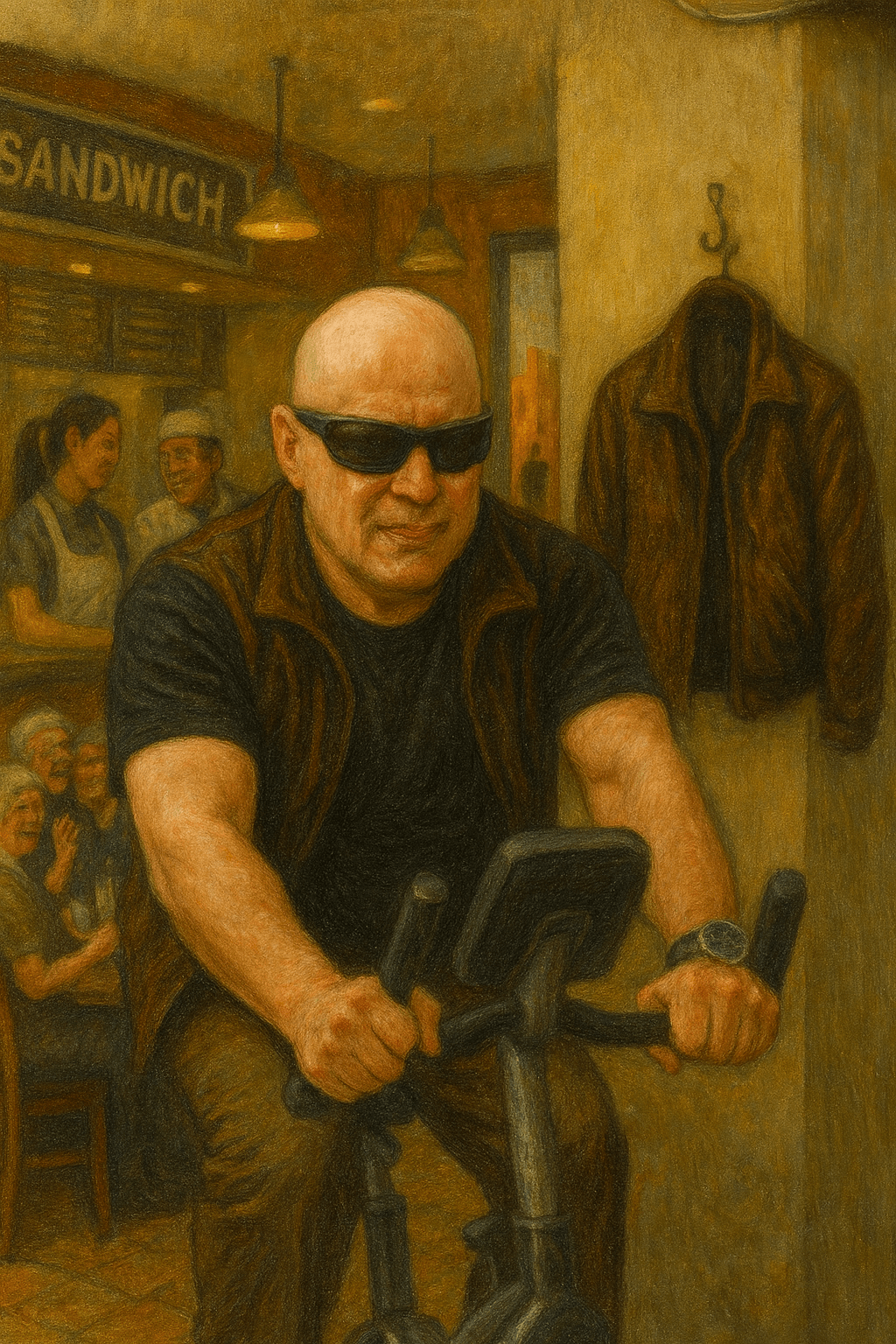
    Every time I saddle up on the Schwinn Airdyne for my daily hour of self-inflicted cardio torment, I don’t just ride—I perform. My mission? Burn 720 calories in 60 minutes. My method? A particularly deranged form of mental gamification I call Suffering-as-Spectacle Syndrome—the belief that my private workout is being broadcast live to a breathless nation, complete with commentary by Jim McKay and Howard Cosell.

    In my mind’s eye, the camera pans across a roaring stadium. A chyron flashes: “BREAKING: McMahon Must Hit 700 Calories to Avert National Crisis.” Jim McKay, with his signature gravitas, informs viewers that if I fail to meet my target, the U.S. economy will spiral into recession, gas prices will surge to $14 a gallon, and toilet paper will vanish from store shelves once again. The stakes are ludicrous. And completely imaginary. But they work.

    By the 50-minute mark, drenched in sweat and gritting my teeth through lactic-acid hell, I’m at 600 calories. McKay’s voice echoes through the fantasy ether: “Ladies and gentlemen, we may just be in the clear. Barring catastrophic collapse, Mr. McMahon appears poised to save the republic.”

    And I believe him. For that final, lung-shredding stretch, I’m not just pedaling a stationary bike in my garage. I’m anchoring Western civilization.

    This isn’t just exercise. It’s an endorphin-fueled psychodrama. It’s Rocky Balboa meets CNN breaking news. And yes, it’s completely unhinged—but so is trying to extract meaning from a piece of cardio equipment designed to make you question every life choice you’ve ever made.

  • The Futility of Being Ready

    The Futility of Being Ready

    In December of 2019, my wife and I, both lifelong members of the National Society of Worrywarts, stumbled upon reports of a deadly virus brewing in China. Most people shrugged. We did not. I jumped on eBay and ordered a bulk box of masks the size of a hotel mini-fridge. It felt ridiculous at the time—a paranoid lark, like filling a doomsday bunker because you heard thunder on a Tuesday. But three months later, on March 13, 2020, the world shut down, and that cardboard box of N95s felt less like overreaction and more like prophecy.

    These days, I teach college in what I call the ChatGPT Era—a time when my students and I sit around analyzing how artificial intelligence is rewiring our habits, our thinking, and possibly the scaffolding of our humanity. I don’t dread AI the way I dreaded COVID. It doesn’t make me stock canned beans or disinfect door handles. But it does give me that same uneasy tremor in the gut—the sense that something vast is shifting beneath us, and that whatever emerges will make the present feel quaint and maybe a little foolish.

    It’s like standing on a beach after the earthquake and watching the water disappear from the shore. You can back up your files, rewrite your syllabus, and pretend to adapt, but you know deep down you’re stuck in Prepacolypse Mode—that desperate, irrational phase where you try to outmaneuver the future with your label maker. You prepare for the unpreparable, perform rituals of control that offer all the protection of a paper shield.

    And through it all comes that strange, electric sensation—Dreadrenaline. It’s not just fear. It’s a kind of alertness, a humming, high-voltage awareness that your life is about to be edited at the molecular level. You’re not just anticipating change—you’re bracing for a version of yourself that will be unrecognizable on the other side. You’re watching history draft your name onto the roster and realizing, too late, that you’re not a spectator anymore. You’re in the game.

  • Flabnesia and the Fall of the Weight-Loss Hero

    Flabnesia and the Fall of the Weight-Loss Hero

    Congratulations! You’ve shed 47 pounds over 8 months, sliding from a swollen 247 to a sleek, even 200—the numerical promised land. At 247, you weren’t just overweight; you were a walking billboard for metabolic dysfunction. A bloated monument to poor impulse control. Your blood pressure was climbing Mount Everest, your triglycerides were hosting a rave, your fingers cracked like old parchment, and your foot buzzed with the low-voltage horror of neuropathy. Your joints? They screamed in Morse code every time you dared to walk more than half a Target.

    And let’s not forget the existential FOMO—not Fear of Missing Out on parties or vacations, but on the you you were supposed to be. The one who didn’t sound like an old staircase every time he stood up.

    But then, in a moment of uncharacteristic clarity—or maybe rage at your own reflection—you declared war on the fat demon. You slashed your calories to a monk-like 2,300, jacked your protein intake to bodybuilder levels, and banished refined carbs and sugar like they owed you money. Your entire cerebral cortex was repurposed into a fat-loss mission control center. Progress became your dopamine drip. Watching the numbers fall on the scale felt like watching your soul return from exile.

    You were, in the language of gymfluencers, “on a journey.” A phrase so overused it should be banished to a motivational poster graveyard. But cliché or not, the journey gave your life narrative structure. It made you feel heroic. Disciplined. Alive.

    And then—you arrived.

    Two hundred pounds. The exact number. Mission accomplished. Cue the existential silence.

    Because now what?

    With the drama over, meaning slips through your fingers like a protein shake on a sweaty treadmill. You no longer wake up with a fat war to fight. And into that vacuum slithers the ancient enemy of every former fatty: complacency.

    Complacency brings friends. First comes Calorie Creep—just a nibble here, a mindless bite there, a slow but deliberate loosening of your former austerity. Then arrives Flabnesia, that insidious amnesia that erases the memory of how awful 247 felt—how humiliating, how painful, how limited. Your jeans start getting tight again, and you blink in confusion as if the dryer is gaslighting you.

    Next, the cruelest symptom of all: Goalstalgia—a perverse longing for the righteous high of the weight-loss struggle. You miss the purpose, the metrics, the drama. And in a dark twist of psychological masochism, you begin to sabotage yourself, just to start over—to claw your way out of the hole you’re actively digging again.

    And so the cycle begins anew. You are no longer the master of your fate or the captain of your macros. You are a cautionary tale—an Ouroboros in athleisure, endlessly consuming your own progress.

  • Psychedelic Mushrooms and the Art of Saying “Meh”

    Psychedelic Mushrooms and the Art of Saying “Meh”

    People I admire—deep thinkers, seekers, trauma survivors, even that old roommate who once confused a lava lamp for God—swear by magic mushrooms. They describe transcendence, tearful reunions with their inner child, and conversations with the universe where the universe speaks perfect Jungian. Apparently, psilocybin is the shortcut to enlightenment, the divine inbox where angels drop PDFs of your truest self.

    And yet, I remain a bastion of Mushroom Apathy Syndrome (MAS)—a spiritual condition marked by an impenetrable indifference to the fungal fanfare. While others are melting into cosmic unity on some mossy hillside, I’m thinking about whether it’s time to reorganize my spice rack. I don’t want to chew sacred mold to glimpse the divine. If I need an ego death, I’ll just read my old poetry.

    Sure, I’d love to encounter the Divine—maybe Spinoza’s glowing web of pantheistic awe, maybe a seraph with decent taste in jazz. But I just can’t take mystical advice from a guy in a woven beanie yelling about chakras while wearing Crocs. If I want a head trip, I’ll queue up Yes, The Strawbs, or Crosby, Stills & Nash and lie on the floor until my chakras align from sheer harmonic exhaustion. Or better yet, I’ll abstain from sugar for ten months and then unleash nirvana with a single bite of decadent, spice-laced carrot cake.

    My condition is also rooted in a kind of Fungal Nihilism—the belief that no mushroom, no matter how ancient, artisanal, or Amazonian, can fix the howling absurdity of existence. You can’t outrun entropy with a spore. If I want to stare into the abyss and laugh, I’ll binge-watch George Carlin eviscerate modern life with nothing more than a mic, a ponytail, and a pair of skeptical eyebrows.

    Ultimately, I practice Spore Snobbery—a reflexive contempt for the breathless mythologizing of psychedelic fungus. These aren’t sacred portals. They’re glorified mushrooms with a publicist. For some, they offer spiritual clarity. For me, they sound like a gastrointestinal trust fall with no one there to catch you but an ayahuasca-shaman-turned-life-coach named Brad.

  • Manchild Mail Euphoria: A Case Study in Horological Regression

    Manchild Mail Euphoria: A Case Study in Horological Regression

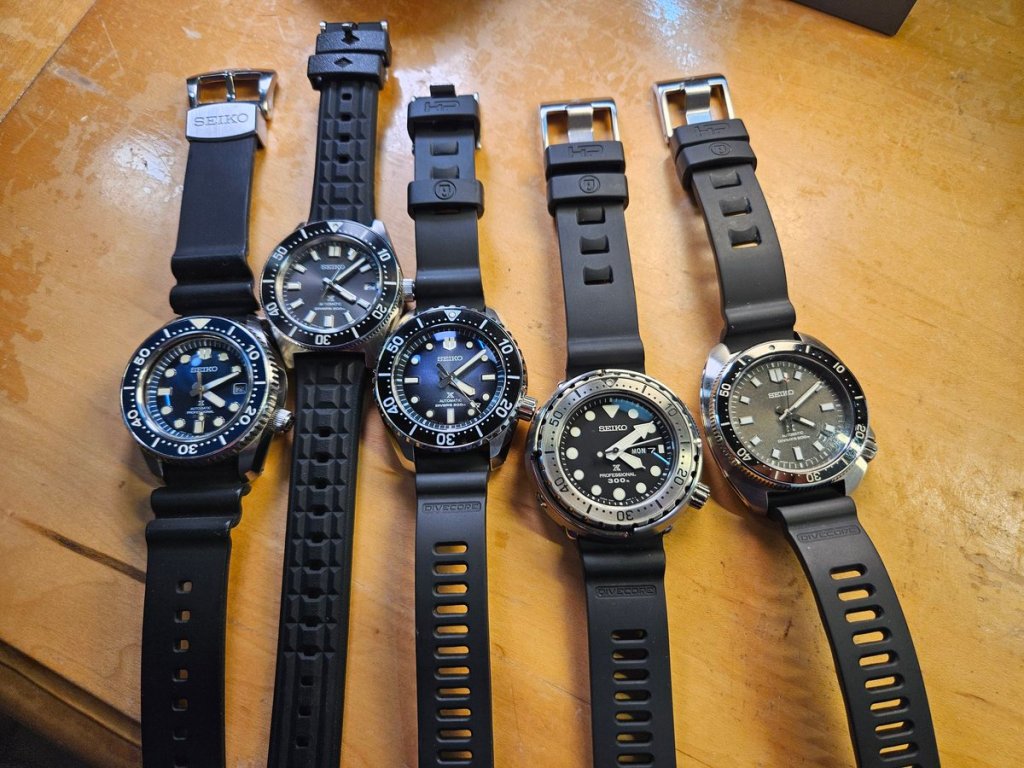
    If you’re a watch obsessive—and let’s face it, if you’re reading this, you probably are—then you need to come to terms with a condition known as Manchild Mail Euphoria: the dizzying, slightly shame-soaked high of waiting for your grown-up toy to arrive in the mail, fully aware that you’re a functional adult behaving like a child hopped up on Capri Sun and Saturday morning cartoons.

    Here’s how it manifests:

    A man—chronologically mature, fiscally semi-responsible, and in possession of at least one mortgage calculator app—orders a watch. Not just any watch. A timepiece so beautiful, so precise, so him, that he spirals into a state of pre-delivery delirium. He begins checking the tracking number with the devotion of a Wall Street analyst watching a volatile stock. “Shipment departed Osaka.” His soul ascends.

    But it doesn’t stop there. To sustain his anticipation, he re-watches YouTube reviews of the very watch he just purchased. Multiple times. Same watch, same narrator, same B-roll of gloved hands rotating the bezel in soft lighting. He knows it’s ridiculous. He watches anyway. It’s horological foreplay.

    As the days crawl by, he regresses—emotionally, spiritually, perhaps hormonally—back to the age of nine, when he mailed seven cereal boxtops to Battle Creek, Michigan, in exchange for a “free” plastic submarine that arrived six to eight weeks later in a box of dreams. Except now, the stakes are higher and the shame is real. Because unlike the submarine, this watch costs $1,500 and he’ll be explaining it to his spouse with a sentence that begins, “Well, technically, I sold two others…”

    He feels the absurdity of it all, of course. He knows that waiting for this package is giving him the same endorphin rush as a contestant winning a brand-new car on Let’s Make a Deal. But he can’t help it. The heart wants what it wants, and in this case, the heart wants sapphire crystal, applied indices, and 200 meters of water resistance he’ll never actually test.

    Manchild Mail Euphoria is real. It’s irrational, embarrassing, and deeply human. And the worst part? The moment the package arrives and he slices open the box like it contains the Ark of the Covenant… he’s already thinking about the next one.

    Because nothing tells time quite like your own arrested development.

  • The Beautiful Unwearable

    The Beautiful Unwearable

    Do you own a Beautiful Unwearable? If so, you already know the cruel paradox: the watch that steals your breath every time you look at it, yet somehow never makes it onto your wrist.

    Picture this: you’re hypnotized by a $2,000 Seiko Astron—a stunner whose build quality punches well above its weight class, easily rivaling watches priced four digits higher. Every gleam of that GPS-synced, zirconia ceramic bezel sends a little burst of dopamine through your bloodstream. So you do what any horological romantic would do: you pull the trigger. A week later, it’s in your hands, fresh from Japan, glinting like a Bond villain’s cufflink.

    And then… nothing.

    You stare at it. You admire it. You photograph it from five angles under different lighting conditions. But when it’s time to choose a watch to wear—on a walk, to the store, or even to teach class—it’s always your rugged dive watch that gets the call. The Astron? It’s too dressy, too refined, too… aspirational. Like buying a tuxedo when your calendar is a wasteland of Costco runs and Zoom meetings.

    So it sits. Day after day. In its cushioned little coffin, gorgeous and neglected, whispering, “You’re not worthy of me.” Unlike wall art, it can’t be displayed; unlike a tool watch, it doesn’t beg to be worn. It becomes horological purgatory—a $2,000 museum piece trapped in a drawer.

    Personally? I’ve never bought an Astron. Why? Because I’ve already mentally lived this scenario. I’ve played out the whole Shakespearean arc in my head: love at first sight, the impulsive purchase, the honeymoon glow… followed by guilt, alienation, and silent shame. I don’t need a Beautiful Unwearable in my collection to know it would haunt me like a luxury ghost.

  • Manuscripnosis: A Vexing Tale of Self-Sabotage

    Manuscripnosis: A Vexing Tale of Self-Sabotage

    I suffer from a humiliating literary affliction: when I’m not trying to write a book—when I’m simply crafting loose, witty blog posts—my prose sings. It breathes. It struts across the page like it owns the place. In those moments, I’m not an “author,” I’m just a clever diarist with decent rhythm and a nose for irony.

    But then comes the fatal whiff—that intoxicating scent of a book deal drifting in from the distance like a mouth-watering freshly-baked coconut macaroon. Suddenly, I begin to try. I sit up straighter. I structure. I strategize. I lean into “craft.” And that’s when my prose, once alive and sinewy, collapses like a soufflé that sensed it was being watched. Gone is the energy, the voice, the mischievous verve. What remains is a flaccid husk of what could have been—something that reads less like a potential bestseller and more like a workshop handout no one asked for.

    This, dear reader, is the vicious, looping paradox I call Unintended Book Syndrome. The moment I stop writing and start authorshipping, my words die on the vine.

    The clinical term, I believe, is Manuscripnosis: a trance-like state in which blog-worthy brilliance is transfigured into joyless literary taxidermy the moment the idea of a “real book” enters the room. I have lived with this disorder for decades. I’ve tried everything—lowering expectations, denying ambition, even faking indifference. Nothing works. The moment I think this could be a book, the prose curls up and dies like a Victorian heroine too delicate for publication.

    Sometimes I fantasize about quitting writing altogether. But abstinence only makes it worse. The despair of not writing eclipses even the misery of writing badly. Which means I am doomed to live forever in this creative purgatory—hovering between genius and garbage, blog post and book, dopamine and dread.

  • The Smoothie of Exile: A Dream of Paid Rejection

    The Smoothie of Exile: A Dream of Paid Rejection

    Last night, I dreamed my twin daughters and I joined what looked, at first glance, like a utopian community center—part fitness club, part cafe, part self-help retreat. The kind of place where earnest posters extol the virtues of “togetherness” and “belonging” in fonts that scream inclusion. There was a smoothie bar. A snack station. A lunch buffet curated by someone who probably used the phrase “elevated casual.” Discussion groups buzzed in breakout rooms, and the coffee lounge pulsed with laughter, back-pats, and the shared glow of collective smugness.

    But not for us.

    From the moment we arrived, we were treated like decorative ghosts—visible only enough to be politely ignored. The regulars were effervescent with each other, all air kisses and animated banter, but when it came to my daughters and me, they offered only the vacant glance you reserve for broken vending machines. At first, I rationalized it: we were new. They didn’t know us. Social ecosystems take time.

    Then the invoices started arriving. Yes, invoices—for a couple of smoothies, a shower, maybe a banana or two. The charges totaled over $200, wrapped in clinical fonts and passive-aggressive phrasing: “usage fee,” “non-member adjustment,” “community maintenance surcharge.” I considered paying them—not because they were fair, but because I foolishly believed acceptance might be purchasable, like premium seating at the theater of belonging.

    But no. The smiles never came. The warmth never thawed. And so, like exiles from Eden (if Eden had a kale bar), we left. Defeated, thirsty for something we couldn’t name, we wandered to a local supermarket and filled our cart with bottled drinks of every variety. Coconut water, green tea, mineral fizz—liquid substitutes for the affirmation we were denied. As if hydration might heal what inclusion had refused to.

  • Identifying and Coping with Neighborplexity

    Identifying and Coping with Neighborplexity

    My dear, respectable neighbors, the Pattersons have forced me to contend with Neighborplexity. Let me explain. For years, I lived in blissful harmony with these upstanding citizens—the kind of people who proudly displayed their New Yorker subscriptions and NPR tote bags like badges of intellectual honor. We had an unspoken pact, a mutual understanding that we were members of the Smart People’s Society, where the TV was reserved for documentaries, award-winning dramas, and the occasional indie film that required subtitles and a dictionary to understand.

    But then, one evening, as I casually glanced out my window—just a harmless peek, really—I saw something so grotesque, so utterly incomprehensible, that it shook me to my core. There, through the open window of my once-revered neighbors, I saw them glued to the screen—not just any screen, but one streaming a TV show so mind-numbingly lowbrow it made reality itself seem like a parody. My brain went into full-blown meltdown. Could it be? Were they actually watching Love Island?

    I blinked, hoping I’d misinterpreted the scene, but no—the horror was all too real. My neighbors, those paragons of taste and intellect, were indulging in what could only be described as televised garbage. I was struck down by a case of Neighborplexity: that gut-wrenching, mind-twisting moment when you realize you might not know the people next door at all. Suddenly, my world was flipped upside down. Had they always been this way? Were those book club meetings just a ruse, a clever cover-up for their secret love affair with trash TV? I felt like I’d just discovered that the Michelin-starred chef who lived down the block actually preferred dining on Spam straight out of the can.

    I thought we were united in our disdain for anything that wasn’t at least 95% fresh on Rotten Tomatoes. But now? Now, I wasn’t so sure. How could they betray me like this? Was every dinner party, every casual chat about the latest literary masterpiece, just a well-orchestrated charade? My mind spun as I tried to reconcile the image of these seemingly cultured, well-spoken people with the reality of them willingly watching—gasp—that show.

    What do I do now? How do I move forward? Can I ever look them in the eye again, or will I be forever haunted by this dark revelation, this unraveling of the fabric of my once-idyllic neighborhood? All because of one dreadful, unforgivable act of poor taste on TV. Love Island, of all things. The horror! The betrayal! The absolute audacity! 

    To get through this ordeal, I must have a clear definition of Neighborplexity and study the coping mechanisms to help me deal with this. So here we go.

    Neighborplexity (n.): The psychological whiplash that occurs when your carefully curated perception of your neighbors—those tote-bag-wielding, podcast-quoting, fair-trade-coffee-brewing intellectuals—is shattered by the revelation that they voluntarily watch garbage television. One moment you’re nodding in mutual disdain over a New Yorker cartoon; the next, you’re watching them binge Love Island with the hungry intensity of someone decoding the Dead Sea Scrolls. Neighborplexity induces spiritual vertigo, trust erosion, and the overwhelming sense that the social fabric of your ZIP code has been irreparably torn by sequins, fake tans, and manufactured drama. It is, in essence, a full-blown existential crisis brought on by a neighbor’s taste in television.


    7 Coping Mechanisms for Surviving Neighborplexity:

    1. Curated Amnesia – Tell yourself you didn’t see it. What open window? What TV screen? As far as you’re concerned, they were watching a Ken Burns documentary about soil.
    2. Projection Therapy – Assume it was ironic. They’re studying Love Island for a sociological thesis titled The Semiotics of Spray Tan.
    3. NPR Overdose – Immediately listen to four consecutive episodes of Fresh Air to flush out any lingering trash-TV toxins.
    4. Visual Recalibration – Replace your neighbor’s face with Tilda Swinton’s. At all times. It helps.
    5. Sarcastic Enlightenment – Convince yourself this is actually a deeper form of taste. Maybe Love Island is postmodern performance art and you’re the unsophisticated one.
    6. Emergency Sumatra Deployment – Brew the darkest, most self-righteous coffee you can find and sip it slowly while rereading Proust. This reminds you who you really are.
    7. Petty Book Club Coup – At the next meeting, accidentally bring up Love Island as a joke and watch their faces. Gauge their guilt. Proceed accordingly with social sanctions or passive-aggressive charcuterie.
  • Perkatory: My Caffeinated Descent into Madness

    Perkatory: My Caffeinated Descent into Madness

    Sumatra coffee is my bad boy of the coffee world—dark, mysterious, and utterly unapologetic. It doesn’t just wake me up; it smacks me across the face, throws me out of bed, and chases me down the street while I’m still in my pajamas. Imagine if a tropical thunderstorm decided to moonlight as a barista, bottling up its fury in a cup. That’s Sumatra—every sip as intense as being caught in a downpour while you’re half-asleep and regretting every life choice that led you to this point.

    Sure, I’m probably guzzling more Sumatra dark roast than is recommended by anyone with a functioning heart, but let’s be real: I’m an overworked college writing professor, buried under an Everest of student assignments that multiply like rabbits on caffeine. Add to that the never-ending demands of an irrational writing obsession with a book titled The Absurdictionary: A Compendium of Comical Curiosities. The result? I keep churning out content until my fingers bleed.”

    But let’s not get ahead of ourselves with the self-pity party. I could give you a long-winded lecture about how the digital age was supposed to bring us more convenience and free time, only to morph into a merciless sociopath that steals our time faster than you can say “work-life balance.” But instead, let me talk about a condition I have from loving coffee too much. 

    Every morning at 6 sharp, like some deranged caffeinated monk, I stagger to the kitchen, where the sacred rite of coffee-making begins. This isn’t just a routine—it’s a holy sacrament that grants me the powers of focus, confidence, and the kind of superhuman alertness that helps me work on one of my best-selling coffee table humor books or grade college essays. The taste of that bitter coffee kissed with a hint of milk and a drop of liquid stevia, is nothing short of ambrosia. By 7 a.m., after downing two 18-ounce cups, I’ve ascended to a higher plane—a realm where I’m not just a man, but a writing, essay-grading, piano-playing, kettlebell-swinging demigod. I go through my day, shower, lunch, nap—rinse and repeat—like a well-oiled machine of productivity, albeit one lugging around a trunkful of neuroses and the social skills of a startled raccoon.

    But there’s this nagging little itch I can’t quite scratch: coffee. It’s more than just a drink at this point; it’s an obsession. Do I love coffee too much? Maybe. Do I worship the ritual a bit too fervently? Definitely. Throughout the day, this thought keeps tiptoeing into my mind like a ninja with a vendetta: “I can’t wait till tomorrow morning when I can make coffee again.” And then, the existential kicker: “Is my life just one endless loop of killing time between coffee sessions?”

    Pat myself on the back: I’ve crossed into a special kind of hell—a hell I’ve christened Perkatory. It’s not quite purgatory, but it’s close. It’s that torturous stretch of time where I’m just existing, dragging myself through the mind-numbing hours between one glorious cup of coffee and the next. It’s a slow-burning obsession that has taken over my life, turning everything else into the dull, gray filler content I’d skip if life had a fast-forward button.

    I remember those bleak, pre-coffee days of my youth—days when Perkatory wasn’t even a thing. Back then, life was simpler, more innocent, and tragically devoid of the caffeinated highs I now chase with the zeal of a junkie trying to recapture that first, glorious hit. But let’s be honest: there’s no going back. Perkatory is here to stay, like that annoying roommate who never does the dishes and steals your leftovers. I’m stuck in this never-ending cycle of waiting, longing, and counting down the hours until I can get my next hit of that sweet, sweet java.

    If you want to suffer like I do, study carefully the meaning of my chosen condition:

    Perkatory (n.): That jittery limbo between your first and fourth cup of coffee, where you’re too caffeinated to sit still but too mentally deranged to function. In Perkatory, time dilates, emails multiply like rabbits, and your heart taps out Morse code against your ribcage while your brain drafts a screenplay, solves climate change, and forgets your Wi-Fi password—simultaneously. It’s a state of spiritual unrest fueled by dark roast and delusion, where productivity feels imminent but never actually arrives. You’re not in hell, exactly—you’re just in line for another cup.