Category: Confessions

  • The Death Car Dilemma: How One Man Escaped the Camry-Accord Abyss

    The Death Car Dilemma: How One Man Escaped the Camry-Accord Abyss

    At nearly 64, with four decades of college writing instruction corroding his patience, Aiken Riddle found himself drowning in self-disgust. His life, once measured in lectures and essays, had shrunk to a tormenting question: Camry or Accord? He obsessed over the choice as though he were deciding between Catholicism and Presbyterianism, his eternal soul dangling in the balance. The absurdity wasn’t lost on him. He had genuine problems—blood markers creeping north, a torn rotator cuff ruining kettlebell workouts, rooms that needed paint, twin daughters who needed driver training, retirement forms stacked like gravestones, and joint bank accounts to secure before death turned his finances into a probate nightmare for his younger wife. Yet he couldn’t stop watching the YouTube videos and Reddit pages comparing the new Camry and Accord. 

    He vacillated like a madman.

    One day while driving to his twins’ high school to pick them up, he would see an Accord and would say to himself with a sigh, “Ah, the Accord EX-L in Canyon River Blue. A very peaceful color. Not a bad car to die in.” Then another voice would say, “It’s a car, not a coffin, dummy!” Then he’d retort: “But this will be the last car I ever buy. Surely, it is my Death Car.” Upon which he’d rebuke himself, “God, you’re morbid! How can I live with you? Get away from me!”

    Then the next day while picking up his girls from their school, he’d see a Camry SE in Heavy Metal and would say, “Ah, the Camry seems to be made for that color. Everything fits perfectly. Plus for under thirty-three K, I’m getting a taste of Lexus.” Upon which his other self would say, “At least you’re not talking about death. That’s an improvement.” Then he would say, “But the Accord is a quieter ride. I need quiet. Plus, the Accord dealership is walking distance away. I can drop off the Accord and walk home. That tips the advantage to Accord. But, wait, people are saying that the new Accord body style looks like an old Ford Taurus. Can I live with such ridicule?”

    Over the ensuing days, he would go back and forth. It reached the point that his wife could tell by his body language that he was about to talk about his Camry-Accord dilemma and she would interrupt him even before he opened his mouth: “Stop right there, buster! I don’t want to hear it. Just make your damn decision!”

    So he was alone in his torment. 

    One day he woke up and said he didn’t need a car. He calculated that for the last decade he had only driven three thousand miles a year. That hardly merited getting himself a new car. The decision was final: His daughters would take the old Accord and he’d give the newer one to his wife. He would simply borrow their cars when he needed them. 

    The decision was genius. He would not be less obliged to drive when he felt his driving skills had compromised over the last decade. He was by nature a recluse. His decision to not buy a car helped his cause. Why spend forty thousand dollars so I can behold a rarely-driven car in my garage before returning to the living room to play the piano or watch Netflix?

    He learned that sometimes a decision is not either/or. There is sometimes another option, and not getting anything can be the best one of all.  

  • Florida Fever Dreams and Katrina Floodwaters: Future Writing Prompts I Can’t Quit

    Florida Fever Dreams and Katrina Floodwaters: Future Writing Prompts I Can’t Quit

    I work obsessively hard to develop essay prompts for my college students. When they prove effective and resonate with the students, I am gratified beyond words and will keep the prompt for perhaps too long. I have an assignment about a diet writer Rebecca Johns who in her essay “A Diet Writer’s Regrets” explores the irony and misery of gaining weight while dispensing weight-loss tips in her women’s magazine articles. Her inability to execute her own advice becomes an opportunity for my students to explore the notion of free will when it comes to weight management, especially now that GLP-1 drugs are proving that dependence on technology can be so much more reliable than aspirations toward self-agency. The students’ essays over the last four semesters have been truly engaging, revealing either their own weight-management torment or a friend or family member’s. 

    One problem, though, with an essay prompt is that as it gets used semester after semester some of the essay components, such as the counterargument-rebuttal section, start looking the same. I suspect the previously written essays become in some form or other available to the new batch of students, and for this reason, I think even the best essay prompts have a limited shelf life. 

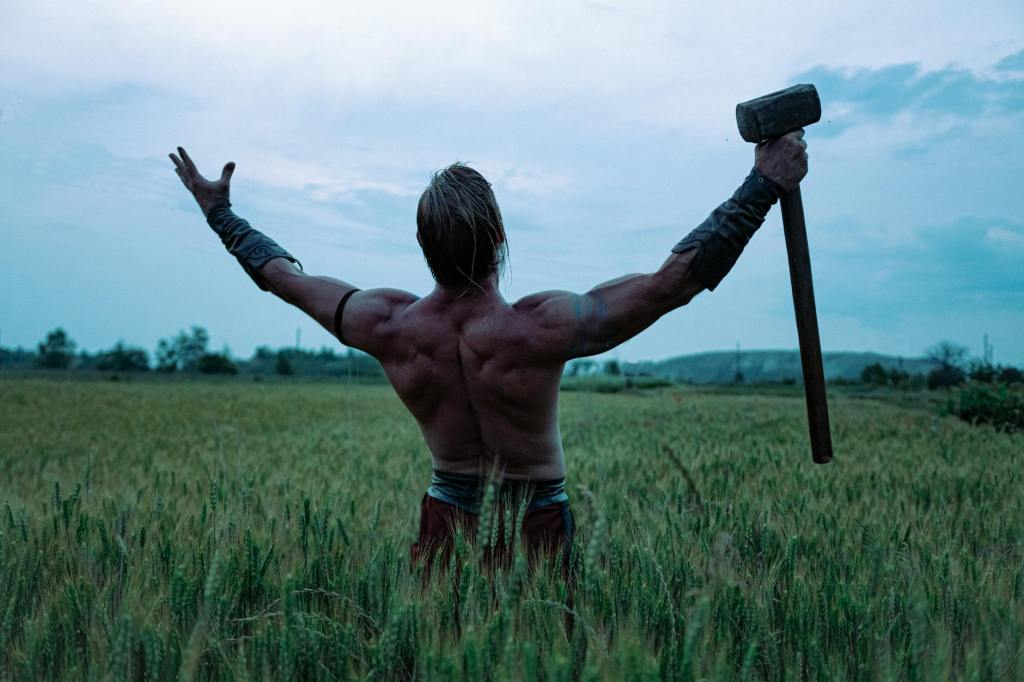
    Another challenge with creating essay prompts is that you don’t really know how they will land with the students until you actually try it out. For example, I was very enthusiastic about my freshman composition class’s first assignment in which they write about the crisis of young men who lack a sense of belonging and purpose and how in their vulnerable state they become vulnerable to the deceptions, manipulations, and false claims of bro influencers. We studied the Liver King who is said to have made over a hundred million dollars and in his caveman cosplay, he was simply too ridiculous and grotesque for my students–all athletes–to take him seriously. He proved so absurd that whatever gravitas I was trying to squeeze out of the assignment just felt like a joke. While millions of men followed their organ-eating cult leader, my athletes were not impressed, and I felt that my essay prompt suffered for it. As a result, I doubt I’ll do that one again.

    Looking ahead, I’m thinking of Florida as less of a physical place and more of a mental fever swamp where I can explore the notion of freedom in its immature and mature incarnations. The TV comedy series It’s Florida, Man and the documentary Some Kind of Heaven about a hedonistic senior citizen home could be an effective exploration of the perils of perpetual adolescence. To avoid making the essay prompt nihilistic, I am leaning toward a contrast essay in which the students explore a more healthy kind of freedom as Cal Newport advocates in his message of “deep work”–the idea that focused work is essential to flourishing and self-fulfillment. 

    Another topic that possesses me is Hurricane Katrina, the idea that a natural disaster was made into a man-made catastrophe through neglect and reckless disregard for the people of New Orleans. This ignominious chapter in American history is a powerful window into red-lining, government corruption, and media misinformation. The riveting documentaries Hurricane Katrina: Race Against Time (Hulu) and Katrina: Come Hell and High Water (Netflix) convince me that I will be exploring Hurricane Katrina next semester. 

    My challenge with Katrina is making sure the story doesn’t collapse into pure tragedy. To balance the devastation, I need to highlight the unique culture of New Orleans—the joy, the tight-knit families, the music, food, and resilience that define the city. The message I want to leave students with is that, despite catastrophe, New Orleans has a distinctive soul that continues to draw the world to its city.

    I suspect even after I retire in less than two years I will still sniff out writing prompts. Coming up with essay prompts is my addiction, and this addiction isn’t going away anytime soon. 

  • The Carton of Milk Expiration Date on Your $3,000 Smart TV

    The Carton of Milk Expiration Date on Your $3,000 Smart TV

    Today to make room for a brand new LG OLED TV, we played a round of Musical TVs, the sad cousin of Musical Chairs, where everyone gets a screen but no one gets a perfect fit. The ten-year-old, 43-inch LG—now equipped with a trusty Roku brain—was dragged into the limbo-like office while my daughter debates whether it’s worth sacrificing square footage in her already modest quarters. The 50-inch Samsung, a QLED that once lorded over the living room, now teeters on another daughter’s dresser, swallowing what little space she had left for, say, books. I myself dragged the other Samsung—a year-old 50-incher—into the primary bedroom, wedging it precariously above the dresser like a luminous monolith threatening to tip over in the night.

    Here’s the irony: both Samsungs, with their decent QLED panels, are sluggish as elderly donkeys thanks to endless software updates. The new champ in the living room, a sleek 55-inch LG OLED with all the bells, whistles, and marketing superlatives, purrs along just fine and the interface moves at lightning speed. 

    The oldest and smallest of the TVs, the 43-inch LG, weighs more than both Samsungs combined. It radiates old-school build quality, but if I mounted it on the wall, the drywall would come crashing down in an avalanche that would obliterate my family mid–Netflix binge. 

    What important lesson have I learned? These so-called “smart TVs” are dumb as dirt. You spend $700 to $3,000, and in a few years the software updates strangle the hardware until it wheezes. The fix is cheap and almost comically obvious: don’t throw the TV out—give it a new brain. A Roku or Apple TV box, a mere $100 to $150, resurrects the panel for another decade. A carton of milk lasts longer than a smart TV OS, but a $99 box of plastic keeps the pixels glowing.

  • On Watches, Aging, and Invisibility

    On Watches, Aging, and Invisibility

    Today I strapped on my Seiko Tuna diver, a hulking slab of steel that announces itself the moment you walk into a room. I don’t exactly want the attention, but let’s be honest: the watch is a radar blip that keeps me from fading into the wallpaper, just another suburban relic limping through the final trimester of existence.

    This fear of invisibility gnawed at me after my cousin Pete’s 75th birthday party in Studio City. His brother-in-law Jim, a retired ophthalmologist at 77, leaned in and muttered, “The worst part of aging is people stop seeing you.” Those words have been rattling around in my skull ever since. Old age, it seems, is less about wisdom and more about turning into a frayed recliner everyone resents but no one wants to haul to the curb.

    I’ll be 64 soon, and I know the rules: Father Time has a master plan, and it doesn’t include my vanity. Sure, you can still play piano with arthritic fingers, hike with a knee brace and a back girdle, and keep a smartwatch ready to call in helicopter rescue if you tumble into a viper-filled canyon. But invisibility is baked into the contract. You can fight it with kale salads and kettlebells, but in the end, your processor slows, your refresh rate lags, and the world swipes past you at 5G speed.

    Take the Samsung QLED my wife bought at Sam’s Club in 2021. Four years later, the picture is fine, but the processor is a fossil. Menus freeze, apps take two minutes to load, and the whole thing wheezes like a Pentium II running Windows 11. Samsung cheaped out on the chip, and now I’m stuck with a dinosaur. My solution? Upgrade to an LG OLED, not because I need perfect pixels, but because I want a TV with an AI 4K processor that doesn’t choke when I click Netflix. The irony isn’t lost on me: I’m furious at Samsung for selling me a laggy processor, yet here I am, trudging through life as a laggy processor. My younger colleagues adapt to new tech in a snap; I freeze and buffer. I’m a Boomer Samsung in a Gen Z OLED world.

    Nature is no kinder than tech. Watch the documentaries: Scar the lion rules the pride until Skip, the younger challenger, finally takes him down. Scar hobbles into the brush, invisible, forgotten, licking his wounds. That’s the arc. You don’t argue with it; you acknowledge it, maybe laugh about it, then go buy a $50 German Chocolate Cake at Torrance Bakery and eat the whole delicious thing. Because if invisibility is inevitable, you might as well go out with frosting on your face.

  • Exit Stage Left: A Teacher’s Final Act

    Exit Stage Left: A Teacher’s Final Act

    I’m fewer than four semesters away from retirement—June 2027, the final curtain—and I’d be lying if I said I wasn’t scared. For nearly forty years I’ve worn the armor of a college classroom persona: bigger, bolder, more disciplined than the fragile, fumbling man who hides inside. Teaching gave me a stage and a referee’s whistle. Without it, who am I? Just the broken man-child without a supervisor, left to his own devices.

    During the pandemic, when colleagues were clawing to get out, I puffed out my chest and declared I was born ready for retirement. I pictured myself a disciplined Renaissance man: mornings at the piano, afternoons writing, evenings lifting kettlebells in the garage, book in hand before bed. A gilded schedule, as though I were independently wealthy. Now those boasts feel like hot air. Structure is one thing. The man animating that structure is another. In the classroom, the stakes were high: thirty pairs of eyes asking, Are you boring? Do you know what you’re talking about? The pressure kept me sharp, funny, and, occasionally, wise. No one lets you coast when you’re trapped under fluorescent lights for two hours with judgmental twenty-year-olds.

    Bitter irony: I’m leaving just as I finally got it right. It took me decades to balance theater with approachability, to drop the drill-sergeant persona that once scared students into silence, to actually build a classroom where people learned and laughed. Now I can scaffold essays like an architect and coax timid students into crafting arguments brick by brick. And just as the machinery is humming, I’m stepping offstage. Melancholy doesn’t begin to cover it.

    And then retirement makes you pay with loads of endless paperwork. Work forms that warn you that you cannot rescind your decision. Medicare forms with their cryptic alphabet soup (A, B, C, D), switching to my wife’s insurance, navigating private plans that read like IKEA instructions translated from Martian. I’ve joked I’d rather do faculty assessment reports than wrestle with retirement forms, and I meant it.

    Meanwhile, time itself heckles me. I’ll be sixty-four in six weeks. At my cousin’s seventy-fifth birthday, the guests—all seventysomethings—mingled like ghosts of futures to come. One cousin, seventy-eight, told me that old age makes you invisible. You still occupy space, but people’s eyes skip over you, as if you’re furniture. Old age is rude like that: the world resents you for hogging resources after your best years are spent. You should apologize for existing. Step aside, old man.

    So here I am, staring down a three-headed monster: paperwork, invisibility, and the slow evaporation of the job that kept me sane. What’s the plan? At six years old, I invented a companion—James, my imaginary friend. I’d knock on the apartment wall and tell my parents James wanted to play. They laughed, which only confirmed that James and I were onto something.

    Now, on the cusp of retirement, I feel his absence. Because when I think of retirement, I think of loneliness, and when I think of loneliness, I think of Gollum—squatting in the cave, muttering “precious” as he caresses the ring. Only for me, the ring isn’t a piece of jewelry. It’s youth. Precious, lost youth. I stroke it with nostalgia and curse it with bitterness. How dare people treat me like I’m invisible, when old age has taught me more than their Google searches ever will? And yet—I know this bitterness is the opposite of wisdom.

    So maybe I do need James back. But not the sweet, knock-on-the-wall James of childhood. I need James 2.0: a drill-sergeant life coach who will slap me across the face and bark: Stop whining. You’ve got love. You’ve got lights on in the house. You’re walking into retirement with more than most people ever dream of. Be grateful. And don’t you dare let this next chapter kick your ass.

  • The Backyard Beast No One Wanted

    The Backyard Beast No One Wanted

    About eight years ago, my wife dragged home a secondhand monstrosity: a deluxe, double-tarp trampoline large enough to launch a small circus. It came with netted partitions to keep bouncing children from achieving low-Earth orbit, a backyard NASA program disguised as “fun.”

    Fast forward to now: my daughters, fifteen and far too sophisticated for backyard astronaut training, want the beast gone. They imagine chic barbecues, fairy lights, friends lounging with kombucha spritzers—scenes that don’t exactly pair with a faded, sagging trampoline hulking like a rusted Saturn V in the middle of the yard. Dutifully, we tried to offload it. We canvassed neighbors, begged on Facebook’s “free stuff” group, even flirted with Craigslist. The universal response? Crickets. No one wants this backyard dinosaur. And frankly, who could blame them? It’s not a toy—it’s a liability. Let a kid hop on it and you’ll be hosting a neighborhood ER shuttle service, complete with broken limbs and dislocated shoulders.

    Denial is over. I’ve stared long enough at its faded tarps, its sun-bleached frame, the sad gaps in its safety net where the gardener hacked through to trim a tree. Whatever curb appeal it once flaunted has been roasted away by the California sun, leaving something closer to a giant lawn ulcer.

    So the verdict is clear: I will dismantle it. Piece by reluctant piece, I’ll scatter its remains into trash bins, an unceremonious Viking funeral for the backyard beast no one wanted.

  • How Soon Is Theft?

    How Soon Is Theft?

    In 1990, I was in my late twenties, a newly minted college writing instructor drifting through life with the ethereal soundtrack of The Smiths, the Cocteau Twins, The Trash Can Sinatras, and The Sundays rattling in my head. One afternoon on Hollywood Boulevard with my girlfriend, I did what any self-respecting young melancholic would do: I bought Smiths T-shirts and posters like sacred relics. The crown jewel was my “How Soon Is Now” poster, a portrait of an angst-drenched youth in a gray cable-knit sweater, gazing downward as if staring into the abyss. I taped it proudly to my office door, a shrine to my tribe. Within a week, it was gone—stolen.

    The theft still smolders decades later. It wasn’t just the insult of having something ripped from my door; it was the betrayal of the faith I placed in The Smiths’ congregation. Their music was heartbreak bottled into beauty, sadness transmuted into community. To love The Smiths, I believed, was to be incapable of theft. Fans were supposed to be fellow pilgrims on the same road to melancholy salvation. You don’t rob your brother of his relics. You light a candle with him and hum “There Is a Light That Never Goes Out.”

    But there it was: my poster ripped away not by a barbarian from the outside, but by a fellow initiate. The irony was unbearable. If The Smiths could not protect us from base impulses, if their music could not ennoble even their most ardent listeners, then what was art worth? Wasn’t it supposed to make us better, kinder, less brutish? The theft of that poster wasn’t just petty larceny. It was the murder of a principle.

    To this day, I remember the empty rectangle of tape marks left on my office door, staring back at me like a smirk from the abyss. The thief didn’t just pocket a poster; they handed me a lesson in nihilism, gift-wrapped in Morrissey’s sorrowful croon. And I’ve been suspicious of beauty ever since, knowing it can inspire devotion and betrayal in the same breath.

  • The Man Who Always Waved

    The Man Who Always Waved

    When my twins were born in 2010, I spent years pacing the sidewalks of my Torrance neighborhood with them—first in a stroller, then a wagon, and eventually on their own unsteady feet. Along those same sidewalks shuffled old couples with dogs, walkers, and time to spare. Sometimes one half of a pair would vanish, leaving the other to walk alone, and soon enough that figure too disappeared from the neighborhood stage. I never knew most of their names, yet I felt tethered to them; they would smile at my daughters, wave with fragile hands, and in that exchange I saw the cycle of life laid bare: the beginning in my stroller, the ending in their absence.

    One man I did know by name—Frank. I don’t recall how we met, but I remember the details: his beige Volvo station wagon, the clever mirror nailed to the tree behind his house so he could back out with precision. Frank looked to be in his late sixties in 2010. He walked the neighborhood with brisk efficiency, always in uniform—olive shorts, white T-shirt, glasses perched on his nose, a beige bucket hat shading his face, and a small wristwatch on a leather band, which he consulted like a man keeping an appointment with life itself.

    He reminded me of a restrained Ned Ryerson from Groundhog Day: perhaps square at first glance, but steady, decent, reliable. No matter how intent he was on his route, he never failed to lift a hand in greeting. The wave was never exuberant, never perfunctory—it was graceful, automatic, the gesture of a man who seemed stitched together with quiet goodness. His wife matched him in cheer, and though I never learned her name, she radiated authenticity. They were a pair who seemed to exist outside of fashion, untouched by fads or pretensions.

    Over time, I realized they had become more than neighbors to me. They were a balm against my cynicism, proof that stability, kindness, and simple decency still existed in a world that seemed allergic to all three. Which is why, six months ago, while lifting weights in my garage, I felt a chill: What happened to Frank? I hadn’t seen him in ages. He would be in his eighties now. Surely he hadn’t slipped away unnoticed?

    Then, this morning, as I turned into my neighborhood after dropping my daughters at high school, I saw him. Frank, unchanged, same outfit, same bucket hat, same little watch. I raised my hand. He raised his. And before I knew it, a tear streaked my cheek.

  • Margaritaville for the Damned

    Margaritaville for the Damned

    Last night I dreamed I was marooned in Prescott, Arizona, summering not in a cabin or hotel but in a public park. The grass was cartoonishly green, a kind of chlorophyll utopia, and families sprawled across it like they’d been carefully arranged for a Chamber of Commerce brochure. My suitcase sat at my side like a misplaced airport refugee, and I couldn’t help but wonder: why Prescott? Why not Denver, or somewhere less suffocatingly wholesome, less postcard-perfect?

    Then I looked up. Looming above the park was a billboard—a monstrosity of sun-bleached cheer—featuring a leathery couple in their seventies. They were bronzed like overcooked turkeys, grinning wide, basking in the eternal glow of some Florida condo where “Margaritaville” played on an endless loop. This was not their first rodeo: it was their fifth marriage each, the residue of decades spent riding the carousel of lust, liquor, and litigation. Their message was plastered across the sky: hedonism may lead to divorce court, bankruptcy, and sun-damaged skin, but look—if you just keep grinning, it’s practically a lifestyle brand.

    I felt an almost religious revulsion at the billboard. It was hollow cheer dressed up as wisdom, a glossy ad for despair masquerading as joie de vivre. Pulling my luggage closer, I glanced at my watch and felt relief that my wife and daughters would be joining me soon. The counterfeit joy overhead only made me hunger more for the real life that I have.

  • I’m in a YouTube Video Slump and I Don’t Know Why

    I’m in a YouTube Video Slump and I Don’t Know Why

    My WordPress dashboard tells me I’ve posted on Cinemorphosis for 152 days in a row, as if it’s awarding me the Blogging Olympics medal for “Most Neurotic Streak.” I don’t post daily out of discipline so much as survival. Writing is my mental hygiene—my daily scrub against chaos. Free therapy without the billable hours.

    YouTube, however, is another story. I haven’t made a video essay in over two weeks, and the gap feels like a cyst growing on my confidence. The longer I wait, the heavier the silence becomes, like trying to deadlift after skipping the gym for a month. I want to post, but not just to feed the beast. I don’t want to churn out recycled monologues about my watch obsession or let YouTube’s algorithm turn me into a carnival barker with clickbait headlines and fake urgency.

    It’s not as if I lack material. College just started, and I’m teaching the entire athletic department. A room full of goal-driven athletes who actually follow instructions? For a writing professor, that’s better than tenure. And as a relic from the muscle era of the 70s—Olympic lifts, protein shakes, and the occasional posing oil—I feel a strange kinship with them. We’ve already launched into our first essay assignment: the crisis of masculinity and how Bro influencers like the Liver King peddle snake oil dressed in bison liver. These guys exploit the anxieties of young men the way payday lenders exploit the broke. Can’t buy a house? Don’t worry, kid, buy abs. Tongue-tied around women? No problem, creatine is your Cyrano de Bergerac. The students are eating it up, and for once, their feedback has been better than protein pancakes.

    So why can’t I translate this into a video essay? Maybe because my brain recently short-circuited over something ridiculous: watch straps. I fell down the rabbit hole of FKM rubber straps after reading a study claiming they leach chemicals into your skin. My beloved Divecore straps—once the apex of wrist comfort—suddenly looked like toxic bracelets. I agonized for days, debating whether to bin them, keep them, or wrap my wrists in cheesecloth. The obsession drained me like a bad relationship. In protest, my mind and body staged a walkout, shutting down further watch chatter. For now, I’m taking a mental break. I’m grateful for the watches I have, but I don’t want to rejoin the strap wars or churn out videos about my latest dive into consumer madness.

    So here I am, taking a mental breather, trying to avoid the treadmill of compulsive content. It’s humbling to admit that the blogging streak hides a creative stall. But I know the video essays will return. They always do. Once I shake off the chemical paranoia and algorithm anxiety and process my thoughts, I’ll be back in the groove—hopefully with something worth watching.