Category: Confessions

  • On Watches, Aging, and Invisibility

    On Watches, Aging, and Invisibility

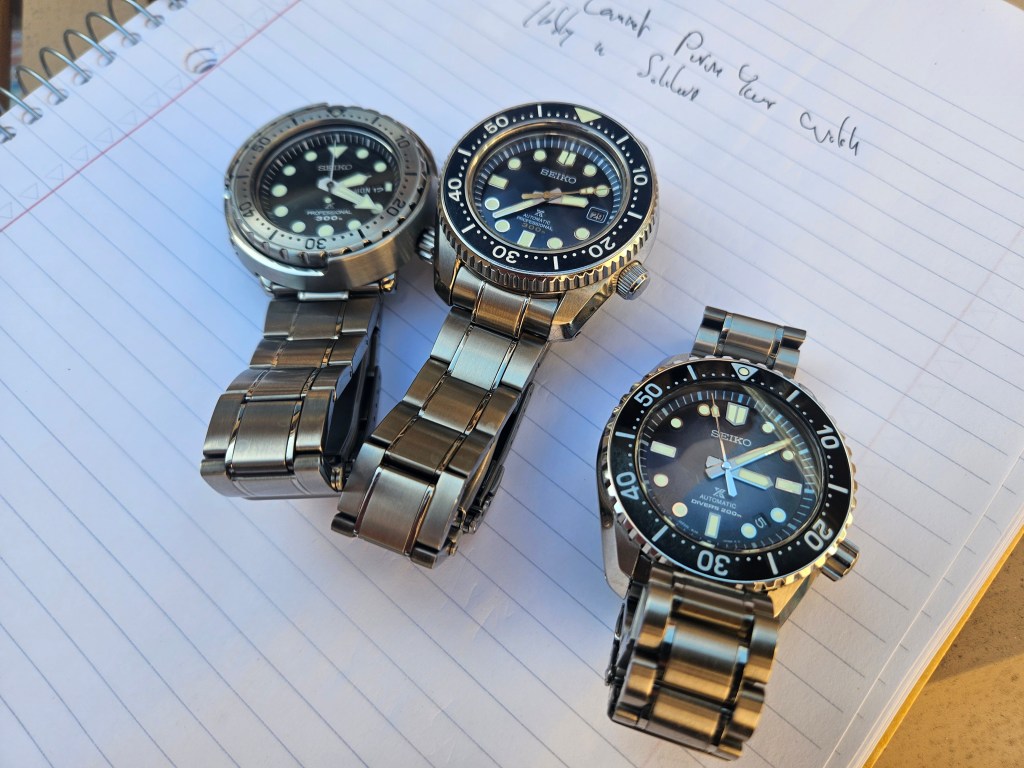
    Today I strapped on my Seiko Tuna diver, a hulking slab of steel that announces itself the moment you walk into a room. I don’t exactly want the attention, but let’s be honest: the watch is a radar blip that keeps me from fading into the wallpaper, just another suburban relic limping through the final trimester of existence.

    This fear of invisibility gnawed at me after my cousin Pete’s 75th birthday party in Studio City. His brother-in-law Jim, a retired ophthalmologist at 77, leaned in and muttered, “The worst part of aging is people stop seeing you.” Those words have been rattling around in my skull ever since. Old age, it seems, is less about wisdom and more about turning into a frayed recliner everyone resents but no one wants to haul to the curb.

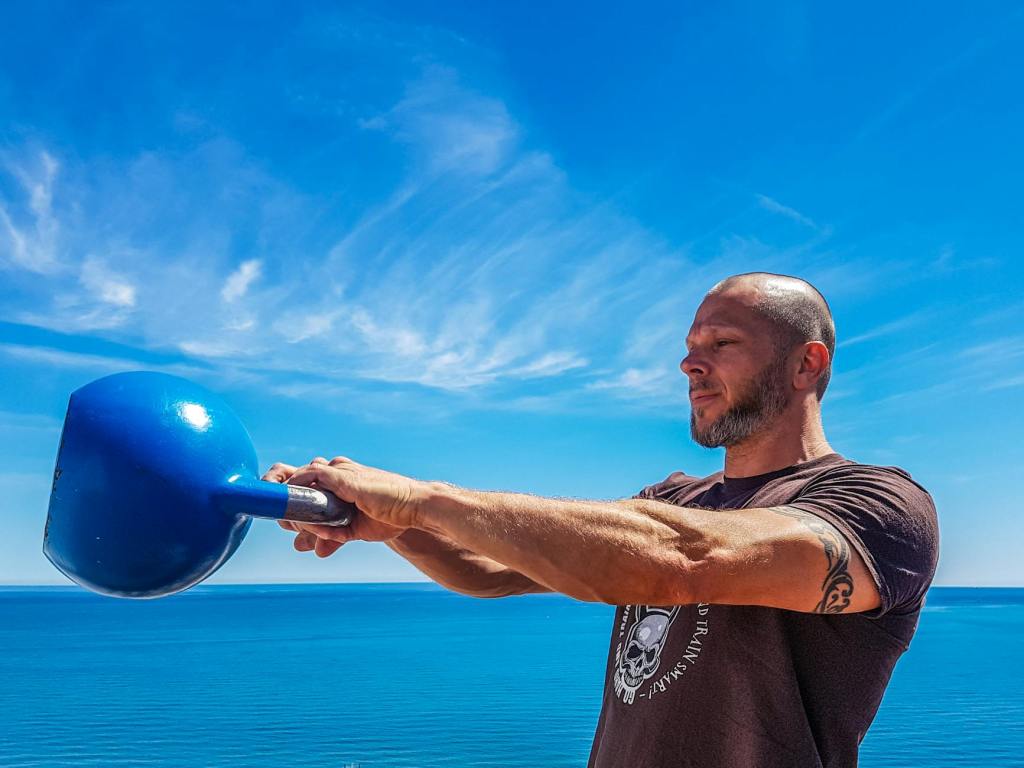
    I’ll be 64 soon, and I know the rules: Father Time has a master plan, and it doesn’t include my vanity. Sure, you can still play piano with arthritic fingers, hike with a knee brace and a back girdle, and keep a smartwatch ready to call in helicopter rescue if you tumble into a viper-filled canyon. But invisibility is baked into the contract. You can fight it with kale salads and kettlebells, but in the end, your processor slows, your refresh rate lags, and the world swipes past you at 5G speed.

    Take the Samsung QLED my wife bought at Sam’s Club in 2021. Four years later, the picture is fine, but the processor is a fossil. Menus freeze, apps take two minutes to load, and the whole thing wheezes like a Pentium II running Windows 11. Samsung cheaped out on the chip, and now I’m stuck with a dinosaur. My solution? Upgrade to an LG OLED, not because I need perfect pixels, but because I want a TV with an AI 4K processor that doesn’t choke when I click Netflix. The irony isn’t lost on me: I’m furious at Samsung for selling me a laggy processor, yet here I am, trudging through life as a laggy processor. My younger colleagues adapt to new tech in a snap; I freeze and buffer. I’m a Boomer Samsung in a Gen Z OLED world.

    Nature is no kinder than tech. Watch the documentaries: Scar the lion rules the pride until Skip, the younger challenger, finally takes him down. Scar hobbles into the brush, invisible, forgotten, licking his wounds. That’s the arc. You don’t argue with it; you acknowledge it, maybe laugh about it, then go buy a $50 German Chocolate Cake at Torrance Bakery and eat the whole delicious thing. Because if invisibility is inevitable, you might as well go out with frosting on your face.

  • Exit Stage Left: A Teacher’s Final Act

    Exit Stage Left: A Teacher’s Final Act

    I’m fewer than four semesters away from retirement—June 2027, the final curtain—and I’d be lying if I said I wasn’t scared. For nearly forty years I’ve worn the armor of a college classroom persona: bigger, bolder, more disciplined than the fragile, fumbling man who hides inside. Teaching gave me a stage and a referee’s whistle. Without it, who am I? Just the broken man-child without a supervisor, left to his own devices.

    During the pandemic, when colleagues were clawing to get out, I puffed out my chest and declared I was born ready for retirement. I pictured myself a disciplined Renaissance man: mornings at the piano, afternoons writing, evenings lifting kettlebells in the garage, book in hand before bed. A gilded schedule, as though I were independently wealthy. Now those boasts feel like hot air. Structure is one thing. The man animating that structure is another. In the classroom, the stakes were high: thirty pairs of eyes asking, Are you boring? Do you know what you’re talking about? The pressure kept me sharp, funny, and, occasionally, wise. No one lets you coast when you’re trapped under fluorescent lights for two hours with judgmental twenty-year-olds.

    Bitter irony: I’m leaving just as I finally got it right. It took me decades to balance theater with approachability, to drop the drill-sergeant persona that once scared students into silence, to actually build a classroom where people learned and laughed. Now I can scaffold essays like an architect and coax timid students into crafting arguments brick by brick. And just as the machinery is humming, I’m stepping offstage. Melancholy doesn’t begin to cover it.

    And then retirement makes you pay with loads of endless paperwork. Work forms that warn you that you cannot rescind your decision. Medicare forms with their cryptic alphabet soup (A, B, C, D), switching to my wife’s insurance, navigating private plans that read like IKEA instructions translated from Martian. I’ve joked I’d rather do faculty assessment reports than wrestle with retirement forms, and I meant it.

    Meanwhile, time itself heckles me. I’ll be sixty-four in six weeks. At my cousin’s seventy-fifth birthday, the guests—all seventysomethings—mingled like ghosts of futures to come. One cousin, seventy-eight, told me that old age makes you invisible. You still occupy space, but people’s eyes skip over you, as if you’re furniture. Old age is rude like that: the world resents you for hogging resources after your best years are spent. You should apologize for existing. Step aside, old man.

    So here I am, staring down a three-headed monster: paperwork, invisibility, and the slow evaporation of the job that kept me sane. What’s the plan? At six years old, I invented a companion—James, my imaginary friend. I’d knock on the apartment wall and tell my parents James wanted to play. They laughed, which only confirmed that James and I were onto something.

    Now, on the cusp of retirement, I feel his absence. Because when I think of retirement, I think of loneliness, and when I think of loneliness, I think of Gollum—squatting in the cave, muttering “precious” as he caresses the ring. Only for me, the ring isn’t a piece of jewelry. It’s youth. Precious, lost youth. I stroke it with nostalgia and curse it with bitterness. How dare people treat me like I’m invisible, when old age has taught me more than their Google searches ever will? And yet—I know this bitterness is the opposite of wisdom.

    So maybe I do need James back. But not the sweet, knock-on-the-wall James of childhood. I need James 2.0: a drill-sergeant life coach who will slap me across the face and bark: Stop whining. You’ve got love. You’ve got lights on in the house. You’re walking into retirement with more than most people ever dream of. Be grateful. And don’t you dare let this next chapter kick your ass.

  • The Backyard Beast No One Wanted

    The Backyard Beast No One Wanted

    About eight years ago, my wife dragged home a secondhand monstrosity: a deluxe, double-tarp trampoline large enough to launch a small circus. It came with netted partitions to keep bouncing children from achieving low-Earth orbit, a backyard NASA program disguised as “fun.”

    Fast forward to now: my daughters, fifteen and far too sophisticated for backyard astronaut training, want the beast gone. They imagine chic barbecues, fairy lights, friends lounging with kombucha spritzers—scenes that don’t exactly pair with a faded, sagging trampoline hulking like a rusted Saturn V in the middle of the yard. Dutifully, we tried to offload it. We canvassed neighbors, begged on Facebook’s “free stuff” group, even flirted with Craigslist. The universal response? Crickets. No one wants this backyard dinosaur. And frankly, who could blame them? It’s not a toy—it’s a liability. Let a kid hop on it and you’ll be hosting a neighborhood ER shuttle service, complete with broken limbs and dislocated shoulders.

    Denial is over. I’ve stared long enough at its faded tarps, its sun-bleached frame, the sad gaps in its safety net where the gardener hacked through to trim a tree. Whatever curb appeal it once flaunted has been roasted away by the California sun, leaving something closer to a giant lawn ulcer.

    So the verdict is clear: I will dismantle it. Piece by reluctant piece, I’ll scatter its remains into trash bins, an unceremonious Viking funeral for the backyard beast no one wanted.

  • How Soon Is Theft?

    How Soon Is Theft?

    In 1990, I was in my late twenties, a newly minted college writing instructor drifting through life with the ethereal soundtrack of The Smiths, the Cocteau Twins, The Trash Can Sinatras, and The Sundays rattling in my head. One afternoon on Hollywood Boulevard with my girlfriend, I did what any self-respecting young melancholic would do: I bought Smiths T-shirts and posters like sacred relics. The crown jewel was my “How Soon Is Now” poster, a portrait of an angst-drenched youth in a gray cable-knit sweater, gazing downward as if staring into the abyss. I taped it proudly to my office door, a shrine to my tribe. Within a week, it was gone—stolen.

    The theft still smolders decades later. It wasn’t just the insult of having something ripped from my door; it was the betrayal of the faith I placed in The Smiths’ congregation. Their music was heartbreak bottled into beauty, sadness transmuted into community. To love The Smiths, I believed, was to be incapable of theft. Fans were supposed to be fellow pilgrims on the same road to melancholy salvation. You don’t rob your brother of his relics. You light a candle with him and hum “There Is a Light That Never Goes Out.”

    But there it was: my poster ripped away not by a barbarian from the outside, but by a fellow initiate. The irony was unbearable. If The Smiths could not protect us from base impulses, if their music could not ennoble even their most ardent listeners, then what was art worth? Wasn’t it supposed to make us better, kinder, less brutish? The theft of that poster wasn’t just petty larceny. It was the murder of a principle.

    To this day, I remember the empty rectangle of tape marks left on my office door, staring back at me like a smirk from the abyss. The thief didn’t just pocket a poster; they handed me a lesson in nihilism, gift-wrapped in Morrissey’s sorrowful croon. And I’ve been suspicious of beauty ever since, knowing it can inspire devotion and betrayal in the same breath.

  • The Man Who Always Waved

    The Man Who Always Waved

    When my twins were born in 2010, I spent years pacing the sidewalks of my Torrance neighborhood with them—first in a stroller, then a wagon, and eventually on their own unsteady feet. Along those same sidewalks shuffled old couples with dogs, walkers, and time to spare. Sometimes one half of a pair would vanish, leaving the other to walk alone, and soon enough that figure too disappeared from the neighborhood stage. I never knew most of their names, yet I felt tethered to them; they would smile at my daughters, wave with fragile hands, and in that exchange I saw the cycle of life laid bare: the beginning in my stroller, the ending in their absence.

    One man I did know by name—Frank. I don’t recall how we met, but I remember the details: his beige Volvo station wagon, the clever mirror nailed to the tree behind his house so he could back out with precision. Frank looked to be in his late sixties in 2010. He walked the neighborhood with brisk efficiency, always in uniform—olive shorts, white T-shirt, glasses perched on his nose, a beige bucket hat shading his face, and a small wristwatch on a leather band, which he consulted like a man keeping an appointment with life itself.

    He reminded me of a restrained Ned Ryerson from Groundhog Day: perhaps square at first glance, but steady, decent, reliable. No matter how intent he was on his route, he never failed to lift a hand in greeting. The wave was never exuberant, never perfunctory—it was graceful, automatic, the gesture of a man who seemed stitched together with quiet goodness. His wife matched him in cheer, and though I never learned her name, she radiated authenticity. They were a pair who seemed to exist outside of fashion, untouched by fads or pretensions.

    Over time, I realized they had become more than neighbors to me. They were a balm against my cynicism, proof that stability, kindness, and simple decency still existed in a world that seemed allergic to all three. Which is why, six months ago, while lifting weights in my garage, I felt a chill: What happened to Frank? I hadn’t seen him in ages. He would be in his eighties now. Surely he hadn’t slipped away unnoticed?

    Then, this morning, as I turned into my neighborhood after dropping my daughters at high school, I saw him. Frank, unchanged, same outfit, same bucket hat, same little watch. I raised my hand. He raised his. And before I knew it, a tear streaked my cheek.

  • Margaritaville for the Damned

    Margaritaville for the Damned

    Last night I dreamed I was marooned in Prescott, Arizona, summering not in a cabin or hotel but in a public park. The grass was cartoonishly green, a kind of chlorophyll utopia, and families sprawled across it like they’d been carefully arranged for a Chamber of Commerce brochure. My suitcase sat at my side like a misplaced airport refugee, and I couldn’t help but wonder: why Prescott? Why not Denver, or somewhere less suffocatingly wholesome, less postcard-perfect?

    Then I looked up. Looming above the park was a billboard—a monstrosity of sun-bleached cheer—featuring a leathery couple in their seventies. They were bronzed like overcooked turkeys, grinning wide, basking in the eternal glow of some Florida condo where “Margaritaville” played on an endless loop. This was not their first rodeo: it was their fifth marriage each, the residue of decades spent riding the carousel of lust, liquor, and litigation. Their message was plastered across the sky: hedonism may lead to divorce court, bankruptcy, and sun-damaged skin, but look—if you just keep grinning, it’s practically a lifestyle brand.

    I felt an almost religious revulsion at the billboard. It was hollow cheer dressed up as wisdom, a glossy ad for despair masquerading as joie de vivre. Pulling my luggage closer, I glanced at my watch and felt relief that my wife and daughters would be joining me soon. The counterfeit joy overhead only made me hunger more for the real life that I have.

  • I’m in a YouTube Video Slump and I Don’t Know Why

    I’m in a YouTube Video Slump and I Don’t Know Why

    My WordPress dashboard tells me I’ve posted on Cinemorphosis for 152 days in a row, as if it’s awarding me the Blogging Olympics medal for “Most Neurotic Streak.” I don’t post daily out of discipline so much as survival. Writing is my mental hygiene—my daily scrub against chaos. Free therapy without the billable hours.

    YouTube, however, is another story. I haven’t made a video essay in over two weeks, and the gap feels like a cyst growing on my confidence. The longer I wait, the heavier the silence becomes, like trying to deadlift after skipping the gym for a month. I want to post, but not just to feed the beast. I don’t want to churn out recycled monologues about my watch obsession or let YouTube’s algorithm turn me into a carnival barker with clickbait headlines and fake urgency.

    It’s not as if I lack material. College just started, and I’m teaching the entire athletic department. A room full of goal-driven athletes who actually follow instructions? For a writing professor, that’s better than tenure. And as a relic from the muscle era of the 70s—Olympic lifts, protein shakes, and the occasional posing oil—I feel a strange kinship with them. We’ve already launched into our first essay assignment: the crisis of masculinity and how Bro influencers like the Liver King peddle snake oil dressed in bison liver. These guys exploit the anxieties of young men the way payday lenders exploit the broke. Can’t buy a house? Don’t worry, kid, buy abs. Tongue-tied around women? No problem, creatine is your Cyrano de Bergerac. The students are eating it up, and for once, their feedback has been better than protein pancakes.

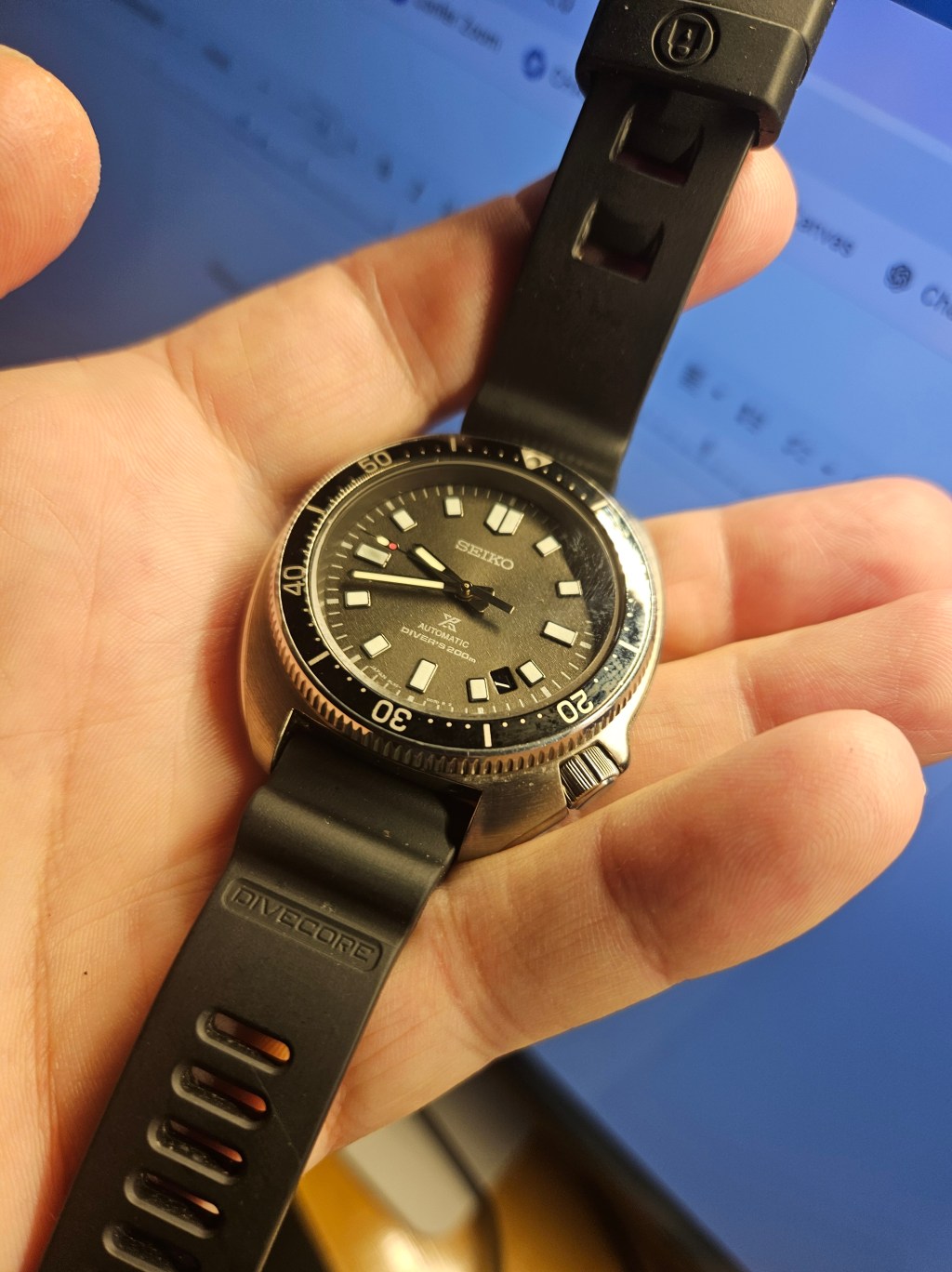
    So why can’t I translate this into a video essay? Maybe because my brain recently short-circuited over something ridiculous: watch straps. I fell down the rabbit hole of FKM rubber straps after reading a study claiming they leach chemicals into your skin. My beloved Divecore straps—once the apex of wrist comfort—suddenly looked like toxic bracelets. I agonized for days, debating whether to bin them, keep them, or wrap my wrists in cheesecloth. The obsession drained me like a bad relationship. In protest, my mind and body staged a walkout, shutting down further watch chatter. For now, I’m taking a mental break. I’m grateful for the watches I have, but I don’t want to rejoin the strap wars or churn out videos about my latest dive into consumer madness.

    So here I am, taking a mental breather, trying to avoid the treadmill of compulsive content. It’s humbling to admit that the blogging streak hides a creative stall. But I know the video essays will return. They always do. Once I shake off the chemical paranoia and algorithm anxiety and process my thoughts, I’ll be back in the groove—hopefully with something worth watching.

  • Triple Lounge Wear: My Magnum Opus of Sloth Couture

    Triple Lounge Wear: My Magnum Opus of Sloth Couture

    When I think of Sigmund Freud, I don’t picture the sober father of psychoanalysis so much as a man presiding over an endless therapy session in which a poor soul reclines on a tufted couch, excavating their psyche with the zeal of a Siberian prisoner digging for coal. I tend to side with podcaster Katie Herzog here: all that navel spelunking doesn’t yield much juice for the squeeze. My mental health cure is more prosaic—get out of my head, do the dishes, help someone else, and remind myself that brooding isn’t a spiritual distinction but simply the human condition, dressed up in self-importance.

    That said, Freud remains a cultural heavyweight, a sort of St. Paul of the psyche. Both men dove into deep, uncharted waters: both charting neurosis and the divided self from different angles. Their remedies were at odds—St. Paul promised redemption; Freud essentially said, “There is no God. Buck up, buttercup.” But there’s always a third way. Perhaps we can podcast our way out of despair. That thought struck me as I read Rebecca Mead’s New Yorker profile of Bella Freud’s “Fashion Neurosis.” Sigmund’s great-granddaughter, Bella isn’t exactly a scholar of the old man’s work, but she leans into his therapy tropes with sly cosplay. Guests flop onto the proverbial couch, confess their quirks, addictions, and philosophies, and tie it all back to their fashion obsessions. Clothes become the psyche’s fabric, quite literally.

    As for me, Bella probably won’t be calling. My claim to fame is enjoying oatmeal for dinner. Still, if she ever asked, I’d come armed with a story. In kindergarten, I had my prized “Monkees pants,” green checkered flares with a radioactive sheen, worn proudly for Show and Tell as I belted out the Monkees’ theme song. Girls swooned, begged for autographs, and I was five going on Micky Dolenz. Then came my Hulk phase: mutilating brand-new jeans so it looked like my swelling muscles had shredded them. My parents adored this use of their clothing budget. Later, the bodybuilding years brought muscle shirts and tight jeans, followed by my “uniform” phase: gray golf shirts, boot-cut jeans, tennis shoes, repeated ad nauseam for three decades.

    My magnum opus, however, is what I call Triple Lounge Wear. A gray tank top and Champion shorts serve as daywear, pajamas, and gym attire—a holy trinity of frictionless fashion. Why cycle through outfits when you can be a one-man capsule collection of sloth and efficiency? 

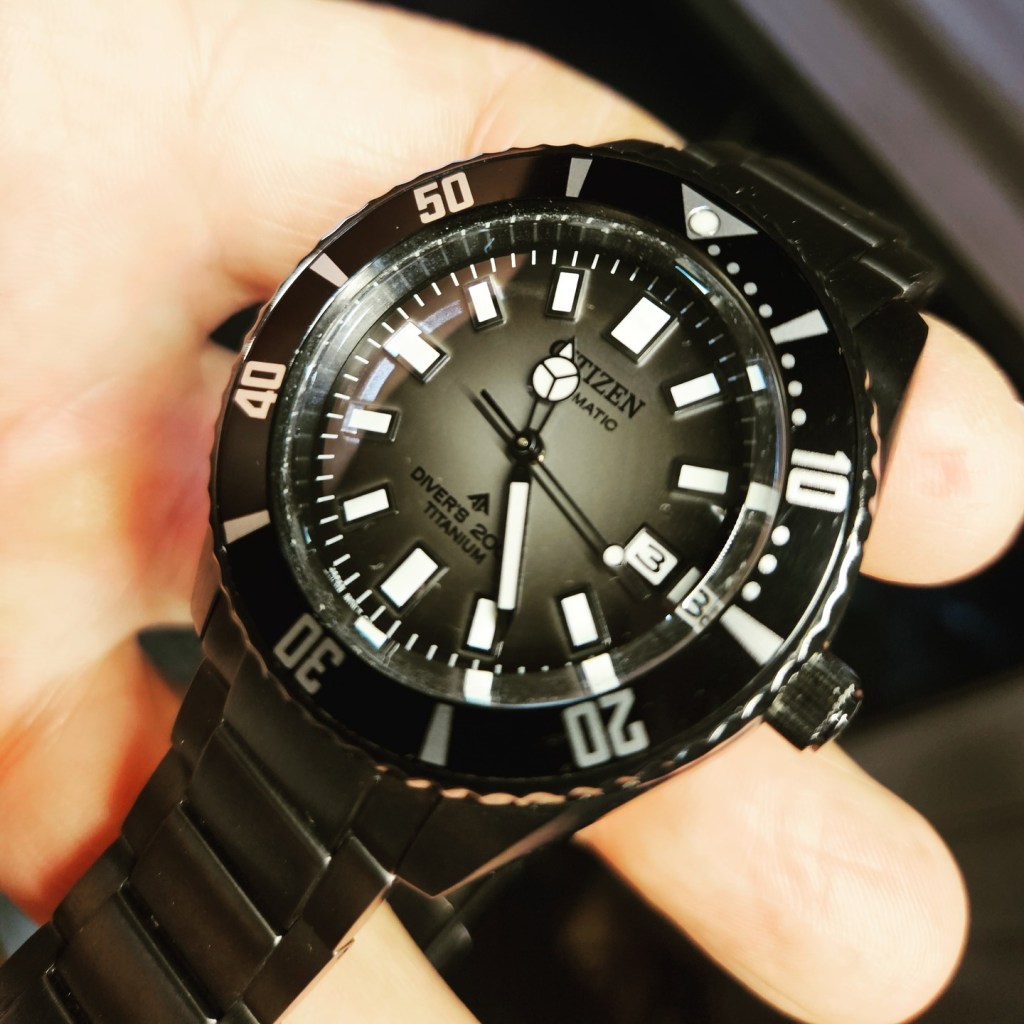
    Naturally, no discussion of fashion would be complete without confessing my incurable diver watch obsession. My imagination is still shackled to childhood visions of Sean Connery suavely flashing a Submariner on a NATO strap, or Jacques Cousteau backstroking with porpoises while his orange-dial Doxa Sub 300 glowed like a miniature sun. Compared to that, what hope does any outfit of mine have? A diver watch isn’t an accessory—it’s the anchor, the crown jewel, the only thing saving me from looking like a man in oatmeal-stained gym shorts pretending he has style.

    Bella Freud would beam at my ingenuity, then lower her voice and ask, “So Jeff, tell me about your childhood.” And I’d answer, “Well, it started with the Monkees pants…”

  • Radical Boring: The Oatmeal-Based Lifestyle Brand No One Asked For

    Radical Boring: The Oatmeal-Based Lifestyle Brand No One Asked For

    Next month I’ll be 64, which apparently means my taste buds have joined AARP. My diet is now narrower than my tolerance for small talk: buckwheat groats, oatmeal (rolled or steel-cut, because why not keep things spicy), Greek yogurt with berries and honey, and peanut butter-and-honey sandwiches on dark bread. While normal humans dream of steak and champagne on a Paris-bound jet, I fantasize about oatmeal for dinner. Forget first class—I’m on the Oatmeal Express, and my only beverage service is dark roast coffee, soy milk, and sparkling water, which is just soda pretending it went to finishing school.

    I know what’s happening. I’m regressing. I crave mush, porridge, pablum—the kind of food that comes in jars with smiling cartoon fruit. My kettlebell workouts, five days a week, are my only defense. I sweat buckets, swing heavy weights, and imagine I look like a Viking—but in truth, it’s just a grown man clinging to his giant metal pacifier. Exercise has become my lullaby. When I collapse afterward, I feel less like a warrior and more like a sedated infant.

    Of course, at a family birthday party, one cousin reminded me that growth only happens when we leave our comfort zones. I nodded while thinking, No thanks, I’ve had enough character development for one lifetime. At this stage, I don’t want adventure. I want oatmeal. I don’t want novelty. I want predictability. I’m not only becoming a baby—I’m pioneering a whole new lifestyle brand called Radical Boring.

    My big act of rebellion? When my twins turn sixteen in six months, they will take my wife’s 2014 Accord, she’ll inherit my 2018 Accord, and I’ll step into the future—so long as the future, a 2026 Accord that comes in “canyon river blue.” My wife begged me not to get silver or gray again, so this is me living dangerously. Of course, I’ll rarely drive it. I’ll open the garage, admire the shiny paint, then close the door and scuttle back inside for a soothing bowl of oatmeal.

    My family laughs at me. They think I’m absurd, predictable, hopelessly domestic. But at least I’m consistent. And if authenticity means being true to yourself, then yes—I am authentically a 64-year-old content with my porridge, my pacifier workouts, and my canyon river blue Honda. Call it returning to the womb if you want. I call it destiny.

    And now, having confessed this ridiculous self-revelation, I find myself thinking of my literary kindred Ariel Levy and her An Abbreviated Life—a memoir I clearly need to revisit, if only to confirm that my brand of absurdity has precedents.

  • Words of Wisdom in a World of Publishing Hallucinations

    Words of Wisdom in a World of Publishing Hallucinations

    Last night I dreamed I was at the Aspen Institute, where I took the stage as a guest speaker while snowflakes pirouetted past the classroom windows like bored ballerinas. Dozens of young writers—already published, already duped—sat before me, waiting to be enlightened. I told them the truth their publishers had concealed with a smile and a contract: the marketing promises were fairy dust, the royalty checks were jokes, and their “book deals” were little more than elaborate scams. They would earn a pittance, and the betrayal would sting worse than any bad review.

    Some of them glared at me like I’d just blasphemed against their gods, but others—emboldened by rage—shouted the names of their novels and memoirs into the snowy air. A nineteen-year-old tech billionaire from India cried out the title of his memoir: The Gunther Effect. I made him repeat it three times, as if conjuring a spell, so the words wouldn’t slip away. Against my better judgment, I was intrigued.

    By popular demand, I returned for a second sermon. This time, I was flanked by professors and “established” writers who knew the game as well as I did. Their lectures weren’t brilliant, but they didn’t have to be. For me, just focusing on one speaker, narrowing the scattered kaleidoscope of my mind into a single lens, felt like mental hygiene—a purging of the Internet’s endless distractions. I thought, This is what I miss: the monastic joy of being a student, concentrating on one voice instead of chasing dopamine scraps.

    And slowly, the room shifted. The students began to understand that my colleagues and I weren’t cynics but keepers of the ugly gospel. We had the keys to the vault, the passwords to real power. We were the Priests and Priestesses of Light and Success, consecrated by disillusion. Hands shot up like candles in a vigil, their questions burning against the snowfall outside, and we were exalted, gratified, almost holy in the glow of their hunger.