Category: Confessions

  • The Man Who Moved to G-Shock Avenue

    The Man Who Moved to G-Shock Avenue

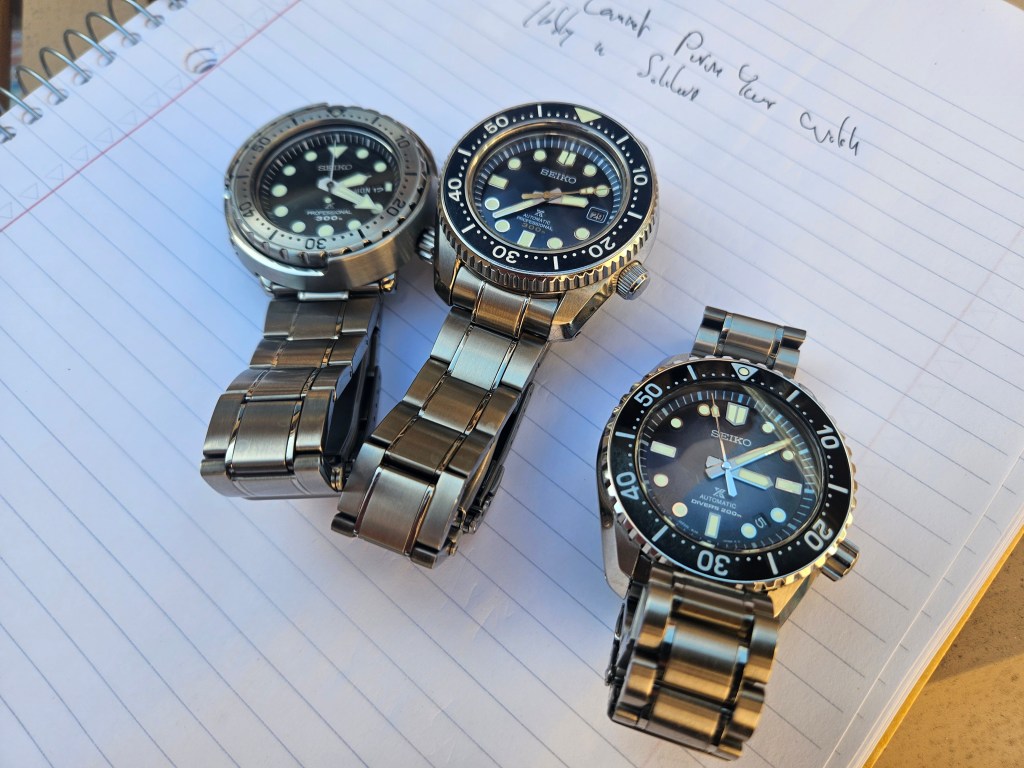
    Paul McCartney once admitted that after the Beatles broke up, he couldn’t bring himself to play their songs. Too much history. Too much emotion packed into every chord. The music wasn’t just music—it was a former life. That’s how you feel about your mechanical divers. They now sit in what you’ve come to call the Box of the Abandoned Past—not discarded, not unloved, but too heavy with memory to wear without reopening old chapters.

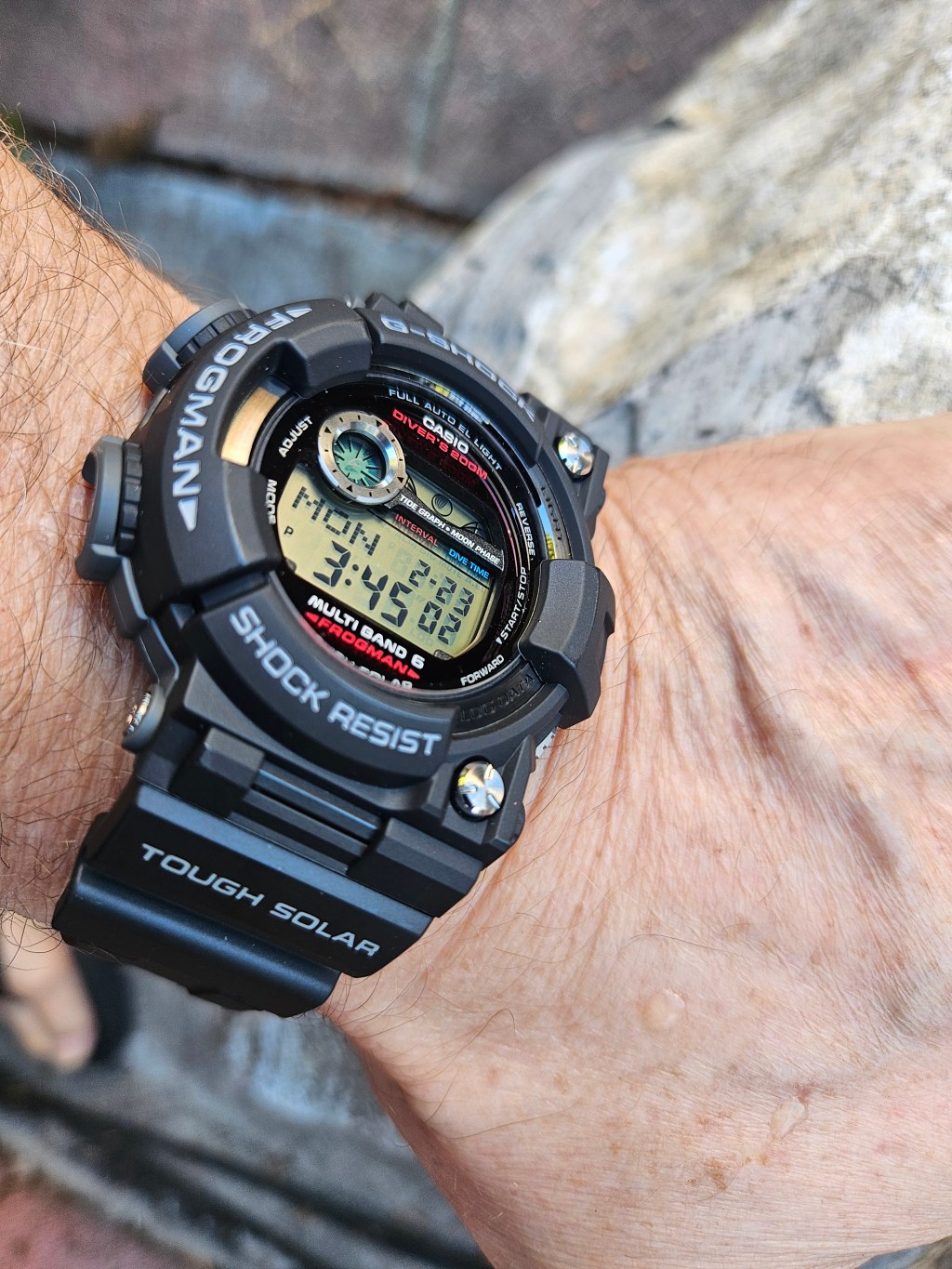
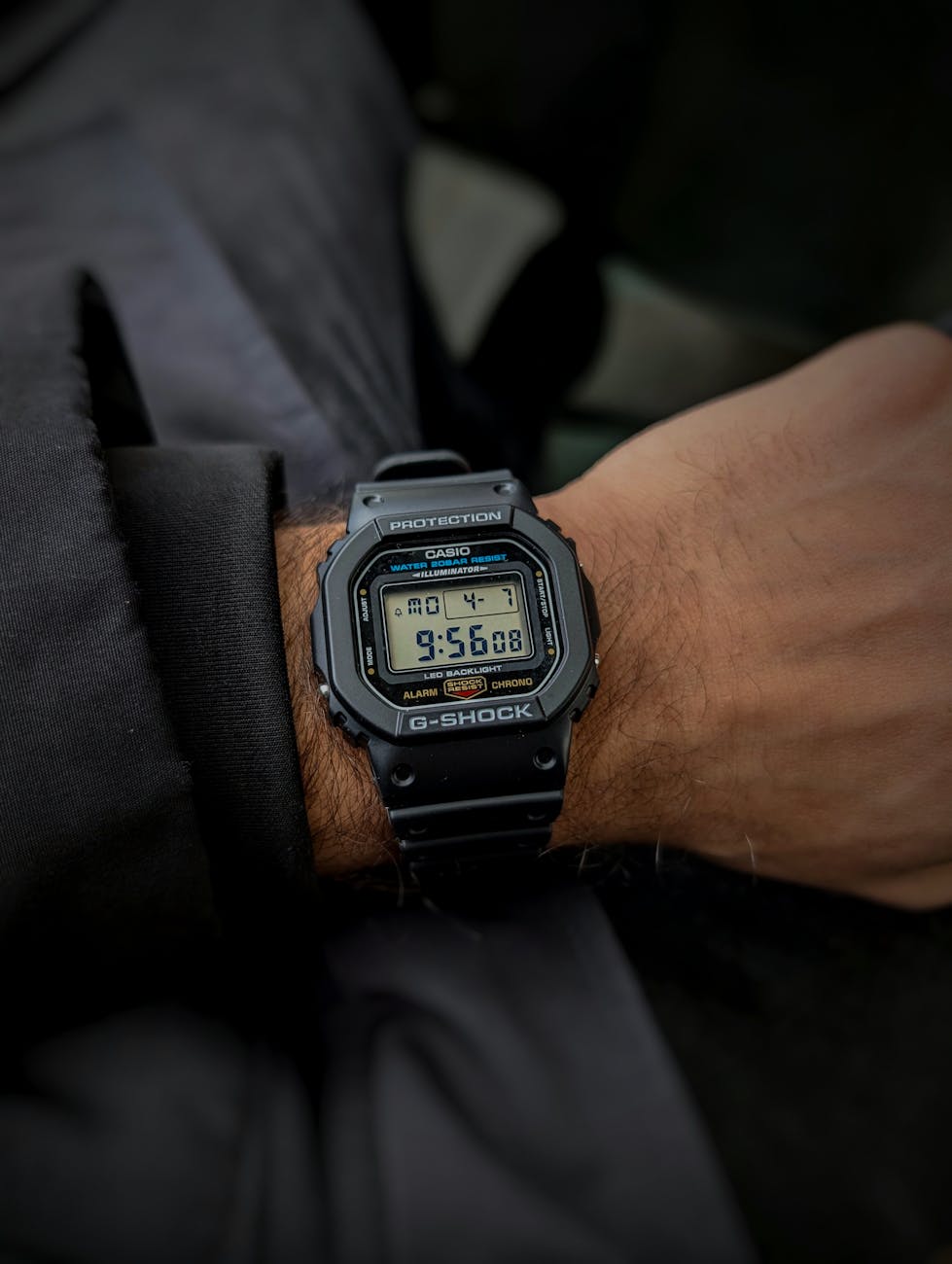
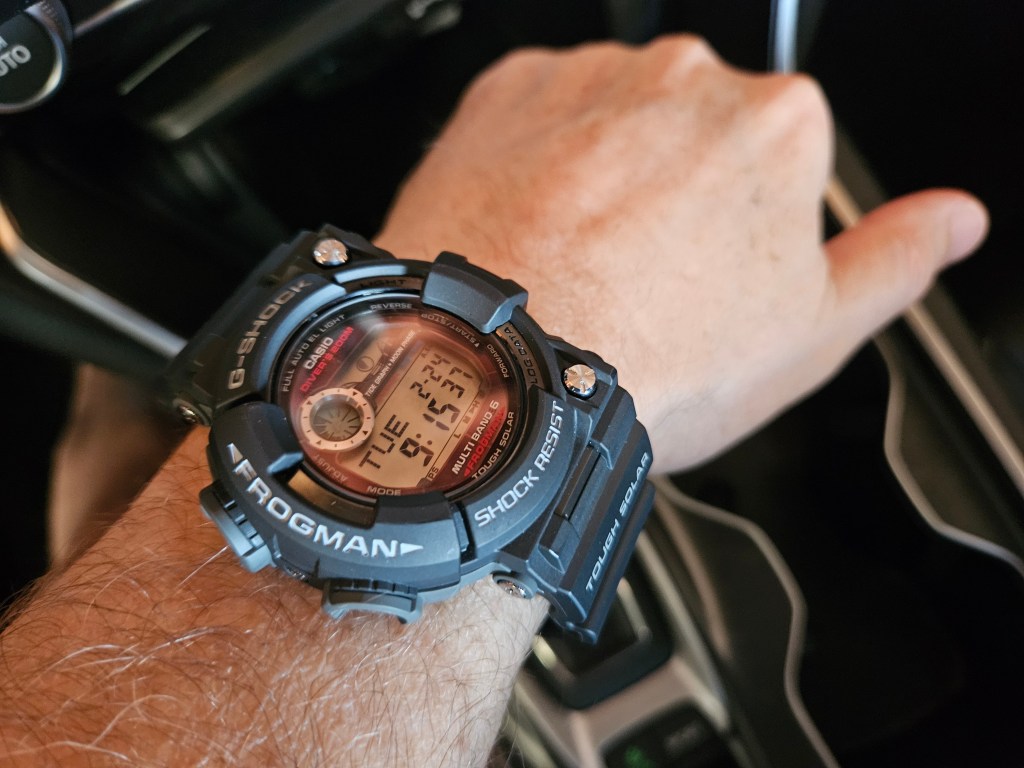
    Then the G-Shock Frogman arrived, and with it came a revelation: you hadn’t just bought a new watch—you had moved cities. For more than twenty years, you’d been living in Mechanical Town, polishing bezels and monitoring seconds like a municipal duty. Suddenly you realized you belonged somewhere else entirely. You packed your emotional bags and relocated to G-Shock Avenue. First the Frogman. Then the Rangeman. Then the high-end Square. No ceremony. No farewell speech. Just a quiet change of address.

    Years passed. Occasionally, you tried to revisit the old neighborhood. You’d take out a mechanical diver, strap it on, and see if the feeling returned. But like McCartney staring at a piano and deciding “Yesterday” could stay in the past, you always drifted back to the Frogman. It was lighter. Simpler. Emotionally frictionless. The past had craftsmanship. The present had peace.

    Still, you refuse to sell the mechanicals. They’re not watches anymore; they’re chapters. Expensive bookmarks in the autobiography of your former self. Once a year, you conduct the ritual. You open the Box of the Abandoned Past. You shine a small, theatrical light across the rows. You offer a quiet apology while Paul McCartney’s “Uncle Albert” plays in the background, the soundtrack of dignified transition.

    Your wife and daughters evacuate the premises during this ceremony, treating it with the same enthusiasm reserved for releasing an aerosol flea bomb in the living room.

    But alone in the room, you sing along, close the box, strap on the Frogman, and step back into the present—no longer a resident of the mechanical past, but a citizen, fully and permanently, of G-Shock City.

    You have entered painful terrain for the watch enthusiast: Emotional Migration. It is the moment a watch enthusiast changes allegiance not by selling a collection, but by quietly moving his identity to a new territory. The old watches may still sit in the box, polished and respectable, but the emotional address has changed. What once felt essential now feels historical; what once felt like an experiment now feels like home. There is no announcement, no dramatic purge—just the slow realization that your wrist no longer reaches for the past. Emotional Migration isn’t about acquiring something new. It’s about discovering that your center of gravity has relocated, and the watches you once loved now live where you used to live.
  • The Great Rangeman Dilemma

    The Great Rangeman Dilemma

    You should be grading over a hundred student essays right now—papers waiting patiently for marginal comments, thesis corrections, and the quiet mercy of a final score. Instead, you are wrestling with a question of far greater cosmic importance, a problem so profound it makes theological disputes such as substationary atonement look like small talk: Should you buy the positive or negative display of the G-Shock Rangeman GW-9400?

    After hundreds of hours on Reddit and YouTube—an advanced degree in amateur Rangeman studies—you have learned the central truth of the universe. The negative display looks better. The positive display works better. And now you stand at the fork in the road where beauty and usability glare at each other like rival theologians.

    Choose the negative display and you will live with Legibility Anxiety—the persistent suspicion that your watch looks magnificent but requires negotiation every time you want the hour. Choose the positive display and you inherit Aesthetic Anxiety—the quiet sense that you chose practicality at the expense of tactical cool. Either way, you lose something essential.

    Of course, there is the nuclear option: buy both. But this only deepens the disorder. Now each morning becomes a moral trial. Whichever watch you choose indicts the other. You will experience Rotational Guilt, the daily awareness that satisfaction has been structurally engineered out of the system.

    Welcome to the Great Rangeman Dilemma—the condition in which a minor consumer choice expands into a metaphysical crisis because every option comes preloaded with future regret. Time disappears into comparison videos, comment threads, lighting tests, and wrist shots while your actual obligations—those hundred essays—sit quietly aging like milk on the counter. The dilemma is not about watches. It is about the mind’s ability to convert a simple decision into a no-win psychological contract where perfection is mandatory, satisfaction is temporary, and productivity flatlines.

    Do not berate yourself for failing to solve it. Many have entered this labyrinth. None have emerged with certainty.

    Now close the browser.

    Your students are waiting.

  • The Cure for Function Abandonment Syndrome

    The Cure for Function Abandonment Syndrome

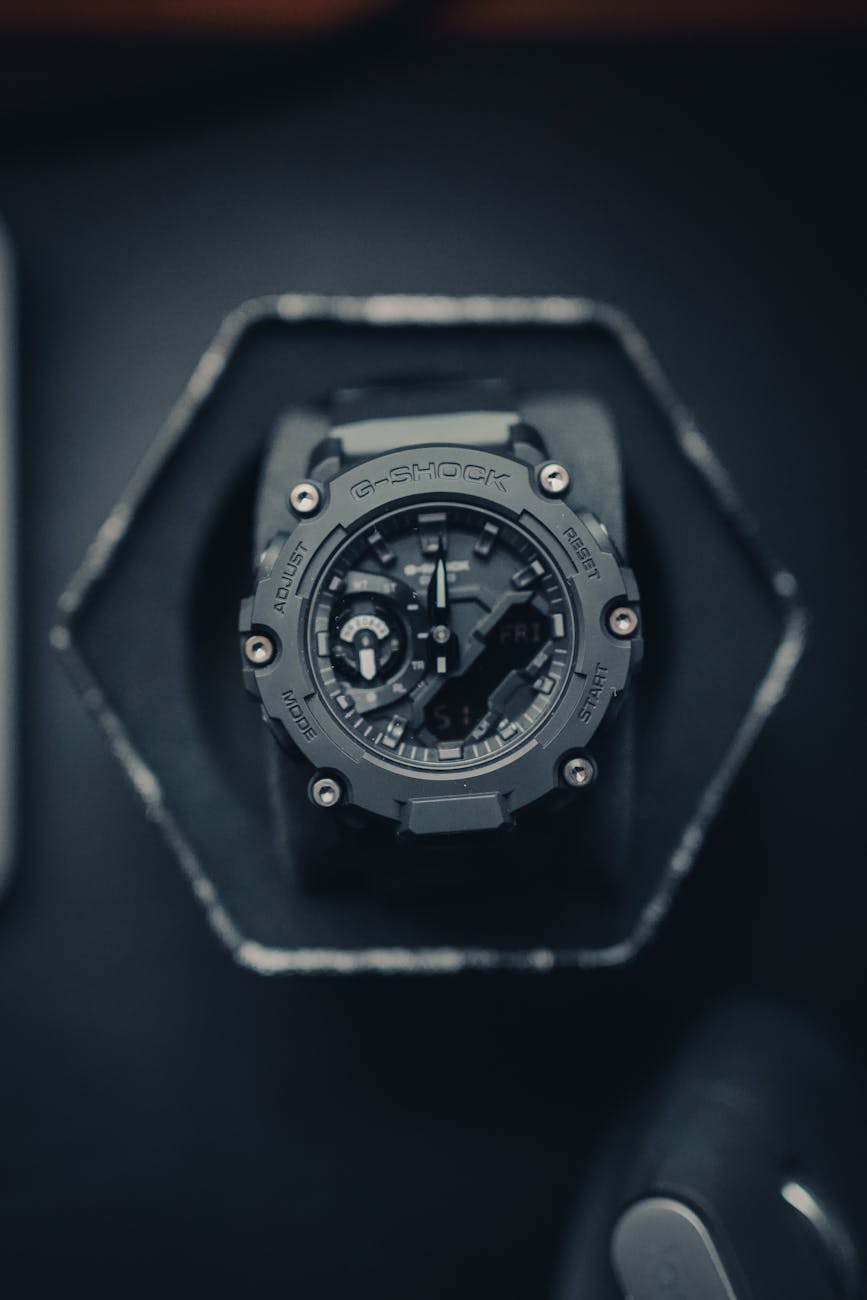
    You encounter a Rangeman owner who worships the stealth blacked-out model with a devotion bordering on performance art. He will tell you, calmly and without irony, that he can’t actually read the time on the negative display. It doesn’t matter. The watch stays on the wrist because it looks lethal—pure shadow, pure attitude, pure presence. Time, apparently, is now a secondary feature.

    Think about the pivot this represents. The man did not buy a timepiece; he bought an image. The geometry, the matte darkness, the tactical aura—these are the real functions. The digits exist somewhere inside the case, like a ceremonial appendix. If the light is right and the wrist is angled just so, the hour may reveal itself. But that’s incidental. The watch is no longer consulted. It is displayed.

    He resembles the fellow who once insisted he read glossy magazines for the articles, only to admit later that the articles had become irrelevant long ago. Content is gone. Only the visuals remain. In the same way, this enthusiast has crossed the line from horology to aesthetic intoxication. The watch no longer tells time. It tells a story about the man wearing it.

    Such a man is suffering from Function Abandonment Syndrome—the condition that sets in when a watch enthusiast quietly releases the expectation that the watch perform its basic task and begins wearing it purely for appearance, mood, or identity. Legibility becomes optional. Accuracy becomes theoretical. The time is technically available somewhere—under ideal lighting, at a cooperative angle—but that’s no longer the point. The owner has crossed the invisible threshold where tool becomes sculpture and utility becomes a nostalgic rumor. He doesn’t check the watch anymore; he acknowledges it. Function Abandonment Syndrome is what happens when style overwhelms purpose and the job description is politely retired without ceremony.

    Is there a cure for his condition? Yes. Imagine this: He lives happily in the glow of his blacked-out Rangeman until the day function suddenly matters again. Picture this: he’s driving a lonely stretch of highway at dusk when the fuel light comes on and the next gas station is closing in five minutes. His phone is dead. The dashboard clock is gone. All he has is the watch he chose for its “presence.” He lifts his wrist. Tilts. Squints. Rolls it toward the fading light like a man trying to read smoke signals from the wrist. The digits hover there, shy and evasive, revealing nothing but his own poor life choices. The station lights flicker off in the distance. In that moment—heart rate climbing, range dropping, darkness settling—he experiences the cold, clarifying terror that ends Function Abandonment Syndrome forever. Because style is thrilling in the showroom. But when the world gets real, the most beautiful watch on earth is the one that will tell you the time the first time you ask.

  • Avoid the Trap of Negative Display Frustration

    Avoid the Trap of Negative Display Frustration

    You saw them everywhere—YouTube thumbnails glowing with reverence, Reddit threads humming like revival meetings. The stealth blacked-out Rangeman was spoken of in near-mythic tones: the ultimate G-Shock, the watch for men who preferred shadow to spotlight. Yes, a few owners admitted the legibility could be… aspirational. But they waved off the concern with a shrug and a grin. One YouTuber confessed he could barely read the time at all, then declared it didn’t matter because he was “Mr. Rangeman.” He slipped into his convertible, wrist angled heroically toward the camera, and drove into the sunset wearing a watch he couldn’t read. He looked happy. Convincingly happy. You believed him.

    You loved the look too. This wasn’t vanity, you told yourself—it was discipline. The negative display felt tactical, restrained, professional. Less gadget, more issued equipment. On the wrist it carried authority without noise. In photos it was perfect: dark, serious, quietly dangerous. The positive display suddenly seemed cheerful, almost friendly—the wristwear equivalent of smiling too much in a job interview. You chose the darker path, convinced you were choosing character over comfort.

    At first, the illusion held. Outdoors, under strong light, the display looked sharp and purposeful. The watch projected competence. It matched the identity you’d purchased along with it: efficient, understated, immune to flash. But then the watch met real life—offices with flat lighting, restaurants with mood lighting, mornings before coffee, evenings after fatigue, quick glances from imperfect angles. The time was always there in theory. In practice, it behaved like a reluctant witness.

    This is the quiet prelude to Negative Display Frustration—the slow erosion that begins when a watch chosen for its stealthy authority requires negotiation for the basic privilege of reading the hour. It starts small: a longer glance indoors, a wrist tilt here, a button press there. Over time, the effort accumulates into low-grade irritation. The display still looks magnificent, but the relationship has shifted. The watch no longer serves effortlessly; it asks for cooperation.

    And the case studies are everywhere. Thousands of owners eventually surrender, trading their negative Rangeman for the positive version and reporting something close to psychological recovery. The lesson is not subtle. In the long run, aesthetics create admiration—but legibility creates peace. Cool impresses the eye. Clarity keeps the mind quiet.

  • Power Jewelry Rejection

    Power Jewelry Rejection

    Many of you have written to me about your migration from luxury mechanical watches to G-Shocks. In your telling, it wasn’t a casual shift. It was a renunciation. The grails were sold, the bracelets retired, the safe emptied. The wrist went digital and never looked back.

    Your stories are not universal. They are personal, situational, shaped by your own history with status, money, and identity. But taken together, they reveal a pattern worth examining.

    The turning point for many of you was a growing discomfort with what your watches had become: power jewelry. The grail that once represented achievement began to feel like a performance—an expensive signal broadcast to strangers. What had felt like success started to feel like theater. The watch no longer told time. It told a story about you, and you were tired of telling it.

    That moment marked the beginning of Power Jewelry Rejection.

    Power Jewelry Rejection is the instant a collector looks down and realizes he isn’t wearing a tool—he’s wearing a résumé. The rejection isn’t driven by finances or fashion. It comes from fatigue with the performance itself. The grail is sold. In its place comes something blunt, durable, socially invisible. And with that change comes an unexpected sensation: relief. Not the thrill of acquisition, but the quiet authority of no longer needing to explain yourself. This isn’t anti-luxury. It’s anti-broadcast. The real power is wearing a watch that does its job and asks nothing about your status in return.

    Once the performance ends, something else appears: a different kind of attachment.

    Many of you described a bond with your G-Shocks that never existed with your luxury pieces. Not pride. Not admiration. Something quieter. The watch became a companion rather than a symbol. You wore it hard. You stopped worrying about it. You trusted it. The relationship shifted from ownership to reliance. For the first time, the watch served you instead of representing you.

    Interestingly, this conversion produced very little missionary zeal.

    There was no urge to persuade others, no need to defend the choice. G-Shock Nation, as you quickly discovered, requires no recruitment. The community is vast, stable, and unconcerned with validation. Evangelism felt unnecessary, even absurd. Confidence made persuasion irrelevant.

    But honesty required one more admission.

    Yes, you had abandoned the idolatry of luxury. But you had not escaped devotion. You had simply changed altars. The emotional intensity remained—only the object had become more practical, more affordable, less socially conspicuous. The new attachment felt healthier, but it was still an attachment.

    And here is where the tone of your stories becomes notable: there was no triumphalism.

    You did not claim enlightenment. You did not declare moral victory. You acknowledged the obvious truth: you hadn’t left consumerism. You had changed its form. The new version felt cleaner, quieter, more aligned with your values. Less performance. More use. Less anxiety. More stability.

    No revolution. Just a recalibration.

    And that may be the most honest outcome the watch hobby ever produces.

  • Give Me Watch Sobriety—Only Not Yet

    Give Me Watch Sobriety—Only Not Yet

    If you think of yourself as a watch addict—someone whose hobby has drifted from interest into pathology—then you are probably also someone who longs for balance, for improvement, for a steadier inner life. You turn, as serious people do, to philosophy. Cicero’s Tusculan Disputations offers the promise: a tranquil soul, calmed by restraint and consistency. No distress. No fear. No desperate longing. No childish emotional swings. The happy man, Cicero suggests, is not the one who feels good, but the one who lives well.

    Then you look at your watch history and feel personally indicted.

    Restraint? You chased the perfect collection like a man hunting a mirage. Consistency? Your tastes pivoted with the emotional weather. Instead of tranquility, you endured the familiar cycle: anticipation, anxiety, justification, regret, and renewed desire. Twenty years of it. Even writing a book about the madness begins to look suspicious—less reflection than performance, a long-form version of hobby melodrama.

    You thought you had achieved peace. Seven mechanical divers. Stability. Closure.

    Then a G-Shock arrived.

    Then another.

    Like Augustine praying for chastity, the watch collector makes the classic promise:
    “Give me watch sobriety—only not yet.”

    The private bargain follows: One more watch, and the madness will be over.

    The promise is never kept.

    At this point, you have two options. You can keep prosecuting yourself for moral failure, or you can acknowledge a simpler truth: every hobby runs on enthusiasm, and enthusiasm always carries a trace of obsession. If you’re honest, part of this has been fun. But honesty requires the other admission as well: balance matters. An hour spent comparing G-Shock legibility is recreation. Losing an entire day to forums while your family heads to the beach without you is not enthusiasm. That’s displacement.

    So stop diagnosing yourself as diseased. You are not broken. You are wired this way. Some people chase golf swings. Some chase wine vintages. You chase watches.

    The real task is not suppression. It’s containment.

    This is where Guardrail Collecting begins.

    Guardrail Collecting allows your enthusiasm to run at full emotional voltage while installing firm limits that keep it from reorganizing your life around itself. It accepts a non-negotiable fact: the impulse isn’t going away. You will want to research, compare, optimize, and improve. The system doesn’t silence that impulse. It puts it inside a lane where curiosity remains pleasure instead of sliding into compulsion. The goal is not austerity. The goal is stability—so the hobby adds energy to your life instead of quietly draining it.

    The guardrails must be built before the surge hits, because no one makes rational decisions during Acquisition Afterglow. Establish three hard limits: a spending ceiling, a time boundary, and a capacity rule—maximum collection size or strict one-in/one-out. Then add a reality check: if watch activity begins to replace family time, sleep, health, or focused work, the rail has been hit. Activity stops. No bargaining. No heroic narratives.

    Maintenance requires periodic audits. Every few months, ask three questions: What am I wearing? What am I spending? How much time disappeared into comparison and speculation? If the hobby feels heavy, tighten the rails. If it feels light and contained, leave them alone.

    Because willpower is unreliable. Mood fluctuates. Enthusiasm surges and crashes.

    Structure does not.

    Guardrail Collecting works for one reason: it replaces self-control with architecture—and architecture holds steady long after motivation fades.

  • You Are in the State of Watch Sovereignty

    You Are in the State of Watch Sovereignty

    Much to your surprise, you’ve fallen in love with a watch—and the evidence isn’t emotional. It’s behavioral. The watch won’t come off.

    You try to rotate. After all, there are other watches in the box—serious watches, expensive watches, watches that once occupied entire weeks of your attention. They deserve wrist time. You reach for the box.

    And then you don’t open it.

    The watch stays on.

    It isn’t a decision. It’s a quiet takeover. The watch has moved past preference and into authority. You don’t command it. It commands you. Rotation is no longer a system; it’s a memory. The rest of the collection waits like passengers at a station where the trains no longer stop.

    What surprises you most is your reaction.

    You feel relief.

    No more morning negotiations. No more outfit coordination. No more low-grade anxiety about neglecting the others. The wheel of choice has stopped spinning, and with it goes a constant, invisible mental tax. The watch is driving now, and you’re happy to sit in the passenger seat and watch the scenery.

    You have entered the realm of Wrist Sovereignty.

    This is the moment when one watch quietly dissolves the democracy of your collection and installs itself as a benevolent dictator. There is no ceremony, no dramatic declaration. One day you simply stop reaching for alternatives. The others remain—polished, impressive, expensive—but they now resemble retired generals: decorated, respected, and no longer deployed.

    The sovereign holds power for a simple reason: it never gives you a reason to remove it. It’s comfortable. Accurate. Reliable. Emotionally frictionless. It doesn’t ask to be protected, admired, or managed. It just works, and it keeps working.

    The true miracle of Wrist Sovereignty isn’t dominance.

    It’s peace.

    The endless comparison loops disappear. The rotation strategies evaporate. The hobby stops being a daily decision and becomes a settled fact. You are no longer managing your watches.

    The watch is managing you.

    And in the rare political systems of the wrist, this is the one where surrender feels like freedom—and the ruler gives you your time back.

  • Treat Your Watches Like Playlists, Not Religion

    Treat Your Watches Like Playlists, Not Religion

    For decades, your identity was secure. High-end mechanical divers. Steel, weight, heritage, tolerances measured in microns. A small, loyal brotherhood of engineering purity lived in your watch box, and you knew exactly who you were.

    Then the fairy tale cracked.

    A G-Shock Frogman entered your life.

    You told yourself it was a novelty. A tool. A temporary experiment.

    Then came the Rangeman.
    Then the premium Square.

    Now you’re standing over your watch box like a man who has betrayed his own lineage.

    Who am I?
    What have I done?
    What happened to my mechanical diver heritage?

    Relax.

    You’re not having a crisis. You’re experiencing Genre Guilt.

    Genre Guilt is the uneasy sensation that enjoying a new category somehow betrays the old one. The mechanical diver sits in the box like a disappointed mentor while the G-Shock hums cheerfully on your wrist, and suddenly you feel the need to justify yourself—to your friends, to your former self, possibly to the watches themselves.

    But the anxiety has nothing to do with enjoyment or function. It comes from a simple mistake: treating collecting like a moral code instead of a mood.

    Here’s the truth.
    Watches are not a marriage.
    Categories are not religions.
    Your collection is not a pledge of allegiance.

    It’s a playlist.

    Your streaming app doesn’t panic when you move from jazz to electronic. It doesn’t accuse you of betraying classical. It simply plays what fits your mood.

    Your collection works the same way.

    Mechanical divers: one playlist.
    G-Shocks: another.

    Millions of collectors do this. You haven’t broken tradition. You haven’t reinvented the hobby. You’re not undergoing a transformation.

    You’re a suburban enthusiast who briefly mistook preference for drama.

    So take a breath. Close the courtroom in your head. There is no betrayal here.

    Add the playlist. Wear the Frogman. Enjoy the Square.

    Your blood pressure—and your hobby—will run a lot smoother once you stop treating mood swings like moral events. Instead, treat your watches like playlists, not religion. 

  • The Geology of Your Obsession

    The Geology of Your Obsession

    You’re three-quarters of the way through a book about the madness of the watch hobby when the plot turns on you.

    The culprit is your first G-Shock—specifically, the digital Frogman GWF-1000. You expected a curiosity, maybe a temporary diversion. What you got instead was a new form of obsession. Not stronger than your mechanical diver fixation. Not weaker. Just different—like discovering that the disease you thought you understood has multiple strains.

    You didn’t see it coming.

    Some of your watch friends are unimpressed. They never drank the G-Shock Kool-Aid, or they did once and recovered. To them, the brand is soulless—plastic, clinical, emotionally sterile. A tool without romance.

    They’re wrong.

    G-Shock has a soul. It’s just a different kind of soul—one built from precision, autonomy, indifference to status, and the moral clarity of a watch that refuses to pretend it’s jewelry. And with that soul comes its own species of madness: atomic-sync monitoring, solar anxiety, display legibility debates, module archaeology, and the quiet satisfaction of a machine that never asks for your attention and never apologizes for it.

    The revelation is unsettling.

    You thought watch madness was a single condition. Mechanical romance, heritage narratives, the poetry of gears. But the Frogman teaches you something more troubling: this hobby doesn’t produce one madness. It produces subgenres. Each category brings its own emotional logic, its own rituals, its own vocabulary of justification. Your mind begins to look less like a collection strategy and more like a geological survey—layers of enthusiasm stacked over time like soil, shale, coal, and volcanic glass.

    You now live in a state of Layered Madness.

    Layered Madness is the realization that obsession in this hobby doesn’t replace itself—it accumulates. What feels like a fresh start—I’m done with mechanical divers; now I’m a G-Shock guy—isn’t a reset. It’s a new deposit in an expanding psychological landscape. Each phase arrives with total confidence that this is the rational version of the hobby. Meanwhile, the earlier passions don’t disappear. They settle below the surface—compressed, preserved, and waiting for the right emotional pressure to re-emerge.

    Over time, the enthusiast stops being a collector of watches and becomes an archaeologist of his own compulsions.

    Layered Madness is the moment you understand the truth: you’re not evolving beyond obsession.

    You’re building a cross-section of it.

  • When Enthusiasm Becomes a Sermon

    When Enthusiasm Becomes a Sermon

    Your fellow watch obsessives will tolerate your excitement—up to a point. Enthusiasm is welcome. Testimony is not. There comes a moment when you cross the invisible line from collector to missionary, and that’s when the room cools. The wrist shots multiply. The tone shifts. Conversations begin to sound less like sharing and more like recruitment. That’s when your friends deliver the social equivalent of a gentle intervention: Get a room.

    What they’re reacting to is Acquisition Afterglow—that brief, intoxicating window after a new watch arrives when the purchase doesn’t merely feel satisfying; it feels revelatory. The watch appears flawless. Doubts evaporate. The owner speaks with the calm authority of a man who has solved time itself. Posting frequency increases. Explanations lengthen. The watch stops being an object and becomes a philosophy. The danger isn’t the joy. The danger is the certainty. What feels like permanent clarity is usually just dopamine with a publicist.

    This is especially true when the revelation is G-Shock. You strap on atomic accuracy, solar autonomy, and blunt utility, and suddenly the mechanical world looks theatrical, sentimental, inefficient. It feels like you’ve discovered plutonium. But here’s the problem: millions discovered it before you. Some stayed in G-Shock Fever for life. Others burned hot for a year or two and drifted back to gears and springs. The experience feels revolutionary. Historically, it’s routine.

    So when the community quietly labels you a Watch Evangelist, the correct response is not denial—it’s calibration. Acknowledge the afterglow. Admit the volume got high. Then stop apologizing. Because enthusiasm is honest, and honesty is the only currency that matters in a hobby built on obsession.

    What you must make clear is this: you are not prescribing. You are not declaring a final truth. You are reporting weather conditions from your wrist. Today it’s G-Shock. Tomorrow, who knows. The emotional terrain shifted—that’s the story. The future is not.

    This is the posture of maturity in the hobby. Not certainty. Not conversion.
    You are not a Watch Evangelist.
    You are a Watch Agnostic.