Category: Confessions

  • The Gospel According to Lalo: Watches, Inadequacy, and the Quest for a Better Self

    The Gospel According to Lalo: Watches, Inadequacy, and the Quest for a Better Self

    Yesterday, the tour bus wheezed to a stop and dumped us in Little Havana like a sack of reluctant tourists. We wandered through downtown under a punishing sun, the air thick with the scent of café Cubano and bravado. That’s when I saw him: a man who looked exactly like Lalo Salamanca, minus the drug empire—crisp white shirt, swagger in his step, and two kids in tow. He wasn’t just crossing the street; he was gliding, chin up, radiating unfiltered, unstudied masculinity. And he wasn’t alone. Little Havana was teeming with these men—fathers who looked like they’d stepped out of a sepia-toned photo labeled Pride, circa Always.

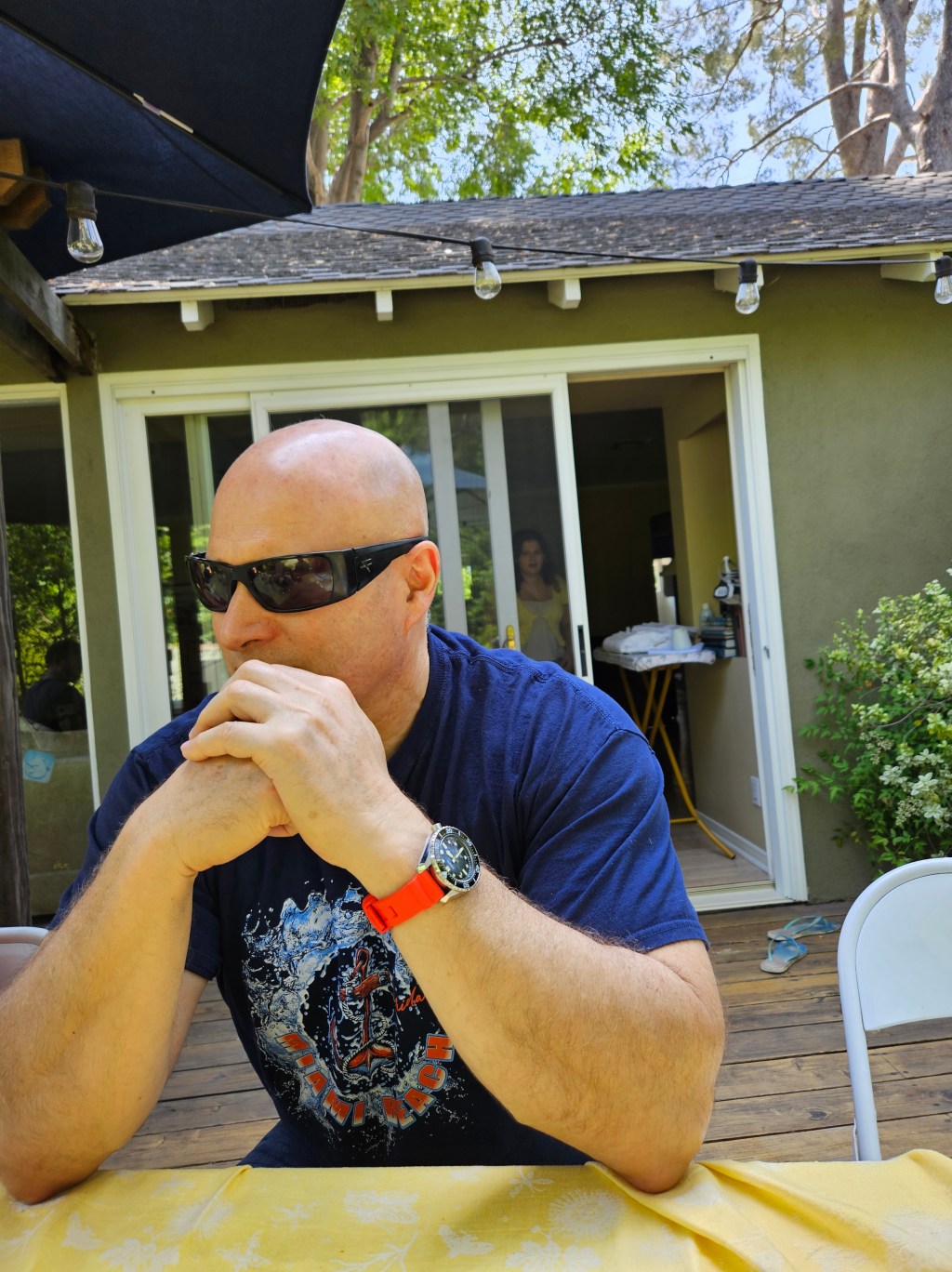
    Meanwhile, there’s me—63 years old, 30 pounds overweight despite daily exercise and good intentions. My daughters joke that I look like Charlie Brown, and not in the charming, animated special way—more in the “existential dread in khakis” sense. I don’t walk across intersections like Lalo. I trudge. And if I’m holding hands, it’s probably because I’m being led away from a pastry counter.

    But as I watched those fathers—their confidence, their presence—I began to realize the true pathology behind my watch obsession. I wasn’t just collecting watches. I was searching for transformation. If I could find the watch, the perfect timepiece, it might just alchemize my Charlie Brown soul into something closer to Lalo—proud, magnetic, quietly heroic.

    Enter the Seiko Astron Nexter—$1,700 of satellite-synced wizardry and horological lust. It gleams. It commands respect. It’s whispering, “Buy me, and become the man you were meant to be.” But let’s be real: I barely go anywhere these days. My public appearances are limited to grocery store aisles and accidental mirror encounters. I’m not a man about town; I’m a man about tuna salad and ibuprofen.

    At 63, how many years of wrist real estate do I even have left? How long before I’m just another well-accessorized ghost, my legacy a drawer of luxury regret? The whole ritual—buying, flipping, rationalizing, repenting—is starting to feel less like a hobby and more like a slow, polished breakdown. This isn’t taste. It’s compulsion with a tracking number.

    Maybe it’s time to quit. I’ve got five watches already—each one a chapter in the memoir of my delusions. Maybe the next chapter isn’t about adding to the collection, but about burning the altar down.

    Here’s a wild idea: make self-denial the new dopamine hit. Let the new obsession be calorie restriction instead of case diameter. Let others chase sapphire crystals and ceramic bezels—I’ll chase a slimmer waistline, a clean mind, and the kind of inner quiet no chronograph can measure.

    Because maybe happiness isn’t behind a glass display case. Maybe it’s not ticking on my wrist. Maybe it’s the empty space where the craving used to be.

    Still… the Astron is beautiful. And it would look damn good on Lalo.

  • Too Old for the Peacock Parade: Notes from a Miami Beach Exile

    Too Old for the Peacock Parade: Notes from a Miami Beach Exile

    From our apartment wedged beside a Hampton Inn in Miami Beach, the morning soundtrack is a symphony of honking horns—angry, insistent, and deeply personal, as if each driver believes their rage will somehow part the traffic like the Red Sea. I’m grateful we didn’t rent a car. Instead, we’ll wander on foot like civilized tourists and hop a trolley to today’s grand event: a five-hour tour of Miami’s greatest hits—its islands, its excess, and its curated chaos. Dinner and a boat ride are promised, which sounds either romantic or like a timeshare presentation with ocean views.

    For my family, it’s all new—the pastel Art Deco, the swampy opulence, the omnipresent scent of tanning oil and ambition. But for me, a native Floridian, this is a strange pilgrimage, a nostalgia trip filtered through Botox and Beats headphones. Miami hasn’t changed—it’s just doubled down. This isn’t a city. It’s a humid runway where the rich and surgically sculpted flex their flesh like currency. I feel like I’m attending a party I wasn’t invited to, wearing the wrong shoes and ten years too late.

    This morning, my wife and I walked the edge of the Atlantic, and I was struck by how different it smells from the Pacific. The Pacific has that cold, salty hush. The Atlantic? It smells lush—warm, sweet, almost suggestive. Like a pineapple cocktail is about to glide down from the clouds and whisper, “Welcome, darling.” There’s something in the air here that makes you believe life is one long poolside flirtation—until you check your bank account or your blood pressure.

    Still, I’m looking forward to going home. Say what you will about Los Angeles—it’s neurotic, performative, and addicted to traffic—but compared to Miami Beach, it’s practically Amish.

  • The Night Irony Beat the Monkees

    The Night Irony Beat the Monkees

    On the night of October 16, 1967—just twelve days shy of my sixth birthday—the universe shoved my head in the toilet and flushed. I could hear the sound of childhood innocence circling the drain. Up to that moment, I was a full-time subscriber to the gospel of positive thinking. Life was fair. Good guys won. If you tried hard and smiled big, the world smiled back. Norman Vincent Peale had basically written the owner’s manual for my inner world.

    That illusion shattered during an episode of The Monkees.

    The episode was called “I Was a 99-lb. Weakling,” and I had parked myself cross-legged in front of the TV, popcorn in lap, expecting hijinks and musical numbers. Instead, I got a masterclass in betrayal and the savage laws of ironic detachment. My hero, Micky Dolenz—the clumsy, lovable soul who made failure seem like a jazz solo—was brutally outmuscled by Bulk, a flexing monolith of a man played by real-life Mr. Universe, Dave Draper. Bulk didn’t walk—he heaved himself through scenes, a sculpted rebuke to every noodle-armed dreamer in America.

    And right on cue, Brenda—the beachside Aphrodite with hair that shimmered like optimism—dropped Micky like a sack of kittens for Bulk, never once looking back.

    This wasn’t just sitcom plot; this was emotional sabotage. I watched, frozen, as Micky enrolled in “Weaklings Anonymous,” embarking on a training montage so grotesquely absurd it veered into tragedy. He lifted dumbbells the size of moon rocks. He drank something called fermented goat milk curd, a substance that looked like it had been skimmed off a medieval wound. He even sold his drum set—his very soul—to chase the delusion that muscles would win her back.

    And then came the twist.

    Just as Micky completed his protein-fueled crucible, Brenda changed her mind. She didn’t want Bulk anymore. She wanted a skinny guy reading Remembrance of Things Past. A man whose pecs had clearly never met resistance training, but whose inner life pulsed with French ennui. The entire narrative pirouetted into absurdity, and I watched my belief system crack like a snow globe under a tire.

    That’s when I first met irony.

    Not the schoolyard kind where someone says “nice shirt” and means the opposite—but the bone-deep realization that the universe isn’t fair, that effort doesn’t guarantee reward, and that life doesn’t play by the moral arithmetic taught in Saturday morning cartoons.

    It was that night I realized muscles weren’t the secret to power—language was. Not curls, not crunches, but craft. Syntax. Prose so sharp it could reroute the affections of beach goddesses and turn the tide of stories. That was the moment my childish faith in “try hard and you’ll win” collapsed, and in its place rose a darker, more potent creed: the pen is mightier not just than the sword, but than the bench press.

    That night, my writing life began—not with celebration, but with betrayal. A glittering lesson delivered in the cruel, mocking tone only irony can wield. And though it hurt, I never forgot it. Because the truth is: irony teaches faster than optimism. And it remembers longer, too.

  • Johnny Carson Was Prozac Before Big Pharma Perfected the Formula

    Johnny Carson Was Prozac Before Big Pharma Perfected the Formula

    I’m listening to Carson the Magnificent on Audible, Bill Zehme’s lush tribute to the King of Late Night. Zehme is a skilled writer, no doubt—but he suffers from an affliction familiar to many stylists: chronic purple prose. His descriptions don’t sparkle; they sprawl. Reading him is like eating an entire wedding cake when a slice would have sufficed. He’s so enamored with his own flourishes that Johnny Carson occasionally vanishes behind the velvet curtain of Zehme’s adjectives.

    Still, what he lacks in restraint, he makes up for in ardor. Zehme clearly loves his subject, and his affection pulses through the pages. Carson emerges as a sort of secular priest of television, delivering nightly benedictions of laughter for thirty years. He wasn’t edgy or groundbreaking—he was dependable, a soothing presence at 11:30 PM, like a warm bath or a glass of room-temperature white wine. He was comfort food for the collective American psyche, Prozac before Big Pharma perfected the formula. A totem from a time when a single man in a suit could stand at the crossroads of politics, culture, and showbiz and crack wise to a nation that hadn’t yet shattered into a million niche audiences.

    I was never much of a Carson acolyte myself. Dick Cavett had the brain. Letterman had the bite. Carson? He had commercials. What I remember most is that the show seemed designed to lull you into a trance of polite chuckles and bland banter. It wasn’t bad, exactly—it was just relentlessly there. Watching The Tonight Show felt less like a choice and more like a ritual, a nightly genuflection before the glow of the TV set. People tuned in not out of excitement, but out of habit. He was the head caveman, murmuring jokes by firelight, while the rest of us nodded and laughed, grateful to not be alone in the dark.

    To skip Carson was to risk social exile. You didn’t want to be the one who missed what the country’s collective subconscious had passively absorbed.

    As I listen to Carson the Magnificent, I find myself pining—not for Carson, but for the era he ruled. A time when a singular voice could still cut through the noise and hold the country’s wandering attention. That cultural unity is gone now, and maybe for the best, but I can’t help mourning it a little.

    Zehme will, I’m sure, delve into the darker recesses of Carson’s psyche—and I’m ready for it. I’ve already mainlined The Larry Sanders Show three times, with a fourth round likely on the way. That show remains the gold standard for peeling back the sequined curtain to reveal the neurotic, solipsistic soul of late-night television. If Zehme gets even halfway there, I’ll consider the audiobook time well spent—even if I have to wade through another paragraph that reads like a thesaurus suffered a head injury.

  • The Stucco Incident: A Tale of Paranoia, Kettlebells, and Redemption

    The Stucco Incident: A Tale of Paranoia, Kettlebells, and Redemption

    My neighbor Joe, a man with a penchant for awkward introductions and cargo shorts, once foisted upon me his friend Raymond—a wiry handyman with a cigarette rasp and a toolbelt that looked like it had seen battle. Raymond had installed our front and bedroom doors with the calm authority of someone who’s spent more time with a level than with his own family. More importantly, Raymond had a black book of contractor contacts so thick it could’ve doubled as a Catholic missal: painters, plumbers, concrete guys, stucco guys, electricians—everyone short of a Vatican-approved exorcist.

    Back in 2007, we’d had our house painted and cloaked in smooth stucco, the kind of finish that whispers suburban respectability. Fast forward to last week: three days of relentless rain and suddenly the back wall looked like it had taken a punch. A large section of the stucco buckled like cheap linoleum. Raymond, unbothered by the decay of manmade things, casually recommended a guy named Jose. Said he’d fix the wall for $650.

    Six-fifty? I was expecting two grand. I nearly kissed my phone. I told Jose yes before he could change his mind, and we agreed he’d start on Wednesday morning.

    That was the plan.

    On Wednesday, I forgot. Utterly. Blissfully. Didn’t check my phone. Didn’t check the time. Just wandered into the garage around 10 a.m. for a kettlebell session, ready to punish myself with Russian swings for no real reason. That’s when I saw it: two missed calls and a text from Jose at 9 a.m. “I’m at your front door.”

    Panic set in. I called him at 10, breathless with guilt. “Jose, I’m so sorry! Where are you?”

    “I’m on the job,” he said, calmly, like I should know what that means.

    “Wait… so, you’re still coming later?”

    Silence.

    After my workout, I crept through the house, peering out the windows like a man who suspects he’s just been ghosted by a contractor. Nothing. No truck. No ladder. Just the usual backyard gloom.

    Convinced I’d blown it—that I was now on Jose’s official “flakes and time-wasters” blacklist—I called him again, borderline pleading. “I’m so sorry for not answering earlier. Please forgive me. I hope we can reschedule…”

    He paused. Then said, almost tenderly, “Jeff. I’m here. I’ve been working in the back of your house the whole time.”

    I turned and looked through the sliding glass door—and there he was, crouched like a monk, phone to ear, smoothing cement with the devotion of a man sculpting a headstone.

    “I’m hanging up,” I said. “I will greet you in person.”

    He laughed, as if to say, You absolute wreck. I ran outside and thanked him more times than was strictly necessary. He just smiled and kept working.

    And the result? Perfect. Seamless. The repaired wall matched the rest of the house so precisely it looked like time had reversed itself. I’m fairly certain Jose undercharged me out of pity.

    Later, when I told my wife about the mix-up and my brief descent into full-blown paranoia, she laughed like it wasn’t the first time. “You’re a mess,” she said. “You get so worked up, you leave reality behind.”

    She’s not wrong. But at least the stucco’s smooth.

  • The Ghost in Aisle Nine: Remembering Chris Grossman

    The Ghost in Aisle Nine: Remembering Chris Grossman

    Back in the Reagan era, when I was a college kid working part-time at Jackson’s Wine & Spirits in Berkeley, I shared long, dusty shifts with a man named Chris Grossman—a wine salesman whose last name, ironically, matched neither his physical presence nor his temperament. Chris was lanky, six foot four, and moved with the grace of a man perpetually on the verge of tripping over his own limbs. He had a face only a Freudian could love: aquiline nose, dark beard, black-framed glasses smudged with fingerprints, and a mop of dark curly hair that looked like it had lost a long battle with a pillow. A pencil was always tucked behind his ear, as if at any moment he might be called upon to draft blueprints for a submarine.

    To customers, Chris was a savant in work shirts with the sleeves rolled just so—half wine whisperer, half philosopher of Zinfandel. He had an uncanny ability to match a Pinot Noir to a personality type, like some sort of boozy Myers-Briggs. The regulars adored him. They trusted his palate, his calm authority, his encyclopedic knowledge of terroir. What they didn’t know—and what I only discovered gradually—was that once he stepped off the floor, he disappeared.

    Chris Grossman had no friends. Not one. He was social the way a vending machine is social—polite, efficient, devoid of emotional commitment. Once, during a lull in business, he confided that he’d had a girlfriend, briefly, years ago. He spoke of it as though he’d survived a hostage crisis. The constant negotiation, the emotional bookkeeping—it exhausted him. “I’m too selfish to pretend otherwise,” he said with an eerie clarity. “I’d only make her miserable.” There was something almost noble in his blunt self-awareness, as if he’d spared both himself and others the slow drip of mutual disappointment.

    His father, he once told me, had been a brilliant but frostbitten physician, a man incapable of affection. Chris, I think, carried his father’s circuitry—a brain tuned for analysis, not empathy. Still, he wasn’t bitter. He wasn’t even rude. If he hated humanity, he kept it on a low simmer, tucked behind a mild smile and a firm handshake.

    We both left Jackson’s in the late ’80s. I moved to the California desert to lecture on writing and lose my illusions in the faculty lounge. Chris stayed local, selling stereos on Shattuck Avenue for places like The Good Guys and Circuit City. He made good money and spent exactly none of it on companionship. No wife, no kids, no pets, not even a ficus. Once a year he drove his Triumph convertible down to Carmel for a vintage car rally, then disappeared back into his cocoon.

    I think about him more than I should. Forty years have passed, and still, his silhouette lingers. Why? Maybe because I recognize myself in him. The difference is, I got married—and in doing so, outsourced my social life to someone with actual initiative. My wife arranges our dinners, our vacations, our tenuous grasp on community. She reminds me to be human. And yet, even she knows I’m a recluse at heart. She gently suggests I see more of my friends—or at least have more friends—so she doesn’t have to absorb every neurotic spiral I produce. Fair enough.

    I’m 63 now. Chris, if he’s still around, must be pushing seventy. I sometimes wonder how he’s weathered the years, whether the silence that once comforted him has curdled into something more sinister. But I also suspect he made peace with his solitude. He looked at the world, with all its needy, buzzing, soul-sucking demands, and chose the quieter suffering. Not because he was brave or broken, but because he knew himself too well to fake it.

    I hope he’s okay. I really do. Solitude, like alcohol, is dose-dependent. For some, it’s a meditative stillness. For others, it’s a slow erosion. I don’t know which side of the line Chris landed on. But wherever he is, I raise a glass to him—alone, perhaps, but not forgotten.

  • Tuned In, Checked Out: Confessions of a Radio Enthusiast

    Tuned In, Checked Out: Confessions of a Radio Enthusiast

    When I catch sight of my black Tecsun PL-680—hulking, angular, unapologetically retro—I freeze like a Victorian child glimpsing a forbidden mechanical marvel through a shop window. My eyes widen, my breath catches. It’s the same reverence I once felt, age six, face pressed against the glass of a toy store, transfixed by the GI Joe helicopter with working rotors and the implied promise of war-zone adventure. Only now the battleground is a cluttered kitchen table, and the artillery is AM talk radio, jazz on shortwave, the solemn murmur of world news drifting in from another hemisphere.

    The desire to switch it on and be swallowed by its frequencies is so intense, it borders on insanity. I feel embarrassed by the depth of this longing, but not enough to stop. My smaller Tecsun PL-330 elicits the same pulse of joy—compact, stealthy, and with an antenna that telescopes like it’s reaching for God. These machines are not just radios; they’re sanctuaries. Each one is a cozy cockpit where I can retreat from reality and tune in to something more orderly, more measured, more mine.

    “On the spectrum,” my wife jokes, watching me cradle a shortwave receiver like it’s a newborn or a detonator. I laugh, but I know she’s not wrong. The way I look at these devices—mouth slightly open, posture slack, eyes glazed with devotion—is not what you’d call neurotypical. It’s the gaze of a man who has found something he understands in a world that too often makes no sense.

    I have no interest in being cured. Therapy doesn’t come with a frequency dial. Meditation never once pulled in Radio Romania International. And no mindfulness app can match the primal, analog thrill of catching a faint station through the hiss of the void.

    These radios are my proof—of eccentricity, yes, but also of what keeps me sane. They hum. They glow. They speak in languages I don’t understand but need to hear. And if that’s madness, I’m fine with it. I’ll be here with my Tecsun, smiling at static, laughing at myself, and tuning in to everything that doesn’t ask me to explain why.

  • Radio Reclaimed: The Proxy Friendship That Saves Your Sanity

    Radio Reclaimed: The Proxy Friendship That Saves Your Sanity

    A couple of months ago, as the Los Angeles wildfires raged, I found myself glued to a radio for live reports. A thought struck me like a lightning bolt: I had missed the radio. This ancient relic had been eclipsed by streaming devices, which, over the past decade, had somehow become my personal cocoon—a space where I meticulously curated my music and podcasts like a hyper-intelligent hermit with a PhD in self-isolation. I was alone, yes, but at least I had the comforting hum of algorithmically chosen tunes to keep me company. Then I realized: this wasn’t comfort. This was madness in a cocoon. My little silo, built to keep out the noise of the world, was also keeping out everything else that made me feel connected. I was losing my grip on reality, like the woman in “The Yellow Wallpaper” who could only see the world through the eyes of her claustrophobic madness.

    So, I did what any self-respecting, slightly paranoid adult would do: I bought a batch of high-performance radios, like the Tecsun PL-990, and I tuned back into the real world. I started listening to Larry Mantle’s voice again on LAist, to KJAZZ and KUSC—the classical music station that claims to be the most popular in the country. And after a few months of basking in their sonic embrace, I understood why KUSC is so beloved. It’s not just music; it’s a friend. The DJs don’t just announce the next piece; they drop in casual nuggets of composer trivia like old pals who just happen to know a lot about Bach’s temper. They are personal, conversational, and soothing, like a club of soundwave whisperers gently easing you into a state of calm with “your nightly lullaby” or music to “start your day.”

    KUSC doesn’t just play classical music. It plays the role of a companion—your anti-anxiety, anti-depression, virtual hug in the form of a radio signal. These aren’t just voices on the air; they’re voices that make you feel like you’re not alone, that someone is there to guide you through the chaos of your day. It’s the kind of subtle emotional manipulation you don’t mind because it’s just so comforting. If radio is going to survive the onslaught of streaming, it could do worse than to study KUSC’s Proxy Friendship model. There’s a lesson in that calm, gentle routine that could help even the most chaotic station become a lifeline in a world that feels like it’s constantly spinning off its axis.

  • Confessions of a Washed-Up Watchfluencer: Dreaming of Leaving YouTube and Instagram

    Confessions of a Washed-Up Watchfluencer: Dreaming of Leaving YouTube and Instagram

    For the better part of a decade, I’ve been a talking head on YouTube—waxing unpoetic about dive watches, flipping Seikos like pancakes, and freefalling into endless spirals of horological self-loathing. My channel was never slick. No fancy cuts, no drone shots over crashing waves, no ominous music swelling over macro shots of ceramic bezels. Just me: a man, a camera, and the slow erosion of his dignity.

    I didn’t edit. I didn’t storyboard. I didn’t build a brand. I just rambled into the void, a kind of wristwatch confessional booth where I shared my joy, my shame, and my madness with an audience of fellow obsessives. For a while, it was exhilarating. Like catching your own reflection in a funhouse mirror and mistaking it for truth.

    At my pathological peak, I owned sixty-three “TV-brand” watches—any brand that looked good on camera and bad for your soul. I knew I had a problem when I started hiding watches in drawers and pretending I hadn’t bought another diver. Getting the collection down to five felt like detox. Like crawling out of a swamp in ripped jeans, clutching a G-Shock and whispering, never again.

    And now? I haven’t filmed in a month. The idea of making another video fills me with dread. My subscriber count has flatlined around 10,000. I’m not growing. I’m not evolving. I’m the guy in the garage band who still thinks the right lighting will disguise the fact that he’s 63, wearing a wig, and flexing in a tank top with a fake tan and a borrowed swagger.

    More than stagnation, it’s the cost of content creation that’s choking me. Every video drags me deeper into the watch swamp. I obsess. I fantasize. I compare. I scroll forums at 2 a.m. and start building mental spreadsheets of specs I’ll forget by morning. The longer I film, the more I think about watches, and the more I think about watches, the less I think about anything else.

    Then there’s Instagram—my other digital vice. The cigarette break I take between grading student essays and questioning my life choices. One minute I’m watching a documentary; the next I’m styling a wrist shot, spreading digital envy like cologne. Watch porn. FOMO fuel. I’m not sharing insight. I’m spreading existential rot disguised as lifestyle content.

    The breaking point came last week when two Instagram friends—good guys, honest guys—messaged me with admiration-tinged despair. They loved my collection but felt ashamed of their own modest $300 watches. That’s when I saw it: I wasn’t inspiring anyone. I was curating a highlight reel of hollow indulgence, turning craftsmanship into competition. I don’t want to be that guy. The one whose joy costs others their peace.

    So yes—I’ve been dreaming of leaving. Leaving YouTube. Leaving Instagram. Leaving the digital masquerade where likes masquerade as affection and comments stand in for connection. But here’s the kicker: I don’t want to announce my departure. I don’t want to post some faux-epic “farewell” video where I stare off into the middle distance like a monk who’s just discovered minimalism. That’s not liberation—that’s branding.

    And yet, here I am. Writing this.

    The irony is suffocating.

    What’s my future on YouTube and Instagram? I honestly don’t know. But I’ve caught the scent of something better—something that smells like freedom, like sanity, like the first breath of fresh air after crawling out of a sealed vault.

    In the meantime, there’s the blog. Nine subscribers. Twenty hits a day. Basically the sound of a tree falling in the woods while everyone’s at brunch. But unlike video, writing helps me think. It gives shape to the noise in my head. Like kettlebell workouts or noodling on a keyboard, it’s therapy with fewer side effects and no recurring subscription fee.

    So no, I don’t care about metrics. Not anymore. I just want to be true to myself, however unmarketable that truth might be.

    And if you’re still reading this—thanks. I’m guessing you get it.

  • Stories That Eat Novels (and Leave No Bones Behind)

    Stories That Eat Novels (and Leave No Bones Behind)

    As part of my rehabilitation from writing novels I have no business writing, I remind myself of an uncomfortable truth: 95% of books—both fiction and nonfiction—are just bloated short stories and essays with unnecessary padding. How many times have I read a novel and thought, This would have been a killer short story, but as a novel, it’s a slog? How often have I powered through a nonfiction screed only to realize that everything I needed was in the first chapter, and the rest was just an echo chamber of diminishing returns?

    Perhaps someday, I’ll learn to write an exceptional short story—the kind that punches above its weight, the kind that leaves you feeling like you’ve just read a 400-page novel even though it barely clears 30. It takes a rare kind of genius to pull off this magic trick. I think of Alice Munro’s layered portraits of regret, Lorrie Moore’s razor-sharp wit, and John Cheever’s meticulous dissections of suburban despair. I flip through my extra-large edition of The Stories of John Cheever, and three stand out like glittering relics: “The Swimmer,” “The Country Husband,” and “The Jewels of the Cabots.” Each is a self-contained universe, a potent literary multivitamin that somehow delivers all the nourishment of a novel in a single, concentrated dose. Let’s call these rare works Stories That Ate a Novel—compact, ferocious, and packed with enough emotional and intellectual weight to render lesser novels redundant.

    As part of my rehabilitation, I must seek out such stories, study them, and attempt to write them. Not just as an artistic exercise, but as a safeguard against relapse—the last thing I need is another 300-page corpse of a novel stinking up my hard drive.

    But maybe this is more than just a recovery plan. Maybe this is a new mission—championing Stories That Eat Novels. The cultural winds are shifting in my favor. Attention spans, gnawed to the bone by social media, no longer tolerate literary excess. Even the New York Times has noted the rise of the short novel, reporting in “To the Point: Short Novels Dominate International Booker Prize Nominees” that books under 200 pages are taking center stage. We may be witnessing a tectonic shift, an age where brevity is not just a virtue but a necessity.

    For a failed novelist and an unapologetic literary wind-sprinter, this could be my moment. I can already see it—my sleek, ruthless 160-page collection, Stories That Eat Novels, four lapidary masterpieces gleaming like finely cut diamonds. Rehabilitation has never felt so good. Who says a man in his sixties can’t find his literary niche and stage an artistic rebirth? Maybe I wasn’t a failed novelist after all—maybe I was just a short-form assassin waiting for the right age to arrive.