Category: Confessions

  • The Los Angeles Wildfires Reconnected Me to Radio

    The Los Angeles Wildfires Reconnected Me to Radio

    The Los Angeles fires, blazing with apocalyptic fury, prompted me to do something I hadn’t done in years: dust off one of my radios and tune into live local news. The live broadcast brought with it not just updates but an epiphany. Two things, in fact. First, I realized that deep down, I despise my streaming devices—their algorithm-driven content is like an endless conveyor belt of lukewarm leftovers, a numbing backdrop of music and chatter that feels canned, impersonal, and incurably distant. Worst of all, these devices have pushed me into a solipsistic bubble, a navel-gazing universe where I am the sole inhabitant. Streaming has turned my listening into an isolating, insidious form of solitary confinement, and I haven’t even noticed.

    When I flipped on the radio in my kitchen, the warmth of its live immediacy hit me like a long-lost friend. My heart ached as memories of radio’s golden touch from my youth came flooding back. As a nine-year-old, after watching Diahann Carroll in Julia and Sally Field in The Flying Nun, I’d crawl into bed, armed with my trusty transistor radio and earbuds, ready for the night to truly begin. Tuned to KFRC 610 AM, I’d be transported into the shimmering world of Sly and the Family Stone’s “Hot Fun in the Summertime,” Tommy James and the Shondells’ “Crystal Blue Persuasion,” and The Friends of Distinction’s “Grazing in the Grass.” The knowledge that thousands of others in my community were swaying to the same beats made the experience electric, communal, alive—so unlike the deadening isolation of my curated streaming playlists.

    And then there was talk radio. Live conversations on KGO 810 AM with Jim Eason and Ronn Owens held a spellbinding charm. In the 70s, my mother and I would sit in the kitchen, enraptured, as they dissected controversies and gossip with the vigor of philosophers at a cocktail party. It was conversation as an art form, communal and vital, like cavemen telling stories around the fire. Contrast that with my podcasts: cherry-picked for my biases, carefully calibrated to affirm my tastes, locking me in an echo chamber so snug it could double as a straightjacket.

    The fires aren’t just devastating to the city—they’ve exposed the cracks in my own longing for connection. The nostalgic ache sent me down a rabbit hole of online research, hunting for a high-performance radio, convinced that it might resurrect the magic of my youth. But even as I clicked through reviews of antennas and AM clarity, a voice nagged at me: was this really about finding a better radio, or was it just another futile errand from a man in his sixties trying to outrun time? Could a supercharged radio transport me back to those transistor nights and kitchen conversations, or was I just tuning into the static of my own melancholia?

  • The gastronomic equivalent of putting a monocle on a raccoon

    The gastronomic equivalent of putting a monocle on a raccoon

    As a kid, my taste buds were on a non-stop joyride with Pigs In a Blanket—those glorious cocktail sausages swaddled in Pillsbury Crescent Rolls, dunked with the carefree abandon of a sugar-high toddler in cheddar cheese, spicy mustard, and barbecue sauce. They were the epitome of childhood bliss.

    Fast forward to adulthood, and we must now suffer Luxury Reinterpretation. This is the gastronomic equivalent of putting a monocle on a raccoon. The process involves taking our beloved comfort foods like Pigs in a Blanket, grilled-cheese sandwiches, and Sloppy Joes, and draping them in so much opulence that you’d think they were being prepared for a royal banquet. We’re talking artisan breads that cost more than a week’s groceries, freshly baked brioche buns, and French cheeses so refined they practically come with a family crest.

    In this upscale twist, culinary wizards employ techniques that sound like they belong in a sci-fi film—slow cooking, smoking, and sous-vide. Flavors are layered with truffle oil, caramelized onions, and sautéed mushrooms, all artfully plated with microgreens, edible flowers, and a drizzle of balsamic reduction that could double as abstract art. There’s even a heart-wrenching narrative woven into the dish, involving deep-rooted culinary traditions or some distant great-grandmother who once served peas on an antique platter.

    The lengths to which we’ll go to gild the lily of our childhood comfort foods is a testament to our fear of being judged for enjoying simple pleasures. Sometimes, all I want is to revel in the uncomplicated joy of Pigs in a Blanket without all the pomp and circumstance. But no, in the world of haute cuisine, even the humble piggy-in-a-blanket must be paraded around in a tuxedo and given a backstory worthy of Shakespearean drama. And so, we drape our comfort foods in an extravagant cloak of sophistication, proving once and for all that our insecurities are as elaborate as the dishes we create.

    This scenario exposes the fact that the move to “Luxury Reinterpretation” isn’t just a culinary choice—it’s a full-blown identity crisis, a performance art piece meant to scream, Look how refined I’ve become! Remember: No matter how much balsamic reduction you drizzle, a piggy-in-a-blanket in a tuxedo is still just a piggy in a blanket—albeit one sweating under the weight of insecurity and overpriced truffle oil.

  • The Slurpee, the Sirens, and the Rabbit That Never Was

    The Slurpee, the Sirens, and the Rabbit That Never Was

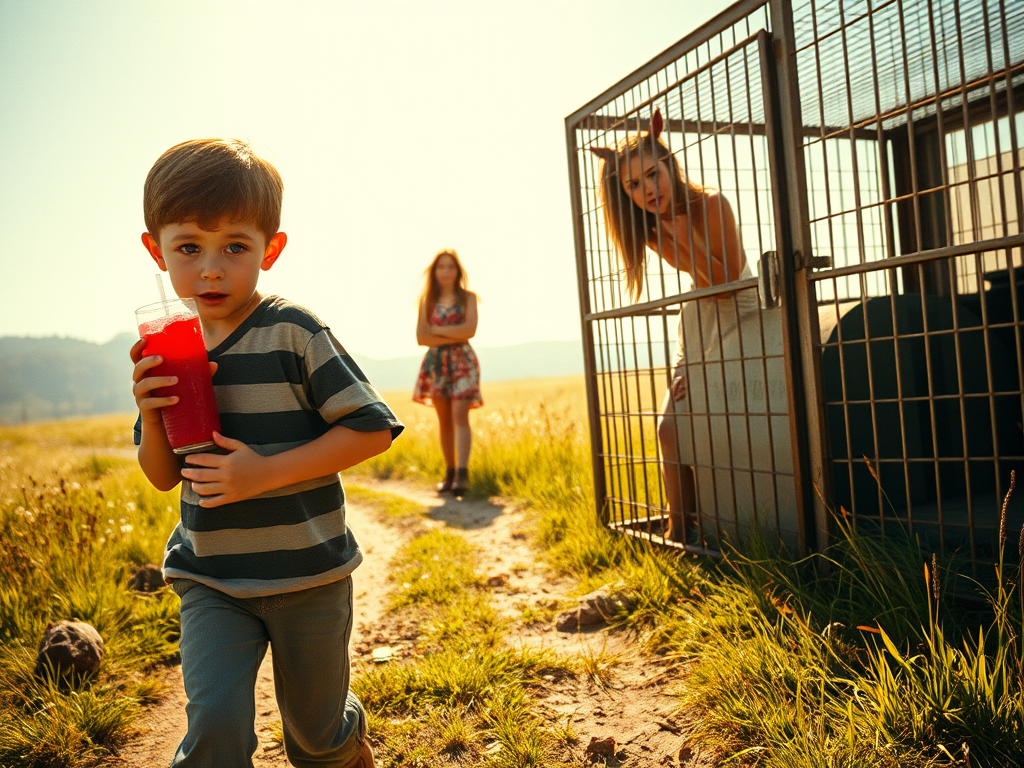
    It was a warm California afternoon in 1973, the kind where time stretched lazily and everything smelled like fresh-cut grass, asphalt, and melted sugar. After sixth-grade let out, we piled off the school bus at Crow Canyon Road and made the mandatory pilgrimage to 7-Eleven, where a cherry Slurpee was both a status symbol and a life force.

    Inside, I was mid-slurp, soaking in the neon buzz of the store, when “Brandy, You’re a Fine Girl” crooned from the radio—a song about a sailor who refuses love for the sea, a detail I should have paid more attention to. Because, right then, the Horsefault sisters walked in.

    They were freckled, long-legged, and dangerously charismatic, their mischievous blue eyes glinting with some hidden scheme. One was in eighth grade, the other a high school sophomore, but their combined power far exceeded their individual ages. They lived in a farmhouse behind the 7-Eleven and approached me with an offer that, in retrospect, should have triggered immediate alarm:

    “Do you wanna see a rabbit in a cage?”

    I did not want to see a rabbit in a cage. But they had high cheekbones and figures that activated my deeply ingrained Barbara Eden fixation, so naturally, I announced that I was deeply invested in seeing this rabbit.

    I followed them out of the store, Slurpee in hand, as we walked about a hundred yards down a trail littered with dry horse dung, the sun casting long shadows over the tall grass. This was, in hindsight, my first mistake.

    At the end of the trail stood a large, ominous cage. The door hung slightly ajar, a thick chain lock dangling menacingly from the latch. I peered inside, expecting my promised rabbit. Instead, I saw nothing but the dark void of impending doom.

    Before I could process the cold realization that no rabbit existed, the sisters cackled like witches, grabbed me, and began dragging me toward the cage. The plan was clear: shove me in, slam the door, lock me up, and leave me to contemplate my poor life choices.

    But I was too strong, too desperate, too unwilling to be some kind of farm-boy prisoner. I fought back, and in the ensuing struggle, we tumbled into the dirt, rolling in a cloud of dust and hay, limbs flailing like a low-budget Western bar fight. Nearby, chickens screeched and flapped in terror, as if foreseeing my imminent imprisonment.

    Sweaty and defeated, the sisters finally let go. I scrambled to my feet and bolted, leaving behind my half-finished Slurpee—a tragic casualty of war.

    The Horsefault sisters had nearly claimed me as their caged trophy, but I had escaped. Barely. I never saw the rabbit. I doubt it ever existed. But I did learn an important lesson that day: if two gorgeous, devious girls invite you to see something in a cage, you are probably the attraction.

  • The Accountant, the Hotpants, and My First Taste of Rejection

    The Accountant, the Hotpants, and My First Taste of Rejection

    The summer of 1972, I was ten years old, flying solo from LAX to Miami, parked in the coveted window seat. Next to me, in the middle, sat a blonde woman in her mid-twenties, bronzed to an unnatural, almost radioactive orange, legs crossed confidently beneath pink hotpants with purple and white racing stripes that suggested speed, danger, and an implied warning to stay in my lane.

    In the aisle seat: her conversational hostage, a lean, dark-haired man of about the same age—an accountant, he would later reveal, which felt like foreshadowing.

    For five hours, I listened as they engaged in a dialogue so lively, so animated, I assumed I was witnessing the early chapters of a great love story. She was in dental hygiene school. He had a degree and a steady job. She exuded the kind of effortless confidence that made her gum seem like a gift from the gods when she passed us each a stick of Dentyne, explaining that it would help pop our ears. A public service announcement, delivered with charm.

    The accountant was decent-looking, well-spoken, clearly trying his absolute best—and for five relentless hours, he kept her engaged. They laughed, they shared stories, they existed in a pocket of perfect airborne intimacy. To my ten-year-old brain, this was an ironclad courtship ritual. The chemistry was undeniable.

    Then, the landing. The taxi to the gate. The moment of truth.

    He asked her out.

    She declined. Politely. Firmly. Efficiently.

    My ten-year-old self was staggered. How was this possible? Hadn’t they just shared an entire cinematic romance arc? The witty banter? The shared laughter? The synchronized gum chewing? And yet—nothing.

    I tried to crack the mystery. Maybe he was too bland. Maybe she had a boyfriend. Maybe she just needed to kill five hours before she got back to real life. Whatever the reason, I, a mere child, absorbed his rejection as if it were my own.

    To this day, I remain personally wounded that she turned him down. She turned us down. And for what? Some other guy in tighter pants?

    That flight should have been a lesson in the arbitrary brutality of romance, but all I really learned was that rejection hurts, even when it’s not technically yours.

  • How Poorly-Written Textbooks Turned Me into an English Major

    How Poorly-Written Textbooks Turned Me into an English Major

    For my first two years of college, I leapfrogged from major to major like a deranged amphibian with commitment issues.

    First stop: Criminal Justice. Sounded cool. Maybe I’d end up solving high-stakes crimes or unraveling some Kafkaesque legal conundrum. Instead, I found myself buried under a mountain of legalese so bloated with provisos, caveats, and contingencies that the independent clause was held hostage somewhere deep in the sentence, gasping for air. Every paragraph felt like a hostage negotiation with words like “notwithstanding” and “heretofore.” It drove me to the brink of syntactical madness.

    Next up: Sociology and Psychology—where common sense observations were drenched in enough self-important jargon to make a cult leader blush. Every sentence oozed the smug satisfaction of someone who thought they had just cracked the meaning of life. Instead of learning anything useful, I was forced to machete my way through a linguistic swamp of words like codependency, interconnectivity, dichotomy, marginalization, and facilitate. I clenched my body so tightly while reading these textbooks that I was convinced I would give myself a self-induced inguinal hernia.

    Desperate for clarity, I gave history a shot. But history textbooks—perhaps fearing the sheer tonnage of facts, dates, and places—responded by stripping the prose of all personality. No rhythm, no opinion, no soul—just a flatline of remedial drudgery. If legal writing was a labyrinth and psychology was a swamp, history was a beige waiting room with no exit.

    Then, an epiphany: I wasn’t rejecting these subjects—I was rejecting their horrendous writing.

    I craved something—something crisp, something electric, something that didn’t feel like linguistic waterboarding. That hunger led me, almost involuntarily, to the English major. There, for the first time, I met grammar—not as a dry set of rules, but as a cosmic force.

    Grammar wasn’t just necessary—it was alive. It was the invisible scaffolding that made human expression possible. It was breathing, movement, structure, music. I marveled at the fact that even small children, with no formal training, could construct intricate, nuanced sentences. This wasn’t just mechanics—this was the architecture of thought itself.

    When I thought of grammar, I didn’t think of dull worksheets. I saw rivulets flowing into streams, streams merging into great rivers, rivers pouring into the ocean. I saw harmony, inevitability, the relentless beauty of structure.

    So, in the end, it wasn’t a love of books or storytelling that made me an English major. It was the sheer, visceral disgust at bad writing that left me no other choice.

  • The Great 70s Oyster Feasts at Pt. Reyes

    The Great 70s Oyster Feasts at Pt. Reyes

    Every summer from 1975 to 1979, my family and a small oyster-guzzling army—ten other families and a battalion of friends—made the pilgrimage to Pt. Reyes Beach. Our sacred mission? To consume shellfish on a biblical scale.

    Johnson’s Oyster Farm supplied us with what felt like truckloads of oysters—so many that if the ocean had suddenly run dry, we wouldn’t have batted an eye. From noon to sunset, we devoured an obscene amount of barbecued oysters, each one bathed in garlic butter and an irresponsible amount of Tabasco. Thousands of loaves of garlic bread disappeared as though vaporized by our gluttony. The meal concluded with slices of chocolate cake so enormous they could have doubled as structural support beams.

    We punctuated this orgy of excess with reckless ocean dives, dismissing dire warnings of great white shark sightings because, in our teenage arrogance, we assumed the sharks would respect our dominance. Emerging from the waves, our pecs glistening with rivulets of saltwater like bronzed demigods, we returned to the picnic tables to resume our assault on the oyster supply.

    By the summer of ‘78, I had evolved into full teenage hedonist mode. That year, rather than going home with my parents, I hitchhiked in the back of a truck with a bunch of people I’d just met—because, clearly, nothing bad ever happened to sweaty, sunburned teenagers full of shellfish riding in the open bed of a moving vehicle. We were feral, fearless, and slightly delirious from a day of unchecked indulgence.

    Stuffed to the gills and feeling like King Neptune in a food coma, we stared at the stars with the vacant, glazed expressions of reptiles digesting a large meal. We swapped wild stories, unconcerned with documenting a single moment. No selfies. No calorie counting. No checking the time. Just a glorious, unrecorded blur of feasting, friendship, and youthful delusion.

    Those were happy days indeed—a time before food guilt, before social media, before adulthood ruined everything. And like all golden eras, it is gone forever.

  • Something Strange Happened to Me When I Saw My Childhood Home on Zillow

    Something Strange Happened to Me When I Saw My Childhood Home on Zillow

    When I was a kid, my dad worked at IBM in San Jose, and we lived at the very end of Venado Court—a cul-de-sac so serene it felt like a cosmic loophole in suburban chaos. I loved everything about it, especially the absence of cross-traffic.

    Cross-traffic was anarchy—it was second base in Little League, where the game unraveled into sheer bedlam: runners stealing, coaches screaming, fielders panicking. But Venado Court? It was home plate. Safe. Untouchable. The kind of place where nothing bad could happen—unless you count the existential horror of eventually having to leave it.

    The analogy reminds me of George Carlin’s classic bit contrasting baseball and football: Baseball is a pastoral dream, all about going home. Football is military conquest, where you march into enemy territory and get your spine realigned by a 300-pound lineman. Venado Court was baseball. It was safety. It was home.

    Recently, I stumbled onto a real estate site featuring my childhood house—5700 Venado Court, San Jose, California, where I lived from 1968 to 1971. The photos were unsettlingly familiar. My old bedroom. The bathroom where Mr. Bubble and Avon’s Sesame Street shampoo bottles once stood like sentinels of childhood innocence. The backyard, still lush with fruit trees—apricot, peach, plum, and walnut—a miniature Garden of Eden where my mother and the neighbor ladies, in some kind of euphoric domestic alchemy, canned preserves like their lives depended on it.

    The kicker? That house, my sacred childhood sanctuary, is now worth $1.3 million—the same price as my current home in Southern California. A deranged part of me toyed with the idea: sell my house, buy my childhood back, step through the front door like some time-traveling prodigal son.

    But then sanity prevailed.

    I know exactly how that story would end. Not in horror, but in ennui. I’d be trapped in a slow-moving nightmare of banality, watching my enchanted memories dissolve under the fluorescent hum of reality. The house wouldn’t feel like home. It would feel like a set piece in a dismantled dream.

    Thomas Wolfe was right—you can’t go home again. Not because it’s scary. But because it’s boring.

  • The Day I Failed the Ishihara Color Blindness Test

    The Day I Failed the Ishihara Color Blindness Test

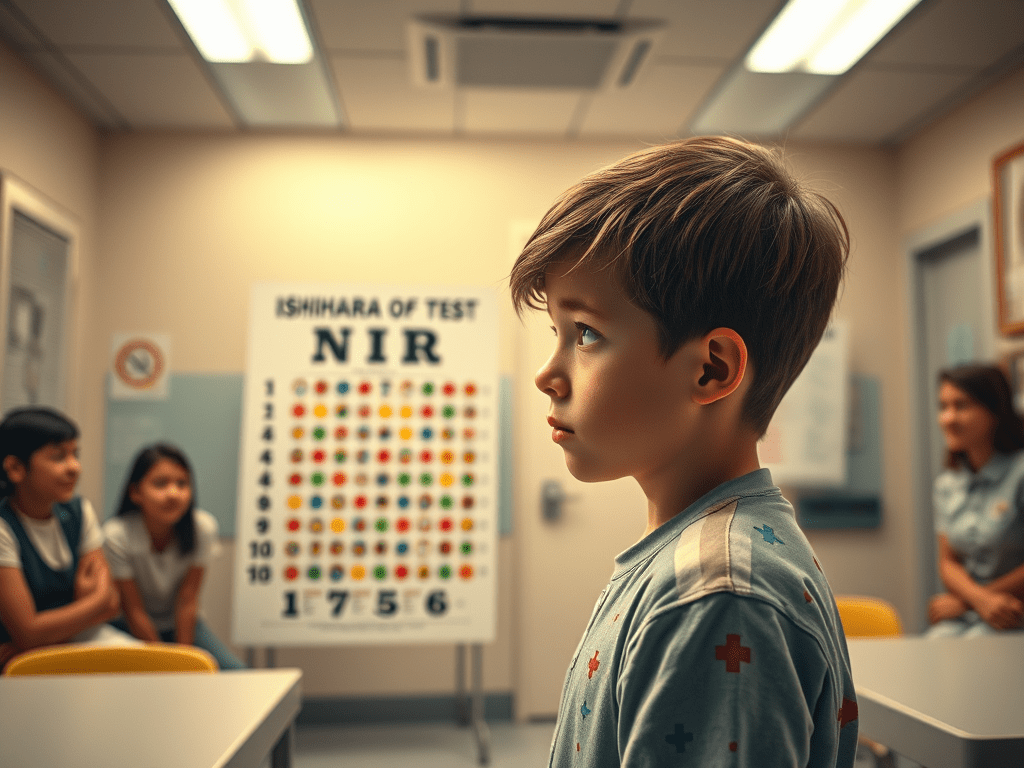
    For years, I harbored a vague but nagging suspicion that peanut butter was green. Why? No clue—until 1971, when the grim truth revealed itself under the fluorescent doom of Independent Elementary’s nurse’s office.

    It was the day of the Ishihara Color Blindness Test, a supposedly routine exercise in humiliation where each fifth grader took turns peering into an illuminated contraption to identify numbers and shapes hidden in a field of colored dots. My classmates breezed through it like game show contestants, rattling off answers with the breezy confidence of children who’d never questioned their own eyesight.

    Then it was my turn.

    I stared into the glowing abyss. Saw nothing. Blinked. Still nothing.

    The nurse grew impatient. “Well? Can’t you see anything?”

    I could not.

    The room erupted in laughter. Congratulations—I was officially hopelessly color-blind, a medical outcast, a social leper. For the remainder of the morning, my classmates regarded me like a rare museum specimen. This boy thinks peanut butter is green. Proceed with caution.

    But fate, as it turns out, is not without a sense of humor.

    During lunch recess, the hierarchy of fifth-grade cruelty shifted. Kickball—a sport where raw physical dominance could overwrite even the most damning personal defect—offered me an unexpected shot at redemption. As the ball rolled toward me, I summoned the might of my tree-trunk leg, swung with the force of a caffeinated mule, and launched that red rubber sphere over everyone’s heads. It sailed past the outfield, past the schoolyard, and over the fence—finally splashing down into the backyard swimming pool of a bewildered suburbanite several blocks away.

    For a brief, glorious moment, I was no longer the kid who saw peanut butter in the wrong spectrum. I was a legend. The freakishly strong fifth grader with the foot of an Olympian and the trajectory of a human cannon.

    Lesson learned: You may be ridiculed for believing peanut butter is green, but if you channel your inner Herman Munster and kick a ball into another ZIP code, nobody gives a damn about your defective eyeballs. Heroism comes in many shades—even if you can’t see them.

  • The Forgotten Song of Misfit Island: My Long, Bitter Feud with Rudolph the Red-Nosed Reindeer

    The Forgotten Song of Misfit Island: My Long, Bitter Feud with Rudolph the Red-Nosed Reindeer

    The most exhausting piece I have ever composed—the one that wrings my soul dry after playing its three relentless movements—is called “The Forgotten Song of Misfit Island.” This sonata, a labor of love and obsession spanning forty years, began as something else entirely: my childhood fury at the televised nightmare known as Rudolph the Red-Nosed Reindeer.

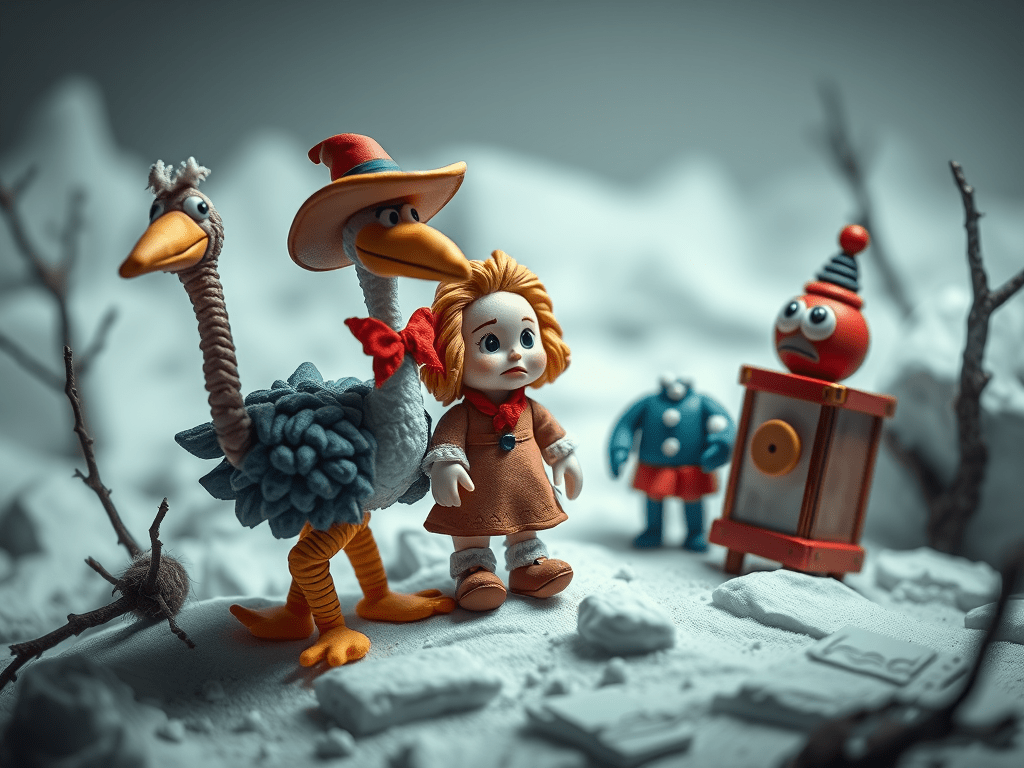
    Like millions of children before me, I was supposed to cherish this 1964 Christmas special as a heartwarming tale of holiday spirit and triumphant underdogs. Instead, I watched it with horrified disbelief, my small, traumatized brain barely able to process the cruelty inflicted upon the most tragic figures in holiday television: the Misfit Toys.

    These weren’t just defective playthings with minor quirks. They were abandoned children, exiled to an arctic hellscape, sentenced to a slow death on a barren glacier. They were ill-equipped for survival, dressed in flimsy rags with no food, no warmth, no shelter from the Abominable Snowman, a giant carnivorous beast stomping the ice sheets with the inevitability of fate itself. Who knows how long they had suffered? Years? Decades? An eternity? And for what crime? Simply being different. The authorities of Christmas had spoken: an ostrich-riding cowboy, a Charlie-in-the-Box, and a melancholy doll were abominations, unfit for the joys of holiday consumerism.

    Defenders of Rudolph will no doubt remind me of the “joyous rescue” at the film’s climax, when Santa Claus swoops in to distribute the Misfit Toys to “good homes.” But let’s examine that so-called rescue. These toys, who had only survived through their deep bond and shared trauma, are now forcibly separated and flung into random households. Santa, in his infinite wisdom, has decided that what these emotionally shattered creatures need is total isolation from the only community that has ever accepted them.

    Santa Claus, the supposed symbol of holiday cheer, is, in fact, an unapologetic tyrant—a man who exploits child labor, forces elves into unregulated factory work, and belittles an aspiring dentist for daring to dream beyond toy-making. My paleontologist friend, Dr. Zachary J. Rasgon, once pointed out another moment of unhinged brutality: the scene where Yukon Cornelius casually yanks out every tooth from the mouth of an endangered hominid—and we’re all supposed to be a-okay with that.

    For over fifty years, this grim portrait of abuse and forced assimilation has been celebrated as a beloved Christmas tradition. And yet, I alone seem to recognize its horrors. I have made my case countless times, but the world continues to revere Rudolph as an “iconic” holiday classic. My protestations fall on deaf ears, branding me as something of a misfit myself.

    And so, I have learned to let go of my rage. Or, at least, I have tried.

    Turning Rage into Music

    As a child, unable to rewrite history, I began rewriting Rudolph. I imagined the Misfit Toys as restless insomniacs, huddled together for warmth, singing a song to ease their suffering. It was a song born of necessity—a celestial hymn of comfort, a melody so powerful that it could momentarily trick them into believing they were loved.

    But in my revised ending, their exile ends only to bring a new torment. Ripped away from each other and cast into separate homes, the toys struggle to recall the song that once gave them solace. They catch fragments of it in dreams, in whispers on the wind, but the full melody is lost to them. The song—the very essence of their shared survival—could only exist when they were together.

    The only solution? A reunion.

    In the version that played in my head for years, an older, wiser, and absurdly wealthy Rudolph, finally understanding the true cruelty of Santa’s decree, takes it upon himself to find and reunite the Misfit Toys. He brings them to a sprawling Tuscan villa, where they can feast under the warm Mediterranean sun and, at long last, remember the song in its full glory. The world hears their melody once more, and it becomes legendary—a song of defiance, resilience, and enduring love.

    This imaginary song, the one that saved the Misfit Toys from oblivion, became the foundation for my most demanding piano composition. It took decades—forty years of reworking, revising, and searching for the perfect sequence of notes.

    A Lifelong Symphony of Misfits

    Even now, I cannot shake my affinity for misfits. My mind is overrun with them: Sidney the Elephant, Kermit the Frog, Tooter Turtle, Beaver Cleaver, Kwai Chang Caine (a.k.a. Grasshopper), Mr. Peabody, George of the Jungle, Milton the Monster. They, too, deserve their own melodies, their own compositions, their own forgotten songs.

    Until I write those songs, I will imagine them all gathered together, sipping wine in that Tuscan vineyard, basking in the company of Rudolph and his long-lost misfit family. And in that imagined paradise, I, too, find a place to belong.

  • Claustrophobia Reveals Your True Soul to the World

    Claustrophobia Reveals Your True Soul to the World

    There are many ways to expose your raw, unfiltered self to the world. Some people achieve this through a near-death experience, a public meltdown, or a bout of food poisoning on an international flight. For me, claustrophobia is the great revealer, an unrelenting force that strips away every ounce of composure and leaves me flailing like a man trapped in quicksand. It doesn’t matter if I’m in a dentist’s chair or strapped into a sadistic amusement park ride—when the walls start closing in, I become the star of my own public humiliation showcase.

    The first great revelation of my soul came at Universal Studios, where I made the tragic miscalculation of sacrificing my personal comfort for my wife and twin daughters. A father’s love is boundless, but so, unfortunately, was my terror. The very air of the place reeked of Las Vegas grift, stale churros, and desperate cash grabs. Every corner had some overenthusiastic performer in mothball-scented epaulets or a handlebar-mustached imposter butchering a French accent for a paycheck. But nothing could have prepared me for the medieval horror that awaited on the Harry Potter Forbidden Journey ride.

    After standing in line for an eternity, I found myself wedged into an airplane seat designed for a malnourished Victorian child. A heavy metal harness slammed down on my 52-inch chest like a bear trap, and within seconds, my body entered full-blown rebellion mode. My lungs went on strike, my heart pounded out an emergency evacuation order, and my brain whispered, You are about to die in the most embarrassing way possible. As the conveyor belt dragged me toward a dark, swirling vortex of Hogwarts-themed doom, I did what any reasonable person would do—I began screaming like a man being lowered into a pit of snakes.

    “STOP THE RIDE! I’M HAVING A HEART ATTACK!” I wailed, flailing like an air dancer outside a used car lot.

    At first, no one in charge seemed to care, but the fellow prisoners trapped beside me picked up on my panic and began chanting my cause like a medieval mob: “STOP THE RIDE! STOP THE RIDE!” Finally, a burly security officer in an FBI-grade sport coat emerged, walkie-talkie in hand, and surveyed my meltdown with the practiced patience of a man who had seen worse. I looked up at him, sheepish and sweaty, and asked, “Do you need to take me to a debriefing room?” He chuckled, helped me out of my restraints, and sent me shuffling out of Universal Studios, a broken man.

    But the universe was not done exposing my fragility.

    The Dentist’s Chair: A Torture Chamber Disguised as Healthcare

    Around the same time as the Universal Studios fiasco, I had a similarly catastrophic loss of dignity at Dr. Howard Chen’s dental office. The appointment started out fine—numbing shots, ear-splitting drills, the usual dance with mortality. But then the bite block came out. For those blissfully unaware, a bite block is a rubber wedge designed to keep your mouth open during dental procedures, but in my case, it may as well have been a medieval jaw clamp designed by Torquemada himself.

    The second it locked my mouth open, my brain fired off the same claustrophobic distress signal as it had on the Harry Potter ride. I couldn’t swallow, which meant I couldn’t breathe, which meant I was about to die, right there, in a flannel shirt, under a fluorescent light, to the soft rock stylings of The Carpenters.

    Before I could stop myself, I ripped off my shirt, launched myself out of the dental chair, and began gasping like a shipwreck survivor.

    “Are you going to be okay, Jeff?” Dr. Chen asked, his voice dripping with the calm patience of a man who has dealt with neurotics before.

    “I CAN’T HAVE THIS RUBBER THING IN MY MOUTH,” I announced, holding the bite block aloft like a relic from an exorcism.

    Dr. Chen nodded, his eyes a mix of concern and professional detachment. “Okay, we’ll do it without the bite block.” He gestured toward the chair. “Go ahead and sit back down.”

    I obeyed, heart pounding, and the rest of the drilling continued without further catastrophe. But the damage to my dignity was irreversible.

    Sensory Hell: The Dentist’s Office Smells Like Death

    The claustrophobia is bad enough, but what really pushes me over the edge is that I am what some might call a “super smeller.” Lying in the dental chair, I am forced to marinate in an unholy stew of:

    • Clove oil
    • Formaldehyde
    • Acrylic
    • Glutaraldehyde
    • Latex gloves
    • The lingering decay of other patients’ tooth dust

    It is the aroma of death itself. I am not a dental patient—I am a cadaver in the early stages of embalming.

    And while I fight off nausea, my mind spirals into a full existential crisis. Something about lying prone, mouth pried open, surgical tools scraping at my enamel, makes me contemplate my soul more than any other moment in my life. The sheer vulnerability of the position mimics some prelude to the afterlife, and I am left with only my own morbid thoughts for company.

    Morbidity Hits Different with 1970s Soft Rock

    As if my anxiety needed any further provocation, Dr. Chen’s office plays 1970s easy listening on a continuous loop. The Carpenters, Neil Diamond, John Denver—songs that transport me straight back to my early years as a melancholic prepubescent. Suddenly, I am ten years old again, scribbling dramatic diary entries about my unrequited love for Patty Wilson, the rosy-cheeked blonde girl from fourth grade who never knew I existed.

    But before I can fully dissolve into a puddle of nostalgic despair, Dr. Chen interrupts.

    “You’re brushing too hard,” he warns. “You’re murdering your gum line.”

    “But I don’t trust the Sonicare to do the job!” I protest.

    “You need to have faith in the Sonicare, Jeff.”

    “But I am a man of doubt.”

    Dr. Chen sighs, shaking his head. “I can see that.”

    Final Humiliation: The Dentist Knows I’m Crazy

    During my latest visit, he threw a new horror into the mix: the possibility of a root canal.

    “What can I do to avoid it?” I asked, racked with dread.

    “Relax, Jeff,” he said. “All this stress is hurting your immune system. You need a strong immune system to fight decay.”

    Great. Now I have to worry about stress-induced tooth rot.

    As I staggered out of the office, I nearly reversed into an angry SUV driver, who honked with the force of a nuclear siren. But what truly shattered me was the sight of Dr. Chen, peering through his office window, watching the entire debacle unfold.

    And in that moment, as our eyes met, I knew—I was, without a doubt, the most unhinged patient he had ever seen. There would be no coming back from this.

    Claustrophobia, once again, had revealed my true soul to the world.