Category: Confessions

  • The Night Irony Beat the Monkees

    The Night Irony Beat the Monkees

    On the night of October 16, 1967—just twelve days shy of my sixth birthday—the universe shoved my head in the toilet and flushed. I could hear the sound of childhood innocence circling the drain. Up to that moment, I was a full-time subscriber to the gospel of positive thinking. Life was fair. Good guys won. If you tried hard and smiled big, the world smiled back. Norman Vincent Peale had basically written the owner’s manual for my inner world.

    That illusion shattered during an episode of The Monkees.

    The episode was called “I Was a 99-lb. Weakling,” and I had parked myself cross-legged in front of the TV, popcorn in lap, expecting hijinks and musical numbers. Instead, I got a masterclass in betrayal and the savage laws of ironic detachment. My hero, Micky Dolenz—the clumsy, lovable soul who made failure seem like a jazz solo—was brutally outmuscled by Bulk, a flexing monolith of a man played by real-life Mr. Universe, Dave Draper. Bulk didn’t walk—he heaved himself through scenes, a sculpted rebuke to every noodle-armed dreamer in America.

    And right on cue, Brenda—the beachside Aphrodite with hair that shimmered like optimism—dropped Micky like a sack of kittens for Bulk, never once looking back.

    This wasn’t just sitcom plot; this was emotional sabotage. I watched, frozen, as Micky enrolled in “Weaklings Anonymous,” embarking on a training montage so grotesquely absurd it veered into tragedy. He lifted dumbbells the size of moon rocks. He drank something called fermented goat milk curd, a substance that looked like it had been skimmed off a medieval wound. He even sold his drum set—his very soul—to chase the delusion that muscles would win her back.

    And then came the twist.

    Just as Micky completed his protein-fueled crucible, Brenda changed her mind. She didn’t want Bulk anymore. She wanted a skinny guy reading Remembrance of Things Past. A man whose pecs had clearly never met resistance training, but whose inner life pulsed with French ennui. The entire narrative pirouetted into absurdity, and I watched my belief system crack like a snow globe under a tire.

    That’s when I first met irony.

    Not the schoolyard kind where someone says “nice shirt” and means the opposite—but the bone-deep realization that the universe isn’t fair, that effort doesn’t guarantee reward, and that life doesn’t play by the moral arithmetic taught in Saturday morning cartoons.

    It was that night I realized muscles weren’t the secret to power—language was. Not curls, not crunches, but craft. Syntax. Prose so sharp it could reroute the affections of beach goddesses and turn the tide of stories. That was the moment my childish faith in “try hard and you’ll win” collapsed, and in its place rose a darker, more potent creed: the pen is mightier not just than the sword, but than the bench press.

    That night, my writing life began—not with celebration, but with betrayal. A glittering lesson delivered in the cruel, mocking tone only irony can wield. And though it hurt, I never forgot it. Because the truth is: irony teaches faster than optimism. And it remembers longer, too.

  • Johnny Carson Was Prozac Before Big Pharma Perfected the Formula

    Johnny Carson Was Prozac Before Big Pharma Perfected the Formula

    I’m listening to Carson the Magnificent on Audible, Bill Zehme’s lush tribute to the King of Late Night. Zehme is a skilled writer, no doubt—but he suffers from an affliction familiar to many stylists: chronic purple prose. His descriptions don’t sparkle; they sprawl. Reading him is like eating an entire wedding cake when a slice would have sufficed. He’s so enamored with his own flourishes that Johnny Carson occasionally vanishes behind the velvet curtain of Zehme’s adjectives.

    Still, what he lacks in restraint, he makes up for in ardor. Zehme clearly loves his subject, and his affection pulses through the pages. Carson emerges as a sort of secular priest of television, delivering nightly benedictions of laughter for thirty years. He wasn’t edgy or groundbreaking—he was dependable, a soothing presence at 11:30 PM, like a warm bath or a glass of room-temperature white wine. He was comfort food for the collective American psyche, Prozac before Big Pharma perfected the formula. A totem from a time when a single man in a suit could stand at the crossroads of politics, culture, and showbiz and crack wise to a nation that hadn’t yet shattered into a million niche audiences.

    I was never much of a Carson acolyte myself. Dick Cavett had the brain. Letterman had the bite. Carson? He had commercials. What I remember most is that the show seemed designed to lull you into a trance of polite chuckles and bland banter. It wasn’t bad, exactly—it was just relentlessly there. Watching The Tonight Show felt less like a choice and more like a ritual, a nightly genuflection before the glow of the TV set. People tuned in not out of excitement, but out of habit. He was the head caveman, murmuring jokes by firelight, while the rest of us nodded and laughed, grateful to not be alone in the dark.

    To skip Carson was to risk social exile. You didn’t want to be the one who missed what the country’s collective subconscious had passively absorbed.

    As I listen to Carson the Magnificent, I find myself pining—not for Carson, but for the era he ruled. A time when a singular voice could still cut through the noise and hold the country’s wandering attention. That cultural unity is gone now, and maybe for the best, but I can’t help mourning it a little.

    Zehme will, I’m sure, delve into the darker recesses of Carson’s psyche—and I’m ready for it. I’ve already mainlined The Larry Sanders Show three times, with a fourth round likely on the way. That show remains the gold standard for peeling back the sequined curtain to reveal the neurotic, solipsistic soul of late-night television. If Zehme gets even halfway there, I’ll consider the audiobook time well spent—even if I have to wade through another paragraph that reads like a thesaurus suffered a head injury.

  • The Stucco Incident: A Tale of Paranoia, Kettlebells, and Redemption

    The Stucco Incident: A Tale of Paranoia, Kettlebells, and Redemption

    My neighbor Joe, a man with a penchant for awkward introductions and cargo shorts, once foisted upon me his friend Raymond—a wiry handyman with a cigarette rasp and a toolbelt that looked like it had seen battle. Raymond had installed our front and bedroom doors with the calm authority of someone who’s spent more time with a level than with his own family. More importantly, Raymond had a black book of contractor contacts so thick it could’ve doubled as a Catholic missal: painters, plumbers, concrete guys, stucco guys, electricians—everyone short of a Vatican-approved exorcist.

    Back in 2007, we’d had our house painted and cloaked in smooth stucco, the kind of finish that whispers suburban respectability. Fast forward to last week: three days of relentless rain and suddenly the back wall looked like it had taken a punch. A large section of the stucco buckled like cheap linoleum. Raymond, unbothered by the decay of manmade things, casually recommended a guy named Jose. Said he’d fix the wall for $650.

    Six-fifty? I was expecting two grand. I nearly kissed my phone. I told Jose yes before he could change his mind, and we agreed he’d start on Wednesday morning.

    That was the plan.

    On Wednesday, I forgot. Utterly. Blissfully. Didn’t check my phone. Didn’t check the time. Just wandered into the garage around 10 a.m. for a kettlebell session, ready to punish myself with Russian swings for no real reason. That’s when I saw it: two missed calls and a text from Jose at 9 a.m. “I’m at your front door.”

    Panic set in. I called him at 10, breathless with guilt. “Jose, I’m so sorry! Where are you?”

    “I’m on the job,” he said, calmly, like I should know what that means.

    “Wait… so, you’re still coming later?”

    Silence.

    After my workout, I crept through the house, peering out the windows like a man who suspects he’s just been ghosted by a contractor. Nothing. No truck. No ladder. Just the usual backyard gloom.

    Convinced I’d blown it—that I was now on Jose’s official “flakes and time-wasters” blacklist—I called him again, borderline pleading. “I’m so sorry for not answering earlier. Please forgive me. I hope we can reschedule…”

    He paused. Then said, almost tenderly, “Jeff. I’m here. I’ve been working in the back of your house the whole time.”

    I turned and looked through the sliding glass door—and there he was, crouched like a monk, phone to ear, smoothing cement with the devotion of a man sculpting a headstone.

    “I’m hanging up,” I said. “I will greet you in person.”

    He laughed, as if to say, You absolute wreck. I ran outside and thanked him more times than was strictly necessary. He just smiled and kept working.

    And the result? Perfect. Seamless. The repaired wall matched the rest of the house so precisely it looked like time had reversed itself. I’m fairly certain Jose undercharged me out of pity.

    Later, when I told my wife about the mix-up and my brief descent into full-blown paranoia, she laughed like it wasn’t the first time. “You’re a mess,” she said. “You get so worked up, you leave reality behind.”

    She’s not wrong. But at least the stucco’s smooth.

  • The Ghost in Aisle Nine: Remembering Chris Grossman

    The Ghost in Aisle Nine: Remembering Chris Grossman

    Back in the Reagan era, when I was a college kid working part-time at Jackson’s Wine & Spirits in Berkeley, I shared long, dusty shifts with a man named Chris Grossman—a wine salesman whose last name, ironically, matched neither his physical presence nor his temperament. Chris was lanky, six foot four, and moved with the grace of a man perpetually on the verge of tripping over his own limbs. He had a face only a Freudian could love: aquiline nose, dark beard, black-framed glasses smudged with fingerprints, and a mop of dark curly hair that looked like it had lost a long battle with a pillow. A pencil was always tucked behind his ear, as if at any moment he might be called upon to draft blueprints for a submarine.

    To customers, Chris was a savant in work shirts with the sleeves rolled just so—half wine whisperer, half philosopher of Zinfandel. He had an uncanny ability to match a Pinot Noir to a personality type, like some sort of boozy Myers-Briggs. The regulars adored him. They trusted his palate, his calm authority, his encyclopedic knowledge of terroir. What they didn’t know—and what I only discovered gradually—was that once he stepped off the floor, he disappeared.

    Chris Grossman had no friends. Not one. He was social the way a vending machine is social—polite, efficient, devoid of emotional commitment. Once, during a lull in business, he confided that he’d had a girlfriend, briefly, years ago. He spoke of it as though he’d survived a hostage crisis. The constant negotiation, the emotional bookkeeping—it exhausted him. “I’m too selfish to pretend otherwise,” he said with an eerie clarity. “I’d only make her miserable.” There was something almost noble in his blunt self-awareness, as if he’d spared both himself and others the slow drip of mutual disappointment.

    His father, he once told me, had been a brilliant but frostbitten physician, a man incapable of affection. Chris, I think, carried his father’s circuitry—a brain tuned for analysis, not empathy. Still, he wasn’t bitter. He wasn’t even rude. If he hated humanity, he kept it on a low simmer, tucked behind a mild smile and a firm handshake.

    We both left Jackson’s in the late ’80s. I moved to the California desert to lecture on writing and lose my illusions in the faculty lounge. Chris stayed local, selling stereos on Shattuck Avenue for places like The Good Guys and Circuit City. He made good money and spent exactly none of it on companionship. No wife, no kids, no pets, not even a ficus. Once a year he drove his Triumph convertible down to Carmel for a vintage car rally, then disappeared back into his cocoon.

    I think about him more than I should. Forty years have passed, and still, his silhouette lingers. Why? Maybe because I recognize myself in him. The difference is, I got married—and in doing so, outsourced my social life to someone with actual initiative. My wife arranges our dinners, our vacations, our tenuous grasp on community. She reminds me to be human. And yet, even she knows I’m a recluse at heart. She gently suggests I see more of my friends—or at least have more friends—so she doesn’t have to absorb every neurotic spiral I produce. Fair enough.

    I’m 63 now. Chris, if he’s still around, must be pushing seventy. I sometimes wonder how he’s weathered the years, whether the silence that once comforted him has curdled into something more sinister. But I also suspect he made peace with his solitude. He looked at the world, with all its needy, buzzing, soul-sucking demands, and chose the quieter suffering. Not because he was brave or broken, but because he knew himself too well to fake it.

    I hope he’s okay. I really do. Solitude, like alcohol, is dose-dependent. For some, it’s a meditative stillness. For others, it’s a slow erosion. I don’t know which side of the line Chris landed on. But wherever he is, I raise a glass to him—alone, perhaps, but not forgotten.

  • Tuned In, Checked Out: Confessions of a Radio Enthusiast

    Tuned In, Checked Out: Confessions of a Radio Enthusiast

    When I catch sight of my black Tecsun PL-680—hulking, angular, unapologetically retro—I freeze like a Victorian child glimpsing a forbidden mechanical marvel through a shop window. My eyes widen, my breath catches. It’s the same reverence I once felt, age six, face pressed against the glass of a toy store, transfixed by the GI Joe helicopter with working rotors and the implied promise of war-zone adventure. Only now the battleground is a cluttered kitchen table, and the artillery is AM talk radio, jazz on shortwave, the solemn murmur of world news drifting in from another hemisphere.

    The desire to switch it on and be swallowed by its frequencies is so intense, it borders on insanity. I feel embarrassed by the depth of this longing, but not enough to stop. My smaller Tecsun PL-330 elicits the same pulse of joy—compact, stealthy, and with an antenna that telescopes like it’s reaching for God. These machines are not just radios; they’re sanctuaries. Each one is a cozy cockpit where I can retreat from reality and tune in to something more orderly, more measured, more mine.

    “On the spectrum,” my wife jokes, watching me cradle a shortwave receiver like it’s a newborn or a detonator. I laugh, but I know she’s not wrong. The way I look at these devices—mouth slightly open, posture slack, eyes glazed with devotion—is not what you’d call neurotypical. It’s the gaze of a man who has found something he understands in a world that too often makes no sense.

    I have no interest in being cured. Therapy doesn’t come with a frequency dial. Meditation never once pulled in Radio Romania International. And no mindfulness app can match the primal, analog thrill of catching a faint station through the hiss of the void.

    These radios are my proof—of eccentricity, yes, but also of what keeps me sane. They hum. They glow. They speak in languages I don’t understand but need to hear. And if that’s madness, I’m fine with it. I’ll be here with my Tecsun, smiling at static, laughing at myself, and tuning in to everything that doesn’t ask me to explain why.

  • Radio Reclaimed: The Proxy Friendship That Saves Your Sanity

    Radio Reclaimed: The Proxy Friendship That Saves Your Sanity

    A couple of months ago, as the Los Angeles wildfires raged, I found myself glued to a radio for live reports. A thought struck me like a lightning bolt: I had missed the radio. This ancient relic had been eclipsed by streaming devices, which, over the past decade, had somehow become my personal cocoon—a space where I meticulously curated my music and podcasts like a hyper-intelligent hermit with a PhD in self-isolation. I was alone, yes, but at least I had the comforting hum of algorithmically chosen tunes to keep me company. Then I realized: this wasn’t comfort. This was madness in a cocoon. My little silo, built to keep out the noise of the world, was also keeping out everything else that made me feel connected. I was losing my grip on reality, like the woman in “The Yellow Wallpaper” who could only see the world through the eyes of her claustrophobic madness.

    So, I did what any self-respecting, slightly paranoid adult would do: I bought a batch of high-performance radios, like the Tecsun PL-990, and I tuned back into the real world. I started listening to Larry Mantle’s voice again on LAist, to KJAZZ and KUSC—the classical music station that claims to be the most popular in the country. And after a few months of basking in their sonic embrace, I understood why KUSC is so beloved. It’s not just music; it’s a friend. The DJs don’t just announce the next piece; they drop in casual nuggets of composer trivia like old pals who just happen to know a lot about Bach’s temper. They are personal, conversational, and soothing, like a club of soundwave whisperers gently easing you into a state of calm with “your nightly lullaby” or music to “start your day.”

    KUSC doesn’t just play classical music. It plays the role of a companion—your anti-anxiety, anti-depression, virtual hug in the form of a radio signal. These aren’t just voices on the air; they’re voices that make you feel like you’re not alone, that someone is there to guide you through the chaos of your day. It’s the kind of subtle emotional manipulation you don’t mind because it’s just so comforting. If radio is going to survive the onslaught of streaming, it could do worse than to study KUSC’s Proxy Friendship model. There’s a lesson in that calm, gentle routine that could help even the most chaotic station become a lifeline in a world that feels like it’s constantly spinning off its axis.

  • Confessions of a Washed-Up Watchfluencer: Dreaming of Leaving YouTube and Instagram

    Confessions of a Washed-Up Watchfluencer: Dreaming of Leaving YouTube and Instagram

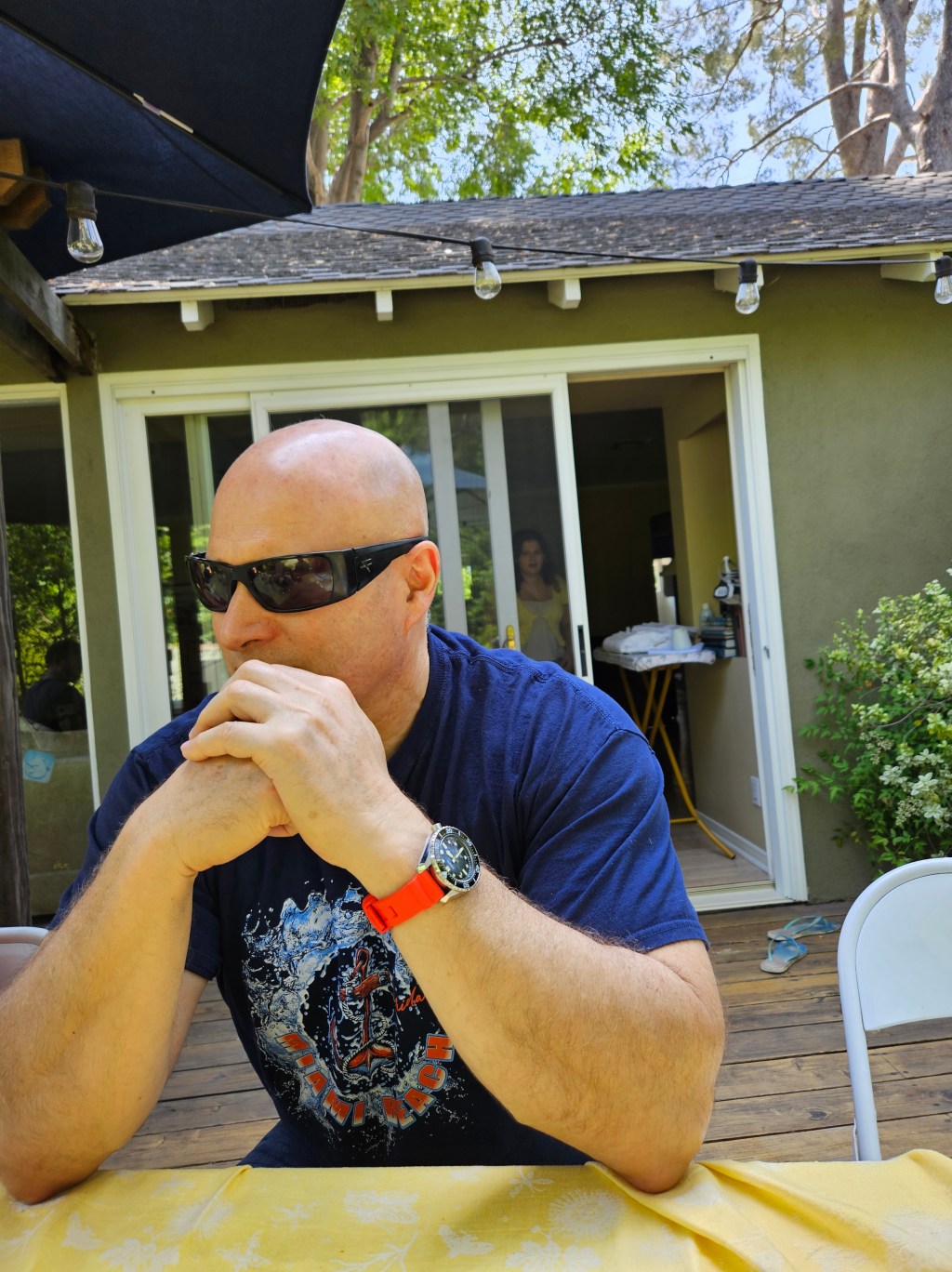
    For the better part of a decade, I’ve been a talking head on YouTube—waxing unpoetic about dive watches, flipping Seikos like pancakes, and freefalling into endless spirals of horological self-loathing. My channel was never slick. No fancy cuts, no drone shots over crashing waves, no ominous music swelling over macro shots of ceramic bezels. Just me: a man, a camera, and the slow erosion of his dignity.

    I didn’t edit. I didn’t storyboard. I didn’t build a brand. I just rambled into the void, a kind of wristwatch confessional booth where I shared my joy, my shame, and my madness with an audience of fellow obsessives. For a while, it was exhilarating. Like catching your own reflection in a funhouse mirror and mistaking it for truth.

    At my pathological peak, I owned sixty-three “TV-brand” watches—any brand that looked good on camera and bad for your soul. I knew I had a problem when I started hiding watches in drawers and pretending I hadn’t bought another diver. Getting the collection down to five felt like detox. Like crawling out of a swamp in ripped jeans, clutching a G-Shock and whispering, never again.

    And now? I haven’t filmed in a month. The idea of making another video fills me with dread. My subscriber count has flatlined around 10,000. I’m not growing. I’m not evolving. I’m the guy in the garage band who still thinks the right lighting will disguise the fact that he’s 63, wearing a wig, and flexing in a tank top with a fake tan and a borrowed swagger.

    More than stagnation, it’s the cost of content creation that’s choking me. Every video drags me deeper into the watch swamp. I obsess. I fantasize. I compare. I scroll forums at 2 a.m. and start building mental spreadsheets of specs I’ll forget by morning. The longer I film, the more I think about watches, and the more I think about watches, the less I think about anything else.

    Then there’s Instagram—my other digital vice. The cigarette break I take between grading student essays and questioning my life choices. One minute I’m watching a documentary; the next I’m styling a wrist shot, spreading digital envy like cologne. Watch porn. FOMO fuel. I’m not sharing insight. I’m spreading existential rot disguised as lifestyle content.

    The breaking point came last week when two Instagram friends—good guys, honest guys—messaged me with admiration-tinged despair. They loved my collection but felt ashamed of their own modest $300 watches. That’s when I saw it: I wasn’t inspiring anyone. I was curating a highlight reel of hollow indulgence, turning craftsmanship into competition. I don’t want to be that guy. The one whose joy costs others their peace.

    So yes—I’ve been dreaming of leaving. Leaving YouTube. Leaving Instagram. Leaving the digital masquerade where likes masquerade as affection and comments stand in for connection. But here’s the kicker: I don’t want to announce my departure. I don’t want to post some faux-epic “farewell” video where I stare off into the middle distance like a monk who’s just discovered minimalism. That’s not liberation—that’s branding.

    And yet, here I am. Writing this.

    The irony is suffocating.

    What’s my future on YouTube and Instagram? I honestly don’t know. But I’ve caught the scent of something better—something that smells like freedom, like sanity, like the first breath of fresh air after crawling out of a sealed vault.

    In the meantime, there’s the blog. Nine subscribers. Twenty hits a day. Basically the sound of a tree falling in the woods while everyone’s at brunch. But unlike video, writing helps me think. It gives shape to the noise in my head. Like kettlebell workouts or noodling on a keyboard, it’s therapy with fewer side effects and no recurring subscription fee.

    So no, I don’t care about metrics. Not anymore. I just want to be true to myself, however unmarketable that truth might be.

    And if you’re still reading this—thanks. I’m guessing you get it.

  • Stories That Eat Novels (and Leave No Bones Behind)

    Stories That Eat Novels (and Leave No Bones Behind)

    As part of my rehabilitation from writing novels I have no business writing, I remind myself of an uncomfortable truth: 95% of books—both fiction and nonfiction—are just bloated short stories and essays with unnecessary padding. How many times have I read a novel and thought, This would have been a killer short story, but as a novel, it’s a slog? How often have I powered through a nonfiction screed only to realize that everything I needed was in the first chapter, and the rest was just an echo chamber of diminishing returns?

    Perhaps someday, I’ll learn to write an exceptional short story—the kind that punches above its weight, the kind that leaves you feeling like you’ve just read a 400-page novel even though it barely clears 30. It takes a rare kind of genius to pull off this magic trick. I think of Alice Munro’s layered portraits of regret, Lorrie Moore’s razor-sharp wit, and John Cheever’s meticulous dissections of suburban despair. I flip through my extra-large edition of The Stories of John Cheever, and three stand out like glittering relics: “The Swimmer,” “The Country Husband,” and “The Jewels of the Cabots.” Each is a self-contained universe, a potent literary multivitamin that somehow delivers all the nourishment of a novel in a single, concentrated dose. Let’s call these rare works Stories That Ate a Novel—compact, ferocious, and packed with enough emotional and intellectual weight to render lesser novels redundant.

    As part of my rehabilitation, I must seek out such stories, study them, and attempt to write them. Not just as an artistic exercise, but as a safeguard against relapse—the last thing I need is another 300-page corpse of a novel stinking up my hard drive.

    But maybe this is more than just a recovery plan. Maybe this is a new mission—championing Stories That Eat Novels. The cultural winds are shifting in my favor. Attention spans, gnawed to the bone by social media, no longer tolerate literary excess. Even the New York Times has noted the rise of the short novel, reporting in “To the Point: Short Novels Dominate International Booker Prize Nominees” that books under 200 pages are taking center stage. We may be witnessing a tectonic shift, an age where brevity is not just a virtue but a necessity.

    For a failed novelist and an unapologetic literary wind-sprinter, this could be my moment. I can already see it—my sleek, ruthless 160-page collection, Stories That Eat Novels, four lapidary masterpieces gleaming like finely cut diamonds. Rehabilitation has never felt so good. Who says a man in his sixties can’t find his literary niche and stage an artistic rebirth? Maybe I wasn’t a failed novelist after all—maybe I was just a short-form assassin waiting for the right age to arrive.

  • The Beatle, the Basement, and the Broken Dream: The Tragedy of a Paul McCartney Look-Alike

    The Beatle, the Basement, and the Broken Dream: The Tragedy of a Paul McCartney Look-Alike

    Reading Why We Write and seeing the world’s elite authors dissect the process that made them flourish forced me to confront a brutal truth: I am not a real writer.

    All those decades of grinding out abysmal, unreadable novels weren’t acts of literary craftsmanship—they were performance art, a cosplay so convincing that even I fell for it. I played the role of “the unappreciated novelist” with such dazzling commitment that I actually believed it. And what was my proof of authenticity? Misery and failure.

    Surely, I thought, only a true genius could endure decades of rejection, obscurity, and artistic suffering. Surely, my inability to produce a good novel was simply a sign that I was ahead of my time, too profound for this crass and unworthy world.

    Turns out, I wasn’t an undiscovered genius—I was just really, really bad at writing novels.

    Misery is a tricky con artist. It convinces you that suffering is the price of authenticity, that the deeper your despair, the more profound your genius. This is especially true for the unpublished writer, that tragic figure who has transformed rejection into a sacred ritual. He doesn’t just endure misery—he cultivates it, polishes it, wears it like a bespoke suit of existential agony. In his mind, every unopened response from a literary agent is further proof of his artistic martyrdom. He mistakes his failure for proof that he is part of some elite, misunderstood brotherhood, the kind of tortured souls who scowl in coffee shops and rage against the mediocrity of the world.

    And therein lies the grand delusion: the belief that suffering is a substitute for talent, that rejection letters are secret messages from the universe confirming his genius. This is not art—it’s literary cosplay, complete with the requisite brooding and self-pity. The unpublished writer isn’t just chasing publication; he’s chasing the idea of being the tortured artist, as if melancholy alone could craft a masterpiece. 

    Which brings us to the next guiding principle for Manuscriptus Rex’s rehabilitation: 

    The belief that the more miserable you are, the more authentic you become. This dangerous belief has its origins in a popular song–none other than Steely Dan’s brooding anthem, “Deacon Blues.”

    Like any good disciple, I’ve worshiped at this altar without even realizing it. I, too, have believed I’m the “expanding man”—growing wiser, deeper, more profound—while simultaneously wallowing in self-pity as a misunderstood loser. It’s a special kind of delusion, the spiritual equivalent of polishing a rusty trophy.

    To fully grasp this faith, I point you to The Wall Street Journal article, “How Steely Dan Created ‘Deacon Blues’” by Marc Myers. There, Donald Fagen and Walter Becker peel back the curtain on the song’s narrator—a man who could’ve just as easily been named Sad Sack Jones. He’s a suburban daydreamer, stuck in a dull, mediocre life, fantasizing that he’s a hard-drinking, sax-blowing rebel with women at his feet.

    Fagen admits the character was designed as a counterpoint to the unstoppable juggernaut of college football’s Crimson Tide—a gleaming machine of winners. In contrast, Deacon Blues is the anthem of the losers, crafted from a Malibu piano room with a sliver of Pacific Ocean peeking through the houses. Becker summed it up best: “Crimson Tide” dripped with grandiosity, so they invented “Deacon Blues” to glorify failure.

    And did it work. “Deacon Blues” became the unofficial patron saint for every self-proclaimed misfit who saw their own authenticity in his despair. He was our tragic hero—uncompromising, self-actualized, and romantic in his suffering.

    But then I read the article, and the spell broke. We were all suckered by a myth. Like the song’s narrator, we swallowed the fantasy of the “expanding man,” not realizing he was a con artist in his own mind. This isn’t a noble figure battling the world’s indifference—it’s a man marinating in his own mediocrity, dressed up in fantasies of scotch, saxophones, and self-destructive glamour.

    Walter Becker wasn’t subtle: the protagonist in “Deacon Blues” is a triple-L loser—an L-L-L Loser. Not a man on the cusp of greatness, but a man clutching a broken dream, pacing through a broken life. Fagen sharpened the knife: this is the guy who wakes up at 31 in his parents’ house and decides he’s suddenly going to “strut his stuff.”

    That sad, self-deluded basement dweller? That was the false prophet I’d built my personal religion around. A faith propped up by fantasies and self-sabotage.

    The man who inspired me wasn’t a misunderstood genius. He was a cautionary tale. A false path paved with jazz, liquor, and the comforting hum of failure.

    The slacker man-child isn’t just a tragic figure crooning in Steely Dan’s “Deacon Blues.” No, he walks among us—lounges among us, really—and I knew one personally. His name was Michael Barley.

    We met in the late 1980s at my apartment swimming pool while I was teaching college writing in Bakersfield, a place that practically invents new ways to suffocate ambition. A failed musician who had dabbled in a couple of garage bands, Michael was in his early thirties and bore such a stunning resemblance to Paul McCartney that he could’ve landed a cushy gig as a Vegas impersonator if only ambition hadn’t been a foreign concept to him. He had it all: the same nose, the same mouth, the same melancholy eyes, even the same feathered, shoulder-grazing hair McCartney rocked in the ’70s and ’80s. Sure, he was shorter, stockier, and his cheeks were pockmarked with acne scars, but from a distance—and, really, only from a distance—he was Paul’s sad-sack doppelgänger.

    Michael leaned into this resemblance like a man squeezing the last drops from a dry sponge. At clubs, he’d loiter near the bar in a black blazer—his self-anointed “Beatles jacket”—wearing a slack-jawed half-smile, waiting for some starry-eyed woman to break the ice with, “Has anyone ever told you…?” His pickup strategy was less a plan and more a form of passive income. The women did all the work; he just had to stand there and exist. The hardest part of the night, I suspect, was pretending to be surprised when they made the McCartney connection for the hundredth time.

    And then he disappeared. For six months, nothing.

    When Michael resurfaced, he wasn’t Michael anymore. He was Julian French—an “English musician” with a secondhand accent and thirdhand dreams. He had fled to London, apparently thinking the UK was clamoring for chubby McCartney clones, and when that didn’t pan out (shocking, I know), he slunk back to Bakersfield to live in his parents’ trailer, which, in a tragicomic twist, was attached to an elementary school where his father worked as the janitor and moonlit as a locksmith.

    But Michael—excuse me, Julian—was undeterred. He insisted I call him by his new British name, swore up and down that his accent was authentic, and we returned to our old haunts. Now, at the gym and in nightclubs, I watched him work the crowd with his faux-charm and faux-accent, slinging cars and cell phones like a man with no Plan B. His Beatles face was his business card, his only sales pitch. He lived off the oxygen of strangers’ admiration, basking in the glow of almost being someone important.

    But here’s the truth: Michael—Julian—wasn’t hustling. He was coasting. His whole life was one long, lazy drift powered by the barest effort. He never married, never had a long-term relationship, never even pretended to have ambition. His greatest challenge was feigning humility when people gushed over his discount McCartney face.

    Time, of course, is undefeated. By middle age, Julian’s face began to betray him. His ears and nose ballooned, his jowls sagged, and the resemblance to Paul McCartney evaporated. Without his one-note gimmick, the magic died. The women, the friends, the sales—they all disappeared. So, back to the trailer he went, tail tucked, learning the locksmith trade from his father, as if turning keys could unlock the door to whatever life he’d wasted.

    And me? I didn’t judge him. I couldn’t.

    Because deep down, I knew I was just as susceptible to the same delusion—the myth of the “Expanding Man.” That romantic fantasy of being a misunderstood artist, swaddled in self-pity, wandering through life with the illusion of authenticity. Like the anti-hero in “Deacon Blues,” Julian wasn’t building a life; he was building a narrative to justify his stagnation.

    And wasn’t I doing the same? By the late ’90s, I was approaching 40, professionally afloat but personally shipwrecked—emotionally underdeveloped, the cracks in my personality widening into canyons. I, too, was toeing that fine line between winner and loser, haunted by the possibility that I’d wasted years buying into the same seductive lie that trapped Julian.

    That’s the genius of the “Deacon Blue’s” Doctrine—a religion as potent as opium. It sanctifies self-pity, addiction, and delusions of grandeur, repackaging them into a noble code of suffering. It convinces you that stewing in your own misery is a virtue, that being a failure makes you authentic, and that the world just isn’t sophisticated enough to appreciate your “depth.”

    But here’s the truth no one tells you: eventually, life hands you your ass on a stick. That’s when you find out which side of the line you’re really on.

  • The Tie-Dye Bikini Apocalypse: A Story of Regret

    The Tie-Dye Bikini Apocalypse: A Story of Regret

    Regret is the cruelest kind of haunting. It doesn’t just linger in the shadows; it moves in, redecorates, and turns your soul into its permanent residence. Regret doesn’t just trap people in the past—it embalms them in it, like a fly in amber, forever twitching with regret. I remain haunted by the fate of three men I know who, decades later, are still gnashing their teeth over a squandered romantic encounter so catastrophic in their minds, it may as well be their personal Waterloo.

    It was the summer of their senior year, a time when testosterone and bad decisions flowed freely. Driving from Bakersfield to Los Angeles for a Dodgers game, they were winding through the Grapevine when fate, wearing a tie-dye bikini, waved them down. On the side of the road, an overheated vintage Volkswagen van—a sunbaked shade of decayed orange—coughed its last breath. Standing next to it? Four radiant, sun-kissed Grateful Dead followers, fresh from a concert and still floating on a psychedelic afterglow.

    These weren’t just women. These were ethereal, free-spirited nymphs, perfumed in the intoxicating mix of patchouli, wild musk, and possibility. Their laughter tinkled like wind chimes in an ocean breeze, their sun-bronzed shoulders glistening as they waved their bikinis and spaghetti-strap tops in the air like celestial signals guiding sailors to shore.

    My friends, handy with an engine but fatally clueless in the ways of the universe, leaped to action. With grease-stained heroism, they nursed the van back to health, coaxing it into a purring submission. Their reward? An invitation to abandon their pedestrian baseball game and join the Deadhead goddesses at the Santa Barbara Summer Solstice Festival—an offer so dripping with hedonistic promise that even a monk would’ve paused to consider.

    But my friends? Naïve. Stupid. Shackled to their Dodgers tickets as if they were golden keys to Valhalla. With profuse thanks (and, one imagines, the self-awareness of a plank of wood), they declined. They drove off, leaving behind the road-worn sirens who, even now, are probably still dancing barefoot somewhere, oblivious to the tragedy they unwittingly inflicted.

    Decades later, my friends can’t recall a single play from that Dodgers game, but they can describe—down to the last bead of sweat—the precise moment they drove away from paradise. Bring it up, and they revert into snarling, feral beasts, snapping at each other over whose fault it was that they abandoned the best opportunity of their pathetic young lives. Their girlfriends, beautiful and present, might as well be holograms. After all, these men are still spiritually chained to that sun-scorched highway, watching the tie-dye bikini tops flutter in the wind like banners of a lost kingdom.

    Insomnia haunts them. Their nights are riddled with fever dreams of sun-drenched bacchanals that never happened. They wake in cold sweats, whispering the names of women they never actually kissed. Their relationships suffer, their souls remain malnourished, and all because, on that fateful day, they chose baseball over Dionysian bliss.

    Regret couldn’t have orchestrated a better long-term psychological prison if it tried. It’s been forty years, but they still can’t forgive themselves. They never will. And in their minds, somewhere on that dusty stretch of highway, a rusted-out orange van still sits, idling in the sun, filled with the ghosts of what could have been.

    Humans have always craved stories of folly, and for good reason. First, there’s the guilty pleasure of witnessing someone else’s spectacular downfall—our inner schadenfreude finds comfort in knowing it wasn’t us who tumbled into the abyss of human madness. Second, these stories hold up a mirror to our own vulnerability, reminding us that we’re all just one bad decision away from disaster.

    Finally, this tale of missed hedonism, of men forever ensnared in the amber of their own foolishness, is biblical writing in its purest form. Not because it involves scripture or saints, but because it operates on a grand, mythic scale. Here, regret isn’t just an emotion—it’s a cosmic punishment, an exile from paradise so severe it echoes through decades. Like Lot’s wife turning to salt, these men made the fatal error of looking back too late, realizing only in hindsight that they had forsaken a divine gift. Their sorrow is eternal, their torment unrelenting. Even now, they wander through the wasteland of their own remorse, spiritually marooned on that sun-scorched highway, the spectral van idling in their subconscious like a rusted-out relic of their squandered youth.