Category: Confessions

  • The No-Watch Zone

    The No-Watch Zone

    Since early adolescence, I’ve belonged to physical culture. Training, lifting, macro-counting, controlled breathing—the rituals took hold when I was twelve and never left. My sacred spaces are wherever the work happens: the gym, the garage, the office corner cleared for punishment and repair. In these places I move iron, swing kettlebells, grind through bike intervals, and fold myself into the severe calm of power yoga. This is the body’s economy—strain, recovery, repeat.

    But I live another life as well.

    I live the timepiece life.

    Throughout the week I rotate watches the way other people rotate shoes. A watch completes the uniform. Without it, the day feels unfinished, like leaving the house without a belt or a sense of purpose.

    Eventually, anyone who inhabits both worlds confronts the same question:
    What watch do you wear when you train?

    My answer: none.

    I have no interest in marinating a watch in sweat until it develops the bouquet of a gym towel abandoned in a locker since the Bush administration. Yes, I’ve entertained the fantasy—the rugged masculinity of crushing a workout while a G-Shock absorbs the shock and the glory. But the fantasy fades quickly.

    Training, for me, is a No-Watch Zone.

    I wear a watch all day. I sleep with one. At some point, the wrist deserves parole. It needs air. It needs to remember what unmonitored existence feels like. Naked skin against the barbell. No weight, no strap, no quiet reminder of identity, status, or time itself.

    The No-Watch Zone is less a practical rule than a philosophical boundary. Sweat, strain, and the sharp chemistry of effort belong to the body alone, not to the artifact. Inside this space, there is no curation, no aesthetic, no signaling. Only breath, effort, fatigue, and the small private victory of continuing.

    And something unexpected happens.

    When the workout ends—shower taken, pulse settled—the act of putting the watch back on feels ceremonial. The wrist returns to civilization. The object regains its presence. Absence restores its meaning.

    Constant wear dulls a watch.

    A little separation makes it matter again.

  • The G-Shock Frogman Sits in a Dark Warehouse

    The G-Shock Frogman Sits in a Dark Warehouse

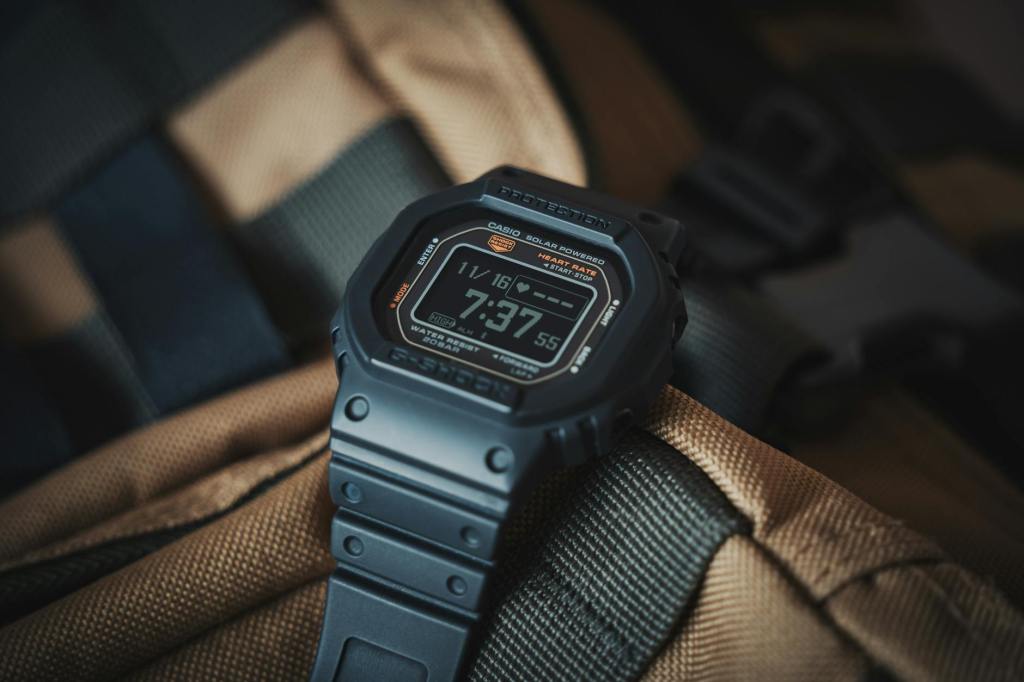
    My G-Shock Frogman from Japan is currently in the custody of DHL Customs, where it has been detained for reasons that appear to fall somewhere between administrative caution and bureaucratic sport.

    After a chain of communications—email links that didn’t open, automated messages that solved nothing, and the familiar sense of shouting into a digital canyon—I finally reached a living human being. The verdict: my package had been randomly flagged. To prove I was a legitimate citizen worthy of receiving a rubber-strapped dive watch, I was instructed to photograph my 1040 tax form, Social Security number included, and submit it for verification.

    I complied.

    The representative then added the final procedural flourish: the clearance team is backlogged, they don’t work weekends, and my Friday submission will not be reviewed until Monday at the earliest.

    And so the Frogman waits.

    Somewhere in a warehouse, my solar-powered watch sits sealed in darkness, a creature built to drink sunlight now confined to a bureaucratic aquarium. It calls to mind Melville’s Dead Letter Office—objects sent with intention, now suspended in institutional stillness. The watch waits. I wait.

    We are both experiencing what might be called Solar Purgatory Syndrome: a condition in which a solar watch is deprived of light while its owner is deprived of momentum. Energy, both mechanical and emotional, drains slowly while the system remains perfectly unmoved.

    What has changed is the feeling.

    Once, waiting for an overseas parcel carried the electricity of childhood—anticipation, possibility, the quiet thrill of something special moving across the world toward you. That feeling has been replaced by fatigue. Bitterness. The dull resentment that comes from being processed rather than served.

    Getting bitten by customs bureaucracy was not part of the romance.

    And something unexpected has happened. The friction hasn’t just slowed the purchase—it has cracked open a larger question. The stress, the forms, the delays, the mild institutional suspicion directed at a man buying a watch from Japan—it all begins to feel disproportionate.

    A voice, calm and unsentimental, has begun to speak:

    You’ve been bitten by the system.
    Consider this instruction.
    Consider this an exit opportunity.
    Enjoy the watches you have.
    Move on.

    This is the onset of a Bureaucratic Burnout Event—the moment when administrative friction overwhelms the emotional reward of the hobby that triggered it. What began as excitement—tracking updates, imagined wrist time, the pleasure of acquisition—collapses under documentation, verification, delay, and institutional indifference. The object itself begins to feel smaller than the effort required to obtain it.

    But the episode may carry a deeper meaning.

    It may be an Exit Omen Moment—the psychological shift in which inconvenience stops feeling like bad luck and starts feeling like instruction. The delay becomes a message. Simplify. Reduce. Stop expanding. Perhaps even stop buying altogether.

    Whether this reaction proves temporary or permanent remains to be seen.

    But for now, somewhere in a dark warehouse, a solar watch waits for light.

    And somewhere outside it, its owner is reconsidering the whole enterprise.

  • The G-Shock Frogman and the Bureaucratic State

    The G-Shock Frogman and the Bureaucratic State

    Over the past forty-eight hours, DHL has sent me approximately two dozen updates about my G-Shock Frogman GWF-1000. Each message arrives with the urgency of a geopolitical crisis, as if the watch were a sensitive diplomatic asset being escorted through a chain of unstable regimes.

    Update received.
    Status changed.
    Action required.

    At one point, a text informed me that I needed to verify my identity—name, address, confirmation that I am indeed the lawful civilian awaiting a rubber-strapped amphibious instrument. I complied immediately. Filled out the form. Submitted the data. Received confirmation.

    Case closed, I thought.

    Case not closed.

    The Frogman is now stranded in customs, apparently under suspicion of either espionage, tariff evasion, or unauthorized aquatic activity.

    I contacted DHL customer service. A courteous representative informed me that my shipment would be “investigated” and that I should expect an email within a few hours. At this stage, I am waiting to learn what additional documentation, declaration, or ceremonial tribute will be required before the watch is released back into the general population.

    The order was placed eleven days ago through Sakura. I’ve purchased from them before without incident. This time, however, the experience feels less like shipping and more like applying for a mid-level government clearance. Whether the delay is caused by tariffs, enforcement changes, or the invisible hand of bureaucratic entropy, I cannot say.

    What I do know is that the process introduces a new emotional variable into overseas buying: friction. Not the minor inconvenience of delay, but the slow accumulation of uncertainty—the growing suspicion that any international purchase may evolve into a procedural endurance event.

    Buying a watch is supposed to generate anticipation.

    This generates vigilance.

    The promise of modern commerce is frictionless efficiency: click, ship, deliver. What I’m experiencing is its bureaucratic inverse. Identity verification. Clearance holds. Investigation windows. Status alerts arriving like play-by-play commentary from a logistics obstacle course.

    This isn’t tracking.

    This is surveillance—of my own anxiety.

    I appear to be suffering from Customs Suspense Syndrome: a condition in which a routine shipment becomes a serialized drama of ambiguity and delay. The buyer no longer follows a package; he refreshes a timeline the way a patient checks for lab results, searching for signs of life.

    Ordering a watch should not feel like running a gauntlet.

    Yet here we are.

    This is not frictionless commerce.

    This is American Gladiators: Customs Edition.

  • Reunion Loop Syndrome: The Watch You Can’t Quit

    Reunion Loop Syndrome: The Watch You Can’t Quit

    Seasoned watch collectors know a particular form of heartbreak: selling a watch they love—then hunting it down again like a lost soulmate. The cycle repeats. Buy. Sell. Regret. Rebuy. Promise never to let it go again. Then, a few months later, the relationship cools, restlessness sets in, and the breakup happens all over again.

    At some point it becomes clear: the fixation isn’t the watch.

    It’s the drama.

    This pattern has a name: Reunion Loop Syndrome—a behavioral cycle in which the collector repeatedly parts with and repurchases the same watch, not because their taste has changed, but because they crave the emotional arc. The pleasure isn’t ownership; it’s the story. Separation sharpens longing. Regret fuels the search. The chase restores meaning. And the reunion delivers a brief, intoxicating high.

    The watch becomes less an object than a romantic partner in a serialized relationship. Each transaction reenacts the emotional turbulence of a teenage breakup—except now the reconciliation includes PayPal fees, overnight shipping, and the quiet humiliation of buying back your own mistake.

    Eventually, some collectors recognize the madness and attempt an intervention.

    Instead of selling, they stage a controlled disappearance.

    The watch is locked in a safe. Or exiled to a friend’s house. Sometimes both. Access is restricted for months—three at a minimum, sometimes a full year. The strategy is simple: simulate loss without the financial damage. Absence rebuilds longing. Time restores novelty. When the watch finally returns to the wrist, the reunion feels earned rather than repurchased.

    It’s emotional theater without the market penalty.

    The good news is the method works. Thousands of dollars remain safely in the bank. The flipping stops. The collection stabilizes. Financial maturity has arrived.

    The bad news is harder to admit. Emotional security is still stuck in senior year.

  • Chrono-orexia: When a Bracelet Feels Like Olive Oil

    Chrono-orexia: When a Bracelet Feels Like Olive Oil

    A few years ago, I heard a radio segment about Orthorexia nervosa, a condition defined by an obsessive devotion to dietary purity. A restaurant server called in with a story. She delivered a salad that was supposed to be dry—no dressing, no oil, no compromise. Somewhere between kitchen and table, a single drop of olive oil landed on a leaf. When the plate arrived, the customer broke down in tears. One glossy molecule of fat, and her world collapsed. Not her meal—her world.

    At the time, I listened with clinical curiosity. Today, I recognize the pathology. It simply changed mediums.

    My watch hobby drifted into a similar territory, a condition I now call Chrono-orexia.

    I wasn’t obsessed with watches in general. That would have been healthy. My fixation narrowed into a doctrine: vintage Seiko divers only, each mounted on a high-end strap. Bracelets were forbidden—horological olive oil. When the system was intact—seven Seiko divers, all properly strapped—I experienced something close to psychological equilibrium. Seven was not a number; it was a perimeter. Inside that perimeter, anxiety quieted. Outside it, chaos waited.

    Chrono-orexia is a purity disorder of the collector’s mind. The hobby stops being about enjoyment and becomes a moral system. Only certain brands. Only certain configurations. Only a sacred number. The watches themselves become secondary to the architecture of the rules. Satisfaction comes not from wearing them but from knowing the system is intact.

    Like Orthorexia, the condition is fragile. One deviation—a bracelet where straps are law, an eighth watch where seven is doctrine—and the nervous system lights up. The collector no longer curates objects; he protects a psychological boundary. At its extreme, Chrono-orexia turns a pleasure into a defensive ritual, governed by an internal commandment that confuses rigidity with control and purity with peace.

    Recently, my condition has been tested.

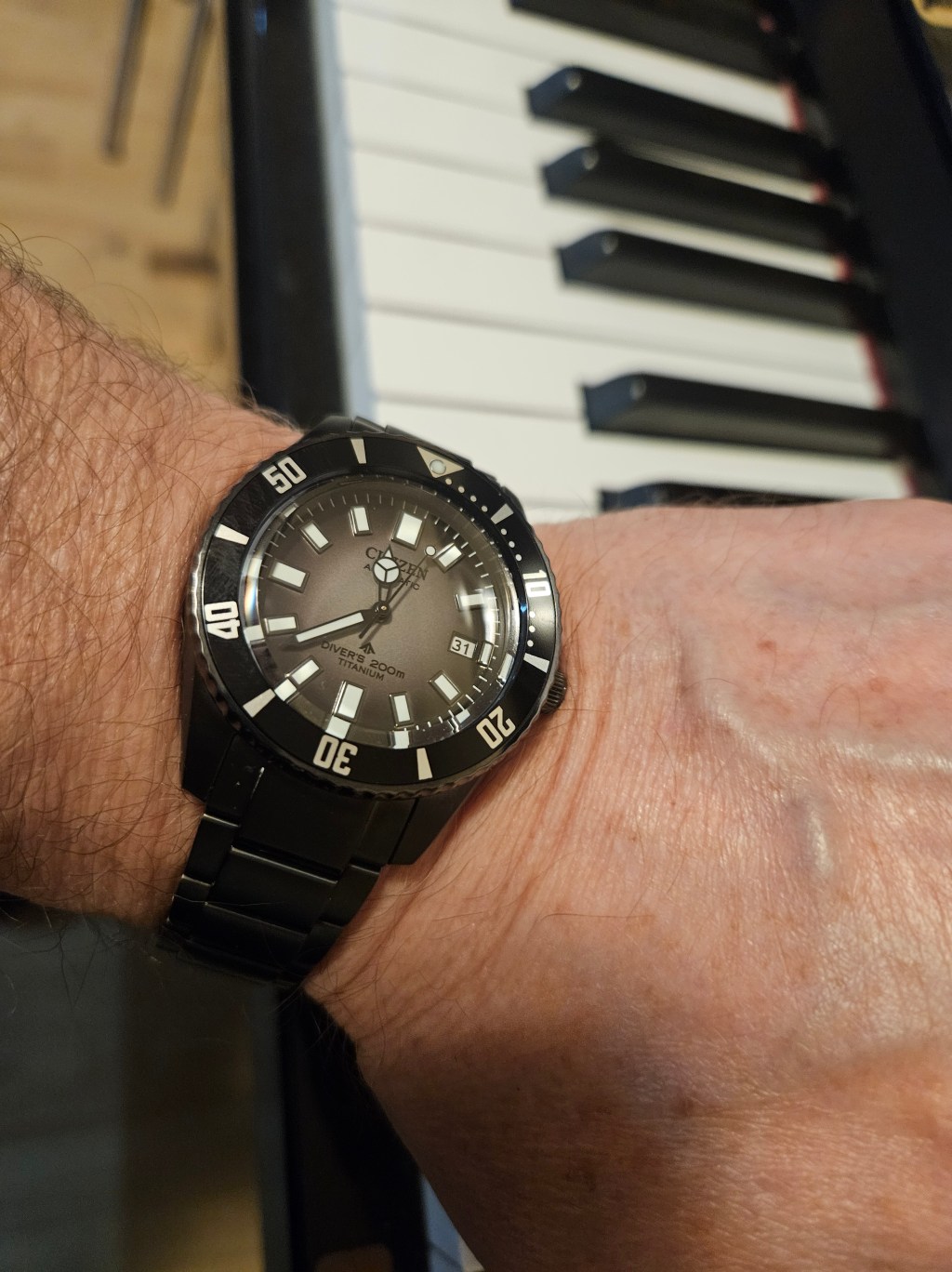
    I acquired two watches that break the covenant: a Citizen Super Titanium diver on a bracelet and a G-Shock Frogman. The Frogman at least respects the strap orthodoxy, but the Citizen arrives gleaming in stainless heresy. Worse, the additions push my collection beyond the sacred number of seven.

    The system is compromised in two ways: bracelet contamination and numerical excess.

    I haven’t collapsed into tears like the olive-oil diner, but I do find myself hovering at a psychological crossroads. Do I purge the Citizen and restore doctrinal purity? Or does obedience to the rule deepen the pathology? Would learning to tolerate imperfection loosen the grip of Chrono-orexia—or would it erode the very structure that keeps my collecting anxiety contained?

    There is a voice inside me that will not negotiate. It speaks in commandments, not suggestions:

    Thou shalt not have one drop of oil upon thy collection.

    I remain agnostic.

    Part of me believes the healthy response is flexibility—that a hobby should breathe, not suffocate under doctrine. Another part suspects the rules are not the illness but the treatment, the scaffolding holding back a larger chaos.

    Agnosticism, it turns out, is just a polite term for ongoing torment.

  • From Bicep Envy to Rolex Envy

    From Bicep Envy to Rolex Envy

    As a teenage bodybuilder, you suffered from classic body dysmorphia—the iron game’s most reliable side effect. Your arms measured a thick, hard-earned 19 inches. Impressive by any sane standard. But Arnold’s were 23. He owned the Rolex of physiques: cathedral pecs, mountain biceps, mythological proportion. You, by comparison, felt like you were wearing a plastic Timex.

    You could bench 400 pounds. Across the gym, a human forklift was casually repping 500 to warm up his joints. He was the champion. You were the fraud. The mirror didn’t show muscle; it showed deficiency. Reality had no vote. Comparison ran the court.

    Years later, the iron left your life, but the disease simply changed wardrobes.

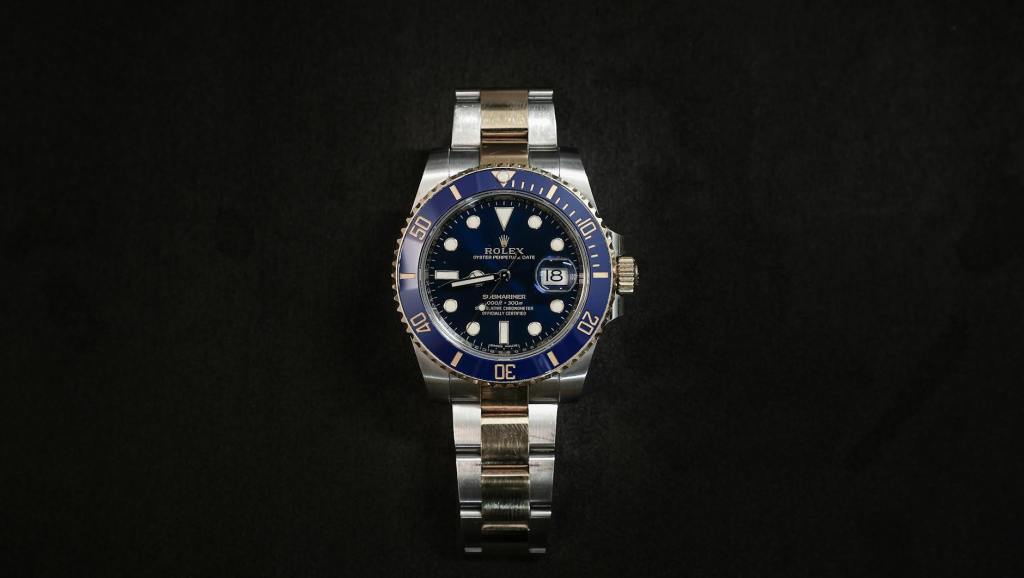
    Now you collect watches. You watch Bosch. Titus Welliver stalks through Los Angeles wearing a Rolex Submariner like a badge of existential authority. Lance Reddick appears in the same universe, his TAG Heuer sitting on his wrist with the quiet confidence of a man who signs warrants and ends conversations.

    It isn’t the watches that get to you. It’s the gravity. The presence. The sense that the watch is merely the visible edge of a life lived at full command.

    Then you look down.

    Your Citizen Eco-Drive stares back—accurate, reliable, environmentally responsible. The watch of a reasonable man. The watch of an overweight suburbanite who owns a good coffee maker and worries about cholesterol. For a brief moment, you consider curling into the fetal position and asking the universe for a refund.

    The condition has a name: Watch Dysmorphia.

    Watch Dysmorphia is a status-perception disorder in which satisfaction with one’s watch—and by extension, one’s life—collapses under the pressure of upward comparison. The object on the wrist may be handsome, capable, even excellent. None of that matters. Against the symbolic weight of a Rolex on a television detective or the effortless confidence of a higher-status wearer, adequacy feels like failure.

    Like its muscular ancestor, the disorder ignores objective reality. A solid Citizen becomes a narrative of smallness. A respectable collection becomes evidence of mediocrity. The luxury watch is no longer a tool for telling time; it becomes a portable mythology of power, competence, and gravitas. When you look at your own wrist, you aren’t checking the hour—you’re reading a verdict.

    The result is predictable: dissatisfaction, restless upgrading, momentary relief, then renewed deficiency. Not because the watch is lacking, but because comparison has quietly rewritten the terms of enough.

    To live with Watch Dysmorphia is to learn a hard law of modern life:

    Comparison is the mother of misery.

  • The Wrist That Ate the Workday

    The Wrist That Ate the Workday

    Working from home is supposed to be a privilege. Deliver the numbers, meet the deadlines, and you’re spared the slow death of freeway traffic and fluorescent lighting. Your company trusts you. Your productivity is tracked by a sleek little monitoring app that converts your workday into a tidy efficiency score.

    Unfortunately, your desk shares airspace with the enemy.

    The lacquered watch box sits there like a silent casino. You glance at the watch on your wrist. Nice. Solid choice. But what about the others? You lift the lid. A row of polished faces looks back at you—steel, lume, sapphire, promise. You’re supposed to be refining actuarial tables, tightening the language in your report, making sure the graphs don’t embarrass you in front of management.

    Instead, you swap.

    The new watch feels right. For three minutes.

    Then doubt creeps in. Maybe the diver was too heavy. Maybe the field watch better matches your “work-from-home professional” persona. Swap again. Back to the box. Another selection. Another micro-adjustment to your identity. Meanwhile, the cursor blinks on an unfinished paragraph, and your productivity score quietly bleeds out.

    You know the behavior is neurotic. You also know you’re waiting for a moment of revelation—for one watch to settle onto your wrist and announce, in a calm and authoritative voice, This is the one. The watches remain silent. So you keep rotating, chasing a verdict that never comes.

    What you have is Chrono-Proximity Compulsion.

    The disorder is simple: when your collection lives within eyesight, your brain enters a loop—check, compare, swap, repeat. Each decision feels minor, harmless, even rational. In aggregate, they shred your attention into chrome-plated confetti. The watches stop telling time and start interrupting it. Work hours dissolve into wrist experiments, each swap chasing a mythical state of alignment between object, mood, and self.

    The cure is drastic but effective.

    You remove the collection from the battlefield. Down to the basement it goes—sealed in a treasure trunk, out of sight, out of negotiation. No lineup. No options. No silent chorus asking to be chosen.

    On your wrist remains the G-Shock GW5000.

    It does not flatter you. It does not whisper about heritage, craftsmanship, or lifestyle. It does not ask to be admired or reconsidered. It delivers one message, blunt and unromantic: Get back to work.

    For the first time all day, the cursor moves.

    And the efficiency app finally has something to measure.

  • Six Months with a Torn Rotator Cuff and a Reality Check

    Six Months with a Torn Rotator Cuff and a Reality Check

    Six months ago, I didn’t tear my left rotator cuff in a moment of heroism or catastrophe. There was no dramatic pop, no cinematic collapse. This was a slow, quiet betrayal—the accumulated result of too many kettlebell sessions, too much weight, and too few rest days. Overtraining doesn’t announce itself. It keeps a ledger. One day the bill comes due.

    The injury delivered more than pain. It delivered anxiety. Every movement carried a whisper of threat: one wrong reach, one careless angle, and the shoulder might unzip itself. I moved cautiously, slept poorly, and began a small, private relationship with fear. I visited the doctor, the physical therapist, and the ultrasound technician. I chose the conservative path—no MRI, no surgery—just the long road of rehab: light weights, resistance bands, patience.

    Subjectively, the progress is real. Mobility has improved. Pain has eased. I’d estimate I’m about 70 percent back. But the injury has one cruel habit: the 3 a.m. wake-up call of throbbing pain. Lying still is the enemy of a damaged shoulder. Arthritis settles in like a squatter. The strange irony is that movement helps. Blood flow is medicine. A light workout often feels better than rest, which violates every instinct you have when something hurts.

    The questions, however, remain. If full mobility returns in a few months, will the nighttime arthritis fade, or is this now part of the landscape? When I’m “healed,” does that mean I can return to moderate kettlebell presses, or is the future a permanent treaty with lighter loads and humility? Injury has a way of rewriting your contract with ambition.

    My current training schedule reflects that renegotiation: two kettlebell sessions, two power yoga sessions, and two rounds a week on the Schwinn Airdyne—the machine I’ve come to call the Misery Machine. Kettlebells and yoga feel like disciplined bliss. The Airdyne feels like punishment administered by a research facility with questionable ethics. I’m less a human being and more of a lab rat. I don’t exercise on it so much as survive it.

    If the bike is the physical grind, the real psychological battle is food. I know what to eat. I actually crave healthy food. My staples read like a nutritionist’s love letter: buckwheat groats, steel-cut oats, chia, hemp, pumpkin seeds, molasses, soy milk. High protein. High magnesium. Clean and intentional.

    The problem isn’t what I eat. It’s how much—and why. Food is how my family connects. A couple nights a week means takeout. Mendocino Farms sandwiches that arrive with the caloric density of a small planet. Bread, desserts, shared indulgence. These moments feel like love, and they also keep me about thirty pounds heavier than I’d like to be.

    There’s a hard truth here that no diet book can soften: you can’t pursue food like a hobby and expect to look like a fitness model. Appetite has consequences. Pleasure has a price. At some point you stop negotiating with reality, make your choices, accept the outcome, and move forward without the luxury of self-pity.

    The shoulder, at least, is improving. Slowly. Imperfectly. But better.

  • The Hand Behind the Bicycle

    The Hand Behind the Bicycle

    Over the years, I’ve read countless religious reflections meant to motivate and console, but one idea has stayed with me more than the rest. In his autobiography, Malcolm X describes a decisive shift in his spiritual life: he came to believe that when a person makes a sincere effort to change—to move toward discipline, integrity, and God—God moves toward that person and meets them halfway. Of all the spiritual guidance I’ve encountered, nothing has struck me as more hopeful than that promise—that effort is never solitary, and that even a small step toward the good is met by a loving force already moving in our direction.

    Seen this way, self-agency is not a lonely act of willpower. It is more like learning to ride a bicycle with a steady hand behind you. Your intentions are the pedaling, but there is also a quiet strength giving you balance and momentum until, almost without noticing, you are moving forward on your own. Independence grows out of support, not isolation; effort becomes freedom because something larger meets you in motion.

  • When Too Much Self-Awareness Kills the Hobby

    When Too Much Self-Awareness Kills the Hobby

    Your watch doomsday routine was entertaining at first. The addiction jokes, the madness metaphors, the psychological autopsies—it all had bite. But over time, the act hardened into a script. Same diagnosis, same grim prognosis, same weary punchline: the hobby is a pathology and you are its patient. What began as sharp self-awareness slowly turned into background noise. When every watch conversation ends in a cautionary tale, the insight stops sounding wise and starts sounding tired.

    Yes, the hobby has its absurdities. Grown men tracking bezel action like lab technicians. Endless forum debates about lume longevity and strap chemistry. The theater of acquisition, the drama of regret. It’s funny because it’s true. But truth has a shadow side: if you keep rehearsing the dysfunction, you begin to believe dysfunction is the whole story. And it isn’t. Watches are also craft, design, history, engineering, ritual, friendship, and—most dangerously of all—simple pleasure.

    Push the pessimism too far and you commit a quiet act of vandalism against your own life. Years of learning, refining your taste, and assembling a disciplined collection suddenly feel like evidence in a case against yourself. Instead of appreciation, you feel suspicion. Instead of satisfaction, you feel embarrassment. The hobby becomes a courtroom where enjoyment is treated as a character flaw.

    So ease off the throttle. Keep your critical edge—persnickety is part of the fun—but let some sunlight into the room. You don’t need to romanticize the hobby, but you don’t need to prosecute it either. Otherwise, you’ll fall into the Self-Sabotage Loop: the habit of undermining your own enjoyment by endlessly rehearsing the hobby’s worst traits—addiction, immaturity, manipulation—until pleasure itself feels irresponsible. That’s the trap. Too invested to quit. Too cynical to enjoy.

    The goal isn’t innocence. It’s balance. Own the flaws. Then wear the watch anyway.