Category: culture

  • Why Good Salsa Matters

    Why Good Salsa Matters

    In 1967, my father took me to the grand opening of a Taco Bell in San Jose, California. This was my first encounter with fast food as spectacle—and with teenagers as a category of human being. They stood behind the registers in a loose formation, and every one of them appeared to be afflicted with the same alarming facial condition. Spots everywhere. An outbreak.

    I was five. I did the math available to me. Had a disease swept through the workforce? Did Taco Bell exposure cause lesions? Were the refried beans radioactive?

    I asked my father what was wrong with their faces.

    “They’re pimples,” he said. Then, without hesitation, he added, “According to Aristotle, God gives pimples to teenagers to teach them humility.”

    I knew immediately this was untrue. Not because I had read Aristotle—I hadn’t—but because I knew my father. This was him doing what he loved most: inventing authority on the spot. He also harbored a low-grade contempt for teenagers, whom he regarded as overconfident and undercooked. Acne, in his view, was divine pushback. Cosmic slapstick.

    The pimples unsettled me, but they did not interfere with my appetite. I ate my tacos and frijoles under the Taco Bell canopy, admiring the beige stone “Mexican” architecture—the aesthetic equivalent of a sombrero on a filing cabinet. The food itself was a novelty. We didn’t eat Mexican food, and Taco Bell certainly wasn’t Mexican food, but it was a portal. A gateway drug.

    Within a few years, my mother was making tacos, burritos, and enchiladas at home. Our Mexican-American neighbors, Mike and Felice Orozco, made salsa from ingredients grown in our own backyards. The salsa lived on the coffee table in a volcanic tureen, like something sacred and faintly dangerous. You could smell it the moment you walked into the living room—chilies, onions, garlic, alive and unapologetic.

    The color stopped you. A deep ruby red. Not restaurant red. Not industrial red. Real red. I have eaten excellent salsa over the decades, but nothing has ever matched the salsa Felice Orozco taught my mother to make in the late 1960s. Even now, if a Mexican restaurant brings out a pre-meal salsa that approaches that standard—even halfway—I take it as a sign of moral seriousness.

    Felice Orozco’s salsa wasn’t just delicious. It was philosophical. It carried an unspoken argument about what survives and what matters. When families pass down food traditions, they’re saying something quietly radical: some knowledge deserves care, repetition, and fidelity. This isn’t about novelty or performance. It’s not about artisanal swagger or bragging rights. It’s about love made practical. Wisdom with onions.

    So what was Taco Bell to me as a child? A desecration of Mexican food? No. It was a signpost. A crude outpost with a faint aroma of the real thing. It pointed toward a richer city beyond itself—a place where food meant connection, where flavors carried memory and generosity.

    The sign didn’t point south.
    It pointed to Felice Orozco’s house.

  • The Potato Diet and the Gospel According to Mel Brooks

    The Potato Diet and the Gospel According to Mel Brooks

    Recently, I fell down a nutritional rabbit hole and emerged clutching a potato. Not just any potato, but the cooked-then-cooled kind—Idaho and sweet potatoes transformed into resistant starch, that miraculous category of food that sounds like it should be protesting something. Resistant starch, I learned, behaves like a probiotic: it feeds the gut microbiome, supports immunity, improves metabolic health, lowers cholesterol, and may reduce colorectal cancer risk. It even helps regulate appetite hormones, which is a polite way of saying it tells your brain to stop behaving like a feral raccoon.

    There’s a whole taxonomy of resistant-starch foods, but I’m a simple man. I’m focusing on potatoes. I eat them cold from the fridge or gently reheated. Lunch and dinner get a potato. Snacks get a yam blended into yogurt like some deranged Thanksgiving parfait. If it’s an Idaho potato, I dress it up with plain Greek yogurt, nutritional yeast, and a reckless amount of herbs and spices. This is what refinement looks like in 2026.

    So far, the results have been suspiciously positive. I feel energized. My gut feels calm and cooperative. I enjoy the strange pleasure of eating potatoes at all hours of the day. The real stars, though, are the yams and sweet potatoes—especially the purple Japanese sweet potatoes, which look like food designed by a medieval alchemist with a sense of humor.

    Then came today.

    On the Schwinn Airdyne, I felt… powerful. Not delusional powerful. Not “I should enter a CrossFit competition” powerful. Just quietly, inexorably strong. I burned 825 calories in 62 minutes. The last time I broke 800 calories on that bike was three years ago, back when my joints were younger and my expectations were less realistic.

    Do I attribute this personal record to my potato regimen? I don’t know. The potatoes could be a placebo. I could be committing the cardinal sin of confusing correlation with causation. More likely, I just had one of those rare days when physiology, psychology, and stubbornness line up like planets.

    I don’t expect to hit 800 calories regularly. Seven hundred is already serious business. Eight hundred requires intent. Eight hundred is a flex. It’s bragging rights territory—the kind of obsessive pursuit Howard Ratner brings to the giant black opal in Uncut Gems, except with less jewelry and more sweat pooling under a stationary bike.

    There was another factor, too. Today’s ride was a response to yesterday.

    My daughters were at Knott’s Berry Farm. My wife was out seeing Leslie Jones. I usually enjoy solitude, but yesterday it curdled. The headlines were bleak. My creative energy flatlined. The world felt slightly out of phase, like a record spinning at the wrong speed. When things get that dark, my internal soundtrack defaults to King Crimson’s “Epitaph”—a song that sounds like it was written for someone weeping against a stone wall at the end of history.

    I got through the night with two documentaries: Mel Brooks: The 99 Year Old Man! and Secret Mall Apartment. One was joyous defiance. The other was a reminder that some people respond to modern despair by secretly building illegal sanctuaries inside dead shopping centers.

    Mel Brooks said something that landed with force. Life is hard. We suffer loss. But piling misery on top of misery—indulging self-pity—only deepens the wound.

    I took that personally. I suspect the 825-calorie burn was my way of replying: I hear you, Mel. I love you. I’m choosing motion over rumination.

    And so I did.

  • Living in the Bottle: A Life Spent Building Cozy Universes

    Living in the Bottle: A Life Spent Building Cozy Universes

    My parents like to remind me that I grew up poor in a cockroach-infested assisted-living situation in Gainesville, Florida. The place was called Flavet Villages—Flavet, if you lived there, which everyone did because there was nowhere else to go. These were not “villages” in any meaningful sense. They were World War II–era Camp Blanding army barracks, uprooted from Jacksonville and dropped into North Florida like surplus history.

    What I love, even now, is the audacity of the name. Flavet Villages. It’s a master class in rebranding: take a barracks crawling with roaches and give it a pastoral plural noun. It’s the real-estate equivalent of dabbing Vicks VapoRub on your neck and calling it Menthol d’Après-Minuit.

    Flavet sat near an alligator swamp and a stretch of forest that felt mythic to me, even then. A Mynah bird lived there—always on the same branch, like a sentry or an oracle—and before bedtime my father and I would walk to the edge of the woods and talk to it. At dusk, the tide dropped, and the swamp revealed itself. Alligator dung, fully expressed. The smell was feral and unmistakable. While most people would recoil, I found it oddly soothing—bracing, even. As if the universe were saying, You’re here. This is real.

    As a native Floridian, I sometimes wonder—with a perverse sense of pride—whether my early exposure to fecal alligator swamps permanently rewired my sensory thresholds in ways outsiders could never understand.

    One evening, as my father and I stood at the forest’s edge, we heard a distant radio playing Juanita Hall’s rendition of “Bali Ha’i” from South Pacific. The song is about an island paradise that seems achingly close yet forever unreachable, and it’s meant to induce longing and melancholy. But I felt none of that. Paradise was already present. I was standing in an enchanted forest with my storytelling father, a talking bird, mythical alligators nearby, and music drifting in like a siren call. This was not longing; this was habitation. I lived in a fairy tale and had no interest in leaving it.

    That same ache—for a magical enclosure—returned when I was five and living in the Royal Lanai Apartments in San Jose. The grounds were landscaped with sunflowers and volcanic rock, and as I walked to the playground I would stare at the flower beds and wish I could shrink myself down to Lilliputian size and live inside them forever. That was my first lesson in coziness: the idea that a small, bounded world could feel safer, richer, and more alive than the vast one surrounding it.

    Then came I Dream of Jeannie. Barbara Eden’s blonde goddess lived inside a genie bottle—a jewel-lined cocoon with a purple circular sofa and pink satin pillows glowing like some erotic reliquary. More than anything, I wanted to live in that bottle with her. The impossibility of that wish crushed me with the same quiet sadness as “Bali Ha’i.” That the bottle was, in reality, a painted Jim Beam decanter only deepened the metaphor. I was intoxicated by fantasy long before I understood the word.

    Flavet Village, the swamp forest, the Royal Lanai flower beds, Jeannie’s bottle—these were all variations on the same theme: cozy ecosystems that stood apart from the real world while quietly shaping how I understood it. Without those parallel universes, reality would have been flatter, harsher, less survivable.

    Now, in my sixties, I’ve built a new ecosystem: my watch world. A watch box holding seven watches that I tend like a mother hen, fretting over straps and bracelets, endlessly optimizing the rotation to extract maximum pleasure from time itself. It’s a controlled universe, one I can enter when the outside world becomes too loud or incoherent. I always come back—but I’m aware of the danger. The pull can be strong. Swapping a Tropic strap for a Waffle may calm me in the moment, but eventually I have to step out of the bottle, leave the forest, and reenter a world that demands attention, judgment, and responsibility.

    The fantasy sustains me. It just can’t replace the world.

  • Chuck Klosterman, Joe Montana, and the Shape of Greatness

    Chuck Klosterman, Joe Montana, and the Shape of Greatness

    I’ve been reading—and now listening to—Chuck Klosterman on music and culture for over a decade. He’s a rare specimen: a true hipster precisely because he has no interest in being cool and too much interest in ideas to waste time polishing his image. His new essay collection, Football, keeps that streak alive. I’m consuming it on Audible while trying to erase myself on the Schwinn Airdyne, pedaling hard enough to regret my life choices. Every so often, Klosterman drops a line that forces me to slow the bike, release the upper-body levers, and frantically thumb notes into Google Docs like a deranged monk copying scripture mid-martyrdom.

    Today’s line stopped me cold: “Greatness is about the creation of archetypes.” He was talking about the Beatles. Not record sales. Not chart dominance. Greatness, he argued, is the act of filling an archetypal mold so completely that everyone who follows can only approximate it. They may be talented, even brilliant, but they’re echoes, not origins. The mold has already been cast.

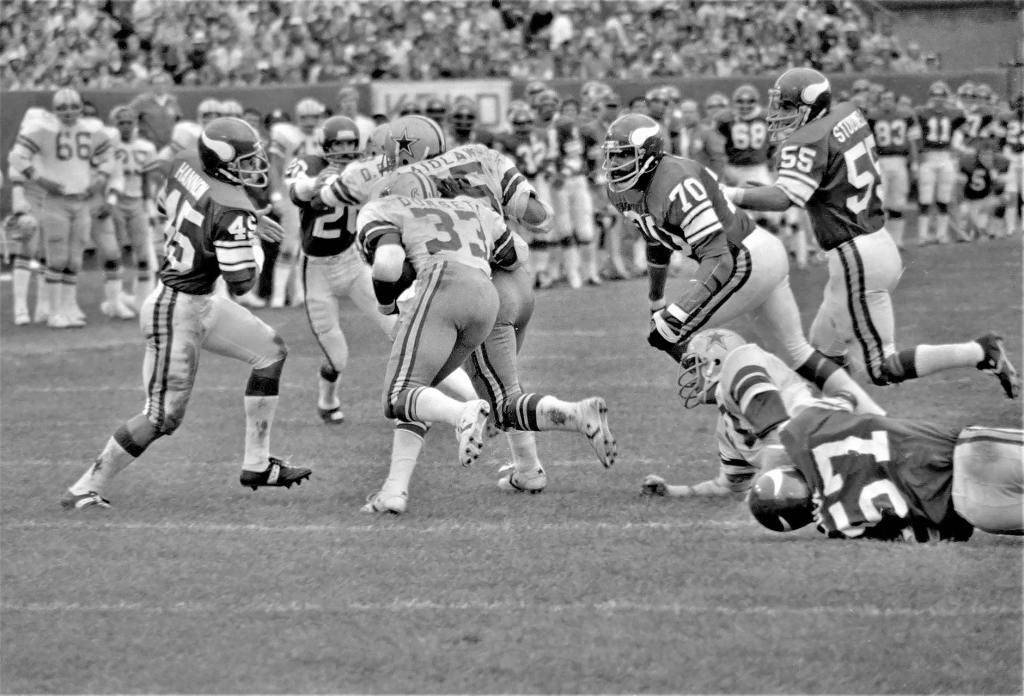
    That idea made me think of Klosterman as a fourth grader, devastated when the Cowboys lost the 1982 NFC Championship to the 49ers on Joe Montana’s pass to Dwight Clark. I was living in the Bay Area then, and Montana instantly became something more than a quarterback. He wasn’t a flamethrower like Elway or a mythic warhorse like Staubach. He was smaller, calmer, unnervingly steady. He slew the Goliath that had humiliated the Niners for years. Montana wasn’t just great—he was David with a slingshot. That archetype mattered more than his stat line, and for a time it made him the greatest quarterback alive.

    I’m not a Beatles devotee, but I understand why people place them on that pedestal. Archetypes don’t require personal devotion; they require recognition. You can see the mold even if you don’t want to live inside it.

    Earlier in the book Klosterman expressed his genuine, hard-earned contempt for Creed—contempt earned the old-fashioned way, through actually listening—and my mind wandered to the opposite of greatness: a strange kind of cultural infamy where a band becomes a symbol rather than a sound. That’s when I realized I’d mixed up Creed with Nickelback, which led me down a brief but intense psychological spiral when I couldn’t find the documentary Hate to Love: Nickelback on Netflix. That film makes it painfully clear that Nickelback’s “crime” is not incompetence or fraud. They’re talented, professional, and wildly successful at pleasing their audience. Their real achievement is unwanted: they became the most socially acceptable band to hate.

    Nickelback’s loathing isn’t sincere. It’s ritualized. Once social media weaponized contempt for them, sneering became a form of virtue signaling—a low-effort way to broadcast cultural superiority without doing the work of listening. Most of the haters probably couldn’t name three songs. The scorn isn’t about music; it’s about belonging.

    Which is why I’d love to talk this through with Klosterman. He’s the right mind for it. Also, he might help me straighten out my chronic band confusion. This isn’t new. When I was five, I used to confuse the Monkees with the Beatles. Apparently, my brain has always had trouble keeping its mop-tops and punchlines in their proper bins.

  • Always Be Closing: The Lie We Keep Buying

    Always Be Closing: The Lie We Keep Buying

    “Always be closing,” Alec Baldwin snarls in Glengarry Glen Ross, playing Blake, a blustering emissary of pure cortisol sent to terrify a roomful of salesmen into obedience. Closing, he tells them, is the only thing that matters. Not effort. Not integrity. Not sanity. Close or die. The line is famous because it taps into something already rotting inside us. We don’t just want to close deals; we want to close life. Getting married is a close. Deciding on a religion is a close. Graduating college is a close. Buying a house, buying a car, settling on a diet, hitting a goal weight—each one dangles the same promise: after this, I can rest. After this, I’ll be done.

    The culture worships closers. Closers are decisive. Closers have plans. Closers stride forward with laminated confidence. Closers collect ceremonies, milestones, certificates, and Instagram captions. Closing is marketed as maturity itself—the moment when uncertainty is evicted and order takes possession of the premises. Winners close. Losers waffle. That’s the myth.

    But closing is a con, and a lazy one at that. It sells the toddler fantasy of permanent comfort: arrive somewhere and stay arrived. Life, unfortunately, does not honor this contract. It leaks, mutates, backslides, and doubles back. I once knew a couple who were desperate to permanently break up with each other. So they got married as a strategy for divorce. They believed the divorce would provide closure—clean lines, sealed chapters, emotional foreclosure. Instead, they remarried. Then divorced again. Then they remarried. Then got another divorce. Closure didn’t show up. It never does. The story simply kept going, indifferent to their paperwork.

    The same lie infects consumer life. I know a man who believed salvation came in the shape of a Rolex Explorer. Ten thousand dollars later, he congratulated himself on having found his Exit Watch—the final piece, the closing bell. Within months, he was browsing watches that made the Rolex look like an appetizer. The watch didn’t close anything. It became a monument to the futility of the attempt.

    We love the idea of closing because we are exhausted—by the volatility of the world and the chaos inside our own skulls. “Always be closing” offers a fantasy of stillness, a promise that motion can end and anxiety can be put in storage. But it’s just another pressure pitch, no more real than the sales patter Mamet skewered. Life doesn’t close. It revises, reopens, and keeps charging interest. The only thing that truly closes is the sales pitch itself.

  • Why Men Can’t Stop Writing Manifestos

    Why Men Can’t Stop Writing Manifestos

    My wife has never been one to traffic in lazy generalizations about men and women, but a few years ago she offered one observation so sharp it lodged itself in my brain. Men, she said, have a peculiar itch that women conspicuously lack: the need to write a manifesto. Not a gentle essay about waking up early to tend tomatoes and eggplant while discovering the joys of fiber and self-care. No. A manifesto is something else entirely—a doctrinal collision, an absolutist thunderclap so brimming with rectitude, so certain of its own world-historical importance, that its author feels morally obligated to broadcast it to the four corners of the earth. Silence would be selfish. Restraint would be unethical.

    A manifesto, of course, cannot emerge from a vacuum. It requires a conversion story—preferably violent. The man was once lost, deformed, wandering in a fog of ignorance. Then something happened. The cosmos intervened. He was singled out. Enlightened. Charged with a mission. His truth, having been hard-won and privately revealed, must now be universalized. To keep it to himself would be a crime against humanity. Thus the manifesto is born: part gospel, part grievance, part personal branding exercise.

    My wife was not complimenting men. She was diagnosing a particular strain of virulent egotism—one that disguises itself as sincerity and moral urgency while quietly pursuing something else: control. To impose a worldview is to dominate. To dominate is to feel powerful. Strip away the rhetoric and you find that many manifestos are not about helping others live better lives but about arranging the world so it finally stops resisting the author’s will.

    Because many men will inevitably produce many manifestos, conflict follows. Doctrines metastasize. Defenses harden. Footnotes sprout like fortifications. Converts gather. Commentaries appear. Some commentaries become so influential they eclipse the original manifesto and establish themselves as superior, corrected versions. The ecosystem expands, competitive and self-referential, like an intellectual CrossFit gym where everyone is chasing the same leaderboard.

    What my wife was really saying, I think, is that men don’t create philosophies primarily to serve others. They create them the way athletes build muscle: to compete. A manifesto is intellectual athletics—grandstanding, bluster, and chest-thumping in paragraph form. It’s less a tool for understanding the world than a way to announce dominance within it.

    Here is my confession, one I may or may not share when my wife gets home tonight: I, too, feel the pull of the manifesto. The fantasy of a grand conversion, followed by the construction of a flawless, infallible system that explains everything, is intoxicating. But if I’m honest, what draws me to that fantasy isn’t egotism so much as fear. The world is a roiling swamp of ambiguity and uncertainty. A manifesto promises certainty on a silver platter, a pacifier for the anxious adult who wants the noise to stop.

    Perhaps my wife is right. Egotism may just be fear in a tuxedo. Men, for whatever reason—biology, culture, testosterone, self-loathing—seem especially adept at projecting their inner chaos onto the world and then mistrusting it for the mess they recognize in themselves. The manifesto becomes a coping mechanism, a way to simulate control in a reality that stubbornly refuses to cooperate.

    Women don’t write manifestos because a manifesto lectures. It talks down. It closes the case. Women talk instead. Life, as they seem to understand it, is an open court—conversation, improvisation, shared meaning, surprise, trust. Men, by contrast, barricade themselves inside doctrine, shout it through a megaphone, and grow indignant when no one salutes.

    When my wife gets home, I think I’ll abandon the manifesto project. I’ll try something riskier. I’ll start a conversation. I’ll listen.

  • Captain Cancel and the Rise of Domestic Hermit Drift

    Captain Cancel and the Rise of Domestic Hermit Drift

    The other day my wife went to lunch with a longtime friend—call her A—and, as women do with admirable efficiency, they covered marriage in a single sitting. A complained that her husband had been drinking more, growing possessive, increasingly controlling. During the meal, he called her three times. By the third interruption, my wife said, the phone might as well have been sitting at the table demanding a chair. When she told me the story later, I said it reminded me of the Tears for Fears song “Woman in Chains.” She didn’t hesitate. “That’s her life exactly,” she said.

    After a pause, the conversation turned, as it inevitably does, to me. “I told A you don’t drink,” my wife said. “You’re not jealous or possessive. But you won’t leave the house. You’re a shut-in.”
    “Doesn’t he go to the gym?” A asked.
    “Not for twenty years,” my wife replied. “He does yoga and kettlebells at home. He’s been trapped in the man cave ever since. And what scares me,” she added, “is that he’s happy.”

    I’m not entirely sure I am happy. I just know my tolerance for annoyance is perilously low, and it drops another notch with each passing birthday. I also know that my friends from my formative college years now live scattered across the country, like artifacts from a previous civilization. We’ve grown apart without drama, which is to say, efficiently. Locally, I have two friends. Tom, a wrestling coach, is either teaching or in Santa Barbara with his girlfriend. I see him about once a year, usually when he drives me to Home Depot so I can transport oversized items back to my cave. My other friend, Pedro, is an engineer who is thirty years younger than I am. The generational differences are… pronounced. We have lunch about four times a year. Add it up and yes—half a dozen social encounters annually qualifies me as a shut-in. Which makes me, by default, an authority on a condition many men my age quietly acquire: Domestic Hermit Drift.

    Domestic Hermit Drift is the gradual, mostly unintentional retreat of a married man from friendships and public life into the managed comfort of home, where routine, hobbies, and solitude replace the effort and risk of maintaining relationships. It isn’t fueled by hostility or misanthropy but by convenience, irritability, fatigue, and the slow atrophy of social muscles. As his world contracts, his wife’s often expands, creating an asymmetry in which she carries the invisible labor of social connection, public presence, and emotional buffering. The genius of the drift is its stealth. No announcement is made. No door slams. The man simply mistakes peace for fulfillment and stability for sufficiency.

    As an expert in Hermit Drift, allow me to identify the warning signs.

    First, your sleepwear, gym clothes, and home clothes become indistinguishable. You sleep in gym shorts and a workout shirt, wear them around the house, exercise in them, shower, and rotate in a freshly washed identical set. You call this efficiency. You experience genuine pleasure in this loungewear optimization and feel morally superior to the sheeple who change outfits multiple times a day. Minimalism, you insist, is a virtue.

    Second, while your wife and her friends design custom T-shirts and handmade signs for rock concerts in the desert, you remain home on a Saturday night swapping straps on your diver watches. You build watch-rotation calendars. You track wrist time. You rank your collection by annual usage. The fact that you know you wore your Seiko Marine Master for exactly 863 hours last year strikes you as reasonable, even impressive. Others find it alarming.

    Third, because your tolerance for irritation is low, you shop only at dawn, when grocery stores are nearly empty and the few people present are still half-asleep—docile, unthreatening, manageable. You take pride in shopping before the rat race wakes up. This dovetails nicely with your time-management philosophy: bed at nine, up at five. By the time the world stirs, you’ve had your coffee, your steel-cut oats, your kettlebell workout, and your canvas grocery bags—your weekly macros—put neatly away. You are, in your own mind, winning.

    The rest of the day unfolds under a regime your wife has named Captain Cancel. Every proposed outing meets a veto. You can’t attend a concert because it might rain, despite cloudless skies. You can’t go to a restaurant because parking is inadequate, and when your wife reminds you of the new parking structure, you explain that it’s widely known to be contaminated with asbestos. A comedian you once loved is playing in Hermosa Beach, but you inform her he hasn’t been funny since the Reagan administration. A trip to Maui is ill-advised due to avian flu, especially dangerous during air travel. A beach picnic is canceled because of a sewage spill that, you explain, has compromised not just the water but the atmosphere. You agree to Taco Tuesday at the local brewery, but it’s too loud. You stuff toilet paper in your ears, announce you’re unwell, and Uber home. You are never invited again. This makes you smile as you drift into a deeply satisfying sleep.

    If you recognize any of these traits, congratulations. You are anti-social. You are Captain Cancel. You have chosen your isolation, locked yourself in your cage, and—most importantly—convinced yourself it was the sensible thing to do.

  • Death by Beauty: Looksmaxxing and the Collapse of Meaning

    Death by Beauty: Looksmaxxing and the Collapse of Meaning

    Thomas Chatterton Williams takes a scalpel to the latest mutation of social-media narcissism in his essay “Looksmaxxing Reveals the Depth of the Crisis Facing Young Men,” and what he exposes is not a quirky internet fad but a moral and psychological breakdown. Looksmaxxing is decadence without pleasure, cruelty without purpose, vanity stripped of even the dignity of irony. It reflects a culture so hollowed out that aesthetic dominance is mistaken for meaning and beauty is treated as a substitute for character, responsibility, or thought.

    I first encountered the term on a podcast dissecting the pronouncements of an influencer called “Clavicular,” who dismissed J.D. Vance as politically unfit because of his face. Politics, apparently, had been reduced to a casting call. Vote for Gavin Newsom because he’s a Chad. At first, this struck me as faintly amusing—Nigel Tufnel turning the cosmetic dial to eleven. Williams disabuses us of that indulgence immediately. Looksmaxxing, he writes, is “narcissistic, cruel, racist, shot through with social Darwinism, and proudly anti-compassion.” To achieve their idealized faces and bodies, its adherents break bones, pulverize their jaws, and abuse meth to suppress appetite. This is not self-improvement. It is self-destruction masquerading as optimization, a pathology Williams rightly frames as evidence of a deeper moral crisis facing young men.

    Ideologically, looksmaxxers are incoherent by design. They flirt with right-wing extremism, feel at home among Groypers, yet will abandon ideology instantly if a rival candidate looks more “alpha.” Their real allegiance is not conservatism or liberalism but Looksism—a belief system in which aesthetics trump ethics and beauty confers authority. Williams traces the movement back to incel culture, where resentment and misogyny provide a narrative to explain personal failure. The goal is not intimacy or community but status: to climb the visual pecking order of a same-sex digital hive.

    At the center of Williams’ essay is a quieter, more unsettling question: what conditions have made young men so desperate to disappear into movements that erase them? Whether they become nihilistic looksmaxxers or retreat into rigid, mythic religiosity, the impulse is the same—to dissolve the self into something larger in order to escape the anxiety of living now. As Williams notes, this generation came of age online, during COVID, amid economic precarity, social fragmentation, and the reign of political leaders who modeled narcissism and grifting as leadership. Meaning became scarce. Recognition became zero-sum.

    Williams deepens the diagnosis by invoking John B. Calhoun’s infamous mouse-utopia experiment. In conditions of peace and abundance, boredom metastasized into decadence. A subset of male mice—“the beautiful ones”—withdrew from social life, groomed obsessively, avoided conflict, and stopped reproducing. Comfort bred collapse. Beauty became a dead end. Death by preening. These mice didn’t dominate the colony; they hollowed it out. NPCs before the term existed.

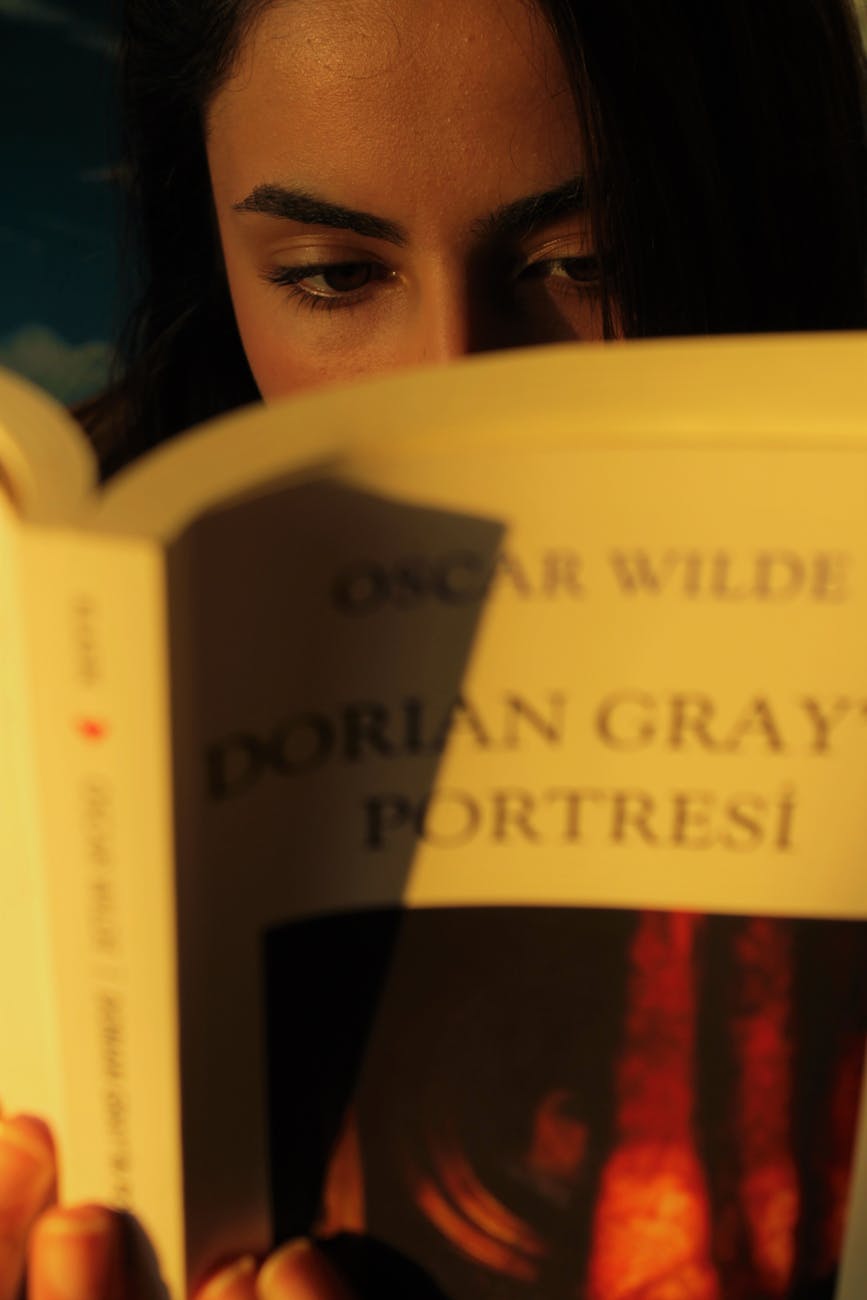
    The literary echo is unmistakable. Williams turns to Oscar Wilde and The Picture of Dorian Gray, where beauty worship corrodes the soul. Wilde’s warning is blunt: the belief that beauty exempts you from responsibility leads not to transcendence but to ruin. Dorian’s damnation is not excess pleasure but moral vacancy.

    The final irony of looksmaxxing is that it produces no beauty at all. The faces are grotesque, uncanny, AI-slicked, android masks stretched over despair. Their ugliness is proportional to their loneliness. Reading Williams, I kept thinking of a society fractured into information silos, starved of trust, rich in spectacle and poor in care—the perfect compost for a movement this putrescent. Looksmaxxing is not rebellion or politics. It’s a neglected child acting out. Multiply that child by millions and you begin to understand the depth of the crisis Williams is naming.

  • Learning About Rejection on a Flight to Miami

    Learning About Rejection on a Flight to Miami

    In the summer of 1972, when I was ten years old and convinced my destiny was to become a musclebound baseball god in the image of Reggie Jackson, I found myself on a flight from LAX to Miami, pressed against the window and staring out at adulthood like it was another continent. In the middle seat sat a blonde bombshell in her mid-twenties wearing pink hot pants with psychedelic purple-and-white stripes and legs so aggressively tanned they could have powered a citrus-processing plant. She wasn’t just attractive; she was a mood. She radiated the entire seventies—optimism, excess, invitation. I wasn’t merely drawn to her. I was drawn to the future she seemed to promise.

    On the aisle sat her conversational counterpart: a pencil-necked, dark-haired man of similar age with impeccable manners, minimal charisma, and the quiet dignity of a man who alphabetizes his spice rack. He was an accountant. She was in dental hygiene school. For five uninterrupted hours, the two of them performed their biographies live, with me as the captive audience. Mostly she spoke. He nodded, gasped on cue, and occasionally supplied a sentence fragment to prove he was still alive. She talked about school, snacks, weather, philosophy—everything. It felt like watching a reality show pilot that forgot to end. But I didn’t mind. She was animated. She was confident. She was hope in hot pants.

    At one point she announced that her ears needed to pop and offered both of us Dentyne gum, explaining that it helped with altitude. I briefly wondered if she thought we were participating in some sort of triathlon of inner-ear resilience. The accountant accepted the gum solemnly, like a man taking medical advice from destiny.

    When the plane finally shuddered to a stop at the gate, the accountant—buoyed by five hours of uninterrupted conversation and the survival glow of having endured it—asked her out on a date. She declined with practiced kindness, the sort of smile perfected by women who have said no thousands of times without ever raising their voice. He accepted the rejection gracefully, even apologetically, as if her disinterest were an inconvenience he had caused.

    My ten-year-old brain short-circuited. I felt like I’d witnessed something indecent. Rejection, I believed, was supposed to be private. Public rejection multiplied the shame. I flashed back to junior high dances where I’d cross the cafeteria, ask a popular girl to dance, watch her recoil as if I’d mistaken bravery for stupidity, then retreat to my friends’ laughter. Now I was seeing the adult version. How could this accountant—handsome, polite, numerically gifted—be rejected after such an extended airborne courtship? I sat there, my romantic assumptions collapsing like cheap sci-fi scenery. Maybe he was too bland. Maybe she had a chaotic love life waiting in Miami. Or maybe—this was the real lesson—she’d simply enjoyed a conversation to pass the time on a long flight. Whatever the reason, I absorbed his rejection as if it were my own. I remain convinced that somewhere in the universe’s permanent records, my name appears next to a small but enduring note: rejected by attractive woman. And yes, it still stings.

  • Flying First Class Is a State of Mind

    Flying First Class Is a State of Mind

    I was born in America in 1961, and if I had to explain this country to a foreigner in one image, I wouldn’t reach for the flag or the Statue of Liberty. I’d point to flying first class. Not the policy of it, not the logistics—just the concept. First class is America in an airline cabin. It grabs you by the collar and says, This is how we do hierarchy. We don’t hide it. We parade it down the aisle.

    Yes, we have our obnoxious luxury cars and coastal dream houses, but nowhere is class difference so intimate as on an airplane. You’re breathing the same recycled air as the people sipping champagne up front. You share the same narrow aisle, the same claustrophobic bathrooms, the same airborne flu incubator. 

    The difference is ceremonial. The first-class passenger is already settled—wrapped in a sherpa blanket, nibbling brie, greeted by flight attendants who address them the way courtiers addressed minor royalty. 

    Then comes the procession: coach passengers filing past, stealing glances, marching toward the back where crying babies, bare feet with ambitious toenails, and circulation-threatening seat pitch await. This is the real luxury—not the champagne, but the ceremony and the choreography. The pleasure is sharpened by contrast. As a first-classer, you’re not cruel. You don’t wish misery on anyone. But your comfort glows brighter because someone else is uncomfortable ten feet away.

    And that glow whispers. Not “you’re lucky.” Not “you’re comfortable.” It whispers the more dangerous phrase: you’re special. That’s the real drug of first class—not legroom, but psychological elevation. The sense that you cracked some hidden code of life, that you’ve unlocked a cheat mode where ordinary frustrations can’t touch you. 

    I once heard a comedian joke that in a plane crash, first-class passengers would survive while the rest of us perished. It’s absurd. And yet… it sounds exactly like something we want to believe.

    This is America. You don’t just earn money here. You earn the right to hear that whisper.

    I’ll confess something anticlimactic: I flew first class once, in 1994, thanks to my father, who sent me to his condo in Maui. I remember almost nothing about it. No ecstasy. No glow. Maybe I suffer from flight anhedonia—the inability to experience joy at 30,000 feet. 

    But I have felt the first-class sensation elsewhere. A friend once let me borrow his Omega Planet Ocean. I wore it to Trader Joe’s and found myself standing in line with organic arugula and the faint, ridiculous thrill of superiority. A luxury watch did what a luxury airline seat never could.

    I could afford such a watch. I owned a Tudor Black Bay once. I sold it quickly, like someone who realized halfway through a costume party that he’d come dressed as the wrong person.

    Now I’m sixty-four, and the urge to gloat has evaporated. I don’t want status anymore. I want clarity. I want restraint. I want a temperament that doesn’t need applause from inanimate objects. Wearing an expensive watch I don’t need feels less like success and more like cosplay—me auditioning for the role of a man who’s made it. The problem is, I know the actor too well. Under the costume is not a titan of confidence but an anxious, fractured soul with the spiritual DNA of Franz Kafka and the comedic timing of Richard Lewis. No amount of Swiss engineering is going to fix that. And pretending otherwise would only make me feel like a fool in very fine clothes.