Category: culture

  • Has AI Broken Education—or Did We Break It First?

    Has AI Broken Education—or Did We Break It First?

    Argumentative Essay Prompt: AI, Education, and the Future of Human Thinking (1,700 words)

    Artificial intelligence has entered classrooms, study sessions, and homework routines with overwhelming speed. Some commentators argue that this shift is not just disruptive but disastrous. Ashanty Rosario, a high school student, warns in “I’m a High Schooler. AI Is Demolishing My Education” that AI encourages passivity, de-skills students, and replaces authentic learning with the illusion of competence. Lila Shroff, in “The AI Takeover of Education Is Just Getting Started,” argues that teachers and institutions are unprepared, leaving students to navigate a digital transformation with no guardrails. Damon Beres claims in “AI Has Broken High School and College” that classrooms are devolving into soulless content factories in which students outsource both thought and identity. These writers paint a bleak picture: AI is not just a tool—it is a force accelerating the decay of intellectual life.

    Other commentators take a different approach. Ian Bogost’s “College Students Have Already Changed Forever” argues that the real transformation happened long before AI—students have already become transactional, disengaged, and alienated, and AI simply exposes a preexisting wound. Meanwhile, Tyler Austin Harper offers two counterpoints: in “The Question All Colleges Should Ask Themselves About AI,” he insists that institutions must rethink how assignments function in the age of automation; and in “ChatGPT Doesn’t Have to Ruin College,” he suggests that AI could amplify human learning if courses are redesigned to reward original thinking, personal insight, and intellectual ambition rather than formulaic output.

    In a 1,700-word argumentative essay, defend, refute, or complicate the claim that AI is fundamentally damaging education. Your essay must:

    • Take a clear position on whether AI erodes learning, enhances it, or transforms it in ways that require new pedagogical strategies.
    • Analyze how Rosario, Shroff, and Beres frame the dangers of AI for intellectual development, motivation, and classroom culture.
    • Compare their views with Bogost and Harper, who argue that education itself—not AI—is the root of the crisis, or that educators must adapt rather than resist.
    • Include a counterargument–rebuttal section that addresses the strongest argument you disagree with.
    • Use at least four credible sources in MLA format, including at least three of the essays listed above.

    Your goal is not to summarize the articles but to evaluate what they reveal about the future of learning: Is AI the villain, the scapegoat, or a tool we have not yet learned to use wisely?

  • Against Becoming a Whole Food Absolutist

    Against Becoming a Whole Food Absolutist

    I admonish my teen daughters for their “high school” diet–80% of which is ultra-processed. I tell them to learn to prepare and enjoy whole foods, and as I speak these words, I can feel a self-righteous halo glowing over my head. My rectitude is rooted in my knowledge that whole foods are more dense, nutritious and fibrous than processed foods, and as a result whole foods help us achieve satiety–the word for feeling full, an important condition to help us avoid overeating. 

    The problem, however, with self-recitude, is that it can encourage us to become absolutists, zealous, and true believers who drink our own Kool-Aid with such relish that we fail to see how blind and rigid we have become. As whole food absolutists, we may find that our worldview and lifestyle doesn’t align with reality.

    This misalignment is discussed in Olga Khazan’s essay “Avoiding Ultra-Processed Foods Is Completely Unrealistic.” The title is followed by the parenthetical “Especially if you have kids.” 

    As a health reporter, Khazan interrogates her own food choices for her son, some of which she understands will be questionable: peanut-butter puffs, grape-jelly Uncrustables sandwich, mixed-berry oat bites–all ultra-processed. 

    She understands that “hyperpalatable” Ultra-Processed Foods (UPFs) are linked to obesity, glucose spikes, insulin resistance, type 2 diabetes, and other afflictions so serious that UPFs should be treated like cigarettes and labeled with surgeon general warnings. 

    In light of UPF’s dangers, Khazan observes there is a myriad of health mommy influencers making videos on how to make your own healthy versions of goldfish crackers and chicken nuggets and how to prepare toothsome steamed cauliflower and carrot salad for your toddlers.

    In this aspirational world, preparing whole foods may give us bragging rights, but it doesn’t align with the real world: Getting stuff done. When you consider how busy a working parent is in our ultra-competitive Hunger Games society, you realize that taking the time to prepare whole foods is an opportunity cost: Yes, you made homemade goldfish crackers, but you didn’t have time to go to the dry cleaners, drop off a return package of undersized garments to Temu, and stand in line at the pharmacy to pick up your medications. In other words, when you’re living in the real world, you have to capitulate to some UPFs regardless of the fitness mommies wagging their scolding fingers at you.

    But Khazan points out that all this food shaming is making us fail to see the complexity of the ultra-processed food category, which is “too broad and difficult” for us to understand. Bran flakes and candy bars are both considered UPFs, but are they equal? Tofu is often categorized as a UPF, but is it really? Is soy milk bad for you in the same way sugary soda is? In other words, can we put all UPFs in the same category?

    To complicate UPFs further, some are even good for you, including some yogurts, breads, and breakfast cereals. Additionally, some people have food restrictions, because of special dietary needs and food allergies, and their health benefits from some UPFs in their diet. For example, I use Splenda and liquid stevia for my coffee and tea, and my insulin thanks me for it.

    The Shaming Whole Food Mommies should stop wagging their fingers for another reason: Being a parent entails unexpected crises that create time-management problems, which can only be solved with a quick meal, such as putting chicken nuggets in the toaster-oven. To make whole foods palatable can take several hours of preparation. Unless you’re rich and home all day, the time required for this type of preparation may elude you. 

    We’re not just talking about the time to prepare whole foods. We’re talking about cognitive drain. The amount of mental energy to bake chicken nuggets and a plate of celery stalks smeared with peanut butter is infinitesimal compared to prepping for chicken Tikka masala over basmati rice followed by cleaning ten times more dishes than microwaving a quick meal.  

    If you’re rich and you can spend time shopping in the morning and the rest of the day in the luxury of your spacious, state-of-the art home, you have the money, time, and cognitive energy to make tasty whole food dishes. Congratulations, you’re a member of the one percent. The rest of us have to work for a living. Unlike you, we’ve got chicken nuggets in the freezer for emergencies. 

    Have we even talked about the cost of whole foods vs. UPFs? A jar of organic pasta sauce cost more than double the one larded with high-fructose corn syrup. The same goes for salsa, nut butters, tomato sauce, pesto, bone broth, and the list goes on. 

    The Whole Foods Mommy Influencers shamelessly lard us with toxic positivity to “educate” us on healthy eating, but what they’re really doing is a muscle flex–showing us how great their lives are and wanting us to suffer FOMO because we don’t have their time and resources. They’re rubbing our noses in their glorious lifestyle knowing deep down that we don’t have the time and resources to join their rarified tribe. They’re more toxic than a case of UPFs. 

    A saner approach is simple: choose your battles. Cook whole meals when you can. Use common sense. Avoid the truly catastrophic diet—the frappuccino-and-bear-claw lifestyle that leads straight to endocrinological ruin. And when you inevitably reach for a UPF shortcut, don’t flagellate yourself or watch a Mommy Influencer video for penance. Just eat, breathe, and move on. The real world is hard enough without adding shame to the grocery bill.

  • Anhedonia: The Teacher We Deserve

    Anhedonia: The Teacher We Deserve

    People are using GLP-1 drugs not just to manage their weight but to sculpt themselves into something that looks less like a person and more like a medical emergency waiting to happen. They’re chasing an aesthetic so gaunt it should come with an IV drip and a gurney. It’s the old human trick: take a good thing, drive it straight past moderation, and plunge it into the abyss.

    We’ve done it forever. In the 70s, we didn’t aim for a tasteful tan; we baked ourselves into mahogany idols so glossy and dark we made strangers gasp with envy—never mind that we were essentially slow-roasting our epidermis. We didn’t want cars; we wanted gas-guzzling behemoths that could outgrowl every engine on the boulevard, even if they drank fuel at 8 miles per gallon. Our bodybuilders juiced themselves into tragicomic animations—bulging, veiny caricatures who collapsed under the very mass they worshipped.

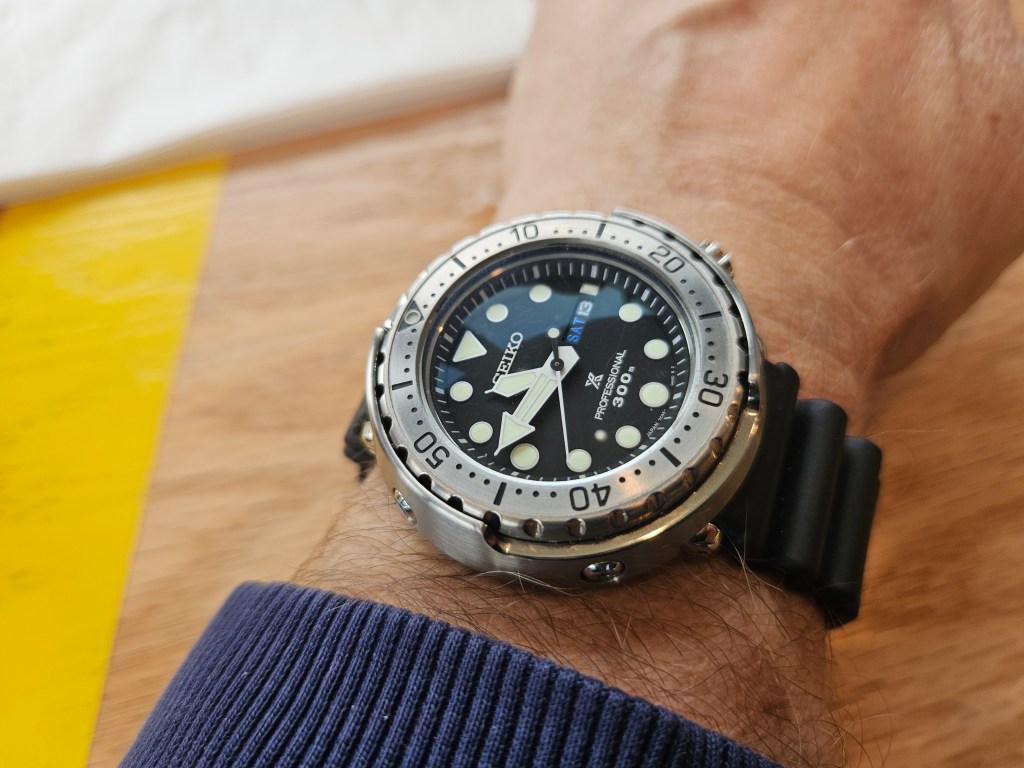
    We do it with art, too. A classical Spotify playlist that began as a polite nod to Haydn mutates into a 300-hour monster stuffed with every composer who ever touched a quill. Coffee? We don’t sip it; we mainline it until it tastes less like roasted beans and more like chemical punishment. And watches? We buy so many that the simple act of choosing one in the morning becomes a hostage negotiation with our own shame.

    Somewhere in this carnival of excess, a king once turned everything to gold and discovered he’d built himself a private hell. We’ve just updated the myth with better tech and worse impulse control.

    Thankfully, we also have a counter-teacher: anhedonia. That deadening of pleasure, that bleak emotional flatline, arrives like a stern therapist with a clipboard and informs us that the thrill is over and the chase was a lie. It tells us the secret we never want to hear: extremes always collapse. And only then—dragged back from the edge—we crawl toward equilibrium, toward something like balance, toward a life that feels human again.

  • Fiona Hill and the Art of Clear Seeing

    Fiona Hill and the Art of Clear Seeing

    Fiona Hill stunned me on Andrew Sullivan’s Dishcast—not with theatrics or self-branding, but with something rarer: unvarnished intelligence. She spoke for more than an hour, weaving global politics, history, and sober analysis together without even a hint of schtick. No sales pitch. No influencer glow. Just clarity and competence. Listening to her felt like opening a window in a stale room. I’m now on track to read both of her books, if only to spend more time in the presence of a mind that refuses mediocrity.

    A few moments hit me squarely. She explained that she has never been drawn to social media, which she sees as a global time sink—an interactive void where people argue about nothing as if it were everything. Then she broadened the frame: we are living through a massive transition in politics, work, education, and culture, and we’d be naïve to pretend we understand it. She argued for humility—an acknowledgment that we can’t yet grasp the scale or direction of the upheaval we’re living through. We are, she suggested, walking into the unknown whether we like it or not.

    Sullivan agreed, calling this moment a “liminal” period in history. I hadn’t heard that word in years and had to remind myself that it means transitional—the uneasy space between what was and what will be. Hill embraced the term. She and Sullivan compared our moment to the Hundred Years’ War. No one living through the 14th century knew they were participants in a century-long conflict. They only knew that the ground was shifting.

    That’s where we are now. Nations wrestling for dominance, AI upending national security and labor markets, globalization rewiring identity and culture, political leaders who behave like pranksters with nuclear codes—this is our chaos. And like medieval villagers, we have no idea how long this period will last. Are these volatile leaders a temporary fever, or will they define an entire era? Are we living through a Hundred-Year Grifter Period? No one knows.

    Strangely, the conversation felt therapeutic. Hearing two sharp, grounded people speak honestly about uncertainty made me feel less panicked and less isolated. My anxiety and existential dread aren’t signs of unraveling—they’re signs of being alert during a liminal age that refuses easy explanations.

  • The Age of Kayfabe Outrage

    The Age of Kayfabe Outrage

    Writers like Robert Kaplan and Jaron Lanier have observed that society has traded analysis for outrage, swapping measured thought for emotional spectacle. I left Twitter—sorry, X—years ago to escape that hurricane of indignation, only to find the same moral theater thriving on Threads. Outrage, it turns out, is social media’s cash crop.

    This made me think of the Old and New Testaments, where prophets, Paul, and even Jesus in the temple showed no shortage of righteous fury. But their outrage was different—it was rooted in moral clarity and the courage to confront hypocrisy, not in the dopamine mechanics of public performance.

    Today’s outrage is a knockoff. It mimics the moral fire of the prophets but burns with cheaper fuel: vanity, self-branding, and the need to belong to a digital mob. It’s not the world of moral outrage we inhabit—it’s the world of fake outrage, a kind of performative fury that convinces even its actors of its authenticity. Like professional wrestlers in Vince McMahon’s ring, we’ve forgotten how to remove the mask.

    This is kayfabe morality: outrage as entertainment, conviction as cosplay. And unlike the prophetic anger of George Carlin or Isiah, which illuminated hypocrisy, ours merely monetizes it.

  • Confessions of a Mediocre Flosser

    Confessions of a Mediocre Flosser

    I’ve been getting my teeth cleaned for over fifty years, which means I’ve sat through half a century of post-cleaning sermons about proper brushing angles, gumline vigilance, and the sacred art of flossing. Every visit follows the same liturgy: I nod piously, vow to reform, perform my dental penance for about a week, and then relapse into plaque-friendly mediocrity. It’s a ritual as predictable as the changing of seasons—scrape, polish, scold, repent, repeat.

    After yesterday’s cleaning, I shared this confession with the office manager as she booked my next appointment. “Be honest,” I said. “Aren’t most of your patients professional bums who show up expecting you to do all the work? I mean, no one actually earns an A in brushing and flossing. We’re all dental delinquents with F averages, right?”

    She glanced at the waiting room, smiled the way a diplomat smiles before denying a scandal, and said, “No comment.”

    I pressed on. “So… that’s a yes.”
    Again, she said, “No comment,” which, of course, confirmed everything.

    Righteous and vindicated, I strutted out with my little goodie bag of guilt—floss, travel toothpaste, and the latest ergonomic toothbrush engineered to fail against human laziness. I tossed it onto the passenger seat and drove home to take a nap, exhausted from an hour of scraping, moral instruction, and the eternal truth that no one—absolutely no one—flosses as much as they say they do.

  • Raising Teens in the Age of Doritos and Doom

    Raising Teens in the Age of Doritos and Doom

    In Food Intelligence, Julia Belluz and Kevin Hall deliver a bleak data point: since 2018, ultra-processed foods—UPFs, the junk with marketing degrees—account for 60 percent of the calories consumed by American adults and nearly two-thirds of what children eat. These edible Frankensteins are now being linked to depression, type 2 diabetes, and early-onset colorectal cancer.

    I have twin daughters in high school who live on donuts, chips, energy drinks, and iced coffees that taste like dessert in a cup. This is their food pyramid of joy. I tread carefully: I don’t want to sound like a puritan in a lab coat or a prophet of intestinal doom. I just want to help without becoming the household killjoy.

    But what is “helpful” when their entire social ecosystem runs on UPFs? If I had to guess, 75 percent of their peer group’s calories come from things that never met a farm or field. Processed food isn’t just addictive—it’s tribal. Sharing snacks is a social contract; refusing one is like rejecting friendship itself.

    Convincing teenagers to stop eating UPFs is about as effective as warning them about “too much screen time.” They’ll nod politely, roll their eyes invisibly, and continue scrolling while demolishing a bag of Flamin’ Hot somethings. Still, I’ll try. I’ll cite the studies, stock the fridge with hummus, guacamole, nut butters, whole-grain crackers, chickpea puffs, trail mix, and protein shakes—an arsenal of virtue they’ll likely ignore.

    Because youth isn’t about balance or moderation. It’s about belonging—through food, fashion, memes, and caffeine. Their need for connection will always outweigh my nutritional sermons. So I’ll do what I can: lay out the facts, offer alternatives, and accept that fighting pop culture is a noble but largely hopeless act of parental theater.

  • Clean Teeth and the Lost Art of Touch

    Clean Teeth and the Lost Art of Touch

    Before my teeth cleaning this morning, I found myself venting to the office manager about the days when a cleaning was so gentle you could practically nap through it, instead of today’s ultrasonic assault that feels like you’re being interrogated by NASA hardware. My hygienist overheard me and promised to go old-school: mostly hand tools, reserving the high-frequency torture wand for the bottom front teeth, those stubborn little stalactites of tartar that laugh in the face of manual labor.

    The result was 38 minutes of blissful nostalgia—quiet, precise, almost tender. And while my mouth was being cleaned, my ears took a trip back to childhood. Through the thin partition I could hear my dentist chatting with a few middle-aged men as he worked on their crowns—no drill whine, just the low murmur of camaraderie. They talked about sports, camping trips, family vacations, and cars in the same unhurried rhythm I remembered from the 1960s barbershops of my youth.

    Back then, my father would get a hot towel and a straight-razor shave while I sat on the cracked vinyl chair, inhaling the comforting cocktail of menthol, talc, and motor oil drifting in from the mechanic’s next door. I’d chew my complimentary piece of Bazooka bubblegum and leaf through Mad Magazine while the barber’s razor sang against my father’s stubble. The air was thick with aftershave, laughter, and unspoken faith in the goodness of ordinary life.

    That’s what I felt again this morning—a fleeting return to a world where work was done by hand, talk was unhurried, and trust was the background hum. My teeth may be cleaner, but what really got polished was my nostalgia for human touch in an age of whirring machines.

  • Sam Harris Has Tea with a Christian Nationalist

    Sam Harris Has Tea with a Christian Nationalist

    Sam Harris has always been a curious kind of mystic—one who believes in meditation, not miracles; consciousness, not creeds. He seeks transcendence without theology, a spiritual depth unburdened by institutional clutter. Religion, he concedes, sometimes gestures toward the same inner world he explores, but it arrives dragging a freight train of dogma, myth, and moral detritus.

    That distaste for organized faith didn’t stop Harris from sitting down with one of its most unyielding champions: Doug Wilson, a self-described “Christian nationalist” pastor out of Moscow, Idaho. Wilson is the sort of man who makes the Bible sound less like scripture and more like federal law. He calls himself a scriptural absolutist, affirms the Apostles’ Creed word for word, believes the earth is 6,000 years old, defends the Old Testament’s death penalties for Sabbath violators, and dreams of a Reformed Presbyterian theocracy—America governed by divine fiat and fossilized certainty.

    When Wilson argued that moral relativism was America’s undoing, Harris did not interrupt. The pastor warned that tolerance would rot the nation from within—imagining a slippery slope from pluralism to polygamy, from open borders to moral anarchy. Harris listened quietly, allowing Wilson to build his own cathedral of logic brick by brittle brick.

    Throughout the conversation, Harris stayed composed, probing only occasionally—asking about the justice of eternal damnation, or how exactly divine law handles marriage beyond the traditional mold. His restraint was surgical. He wasn’t there to score points; he was there to let the argument reveal itself.

    At one point, Wilson lamented that secular institutions had failed us. Oddly, Harris seemed to nod—at least internally. They shared a disappointment in modernity’s moral anemia, though their prescriptions could not be more opposed. Harris seeks meaning through reason and mindfulness; Wilson seeks it through submission and authority.

    By the end, no one converted anyone. Harris didn’t embrace theocracy, and Wilson didn’t abandon it. But something subtler occurred: civility. Wilson, almost startled, thanked Harris for his respect and good manners—an acknowledgment that such conversations usually end in shouting.

    So what did Harris accomplish? He held a mirror to theocratic ambition without breaking it. By letting Wilson speak freely, he illuminated the growing movement that longs for a Christianized state—a homegrown version of moral authoritarianism dressed as righteousness. Harris didn’t win an argument; he revealed the landscape of the battlefield.

  • Have I Gone Overboard with My Protein Obsession?

    Have I Gone Overboard with My Protein Obsession?

    Five nights ago, I dreamed I was trapped at a houseboat party. The decks heaved with music and laughter; people swayed, bottles clinked, lights shimmered across the water. Somewhere between the bass thump and the spray of cheap champagne, I decided it was time to save everyone. I climbed onto a railing and began lecturing on the virtues of a high-protein diet.

    The crowd ignored me. The more I shouted about the glory of amino acids, the louder the DJ turned the volume. My words scattered across the lake like crumbs for fish. I tried compromise—lowering the daily requirement from 200 grams to 120—but no one cared. Eventually, hoarse and defeated, I realized I’d become a mad prophet of whey protein, screaming into the void. When I woke, I asked myself the obvious question: Had I gone overboard on my protein obsession?

    That question lingered until this morning, when I read Julia Belluz and Kevin Hall’s Food Intelligence: Protein, the “Only True Nutrient.” They argue that our worship of protein is centuries old. In 1853, a Parisian newspaper mocked vegetarians as gaunt weaklings too frail to walk out of a restaurant unaided. A hundred years later, Arnold’s gospel of 250 grams a day turned protein into a civic duty for gym rats. Now, with Google searches and supplement sales hitting record highs—an industry worth $28 billion—protein has become both religion and racket. Everyone preaching its holiness seems to be selling tubs of it.

    Protein has always been marketed as a competitive edge: animal protein supposedly bestows power, plant protein supposedly punishes you with mediocrity. Yet Belluz and Hall dismantle this myth. Plant eaters, they write, can easily get all essential amino acids from a diverse diet—no powders, no “meat extract,” no panic required.

    Even more humbling, they admit that no one actually knows the optimal daily dose. Our bodies, they say, have a built-in governor called “protein leverage,” which drives us to crave roughly what we need. Too little protein and we lose muscle, which shortens life. Too much—especially at the expense of a balanced diet—and we hasten the same end. Somewhere between the extremes lies the sweet spot, but it’s not a round number you can print on a supplement label.

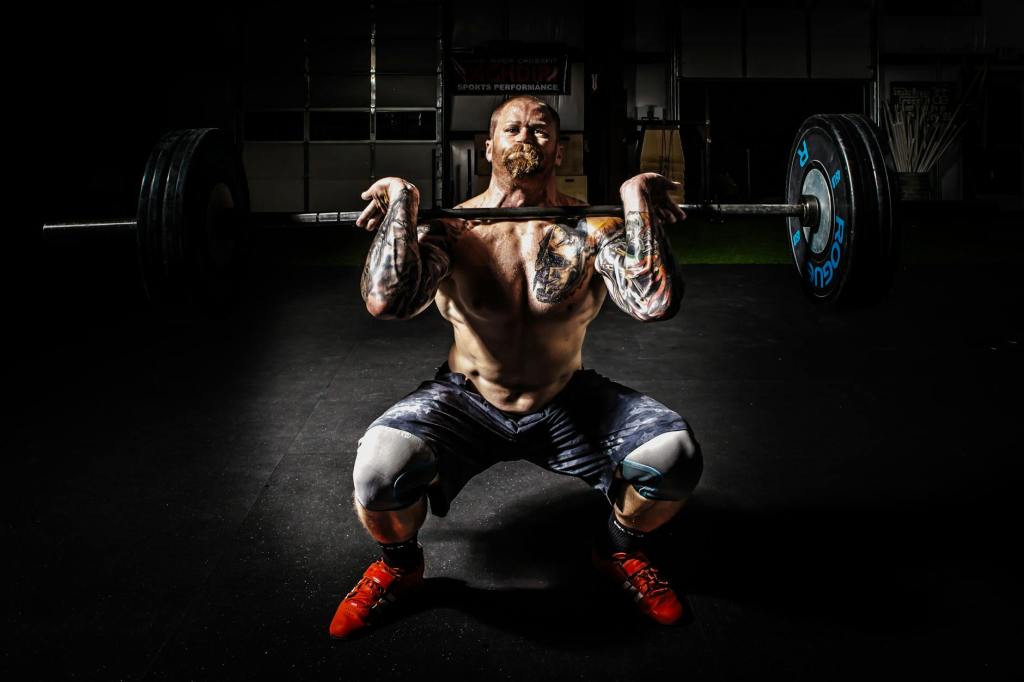
    That answer frustrated me. I like numbers. I like goals. “More” has always felt safer than “enough.” Reading their chapter, I remembered the summer of 1978, when I was sixteen and backstage with Mr. Universe Mike Mentzer before his posing exhibition set to 2001: A Space Odyssey. I asked how much protein he ate. “About a hundred grams,” he said, barely looking up from his shake. I was stunned. Arnold had taught us to eat at least 250.

    “Why not more?” I asked. Mentzer shrugged. “It’ll just make you fat.” Then, with equal candor, he mentioned his steroid stack—Deca-Durabolin included. Even then I could tell: genetics, not shakes, were the true miracle. At five-foot-eight and 225 pounds, he was carved from marble, but it was marble under pressure. He died of heart failure at 49, just five miles from where I live.

    Now I’m 64, taking in 180 grams a day and wondering if I’ve turned protein into a creed. I’m strong for my age but heavier than I’d like. Maybe the excess that built my muscle also built my burden. That houseboat dream feels less like absurdity and more like warning. It’s time to stop shouting about protein and start listening—to appetite, to reason, and maybe to the quiet voice reminding me that balance, not bulking, is the real art form.