Category: culture

  • When the Levees Broke, So Did the Nation

    When the Levees Broke, So Did the Nation

    The documentaries Hurricane Katrina: Race Against Time (Hulu) and Katrina: Come Hell and High Water (Netflix) are searing indictments as much as they are testaments to survival. They tell the story of a singular city—New Orleans, a cultural jewel—betrayed and abandoned by its own nation.

    Told through the voices of those who endured the storm in 2005, these films lay bare a fourfold sin against the people of New Orleans.

    First sin: red-lining. Decades of discriminatory housing policies corralled Black families into neighborhoods below sea level—neighborhoods left exposed to catastrophe—while white families secured higher, safer ground. Yet out of this coerced geography bloomed community, kinship, jazz, art, and a way of life so distinctive that New Orleans became not just a city but a state of mind.

    Second sin: neglect. The protective marshlands were carved away, the levees shoddily built, the safeguards ignored. What should have been natural resilience was dismantled piece by piece, until a storm became a man-made massacre.

    Third sin: abandonment. When the waters rose, thousands of citizens waited for rescue that never came. They suffered hunger, thirst, illness, despair. Bureaucracies paralyzed by incompetence and poisoned by political rivalry left them stranded—leaders too intent on humiliating one another to save lives.

    Fourth sin: defamation. Media outlets, infected with racism, painted Black survivors as looters and criminals while white survivors were depicted as resourceful and brave. Rumors of sniper fire and marauding gangs turned aid missions into militarized standoffs, with the National Guard pointing rifles at the very people they were sent to save. These lies fueled white vigilantes who hunted Black residents as if the collapse of law gave them license to kill.

    This fourfold betrayal is almost unbearable to watch, yet threaded through the grief is a resilient beauty: the music, the food, the language, the humor, the love of place that make New Orleans irreducible. Katrina remains one of America’s most shameful chapters—but also a reminder that the soul of New Orleans is larger than its wounds.


  • Typepad, R.I.P.: Obituary for a Dinosaur

    Typepad, R.I.P.: Obituary for a Dinosaur

    In 2006, I wandered into the Wild West of self-publishing and signed up with Typepad. Back then, blogs felt like a revolution: you could pour your obsessions straight into the digital void without begging gatekeepers for approval. I created three: Herculodge, where I indulged my radio fixation; The Breakthrough Writer, course content for my freshman comp class; and The Critical Thinker, the companion for my critical thinking students. Typepad cost me about $150 a year—a fair price for a soapbox in the dawn of the Blog Era.

    But by April 2025, my soapbox had turned into a rickety stool. Typepad was wheezing like a geriatric dinosaur stumbling into an unfamiliar world: constant downtime, glacial load times, the unmistakable stink of neglect. Research confirmed my suspicion—it had been sold, stripped for parts, and left to rot. I canceled my subscription. Out of nostalgia, I kept Herculodge in basic mode, mainly because its archive of radio reviews was still linked to Thomas Witherspoon’s venerable SWLing Post, a site that embodies everything good about radio: community, continuity, and voices across the airwaves.

    But in truth, Herculodge had gone dormant long ago. After the 2025 wildfires in Los Angeles, I went on a spree, bought a dozen radios, reviewed them all, and then, slowly, stopped. The flame flickered, and I moved on.

    Yesterday the official death notice arrived: “We have made the difficult decision to discontinue Typepad, effective September 30, 2025.” Translation: pull the plug, bury the dinosaur.

    This little obituary for Typepad drags me back to the Blog Era, when voices as sharp as Andrew Sullivan’s rose to the level of public intellectuals, while hobbyists like me tinkered in the shadows of niche obsessions, broadcasting to niche audiences. Blogs felt cozy, almost literary: you in a robe, cat on your lap, coffee steaming, ruminating about Virginia Woolf before hitting “publish.” Compare that to today’s Hot Take Era: dopamine-charged combatants spewing rage, preening for likes, and mistaking tribal points for thought.

    The end of Typepad is the end of that quieter world.

    I’ve since migrated to WordPress, which works better, loads faster, and hasn’t collapsed into irrelevance. I have mixed feelings about AI image generators: sometimes they hit the mark, but mostly they’re garish clip art pretending to be art. Still, I pay two hundred bucks a year to carve out a little order from the chaos, and it’s worth every cent. Cheaper than therapy, and with fewer platitudes.

    Typepad’s death isn’t tragic—it’s just the final shovel of dirt on an era already gone.

  • Bong Hits and Netflix: Teaching the Hedonic Treadmill to the Hustle Generation

    Bong Hits and Netflix: Teaching the Hedonic Treadmill to the Hustle Generation

    I teach a college writing class to the athletic department—an eclectic mix of football bruisers, soccer strikers, volleyball hitters, and water polo warriors. Two days ago, I introduced the concept of the hedonic treadmill, the cruel little loop in which humans adapt to pleasure until the buzz wears off and they need to crank the dial higher, faster, and louder, until finally the machine spits them out, exhausted and miserable.

    To make the point vivid, I shared a story from a former student. His older brother had dropped out of college, moved back in with mom, and made a religion out of lying in bed. His life consisted of Netflix marathons on a laptop, constant texts to his girlfriend, and a bong glued to his lips. A self-sedated sloth with Wi-Fi.

    So I asked my athletes, “Does this guy sound happy to you?”

    One of the wide receivers, a psychology major with a grin as wide as the end zone, shot up his hand and said, absolutely—this guy was living the dream. No responsibilities, no alarms, no essays. Everyone, he insisted, would be content to live such a life.

    My jaw dropped. A psychology major dazzled by the ecstasy of permanent adolescence? I reminded him—gently but with a sharp edge—that life demands connection, structure, and purpose if humans are to flourish. Without it, the brain rots. He smiled, nodded, and conceded my point. But the nod was polite, the smile indulgent. I wasn’t sure I had actually shaken his conviction that the guy with the bong had cracked the code.

    After the wide receiver declared his envy for the bong-hugging bed-dweller texting his girlfriend, I scanned the room and realized my grand metaphor had belly-flopped. My hedonic treadmill example didn’t land, to use modern parlance. What I intended as a cautionary tale of mental rot registered instead as a spa brochure: Netflix, weed, and endless texting looked less like disintegration and more like a vacation package.

    With fifteen weeks left in the semester, I’ve had to remind myself of two things. First: I can’t demolish their fantasies in one lesson. The hedonic treadmill requires repeat assaults, examples from all angles, until they feel—not just know—the despair of a life without meaning. Clearly, Bong Boy failed to deliver the emotional punch.

    Second: these kids belong to the “I’ll Never Buy a House” Generation. Their skepticism is hardwired. To them, the fantasy of collapsing in bed with Netflix and THC isn’t just laziness; it’s an antidote to the endless hustle culture they know they’ll never escape.

    I’m close to sixty-four. My students are nineteen. If I want to reach them, I need to remember the golden rule of teaching—or sales, or persuasion of any kind: know your audience, speak to their anxieties, and try to see life through their eyes. Otherwise, you’re not a communicator—you’re just a crank with a lecture.

  • Letter of a Reluctant Vegan

    Letter of a Reluctant Vegan

    Dear Family and Friends,

    My conscience has dragged me, kicking and screaming, into veganism—at least in the realm of eating. I’m not claiming sainthood. There will still be leather on my belt and my chair, but food is the resource I consume daily until I croak, so food is where the battle line is drawn.

    Frankly, it feels absurd to have to write this letter. What am I supposed to do—show up at your barbecue with a thawed hockey puck of a veggie burger and no explanation? Consider this fair warning.

    I don’t pass judgment on those who can’t afford the luxury of organic lentils, nut butters, and vegan supplements. I judge only myself. I have the means. I have no excuse.

    For my Christian in-laws, who may brand this heresy, I’ll admit: Scripture says God gave us animals for food, and Jesus Himself ate fish. But tell me—do you really see Jesus slurping down a farm-factory tilapia raised in ammonia haze, or God green-lighting slaughterhouses where conveyor belts double as hell’s architecture? I don’t.

    Yes, animals in antiquity suffered in the kill, but the industrial scale today—the torture factories, the mass indifference to pain—requires a numbness of conscience that is staggering. Hunting is one thing. Outsourcing the deed to workers inhaling ammonia until their fingernails fall off is quite another.

    I can already hear the rebuttal: “Why fret over animals when humans suffer?” To which I reply: false dilemma. I can care about both. Just as I can walk and chew gum, I can oppose sweatshops and factory farms.

    Still, I know my silence won’t protect me. Even if I never lecture, my plate of tofu will speak volumes. My very behavior will look like an indictment. Mockery is inevitable.

    And sure, I could rationalize my way back. It would be easier to eat one family meal instead of making them salmon while I steam buckwheat groats. I could shrug and say, “The animals are doomed anyway, so I might as well enjoy them.” I could hide behind biology: “I’m an omnivore; meat is natural; animal protein is more bioavailable.” But to do this would be cowardice—a lazy suppression of conscience.

    I owe my family the best version of me, not the morally diminished one. So here I stand, vegan plate in hand. The road is awkward, lonely, and a little ridiculous, but it’s the road my conscience demands.

  • When Your Tofu Judges Your Family

    When Your Tofu Judges Your Family

    Let’s say your guilty conscience finally gets the better of you. You can no longer justify devouring Thai-glazed chicken tenders, Mongolian beef, or coconut-curry fish stew while imagining the farm-factory horror that produced them. So you make the noble pivot: buckwheat groats for breakfast, organic nut butter toast, tofu and tempeh sizzling over cucumbers and arugula, and two daily scoops of plant-based protein powder to cover your macros. Milk? Gone. Soy in your coffee now, because conscience trumps cream.

    Do you miss meat? Absolutely—especially when your neighbor fires up the barbecue and the smell of charred ribs floats over the fence like weaponized nostalgia. But you march on, telling yourself that your cousin’s cardiologist called a vegan diet the “gold standard” for heart health.

    And yet, your cravings turn out to be the easy part. The real battlefield isn’t in the kitchen—it’s in the living room, the backyard, the family reunion. Your relatives haven’t sipped the vegan Kool-Aid and don’t appreciate the implicit sermon you’re preaching with every salad. You can swear you’re not judging them, but your plate of tofu says otherwise. Moral condemnation wafts from you like incense whether you intend it or not.

    Socially, you’ve become a problem guest. You show up at a barbecue with your vegan hockey puck, and suddenly you’re the party’s designated buzzkill—part leper, part nag, part mascot of guilt. Expect to eat your soy patty alone while everyone else passes the brisket.

    Economically, you’ve got blind spots too. Sure, you can afford organic tempeh and boutique supplements, but when you hint that everyone should go vegan, you’re ignoring the single mom shopping with food stamps, or the families living where tofu costs more than ground beef. To them, your “ethical choice” sounds like aristocratic scolding.

    Culturally, you risk stomping on traditions. Grandma’s meat stew isn’t just calories; it’s love in a ladle. Lecture her about vegan virtue, and you’re not just critiquing dinner—you’re insulting her lineage. And good luck explaining your plant-based gospel to Inuit communities who rely on seals and whales for survival. You’ll sound less like a prophet and more like a nincompoop.

    So here you are, impaled on the horns of the vegan dilemma. On one side, you can’t play the sanctimonious scold without alienating everyone around you. On the other, your conscience insists that, as a well-fed suburbanite, you are morally obligated to avoid meat. The path forward is thorny, precarious, and socially awkward. But welcome to the real world: nobody said doing the right thing would come with applause.

  • Self-Interest with Sauce: Why Your Finger Isn’t Worth a Million Lives

    Self-Interest with Sauce: Why Your Finger Isn’t Worth a Million Lives

    In How Adam Smith Can Change Your Life, Russ Roberts quotes the Talmudic sage Hillel: “If I am not for myself, who will be for me? If I am only for myself, who am I?” Roberts riffs on this by pointing out Smith’s hard edge: if you would sacrifice millions of lives to save a single finger, you are “a monster of inhuman proportions.”

    Which, of course, made me think of chicken tenders. A few nights ago I had the Sweet Thai Glazed chicken at Starbird—fast food so transcendent it felt like a religious conversion, crispy shallots and herb aioli included. I wanted to go back the next day. And the next. My self-interest is crystal clear: eat more Starbird. The problem? My pursuit of gustatory bliss comes at the expense of chickens. Just as my hunt for bioavailable whey protein powders comes at the expense of cows.

    So—am I a monster? If I turned vegan, would that absolve me, or would I just uncover a longer list of moral failings still clinging to my name tag? Because the world isn’t eating less meat. It’s eating more, mostly factory-farmed, while pretending not to notice the conveyor-belt cruelty behind the menu. Ignore it long enough and moral numbness sets in, the kind that doesn’t just ruin animals but corrodes us too, spreading in ripples like bird flu, mad cow, or the next “mystery wet market disease.”

    And cruelty isn’t the only place where “self-interest” mutates into its evil twin. Consider America’s sacred cow: gun freedom. Other nations see mass shootings, change laws, and reduce tragedies. America, however, doubles down—choosing an idea of freedom that keeps killing us. Here, “self-interest” looks less like wisdom and more like suicide with better branding.

    That’s the trouble with self-interest. It’s a slippery little devil with at least two sharp horns. First: it lets us rationalize immoral behavior until we become monsters congratulating ourselves for our appetites. Second: it convinces us that policies which maim us—like endless guns, endless meat—are somehow in our “best interest.”

    In reality, self-interest is a hornet’s nest: buzzing passions, compulsive hungers, warped myths, and counterfeit happiness. To live in true self-interest means sorting out the destructive impulses from the behaviors that actually make us moral and happy. But most people never attempt the sorting, because the road to ruin is wide, comfortable, and paved with chicken tenders, while the road to virtue is narrow, steep, and has terrible Yelp reviews.

  • How Selfishness Accidentally Invented Kindness

    How Selfishness Accidentally Invented Kindness

    Morality is one of those words that makes people recoil. It has the stale odor of an HR training video, the medicinal burn of cod liver oil, the joyless bulk of broccoli shoveled onto your plate, or the dead-eyed banality of inspirational refrigerator magnets. Nothing about the word screams adventure—it screams paperwork.

    The topic itself feels penitential and airless, full of clichés, and as lively as a Soviet staff meeting in the Kremlin basement. Take Adam Smith’s The Theory of Moral Sentiments. The title alone could euthanize a graduate seminar.

    And yet economist Russ Roberts opened this dusty tome and found himself not nodding off, but utterly hooked. So hooked that he wrote How Adam Smith Can Change Your Life: An Unexpected Guide to Human Nature and Happiness. Roberts argues that Smith’s insight—that even our selfishness requires us to make others happy—isn’t boring at all. On the contrary, it’s deliciously counterintuitive: the truly selfish person learns that generosity is the best form of selfishness. The helper outpaces the sloth.

    This paradox gives Smith’s argument fizz. What looks like a grim penal code of moral duty turns out to be startlingly original and surprisingly human. For Roberts, the book became a companion, a talisman. He lugged it everywhere, scribbled notes in the margins, and evangelized to anyone who would listen. The book stopped being just a book and became, as Kafka once demanded, an axe for the frozen ocean of the soul.

    I admit, I almost left Roberts’ book untouched. The title had the whiff of self-help, and I vowed long ago to steer clear of the genre’s swamp of clichés. But Nabokov was right: it’s not the what but the how. A book brimming with insight and originality can transcend its category. Roberts’ take on Smith is philosophy dressed as self-help, but in the best sense: witty, sharp, and unafraid to wrestle with misery, selfishness, and the false idol of money.

    Good philosophers, like good teachers, are also salesmen. Roberts sells Smith not as piety in a powdered wig, but as a guide for how to live with honesty, courage, and—yes—even happiness. Against all odds, I’m sold.

  • The Fix-It Myth: Why Self-Help is Just a Car Manual for Broken Humans

    The Fix-It Myth: Why Self-Help is Just a Car Manual for Broken Humans

    In her essay “Improving Ourselves to Death,” Alexandra Schwartz skewers our obsession with “setting goals” and the self-help prophets who profit by defining them. These gurus peddle life hacks as if they were cheat codes for existence, promising that with the right app, cue, or wearable gadget, you too can become a shiny human upgrade—an iPhone with abs.

    Their gospel is simple: optimization. A body that runs like a Swiss watch. A brain that hums like a Tesla battery. The result is a consumer barrage of homilies, buzzwords, and dopamine-chasing gadgets—all in service of transforming you into the ultimate product: yourself.

    But Schwartz argues that self-help is nothing more than a mirror, reflecting our dreams, neuroses, and insecurities. And one illusion persists like an American birthright: the Fix-It Myth. The fantasy that we are just machines—cars in need of a tune-up. Find the right manual, grab the right tools, and presto: you’re repaired, maybe even upgraded, ready to roar back onto the freeway of productivity.

    This myth has metastasized in the gig economy, where survival depends on perpetual hustle. We’ve convinced ourselves we must be perfectly fine-tuned—capable of juggling three jobs, dabbling in day trading, and hoarding enough cash to claw our way into a coveted zip code.

    At the core of this delusion is what therapist Phil Stutz calls the “Moment Frozen in Time”: a fantasy snapshot where everything is perfect—you look flawless, your soulmate is flawless, your calendar is conflict-free, and every day is a spa day in Shangri-La. The billion-dollar self-help industry feasts on this fantasy, offering secret codes that promise to deliver the life of a minor deity.

    Gwyneth Paltrow plays High Priestess of the Perfection Myth, hawking jade eggs and kale smoothies as though they were Eucharist wafers. On the Manosphere side, we’ve endured the spectacle of the Liver King—reduced from ancestral beef oracle to fallen fraud—and the smirking jiu-jitsu bodybuilder Mike Israetel, who at least delivers his advice with more honesty than theatrics.

    Stutz, however, refuses to sell the dream. His blunt counter-sermon: life is pain, uncertainty, and work. The faster you accept this, the happier you’ll be—because reality, not fantasy, is the only terrain where resilience and joy can actually grow. Otherwise, you’re just another maladapted child clinging to the hope of effortless bliss.

    And all the while, we’ve marinated in two decades of social media’s dopamine fever swamp: the endless scroll of FOMO, flexing, and fraudulence. Maybe the truest life hack isn’t another app or guru, but closing the laptop, lacing up your shoes, pounding out a five-mile run, and letting endorphins—not Instagram—clear your head.

  • Building a Bulwark Against Dopamine

    Building a Bulwark Against Dopamine

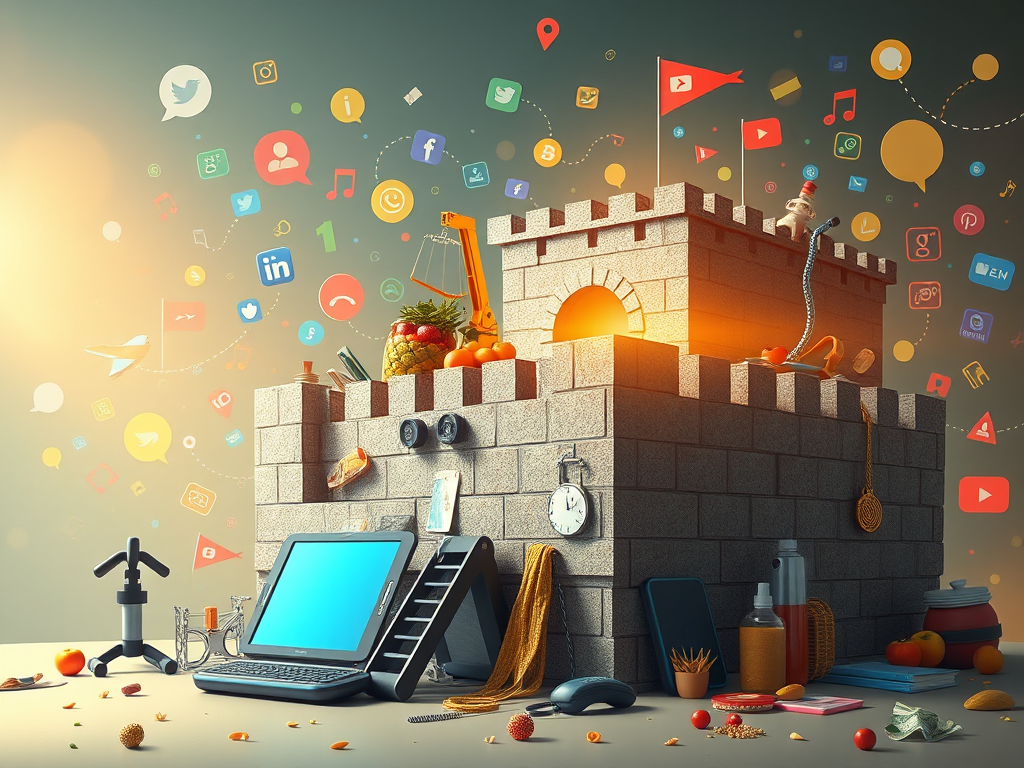
    Charles Duhigg, in The Power of Habit, insists that the real magic of self-improvement isn’t magic at all—it’s repetition, consistency, and time. Muscle memory married to good habits rewires the brain so that willpower stops being a daily knife fight. Instead, habits act as a bulwark, a fortification that keeps temptation outside the walls.

    Take my relationship with German Chocolate Cake. I adore it. But I eat it once a year because I never buy it. The thought of driving downtown, circling for parking, and elbowing through bakery lines kills the craving faster than broccoli. If people on TV are flaunting cake, I’ve trained myself to default to popcorn and an apple, which is like swapping bourbon for chamomile tea. Still, despite this culinary Maginot Line, I live fifteen pounds heavier than I want to be—proof that the fortress has weak spots.

    The Internet, however, is a stronger adversary than cake. Social media rewires the brain more ruthlessly than sugar. Twitter/X trained me to think in quips, Facebook taught me to beg for likes like a starving dog scratching at the door. I finally quit both. I post on Facebook once a month and promptly forget about it. I’m saner for it.

    But YouTube? That’s my heroin. I’ve been making watch-obsession videos for over a decade and built a modest following of 10,000. When a video pops, YouTube showers me with fireworks like a slot machine jackpot. When it flops, I get a scolding message: “This video isn’t bringing in as many of your subscribers as usual.” It’s the algorithm wagging its finger like a principal telling me I’ve failed society.

    YouTube has rewired my brain in both noble and grotesque ways. On the one hand, I’m sharper at public speaking, better at spinning essays into expositions, and more skilled at civil engagement with various personalities. On the other hand, I care too much about metrics, let them colonize my self-worth, and live half my life inside the algorithm’s funhouse mirror. I now inhabit parallel universes—the physical world and the YouTube world—fleeing one when the other displeases me.

    The problem is that the Internet’s temptations can’t be quarantined. My work machine is also my dopamine slot machine. One new tab, one click, and I’m plunging into a carnival of junk content, drenched in FOMO syrup and neon distraction. Cal Newport is right: when you toggle between focused work and dopamine junk food, the brain leaves behind a sticky residue that smothers concentration. I’ve felt that sludge firsthand, and I despise myself for swimming in it.

    As Duhigg notes, the brain is “constantly looking for ways to save effort” by making routines automatic. That’s useful for the monk who wakes at dawn to meditate, but disastrous for someone whose screen offers the New Tab to Nowhere. If only I could build a stronger bulwark against the carnival in my browser, I might actually live lighter, work deeper, and—dare I say it—be happier.

  • The Gospel of the Liver King

    The Gospel of the Liver King

    Brian Johnson, better known as the Liver King, is a steroidal cartoon who tried to sell himself as a prophet of “ancestral living.” In reality, he was just another hustler juicing his body with over a hundred grand a year in growth hormones and anabolic steroids. He strutted around Instagram in animal skins, bellowing like a berserk Viking, gnawing raw liver on camera, and flogging overpriced supplements. His entire empire collapsed the moment it was revealed that his shredded physique was less the fruit of caveman purity and more the handiwork of pharmacy-grade science.

    Instead of bowing out in disgrace, he doubled down. Unable to detach from the narcotic glow of internet celebrity, he documented his own unraveling in real time—YouTube became his padded cell, each video another entry in the world’s strangest public diary. He wanted to be remembered as a leader, a liberator from modern malaise, but he became a parody of himself, a sideshow Rambo gone rancid.

    Raw meat became his metaphor—masculinity, toughness, a primal rejection of processed life. But it was also cosplay, a carnival act built for the algorithm, because nothing feeds clicks like a maniac tearing into a bull testicle with his teeth. And young men, starving for meaning, saw not a fraud but a messiah: the steroidal savior who would flex them into the promised land.

    This was kayfabe 2.0. Vince McMahon taught wrestlers never to break character, and Liver King took that gospel straight to Instagram. Only he forgot the cardinal rule: kayfabe consumes you. Live in the gimmick long enough and the gimmick swallows the man. By the end, Liver King wasn’t selling a mask—he was the mask, devoured whole by his own performance.

    His collapse is bigger than one delusional influencer. It’s a commentary on the culture itself: a society so anesthetized by spectacle that it mistakes bombast for wisdom. Idiocracy predicted a wrestler-president peddling electrolytes; we got a shirtless Texan chewing raw liver and pushing HGH cocktails disguised as authenticity. Mike Judge wasn’t satirizing the future—he was reporting it early.

    And yet, there is something deeply American in the Liver King’s fall: the grift, the spectacle, the refusal to relinquish the stage even when the show is over. His tragedy is that of a man who wanted love, found instead an algorithm’s approval, and now cannot escape the cage of his own creation.