Category: culture

  • Rewind, Delete, Regret: The Cost of Editing Love

    Rewind, Delete, Regret: The Cost of Editing Love

    Eternal Sunshine of the Spotless Mind and Black Mirror’s The Entire History of You are thematically bound by a shared anxiety: the dangerous seduction of technological control over memory. In Eternal Sunshine, memory erasure is marketed as emotional liberation—a clean slate for the brokenhearted. Similarly, in “The Entire History of You,” the brain-implanted “grain” promises perfect recall, total clarity, and the ability to replay moments with photographic precision. Both stories probe a fundamental question: if we could edit our pasts—delete pain, scrutinize joy, control the narrative—would we be better off, or would we unravel?

    Both works reveal that tampering with memory doesn’t resolve emotional suffering; it distorts and magnifies it. In Eternal Sunshine, Joel and Clementine attempt to erase each other, only to circle back into the same patterns of love, longing, and dysfunction. Their emotional chemistry survives the purge, suggesting that memory is not simply data but something embedded in identity, instinct, and the soul. “The Entire History of You” flips the dynamic: instead of forgetting, the characters remember too much. Liam’s obsessive rewinding of moments with his wife becomes a self-inflicted wound, each replay deepening his paranoia and unraveling his sense of reality. The technology doesn’t heal him—it traps him in a recursive loop of doubt and resentment.

    The irony in both narratives is that the human mind, with all its flaws—forgetfulness, bias, emotional haze—is actually what allows us to forgive, to grow, to love again. Eternal Sunshine presents memory loss as a form of mercy, but ultimately asserts that pain and connection are inseparable. The Entire History of You warns that perfect memory is no better; it turns love into surveillance, and intimacy into evidence. In both cases, technology doesn’t enhance humanity—it reveals its brittleness. It offers a fantasy of control over the uncontrollable: the messiness of relationships, the ambiguity of feelings, the inevitability of loss.

    Thus, Eternal Sunshine serves as a philosophical and emotional precursor to “The Entire History of You.” Where one is melancholic and lyrical, the other is clinical and chilling—but both reach the same conclusion: to be human is to remember imperfectly. Whether we erase the past or obsessively relive it, we risk losing what actually makes relationships meaningful—our capacity to feel, forget, forgive, and fumble our way forward. Memory, in both stories, is less about accuracy than emotional truth—and trying to mechanize that truth leads only to alienation.

  • The Design Space Is Shrinking: How A.I. Trains Us to Stop Trying

    The Design Space Is Shrinking: How A.I. Trains Us to Stop Trying

    New Yorker writer Joshua Rothman asks the question that haunts every creative in the age of algorithmic assistance: Why even try if A.I. can do it for you?
    His essay  “Why Even Try If You Have A.I.?”unpacks a cultural crossroads: we can be passive passengers on an automated flight to mediocrity, or we can grab the yoke, face the headwinds, and fly the damn plane ourselves. The latter takes effort and agency. The former? Just surrender, recline your seat, and trust the software.

    Rothman begins with a deceptively simple truth: human excellence is born through repetition and variation. Take a piano sonata. Play it every day and it evolves—new inflections emerge, tempo shifts, harmonies stretch and bend. The music becomes yours not because it’s perfect, but because it’s lived. This principle holds across any discipline: cooking, lifting, writing, woodworking, improv jazz. The point isn’t to chase perfection, but to expand what engineers call your “design space”—the evolving terrain of mastery passed from one generation to the next. It’s how we adapt, create, and flourish. Variation, not polish, is the currency of human survival.

    A.I. disrupts that process. Not through catastrophe, but convenience. It lifts the burden of repetition, which sounds like mercy, but may be slow annihilation. Why wrestle with phrasing when a chatbot can generate ten variations in a second? Why compose from scratch when you can scroll through synthetic riffs until one sounds “good enough”? At some point, you’re not a creator—you’re a casting agent, auditioning content for a machine-written reality show.

    This is the creep of A.I.—not Terminator-style annihilation, but frictionless delegation.
    Repetition gets replaced by selection. Cognitive strain is erased. The design space—the sacred ground of human flourishing—gets paved over with one-size-fits-all templates. And we love it, because it’s easy.

    Take car shopping. Do I really want to endure a gauntlet of slick-haired salesmen and endless test drives? Or would I rather ask ChatGPT to confirm what I already believe—that the 2025 Honda Accord Hybrid Touring is the best sedan under 40K, and that metallic eggshell is obviously the right color for my soulful-but-sensible lifestyle?
    A.I. doesn’t challenge me. It affirms me, reflects me, flatters me. That’s the trap.

    But here’s where I resist: I’m 63, and I still train like a lunatic in my garage with kettlebells five days a week. No algorithm writes my workouts. I improvise like a jazz drummer on creatine—Workout A (heavy), Workout B (medium), Workout C (light). It’s messy, adaptive, and real. I rely on sweat, not suggestions. Pain is the feedback loop. Soreness is the algorithm.

    Same goes for piano. Every day, I sit and play. Some pieces have taken a decade to shape. A.I. can’t help here—not meaningfully. Because writing music isn’t about what works. It’s about what moves. And that takes time. Revision. Tension. Discomfort.

    That said, I’ve made peace with the fact that A.I. is to writing what steroids are to a bodybuilder. I like to think I’ve got a decent handle on rhetoric—my tone, my voice, my structure, my knack for crafting an argument. But let’s not kid ourselves: I’ve run my prose against ChatGPT, and in more than a few rounds, it’s left me eating dust. Without A.I., I’m a natural bodybuilder—posing clean, proud, and underwhelming. With A.I., I’m a chemically enhanced colossus, veins bulging with metaphor and syntax so tight it could cut glass. In the literary arena, if the choice is between my authentic, mortal self and the algorithmic beast? Hand me the syringe. I’ll flex with the machine.

    Still, I know the difference. And knowing the difference is everything.

  • If You Only Watch One Black Mirror episode, Let It Be “Joan Is Awful”

    If You Only Watch One Black Mirror episode, Let It Be “Joan Is Awful”

    If you only watch one episode of Black Mirror, let it be Joan Is Awful—especially if you have a low tolerance for tech-dystopian fever dreams involving eye-implants, social scores, or digital consciousness uploaded to bees. This one doesn’t take place in a dark tomorrow—it’s about the pathology of right now. It skewers the Curated Era we already live in, where selfhood has been gamified, privacy is casually torched, and we’re all trapped in the compulsion to turn our lives into content—often awful, but clickable content.

    Joan, the title character, is painfully ordinary: a mid-level tech worker trying to swap out one man (her manic ex) for another (her milquetoast fiancé) and coast into a life of retail therapy and artisanal beverages. Her existence—Instagrammable, calibrated, aggressively average—is exactly the kind of raw material the in-universe Netflix clone Streamberry is looking for. They turn her life into a show called “Joan Is Awful,” starring a CGI deepfake Salma Hayek version of Joan, who reenacts her life with heightened melodrama and algorithmically-optimized awfulness.

    This isn’t speculative fiction. It’s just fiction.
    Streamberry’s vision of a personalized show for everyone—one that amplifies your worst traits and pushes them out for mass consumption—is barely an exaggeration of what Instagram, TikTok, and YouTube are already doing. We’ve all become our own showrunners, stylists, and publicists. Every TikTok tantrum and curated dinner plate is an audition for relevance, and the platforms reward us for veering into the grotesque. The more unhinged you become, the more “engagement” you earn.

    “Joan Is Awful” works both as a laugh-out-loud satire and as a metaphysical gut-punch. It invites us to contemplate the slippery nature of selfhood under surveillance capitalism. At its core is the concept of “Fiction Level 1”: the dramatized version of Joan’s life generated by AI, crafted from data scraped from her phone, her apps, her browsing history. Joan doesn’t write the script. She doesn’t even get to protest. She’s just the original dataset—fodder for narrative extraction. Her real self is mined, exaggerated, and repackaged for mass appeal.

    Sound familiar?

    In the real world, we all star in our own low-budget version of “Joan Is Awful,” plastered across social media feeds. These platforms don’t need deepfakes. We willingly create them, editing ourselves into marketable parodies. We offer up a polished persona while our actual selves starve for air—authenticity traded for audience, spontaneity traded for algorithmic approval.

    You can enjoy “Joan Is Awful” as slick satire or you can unpack its metafictional mind games—it rewards both approaches. Either way, it’s easily one of Black Mirror’s top-tier episodes, alongside “Nosedive,” “Rachel, Jack and Ashley Too,” and “Smithereens.” It’s not science fiction. It’s just a very well-lit mirror.

  • Why I Refuse to Journal Like a Good Little Introvert

    Why I Refuse to Journal Like a Good Little Introvert

    One of my most cherished moments of accidental transcendence happened somewhere between the cow-scented fields of Bakersfield and the fog-choked sprawl of San Francisco in the spring of 1990. I was climbing the Altamont Pass in a battered 1982 Toyota Tercel that handled like a shopping cart when The Sundays’ “Here’s Where the Story Ends” crackled to life on the radio. Harriet Wheeler’s voice—equal parts cathedral and confession booth—floated through the speakers, and suddenly I wasn’t commuting through California; I was levitating above it. I wasn’t driving—I was ascending. In that moment, I stumbled into something bigger than myself, gifted by two Brits, David Gavurin and his partner Wheeler, who recorded their luminous dispatches, then vanished from the stage like saints escaping the tabloid apocalypse.

    They made beauty, and then they walked away. No farewell tour, no social media mea culpas, no sad attempts at reinvention. Just a few perfect songs and the audacity to say, that’s enough. They’re my heroes—not for what they did, but for what they didn’t do. They resisted the narcotic of attention. They said no to the stage and yes to obscurity, which in our fame-gluttonous culture is the moral equivalent of monkhood.

    I, by contrast, never quite shut up.

    I’ve been peddling stories since high school, where I’d hold court at lunch tables, unspooling feverish tales of misadventure like a cracked-out bard. At 63, I still haven’t kicked the habit. But unlike the craven influencer class, I hope I’m not just hustling dopamine hits. I tell stories because I need to make sense of this deranged carnival we call modern life. It’s an instinct, like blinking or checking the fridge when you’re not even hungry.

    Some stories are survival tools disguised as art. Viktor Frankl wrote to preserve his sanity in a death camp. Phil Stutz prescribes narrative like medicine. And when I hear a brilliant podcaster dissect the absurdity of daily life, it feels like eavesdropping on salvation. It’s not just performance—it’s connection. Human beings, after all, are just gossiping apes trying to explain why the hell we’re here.

    Storytelling is the futile, glorious act of forcing chaos into coherence. It’s pinning butterflies to corkboard. Life is all noise—emails, funerals, fast food, missed calls—and stories give it a beat, a structure, a moral, even if it’s just “don’t marry a narcissist” or “never trust a man who wears sandals to a job interview.”

    So why not keep it to myself? Why not scribble in a journal and hide it in the sock drawer next to my failed dreams and mismatched batteries? Because I find journaling about as appealing as listening to my own Spotify playlist on repeat in a sensory deprivation tank. No thanks. I don’t want to be alone with my curated echo chamber. I want a café. A digital one, maybe, with only a few scattered patrons. But still—voices, questions, and the hum of others trying to make sense of it all.

    I’ll never be famous. I’ll never go viral. But if someone reads my ramblings and thinks, me too—then that’s enough. I’m not trying to be an algorithm’s golden child. I’m just trying to find some order in the mess. Just like I always have.

  • Beauty Without Performance: The Quiet Legacy of The Sundays

    Beauty Without Performance: The Quiet Legacy of The Sundays

    Harriet Wheeler and David Gavurin of The Sundays gave the world my favorite song of all time: “You’re Not the Only One I Know.”
    I didn’t just fall for that song — I tumbled headfirst into their entire body of work across three albums, each one a quiet masterclass in melancholy and grace. I saw them live twice, but the 1990 show at Slim’s in San Francisco left a scar on my heart that never quite healed. Somewhere between the ringing guitars and Harriet’s bittersweet voice, I understood something about beauty that hurt — the way only true beauty can.
    I bought a Sundays T-shirt that night, and decades later, my teenage daughter wears it like a badge of honor as if carrying the torch for a band she never saw but somehow still feels.

    Wheeler and Gavurin, true to form, refused to play the roles we demanded of them.
    After making their brief, brilliant splash on the music scene, they disappeared — not in disgrace, but in quiet triumph.
    No messy social media fade-outs. No tragic reunion tours at casino amphitheaters. Just two people choosing domestic obscurity over the ceaseless meat grinder of public performance.
    Rumor has it Harriet became a schoolteacher. I hope that’s true. There’s something magnificent about the idea of her trading in the spotlight for a chalkboard, living in the kind of real, unperformed life that fame devours.

    Meanwhile, their fanbase — myself included — obsessed for years, combing through blogs and Reddit threads for any sign of a comeback that never arrived.
    But the more I think about it, the more I admire Wheeler and Gavurin’s refusal to extend the brand of themselves indefinitely.
    The same beauty that made their music shimmer with timeless sadness likely steered them away from the terminal exhibitionism that seems to consume so many artists.
    Their art wasn’t a ladder to fame — it was a lifeboat out of it.

    They should know this much:
    The same Sunday’s T-shirt I once wore to death now lives on, worn proudly by my daughter, proof that real magic — the kind you don’t sell, the kind you don’t explain — doesn’t need an encore.

  • Obscurity Without Shame: The Enduring Beauty of the Trash Can Sinatras’ “Obscurity Knocks”

    Obscurity Without Shame: The Enduring Beauty of the Trash Can Sinatras’ “Obscurity Knocks”

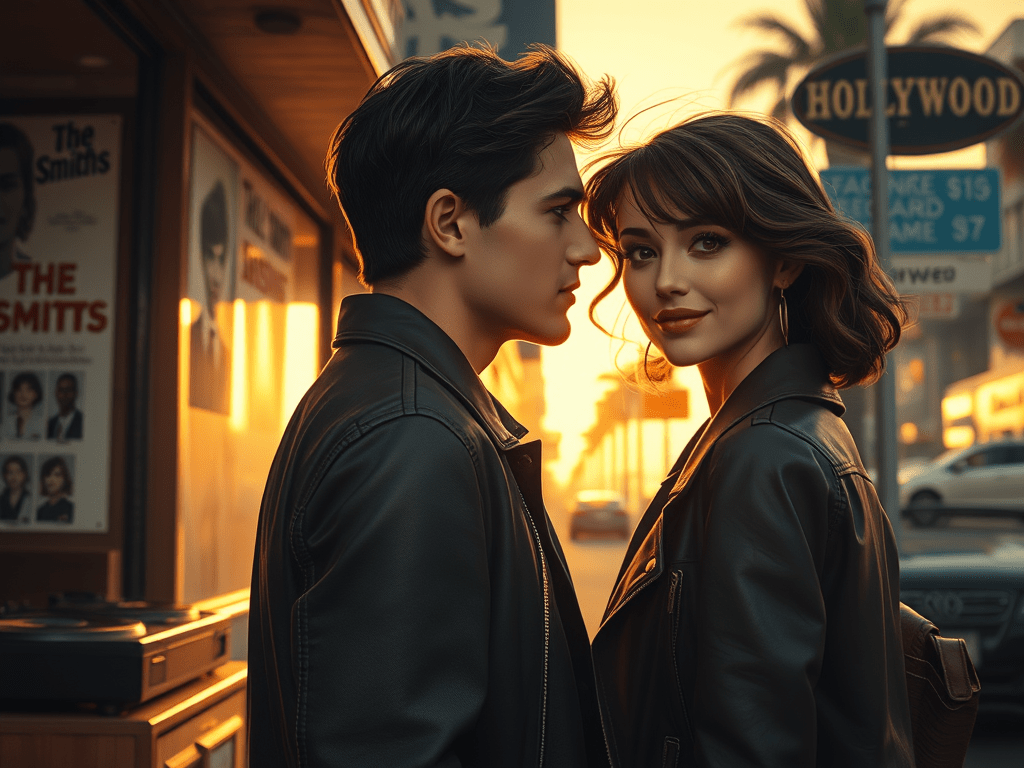
    It was 1990, and there I was — strutting down Hollywood Boulevard with my girlfriend, a walking cliché in a secondhand leather jacket, pretending to be too jaded for the tourists but secretly hoping to be discovered by a roving talent scout. We ducked into some grim little shrine to adolescent misery, shopping for Smiths T-shirts and anything else that might broadcast our manufactured melancholy.

    That’s when the store’s sound system offered up “Obscurity Knocks” by the Trash Can Sinatras — a song I was too full of myself to recognize as a direct warning shot.
    At the time, I was a preening, would-be screenwriter and novelist, drunk on my own imaginary press clippings, convinced that obscurity was a fate reserved for lesser mortals. I didn’t realize that the bright, bittersweet melody washing over those racks of ironic despair was, in fact, my personal horoscope: You, sir, will toil unseen. You will remain a hidden draft in life’s file cabinet. And — shocking plot twist — it will not kill you.

    Decades later, “Obscurity Knocks” still sits at the top of my all-time favorites list, not because it flatters ambition, but because it gently demolishes it.
    It’s a hymn to living for the work itself, to making peace with invisibility, to resisting the cheap, sugary high of external validation.

    It is one of those rare songs that manages to be both wistful and liberating at once — a graceful acceptance letter to a life lived outside the gravitational pull of fame. Far from being a bitter anthem of failure, it’s a clear-eyed celebration of choosing the harder, more honest road: living for one’s art rather than living off it.

    At first listen, the jangly guitars and breezy melody almost betray the lyrical gravity beneath. The music is light, but the words carry the weight of a reckoning. The narrator stands at the border between youthful ambition and mature resignation, surveying the life he has actually lived versus the life he once imagined. And yet, there is no rage, no tantrum, no grasping for lost relevance. Instead, there is something far healthier and more beautiful: an elegy without self-pity, a conscious decision to stay faithful to the things that matter.

    The song’s real bravery lies in its refusal to dress obscurity up as defeat. It suggests that real integrity means loving what you do even when the spotlight points elsewhere — when the record deals dry up, when the critics stop caring, when the audience forgets. In an era addicted to metrics — clicks, likes, views — “Obscurity Knocks” remains a defiant refusal to reduce one’s life to a scoreboard.

    Mortality hums quietly underneath the entire track. It’s not explicit, but it’s there, felt in the weariness behind certain lines, the subtle wear and tear of a life measured not by trophies but by quieter, richer achievements: loyalty to craft, private joy, the bittersweet pleasure of simply carrying on. It accepts the inevitable fading without collapsing into nihilism.

    There is longing, yes — the song aches with it — but it’s a clean, unsentimental kind of longing. It isn’t the longing for public adoration or manufactured relevance; it’s the deeper human longing to matter, to create something true before the clock runs out. In this way, “Obscurity Knocks” isn’t just about a music career. It’s about the universal experience of learning to live meaningfully in a world that will not give you a standing ovation for it.

    The Trash Can Sinatras don’t rage against the dying of the light; they tip their hats to it, shrug, and keep playing. And in that shrug, that beautifully unvarnished acceptance, they find a kind of glory that fame could never offer.

    Do the Trash Can Sinatras have a song more beautiful than “Obscurity Knocks”? Technically, yes — but only one, and finding it is like trying to locate the Holy Grail in a used CD bin. It’s a B-side called “My Mistake,” a painfully perfect little anthem about a young fool so drunk on love he trips over his own heart like it’s a barstool in a dark room.

    It’s a song that captures, with ridiculous precision, the exquisite humiliation of thinking you’re the protagonist in a grand romance when you’re actually just a blip on someone else’s radar — a mistake you won’t stop making until life has finished sanding the delusions off your bones.

    Postscript:

    After writing this post, I felt compelled to listen to “Obscurity Knocks” on YouTube and someone asked in the comment section: “Any other songs like this?” I answered: “Yes, ‘My Finest Hour’ by The Sundays.”

  • New Yorker’s Remorse Syndrome

    New Yorker’s Remorse Syndrome

    It’s a charming form of cosplay, really — striding around as a “well-informed citizen” while sinking ungodly hours into consumer research. Watches, radios, headphones, laptops, Chromebooks, mechanical keyboards, high-end sweatshirts, orthopedic luxury sneakers, protein powders, protein bars, athletic-grade water bottles — an entire temple of optimized living, curated with clerical devotion.

    Meanwhile, out in the real world, society is fraying like an ancient flag in a hurricane. Yeats’ prophecy is no longer a chilling warning — it’s a project status update.
    The center isn’t holding. The center left the chat months ago.
    But instead of reckoning with the slow dissolve of civil society, it’s so much easier, so much kinder to the blood pressure, to compare toaster ovens with touchless air fryer settings.

    Yes, yes, I know — one must be informed. George Carlin gave us front-row tickets to the Freak Show. We owe it to the species, or at least to our own dim dignity, to bear witness.
    But honestly? Some days, it feels like sanity demands partial withdrawal. A news podcast here. A curated briefing there. Enough to feign civic engagement at parties without having to call a therapist immediately afterward.

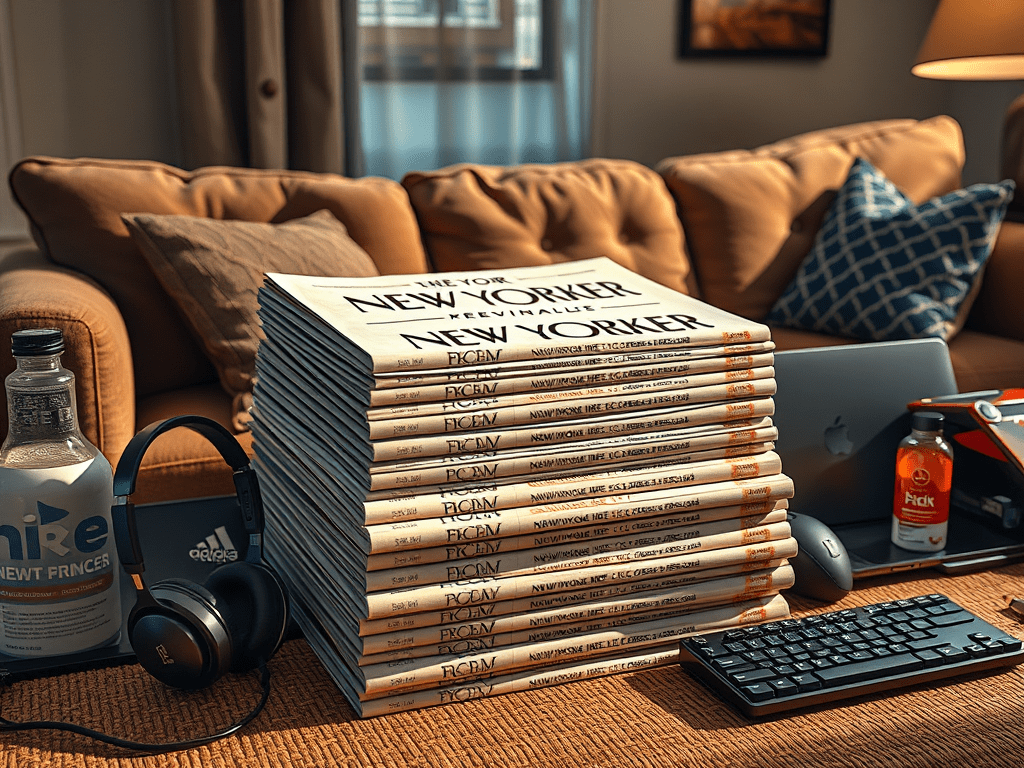
    This brings me to the shrine of guilt at the center of my living room: the great, unread New Yorker stack.
    I have subscribed since 1985, back when Reagan was doing his best kingly impression and nobody had heard of an iPhone.
    The stack now functions less as reading material and more as a kind of grim altar — a silent accusation in glossy print.
    Friends glance at it and nod approvingly, as if my very possession of these magazines implies moral seriousness.
    I let them believe.
    Inside, I know better.
    I know that I am a fallen monk, a heretic of intellectual duty, choosing the velvet lure of consumer escapism over the weighty gospels of sociopolitical collapse.

    I have a diagnosis: New Yorker’s Remorse Syndrome — a condition in which one publicly performs allegiance to Enlightenment values while privately seeking refuge among comparison charts and Amazon star ratings.
    The mind knows what it ought to do.
    The heart, however, prefers shopping for the perfect water bottle while Rome burns quietly in the background.

  • Writing a Blog in the Performative Hangover Era

    Writing a Blog in the Performative Hangover Era

    For over a decade, I ran a YouTube channel — a modest operation born in my late forties. Calling it a channel might be too grand: there were no edits, no soundtracks, no backgrounds, no clever image inserts. Just me, my watches, and a stubborn refusal to pretend I knew anything about video production. It was, in essence, a podcast that forgot it was supposed to be seen.

    I built a small but loyal audience — over 10,000 subscribers, steady commenters, familiar names. Within the narrow but fervent watch community, I was a known entity: a man chronicling the eternal scuffle with watch addiction.

    But now, staring down my sixty-fourth birthday this October, I’m stepping away — and not with a heavy heart, but with something closer to relief.

    First, I have no desire to become an influencer. The idea of monetizing my channel, hawking brands I barely tolerate, feels as alien as joining a boy band at my age. Second, I have zero interest in learning the sacred arts of Final Cut Pro wizardry. The polished, professional YouTuber life was never my ambition. Third — and most importantly — the fire that once drove me is gone. And good riddance. Fire, in my case, has always been another word for addiction — the old need for validation, the parasocial buzz of comment sections and endless watch chatter. I don’t want the fire back. I want peace.

    Does this retreat from YouTube mean a pivot to podcasting?
    No.
    I’m not looking for a new mirror in which to admire or define myself. I don’t need the hustle of relevance, or the 3 a.m. panic about subscriber counts. A podcast requires not just a theme but conviction — a genuine need to say something the world hasn’t already heard. Right now, my life is full of smaller, quieter things: amateur piano practice, kettlebell workouts in my garage, a general interest in health and fitness. None of these scream “launch a weekly show.”

    Sure, I could bang out a fitness video for people over fifty — it would take thirty seconds: Stay active, love people, eat real food, prioritize protein, lay off the booze. There, fitness empire built.
    But combing through the absurdly granular debates of the diet-industrial complex? No thanks.

    Truthfully, most social media feels unbearable to me now — bloated with performative sincerity, vibrating with empty gestures. I’m done performing. Like many, I have full-blown social media fatigue.

    And then there’s the nagging ghost of my old literary ambitions — the dream of publishing memoir, fiction, or some slippery hybrid of the two, the sort of “autofiction” the novelist Emmanuel Carrère perfected. That ghost finds me now, not on YouTube, not on a podcast, but on my blog.

    The blog is where I now quietly reign.
    Not as a digital emperor counting clicks, but as a stubborn craftsman hacking away at the weeds of complacency. I don’t know if my writing will “take off” or “storm the world.” I only know it helps me process the madness, fight entropy, and stay alert to the real battle — the one against mindless consumerism and numbing repetition.

    So here I am, in what I suppose I could call the next chapter.
    The Performative Hangover Years.
    The Post-COVID Malaise.
    The Be Brave in Your Sixties Project.

    I’ll get back to you with the final title once I’ve lived it a little longer.

  • Velvet Fists: Sentimentality, Violence, and the Lie of the Crappy Love Song

    Velvet Fists: Sentimentality, Violence, and the Lie of the Crappy Love Song

    In the early ’90s, screenwriter Dennis Potter—whose haunting 1980 film Blade on a Feather once grabbed my imagination by the throat—sat across from Charlie Rose, passionately defending one of humanity’s most derided cultural artifacts: the “crappy love song.”

    Potter’s argument was simple and oddly noble:
    In a world where we grovel like pigs at the trough of materialism, even the cheesiest love ballad points, however clumsily, toward something higher—a yearning for transformative love, the kind that rattles the soul and redeems our miserable existence.
    And that, Potter insisted, should be celebrated, not sneered at.

    I see his point.
    But I can’t quite choke it down.

    What happens when the music is even crasser than life itself?
    Forgive the offense, but Kenny G springs to mind—a man whose saxophone emits what can only be described as the ambient soundtrack of lobotomized love.
    Millions swoon to his treacly squeals, convinced they’re tasting transcendence.
    But what they’re really swallowing is sentimentality in its most lethal form: syrupy, infantilizing, and vaguely unhinged.

    While I love Potter for wanting to defend the human need for transcendent emotion, I can’t ignore the underlying rot.
    These “crappy love songs,” much like Kenny G’s ambient anesthesia, often peddle not real love, but an emotionally stunted counterfeit—sentimentality, a soft mask stretched tight over something far uglier.

    Sentimentality terrifies me because it is not benign.
    It is childish emotion weaponized.
    It is the refusal to mature, to engage with the complicated ambiguities of real love, real pain, real life.
    And because these stunted feelings are defended with the ferocity of a cornered child, sentimentality often harbors its dark twin: violence.

    Saul Bellow, with his characteristic unsparing clarity in Herzog, nailed it:
    It’s the most sentimental people who are the most violent.

    Why?
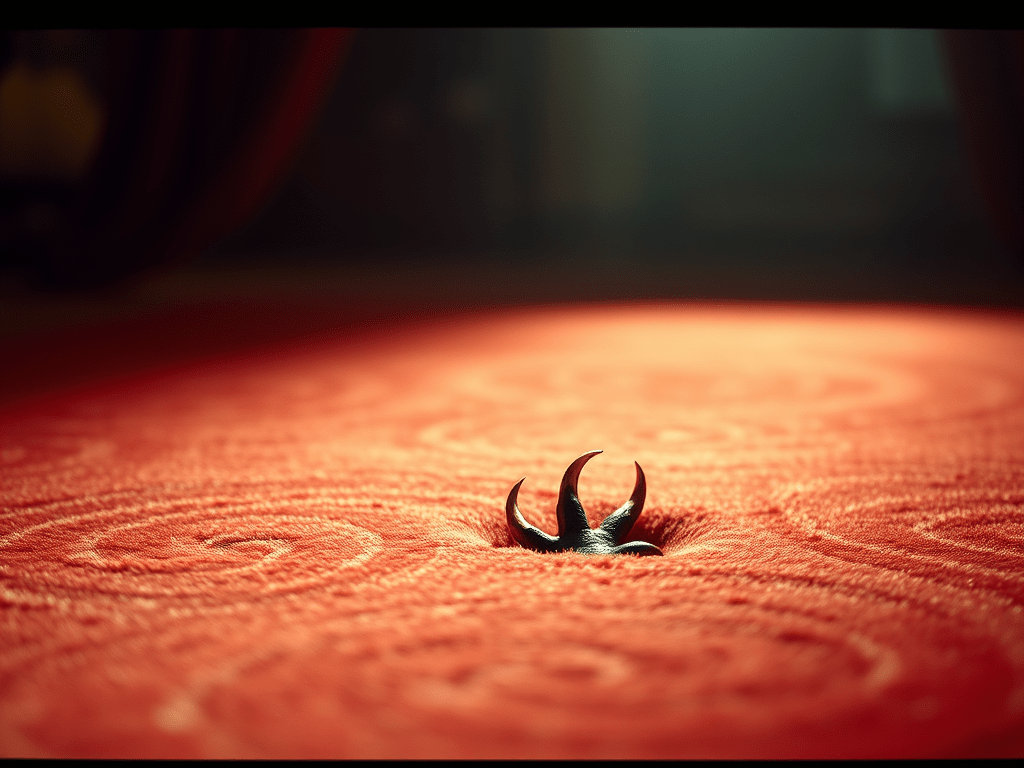
    Because sentimentality is a velvet carpet stretched precariously over a tiger’s claw.
    It’s the illusion of sweetness clinging desperately to a subterranean rage—the rage of people who cannot tolerate having their fragile, maudlin dreams challenged.
    To question sentimentality is to trigger a defensive violence, a panicked fury at the idea that real adulthood demands something sterner, braver, and infinitely less sweet.

    So no, Dennis Potter, I can’t fully join you in your defense of the crappy love song.
    Because too often, beneath that soaring key change and saccharine lyric, I hear not the longing for transcendent love—
    but the faint, snarling growl of a soul that refuses to grow up.

  • The Protein Bar Delusion: My Love Affair with Lies and Graham Crackers

    The Protein Bar Delusion: My Love Affair with Lies and Graham Crackers

    I don’t eat protein bars anymore. Not because I’m virtuous—far from it—but because I finally admitted the obvious: they’re not meal replacements. They’re meal add-ons, sneaky little calorie grenades dressed up in the halo of anabolic health, whispering sweet promises of lean muscle and zero guilt.

    I’ve been chasing that lie since the 1970s.
    Back then, the gold standard of protein bars was the Bob Hoffman Club Sandwich—a peanut butter and graham cracker Frankenstein’s monster that must have clocked in at 500 calories, easy. It wasn’t a snack. It wasn’t a supplement. It was a religious experience.
    If I wanted to recreate it today, I’d just mash a couple of Reese’s between two graham crackers and pray for forgiveness.

    Over the decades, I kept eating protein bars—dense peanut butter bricks, chewy “engineered food” monstrosities—but never to any good effect. These bars didn’t sculpt my physique. They bulked me up like a slow, steady inflation of regret. Eventually, I abandoned them, like a gambler walking away from the slot machine after realizing the house always wins.

    Still, they haunt me.
    Protein bars remind me of Willy Wonka’s cursed 7-course meal gum that turned Violet Beauregarde into a giant blueberry: a miracle product promising the world but delivering only bloat and existential crisis.

    To be fair, the bars have gotten better over the years. There’s even one called David (because apparently even protein bars have minimalist branding now) made with real food, boasting 28 grams of protein at a miraculous 150 calories. It tempts me.
    Wouldn’t it be smarter, simpler, even a bit sexier to chomp down a David bar at breakfast instead of mixing up my daily slurry of yogurt, protein powder, soy milk, and berries? (A concoction that hits 500 calories with depressing reliability.)

    Maybe. But I know myself: I’d be starving by 9:30 a.m., staring into the abyss of a second breakfast. Protein bars have never given me satiety. They’re a snack in drag—a dessert cosplaying as health food.

    And yet… with all the shredded influencers on YouTube slicing open protein bars like they’re sommelier-testing vintage wine, I feel the pull. A little FOMO. A little “Maybe this time it’ll be different.”

    I have to remind myself, again and again:
    I’m not in love with the protein bar.
    I’m in love with the idea of the protein bar—the fantasy that some sweet, tidy, macro-balanced rectangle will solve my problems, sculpt my body, and carry me into some higher, cleaner version of myself.

    Reality tastes different.
    It tastes like mealy, sweet resignation. It tastes like being duped—with a thin layer of whey isolate on top.