Category: culture

  • Remembering the 90s when Seinfeld made existential apathy a form of cultural resistance

    Remembering the 90s when Seinfeld made existential apathy a form of cultural resistance

    I’ve always been a lousy sleeper—a lifelong insomniac, night-thinker, ceiling-staring obsessive. So when my brain, usually a humming engine of late-night anxieties, surprises me by downshifting into a silky semi-sleep, I take notice. I don’t just enjoy those moments—I archive them in some velvet-lined folder in my mind, filed between “Miracles” and “Rare Weather Patterns.”

    One such miracle happened in the summer of 1991 in the gloriously tacky suburb of Buena Park, California. I had recently relocated from the Bay Area to Bakersfield, that Central Valley of hot wind and dust, to teach composition at the university. It was a job that paid me in respect and barely enough money to keep me in burritos and gas.

    Weekends were spent visiting Nicole, the girlfriend of my ex-student Mike, a real-deal Navy SEAL with shoulders like boulders and a heart that thumped exclusively for her. We’d drive south, Mike and I, and wind up at Nicole’s parents’ place not far from Knott’s Berry Farm—California’s budget Disneyland, where roller coasters and churros come with a faint scent of desperation.

    Dinner with Nicole’s folks was always home-cooked, polite, and meatloaf-heavy. But the real magic happened later in the den, where the three of us would settle in for prime-time America’s Funniest Home Videos, back when Bob Saget’s voiceovers made even mild concussions look charming.

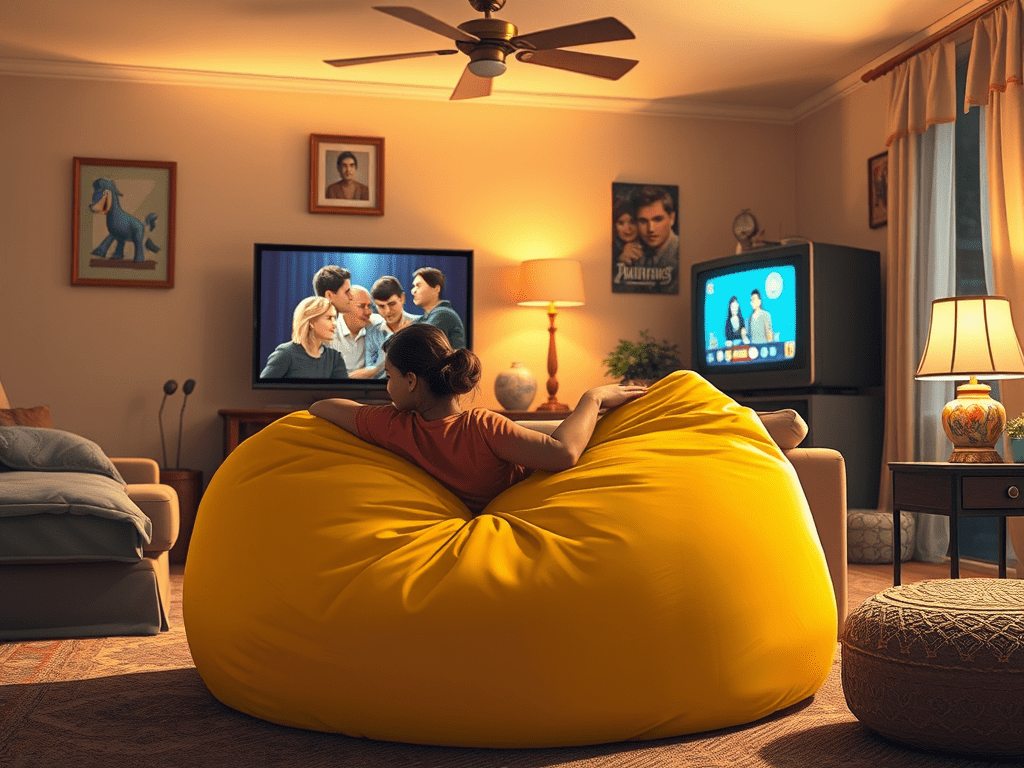
    Mike and Nicole snuggled on the sofa, whispering sweet nothings or planning some SEAL Team Six domestic mission. I would sink into a bloated yellow bean bag chair like a man slipping into a warm pond of polyester and forgotten dreams.

    As I floated somewhere between reruns and REM, Nicole’s mom would be doing laundry in the adjacent room, and the floral scent of freshly tumbled linens—fabric softener with notes of lilac and vague suburban joy—would drift in and intoxicate me. The TV flickered. The lovers whispered. I, utterly ignored, entered a state of transcendence usually reserved for monks or the chemically enhanced.

    In that half-dream, I’d rocket through constellations, revisit my childhood neighborhood where everyone still had knees that worked, and rendezvous with a mysterious dream woman who always met me at sunset on a Hawaiian beach. I was twenty-nine, single, unburdened, and lazy in a way only the early ‘90s allowed—when Seinfeld made existential apathy a form of cultural resistance.

    Looking back now, from the sagging perch of sixty-three, it’s easy to sigh at the sheer, stupid comfort of it all. I no longer live in that bubble-wrapped world where being a third wheel was a blissful kind of freedom, where responsibility was just a concept in other people’s lives.

    Still, on a quiet afternoon, stretched out on my modern couch, if the narrator of a nature documentary starts detailing the mating habits of sea otters in a sonorous British whisper, something in me softens. The air thickens. I begin to drift. And for a flickering moment, I’m back in that bean bag—yellow, ridiculous, sublime—floating on the fabric-softened breeze of a world that no longer exists.

  • Streamberry, Self-Loathing, and the Algorithmic Abyss: How “Joan Is Awful” Skewers the Curated Life

    Streamberry, Self-Loathing, and the Algorithmic Abyss: How “Joan Is Awful” Skewers the Curated Life

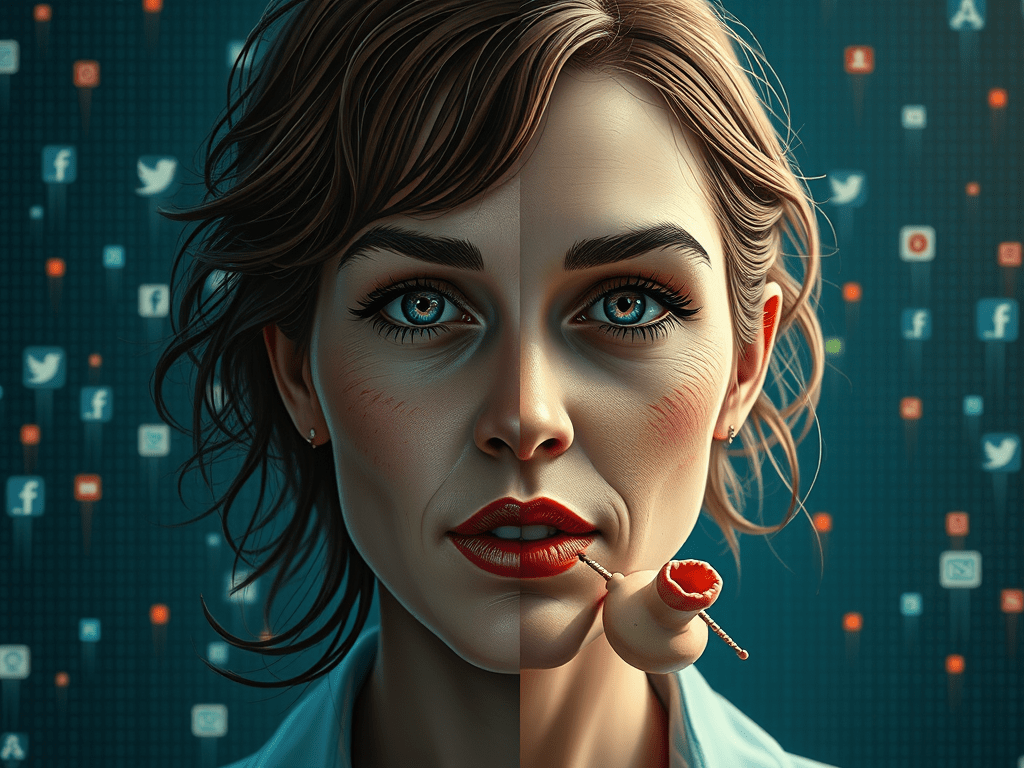
    In Black Mirror’s “Joan Is Awful,” Charlie Brooker offers more than a dystopian farce—he serves up a wickedly accurate satire of the curated lives we present online. It’s not just Joan who’s awful. It’s us. All of us who’ve filtered our flaws, outsourced our personalities to engagement metrics, and whittled ourselves down to algorithm-friendly avatars. The episode doesn’t critique Joan alone—it roasts the whole rotten architecture of social media curation and shows, with brutal clarity, how the pursuit of digital perfection transforms us into insufferable parodies of our former selves.

    First, let’s talk about performance. Joan, like any good social media user, lives her life as if auditioning for a role she already occupies—one shaped not by authenticity but by optics. She performs “relatable misery,” complete with awkward office banter, fake smiles, and passive-aggressive salad orders. Social media rewards this pantomime, demanding we be palatable, aspirational, and vaguely miserable all at once. The result? A version of ourselves designed to please an audience we secretly resent. Joan is what happens when your curated self becomes the dominant narrative—when branding overtakes being. Her AI-generated counterpart doesn’t misrepresent her; it distills her curated contradictions into a grotesque caricature that somehow feels… accurate.

    Second, there’s the fact that Joan—like all of us—is under constant surveillance. In Joan Is Awful, it’s not just the NSA snooping in the background—it’s the entire viewing public, binge-watching her daily descent into algorithm-approved degradation. This is what we’ve signed up for with every “I accept” click: to become content, voluntarily and irrevocably. Our data, behaviors, and digital crumbs are fed into the algorithmic sausage grinder, and what comes out is a grotesque mirror held to our worst instincts. The AI Joan is not a stranger; she’s the monster we’ve been molding through every performative tweet, selfie, and humblebrag. In a world where perception is currency, she’s our highest-valued coin.

    Then comes the psychological shrapnel: identity fragmentation. Joan can no longer tell where she ends and Streamberry’s Joan begins, just as many of us can’t quite remember who we were before the algorithm gave us feedback loops in the form of likes, retweets, and dopamine pings. This curated self isn’t just a mask—it becomes the default setting. The dissonance between public persona and private truth breeds an existential malaise. Joan’s real tragedy isn’t that her life is on TV—it’s that she’s lost the plot. She’s a passenger in her own narrative, outsourced to a system that rewards spectacle over substance.

    Let’s not forget the moral rot. Watching your AI double destroy your reputation while millions tune in might seem horrifying—until you remember we do this willingly. We doomscroll, rubberneck scandals, and serve our digital idols on platters made of hashtags. Joan, sitting slack-jawed in front of her TV, is no different from us—addicted to her own collapse. It’s not the horror of exposure that eats her alive; it’s the realization that her own worst self is exactly what the algorithm wanted. And that’s what it rewarded.

    Ultimately, Joan Is Awful is a break-up letter with social media—if your ex were a manipulative narcissist with access to all your personal data and a flair for psychological torture. Escaping the curated self, as Joan tries to do, is like fleeing an abusive relationship. You know it’s toxic, you know it’s killing you—but part of you still misses the attention. The episode doesn’t end with a triumphant reinvention; it ends with Joan in fast food purgatory, finally unplugged but still wrecked. Because once you’ve sold your soul to the algorithm, the buyback price is steep.

    So yes, Joan is awful. But only because she reflects what happens when we let the curated life take the wheel. In the Streamberry age, we aren’t living—we’re streaming ourselves into oblivion. And the worst part? We’re giving it five stars.

  • The Gospel According to Mounjaro and ChatGPT

    The Gospel According to Mounjaro and ChatGPT

    The other day I was listening to Howard Stern and his co-host Robin Quivers talking about how a bunch of celebrities magically slimmed down at the same time. The culprit, they noted, was Ozempic—a drug available mostly to the rich. While they laughed about the side effects, such as incontinence, “Ozempic face” and “Ozempic butt,” I couldn’t help but see these grotesque symptoms as a metaphor for the Ozempification of a society hooked on shortcuts. They enjoyed some short-term benefits but the side effects were far worse than the supposed solution. Ozempification was strikingly evident in AI-generated essays–boring, generic, surface-level, cliche-ridden, just about worthless. Regardless of how well structured and logically composed, these essays have the telltale signs of “Ozempfic face” and “Ozempic butt.” 

    As a college writing instructor, I’m not just trying to sell academic honesty. I’m trying to sell pride. As I face the brave new world of teaching writing in the AI era, I’ve realized that my job as a college instructor has morphed into that of a supercharged salesman. And what am I selling? No less than survival in an age where the very tools meant to empower us—like AI—threaten to bury us alive under layers of polished mediocrity. Imagine it: a spaceship has landed on Earth in the form of ChatGPT. It’s got warp-speed potential, sure, but it can either launch students into the stars of academic brilliance or plunge them into the soulless abyss of bland, AI-generated drivel. My mission? To make them realize that handling this tool without care is like inviting a black hole into their writing.

    As I fine-tune my sales pitch, I think about Ozempic–that magic slimming drug, beloved by celebrities who’ve turned from mid-sized to stick figures overnight. Like AI, Ozempic offers a seductive shortcut. But shortcuts have a price. You see the trade-off in “Ozempic face”—that gaunt, deflated look where once-thriving skin sags like a Shar-Pei’s wrinkles—or, worse still, “Ozempic butt,” where shapely glutes shrink to grim, skeletal wiring. The body wasn’t worked; it was bypassed. No muscle-building, no discipline. Just magic pill ingestion—and what do you get? A husk of your former self. Ozempified.

    The Ozempification of writing is a marvel of modern mediocrity—a literary gastric bypass where prose, instead of slimming down to something sleek and muscular, collapses into a bloated mess of clichés and stock phrases. It’s writing on autopilot, devoid of tension, rhythm, or even the faintest trace of a soul. Like the human body without effort, writing handed over to AI without scrutiny deteriorates into a skeletal, soulless product: technically coherent, yes, but lifeless as an elevator pitch for another cookie-cutter Marvel spinoff.

    What’s worse? Most people can’t spot it. They think their AI-crafted essay sparkles when, in reality, it has all the charm of Botox gone wrong—rigid, lifeless, and unnervingly “off.” Call it literary Ozempic face: a hollowed-out, sagging simulacrum of actual creativity. These essays prance about like bargain-bin Hollywood knock-offs—flashy at first glance but gutless on closer inspection.

    But here’s the twist: demonizing AI and Ozempic as shortcuts to ruin isn’t the full story. Both technologies have a darker complexity that defies simplistic moralizing. Sometimes, they’re necessary. Just as Ozempic can prevent a diabetic’s fast track to early organ failure, AI can become a valuable tool—if wielded with care and skill.

    Take Rebecca Johns’ haunting essay, “A Diet Writer’s Regrets.” It rattled me with its brutal honesty and became the cornerstone of my first Critical Thinking essay assignment. Johns doesn’t preach or wallow in platitudes. She exposes the failures of free will and good intentions in weight management with surgical precision. Her piece suggests that, as seductive as shortcuts may be, they can sometimes be life-saving, not soul-destroying. This tension—between convenience and survival, between control and surrender—deserves far more than a knee-jerk dismissal. It’s a line we walk daily in both our bodies and our writing. The key is knowing when you’re using a crutch versus when you’re just hobbling on borrowed time. 

    I want my students to grasp the uncanny parallels between Ozempic and AI writing platforms like ChatGPT. Both are cutting-edge solutions to modern problems: GLP-1 drugs for weight management and AI tools for productivity. And let’s be honest—both are becoming necessary adaptations to the absurd conditions of modern life. In a world flooded with calorie-dense junk, “willpower” and “food literacy” are about as effective as handing out umbrellas during a tsunami. For many, weight gain isn’t just an inconvenience—it’s a life-threatening hazard. Enter GLP-1s, the biochemical cavalry.

    Similarly, with AI tools quickly becoming the default infrastructure for white-collar work, resisting them might soon feel as futile as refusing to use Google Docs or Windows. If you’re in the information economy, you either adapt or get left behind. But here’s the twist I want my students to explore: both technologies, while necessary, come with strings attached. They save us from drowning, but they also bind us in ways that provoke deep, existential anguish.

    Rebecca Johns captures this anguish in her essay, “A Diet Writer’s Regrets.” Ironically, Johns started her career in diet journalism not just to inform others, but to arm herself with insider knowledge to win her own weight battles. Perhaps she could kill two birds with one stone: craft top-tier content while secretly curbing her emotional eating. But, as she admits, “None of it helped.” Instead, her career exploded along with her waistline. The magazine industry’s appetite for diet articles grew insatiable—and so did her own cravings. The stress ate away at her resolve, and before long, she was 30 pounds heavier, trapped by the very cycle she was paid to analyze.

    By the time her BMI hit 45 (deep in the obesity range), Johns was ashamed to tell anyone—even her husband. Desperate, she cycled through every diet plan she had ever recommended, only to regain the weight every time. Enter 2023. Her doctor handed her a lifeline: Mounjaro, a GLP-1 drug with a name as grand as the results it promised. (Seriously, who wouldn’t picture themselves triumphantly hiking Mount Kilimanjaro after hearing that name?) For Johns, it delivered. She shed 80 pounds without white-knuckling through hunger pangs. The miracle wasn’t just the weight loss—it was how Mounjaro rewired her mind.

    “Medical science has done what no diet-and-exercise plan ever could,” she writes. “It changed my entire relationship with what I eat and when and why.” Food no longer controlled her. But here’s the kicker: while the drug granted her a newfound sense of freedom, it also raises profound questions about dependence, control, and the shifting boundaries of human resilience—questions not unlike those we face with AI. Both Ozempic and AI can save us. But at what cost? 

    And is the cost of not using these technologies even greater? Rebecca Johns’ doctor didn’t mince words—she was teetering on the edge of diabetes. The trendy gospel of “self-love” and “body acceptance” she had once explored for her articles suddenly felt like a cruel joke. What’s the point of “self-acceptance” when carrying extra weight could put you six feet under?

    Once she started Mounjaro, everything changed. Her cravings for rich, calorie bombs disappeared, she got full on tiny portions, and all those golden nuggets of diet advice she’d dished out over the years—cut carbs, eat more protein and veggies, avoid snacks—were suddenly effortless. No more bargaining with herself for “just one cookie.” The biggest shift, however, was in her mind. She experienced a complete mental “reset.” Food no longer haunted her every waking thought. “I no longer had to white-knuckle my way through the day to lose weight,” she writes.

    Reading that, I couldn’t help but picture my students with their glowing ChatGPT tabs, no longer caffeinated zombies trying to churn out a midnight essay. With AI as their academic Mounjaro, they’ve ditched the anxiety-fueled, last-minute grind and achieved polished results with half the effort. AI cushions the process—time, energy, and creativity now outsourced to a digital assistant.

    Of course, the analogy isn’t perfect. AI tools like ChatGPT are dirt-cheap (or free), while GLP-1 drugs are expensive, scarce, and buried under a maze of insurance red tape. Johns herself is on borrowed time—her insurance will stop covering Mounjaro in just over a year. Her doctor warns that once off the drug, her weight will likely return, dragging her health risks back with it. Faced with this grim reality, she worries she’ll have no choice but to return to the endless cycle of dieting—“white-knuckling” her days with tricks and hacks that have repeatedly failed her.

    Her essay devastates me for many reasons. Johns is a smart, painfully honest narrator who lays bare the shame and anguish of relying on technology to rescue her from a problem that neither expertise nor willpower could fix. She reports on newfound freedom—freedom from food obsession, the physical benefits of shedding 80 pounds, and the relief of finally feeling like a more present, functional family member. But lurking beneath it all is the bitter truth: her well-being is tethered to technology, and that dependency is a permanent part of her identity.

    This contradiction haunts me. Technology, which I was raised to believe would stifle our potential, is now enhancing identity, granting people the ability to finally become their “better selves.” As a kid, I grew up on Captain Kangaroo, where Bob Keeshan preached the gospel of free will and positive thinking. Books like The Little Engine That Could drilled into me the sacred mantra: “I think I can.” Hard work, affirmations, and determination were supposed to be the alchemy that transformed character and gave us a true sense of self-worth.

    But Johns’ story—and millions like hers—rewrite that childhood gospel into something far darker: The Little Engine That Couldn’t. No amount of grit or optimism got her to the top of the hill. In the end, only medical science saved her from herself. And it terrifies me to think that maybe, just maybe, this is the new human condition: we can’t become our Higher Selves without technological crutches.

    This raises questions that I can’t easily shake. What does it mean to cheat if technology is now essential to survival and success? Just as GLP-1 drugs sculpt bodies society deems “acceptable,” AI is quietly reshaping creativity and productivity. At what point do we stop being individuals who achieve greatness through discipline and instead become avatars of the tech we rely on? Have we traded the dream of self-actualization for a digital illusion of competence and control?

    Of course, these philosophical quandaries feel like a luxury when most of us are drowning in the realities of modern life. Who has time to ponder free will or moral fortitude when you’re working overtime just to stay afloat? Maybe that’s the cruelest twist of all. Technology hasn’t just rewritten the rules—it’s made them inescapable. You adapt, or you get left behind. And maybe, somewhere deep down, we all already know which path we’re on.
  • The Shame of Being Crock Blocked

    The Shame of Being Crock Blocked

    I learned the invaluable lesson of staying in my lane in 1989, a year that will forever be etched in my memory as the year I brought industrial sludge to an English Department potluck picnic. I was a freshly minted lecturer at a university in the California desert, and it was my inaugural potluck. Naturally, I was determined to impress my colleagues with a culinary masterpiece. I had a slow cooker, a gift from my mother, which I imagined to be my ticket to gastronomic glory. So, I decided to tackle curried lentils—a dish so ambitious it could have been named “Lentil Apocalypse.” I poured lentils into the slow cooker until it was practically bursting at the seams. Next, I added what could only be described as an entire bottle of curry, along with a mountain of chopped onions and celery. Unsure of how long these lentils needed to avoid the dreaded “raw green beetle” look, I left them cooking all day. By the time I made my way to the picnic, the contents had morphed into what resembled a toxic waste spill, a sludge so thick it could be used to pave roads. With all the bravado of a culinary adventurer, I placed my slow cooker among the other dishes. As hours ticked by, my creation remained untouched. The English Chair, Solomon, seemed to take pity on me. He ladled a small portion onto his plate in a gesture of charity, but his reaction was nothing short of tragic. His face contorted in a way that suggested he’d just tasted a toxic waste dump, and he looked as if he might need a hazmat suit and a team of medics. From that day on, I was never again entrusted with bringing food. Instead, my muscles were put to better use hauling giant bags of ice, crates of wine glasses, and cartons of boxed wine to future events. Eventually, I learned my lesson and found my true calling—one that involved heavy lifting and zero culinary experiments. And so, I stayed in my lane, with a clear understanding that my talents were best suited for anything other than poisoning my colleagues with curried lentils.

    My ordeal points is an example of being Crock Blocked–the uniquely mortifying shame experienced when your potluck contribution—usually involving a Crock-Pot, misplaced ambition, and a suspiciously gelatinous texture—is avoided by everyone, like it’s radioactive. Crock Blocked is when your dish becomes a pariah on the buffet table, gathering flies instead of praise, while nearby casseroles are ravaged like it’s the last supper. You watch helplessly as guests whisper about “that lentil thing,” your dreams of impressing the crowd slowly congealing into a turmeric-scented failure. You leave with your dignity dented, your Crock-Pot still full, and your social standing demoted to Ice Guy.

  • The PreSnackalithic Era

    The PreSnackalithic Era

    In the Before Snack Times of the early 70s, we didn’t have helicopter parents hovering over us, micromanaging our every move with a suffocating schedule of dance classes, gymnastics, karate, swim lessons, math tutors, writing coaches, soccer practices, chess clubs, computer coding, mindfulness meditation, and Ashtanga Yoga. We didn’t have smartphones tracking us like we were secret agents with microchips implanted in our necks. For the entire day, our parents had absolutely no clue where we were or what we were up to. We’d saunter off after breakfast, either on foot or aboard our trusty bicycles, and were expected to return only by dinner. During that endless stretch of freedom, we’d navigate through construction sites strewn with lumber, nails, electrical wires, and bottomless ditches, all of which screamed, “Adventure awaits!” We gravitated toward mud, streams, and rivers like moths to a flame, setting up wooden ramps to perform Evel Knievel-level stunts over bodies of water. The messier and more perilous the terrain, the more irresistible it became. These hazardous playgrounds were usually bordered by rusty barbed-wire fences and “Do Not Enter” signs, which not only failed to deter us but ignited our rebellious spirits to trespass with even more gusto. Inside these danger zones, we’d be chased by furious steers, territorial cows, and muscle-bound guard dogs. Occasionally, a disgruntled landowner would fire warning shots at us with a pellet gun, a token gesture that barely fazed us. In the ravines behind our homes, we crafted forts, swung from vines, ignited firecrackers, and leaped into piles of poison oak. We encountered black widows, rattlesnakes, bobcats, coyotes, and even the occasional mountain lion. After a day of flouting every conceivable health and safety code, we’d trudge home at night, our bodies caked in filth, bruises, and scratches. But our parents, bless their oblivious hearts, never inquired about our whereabouts or escapades. As long as we took a bath and cleaned up, they were content to feed us hearty helpings of turkey pot pies, meatloaf, chili, and tacos. They knew we needed the energy to wake up the next morning and dive headfirst into another day of mayhem. Back then, we had little time for snacking. Our days were filled with wilderness adventures, where our imaginations ran wild. This level of playfulness, chaos, and enchantment is as extinct as the dinosaurs in today’s Snack Age, where parents meticulously micromanage their children’s activities and pacify their appetites with chips, juice boxes, chocolate chip granola bars, fruit rolls, and Happy Meals.

    Before Snack Times is sometimes referred to as the PreSnackalithic Era–the rough-and-tumble epoch of the early 1970s when childhood ran on chaos, sunburns, and a single daily meal of meatloaf or tacos—long before the rise of the Snack Age. In the PreSnackalithic Era, children roamed unsupervised like feral philosophers, fueled not by organic apple slices or protein-packed squeeze pouches, but by sheer mischief and an occasional stolen sip from a warm garden hose. Helmets were for astronauts, schedules were a myth, and sustenance came only when the streetlights flickered on and the meatloaf hit the table. Snack culture had not yet risen from the primordial ooze, and the only “mindfulness” was making sure you didn’t get bitten by a rattlesnake while building a fort in a construction site. Parents parented with the laissez-faire wisdom of, “If he’s not home by dinner, we’ll worry.” And worry they rarely did.

  • Kleptobite

    Kleptobite

    When I was six years old in 1968, I lived for a year with my grandparents in Belmont Shore. One day after school, a distraught neighbor, a 79-year-old widow named Mrs. Davis, said she locked herself out of her house. Could she borrow me to climb through her bedroom window and unlock the front door for her? With my grandmother’s approval, I did just that. I pretended to be a cat burglar, slithered through the ajar window, and walked through her house. With great curiosity, I examined the interior of the living room.  The floor was covered with a plush, floral-patterned rug. The centerpiece of the room was a large, floral-patterned couch. It was flanked by two wingback chairs, upholstered in a velvety red fabric. Each chair had a lace doily draped over the backrest. A coffee table with spindly legs sat in front of the couch, its surface crowded with an assortment of knickknacks: a porcelain figurine of a ballerina, a small crystal bowl filled with wrapped candies, and a couple of framed photos. The walls were adorned with family portraits, framed cross-stitch samplers, and a large, oval mirror with a gold frame. A grandfather clock ticked methodically in the background, its pendulum swinging with a steady rhythm that made me feel lost in time. Something came over me. Being alone, I felt possessed with a transgressive spirit, and I lifted the candy jar’s lid and, even though I disdained hard candy, I stuffed a butterscotch candy in my pocket before opening the front door for Mrs. Davis. I felt guilty for my act of theft because Mrs. Davis proclaimed me to be her newly-minted hero and handed me a crisp one-dollar bill, which I would later spend on Baby Ruth and Almond Joy Bars. I had difficulty sleeping that night. I worried that Mrs. Davis might feel inclined to take inventory of her candies and discover that one was missing, prompting her to demote me from hero to villain. My career as a thief had come to a quick end. On the other hand, I had a glimpse of what it was like to be a superhero entering houses and saving people in distress. I convinced myself that my career as Superman was just beginning. 

    My act of thievery points us to the lexicon term: Kleptobite–the act of stealing a food item not for its flavor or nutritional value, but purely for the electric thrill of transgression. A Kleptobite is less about appetite and more about theater—the petty larceny of a Werther’s Original lifted like a crown jewel, the pilfered peppermint filched under the nose of a trusting septuagenarian, not for the tongue, but for the adrenaline. Often committed in plush-carpeted living rooms with doilies and ticking clocks, this culinary crime wave is fueled by a cocktail of boredom, childhood hubris, and vague superhero delusions. Side effects include guilt-induced insomnia, paranoia about candy audits, and overcompensating acts of heroism.

  • Cerealphilia

    Cerealphilia

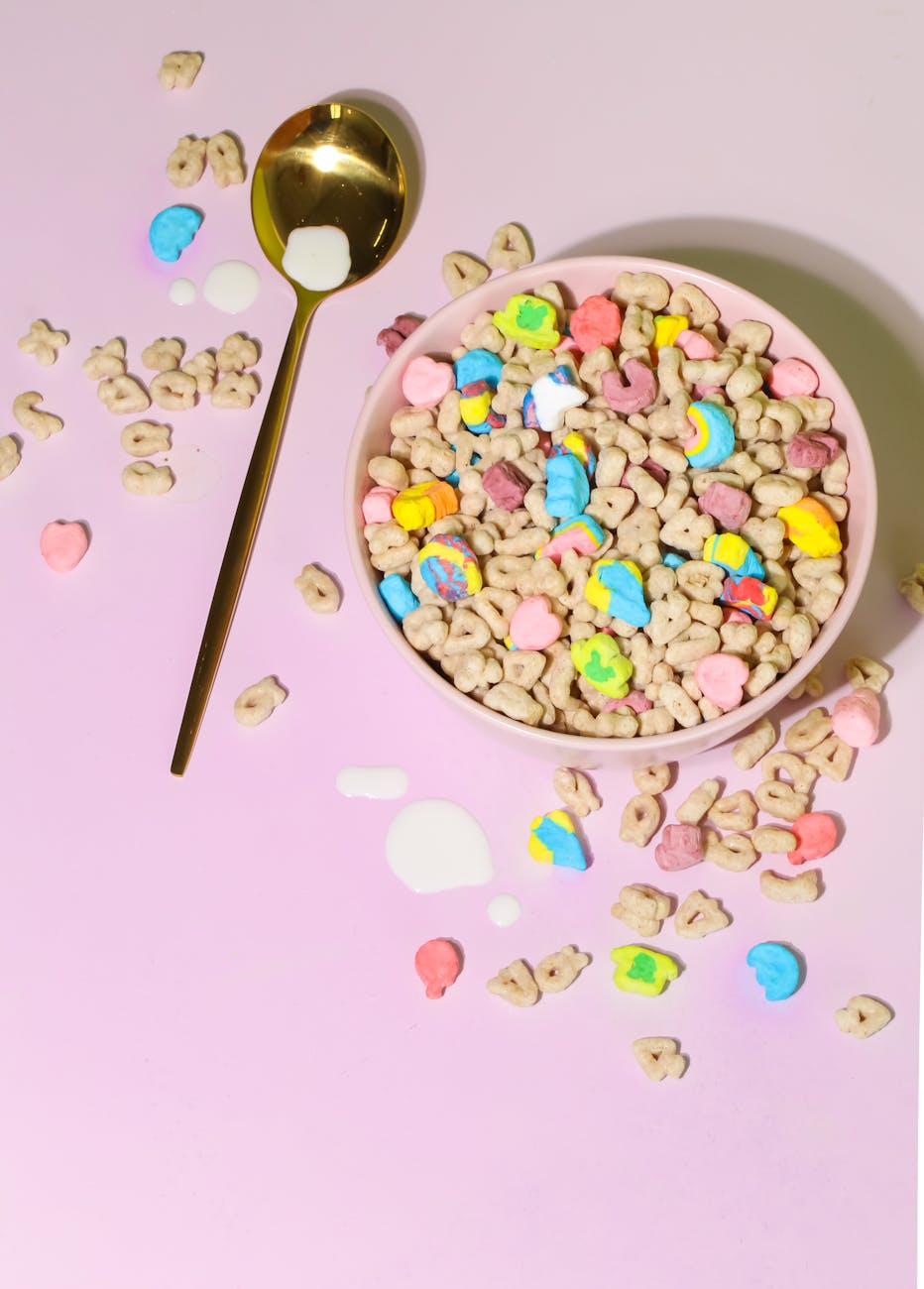
     Cereal is more than a grain; it’s an existential dream of happiness and the maternal embrace. As kids, we didn’t just eat cereal—we engaged in epic love affairs with cartoon mascots, played mind-bending board games on the back of the box, and embarked on treasure hunts for plastic trinkets buried deep within the sugary abyss. We sent box tops to claim submarines, shirts, hats, and other merchandise that, in hindsight, had all the utility of a chocolate teapot.

    My cereal obsession reached such dizzying heights that I fantasized about growing up to be a Major League baseball star who exclusively dined on cereal for breakfast, lunch, and dinner. In my dreams, I was a grocery store legend, cart packed to the brim with Cap’n Crunch, Franken Berry, Count Chocula, Froot Loops, and Lucky Charms. Cereal was my ticket to mindless self-gratification, whisking me away with Pinocchio to Paradise Island, where we’d lose our minds, sprout donkey ears, and bray like beasts in a symphony of sugary delirium.

    In the 1970s, cereal spun tales of the good life and ultimate success. We gorged on granola, wheat germ, Wheaties, and Special K, convinced we were one spoonful away from becoming paragons of health, fitness, and suburban nirvana. One of the era’s cereal prophets was Euell Gibbons, the outdoor enthusiast who, with a straight face, asked us in Grape-Nuts ads, “Ever eat a pine tree? Many parts are edible.” Gibbons spun a yarn about Grape-Nuts that promised to ground us in the Earth, bestow vitality, and arm us with survival skills fit for a post-apocalyptic rainforest escapade equipped with nothing but a buck knife and a loincloth. In reality, eating the gravel-like cereal resulted in thousands of dentist visits for chipped teeth and a crunch so deafening, it drowned out the morning radio.

    Despite all this, Grape-Nuts still haunt my cravings. The crunch and malty flavor have me hooked. I’ve read that Grape-Nuts are the only store-bought cereal that hasn’t been subjected to extrusion, that nefarious heating process that murders nutrients. Instead, Grape-Nuts are baked like a loaf of bread, ensuring that each bite is a dense, jaw-breaking tribute to my childhood.

    There was a time in my adult life when I raged against the societal norms that prevented me from consuming cereal for all three meals. I longed for cold store-bought cereal for breakfast, oatmeal for lunch, and buckwheat for dinner. I envisioned my cereals adorned with peanut butter, walnuts, chia seeds, hemp seeds, and berries to pack in nutrients and calories. But my plan was thwarted by my wife and twin daughters, who, in their maddeningly rational mindset, refused to partake. Clearly, I was on the brink of an eating disorder, or perhaps my subconscious was grasping for the lost comfort and convenience of my cereal-drenched youth.

    Yuval Noah Harari has plenty to say about our destructive quest for comfort and convenience in Sapiens. He argues that as foragers, hunting animals and gathering fruits, we were sharp, alert, fit like Special-Ops fighters, and generally happy. But when we settled down to farm, convinced we were making life easier, we fell for history’s biggest con. Agriculture, which brought us mountains of grains and cereals, was the dawn of obesity, tooth decay, impotence, arthritis, hernias, scoliosis, rampant thievery, economic disparity, starvation, infectious disease, mass animal cruelty, and misogyny. We weren’t duped by people but by wheat, rice, and potatoes—plants that manipulated us into cultivating them, chaining us to the fickle rhythms of the harvest, and inflicting more misery than any human could.

    Maybe I was getting played by cereal. It wormed its way into my psyche, hijacked my thoughts, and turned me into a zombie who couldn’t watch TV without retreating to the kitchen for a bowl of cold cereal by 7 p.m., seeking the soothing crunch as I stared, glassy-eyed, at the screen.

    My excessive thoughts on cereal point to Cerealphilia–a condition in which love for cereal evolves from innocent childhood affection into a full-blown emotional dependency masquerading as nutritional strategy. Cerealphilia sufferers don’t just eat cereal—they commune with it, fantasize about it, and defend it with the fervor of a late-stage cult member. Symptoms include justifying cold cereal for dinner as “wholesome,” craving the cardboard crunch of Grape-Nuts like a Pavlovian hit, and resenting anyone who dares suggest you diversify your diet. At its core, Cerealphilia is comfort-seeking disguised as health enlightenment, a warm milky bath for the soul stirred with nostalgia, rebellion, and a sprinkle of dietary delusion.

    Diagnostic Checklist for Cerealphilia:

    1. Box-top Hoarding: You’ve considered raiding your attic for vintage box tops in case the Cap’n ever reopens the mail-order treasure vault.
    2. Cereal Monogamy: You’ve eaten Cap’n Crunch in more variations than you’ve had actual romantic partners.
    3. Midnight Communion: Your idea of unwinding involves a mixing bowl of cereal and a trance-like TV binge by 7 p.m.—without fail.
    4. Grape-Nuts Evangelism: You’ve told someone, without irony, that “many parts of a pine tree are edible” while crunching through Grape-Nuts like a woodland druid.
    5. Multi-Box Illusionism: You “rotate” between six cereal boxes to simulate dietary variety while consuming 99% corn and sugar in slightly different shapes.
    6. Mascot Emotional Investment: You’ve had an existential crisis over the retirement of Quake the Coal Miner.
    7. Snack Shame Evasion: You justify an evening bowl by claiming it’s your “light dinner” or “a superior protein vehicle.”
  • The Cerealverse Effect

    The Cerealverse Effect

    In middle school, I knew a guy whose mother worked for one of the big cereal companies. She’d haul home enough test brands to fill an entire aisle at the supermarket, and her son would gleefully showcase these cereal treasures to me. These were the sugary, hyperactive cousins of Count Chocula, Franken Berry, and King Vitamin, but with names and characters that felt like they’d been brainstormed in an alternate dimension. Sick to death of his mother’s never-ending cereal avalanche, the boy would generously offload as many boxes on me as I could carry. The cereals tasted just like the ones you could buy at the store, except they sported names like “Dracula Nuggets” and “Zombie Crunch,” with mascots that looked like they’d escaped from a fever dream. Having these cereals in my home was like living in a bizarro parallel universe where everything seemed the same but was deliciously and disturbingly off-kilter. It was like stepping into a cereal Twilight Zone, where my breakfast routine was governed by creatures that might have been conjured by a deranged cartoonist. That period of my life still feels like a surreal dream, one where I was bestowed with the magical ability to traverse a strange universe of off-brand cereals that was denied to mere mortals. I strutted through my kitchen each morning like a cereal demigod, clutching my spoon as if it were a scepter, lording over my kingdom of oddly named, bizarrely shaped breakfast delights.

    I had encountered the Cerealverse Effect – everything feels familiar, but faintly distorted, like a cereal déjà vu.

  • Déjà Chew 

    Déjà Chew 

    When I was a kid, my mother indulged my insatiable appetite for sugary cereal, Cap’n Crunch, in all its glorious variations: Cap’n Crunch plain, Cap’n Crunch with Crunch Berries, Peanut Butter Cap’n Crunch, and the audaciously renamed versions that tasted exactly the same: Quisp, Quake, and King Vitamin. I felt a burning compulsion to taste-test all these varieties with the meticulousness of a sommelier sampling dozens of Zinfandels or a fromager savoring different types of Camembert, or a musicologist analyzing hundreds of versions of Rachmaninoff’s Second Symphony. Eating six versions of Cap’n Crunch was my way of embracing the illusion of variety while devouring the same cereal over and over again. I was a preadolescent boy, steadfast in my desire to believe I had choices, yet paradoxically terrified of making any. It’s like hearing about the man who’s on his sixth marriage, each wife a near-carbon copy of the last in appearance, temperament, and personality. The poor sap keeps circling back to the same woman, convincing himself he’s “found someone new” and pinning his hopes on a fresh start. That was me with Cap’n Crunch. I was stuck in a sugary Groundhog Day, endlessly looping through bowls of the same old cereal under different guises. Not only was I stagnant in my food choices, but I was also regressing into a sugar-coated stupor. My love for cereal, which persists to this day, was my way of vanishing into a chosen comfort zone. In that sugary sanctuary, I found both bliss and oblivion, content to float along in a sea of crunchy sameness, convinced I was exploring new culinary frontiers.

    This type of delusional behavior points us to Déjà Chew–the eerie sensation that every “new” cereal tastes exactly like the last one you swore was different. The uncanny sensation of culinary déjà vu happens when, despite the flashy new box, the novelty-shaped marshmallows, or the misleading “limited edition” label, your spoon hits the same old sugary slurry you’ve been eating since the Nixon administration. Déjà Chew convinces you you’re exploring new taste frontiers, when in fact you’re just riding a merry-go-round of processed nostalgia. It’s the foodie equivalent of dating your ex’s identical twin and calling it personal growth. One bite in, you know exactly where this is going—but you chew on, comforted by the illusion of variety and the soothing crunch of your own arrested development.

  • Crustodianism

    Crustodianism

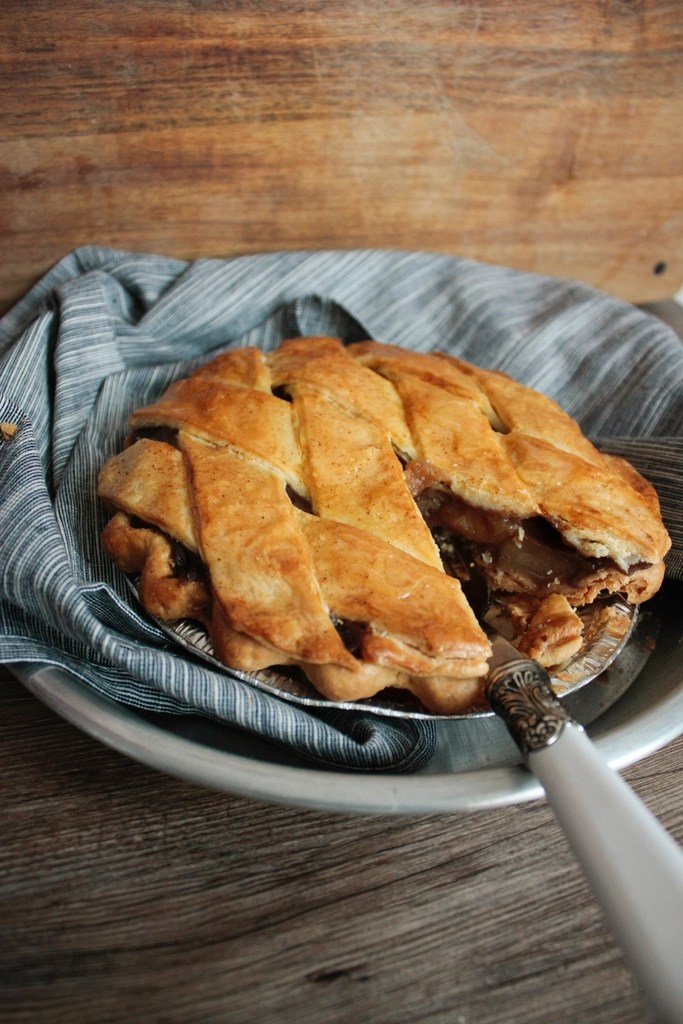
    Many moons ago, my wife and I watched the 2006 HBO documentary Thin, which chronicles the tragic existence of girls in a Florida rehab clinic for eating disorders. These poor souls were ensnared in a vicious cycle of depression, self-loathing, and lies, their recovery rates abysmally low and fatality rates tragically high. After this emotional gut-punch, we desperately needed a palate cleanser, so we turned to a pie-baking contest featuring Midwestern women in Christmas sweaters, lovingly toiling over pie crusts. These wholesome warriors of the kitchen were a stark contrast to the aforementioned sufferers. It dawned on me that pie baking is the antithesis of anorexia—a condition of solipsism where one disappears into the self, whereas pie baking is a testament to community, love, and selfless devotion to butter and flour.

    Imagine, if you will, a world where the kitchen isn’t just a hub of culinary creation but a sacred temple of love, where pie-baking is the highest form of devotion. In this sanctified realm, every Midwestern woman in a Christmas sweater is a culinary high priestess, her rolling pin a scepter of affection, her pie crust a canvas for heartfelt artistry. The Pie Baking Contest is an epic battleground where these valiant women gather, their aprons fluttering like superhero capes, ready to channel pure, unadulterated love into their pies. The stakes are absurdly high, the competition fierce, but the atmosphere? Pure camaraderie and joy.

    Here, pie baking is not just a quaint pastime; it’s an epic saga of love, community, and unyielding devotion. These heroines approach their craft with the precision of neurosurgeons and the passion of Renaissance artists. Flour fills the air like enchanted snow, butter is blended into dough with the deftness of a master illusionist, and apples are peeled and sliced with the ferocity of a seasoned samurai. Each pie is a labor of love, a tangible expression of their deepest affections. As they sweat and toil over their creations, the kitchen morphs into a bustling hub of warmth and connection.

    Baking pies, slinging spaghetti and garlic bread, or whipping up a dish of hot and sour Tom Yum Goong soup demands a healthy soul, one that’s plugged into the matrix of family and community. We therefore don’t journey solo but soar with a merry band of culinary adventurers, armed with spatulas and mixing bowls, ready to conquer the next great feast. So, skip the guilt and embrace the butter—life’s too short for bland food and empty kitchens.

    Baking pies points us to the valuable custom of Crustodianism–the sacred, soul-healing act of cooking not merely for sustenance, but as a devotional rite—an expression of love, fellowship, and culinary redemption. Born at the crossroads of Midwest Christmas sweater sincerity and battle-hardened pie crust tenacity, Crustodianism elevates the domestic act of baking into a communal liturgy. The Crustodian is no mere cook; she (or he, apron optional) is a caretaker of tradition, a therapist armed with a rolling pin, a high priest of carbs performing ritual alchemy with butter, flour, and tears of joy.

    In contrast to the solipsistic void of disordered eating, where nourishment is seen as the enemy, the Crustodian sees food as communion. A warm casserole becomes a life raft. A triple-layer coconut cream pie becomes a bridge to the lonely. A pot of stew bubbles with the echoes of ancestral affection. Cooking, in this frame, is the antidote to isolation—the proof that one has not given up on the world but doubled down on its delicious potential.

    Crustodianism isn’t just about the food. It’s about saying, “I made this for you,” and meaning it with your whole buttery soul. It’s about reclaiming joy, reclaiming appetite, and yes, reclaiming your place at the table—preferably next to someone you love, with a second helping on the way.