Category: culture

  • Why Ritualized Combat Still Needs a Line You Don’t Cross

    Why Ritualized Combat Still Needs a Line You Don’t Cross

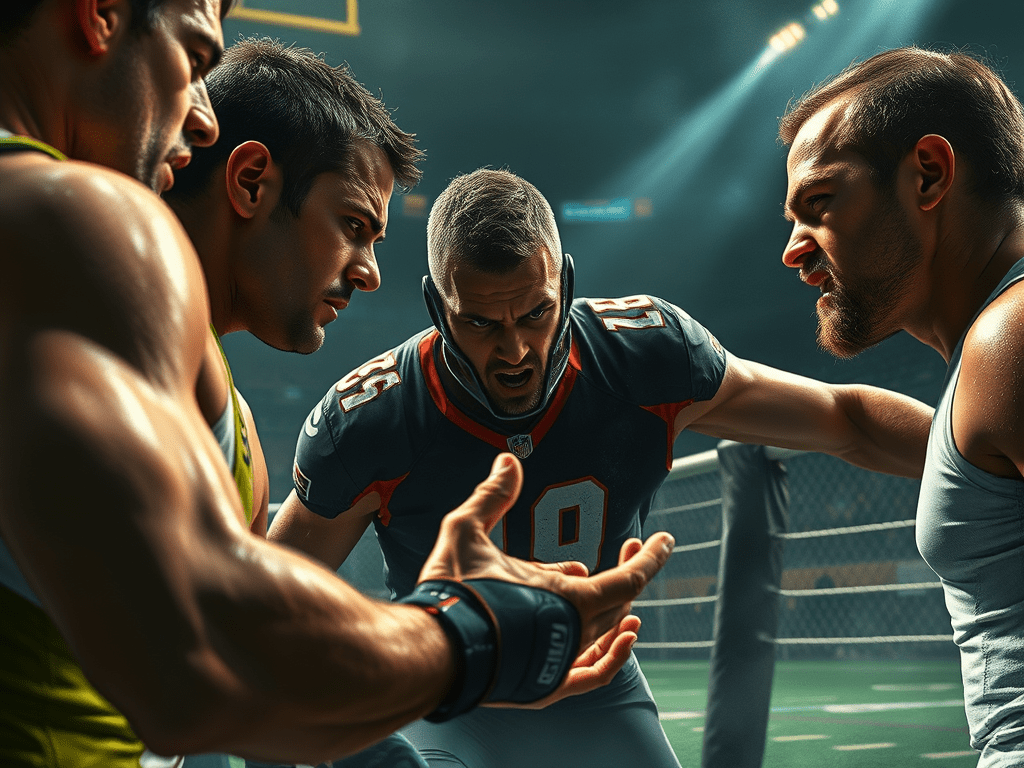
    In The Professor in the Cage, Jonathan Gottschall argues that sports like football aren’t just games—they’re stylized duels, ritualized combat wrapped in pads and broadcast rights, and they function on one essential currency: honor. Strip away the cleats and helmets, and you’re left with the same ancient male impulse—to fight, to dominate, and to prove you’re not the rabbit in a room full of wolves.

    But here’s the twist Gottschall doesn’t miss: even in the most violent games, there are rules—rituals that separate man from animal, performance from savagery. The football field, the octagon, the prison yard, the nightclub—they’re all arenas of testosterone-laced theater where men assert dominance, but with an agreed-upon script. Break that script, and you don’t just commit a foul—you commit a cultural sin.

    Trash Talk, But Make It Sacred

    We tend to think of trash talk as disrespectful—and, sure, it often is. But it’s also part of the ritual. Mind games, verbal jabs, icy stares, even the headbutt-in-slow-motion during a coin toss—it’s all within the monkey dance. The key is: you stay within the choreography. There’s a line you don’t cross.

    Bill Romanowski didn’t just cross the line—he nuked it. In 1998, the white Denver Broncos linebacker spit on Black 49ers receiver J.J. Stokes. Not trash talk. Not gamesmanship. Spit. A loaded gesture, freighted with the filth of American racial history—slavery, Jim Crow, the days when white men spat on Black men to reduce them to less than human.

    Romanowski’s act wasn’t just disgusting. It was ritual desecration. So offensive, his own teammates were furious. Shannon Sharpe, on national television, looked ready to turn in his mic for a helmet and hunt Romo down himself. Tom Jackson—veteran linebacker, no stranger to violence—said it plain: “If a white man had spit on me, I’d have told him, ‘Do it again and I’ll kill you.’”

    That’s the level of violation we’re talking about. Because saliva isn’t just gross—it’s symbolic. In the world of ritualized combat, putting your spit on someone is not communication—it’s provocation. It’s the opening move in a fight, not a play.


    The Gum on the Ashtray: A Nightclub Parable

    Gottschall’s theory doesn’t just live on the field. I’ve seen it firsthand—in 1989, at a nightclub in Bakersfield. I was a new writing instructor, sitting with some Nigerian colleagues, when a crew of men—hardened, street-weathered, violent-looking—decided they didn’t like our presence. One of them walked over, pulled the gum from his mouth, smashed it into our ashtray with theatrical contempt, and walked off.

    Let me decode that for you: he spit on our table without actually spitting. He made a saliva-based gesture designed to start something. And the unspoken law was clear: respond, or leave and accept that you’ve been punked.

    I left. Because I wasn’t ready to fight five guys who looked like they’d fought their way out of worse places than any writing conference I’d ever attended.

    But the principle was unmistakable: once the ritual starts, you have to define yourself. Are you food, or are you the one eating?


    The Prison Equation: No Bananas, No Mercy

    Gottschall brings it full circle with prison—the pressure cooker of male hierarchy. There, the rules are stripped to the bone. If you don’t retaliate, you don’t just lose a banana—you lose your humanity. You become “the rabbit.” The food. The one they take from, laugh at, exploit.

    He writes, “If you fail the heart test, the other inmates will take your food, exploit your commissary privileges, extort your relatives, and make you a slave.” In other words: show weakness once, and you’re done.


    Football, Violence, and the Unspoken Law

    Now take that mindset to football. When a linebacker stares down a quarterback after a sack, or a cornerback jaw-jacks a wideout after a deflection, they’re not just showing off—they’re broadcasting: “I am not the rabbit. I am not food.”

    That’s why we watch. Beneath the helmets, we’re witnessing status battles in real time, under stadium lights. It’s ritualized war with a rulebook and highlight reels. And we love it. Because something ancient inside us recognizes the stakes, even if we don’t name them.

    But even here, in the modern Coliseum, the honor code must hold. Break it—spit on your opponent, stomp a head, ignore the script—and you’re not just a dirty player. You’re a violator of the sacred order. You’re chaos in a world that depends on containment.


    Conclusion: Spit Happens, But It Shouldn’t

    So yes, ritualized combat is part of our DNA. We can’t scrub it out any more than we can stop blinking. But it only works when the rules of engagement are followed. Trash talk is theater. Respect is the scaffolding. And spit—literal or symbolic—is a bridge too far.

    Because when men fight, they must fight with rules.
    And if they don’t?
    It’s not sport anymore.
    It’s just violence.

  • The Gorilla Pecs of Glory: Why We Watch Men Smash Each Other and Call It Civilization

    The Gorilla Pecs of Glory: Why We Watch Men Smash Each Other and Call It Civilization

    According to Jonathan Gottschall, author of The Professor in the Cage: Why Men Fight and Why We Like to Watch, football isn’t just sport—it’s ritualized combat. A tamed brawl. A socially sanctioned way to indulge our primal appetite for domination without devolving into street warfare. He calls it the monkey dance, a primitive ballet with rules, referees, and halftime shows. I prefer a less polite term: the gorilla pec slap—because that’s what it is. Chest-thumping, ego-flexing theater that feels a lot less like play and a lot more like primal pageantry.

    Gottschall’s thesis is blunt and unapologetic: we are wired for battle. From schoolyard scuffles to rap battles to cage fights, we seek structured conflict to test status, establish pecking orders, and avoid descending into outright anarchy. Whether it’s verbal warfare on stage or two linemen colliding at full speed, it’s all the same story: controlled aggression keeping the real chaos at bay.

    And the stakes, bizarrely, are moral. Gottschall suggests that these “battles with a code” serve a civilizing function: they allow men—yes, mostly men—to hash out dominance hierarchies without burning down the village. Ritualized violence, he argues, is less toxic than the alternative: unpredictable, unsanctioned brutality.

    This raises an uncomfortable truth about the function of sports: men need to know where they stand. The pecking order isn’t just some caveman relic—it’s a form of psychological infrastructure. Everyone knowing their “lane” may sound medieval, but Gottschall insists it’s what prevents society from devolving into a Mad Max sequel. And frankly, he might be right.

    Ritualized battle—be it on the field, the mat, or the mic—feeds something deeper than bloodlust. It gives us narrative. Stories of courage, humiliation, redemption, and collapse. We see ourselves in those stories. We crave them not just for the carnage but for what they reveal: who we are when the pressure spikes and the lights come on.

    Still, some social critics aren’t buying it. They see football and its violent cousins as nothing more than toxic masculinity wrapped in billion-dollar branding. To them, it’s hero cosplay for emotionally stunted men. But Gottschall flips that argument: suppressing these instincts doesn’t make us enlightened—it just makes us dishonest.

    That said, even if we accept that ritualized combat is hardwired and necessary, we’re still left with a lingering question: at what cost? The bodies pile up. The brains deteriorate. Athletes become avatars for our fantasies—and casualties of them, too. Their injuries are real, their careers often short, and their pain long. And yet the spectacle rolls on.

    Meanwhile, the sports industry—like any good dealer—knows how to keep us hooked. Betting apps ping our dopamine receptors, endless content fills our social feeds, and we’re suddenly refreshing stats at 2 a.m. like Wall Street analysts chasing fantasy league glory. What started as play becomes compulsion. Hero worship mutates into dependency. Sports betting morphs into moral rot.

    So where does that leave the thinking sports fan? Are we doomed to either overanalyze the game into oblivion or become wide-eyed addicts to its spectacle? Can we still enjoy a bone-rattling hit without silently calculating the CTE risk?

    There are no easy answers. But here’s the uncomfortable truth: sports are too good at what they do. They hijack our lizard brains, feed our tribal instincts, and offer us drama cleaner than politics, safer than war, and more thrilling than any sermon.

    And like those mythical gorillas slapping their chests in the mist, we’ll keep watching. Because beneath the helmets and highlight reels, we’re not just watching games—we’re watching ourselves. And that, more than anything, is the real addiction.

  • The Salma Hayek-ification of Writing: A Love Letter to Our Slow-Motion Doom

    The Salma Hayek-ification of Writing: A Love Letter to Our Slow-Motion Doom

    I’ve done what the pedagogical experts say to do with ChatGPT: assume my students are using it and adjust accordingly. I’ve stopped trying to catch them red-handed and started handing them a red carpet. This isn’t about cracking down—it’s about leaning in. I’ve become the guy in 1975 who handed out TI calculators in Algebra II and said, “Go wild, kids.” And you know what? They did. Math got sexier, grades went up, and nobody looked back.

    Likewise, my students are now cranking out essays with the polish of junior copywriters at The Atlantic. I assign them harder prompts than I ever dared in the pre-AI era—ethical quandaries, media critiques, rhetorical dissections of war propaganda—and they deliver. Fast. Smooth. Professional. Too professional.

    You’d think I’d be ecstatic. The gap between my writing and theirs has narrowed to a hair’s width. But instead of feeling triumphant, I feel…weirdly hollow. Something’s off.

    Reading these AI-enhanced essays is like watching Mr. Olympia contestants on stage—hyper-muscular, surgically vascular, preposterously sculpted. At first, it’s impressive. Then it’s monotonous. Then it’s grotesque. The very thing that was once jaw-dropping becomes oddly numbing.

    That’s where we are with writing. With art. With beauty.

    There’s a creeping sameness to the brilliance, a too-perfect sheen that repels the eye the way flawless skin in a poorly-lit Instagram filter repels real emotion. Everyone’s beautiful now. Everyone’s eloquent. And like the cruelest of paradoxes, if everyone looks like Salma Hayek, then no one really does.

    AI content has the razzle-dazzle of a Vegas revue. It’s slick, it’s dazzling, and it empties your soul faster than a bottomless mimosa brunch. The quirk, the voice, the twitchy little neurosis that makes human writing feel alive? That’s been sanded down into a high-gloss IKEA finish.

    What we’re living through is the Salma Hayek-ification of modern life: a technologically induced flattening of difference, surprise, and delight.

    We are being beautified into oblivion.

    And deep inside, where the soul used to spark when a student wrote a weird, lumpy, incandescent sentence—one they bled for, sweated over—I feel the faint echo of that spark flicker.

    I’m not ready to say the machines have killed art. But they’ve definitely made it harder to tell the difference between greatness and a decent algorithm with good taste.

  • The Salma-Hayek-ification of Beauty and the Algorithmic Flattening of Everything (And Why Your Weirdness Is Now Sacred)

    The Salma-Hayek-ification of Beauty and the Algorithmic Flattening of Everything (And Why Your Weirdness Is Now Sacred)

    If technology can make us all look like Salma Hayek, then congratulations—we’ve successfully killed beauty by cloning it into oblivion. Perfection loses its punch when everyone has it on tap. The same goes for writing: if every bored intern with a Wi-Fi connection can crank out Nabokovian prose with the help of ChatGPT, then those dazzling turns of phrase lose their mystique. What once shimmered now just… scrolls.

    Yes, technology improves us—but it also sandblasts the edges off everything, leaving behind a polished sameness. The danger isn’t just in becoming artificial; it’s in becoming indistinguishable. The real challenge in this age of frictionless upgrades is to retain your signature glitch—that weird, unruly fingerprint of a soul that no algorithm can replicate without screwing it up in glorious, human ways.

    If technology can make us all look like Brad Pitt and Selma Hayak, then none of us will be beautiful. Likewise, if we can all use ChatGPT to write like Vladimir Nabokov, then florid prose will no longer have the wow factor. Technology improves us, yes, but it also makes everything the same. Retaining your individual fingerprint of a soul is the challenge in this new age. 

  • Left Behind in a Dream: How Grunge Crushed My Jangle-Pop Heart

    Left Behind in a Dream: How Grunge Crushed My Jangle-Pop Heart

    In 1990, I was standing under the humming fluorescents of a dusty T-shirt and poster shop on Hollywood Boulevard, flipping through faded images of Morrissey, when a song hit me like a velvet brick: Obscurity Knocks by the Trashcan Sinatras.

    A wall of shimmering guitars spilled out of the speakers—jangly, melancholic, and so clearly descended from the holy Johnny Marr school of emotional resonance. It was as if Heaven Knows I’m Miserable Now had been reincarnated in a Scottish bedroom, passed through a reverb pedal, and handed to someone just wounded enough to understand.

    That same year, I fell headfirst into The Sundays’ Reading, Writing, and Arithmetic, and I’ve never quite crawled out. You’re Not the Only One I Know” may still be my favorite song of all time—part lullaby, part confessional, sung by someone who sounded like they were trying not to wake the ghosts in the room.

    In those moments, I was sure I was witnessing the dawn of a new musical epoch—an era where introspective, literate guitar pop would inherit the emotional crown left by The Smiths. I imagined mixtapes stretching into the next decade, filled with chiming guitars and lyrics that quoted Yeats and quietly ruined you.

    But then the mood changed.

    Nirvana showed up, kicked in the door, and everyone suddenly wanted to scream into the void instead of whisper into the ache. Nevermind dropped, and within what felt like minutes, everyone moved to Seattle, grew out their hair, and baptized themselves in feedback and flannel. The dreamy pop I loved didn’t just fall out of fashion—it was buried in a landslide of Grunge.

    The prophecy had already been written in “Obscurity Knocks”—and it delivered.

    But I refused to let go. While the world air-guitared to “Smells Like Teen Spirit,” I doubled down on Lloyd Cole, The Cocteau Twins, Lush, Chapterhouse, and The Go-Betweens. I curated sadness. I polished it. I stayed loyal to the bands that sounded like rain and minor chords and unspoken longing.

    Grunge? Too growly. Too aggro. Too much boot-stomping and not enough sighing into the mist.

    So what carries the flickering torch of that era for me today? What band whispers instead of roars, dreams instead of demands? One song comes to mind: Love Yourself by Lovejoy.

    It’s not a perfect mirror of those early ’90s tracks, but it has the same fragile DNA—the ache, the beauty, the subtle drama folded into melody. It’s as if someone reached back into my old shoebox of mixtapes, pulled out a strand of sound, and stitched it into something new.

    Call me stubborn. Call me sentimental. But I’ll be here, still thumbing through my old CDs, still worshipping at the altar of bittersweet jangle-pop, long after the amplifiers of Grunge have gone quiet.

  • When Books Were Gods: Nostalgia for a Lost Era

    When Books Were Gods: Nostalgia for a Lost Era

    Alice Flaherty opens The Midnight Disease: The Drive to Write, Writer’s Block, and the Creative Brain with a quote from Roland Barthes: “A creative writer is one for whom writing is a problem.”

    Problem? That word hardly does justice to the affliction. A problem is misplacing your car keys or forgetting to pay the water bill. What I have is more like a life swallowed whole, a case study in obsession so severe it borders on the pathological. Writing isn’t just a habit; it’s an all-consuming parasite, a compulsion that, in a just world, would require a 12-step program and a sponsor who confiscates my pens at night.

    But since no one is shipping me off to a remote cabin with nothing but an axe and a survival manual, I’ll have to settle for less extreme interventions—like seeking solace in Flaherty’s musings on the so-called writing “problem.”

    As it turns out, my affliction has a clinical name. Flaherty informs me that neurologists call this compulsion hypergraphia—the unrelenting urge to write. In their view, I suffer from an overactive communication drive, a neurochemical malfunction that ensures my brain is forever churning out words, whether the world wants them or not.

    Yet Flaherty, a physician and a neuroscientist, doesn’t merely dissect the neurology; she also acknowledges the rapture, the ecstasy, the fever dream of writing. She describes the transformative power of literature, how great writers fall under its spell, ascending from the mundane to the sacred, riding some metaphorical magic carpet into the great beyond.

    For me, that moment of possession came courtesy of A Confederacy of Dunces. It wasn’t enough to read the book. I had to write one like it. The indignation, the hilarity, the grotesque majesty of Ignatius J. Reilly burrowed into my psyche like a virus, convincing me I had both a moral duty and the necessary delusions of grandeur to bestow a similarly deranged masterpiece upon humanity.

    And I wasn’t alone. Working at Jackson’s Wine & Spirits in Berkeley, my coworkers and I read Dunces aloud between customers, our laughter turning the store into a kind of literary revival tent. Curious shoppers asked what was so funny, we evangelized, they bought copies, and they’d return, eyes gleaming with gratitude. Ignatius, with his unhinged pontifications, made the world seem momentarily less grim. He proved that literature wasn’t just entertainment—it was an antidote to the slow suffocation of daily life.

    Before Dunces, I thought books were just stories. I didn’t realize they could act as battering rams against Plato’s cave, blasting apart the shadows and flooding the place with light.

    During my time at the wine store, we read voraciously: The Ginger Man, One Hundred Years of Solitude, Moravia’s Contempt, Camus’ Notebooks, Borges’ labyrinthine tales. We never said it out loud, but we all understood—life was a dense fog of absurdity and despair, and books were our MREs, the intellectual rations that kept us alive for another day in the trenches.

    Books were our lifeline. They lifted our spirits, fortified our identities, and sharpened our minds like whetstones against the dull blade of existence. They turned us into a ragtag band of literary zealots, clutching our dog-eared pages like relics, singing the praises of Great Literature with the fervor of the Whos in Whoville—except instead of roasting beast, we feasted on Borges and Camus.

    Which brings us to Flaherty’s lament: the Internet is muscling books out of existence, and when books go, so does a vital piece of our humanity.

    What would my memories of Jackson’s be without the shared reverence for literature? It wasn’t just a passion; it was the glue that bound us to each other and to our customers. The conversations, the discoveries, the camaraderie—none of it could be replicated by an algorithm or a meme.

    How can I not think of this in the context of a country still staggering through its post-pandemic hangover of rage, paranoia, and despair? Where the love of books has been trampled beneath an endless scroll of digital sludge, and where human connection has been reduced to strangers launching spiteful grenades at each other across social media—those lawless arenas ruled by soulless tech lords, their pockets fat with the profits of our collective decline?

    Flaherty confesses that her need to dissect the spark of writing—the thing that makes it so irrepressibly human—was an uncontrollable urge, one that made her question whether she suffered from hypergraphia, postpartum mania, or some deeper compulsion to explore what she calls the “Kingdom of Sorrow” after the devastating loss of her prematurely born twin boys. Her search for the root of her writing obsession reminded me of Rainer Maria Rilke’s advice in Letters to a Young Poet: the only writing worth doing is that which one cannot not do.

    Beyond hypergraphia—an affliction rare enough to keep it from becoming a trendy self-diagnosis—Flaherty also tackles the more mundane but far more common malady of writer’s block. She attributes it to mood disorders, procrastination, repressed anxieties, and perhaps a sprinkle of nihilism. I used to wrestle with writer’s block myself, particularly between short stories, back when I entertained the delusion that I might carve out a name for myself in literary fiction. But whenever I think of writer’s block, I think of the one person I’d most like to share a meal with: Fran Lebowitz.

    Lebowitz’s writer’s block has lasted for decades, so long, in fact, that she’s upgraded it to a “writer’s blockade.” If Blaise Pascal was an acid-tongued intellectual defending faith, Lebowitz is the sharp-tongued patron saint of the New York literati, delivering high-caliber cultural commentary with the precision of a diamond-tipped drill. That she doesn’t write is a cosmic joke. That people care she doesn’t write is part of her legend. That her off-the-cuff witticisms are more electrifying than most books in print makes her, without question, my literary idol.

    And yet, my devotion to Lebowitz only reveals the terminal nature of my writing affliction. If a genie granted me the chance to swap lives with her—to tour the world, bask in standing ovations, and deliver effortless, unfiltered cultural critique to sold-out crowds—but on the condition that I could never write another book, I would turn it down without hesitation. This refusal confirms the depths of my sickness. In this hypothetical scenario, books themselves are mere shadows compared to the brilliance of Lebowitz’s conversation. And yet, here I am, clinging to the shadows, convinced that somewhere in those pages, I will find the thing that makes existence bearable.

    Surely, no specialist can diagnose a disease like this, much less cure it.

    Reading Flaherty’s sharp and introspective book, I found myself circling a familiar question: is the urge to write both a pathology and a gift? This led me straight to The Savage God, A. Alvarez’s bleak yet compelling account of depression, suicide, and literature. Across history, writers afflicted by melancholy, madness, or sheer existential despair have been cast as tragic geniuses, indulgent sinners, or misunderstood romantics, depending on the prevailing religious and literary winds.

    Take Sylvia Plath, the confessional poet who sealed her fate at thirty, or John Kennedy Toole, the tortured author of A Confederacy of Dunces, who asphyxiated himself at thirty-one. Conventional wisdom holds that Toole’s despair stemmed from his inability to publish his novel, but Tom Bissell, in “The Uneasy Afterlife of A Confederacy of Dunces,” suggests a more tangled story—one of creeping paranoia and the pressures of academia, where Toole, at twenty-two, was the youngest professor in Hunter College’s history.

    Like his doomed creator, Ignatius J. Reilly is possessed by the need to write. His screeds, stitched together from the wisdom of Boethius, function less as arguments and more as the existential flailings of a man convinced that writing will bring him salvation. He writes because he must, the way a fish swims—to stay alive.

    Bissell’s most cutting insight isn’t about Toole’s life, but about his novel’s fundamental flaw: Dunces is riddled with indulgences—flabby with adverbs, allergic to narrative structure, and populated with characters so exaggerated they teeter on the edge of cartoonhood. He argues that Dunces is “a novel that might have been considerably more fun to write than it is to read.” This line stopped me cold.

    Why? Because Dunces was my Rosetta Stone, my gateway drug to the idea of becoming a comic novelist. And yet here was the brutal truth: the very book that set me on this path was a wreck of undisciplined excess. If Dunces ruined my life, it did so not because it failed, but because I absorbed its flaws as gospel. I inhaled its bloated exuberance, its unshackled absurdity, and made it my literary template.

    To undergo a religious experience from a flawed book is to risk a kind of artistic contamination—you don’t just inherit its brilliance, you inherit its sins. My writing compulsion is perhaps nothing more than Dunces’ worst tendencies metastasized in my brain.

    And so, as a recovering writing addict, I am forced to sit with this painful revelation and digest it like a bad meal—one that demands an industrial-strength antacid.

  • Too Old for the Peacock Parade: Notes from a Miami Beach Exile

    Too Old for the Peacock Parade: Notes from a Miami Beach Exile

    From our apartment wedged beside a Hampton Inn in Miami Beach, the morning soundtrack is a symphony of honking horns—angry, insistent, and deeply personal, as if each driver believes their rage will somehow part the traffic like the Red Sea. I’m grateful we didn’t rent a car. Instead, we’ll wander on foot like civilized tourists and hop a trolley to today’s grand event: a five-hour tour of Miami’s greatest hits—its islands, its excess, and its curated chaos. Dinner and a boat ride are promised, which sounds either romantic or like a timeshare presentation with ocean views.

    For my family, it’s all new—the pastel Art Deco, the swampy opulence, the omnipresent scent of tanning oil and ambition. But for me, a native Floridian, this is a strange pilgrimage, a nostalgia trip filtered through Botox and Beats headphones. Miami hasn’t changed—it’s just doubled down. This isn’t a city. It’s a humid runway where the rich and surgically sculpted flex their flesh like currency. I feel like I’m attending a party I wasn’t invited to, wearing the wrong shoes and ten years too late.

    This morning, my wife and I walked the edge of the Atlantic, and I was struck by how different it smells from the Pacific. The Pacific has that cold, salty hush. The Atlantic? It smells lush—warm, sweet, almost suggestive. Like a pineapple cocktail is about to glide down from the clouds and whisper, “Welcome, darling.” There’s something in the air here that makes you believe life is one long poolside flirtation—until you check your bank account or your blood pressure.

    Still, I’m looking forward to going home. Say what you will about Los Angeles—it’s neurotic, performative, and addicted to traffic—but compared to Miami Beach, it’s practically Amish.

  • Johnny Carson Was Prozac Before Big Pharma Perfected the Formula

    Johnny Carson Was Prozac Before Big Pharma Perfected the Formula

    I’m listening to Carson the Magnificent on Audible, Bill Zehme’s lush tribute to the King of Late Night. Zehme is a skilled writer, no doubt—but he suffers from an affliction familiar to many stylists: chronic purple prose. His descriptions don’t sparkle; they sprawl. Reading him is like eating an entire wedding cake when a slice would have sufficed. He’s so enamored with his own flourishes that Johnny Carson occasionally vanishes behind the velvet curtain of Zehme’s adjectives.

    Still, what he lacks in restraint, he makes up for in ardor. Zehme clearly loves his subject, and his affection pulses through the pages. Carson emerges as a sort of secular priest of television, delivering nightly benedictions of laughter for thirty years. He wasn’t edgy or groundbreaking—he was dependable, a soothing presence at 11:30 PM, like a warm bath or a glass of room-temperature white wine. He was comfort food for the collective American psyche, Prozac before Big Pharma perfected the formula. A totem from a time when a single man in a suit could stand at the crossroads of politics, culture, and showbiz and crack wise to a nation that hadn’t yet shattered into a million niche audiences.

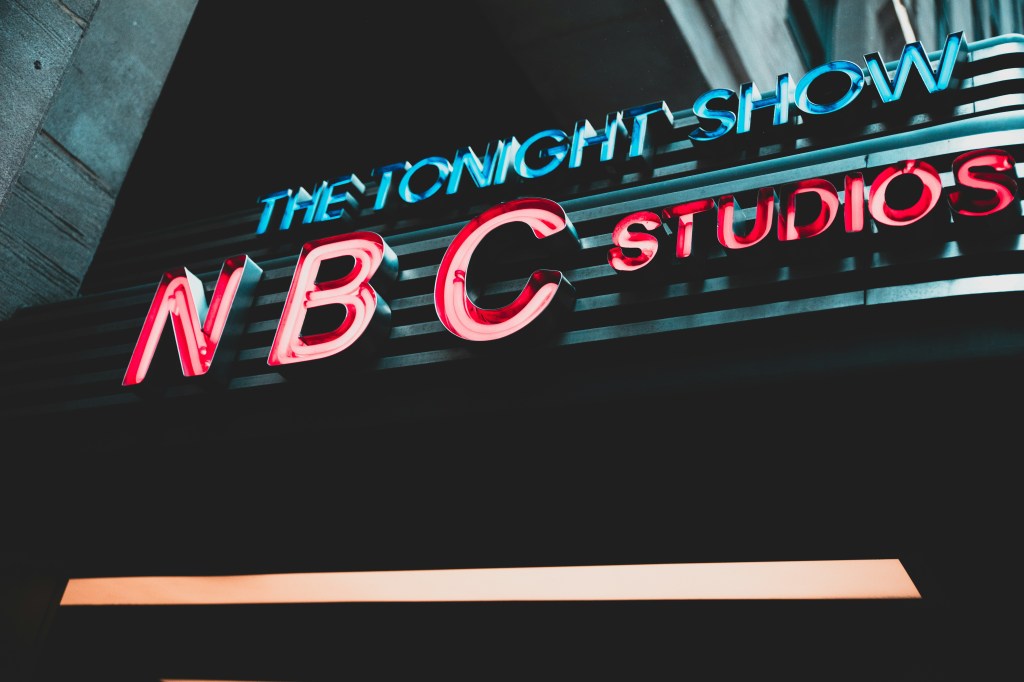
    I was never much of a Carson acolyte myself. Dick Cavett had the brain. Letterman had the bite. Carson? He had commercials. What I remember most is that the show seemed designed to lull you into a trance of polite chuckles and bland banter. It wasn’t bad, exactly—it was just relentlessly there. Watching The Tonight Show felt less like a choice and more like a ritual, a nightly genuflection before the glow of the TV set. People tuned in not out of excitement, but out of habit. He was the head caveman, murmuring jokes by firelight, while the rest of us nodded and laughed, grateful to not be alone in the dark.

    To skip Carson was to risk social exile. You didn’t want to be the one who missed what the country’s collective subconscious had passively absorbed.

    As I listen to Carson the Magnificent, I find myself pining—not for Carson, but for the era he ruled. A time when a singular voice could still cut through the noise and hold the country’s wandering attention. That cultural unity is gone now, and maybe for the best, but I can’t help mourning it a little.

    Zehme will, I’m sure, delve into the darker recesses of Carson’s psyche—and I’m ready for it. I’ve already mainlined The Larry Sanders Show three times, with a fourth round likely on the way. That show remains the gold standard for peeling back the sequined curtain to reveal the neurotic, solipsistic soul of late-night television. If Zehme gets even halfway there, I’ll consider the audiobook time well spent—even if I have to wade through another paragraph that reads like a thesaurus suffered a head injury.

  • 12 Essential Lexicon Terms for Understanding Social Media-Spawned Pathologies

    12 Essential Lexicon Terms for Understanding Social Media-Spawned Pathologies

    #1: Doppelganger Effect

    When your online double becomes hotter, louder, meaner—and more successful than you.

    #2 Likelepsy

    A convulsive need for validation triggered by spikes in engagement and followed by a crushing dopamine crash.

    #3 Privacide

    The voluntary and cheerful execution of your privacy in exchange for predictive weather, curated playlists, and targeted ads for pants you only thought about.

    #4 TMI-rrhea

    An unstoppable stream of personal disclosures that nobody asked for and everyone wishes they could unsee.

    #5 Confessistan

    A nation where every citizen is legally required to document their feelings, bowel movements, and brunch choices for public consumption.

    #6 Cringe Fatigue

    A pang of cringe, sadness, and vicarious embarrassment experienced mid-scroll as you witness your friend’s dignity dissolve into hashtags and hot takes.

    #7 Narrativitis

    The chronic compulsion to turn real life into a curated, melodramatic storyline, complete with mood lighting and sad indie music.

    #8 FOMOblivion

    A cognitive blackout where the fear of missing out completely eclipses the joy of being present, addressing your real needs, and the real needs of others because you’re constantly seething in envy and anxiety over hyped-up trifles.

    #9 Scrolloticism

    The act of finding emotional pleasure in self-inflicted torment via outrage consumption and doomscrolling and compensatory self-aggrandizing content posing.

    #10 The Narrative Trap

    When your life becomes a story written by everyone else, and the only thing you can’t do is rewrite your part.

    #11 Feedgret

    A soul-curdling regret triggered by the realization that you’ve been publicly cosplaying as your best self while quietly decaying inside.

    #12 InstaShame Spiral

    A violent emotional plunge brought on by rereading your old captions and realizing you’ve been subtweeting your own dignity for years.

  • Case Studies in Performatosis: Black Mirror’s “Joan Is Awful” and “Nosedive”

    Case Studies in Performatosis: Black Mirror’s “Joan Is Awful” and “Nosedive”

    In the grand medical theater of Black Mirror, few disorders are as virulent and tragically funny as Performatosis—the compulsive need to live life as if constantly auditioning for an invisible panel of social media judges. Two episodes in particular, “Joan Is Awful” and “Nosedive,” offer prime case studies in this terminal condition. Both protagonists—Joan and Lacie—aren’t just victims of technological dystopia; they’re emotionally exhausted performers collapsing under the weight of their own curated identities. And like all great tragicomedies, they bring it on themselves with a smile, a filter, and a legally binding Terms of Service they definitely didn’t read.

    “Joan Is Awful” is what happens when you outsource your entire identity to an algorithm and then act surprised when it turns on you. Joan, a blandly competent tech middle-manager with questionable morals and a perpetual expression of secondhand guilt, becomes a literal character in a TV show about her own life. But this isn’t just surveillance—it’s a forced performance, one she never auditioned for but can’t stop starring in. Her daily decisions are reinterpreted, exaggerated, and broadcast to a global audience craving content, not character. The real tragedy? Joan begins modifying her behavior to match the awful version of herself the algorithm is producing, proving that once Performatosis sets in, the line between self and spectacle evaporates faster than a TikTok trend.

    Meanwhile, in “Nosedive,” Lacie lives in a pastel-colored prison of positivity, where smiles are currency and emotional repression is a public service. Her entire life is a performance designed to earn ratings—every cup of overpriced coffee, every chirpy interaction, every dead-eyed compliment is another step up the social ladder. But like all performances, hers eventually cracks, and when it does, it’s not just a fall—it’s a nosedive into social exile. Her descent is more than a narrative arc; it’s a diagnosis. She’s suffering from terminal Performatosis, unable to stop performing even as her audience turns on her. The episode’s final, cathartic scream-off in jail is less an act of rebellion and more a final gasp of unscripted truth.

    What links Joan and Lacie is not just the technology that invades their lives, but the deep, internalized need to be seen—and more dangerously, to be liked. They are not characters living in dystopias; they are mirrors of us, the perfectly average user who has confused validation with identity. The systems they’re trapped in are just more honest versions of the ones we already use—systems that reward curated personas, punish messiness, and encourage self-policing with a faux-empowering smile. In both cases, the platforms don’t just reflect reality; they rewrite it, edit it, and package it for mass consumption—leaving the person behind feeling like a glitch in their own story.

    Performatosis, as diagnosed through these episodes, is not about ego. It’s about survival in a world where being real is risky, but being performative is profitable. Joan and Lacie suffer not just because they’re being watched, but because they’ve handed over their stories to people—and systems—that care more about ratings than reality. Their eventual breakdowns are not mental collapses; they’re acts of resistance. Unscripted, unbeautiful, and gloriously human. And if we’re smart, we’ll take the hint: stop performing before you forget the script was never yours to begin with.