Category: culture

  • It’s Time to Replace the Manoverse

    It’s Time to Replace the Manoverse

    The Manoverse—if we’re still calling it that—is less a universe and more a glorified bachelor pad of delusion: part weight room, part cigar lounge, part bunker of arrested development. It’s where middle-aged men cosplay as lone wolves, though most couldn’t survive a weekend without their chiropractor, their wireless earbuds, or the approval of a group chat titled “Legends Only.”

    Here, masculinity is curated like a Spotify playlist: heavy on Joe Rogan and conspiracy theories, light on self-awareness. It’s a world built on protein powder, podcast epistemology, and the sacred belief that buying another tactical flashlight will somehow repair one’s crumbling sense of purpose. These men aren’t villains. They’re just… tired. Tired of being told to open up and tired of not knowing how. So instead, they talk about cigars and bourbon like it’s therapy and do deadlifts until their emotions herniate.

    It’s not toxic masculinity—it’s post-traumatic stoicism, sprayed with Axe and monetized via affiliate links. A more accurate word for Manoverse is Brocosytem–a thriving ecosystem of protein, posturing, and podcast quotes or Testosterzone– where men go to reclaim their abs, autonomy, and adolescent values.

    We need a wholesome place for masculinity–a place for strength and stewardship. We need a Manstead–a homestead of character; a grounded place where strength meets responsibility or a Mantlehood–which suggests taking up a mantle: carrying responsibility with humility and grace. Or we need a Manhaven–a sanctuary of stable, nurturing masculinity. Protective, not possessive.

    The self-satisfied podcasters of the so-called Manosphere have officially jumped the shark. Their recycled rants and tired performances have lost whatever relevance they once had. It’s clear they’ve outlived their cultural moment. What we need now are new voices—embodied, grounded examples of healthy masculinity—men who lead with integrity, vulnerability, and actual wisdom instead of volume and vanity.

  • Smoke, Sheets, and the Spectacle of Faith

    Smoke, Sheets, and the Spectacle of Faith

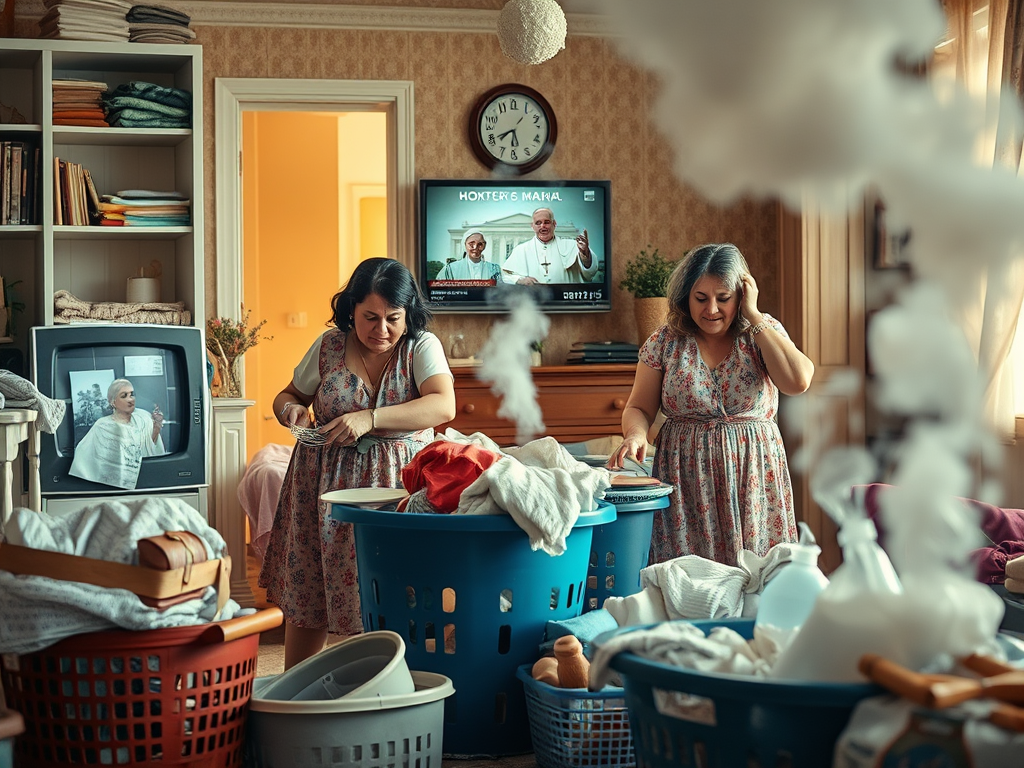
    This morning, I was deep in the ritual of pre-cleaning for the cleaning ladies. Yes, the Marías—both of them named Maria, as if summoned from a 1960s sitcom or a Vatican registry. I was stripping beds, scrubbing dishes, and hoisting laundry baskets like I was auditioning for a domestic CrossFit competition. Because as every self-deluded homeowner knows: your house must be cleaned before the cleaners arrive, lest they judge you and your sloth.

    In the background, Larry Mantle’s AirTalk droned dutifully on LAist 89.3. Then, mid-sentence, the broadcast was interrupted—an old-school news bulletin, the kind that makes you expect a war or a celebrity scandal. But no. Something rarer: a new pope had been chosen. The signal? White smoke rising from the chimney of the Sistine Chapel.

    I had never heard of this protocol before. My first thought? Not theology. Not history. But the shared aesthetic DNA between this and the Golden Globes. The Oscars. The artificial wonder of Peter Pan’s Flight at Disneyland. If you want transcendence, baby, you’d better stage it.

    The Catholic Church, whatever its flaws, understands showmanship. They know airtight theological arguments are no match for spectacle. You don’t capture the masses with hermeneutics—you hook them with enchantment. Thus: white smoke. Bells. Angels singing in Dolby surround. The Vatican doesn’t inform you a pope’s been picked. They stage it like a cosmic halftime show.

    Religion, in its enduring wisdom, knows austerity is a losing brand. Dry dogma doesn’t sell. You need magic. Mystery. A sense that the universe has backstage lighting and a fog machine.

    Because man does not live on bread alone.

    No, man also lives on bells, incense, pageantry, and the theatrical flourish of divine appointment announced via rooftop smoke signals. What’s the metaphysical takeaway? That God, like Hollywood, knows how to build suspense.

  • Breaking Up with the Big Apple: Lena Dunham’s Urban Exorcism

    Breaking Up with the Big Apple: Lena Dunham’s Urban Exorcism

    Lena Dunham once burst onto the pop culture scene like a glitter bomb in a library—loud, impossible to ignore, and slightly out of place. As the wunderkind creator and star of Girls, she personified a certain species of early-2010s Brooklynite: neurotic, navel-gazing, and armed with a liberal arts degree and a vape pen. Her character, Hannah Horvath, declared herself the voice of her generation—or at least a voice of a generation—and we believed her, for better or worse. Adam Driver rode shotgun to stardom on the back of that HBO juggernaut, but Dunham, after a brief and blazing ascent, seemed to evaporate into a fog of personal crises, health issues, and public backlash.

    And then—poof—she was gone.

    Now, Dunham reappears in the pages of The New Yorker with a lyrical breakup letter to New York City, a place that once ran through her veins like overcaffeinated blood. Titled “Why I Broke Up With New York,” the essay chronicles her disillusionment with the urban cathedral she once helped mythologize. Born to an artsy Manhattan clan, she was baptized in brownstones and indie bookstore readings. But the signs of incompatibility showed early: by fourth grade, she needed therapy and anti-anxiety meds. The city wasn’t just fast—it was feral. The subway was a sensory mugging. Noise, chaos, and crowds ganged up on her nervous system. Her sanctuary was a loft bed, stacked high with books and lined with silence.

    That Dunham became the face of NYC hipsterdom is an irony she doesn’t miss. Girls was a love letter to New York in the same way a therapy session is a love letter to your absentee father. After the show ended, so did her patience. She fled to Los Angeles, then Wales—yes, Wales—and finally landed in London, which offered just enough cosmopolitan energy without the aggressive swagger of Manhattan. London was like New York after a long exhale.

    What Dunham’s essay ultimately embraces is self-acceptance. Breaking up with New York doesn’t mean she failed. It just means she outgrew a place that never really fit. And for those who see New York as a mythic proving ground for artists, she offers a bracing rebuttal: it’s also a place that can grind your soul into subway soot. There’s no shame in walking away from an abusive relationship—even if that relationship is with a city that other people treat like a religion.

  • There Is No Digital Kaffeeklatsch: The Lie of Social Media

    There Is No Digital Kaffeeklatsch: The Lie of Social Media

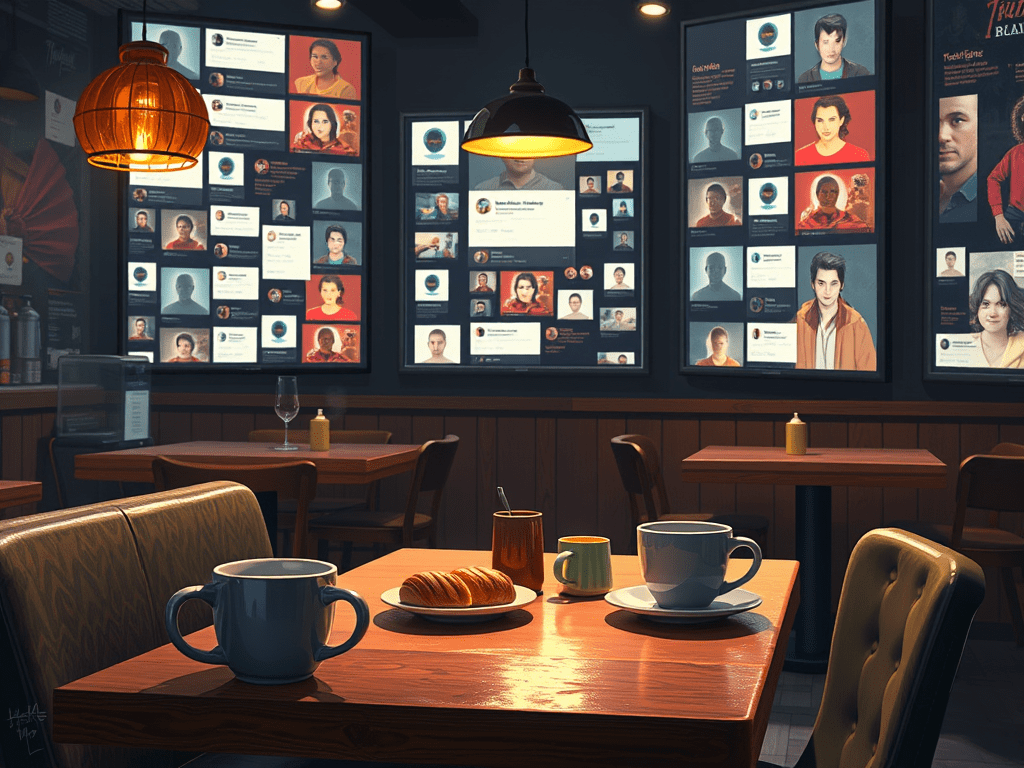
    For the last fifteen years, we’ve let the term social media slip into our lexicon like a charming grifter. It sounds benign, even wholesome—like we’re all gathered around a digital café table, sipping lattes and chatting about our lives in a warm, buzzing kaffeeklatsch. But that illusion is precisely the problem. The phrase “social media” is branding sleight-of-hand, a euphemism designed to lull us into thinking we’re having meaningful interactions when, in reality, we’re being drained like emotional batteries in a rigged arcade.

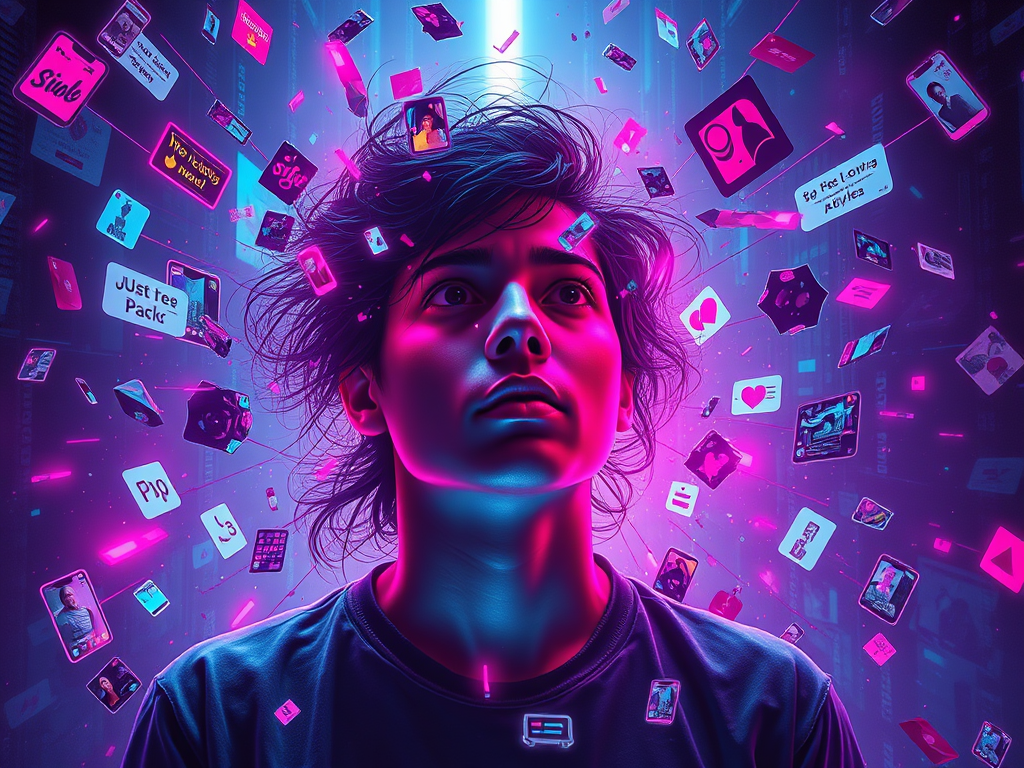
    This is not a friendly coffeehouse. It’s a dopamine-spewing Digital Skinner Box where you tap and scroll like a lab rat hoping for one more pellet of validation. What we’re calling “social” is, in fact, algorithmic manipulation dressed in a hoodie. We are not exchanging ideas—we are bartering our attention for scraps of engagement while surrendering personal data to tech oligarchs who harvest our behavior like bloodless farmers fattening up their cattle.

    Richard Seymour calls this hellscape The Twittering Machine, and he’s not exaggerating. Byung-Chul Han calls it gamification capitalism, a regime in which we perform our curated selves for likes while the real self, the vulnerable human beneath the filter, slowly atrophies. Anna Lembke describes our overstimulated descent in Dopamine Nation, while the concept of Algorithmic Capture suggests we no longer shape technology—technology shapes us.

    So let’s drop the charade. This isn’t “social media.” It’s addiction media, engineered to flatten nuance, hollow out identity, and leave us twitching in the glow of our screens like the last souls left in a flickering casino. Whatever this is, it’s not convivial, it’s not coffeehouse chatter, and it’s certainly not social. It’s the end of human discourse masquerading as connection.

  • The Great Rebrand: Why “Addiction Media” Tells the Truth

    The Great Rebrand: Why “Addiction Media” Tells the Truth

    Reading Richard Seymour’s The Twittering Machine is like discovering that Black Mirror isn’t speculative fiction—it’s documentary. Seymour paints our current digital reality as a propaganda-laced fever swamp, one where we aren’t just participants but livestock—bred for data, addicted to outrage, and stripped of self-agency. Watching tech-fueled sociopaths ascend to power begins to make sense once you realize that mass digital degradation is the new civic norm. We’re not on the cusp of dystopia; we’re marinating in it.

    Most of us are trapped in Seymour’s titular machine, flapping like digital pigeons in a Skinner Box, pecking for likes, retweets, or just one more dopamine hit. We scroll ourselves into a stupor, zombies hypnotized by grotesque clickbait and influencer gaucherie. And yet, a flicker of awareness remains. Some of us know our brains are rotting. We feel it in our foggy thoughts, our shortened attention spans, our craving to be “seen” by strangers.

    But Seymour offers no comfort. He cites a 2015 study where people tried to quit Facebook for 99 days. Most folded within 72 hours. Some switched to Instagram, TikTok, or Twitter—addiction by another name. Only a rare few truly escaped, and they reported something wild: clarity, peace, a sudden freedom from the exhausting treadmill of performance. They had unplugged from what philosopher Byung-Chul Han calls “gamification capitalism,” a system where every social interaction is a metric and every self is a brand.

    Seymour’s takeaway? Let’s retire the quaint euphemism “social media.” It’s not social. It’s not media in the traditional sense. It’s engineered compulsion. It’s addiction media—and we’re the lab rats with no exit key.

  • From Gutenberg to Doomscroll: A Brief History of Our Narrative Decline

    From Gutenberg to Doomscroll: A Brief History of Our Narrative Decline

    Richard Seymour, in The Twittering Machine, reminds us that writing was once a sacred act—a cerebral pilgrimage and a cultural compass. It charted the peaks of human enlightenment and the valleys of our collective idiocy. But ever since Gutenberg’s movable type cranked out the first printed tantrum, writing has also been big business. Seymour calls this “print capitalism”—a factory of words that forged what Benedict Anderson dubbed “imagined communities,” and what Yuval Noah Harari might call humanity’s favorite pastime: building civilizations on beautifully told lies.

    But that was then. Enter the computer—a Pandora’s box with a backspace key. We haven’t just changed how we write; we’ve scrambled the very code of our narrative DNA. Seymour scoffs at the term “social media.” He prefers something more honest and unflinching: “shorthand propaganda.” After all, writing was always social—scrolls, letters, manifestos scrawled in exile. The novelty isn’t the connection; it’s the industrialization of thought. Now, we produce a firehose of content—sloppy, vapid, weaponized by ideology, and monetized by tech lords playing dopamine dealers.

    The term “social media” flatters what is more accurately a “social industry”—a Leviathan of data-harvesting, behavioral conditioning, and emotional slot machines dressed in UX sugar-coating. The so-called “friends” we collect are nothing more than pawns in a gamified economy of clout, their every click tracked, sold, and repurposed to make us addicts. Sherry Turkle wasn’t being cute when she warned that our connections were making us lonelier: she was diagnosing a slow psychological implosion.

    We aren’t writing anymore. We’re twitching. We’re chirping. We’re flapping like those emaciated birds in Paul Klee’s the Twittering Machine, spinning an axle we no longer control, bait for the next poor soul. This isn’t communication. It’s entrapment, dressed up in hashtags and dopamine hits.

  • The Twittering Machine Never Sleeps

    The Twittering Machine Never Sleeps

    Richard Seymour, in his searing dissection of our digital descent, The Twittering Machine, argues that our compulsive scribbling across social media isn’t a charming side effect of modern communication—it’s a horror story. He calls our affliction “scripturient,” which sounds like a medieval disease and feels like one too: the raging, unquenchable urge to write, tweet, post, blog, caption, and meme ourselves into validation. According to Seymour, we’re not sharing—we’re hemorrhaging content, possessed by the hope that someone, somewhere, will finally pay attention. The platforms lap it up, feeding on our existential howl like pigs at a trough.

    But here’s the twist: these platforms don’t just amplify our words—they mutate us. We contort into parodies of ourselves, honed for likes, sharpened for outrage. Seymour’s reference to Paul Klee’s painting the Twittering Machine isn’t just arty window dressing—it’s prophecy. In it, skeletal birds crank a machine with the desperate chirps of bait, luring the next batch of fools into the algorithmic abyss. Once captured, these chirpers become part of the machine: chirp, crank, scroll, repeat. It’s not connection—it’s servitude with emojis.

    And yet, here I am. Writing this blog. Voluntarily. On WordPress, that semi-respectable cul-de-sac just outside the main drag of Social Media Hell. It’s not Facebook, which is a digital Thunderdome of outrage, memes, and unsolicited opinions from high school classmates you forgot existed. No, WordPress lets me stretch out. I can write without worrying that my paragraph won’t survive the swipe-happy thumbs of the attention-deficient. It feels almost…literary.

    But let’s not get smug. The moment I promote my posts on Twitter or check my analytics like a rat pressing a pellet bar, I’m caught in the same trap. I tell myself it’s different. That I’m writing for meaning, not metrics. But the line between writer and performer, between expression and spectacle, gets blurrier by the day. I’ve escaped the Twittering Machine before—unplugged, deleted, detoxed—but it still hums in the background, always ready to pull me back in with the promise of just one more click, one more like, one more little chirp of relevance.

  • You, Rewritten: Algorithmic Capture in the Age of AI

    You, Rewritten: Algorithmic Capture in the Age of AI

    Once upon a time, writing instructors worried about comma splices and uninspired thesis statements. Now, we’re dodging 5,000-word essays spat out by AI platforms like ChatGPT, Gemini, and Claude—essays so eerily competent they hit every benchmark on the department rubric: in-text citations, signal phrases, MLA formatting, and close readings with all the soulful depth of a fax machine reading T.S. Eliot. This is prose caught in the Uncanny Valley—syntactically flawless, yet emotionally barren, like a Stepford Wife enrolled in English 101. And since these algorithmic Franken-scripts often evade plagiarism detectors, we’re all left asking the same queasy question: What is the future of writing—and of teaching writing—in the AI Age?

    That question haunted me long enough to produce a 3,000-word prompt. But the deeper I sank into student conversations, the clearer it became: this isn’t just about writing. It’s about living. My students aren’t merely outsourcing thesis statements. They’re using AI to rewrite awkward apology texts, craft flirtatious replies on dating apps, conduct self-guided therapy with bots named “Charles” and “Luna,” and decode garbled lectures delivered by tenured mumblers. They feed syllabi into GPT to generate study guides. They get toothpaste recommendations. They draft business emails and log them in AI-curated archives. In short: ChatGPT isn’t a tool. It’s a prosthetic consciousness.

    And here’s the punchline: they see no alternative. AI isn’t a novelty; it’s a survival mechanism. In their hyper-accelerated, ultra-competitive, attention-fractured lives, AI has become as essential as caffeine and Wi-Fi. So no, I won’t be asking students to merely critique ChatGPT as a glorified spell-checker. That’s quaint. Instead, I’m introducing them to Algorithmic Capture—the quiet tyranny by which human behavior is shaped, scripted, and ultimately absorbed by optimization-driven systems. Under this logic, ambiguity is penalized, nuance is flattened, and people begin tailoring themselves to perform for the algorithmic eye. They don’t just use the machine. They become legible to it.

    For this reason, the new essay assignment doesn’t ask, “What’s the future of writing?” It asks something far more urgent: What’s happening to you? I’m having students analyze the eerily prophetic episodes of Black Mirror—especially “Joan Is Awful,” that fluorescent satire of algorithmic self-annihilation—and write about how Algorithmic Capture is reshaping their lives, identities, and choices. They won’t just be critiquing AI’s effect on prose. They’ll be interrogating the way it quietly rewrites the self.

  • Contagion of Fear: World War Z and the Collapse of Global Order: A College Essay Prompt

    Contagion of Fear: World War Z and the Collapse of Global Order: A College Essay Prompt

    Essay Prompt:

    In World War Z, a global pandemic rapidly spreads, unleashing chaos, institutional breakdown, and the fragmentation of global cooperation. Though fictional, the film can be read as an allegory for the very real dysfunction and distrust that characterized the COVID-19 pandemic. Using World War Z as a cultural lens, write an essay in which you argue how the film metaphorically captures the collapse of public trust, the dangers of misinformation, and the failure of collective action in a hyper-polarized world. Support your argument with at least three of the following sources: Jonathan Haidt’s “Why the Past 10 Years of American Life Have Been Uniquely Stupid,” Ed Yong’s “How the Pandemic Defeated America,” Seyla Benhabib’s “The Return of the Sovereign,” and Zeynep Tufekci’s “We’re Asking the Wrong Questions of Facebook.”

    This essay invites you to write a 1,700-word argumentative essay in which you analyze World War Z as a metaphor for mass anxiety. Develop an argument that connects the film’s themes to contemporary global challenges such as:

    • The COVID-19 pandemic and fear of viral contagion
    • Global migration driven by war, poverty, and climate change
    • The dehumanization of “The Other” in politically polarized societies
    • The fragility of global cooperation in the face of crisis
    • The spread of weaponized misinformation and conspiracy

    Your thesis should not simply argue that World War Z is “about fear”—it should claim what kind of fear, why it matters, and what the film reveals about our modern condition. You may focus on one primary fear or compare multiple forms of crisis (e.g., pandemic vs. political polarization, or migration vs. misinformation).

    Use at least three of the following essays as research support:

    1. Jonathan Haidt, “Why the Past 10 Years of American Life Have Been Uniquely Stupid” (The Atlantic)
      —A deep dive into how social media has fractured trust, created echo chambers, and undermined democratic cooperation.
    2. Ed Yong, “How the Pandemic Defeated America” (The Atlantic)
      —An autopsy of institutional failure and public distrust during COVID-19, including how the virus exposed deep structural weaknesses.
    3. Seyla Benhabib, “The Return of the Sovereign: Immigration and the Crisis of Globalization” (Project Syndicate)
      —Explores the backlash against global migration and the erosion of human rights amid rising nationalism.
    4. Zeynep Tufekci, “We’re Asking the Wrong Questions of Facebook” (The New York Times)
      —An analysis of how misinformation spreads virally, creating moral panics and damaging collective reasoning.

    Requirements:

    • Use MLA format
    • 1,700 words
    • Quote directly from World War Z (film dialogue, plot events, or visuals)
    • Integrate at least two sources above with citation
    • Present a counterargument and a rebuttal

    Here’s a 9-paragraph outline and three sample thesis statements to guide students toward deep, layered analysis of World War Z as metaphor.

    Three Sample Thesis Statements

    World War Z presents zombies not just as flesh-eating threats but as avatars of global panic—embodying fears of pandemics, mass migration, and social collapse. Through its globe-hopping narrative and relentless spread of infection, the film critiques a world increasingly unprepared to manage the fallout of interconnected crises, echoing Haidt’s concerns about fractured public trust and Yong’s analysis of institutional fragility.

    In World War Z, the zombie outbreak functions as a metaphor for weaponized misinformation and the breakdown of global cooperation, dramatizing how societies consumed by fear and tribalism respond not with solidarity, but with suspicion and violence. The film anticipates the moral failures detailed by Haidt and Tufekci, making it less about monsters than about our inability to face crisis without self-destructing.

    Far from a typical horror film, World War Z is a global parable of dehumanization and displacement, where zombies symbolize both contagious fear and the faceless masses of migration and poverty. As Benhabib argues, the return of nationalism and the fear of the “Other” has shattered international solidarity—anxiety the film visualizes through barricades, lockdowns, and apocalyptic border control.

    9-Paragraph Outline

    Paragraph 1 – Introduction

    • Hook: Use an arresting visual to frame our world’s current instability.
    • Context: Introduce World War Z as more than a thriller—it’s an allegory of global collapse.
    • Thesis: State your central argument about how the zombies symbolize a deeper, contemporary fear (e.g., pandemic panic, social polarization, migration anxiety, misinformation, etc.).

    Paragraph 2 – The Metaphorical Function of Zombies

    • Discuss the symbolic role of zombies in film generally (fear of the masses, disease, mindlessness).
    • Explain how World War Z updates the metaphor to reflect 21st-century global anxieties.

    Paragraph 3 – Global Crisis and Institutional Collapse

    • Analyze scenes showing governments falling apart, the UN being sidelined, the world reduced to reactive chaos.
    • Connect to Ed Yong’s argument about institutional failure during COVID-19.

    Paragraph 4 – Fear of Migration and the Dehumanized Other

    • Examine the treatment of human mobs, refugees, and zombies in border scenes (e.g., Jerusalem wall, flight panic).
    • Use Seyla Benhabib’s piece to discuss the rising fear of displacement and the collapse of asylum ethics.

    Paragraph 5 – The Spread of Misinformation and Breakdown of Truth

    • Point to the conspiracy theories and media confusion in the film’s early scenes.
    • Use Tufekci’s argument to show how misinformation spreads like a virus—and how that’s reflected in the zombie metaphor.

    Paragraph 6 – The Psychology of Polarization and Fear

    • Explore the emotional tone of the film: anxiety, distrust, hyper-individualism.
    • Connect to Haidt’s claim that polarization has eroded rational cooperation and heightened mass irrationality.

    Paragraph 7 – Counterargument

    • Some may argue that World War Z is just a fast-paced action flick with no real political message.
    • Rebut by showing how even its structure—a global chase from chaos to cure—mirrors real-world anxieties about global crisis management and ethical triage.

    Paragraph 8 – Deeper Implications of the Metaphor

    • Push the metaphor further: zombies as collapsed selves, media-driven mobs, people stripped of identity.
    • Reflect on how the film doesn’t just diagnose fear—it reflects our inability to reckon with complexity in a globalized age.

    Paragraph 9 – Conclusion

    • Reaffirm your thesis.
    • Leave the reader with a provocative final thought: maybe the zombies aren’t the dead—they’re us, stripped of cooperation, overwhelmed by fear, and marching blindly toward collapse.

  • Siri, Am I Losing My Mind? Asking for Jia Tolentino

    Siri, Am I Losing My Mind? Asking for Jia Tolentino

    In her essay “My Brain Finally Broke,” New Yorker writer Jia Tolentino doesn’t so much confess a breakdown as she performs it—on the page, in real time, with all the elegance of a collapsing soufflé. She’s spiraling like a character in a Black Mirror episode who’s accidentally binge-watched the entire internet. Reality, for her, is now an unskippable TikTok ad mashed up with a conspiracy subreddit and narrated by a stoned Siri. She mistakes a marketing email from Hanna Andersson for “Hamas,” which is either a Freudian slip or a symptom of late-stage content poisoning.

    The essay is a dispatch from the front lines of postmodern psychosis. COVID brain fog, phone addiction, weed regret, and the unrelenting chaos of a “post-truth, post-shame” America have fused into one delicious cognitive stew. Her phone has become a weaponized hallucination device. Her mind, sloshing with influencer memes, QAnon-adjacent headlines, and DALL·E-generated nonsense, now processes information like a blender without a lid.

    She hasn’t even gotten to the fun part yet: the existential horror of not using ChatGPT. While others are letting this over-eager AI ghostwrite their résumés, soothe their insecurities, and pick their pad thai, Tolentino stares into the abyss, resisting. But she can’t help wondering—would she be more insane if she gave in and let a chatbot become her best friend, life coach, and menu whisperer? She cites Noor Al-Sibai’s unnerving article about heavy ChatGPT users developing dependency, loneliness, and depression, which sounds less like a tech trend and more like a new DSM entry.

    Her conclusion? Physical reality—the sweaty, glitchy, analog mess of it—isn’t just where we recover our sanity; it’s becoming a luxury few can afford. The digital realm, with its infinite scroll of half-baked horror and curated despair, is devouring us in real time. Tolentino isn’t predicting a Black Mirror future. She is the Black Mirror future, live and unfiltered, and her brain is the canary in the content mine.