Category: culture

  • Watch Abundance Anhedonia

    Watch Abundance Anhedonia

    Sometimes I wonder how technology might assassinate my love for timepieces. Picture this: a $200 spool of 3-D printer feedstock spits out your $10,000 grail watch. Eight years later, when the mechanical movement needs servicing, you don’t take it to a watchmaker—you print another.

    If watch-printing is as easy as making pancakes, I’d have thousands. Would I be happy? No. I’d be the spoiled rich kid sulking in his palatial bedroom because Mom and Dad bought him every toy but a bazooka.

    “Son, I bought you everything.”
    “But I want a bazooka.”
    “They’re illegal.”
    “I don’t care!”

    When everything is instant, the “holy grail” becomes an inside joke. The magic dies in the flood of abundance. Just ask the diamond industry. Lab-grown stones are flawless, cheap, and undetectable to the human eye—obliterating the romance of bankrupting yourself for an engagement ring. Watches could be next. As thousands of luxury timepieces materialize out of your 3-D printer, you will be overcome by Watch Abundance Anhedonia: a psychological dead zone caused by frictionless acquisition. When effort, waiting, and sacrifice are removed from ownership, pleasure flatlines. The watch collector becomes the sulking child of excess, bored by plenitude and secretly longing for denial.

    And that’s just one front. On another, tech billionaires are funding biohackers to keep us ticking for 900 years. If I’m going to live to 85, time feels urgent. If I’m going to live to 900, time is a leisurely brunch. Chronological time starts to matter less than biological time—the wear and tear written in my cells.

    In that world, your Rolex Submariner won’t tell you what matters. Your doctor-prescribed smartwatch will, tracking cardiovascular vitality, antioxidant levels, and the sorry truth of your lifestyle choices. Refuse to wear it, and your insurance premiums explode tenfold or you’re cut off entirely. Privacy? Gone. Your vitals are known to your insurer, employer, spouse, dating app matches, and the guy at your gym checking your actuarial risk.

    When the mechanical watch dies, so does your privacy. And somewhere, Dale Gribble from King of the Hill is finding the conspiracy angle.

    Give it five years. Our “watch collector meet-up” will look more like group therapy for mechanical-watch dinosaurs funding their therapists instead of their ADs. But fear not—obsession never dies, it just changes costume. Post-watch, your new drug will be optimization.

    You’ll strap on your OnePlus Watch 3, buy a $2,600 CAROL resistance bike, and simulate being chased by a saber-toothed tiger because “hormesis”—that holy word—demands mild ordeals to make you live forever. Resistance intervals, intermittent fasting, cold plunges. Goodbye winding bezels; hello gamified cell stress.

    Our poster boy? Bryan Johnson—the billionaire fasting himself pale, zapping his groin nightly to maintain the virility of a high school quarterback. Critics say he looks like a vampire who’s just failed a blood test. I say he’s the future. Picture him at 200, marrying a 20-year-old and siring a brood. Male Potency and Reproductive Success: the distilled recipe for happiness.

    Except I’m kidding. The truth: peer-reviewed science says we might beat the big killers before 90—heart disease, cancer, stroke, Alzheimer’s—but the biological ceiling is still ~100. Eventually your organs quit. All the optimization in the world won’t rewrite that.

    As a watch obsessive, I know the tyranny of time. The biohackers are fixated on biological time as if it’s the only kind that matters. But the Greeks knew a third: kairos—the moment saturated with meaning, purpose, connection. All the Bryan Johnsons in the world can’t 3-D print that.

    Live 200 years without kairos and you’re not a winner; you’re a remake of Citizen Kane with a garage full of exotic cars and no friends.

    A long time ago, a friend told me about the night cocaine hollowed him out so completely that he didn’t care his best friend was kissing his girlfriend. Then a voice in his head said, “Dude, you should care.” He went to rehab the next day. That’s soul work.

    And that’s what’s missing from the longevity cult: soul work. Without it, all the tech, watches, and optimized mitochondria in the world are just a shiny grift.


  • Why You Can’t Pursue the Watch Hobby in Solitude

    Why You Can’t Pursue the Watch Hobby in Solitude

    I should have known at thirteen that seventeen would be brutal. At thirteen, Janis Ian’s “At Seventeen” was already circulating through the house like a prophecy. I liked the song well enough, but my mother loved it. It was her time machine back to high school—loneliness, rejection, the ache of not measuring up. More than once I watched her eyes fill as the song drifted out of our Panasonic portable radio. That was her loneliness anthem. I needed my own. Mine was “Watching and Waiting” by the Moody Blues—a song for someone alone in the dark who senses there is something greater beyond himself and aches to make contact with it. Less teenage rejection, more metaphysical hunger.

    By seventeen, starting college, I was profoundly lonely. According to Erik Erikson, this is the stage defined by intimacy versus isolation, and I was losing badly. I felt it in my bones as a socially maladroit bodybuilder shuffling through classes by day and working nights as a bouncer at a teen disco called Maverick’s in San Ramon. Picture it: me at the door, arms crossed, watching a parade of thrill-seekers gyrate, flirt, and dissolve into noise. The job didn’t cure my loneliness; it distilled it. I was close enough to touch the crowd and miles away from belonging to it.

    One morning after a late shift, I dreamed I was living in the Stone Age. I was alone in a cave, wrapped in animal skins, stepping out into a gray, indifferent sky. I raised my arms toward the clouds, reaching for something—anything—that might answer me. In the background, “Watching and Waiting” played like a prayer I hadn’t yet learned how to pray. The dream was sad and beautiful, which felt like progress. As Kierkegaard noted, despair’s worst form is not knowing you’re in it. At least I knew. And as the Psalmist understood long before therapy existed, grace tends to follow sorrow once the sorrow has been fully felt.

    People hate being alone. They’ll sit through ads on YouTube rather than listen ad-free on Spotify because YouTube lets them comment, scroll, argue, agree—experience the song with others. Solitude may be cleaner, but communion is warmer. Which brings me to watches. What is the watch hobby in isolation? Nothing. A watch on a deserted island is just a lump of steel keeping time for no one. The hobby exists only because a community animates it—supports it, debates it, sometimes overfeeds it. A watch on your wrist is a semiotic flare. It says something. Others read it. You read them back. That exchange is the point.

    This is what I mean by Horological Communion: the quiet fellowship formed when watches are not hoarded as private trophies but offered as shared symbols. Meaning emerges only when the object is seen, recognized, and answered—at meetups, in forums, in comment sections, across a knowing glance from one wrist to another. Without that communion, the watch is mute. It ticks, faithfully, but it says nothing at all.

  • The Watch Miserabilist

    The Watch Miserabilist

    The Watch Miserabilist is a man determined—by temperament, guilt, vanity, and a punishing inner prosecutor—to turn a pleasurable hobby into a moral catastrophe. He stares at his collection as if it were evidence in a trial against him and sighs, “These watches mock me. I am unworthy. I have nowhere to wear them.” He glances down at his Omega Planet Ocean while seated in a windowless man cave and concludes, with theatrical despair, that the watch has exposed him as a fraud. Luxury, in his hands, becomes an accusation.

    He shuffles around his lair like a contemporary Gollum: threadbare robe, bloodshot eyes, four-day beard, posture of defeat. He looks vaguely unhoused. The contrast is brutal—this exhausted homunculus lugging around a six-thousand-dollar slab of Swiss engineering on his wrist. The watch gleams with purpose; the man does not. You can practically hear the object wondering how it ended up here. Whatever redemption the Miserabilist hoped the purchase would bring has failed spectacularly. The watch did not save him. It only sharpened the irony.

    Despite owning a dozen coveted Swiss watches, his YouTube channel limps along with fewer than fifty subscribers. His voice is saturated with despair—thick, damp, unventilated. Viewers last about five seconds before clicking away, not because the watch isn’t beautiful, but because the misery is suffocating. The sadness radiates through the screen. You can almost smell the robe. No lume shot can redeem a tone that sounds like it’s been steeped overnight in self-loathing.

    The uncomfortable truth is that every watch obsessive carries a trace of the Watch Miserabilist within. It’s the voice of guilt and nihilism that wants to poison enjoyment, to insist that pleasure is illegitimate, that beauty must be justified, that desire is suspect. This voice must be acknowledged—but never indulged. You laugh at it. You recognize it. You keep it at arm’s length. Because once coddled, it metastasizes. The Watch Miserabilist is not wisdom. It is a disease, and left unchecked, it will devour every ounce of joy in its path.

  • The Greatest Flex Is Self-Denial

    The Greatest Flex Is Self-Denial

    In case anyone has missed it, Bruce Springsteen is seventy-five years old and still looks like he could outrun most men half his age while singing at full volume. He has the same chiseled body that powered “Born to Run” during my junior year—the song that injected an entire generation with adolescent adrenaline and the belief that escape was always one chorus away. The mystery is not that Springsteen is still performing. The mystery is how he’s performing while appearing carved out of disciplined granite.

    The answer, it turns out, is brutal in its simplicity. Springsteen eats one meal a day. That’s it. No grazing. No late-night negotiations with the pantry. His self-control has apparently spread, too. Chris Martin of Coldplay—another famous man who could afford to eat like a Roman emperor—has sworn off dinner entirely. I find all of this deeply unsettling, not because it’s unhealthy or extreme, but because it’s practiced by people who could easily afford indulgence as a full-time lifestyle.

    That’s the real flex. Not yachts. Not villas. Not decadent excess. The most impressive display of power available to the wealthy is self-denial. These men don’t lack access. They lack excuses. Their discipline quietly points an accusatory finger at the rest of us, and unfortunately, that finger lands squarely on my plate.

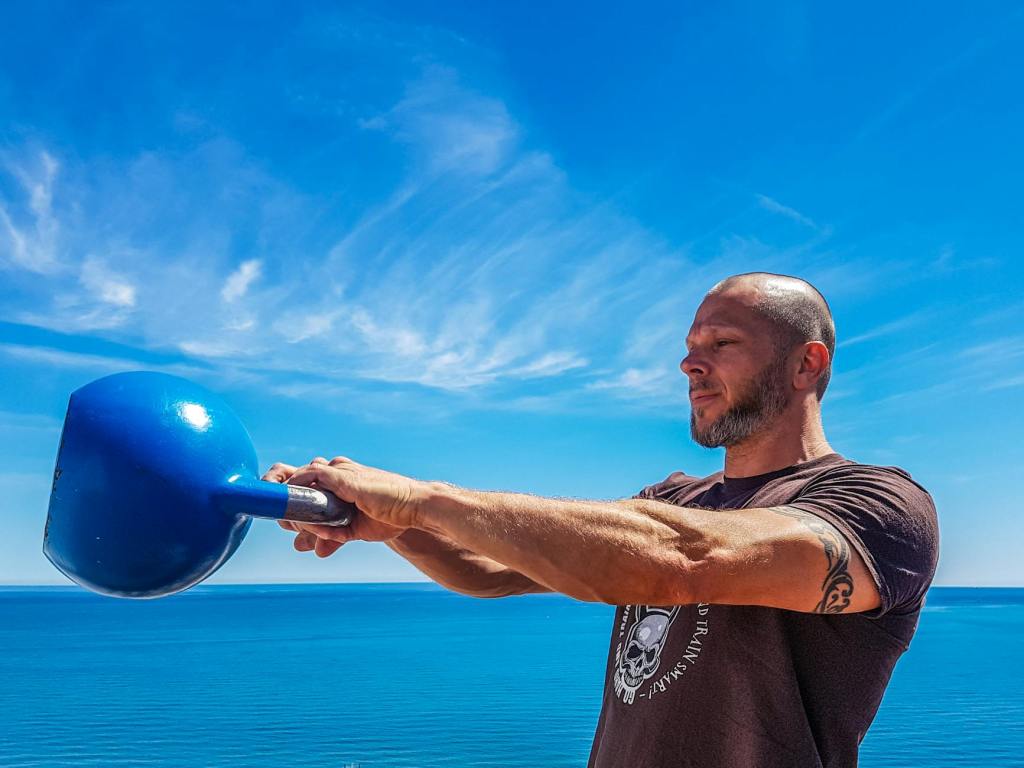
    If I’m being honest—and honesty is the whole problem here—I’m indulgent when it comes to food. Portions creep. Snacks multiply. I carry about twenty pounds that no amount of kettlebells or Schwinn Airdyne heroics can fully offset. Springsteen himself has said that fitness is ninety percent diet, and I resent him for being right. You can’t out-train a refrigerator you keep reopening out of habit.

    So tonight, instead of reaching for another snack, I may watch the latest Bruce Springsteen documentary for moral reinforcement. The man who once soundtracked youthful restlessness may now be offering something rarer: a model of restraint with dignity intact. Cheers to Bruce Springsteen—patron saint of senior citizens who refuse to let dinner win.

  • The Watch Relapse Spectacle

    The Watch Relapse Spectacle

    Watch addicts eventually reach a terminal stage of torment: the moment when the hobby that once delivered pleasure produces only agitation. The rotation feels oppressive. The collection feels accusatory. At this point, the addict does what desperate cultures have always done—he invents a ritual.

    Surveying the landscape for deliverance, one inevitably recalls the 2014 viral fever dream known as the Ice Bucket Challenge. The watch world demands its own purgative spectacle. Enter the One-Watch Challenge.

    The ritual is simple and public. A ten-minute YouTube video is required. The setting must be tasteful—backyard at golden hour or living room with flattering light. Friends gather. Straws are drawn. Every watch in the collection is claimed except the one the addict secretly hopes will remain. The winners strap on their spoils, grinning like looters at the fall of a city. The subject is then lifted into the air, victorious yet emptied, holding aloft his single remaining watch.

    He is reborn. He is no longer a collector. He is a Oner—a new creature who has renounced rotation days for the austere monogamy of one watch, worn for the rest of his natural life. He speaks of clarity. He speaks of peace. He uploads the video and waits for absolution.

    Naturally, the movement does not end there.

    A counter-genre soon emerges: the Relapser. These videos document former Oners discovered months later, sprawled on their carpets amid a shameful abundance of watches. Boxes are open. Straps are tangled. The men appear undone—glassy-eyed, infantile, muttering references to limited editions and “just one more.” The videos are initially consumed as comedy, shared with a wink and a laugh.

    Over time, the laughter fades.

    The genre acquires a formal name: the Watch Relapse Spectacle—the inevitable counter-ritual in which renunciation collapses into excess. What began as entertainment hardens into parable. For the first time, the wider public glimpses the pathology beneath the polish. The madness is no longer charming. It is instructive.

  • The Exit Watch That Blew the Exit

    The Exit Watch That Blew the Exit

    There comes a moment in every watch influencer’s career when he announces, with ceremonial gravity, that he has found his Exit Watch. This watch, he assures his audience, is different. It stands apart from the rest of the collection not merely in design, but in destiny. It promises completion. Closure. A sense that the long pilgrimage through steel and lume has reached its ordained end.

    The watch is so magnificent that it demands narrative consequences. The influencer hints at “big changes.” New content. A reimagined channel. Perhaps fewer uploads, perhaps deeper reflections. The implication is clear: the Exit Watch has not merely ended a collecting phase—it has matured the man.

    Then the watch arrives.

    It is flawless. Better than expected. The case sings. The dial radiates authority. The bracelet feels engineered by monks. The unboxing video trembles with reverence. For approximately forty-eight hours, the influencer experiences peace.

    Then something goes wrong.

    The watch does not quiet desire. It amplifies it. Instead of satiation, there is hunger—acute, feral, unprecedented. The Exit Watch behaves less like a sedative and more like a stimulant. New watches begin to haunt his thoughts. He starts browsing late at night. He rationalizes. He reopens tabs he swore were closed forever. The collection multiplies wildly, untethered from logic or restraint.

    Within months, the spiral is complete. The influencer is on the brink of losing his sanity, his marriage, and his house—saved only by a merciful uncle who wires sixty thousand dollars to send him to a rehab facility in the Utah desert. There, stripped of his collection, he learns to play the flute, hunt his own food, and live without Wi-Fi. He emerges thinner, quieter, and reconciled to a solitary G-Shock Frogman, worn not for pleasure but for survival.

    This is Exit Watch Reversal: the affliction in which a watch intended to conclude a collecting arc instead detonates it. The subject does not experience closure, but acceleration—as though the watch has unlocked a previously dormant appetite and handed it the keys.

  • Guillermo del Toro’s Frankenstein and the Wounded Male Ego

    Guillermo del Toro’s Frankenstein and the Wounded Male Ego

    I resisted watching Frankenstein. I assumed it would be a lavish, overcooked gothic reheating of Frankenstein—all velvet drapes, thunderclaps, and prestige posturing. I was wrong. It is polished and operatic, yes, but beneath the lacquer there’s an unexpectedly tender heart beating, unevenly, like something newly stitched together and afraid it might be noticed.

    Oscar Isaac plays Victor Frankenstein as a man permanently damaged by a tyrannical, grandiose father. This Victor doesn’t merely want to conquer death; he wants to correct his own humiliation. Science becomes his altar, godhood his compensation. In trying to escape the cruelty that shaped him, he replicates it with terrifying fidelity. The film is unsparing on this point: the wounded male ego, when armed with intellect and ambition, is a demolition device.

    The monster—created from hanged bodies and unholy obsession—is played by Jacob Elordi with startling delicacy. Six-foot-five and impossibly graceful, Elordi gives us not a brute but a melancholic waif, a creature whose sadness feels tuned to a minor key. There’s something unmistakably early-’80s indie about him—an echo of Julian Cope or the funereal romance of Echo & the Bunnymen and The Cure. He looks like he could step up to a microphone and confess his alienation in verse. Elordi doesn’t lean into that fantasy, but he doesn’t need to. His restraint is what breaks you.

    That this film avoids camp, self-indulgence, and parody is no small feat. At over two and a half hours, with a plot that is essentially elemental, the pacing remains assured. Del Toro trusts atmosphere, performance, and thematic coherence. The conviction is clear: a man tries to elevate himself into a god and leaves a trail of devastation, while the being he creates is condemned to a far crueler fate—immortality without belonging.

    When the credits rolled, I could almost hear Ian McCulloch singing “The Disease.” The association felt right. Elordi’s monster carries that same expression: beautiful, doomed, and painfully aware that he will outlive his wounds without ever outgrowing them.

  • How We Went from Breakfast Mascots to Political Tribes

    How We Went from Breakfast Mascots to Political Tribes

    A few nights ago, I watched Big Vape: The Rise and Fall of Juul, the four-part autopsy of a company that promised salvation from combustible cigarettes and instead managed to hijack a generation’s taste buds. Juul framed itself as a public-health crusader. What it actually built was a sleek delivery system for addiction, turbocharged by flavors engineered to lodge themselves deep in the dopamine circuitry of young brains.

    Former employees and users all pointed to the same thing: mango. Mango wasn’t just a flavor; it was an event. People didn’t vape mango casually. They marinated in it. Mango was the hook.

    Watching this, I was transported back to my own childhood and my first chemical romance: Cap’n Crunch.

    There was something about that unholy alliance of corn flour, palm oil, and brown sugar that short-circuited my will. I didn’t want moderation; I wanted saturation. My parents imposed limits, which only deepened my resolve to grow up as fast as possible so I could make my own enlightened dietary decisions—namely, Cap’n Crunch for breakfast, lunch, and dinner. I failed to notice the irony that a grown man subsisting on sugar cereal would represent not maturity but infantilization.

    Cap’n Crunch’s true genius wasn’t just sweetness. It was proliferation. The same cereal reappeared in endless costumes—Crunch Berries, Peanut Butter Crunch—each one offering the illusion of choice. King Vitamin was the most audacious iteration: Cap’n Crunch in a health halo, a masterclass in rebranding junk as virtue. Lipstick on a pig, poured into a cereal bowl.

    Then there were the mascots. Quisp the Martian. Quake the muscle-bound coal miner. As a child steeped in superhero comics and Hulk fantasies, I gravitated toward Quake. Strength. Power. Identity. I didn’t realize I was choosing a brand avatar, not a breakfast.

    Cereal companies were having a field day. We watched cartoons while eating the very product being advertised between scenes. It never occurred to us that we were being conditioned—trained to celebrate a non-nutritive food substance that dissolved teeth and rewired appetite. The Juul kids didn’t know it either. They thought they were buying into a sleek, adult lifestyle. What they were really purchasing was dependence, with a mango aftertaste.

    What troubles me now is that adults don’t seem any less susceptible.

    Today, many people consume political tribes the way we once consumed sugar cereal and flavored vapor. Politics has been repackaged as lifestyle branding—complete with slogans, merch, cosplay, and dopamine hits. The substance is thin. The stimulation is constant. Critical thinking is nowhere to be found.

    These aren’t political commitments; they’re identity snacks. Sugar rushes masquerading as convictions. Defense of one’s “views” consists of chanting talking points with the same reflexive loyalty I once reserved for Cap’n Crunch. No wonder the country feels like it’s in free fall. We haven’t grown up—we’ve just swapped mascots.

    We are a nation of adult children, hooked on political flavors the way kids were hooked on cereal and Juul users were hooked on mango. Politics has become a consumer product: addictive, polarizing, shallow, and wildly profitable. All dopamine. No nutrition.

  • The Hot Take Is the Chronic Cough of Something Gone Wrong

    The Hot Take Is the Chronic Cough of Something Gone Wrong

    We live in a Hot Take culture, and on balance, hot takes do more harm than good.

    For a decade, I feasted on them. Back when it was still called Twitter, my days were seasoned with sharp one-liners, instant judgments, and rhetorical mic drops. It felt bracing at first—intellectual espresso shots delivered in 280 characters. But over time, the feed stopped feeling like conversation and started feeling like a room full of people shouting clever insults at a fire.

    About a year ago, I deleted my account. By then, I barely recognized the people I once followed. Everything had gone shrill. Bombast replaced thought. Even the impressive hot takes—clever, ruthless, beautifully phrased—eventually blurred into something anesthetizing. A constant buzz that left me dull rather than informed.

    I didn’t quit social media entirely. What I actually want is boring, old-fashioned breaking news. Tell me what happened. Tell me where. Tell me when. I don’t need a verdict within thirty seconds. So now I drift through places like Threads, mostly lurking. Many of the smart people I used to follow migrated there. Some still do what they’ve always done: post headlines and context. Others can’t resist the gravitational pull of commentary. News first, hot take immediately after. Their allies cheer them on inside familiar silos, and the machine rewards escalation.

    To be fair, not everyone posting is chasing dopamine. Some journalists are doing real work. They have massive audiences and feel a genuine obligation to interpret chaos in real time. They live in a crucible of praise and abuse, applause and outrage. That kind of constant psychic weather can’t be healthy, but the motive is understandable—meaningful engagement. If this were a pre-digital era, they’d still be doing something similar, just with deadlines instead of feeds. Slower. Quieter. Possibly saner.

    But then there’s another species entirely: the professional Hot Taker.

    This person has mastered the form. Their posts are short, sharp, structurally elegant. A good hot take is witty, memorable, and instantly legible. It lands. It spreads. It racks up likes and reposts like a slot machine hitting cherries. Success is measurable, public, addictive.

    And that’s the trap.

    When identity and self-worth become tethered to engagement metrics, the self gets commodified. Everything becomes raw material for the next take. Nuance is a liability. Hesitation is death. The hot take demands boldness, outrage, and certainty—even when certainty is fraudulent.

    At that point, the Hot Taker is no longer responding to the world; they are farming it.

    I’ve watched thoughtful, decent people slide into this role. At first, their posts are useful. Then they overshare. Then they pick fights they don’t need to fight. Eventually, their online life becomes a series of skirmishes that feel exhausting even to sympathetic observers. They can’t stop—not because they’re evil, but because the machine has trained them well.

    So yes, we live in the Age of the Hot Take, where people measure their purpose by their ability to generate applause from the faithful. Hot takes don’t convert anyone. They delight the choir and enrage the opposition. Polarization intensifies. Nothing moves.

    Is it unfair to call this a disease? I don’t think so.

    First, there’s the hijack. The belief that constant expression equals relevance, that relevance equals worth. It’s a delusion reinforced by numbers. Likes don’t satisfy; they sharpen hunger.

    Then there are the consumers. By liking and reposting, they feel they’re participating in history, bending reality toward justice. In practice, they’re mostly helping tribes harden their borders. Everyone believes they’re weaponizing truth. No one notices the epistemic ground eroding beneath them.

    When COVID hit, I assumed the crisis would force clarity. Instead, it deepened the divide. Now measles—a disease we already solved—is making a comeback. Science, once the shared floor, has become another battlefield. If pandemics and preventable deaths can’t bring us together, hot takes certainly won’t.

    You can fire off the most righteous, viral condemnation imaginable. Measles will still spread.

    So what should we do instead?

    The answer isn’t attractive. Reality hasn’t hit hard enough yet. Historically, people abandon fantasy only when consequences become unavoidable. Until then, we chatter. We posture. We perform. Hot takes aren’t solutions. They’re symptoms—the chronic cough that tells you something deeper is wrong.

  • While Others Fell in Love, I Was Benching

    While Others Fell in Love, I Was Benching

    In 1975, when I was fourteen and already grooming myself for eventual induction into the House of Schwarzenegger, I was struck with existential terror by an article in The San Francisco Chronicle. Futurists, it announced, were preparing us for the inevitable: Earth would soon be too crowded, too exhausted, too used up. Humanity would have to evacuate—via lunar shuttles—and establish solar-powered colonies in outer space.

    The article leaned heavily on the ideas of Gerard K. O’Neill, a Princeton physicist whose vision would later crystallize in The High Frontier. We would live, he proposed, in “artificial, closed-ecology habitats in free orbit,” powered by vast solar arrays. Don Davis supplied illustrations: cottages, rolling green hills, fountains, happy citizens strolling through a weightless Eden that looked suspiciously like a New Age brochure for upscale suburbia.

    Then I noticed something horrifying.

    Everyone in the drawings was skinny. Not lean. Not athletic. Skinny in a faint, undernourished, anemic way. It dawned on me with the force of revelation: no gravity meant no resistance. No resistance meant no gyms. No iron. No pumping. My muscles would dissolve. I would become what I most feared—a tomato with toothpicks stuck into it, drifting through space in orthopedic sandals.

    A forced relocation to an orbital colony wouldn’t just end bodybuilding. It would end me.

    That moment revealed two durable truths about my character. First, I did not like change. Even minor disruptions—replacing stereo components, finding a new health club—felt borderline traumatic. The idea of being compelled to move to space was not exciting; it was annihilating. Second, bodybuilding wasn’t a hobby. It was a containment field. Anything that threatened it threatened my psychic infrastructure.

    This may explain why girls confused and frightened me.

    A few tried, valiantly, to breach my defenses. One was Mary Claybourne, a high school sophomore who had a very obvious crush on me. One afternoon at my locker, she handed me a birthday card. On the front it read: If It Feels Good, Do It! Inside, she had written a note inviting me to ask her out.

    I remember standing by a pillar near the courtyard, reading her card, while Mary sat at a picnic table with her friends, looking at me with naked hope. The look was unmistakable. She wanted me to stride across the concrete, tear open my street clothes, emerge in a cape, and sweep her into a romance worthy of daytime television.

    Instead, I stared at her beautiful eyes and thought only this: How can I possibly love this girl when civilization is on the brink of relocating to a gravity-free space colony where I won’t be able to bench press?

    The question was absurd. Knowing it was absurd did nothing to soften the dread.

    Looking back now, it’s clear I wasn’t ready for intimacy. Some teenagers arrive relatively intact, with enough internal coherence to connect to others without panic. I was not one of them. I was fragmented. Provisional. A self still under construction. I wasn’t merely a bodybuilder—I was a builder in the most literal sense. I had to assemble myself first. An embryo cannot date.

    And yet, I sometimes wonder if that’s a convenient story. Maybe I should have waded into the shallow end of teenage romance and learned to flail. Maybe sinking a little would have strengthened muscles bodybuilding couldn’t touch. Maybe the gym wasn’t just discipline—it was refuge. A retreat from the unpredictable demands of real life.

    What I know now is this: girls represented the same threat as space colonies. I liked them too much. I sensed that if I surrendered to romance, my monastic devotion to iron would falter. I had no talent for balance. If I served one master, I would resent the other.

    So, overwhelmed by choice, I chose the one world I could control.

    On Friday night, I did not date Mary Claybourne.

    I dated the bench press.