Category: Health and Fitness

  • My Personal Sane Eating Lexicon: Cravattenuation, Savorosity, and Munchdrift

    My Personal Sane Eating Lexicon: Cravattenuation, Savorosity, and Munchdrift

    On April 10th, fresh off a family vacation in Miami and still spiritually sticky with airport pastrami sandwich guilt, I stepped on the scale and was greeted with a soul-curdling 247 pounds. Yes, some of it is lifelong muscle from half a century of hoisting kettlebells and playing Hercules in the garage. But make no mistake—this number was a slap in the face, a statistical insult to my dignity. Fueled by a righteous anger I can only describe as metabolic revenge, I went to war.

    First, I cut my meals down to three per day and gamified the system like a psychological Jedi. My lunchtime yogurt-and-berries bowl got reassigned as a post-nap “treat,” and a humble apple—normally the most boring fruit in the bowl—was elevated to nightly “dessert,” strategically scheduled for 8 p.m. to give my inner child something to cling to as the kitchen closed. I also slashed my coffee intake from 36 to 18 ounces (don’t worry, I’m still barely human), and dropped my creatine from 6 grams to a mere 3—enough to retain my swole, but not enough to float like a sodium balloon.

    Meanwhile, I came to grips with the ugly truth that I was overstuffing both my freezer and my face. The freezer had become a metaphor for my appetite: jammed with frozen berries, low-carb snacks, and delusions of future discipline. Constantly raiding it created two problems: overconsumption and literal water puddles from a clogged defrost drain. My wife and I emptied the thing out like detoxing hoarders, and miraculously, the fridge stopped weeping. I then purchased a chest freezer for the garage to create a buffer zone—a cold storage moat to protect the kitchen from my impulsive nibbling.

    By April 19, I had dropped to 240 pounds—a loss of seven pounds in nine days, even with an Easter cheat day that involved chocolate cake and blueberry pie, which I regret nothing about. Today I weigh again after my workout, prepared to assess the pastry fallout. But here’s the real revelation from those ten days: the hunger I thought I was feeling wasn’t hunger—it was performance anxiety from my stomach, a neurotic need to react to every twitch of emptiness like it was a national emergency. That, my friends, is where Cravattenuation comes in.

    Cravattenuation is the noble and necessary art of muting your inner snack gremlin—the one who panics at the first polite growl of your stomach and demands cheese. It’s the mental and metabolic recalibration that teaches you this: real hunger is not a 3 p.m. yawn with a craving for almonds. It’s a deeper emptiness, one you can actually enjoy. Because when you let your appetite stretch out and breathe, you arrive at meals not with guilt or compulsion, but with appetite and joy. Hunger becomes less of a trigger and more of a drumroll.

    Cravattenuation the deliberate process of retraining your body to interpret minor hunger signals not as existential emergencies but as low-priority system notifications: “You might want to eat in a bit” instead of “RAID THE PANTRY OR DIE.” Just as meditation teaches you to sit with discomfort rather than react impulsively, Cravattenuation teaches you that a little hunger isn’t a crisis—it’s foreplay for a better meal.

    We’ve been conditioned by snack culture and anxiety-driven consumption to treat hunger as something to be feared and fixed immediately, like a smoke alarm or a toddler tantrum. But when you practice Cravattenuation, something remarkable happens: your threshold for hunger strengthens, and the urgency softens. You learn to sit with a mild stomach pang without spiraling into carb-lust. Over time, you develop what can only be described as Hunger Discernment: the ability to separate emotional nibble-itching from true physiological need.


    The Unexpected Perk:

    By making your body earn the meal—not through punishment, but patience—you begin to eat with a clarity and joy that’s been missing since the dawn of office vending machines. Food tastes better when you’re actually hungry for it. Not “kinda bored” hungry, not “scrolling through cheese reels” hungry, but real hungry. Cravattenuation helps you not only manage your weight with more ease and grace, it re-enchants the eating experience itself. You’ll start treating meals like mini homecomings rather than pit stops at a dopamine gas station.


    Name for the Healthy State: Savorosity

    (savor + satiety + curiosity)

    Savorosity is the elegant state you enter after mastering Cravattenuation—a zone where hunger feels less like a hostage crisis and more like an invitation. It’s when you greet mealtime with curiosity and pleasure, not guilt or compulsion. It’s when you chew slower, taste deeper, and know you’ve arrived not because you gave in to a craving, but because you earned your appetite.

    Cravattenuation gets you there. Savorosity keeps you there. And together, they free you from the tyranny of the pantry’s siren call.

    Of course, the desired state of Savorosity has an opposite condition: Munchdrift, which is the mindless, momentum-driven eating that results from random grazing, emotional nibbling, and culinary boredom. It’s what happens when hunger is no longer a signal but a background noise, muffled by routine snacking and phantom cravings. In the Munchdrift state, meals are neither anticipated nor savored—they’re accidental. A handful of nuts here, a swipe of hummus there, three spoonfuls of cottage cheese at midnight, and suddenly, you’ve eaten 1,200 calories without ever feeling either full or satisfied. The food doesn’t taste bad; it just doesn’t taste like anything—because your palate is bored and your appetite never had a chance to sharpen.

    While Savorosity is marked by intentionality, restraint, and presence, Munchdrift is all drift and no anchor. It’s eating as ambient noise. It’s the cognitive equivalent of scrolling Instagram while watching TV while wondering why you’re still chewing. 

  • How to Stop Your Appetite from Heckling You and Achieve Savorosity

    How to Stop Your Appetite from Heckling You and Achieve Savorosity

    Coined Term: Cravattenuation

    (craving + attenuation)


    Extended Definition:

    Cravattenuation is the psychological and physiological art of turning down the volume on your inner snack gremlin—the one who starts kicking the back of your consciousness the moment your stomach makes a polite gurgle. It’s the deliberate process of retraining your body to interpret minor hunger signals not as existential emergencies but as low-priority system notifications: “You might want to eat in a bit” instead of “RAID THE PANTRY OR DIE.” Just as meditation teaches you to sit with discomfort rather than react impulsively, Cravattenuation teaches you that a little hunger isn’t a crisis—it’s foreplay for a better meal.

    We’ve been conditioned by snack culture and anxiety-driven consumption to treat hunger as something to be feared and fixed immediately, like a smoke alarm or a toddler tantrum. But when you practice Cravattenuation, something remarkable happens: your threshold for hunger strengthens, and the urgency softens. You learn to sit with a mild stomach pang without spiraling into carb-lust. Over time, you develop what can only be described as Hunger Discernment: the ability to separate emotional nibble-itching from true physiological need.


    The Unexpected Perk:

    By making your body earn the meal—not through punishment, but patience—you begin to eat with a clarity and joy that’s been missing since the dawn of office vending machines. Food tastes better when you’re actually hungry for it. Not “kinda bored” hungry, not “scrolling through cheese reels” hungry, but real hungry. Cravattenuation helps you not only manage your weight with more ease and grace, it re-enchants the eating experience itself. You’ll start treating meals like mini homecomings rather than pit stops at a dopamine gas station.


    Name for the Healthy State: Savorosity

    (savor + satiety + curiosity)

    Savorosity is the elegant state you enter after mastering Cravattenuation—a zone where hunger feels less like a hostage crisis and more like an invitation. It’s when you greet mealtime with curiosity and pleasure, not guilt or compulsion. It’s when you chew slower, taste deeper, and know you’ve arrived not because you gave in to a craving, but because you earned your appetite.

    Cravattenuation gets you there. Savorosity keeps you there. And together, they free you from the tyranny of the pantry’s siren call.

  • DeDopaminification: Breaking Up with the Machine That Loves You Too Much

    DeDopaminification: Breaking Up with the Machine That Loves You Too Much

    DeDopaminification is the deliberate and uncomfortable process of recalibrating the brain’s reward circuitry after years—sometimes decades—of synthetic overstimulation. It’s what happens when you look your phone in the face and whisper, “It’s not me, it’s you.” In a culture addicted to frictionless pleasure and frictionless communication, DeDopaminification means reintroducing friction on purpose. It’s the detox of the soul, not with celery juice, but with withdrawal from digital dopamine driplines—apps, feeds, alerts, porn, outrage, and validation loops disguised as “engagement.”

    In Alone Together, Sherry Turkle diagnosed the psychic fragmentation wrought by constant digital interaction: we’ve become people who talk less but text more, who perform connection while starving for authenticity. In one of her most haunting observations, she notes how teens feel panicked without their phones—not because they’re afraid of missing messages, but because they fear missing themselves in the mirror of others’ attention. Turkle’s world is one where dopamine dependency isn’t just neurological—it’s existential. We’ve been trained to outsource our worth to the algorithmic gaze.

    Anne Lembke’s Dopamine Nation picks up this thread like a clinical slap to the face. Lembke, a Stanford psychiatrist, makes it plain: the modern world is engineered to overstimulate us into oblivion. Pleasure is no longer earned—it’s swipeable. Whether it’s TikTok, sugar, or digital outrage, our brains are being rewired to expect fireworks where there used to be a slow-burning candle. Lembke writes that to reset our internal reward systems, we must embrace discomfort—yes, want less, enjoy silence, and learn how to sit with boredom like it’s a spiritual practice.

    DeDopaminification is not some puritanical rejection of pleasure. It’s the fight to reclaim pleasure that isn’t bankrupting us. It’s deleting TikTok not because you’re better than it, but because it’s better than you—so good it’s lethal. It’s deciding that your attention span deserves a tombstone with dignity, not a death-by-scroll. It’s not heroic or Instagrammable. In fact, it’s boring, slow, sometimes lonely—but it’s also real. And that’s what makes it revolutionary.

  • Reclaiming Your Sanity May Depend on DeBrandification

    Reclaiming Your Sanity May Depend on DeBrandification

    DeBrandification is the conscious, defiant act of peeling away the curated layers of your public persona like old vinyl siding from a house that never needed a makeover in the first place. It’s the moment you look at your bio—“educator, content strategist, latte enthusiast, recovering perfectionist”—and think, Who the hell is this algorithm-optimized mannequin and what has she done with my soul? DeBrandification is not rebranding; it is anti-branding. It’s the willful act of becoming unmarketable, unpredictable, and gloriously unverified. You stop asking, Will this post get engagement? and start wondering, What would I write if no one were watching and no sponsors were lurking?

    It begins subtly: you delete a profile picture, unpublish a blog, or (gasp) let your TikTok account die peacefully of neglect. Soon, you’re off the grid like a suburban Thoreau with Wi-Fi guilt, refusing to hashtag your lunch or quote-tag your trauma. You don’t disappear—you just stop performing. The metrics vanish, and in their place, something odd happens: your thoughts get weirder, your sentences wobblier, your voice less pleasing but more alive. DeBrandification is not career suicide. It’s self-resurrection. And if you do it right, you won’t just lose followers—you’ll lose the craving for them.

    The final scene of Black Mirror’s “Nosedive” is a textbook act of DeBrandification—messy, raw, and utterly liberating. After spending the entire episode contorting herself into a chirpy, pastel-colored caricature to boost her social rating, Lacie finally bottoms out—literally and metaphorically—in a jail cell. Stripped of her devices, her followers, and the suffocating need to be likable, she engages in a gloriously profane scream-fest with her fellow inmate, both of them hurling insults with reckless joy. It’s the first time we see her alive—flushed, furious, and unfiltered. In that moment, Lacie isn’t falling apart; she’s shedding the synthetic skin of her brand. No more forced smiles, no more filtered breakfasts, no more networking by emotional hostage. What remains is a person—not an avatar, not a score—a human being who, for the first time, doesn’t give a five-star damn.

  • The Kettlebell Monk and the Return of the Yoga Cult

    The Kettlebell Monk and the Return of the Yoga Cult

    I’ve been lifting weights since I was 12 years old—long enough to have calluses older than some of my students. My loyalty has always been to iron, not incense. And yet, twice in my life I’ve flirted with the cult of yoga. First from 2005 to 2008, when Power Yoga made me sweat like a sinner in a sweat lodge, and again recently, from 2023 to 2024, when something primal in me remembered the bliss of holding Warrior Two while the room turned into a personal rainforest.

    But iron always calls me back. Resistance training, especially kettlebells, is my native language. It’s the blunt poetry of movement: swing, squat, grind. There’s no chanting, no ambient whale noises—just the thud of steel against gravity and the holy ache of delayed-onset muscle soreness. Still, yoga lingered in my subconscious like a forgotten lover with a very flexible spine.

    Then came the dream.

    I was living in what could only be described as a monastic exercise gulag perched high in the Swiss Alps—imagine if The Sound of Music were choreographed by a CrossFit cult and everyone smelled faintly of magnesium chalk and regret. My cell was a minimalist slab of concrete, colder than a Russian novel and just as unforgiving. There I was, hammering out kettlebell swings with the grim dedication of a prisoner serving a life sentence for crimes against rest days, when it hit me—not just a muscle cramp, but a full-body epiphany.

    I missed the sweat.

    But not just any sweat. Not the stoic, industrial, man-against-iron kind that kettlebells demand. I missed yoga sweat. That slow, creeping, mind-liquefying ooze you earn by holding Crescent Lunge for six minutes while your brain gently transitions from “I am one with the universe” to “I am dying alone on this mat.” It’s the kind of sweat that doesn’t just leave the body—it evacuates your ego with it.

    The sense of FOMO hit me like a rogue medicine ball to the face. I wasn’t just missing out on yoga—I was exiled from it, cast into the outer darkness where there is weeping, gnashing of teeth, and tight hip flexors. The regret was theological. Yoga wasn’t just an option anymore. It was a spiritual ventilator.

    In the dream, I staggered from my training cell like a sinner leaving the confessional. I entered my quarters—bare except for a desk, a lamp, and the faint scent of despair—and rearranged it like a man staging his own resurrection. Then, with the urgency of a convert and the shame of a backslider, I Googled yoga poses. Warrior. Triangle. Pigeon. All the old apostles.

    I wandered the grounds like a deranged prophet in compression leggings, possessed by a holy compulsion to evangelize. I whispered gospel truths: “Downward Dog is deliverance,” “You are your breath,” “Meat is a distraction.” People followed. Of course they did. We began practicing together, flowing through vinyasas with cult-like synchronicity. We ate vegan three times a day, spoke only in Sanskrit-inflected aphorisms, and achieved a level of hamstring enlightenment most people only dream about.

    It was utopia, with better posture.

    Then I woke up.

    Still in a fog of sacred revelation, I marched to my computer, opened my long-neglected list of yoga sequences in Google Docs, and committed to the third phase of my yoga life: twice a week, no excuses. Five days of kettlebell discipline to keep me grounded, two days of yoga to unlock whatever transcendental weirdness lives in my hips.

    Because as much as I love kettlebells—and I do—they’ve never given me that hallucinatory bliss, that euphoric disintegration of self, that only comes from holding Triangle Pose until your consciousness starts leaking out of your ears.

    Iron builds the body. Yoga does something else. And I’m not going to miss out this time. 

  • The Wired Warrior: Football, Technology, and the Price of Glory: Is the Modern Athlete a Gladiator, a Lab Experiment, or Both? A College Writing Prompt

    The Wired Warrior: Football, Technology, and the Price of Glory: Is the Modern Athlete a Gladiator, a Lab Experiment, or Both? A College Writing Prompt

    Football is more than a game—it’s a national ritual built on sacrifice, spectacle, and, increasingly, moral controversy. As medical research continues to link tackle football to chronic traumatic encephalopathy (CTE), long-term disability, and early death, the sport faces growing scrutiny. Critics like Malcolm Gladwell, Kathleen Bachynski, and Steve Almond argue that football is an unethical institution that profits from the pain of young men—especially those from lower-income communities—who are treated more like commodities than people. Others defend football as a legitimate form of personal agency and cultural identity, where athletes like Ronnie Coleman and other elite performers knowingly risk their bodies for glory, pride, and a path to opportunity.

    At the same time, advances in technology—including smart helmets, biometric tracking, and AI-powered safety protocols—promise to make the game significantly safer. Some see these developments as the key to football’s survival, while others fear that a “watered-down” version of the sport would strip it of the danger, drama, and warrior ethos that fans crave.

    In a well-structured argumentative essay, respond to the following question:

    Should football be fundamentally reformed in response to CTE research and emerging safety technologies, or should it remain a high-risk sport built on personal choice, cultural tradition, and the pursuit of greatness?


    Your essay should:

    • Take a clear, defensible position on the central question.
    • Consider multiple perspectives, including ethical critiques, technological optimism, and the value of personal agency.
    • Engage with course materials such as Killer Inside, Evolution of the Black Quarterback, CTE case studies, and relevant authors (e.g., Gladwell, Almond, Bachynski).
    • Explore how reform could affect not only players and fans, but also the future cultural identity of the sport.

    Here is a 9-paragraph argumentative essay outline that follows the Toulmin structure, tailored specifically to your prompt on football, ethics, and technology:


    Title: Challenging the Football Status Quo: Risk, Reform, and the Future of the Game


    I. Introduction

    • Hook: Open with a vivid image of a high-stakes NFL game—stadium roaring, players colliding, the quarterback limping off the field.
    • Context: Briefly explain how football’s cultural dominance is being challenged by increasing awareness of CTE, exploitation, and emerging safety technologies.
    • Thesis (Claim): Football must be fundamentally reformed in response to CTE research and technological advances—not to destroy the sport, but to preserve its integrity, protect its players, and allow it to evolve ethically in a changing society.

    II. Background

    • Define CTE and its connection to tackle football.
    • Summarize how football traditionally valorizes physical sacrifice and risk.
    • Introduce the ethical controversy: entertainment vs. exploitation.

    III. Point 1 – The Moral Imperative to Reform

    • Warrant: If a system knowingly causes irreversible harm, society has a duty to intervene.
    • Evidence: Reference studies on CTE and examples of players suffering post-retirement (e.g., Junior Seau, Aaron Hernandez).
    • Tie-in: Reform isn’t a moral overreach—it’s damage control.

    IV. Point 2 – Technology Makes Reform Feasible

    • Claim: Smart helmets, AI-driven impact analysis, and biometric wearables can reduce injury without eliminating physicality.
    • Evidence: Cite current innovations and their projected benefits.
    • Warrant: Technological reform isn’t fantasy—it’s already happening.

    V. Point 3 – True Player Choice Requires Full Awareness

    • Claim: Arguing that players “know the risks” assumes informed consent—but many players start young and lack full knowledge of long-term effects.
    • Evidence: Use Bachynski’s critique of youth football and the financial coercion tied to poverty.
    • Warrant: Informed choice is only valid when other viable opportunities exist.

    VI. Counterargument – The Tradition of Risk is Central to the Game

    • Present the argument: Football, like MMA or bodybuilding, is about voluntary risk and personal glory.
    • Use Noah’s and Daniel’s perspectives from Bodenner’s essay to show how some players accept risk with pride.
    • Acknowledge the emotional weight of this argument.

    VII. Rebuttal – Spectacle Doesn’t Justify Preventable Harm

    • Response: Cultural tradition is not a moral defense; sports have evolved before.
    • Use comparisons: NASCAR added safety after deaths, boxing implemented concussion protocols.
    • Argue that reform can preserve the game’s intensity without making sacrifice its currency.

    VIII. Broader Implications

    • Claim: Reforming football could ripple outward—setting ethical standards for other sports and youth programs.
    • Connect to societal values: Is our entertainment worth the human cost?
    • Suggest that football can remain powerful and inspiring without being a bloodsport.

    IX. Conclusion

    • Reaffirm thesis: Reform is not the death of football—it’s the only path to preserving it responsibly.
    • Emphasize the dual benefit: safer players and a sport that aligns with evolving cultural ethics.
    • Leave readers with a final image: a new generation of players thriving in a game that challenges them without destroying them.
  • Brains for Glory: How Football Became the Lottery of the Left Behind

    Brains for Glory: How Football Became the Lottery of the Left Behind

    In Alana Semuels’ “The White Flight from Football,” we meet Shantavia Jackson, a single mother working the night shift at Home Depot. With three sons—ages 11, 12, and 14—she turns to youth football not just for recreation but as a form of structure, mentorship, and protection. Coaches become surrogate father figures, teaching discipline and teamwork. For her son Qway, who lives with a mental disorder, football provides a stabilizing force: a team that functions as his support system.

    For Shantavia, football isn’t just a sport—it’s an escape hatch. She can’t afford to send her sons to college, and she sees football as the only viable route out of a life circumscribed by poverty. It’s a desperate gamble, but in communities like hers, desperate gambles are often the only kind available.

    Against this backdrop, research continues to pile up showing that tackle football can cause severe and irreversible brain trauma. In response, many parents—particularly white and affluent—are pulling their children out of youth leagues. The ability to make that choice is, at its core, an expression of privilege. While white participation in youth football declines, Black participation remains disproportionately high: 44 percent of Black boys play tackle football, compared to just 29 percent of their white peers. This racial divide plays out on the national stage: today, Black athletes make up nearly half of all Division I college football players, up from 39 percent in 2000, while white athletes have dropped from 51 percent to 37 percent.

    The implication is grim: Black children are more likely to accept long-term risks because they have fewer short-term options. White children, cushioned by economic security and broader educational opportunities, can afford to walk away. The more the science reveals about the dangers of early head trauma, the more it becomes clear who is left holding the risk.

    And the science is damning. A 2017 Boston University study found that athletes who began playing tackle football before age 12 were twice as likely to develop behavioral problems and three times as likely to suffer from clinical depression. A separate study by Wake Forest University revealed that boys who played just one season of tackle football between the ages of 8 and 13 showed diminished brain function. The greatest fear is CTE—chronic traumatic encephalopathy—a degenerative brain disease caused by repeated hits to the head, not just concussions. Even subconcussive blows can cause lasting damage. In 2017, researchers examined the brains of 111 deceased NFL players. They found CTE in 110 of them.

    In response, some former players and medical experts now advocate delaying tackle football until high school, when bodies are more physically mature and kids are better able to understand and implement safe tackling techniques. But the sport is growing, not shrinking, and its profitability only reinforces the risk. At Texas A&M University, football generates $148 million a year. That revenue stream depends on a constant influx of young talent—often from families like Shantavia’s—eager for a scholarship and a shot at something better.

    The decision to play football, or not to, has become yet another expression of America’s racial wealth divide. As of 2021, the median wealth of white households was $250,400—about 9.2 times that of Black households, which stood at just $27,100. Though there have been modest gains in Black wealth, the gap remains vast. In 2022, the median wealth for Black households rose to $44,890—still far behind the $285,000 median for white households. This disparity isn’t merely numerical; it’s structural, baked into the opportunities people can or cannot access.

    In this context, football becomes less a sport and more a bloodletting ritual—one that disproportionately brutalizes the bodies of those with the fewest alternatives. For children growing up in neighborhoods with failing schools, limited healthcare, and short life expectancies, football isn’t just a game. It’s a high-stakes wager: risk your brain for a future, or settle for no future at all.

  • The Gorilla Pecs of Glory: Why We Watch Men Smash Each Other and Call It Civilization

    The Gorilla Pecs of Glory: Why We Watch Men Smash Each Other and Call It Civilization

    According to Jonathan Gottschall, author of The Professor in the Cage: Why Men Fight and Why We Like to Watch, football isn’t just sport—it’s ritualized combat. A tamed brawl. A socially sanctioned way to indulge our primal appetite for domination without devolving into street warfare. He calls it the monkey dance, a primitive ballet with rules, referees, and halftime shows. I prefer a less polite term: the gorilla pec slap—because that’s what it is. Chest-thumping, ego-flexing theater that feels a lot less like play and a lot more like primal pageantry.

    Gottschall’s thesis is blunt and unapologetic: we are wired for battle. From schoolyard scuffles to rap battles to cage fights, we seek structured conflict to test status, establish pecking orders, and avoid descending into outright anarchy. Whether it’s verbal warfare on stage or two linemen colliding at full speed, it’s all the same story: controlled aggression keeping the real chaos at bay.

    And the stakes, bizarrely, are moral. Gottschall suggests that these “battles with a code” serve a civilizing function: they allow men—yes, mostly men—to hash out dominance hierarchies without burning down the village. Ritualized violence, he argues, is less toxic than the alternative: unpredictable, unsanctioned brutality.

    This raises an uncomfortable truth about the function of sports: men need to know where they stand. The pecking order isn’t just some caveman relic—it’s a form of psychological infrastructure. Everyone knowing their “lane” may sound medieval, but Gottschall insists it’s what prevents society from devolving into a Mad Max sequel. And frankly, he might be right.

    Ritualized battle—be it on the field, the mat, or the mic—feeds something deeper than bloodlust. It gives us narrative. Stories of courage, humiliation, redemption, and collapse. We see ourselves in those stories. We crave them not just for the carnage but for what they reveal: who we are when the pressure spikes and the lights come on.

    Still, some social critics aren’t buying it. They see football and its violent cousins as nothing more than toxic masculinity wrapped in billion-dollar branding. To them, it’s hero cosplay for emotionally stunted men. But Gottschall flips that argument: suppressing these instincts doesn’t make us enlightened—it just makes us dishonest.

    That said, even if we accept that ritualized combat is hardwired and necessary, we’re still left with a lingering question: at what cost? The bodies pile up. The brains deteriorate. Athletes become avatars for our fantasies—and casualties of them, too. Their injuries are real, their careers often short, and their pain long. And yet the spectacle rolls on.

    Meanwhile, the sports industry—like any good dealer—knows how to keep us hooked. Betting apps ping our dopamine receptors, endless content fills our social feeds, and we’re suddenly refreshing stats at 2 a.m. like Wall Street analysts chasing fantasy league glory. What started as play becomes compulsion. Hero worship mutates into dependency. Sports betting morphs into moral rot.

    So where does that leave the thinking sports fan? Are we doomed to either overanalyze the game into oblivion or become wide-eyed addicts to its spectacle? Can we still enjoy a bone-rattling hit without silently calculating the CTE risk?

    There are no easy answers. But here’s the uncomfortable truth: sports are too good at what they do. They hijack our lizard brains, feed our tribal instincts, and offer us drama cleaner than politics, safer than war, and more thrilling than any sermon.

    And like those mythical gorillas slapping their chests in the mist, we’ll keep watching. Because beneath the helmets and highlight reels, we’re not just watching games—we’re watching ourselves. And that, more than anything, is the real addiction.

  • The Santa Claus of Donuts Must Die

    The Santa Claus of Donuts Must Die

    Let’s start with the obvious: your family bonds over food because food is reliable. It doesn’t argue with you about politics, it doesn’t criticize your life choices, and it doesn’t ask to borrow your car. It just shows up, warm and sugary, like a friend who never judges. And when you show up holding that pink box of donuts? You’re not just a guy walking through the front door—you’re the Santa Claus of Donuts, bearing gifts that turn your living room into a dopamine theme park. Everyone lights up. You are loved. You are admired. You are a hero.

    Until the sugar crash hits and you’re lying on the couch wondering how a simple box of pastries turned into a hostile takeover of your waistline. Again.

    You, my friend, have what polite society calls an “addictive personality,” but let’s not sugarcoat it (pun intended). You go overboard like it’s your patriotic duty. One treat turns into three. One bite into a blackout. You need boundaries, not Pinterest recipes.

    So here’s your prescription. It’s boring, brutal, and blessedly effective:

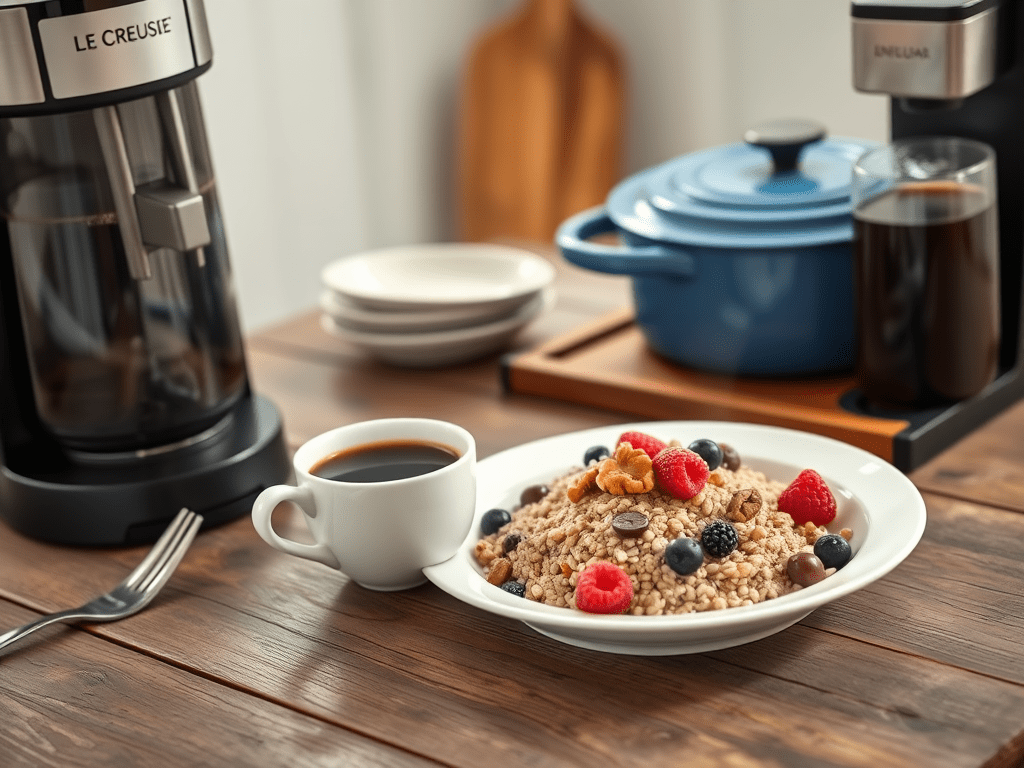
    Breakfast: Plain Greek yogurt, a scoop of protein powder, flaxseeds, chia seeds, and a handful of berries. Also, coffee. Strong enough to slap you awake and maybe shake loose some of your delusions.

    Lunch: A salad—yes, a salad—with actual protein in it. Maybe chicken. Maybe tuna. Add a scoop of cottage cheese if you hate joy a little less that day. Have some fruit so you don’t hallucinate cookies.
    Dinner: Protein again. Vegetables. Herbal tea, like the sad monk you are becoming. Cap it off with an apple and the faint memory of dessert.
    Snack Defense Protocol: If you start prowling like a raccoon between lunch and dinner, shove a carrot in your mouth, sip some green tea, and crack open a diet root beer. It’s not a thrill, it’s a strategy.

    And let us not forget why you had to slam the snack door shut like it owed you money: snacks are traitors. They pretend to be innocent little diversions—just a handful here, a nibble there—but they’re silent assassins. Those calories accumulate like guilt after a Vegas weekend, slowly padding your frame while you’re busy telling yourself you’re “cutting back.”

    Now, let’s address the hard truth, as spoken by the philosopher-king of overweight comedians, Tom Segura: “You don’t lose weight until you hate your fatness more than you love food.” Yes, it’s harsh. But he’s not wrong.

    Still, let’s reframe it with a little less bile and a touch more clarity:
    You won’t change until you prefer discipline to chaos. Until your craving for stability outweighs your need for a dopamine hit. Until your love of self-respect outweighs your love of Cheez-Its.

    You don’t need another meal plan—you need a code. A way of eating that doesn’t just fill your stomach, but recalibrates your priorities. Food is not your therapist. Food is not your friend. Food is fuel. And you? You’re not Santa Claus anymore. You’re something better: a man in control of his appetite, his identity, and his damn life.

    Now go make that yogurt bowl like it’s a holy ritual and not a punishment. The rest will follow.

  • An Argument for Healthy Denial: A Self-Help Sermon for the Self-Indulgent

    An Argument for Healthy Denial: A Self-Help Sermon for the Self-Indulgent

    Let’s be honest. You’ve tried the soft-glow Instagram mantras and the overpriced journaling apps. You’ve danced with dopamine like a lab rat in a Vegas casino, chasing every ping, snack, scroll, and retail hit like it was divine revelation. And where has it gotten you? Nowhere worth photographing.

    So here’s your wake-up call, preacher-style, minus the tambourine: take care of your damn self. Not in that syrupy “self-care” way that means binge-watching prestige TV while mainlining DoorDash and calling it therapy. No, I mean the kind of care that involves discipline, boundaries, and strategic discomfort—also known as healthy denial.

    Phil Stutz is right: your relationship with your body, your soul, and the people around you depends on your ability to say “no” like your life depends on it—because it does. Not “no” out of self-loathing or ascetic performance art, but “no” because you actually give a damn about the human being you’re becoming.

    You don’t skip the donut because you hate yourself. You skip it because you respect yourself enough not to let your biology, your boredom, or your bastardized idea of “treat culture” run your life. You are not a French bulldog in a baby stroller. You are a fully grown adult with responsibilities and, presumably, a spine.

    And no, this isn’t some narcissistic glow-up project. You’re not chiseling your abs to become a thirst trap or launching your “healing journey” vlog. This is not a TED Talk in the making. This is about getting better because the people who count on you deserve more than your bloated, distracted, half-baked self. Society doesn’t need another dopamine junkie sucking on algorithmic pacifiers while pretending to be “living their truth.”

    Yes, some will tell you denial is toxic, puritanical, even abusive. These are the same people who believe “treating yourself” five times a day is a human right. But let’s get something straight: healthy denial is not self-hatred—it’s self-respect with a steel backbone. You deny yourself garbage because you’re aiming for gold. You crave meaning, not just muffins. You want to die with fewer regrets, not a legacy of half-eaten potato chips and unread terms of service.

    So here’s what you’re going to do.
    You will stop snacking. Period.
    You will stop scrolling like a brainless peasant begging for dopamine crumbs from tech oligarchs.
    You will stop curating materialistic trinkets—yes, even the “limited edition” timepieces—and broadcasting your conspicuous consumption like a status-starved magpie.

    Instead, you will create.

    You will write.
    You will make music.
    You will work out with the devotion of a monk in a burning temple.
    You will show up for your family like it matters—because it does.
    And you will treat your time on this spinning sphere not as an entitlement but as the limited-edition miracle it is.

    This is not about being better than others. This is about being better for others. And if that sounds corny to you, maybe you’ve been swimming in irony so long you’ve forgotten what sincerity feels like.

    Here’s your new gospel: eat clean, think clearly, serve humbly, and waste nothing—not even time.

    Now get to it. The clock is ticking, and you’re not getting any younger.