Category: Health and Fitness

  • Appetyranny

    Appetyranny

    One of the most memorable TV ad campaigns of my youth in the late 1960s was “How Do You Handle a Hungry Man?” The stakes were sky-high. Imagine the scene: a harried housewife in her perfectly pressed apron, hair teased to high heaven, facing off against her husband, the archetypal Hungry Man. He enters the kitchen with the imposing gait of a lumberjack who’s felled a forest, his appetite as vast as the Grand Canyon. He casts a skeptical eye over the bubbling pot on the stove, nostrils flaring like a bloodhound on the scent. The tension is palpable. But fear not! With a dramatic flourish, she opens a can of Campbell’s Manhandlers soup, the magical elixir that transforms her kitchen into a culinary Colosseum. She pours the contents into a pot, and it’s as if she’s summoned the culinary gods themselves. The soup is no ordinary broth; it’s a veritable cornucopia of steak chunks, peas, and potatoes, swimming in a rich, hearty base that promises to tame even the most insatiable of appetites. As the aroma wafts through the kitchen, her husband’s eyes widen in delight. He grabs a spoon and dives in, and the transformation is instantaneous. His previously skeptical demeanor melts away, replaced by pure bliss. He slurps the soup with the gusto of a Viking at a medieval banquet, and she watches, triumphant. The jingle plays in the background, a triumphant anthem to her victory over hunger.

    The food industry at the time was relying on Appetyranny–the 1970s advertising-driven psychosis in which a woman’s entire self-worth was measured by her ability to quell the beastly hunger of her man. Fueled by jingles and canned soup, Appetyranny framed female failure not in terms of character or intellect, but in spoonfuls: if he’s still hungry, you’re unlovable.

    It was the golden age of culinary gaslighting, where a man’s growling stomach was treated like a ticking bomb, and your job—housewife, mother, woman—was to neutralize it with sodium-laced beef sludge. Fail, and you risked suburban scandal. Succeed, and you were serenaded by baritone jingles that implied your marriage had been saved by soup.

    Side effects of Appetyranny include:

    • The belief that men turn feral without starch by 6 p.m.
    • Buying food with names like Manwich, Sloppy Joe, or Hearty Beef ‘n’ Barley
    • Mistaking Campbell’s labels for emotional validation
    • A lifelong association between love and ladles

    Appetyranny wasn’t just marketing. It was a meat-chunk manifesto from the patriarchal pantry, where the kitchen timer doubled as a ticking bomb of feminine adequacy.

  • Snaccusation

    Snaccusation

    I was six years old in the summer of 1967 when my father, in his infinite wisdom, decided to purchase a used Rambler station wagon—a vehicle so mechanically challenged it made the Titanic look like a robust sea vessel. This car was less of an automobile and more of a rolling disaster waiting to happen. The peak of its misadventures came while we were crossing the Grapevine, when the Rambler decided it had had enough of life on the open road and broke down in the middle of nowhere. We were marooned in Bakersfield, that parched, desolate wasteland of eternal sun, for an entire day while a mechanic worked on our mechanical abomination at a gas station attached to what could only be described as the Chicken Apocalypse. With nothing to do but stew in boredom, I scavenged the vending machine for sustenance and emerged victorious with an orange Fanta and PayDay bars. These treasures, while delicious, did little to distract me from the endless rows of chicken cages that stretched out like a scene from a poultry-themed horror movie. My attempts to entertain myself by poking fingers through the cages were met with warnings from the mechanic’s wife, who was so spooky she might have been auditioning for the role of the Wicked Witch of the West. She dramatically presented her mutilated hand—now sporting only three fingers—and declared, “If people spent one day with a chicken, they’d understand it’s a filthy beast. I gave up eating chicken when I was a little girl. It’s a disgusting creature.” The way she spoke about chickens made them sound like they were plotting world domination from their cages. As I finished my PayDay bar, which I was now convinced was made of rat hair and despair, she scowled and said, “Those have rat hairs in them, you know. Keep eating and you’ll be on your way to the hospital for a stomach pumping. Be my guest.” Her cackle echoed through the gas station like the laugh of a mad scientist who had just released an army of mutant chickens. At that moment, I was fully convinced that this woman was a witch and that we were doomed to spend the rest of eternity in that chicken-infested purgatory. The only way out, it seemed, was a magical escape. Fortunately, when we finally returned to San Jose, my father, in an act of redemption, traded the cursed Rambler for the most divine vehicle ever conceived: a shimmering aqua-green 1967 Chrysler Newport. This chariot of heavenly design, with its oversized radio preset buttons that felt like they were straight out of a sci-fi epic, was my salvation. It was the car’s radio that made it such a standout. I lounged in the back seat, listening to Burt Bacharach, The Monkees, and The Fifth Dimension, basking in the glory of this automotive sanctuary that was, to my young eyes, the celestial shield protecting me from the three-fingered, rat-hair-proclaiming witch of Bakersfield.

    This tale of confectionery betrayal and poultry-fueled trauma demands a term that captures the dark alchemy of childhood wonder curdled by the fear that my favorite candy bar had rat hairs: Snaccusation–the paralyzing dread that overtakes you when someone—usually an unhinged adult with three fingers and an agenda—tells you your favorite candy bar contains rat hairs, bug legs, or the crushed dreams of factory workers, and suddenly you can taste the contamination. You can never eat it again without imagining a stomach pump and a tetanus shot.

    A Snaccusation isn’t just a rumor—it’s a hex. It’s when a PayDay bar transforms from nutty bliss into a rodent-flecked harbinger of gastrointestinal doom. It’s when the vending machine becomes a moral trap, and your six-year-old soul gets haunted by a gas station oracle with a vendetta against poultry and processed sugar.

    Symptoms include:

    • Involuntary shivers at the sight of orange Fanta
    • Chronic side-eye at vending machines
    • Nightmares involving chickens unionizing against humanity
    • A Pavlovian gag reflex triggered by the word “nougat”

    A Snaccusation isn’t about truth—it’s about the spell. One cackling witch in Bakersfield and your candy-bar innocence is lost forever.

  • Snackrilege

    Snackrilege

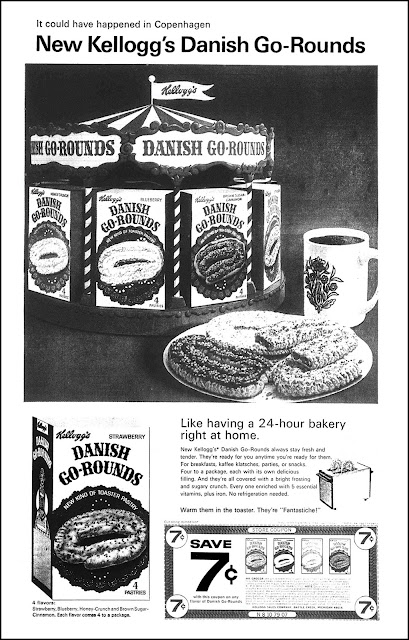
    Introduced by Kellogg’s in 1968, Danish Go-Rounds were like the golden fleece of breakfast pastries. Imagine Pop-Tarts, but with the sophistication of a five-star dessert. The brown sugar-cinnamon Danish Go-Rounds were so addictive, they made crack look like a mere curiosity. At the ungodly hour of 2 a.m., millions of Americans would wake up in cold sweats, their cravings driving them to frenzied searches for the Nectar of the Gods—only to find their precious pastries had vanished into thin air. Then, in a move so baffling it felt like a conspiracy against breakfast enthusiasts everywhere, Kellogg’s pulled the plug on Danish Go-Rounds in the mid-seventies. They kept the Pop-Tarts, those cardboard-like impostors that tasted like they were designed by a committee of flavorless robots. The heartbreak was palpable. It was as if a divine bakery had been shut down and replaced with a factory that churned out glorified toaster insulation. The eradication of Danish Go-Rounds is now remembered as one of the most colossal institutional blunders in history—up there with the fall of Rome and the invention of the Rubik’s Cube. The void they left was so immense, it bored a gaping chasm in my soul. My heart, once full of pastry-filled joy, now echoed with the hollow sound of Pop-Tarts’ lifeless crunch. While Danish Go-Rounds faded into the annals of breakfast history, Pop-Tarts flourished like a tasteless, mass-produced phoenix. This shift symbolized the erosion of artisanal craftsmanship and the triumph of consumer complacency. It heralded the rise of such culinary horrors as Imperial Margarine, Tang, Space Food Sticks, Boone’s Farm Apple Wine, and SlimFast—products so tragic they make a TV dinner look like a gourmet feast. The Gastronomic Time Traveler had to bear witness to this disheartening transition, seeing the demise of pastries that were practically food royalty. In their place, we got a parade of processed atrocities that made the culinary landscape look like a dystopian nightmare. So there I was, left to mourn the loss of Danish Go-Rounds, savoring the bitter taste of what once was, while choking down the unworthy replacements that flooded the market. It was a breakfast apocalypse, and I was living in its soggy aftermath.

    My undying grief over the extinction of Danish Go-Rounds introduced me to Snackrilege–The soul-crushing betrayal one experiences when a beloved snack—usually a glorious artifact of pre-1980s food engineering—is unceremoniously discontinued and replaced with a bland, mass-produced imposter that tastes like cafeteria foam and broken dreams.

    Snackrilege is not just a disappointment; it’s a culinary excommunication. It’s the moment you realize Kellogg’s didn’t just discontinue Danish Go-Rounds—they blasphemed the sacred breakfast pantheon by pretending a Pop-Tart could ever fill that flaky, spiraled void.

    Symptoms of Snackrilege include:

    • Grief rage in the frozen aisle
    • Late-night Google searches for defunct product petitions
    • Emotional hoarding of expired boxes found on eBay
    • Screaming “It used to mean something!” at a toaster

    Snackrilege marks the exact point where food nostalgia turns into holy indignation. It’s not about the pastry. It’s about what we lost—flavor, artistry, and the illusion that breakfast was once made by pastry angels instead of lab interns with degrees in corn syrup engineering.

  • The Curse of the Shamewich

    The Curse of the Shamewich

    I remember the day well. I was six years old as I trudged to Katherine R. Smith Elementary in San Jose, California, with three boys who would’ve made excellent talent scouts for the smell police. Usually, a Hostess Fruit Pie or pink Sno Ball made lunch a bright spot in my otherwise bleak existence, but not today. Today, the stench of rotten tuna wafting from my Captain Kangaroo lunch box was so potent it could’ve been classified as a biological weapon. My companions, gagging and accusing me of harboring a dead sea creature, demanded an explanation.

    Finally, I surrendered. We stopped in a field separating the Stop & Go Market from the school, and I opened the lunch box. There it was: the festering tuna sandwich, now a slimy, mayonnaise-coated abomination that had broken free from its plastic baggie and redecorated the inside of my lunchbox like a Jackson Pollock painting from a nightmare. We stared in horror at the black tuna juices, streaks of inky malevolence, and chunks of something unholy smeared all over the tin pail’s lining.

    “How could you eat that?” one boy asked, his voice a mix of pity and revulsion. I shrugged, resigned to my fate. It was my lunch, after all. So, I closed the lunch box, sealing the miasma inside, and we continued our grim march to school. I placed my lunch box alongside everyone else’s in the designated coat closet, a ticking olfactory time bomb among the innocent.

    Then came the Duck-and-Cover Drill. We crawled under our desks, awaiting the end-of-the-world announcement from the principal. But instead of nuclear annihilation, Mrs. Corey and the entire class were assaulted by a stench so vile it made everyone question their will to live. “Who brought a dead creature into my classroom?” she demanded, her forehead crinkling, nostrils flaring. Students squeezed their noses and made mock gagging noises, adding to the apocalyptic ambiance.

    The boys I’d walked to school with pointed at my lunch box, the source of the olfactory Armageddon. Mrs. Corey approached it like a bomb disposal expert, slowly opening the lid to reveal the horror within. She gazed at the contents as if she had just uncovered a portal to the underworld. “Did your mom pack this?” she asked, her voice tinged with disbelief and horror.

    I nodded. Mrs. Corey winced, a look of cosmic condemnation crossing her face, as if my entire bloodline was responsible for this culinary atrocity. She closed the lunch box with a finality that suggested she was sealing away a great evil, handed it to the teacher’s aide to place outside, and announced that my food was unfit for consumption. She then solicited volunteers to donate a part of their lunch to me, the pariah of the playground.

    Too mortified to eat, I sat on my blanket, avoiding the curious and horrified stares of my classmates. My appetite was dead, much like the tuna that had ruined my day. I remained on my blanket, and imagined I looked like David Draper in that Monkees episode. Rather than be a pathetic figure in need of charity, I would be a vision of glory and strength, the focal point of everyone’s admiration. My fantasy of walking like a Skyscraper among the Shacks of Mediocrity at the beach was interrupted by my stomach growling in protest at the cruel hand fate had dealt me.

    Little did I know, I had been cursed by the Shamewich–the deep, haunting sense of culinary disgrace one feels when a packed lunch goes rancid, rogue, or just plain weird—and becomes the epicenter of public ridicule. A Shamewich isn’t always a sandwich, but it’s always a moment—a sensory trauma in which your identity is temporarily replaced by the aroma of failure.

    It’s the rank stench of black tuna juice wafting from your Captain Kangaroo lunchbox. It’s the entire class gagging under their desks while your lunch gets escorted out like a radioactive crime scene. A Shamewich is not just what you eat—it’s who you become in the eyes of your peers: the one whose mother packed a biohazard in bread.

    Symptoms include:

    • Desire to sink into the floor or self-immolate
    • Permanent suspicion of mayonnaise
    • Fantasies of reinvention as a muscle-bound hero from The Monkees
    • Never bringing tuna to school again unless you’re ready to own the nickname “Fish Bomb”

    A Shamewich leaves an emotional stain long after the mayonnaise has been wiped clean. It’s not just a bad lunch—it’s a rite of passage.

  • Astroganda

    Astroganda

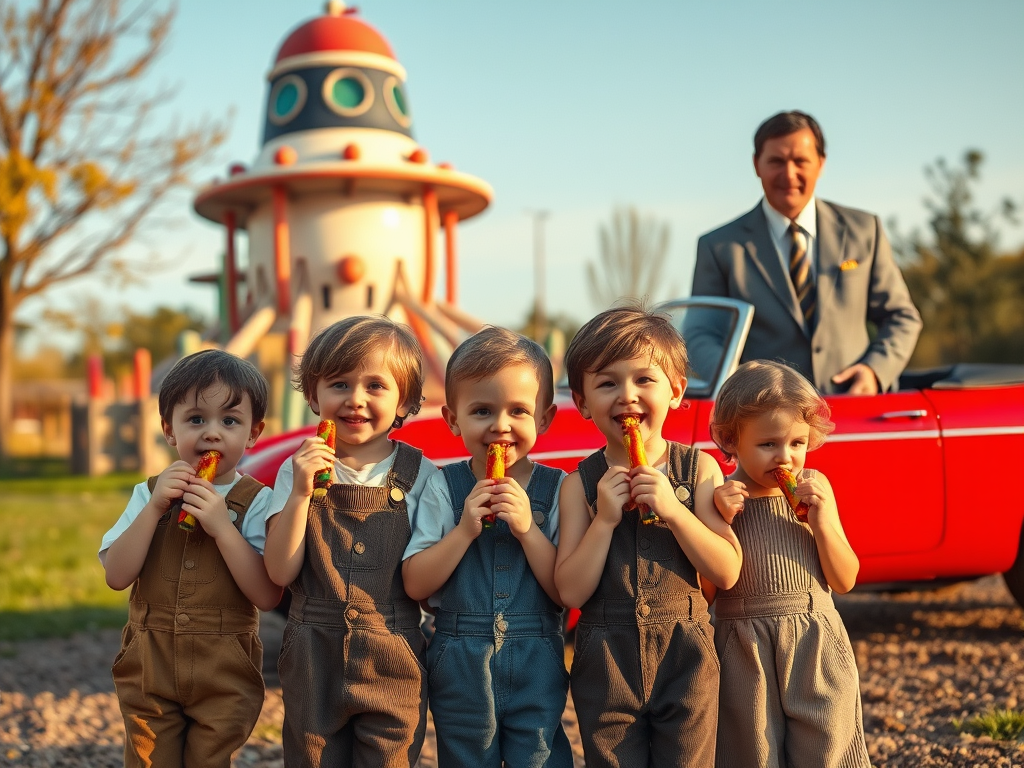
    When I was five, I was the proud herald of my father’s superhuman abilities. I told the other kids at the Royal Lanai apartments playground that my dad, an IBM engineer, was basically Tony Stark with a day job. I pointed to the giant playground spaceship and swore that when he got home, he’d slap rocket launchers on it and we’d all blast off to Mars. Naturally, the kids, hungry for cosmic adventure, followed me to the carport, where my dad’s red MGB was parked like the space shuttle awaiting launch. We munched on Pillsbury Space Food Sticks—because apparently, astronaut snacks were the pinnacle of pre-launch cuisine—as we waited in breathless anticipation.

    When the MGB finally roared into the carport, we erupted like we’d just seen the second coming of the space shuttle. But my father, in his somber gray suit that made him look like a budget Bond villain, crushed our dreams faster than a meteorite. “Sorry, kids,” he declared, “but flying to Mars without FAA clearance would land me in the slammer.” Our little faces fell as we imagined Dad in prison for attempting to breach the celestial airspace. Our sense of civic duty suddenly made us feel like unsung heroes, following the rules by not flying to Mars. The thrill of not going to Mars was almost as exhilarating as the thought of actually going there.

    The real blow to my father’s godlike status wasn’t his failure to launch us into space. No, it was his red MGB. This flashy little convertible was more temperamental than a teenager with a broken phone. It had a pathological aversion to warm weather and its engine seemed to overheat if you so much as looked at it sideways. Frustrated by its chronic hot flashes, my father finally traded it for a turquoise Chrysler Newport. The MGB’s breakdowns were like a public confession that there were engineering limits even he couldn’t defy. If he couldn’t conquer a car, how could he possibly conquer the cosmos?

    Meanwhile, we ate our Space Sticks, hoping these chewy abominations might turn us into astronauts. Those days introduced me to the food industry’s sugary, astronaut-themed scam that sold space-age wonder in chewy, shrink-wrapped form. The term for this manipulation is Astroganda–The slick marketing tactic that wrapped ordinary snacks—like Pillsbury Space Food Sticks—in a shimmering cloak of interstellar cool, convincing kids that chewing one made them honorary astronauts. A hybrid of “astro” and “propaganda,” Astroganda is the strategy of linking mass-produced consumer goods with galactic ambition, NASA prestige, and the promise that you too could eat like Buzz Aldrin while sitting in your corduroy overalls.

    Space Food Sticks were less about nutrition and more about narrative—chewy cocoa logs of powdered optimism, packaged for Earth-bound dreamers with moonshot imaginations. They didn’t just taste like chocolate; they tasted like potential.

    Victims of Astroganda could often be found in carports, licking space dust off their fingers, eyes fixed on a dented MGB convertible, waiting for liftoff and quietly ignoring the radiator steam as a mere launch delay.

    It wasn’t food—it was future cosplay in a wrapper. And we bought it. Literally and figuratively.

  • Chocotrickery

    Chocotrickery

    When I wasn’t honing my superhero powers, I was a rock star—at least in the hallowed halls of Katherine R. Smith Elementary. Every Friday during Show and Tell, I transformed into Micky Dolenz from The Monkees. I strutted into Mrs. Gilarde’s kindergarten class in my emerald green corduroy flares, aka the “Monkees pants,” ready to dazzle. My friends and I performed the “Theme Song” with such confidence that we shunned instruments, relying solely on the raw, unfiltered power of our vocals. The girls’ ear-piercing screams nourished my hungry self-esteem. Show and Tell Fridays became my therapy, where I reveled in the adoration of my screaming fans. I’d come home giddy, the shrieks of the girls still ringing in my ears like a symphony of validation. Exhausted from the grueling demands of being a five-year-old rock god, I devoured snacks like a tiny, ravenous beast. Oscar Mayer liverwurst sandwiches on Wonder Bread, meatloaf sandwiches drowning in ketchup, grilled cheese oozing butter, Rice Krispy Squares, Hostess berry pies, and Ovaltine-laced milk by the gallon—all disappeared down my gullet.

    Ah, Ovaltine. Marketed as a nutritional elixir but clearly a placebo in a milkshake’s clothing—a clever ruse setting the stage for future food gimmickry. They could’ve sold me anything with that chocolatey lie, and I’d have believed it was manna from heaven. Looking back, my daily ritual of inhaling these calorie bombs was a prelude to a life of chasing comfort in sugary deceit and processed delights.

    Ovaltine introduced me to Chocotrickery–the food industry’s sleight of hand in disguising dessert as “nutritional fuel” for growing kids—most notoriously embodied in the form of chocolate milk powder like Ovaltine, Nesquik, or other faux health elixirs disguised as academic performance enhancers and muscle juice for tiny rock stars.

    Chocotrickery is the corporate wizardry that convinced millions of children (and their exhausted, hopeful parents) that dumping sugar-cocoa dust into milk transformed it into a brain-boosting, bone-fortifying superdrink. In reality, it was more like chocolate frosting in liquid drag.

    Children caught in the throes of Chocotrickery didn’t just drink a beverage—they drank the fantasy: that they’d grow taller, smarter, cooler, and possibly even become Micky Dolenz if they stirred it long enough. It’s the original bait-and-sip scheme, the gateway to a lifetime of falling for healthwashed comfort foods wrapped in the sparkle of cartoon endorsements and pseudo-scientific promises.

    Chocotrickery is how nostalgia tastes when it’s spiked with glucose and lies.

  • Mascotopia

    Mascotopia

    In the pantheon of childhood injustices, the fall of Quake cereal stands as a monumental tragedy, rivaled only by the desecration of classic toys left to languish on the frozen island of misfit toys in Rudolph the Red-Nosed Reindeer. When Jay Ward’s cereal mascots, Quisp the Martian and Quake the Muscle-Bound Coal Miner, squared off in the great cereal showdown, the stage was set for an epic clash of taste, texture, and, most importantly, personal pride. Quake cereal, with its robust, gear-shaped nuggets, was not merely a breakfast option—it was a testament to human resilience and strength. Each nugget, dense enough to withstand the fury of a thousand spoons, stood firm in milk like a stoic warrior on the battlefield of breakfast. Meanwhile, Quisp, that whimsical Martian interloper, boasted soggy, flying saucer-shaped morsels that dissolved into a milky mush faster than a gremlin in a rainstorm. The rivalry between Quisp and Quake wasn’t just a marketing ploy; it was a battleground of epic proportions. Quake represented the pinnacle of cereal engineering—a bulwark of flavor against the encroaching tide of mediocrity. It was the hero of breakfasts, a cereal that could withstand the ravages of time and milk. Yet, despite Quake’s gallant efforts, the Martian’s insipid cereal prevailed. The decision was as senseless as declaring that the Titanic had not been adequately equipped with lifeboats because it had too many! When Quake was ultimately relegated to the annals of cereal history, I mourned as if my very soul had been denied a fundamental right. My grief was not solely about the cereal’s departure from the shelves—it was a visceral rejection of my will, a cosmic snub that struck at the very core of my breakfast autonomy. The elimination of Quake was akin to having one’s preferred superhero unceremoniously booted from the Justice League or, even worse, being told that one’s beloved comic book character had been written out of existence in the most disheartening crossover event ever imagined. The real tragedy here was not just the absence of Quake but the profound, personal affront I felt. It was as though Quake’s disappearance had somehow invalidated my very existence. Every time I poured a bowl of Quisp, I could almost hear the distant echoes of Quake’s forlorn whimpers, like a hero’s lament echoing through a desolate wasteland. The cereal aisle had become a barren landscape, a cruel reminder of a time when my preferences mattered—when I had a say in the cosmic balance of breakfast cereals. To me, Quake’s demise was not just an end to a cereal line but a grand, cosmic betrayal. It was as if the universe had conspired to mock my taste, to show me that my choice was inconsequential in the grand scheme of things. It was a stark, immutable reminder that, in the endless war between sugary Martian cereals and dense coal-miner nuggets, I was but a mere footnote in the annals of breakfast history. The apocalypse of Quake was the most tragic event in my cereal-eating career—a frozen island of disappointment, a sorrowful wasteland where only the memories of crispy, gear-shaped nuggets could console me.

    This incident introduced me to the idea of Mascotopia–the psychological condition in which the mascot of a cereal is so charismatic, heroic, or mythically overdeveloped that the actual cereal—a bland, sugar-dusted travesty—never stood a chance of living up to the hype. Victims of Mascotopia don’t eat breakfast—they mourn it. They pour a bowl expecting a hero’s journey and end up with soggy mediocrity.

    In this fever dream of commercial betrayal, Quake becomes a breakfast demigod, and Quisp a marshmallow Machiavelli. The mascots aren’t just marketing—they’re myth. And when your chosen avatar (Quake) is written out of existence in favor of a glorified puffball from Planet Bland, the resulting grief isn’t about flavor—it’s existential.

    Mascotopia is that childhood moment when you realize the cereal box is lying to you. It promised glory, grit, and nuggets that could survive the Big Bang. Instead, you’re left with dissolving saucers and a broken identity.

  • Snackjection

    Snackjection

    When I was five, my father constructed a treehouse that stood like a beacon of childhood ambition in the Flavet Villages Apartments in Gainesville, Florida. It was a fortress, a palace, a skyscraper reaching for the heavens—at least in my young mind. In this realm of wood and nails, I sought to assert my dominion, and what better way than with the power of Sun-Maid raisins? One fateful day, I lured Tammy Whitmire to ascend the tree’s wooden slats by brandishing the ultimate weapon: a box of Sun-Maid raisins. This wasn’t just any box; it featured the Sun-Maiden herself, a radiant figure holding a colossal tray of grapes. Her red bonnet and the halo of yellow light marked with white triangles around her head made her look like the Great Raisin Angel, a deity of dried fruit. Tammy, captivated by the angelic glow of the Sun-Maiden, climbed up to join me. Victory seemed imminent until Zane Johnson, lurking in a nearby tree, emerged from a leafy cluster and shattered my triumph. With a smug grin, he declared he had something far superior to my measly raisins: Captain Kangaroo Cookies. These weren’t just cookies; they were double-fudge, cream-centered cookie sandwiches, the culinary equivalent of Excalibur. In the brutal marketplace of childhood affections, my raisins didn’t stand a chance. Tammy, seduced by the allure of Zane’s superior snacks, descended my tree faster than a squirrel on espresso and sprinted to Zane’s treehouse. There, they feasted on the decadent cookies, leaving me alone with my pitiful box of raisins. My reign had ended before it began. Crushed by the betrayal, I reclined in my treehouse and sobbed myself to sleep. But the universe wasn’t done with me yet. I awoke hours later to a stinging horror: my body was swarmed by red fire ants, drawn to the sweet raisins. My skin felt like it had been lashed by a thousand stinging nettles. In agony, I bolted to my apartment where my mother, horrified, gave me a scalding bath to rid me of the ants. In the battle between Sun-Maid Raisins and Captain Kangaroo Cookies, the cookies had won, and I had learned a painful, itchy lesson about the power of snacks and the fickleness of friends.

    This traumatic memory was my introduction to Snackjection–the  soul-bruising humiliation that occurs when your lovingly curated snack—especially one featuring wholesome packaging like a bonneted raisin maiden—is publicly rejected in favor of a rival’s more brand-name, sugar-slicked treat. Often inflicted during the high-stakes snack diplomacy of childhood, Snackjection delivers a one-two punch: the collapse of your social standing and the realization that Captain Kangaroo cookies wield more romantic sway than your dried fruit ever will.

    Symptoms may include:

    • Sudden loss of confidence in your snack brand identity
    • Emotional exile to a solo treehouse
    • Uncontrollable sobbing followed by an insect siege
    • Existential questioning of why the Sun-Maid looks holy but delivers only heartbreak

    Snackjection is the snacktime equivalent of being left at the altar for someone with a lunchbox full of TV tie-in sugar bombs.

  • How 60s TV Gave Us Kibblelust

    How 60s TV Gave Us Kibblelust

    As a kid in the 1960s, I was utterly mesmerized by the tantalizing dog food commercials on TV. Gaines-Burgers, those succulent patties that looked like ground hamburger, and Gravy Train nuggets, which magically transformed into rich, brown gravy with just a splash of water, had my salivary glands working overtime. It was clear that the advertisers had one devious goal: to make dog food so visually appealing that even humans would crave it. And did they succeed.

    I marched up to my dad one day, eyes wide with canine envy, and declared that I wanted to be a dog just so I could savor these advertised delicacies. His face twisted in confusion, then horror, and then a resignation that only a parent can truly master. Determined to cure me of my bizarre wish, he whisked me off to a local bistro and ordered me a French Dip with au jus sauce.

    As the sandwich arrived, dripping with savory goodness, my dad leaned in and asked, “So, how do you like your French Dip?”

    I took a bite, my taste buds doing a happy jig, but instead of expressing my appreciation like a normal human child, I couldn’t resist. I let out a guttural growl, dropped to all fours, and began scratching an imaginary itch with my hind leg, much to the mortification of my father and the bewilderment of the bistro patrons.

    Dad’s face turned a shade of crimson that would have made a ripe tomato jealous. He sighed deeply, clearly questioning his life choices, while I continued my canine performance, convinced that I had discovered the next best thing to Gravy Train. It was then that I realized: the allure of dog food had turned me into a French Dip-devouring, itch-scratching spectacle of childhood absurdity.

     The irrational, often childhood-onset hunger triggered by the hyper-curated presentation of pet food in commercials—particularly dog food stylized to look more appetizing than anything in your pantry. Kibblelust is not mere curiosity; it’s a visceral craving born from the fantasy that somewhere, out there, dogs are eating better than you are.

    Sufferers of Kibblelust may experience symptoms such as food envy toward canines, a desire to bark in public, or in extreme cases, dropping to all fours in a bistro after biting into a French Dip, convinced it’s the closest a human will come to Gravy Train transcendence.

    This condition typically begins with 1960s-70s advertising campaigns involving burger-shaped meat slabs and gravy-generating pellets and is usually cured by a parent’s panicked intervention and a stern lesson in food hierarchy.

    Kibblelust represents the first great betrayal of consumer trust: when you realize advertisers are not above making animal food look better than human cuisine—and you fell for it.

  • The Cake and the Crumbs: A Toddler’s Origin Story of Maximalust

    The Cake and the Crumbs: A Toddler’s Origin Story of Maximalust

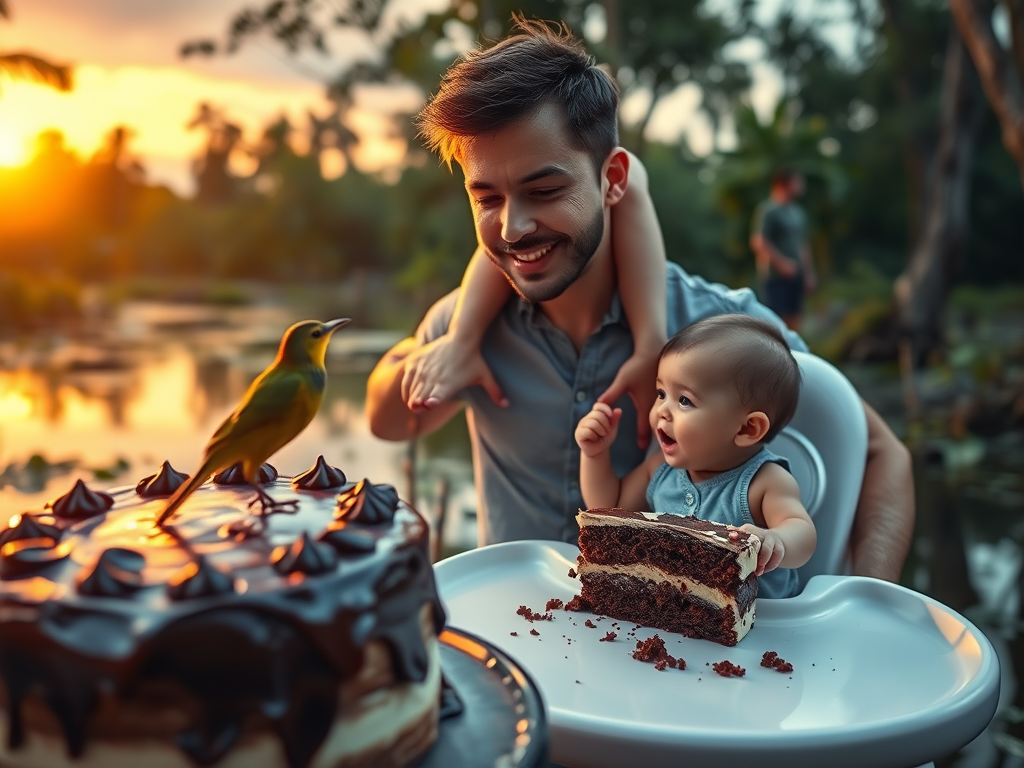
    I was a bright-eyed two-year-old growing up in the surreal surroundings of VA housing in Gainesville, Florida. My home, a repurposed army barracks known as Flavet Villages, was nestled near an alligator swamp where the air was thick with the smell of low-tide alligator dung, a stench so potent it could knock out a grown man. Yet, amidst this pungent atmosphere lay an enchanting routine: visiting a Mynah bird perched on the same tree branch in a nearby forest. This mystical bird, almost a local deity, engaged in nightly conversations with my father and me, its wisecracking voice echoing in the twilight. On my second birthday, my father, ever the hero, carried me on his shoulders for our evening visit to the Mynah bird. As we journeyed through the swampy landscape, the scent of celebration wafted from our small apartment, where my mother was busily preparing birthday decorations. In the distance, the melancholic tune of “Bali Ha’i” drifted from a neighbor’s radio, adding a cinematic touch to our adventure. We returned home, greeted by the excitement of neighbors and the promise of birthday cake. The neighbor’s child, a frail wisp of a boy who looked like he might be blown away by the next strong gust of wind, sat in his high chair, a throne of pity contrasting starkly with my robust presence. I, the towering giant of toddlers, was presented with a slice of cake so large it could double as a life raft. The cake, an Everest of chocolate decadence, was all mine to conquer. Then, I glanced at the poor child beside me. His mother, apparently convinced he was a baby bird rather than a human toddler, meticulously pinched off cake crumbs and fed them to him out of the palm of her hand. Each crumb, delivered with the precision of a jeweler setting a diamond, highlighted the stark disparity between my cake feast and his crumb diet. My eyes widened in disbelief. Was this real? Was I witnessing a Dickensian nightmare unfold at my birthday party? My horror magnified as I chewed through my colossal slice of cake, each bite a triumphant celebration of my toddlerhood. Meanwhile, the other child nibbled at his crumbs, a tragic figure resigned to his fate. In my young mind, the situation escalated to epic proportions. I envisioned myself as a benevolent king, feasting on a banquet, while the other boy was a destitute peasant, scrabbling for scraps in my opulent court. That moment, seared into my memory, became a symbol of the great injustices of the world. How could a child, on my birthday no less, be subjected to such cruel cake inequity? The image of his mother, delicately inserting crumbs into his mouth, haunted me like a ghost of birthdays past. It was as if I had witnessed the greatest travesty of my young life, a Shakespearean tragedy played out in frosting and crumbs. Years have passed, and many birthdays have came and went, but the memory remains vivid. I have tasted many cakes since then, each one a reminder of that fateful day when I first encountered true pity. In my exaggerated recollection, the event has grown more fantastical. The crumbs have became smaller, my cake slice grander, and the emotional weight of that moment ever heavier. So here I stand, a veteran of countless birthday celebrations, carrying with me the bittersweet lesson that not all cake experiences are created equal. And perhaps, in my heart of hearts, I’ve learned to savor every slice of cake with the gratitude of one who knows that somewhere, someone might be living on crumbs.

    The deeply embedded, early-life memory resulted in the belief that more food is always better—more validating, more righteous, more deserved. Born in toddlerhood and fed by birthday cakes the size of rafts, Maximalust is not just a craving—it’s a worldview. It equates abundance with virtue and scarcity with shame. It’s the toddler id that sees a normal portion and thinks, “Who hurt you?” It’s the pathology that makes buffets feel like moral high ground and crumbs like moral failure. Maximalust is the primal belief that to be loved is to be laden with frosting.

    In addition to Maximalust, I discovered the notion of Crumbpassion–the emotional dissonance that arises when your plate is Mount Olympus and theirs is a cautionary tale. It is not kindness—it’s existential discomfort wrapped in frosting empathy. The crumb-fed child becomes a Dickensian ghost, a living allegory of restraint, and you, the overfed protagonist, must reckon with the unfairness of cake distribution and your own frosting-fueled privilege.

    Together, Maximalust and Crumbpassion form a tragicomic framework of early appetite mythology—a toddler’s origin story of food, power, and pity that lives rent-free in your adult relationship with dessert.