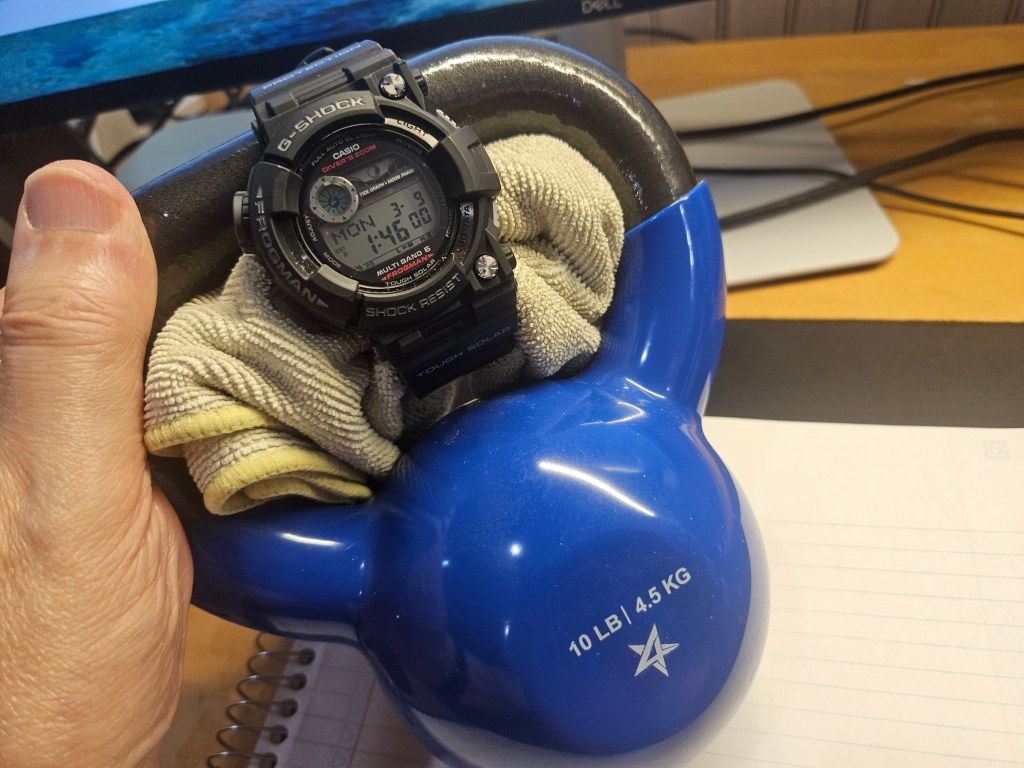
Category: Literary Dispatches

  • Cherry-Picking Does Not Make a Persuasive Book

    Cherry-Picking Does Not Make a Persuasive Book

    Kathryn Paige Harden left the evangelical church of her childhood and is now a behavioral geneticist at the University of Texas at Austin. She is also the author of the insightful, compelling Original Sin: On the Genetics of Vice, the Problem of Blame, and the Future of Forgiveness. After enjoying her long conversation with Andrew Sullivan, I picked up her book on Audible.

    In it, Harden distinguishes between two kinds of sin. Sin with a small “s” refers to individual acts that violate one’s moral code. Sin with a capital “S,” however, describes our enduring tendency to make a mess of things over time—what might be called the arc of human fallibility. To clarify this idea, she quotes Francis Spufford from his book Unapologetic: Why, Despite Everything, Christianity Can Still Make Surprising Emotional Sense, where he famously defines sin as the “Human Propensity to Fuck Things Up,” or HPtFTU.

    I was surprised that Harden, an ex-evangelical, would draw on a self-described Christian apologist, so I decided to read Spufford’s book myself. It quickly became clear that he is an exceptional writer with sharp insights into the Christian faith. He captures what he sees as the core message of Jesus: that one must give of oneself freely and without limit, loving and serving others with a pure heart. Intention, in his view, is everything.

    Still, something triggered my skepticism. Spufford repeatedly claims that Judaism and Islam, unlike Christianity, emphasize rule-following over inner intention. He uses the term orthopraxy—right action—as opposed to orthodoxy, or right belief. But this struck me as a reductive and biased claim, especially given the abundance of Jewish and Islamic teachings that stress sincerity, purity of heart, and the dangers of hypocrisy. The more he pressed this point, the harder it became to see him as merely insightful; he began to seem like a brilliant writer with a credibility problem.

    That problem deepened as I read on. Spufford appears willing to sidestep or reinterpret scripture when it conflicts with his more liberal views, particularly on issues like gay marriage and eternal damnation. There is a certain irony here. He praises Christianity for its emphasis on inner transformation and intention, yet he cherry-picks the Bible and reshapes Jesus to align with his own sensibilities. That project—recasting a religious tradition in one’s own image—strikes me as a task that calls for more self-scrutiny, especially before critiquing other religions for lacking moral depth.

    I say this as an agnostic. I’m not troubled by Spufford’s liberal commitments. In fact, I wish the Augustinian notion of eternal damnation were not true. But Spufford seems to want both the moral authority of traditional Christianity and the freedom to revise it at will. He presents the demanding ethical vision of Jesus—love without limits—while setting aside inconvenient passages that might complicate that vision.

    Harden, for her part, had the clarity and courage to leave the faith of her upbringing. Spufford also left his childhood religion, but his return to it—on his own carefully edited terms—would benefit from a bit more humility.


  • When “Your Truth” Stops Being Believable

    When “Your Truth” Stops Being Believable

    Helen Lewis’ Atlantic essay “The Death of Millennial Feminism” observes that Lindy West “is the most successful feminist writer of her (and my) generation,” propelled by raw, often self-deprecating confessionals and “viral takedowns.” She had the ears of women everywhere. She became the loudest evangelist for feminism and a tireless promoter of “fat positivity.” Then she wrote a memoir that brought it all to a halt. Adult Braces reverses many of the feminine ideals she once championed.

    Much in the book makes Lewis cringe, but one detail stands out: West allows her partner to enter a throuple with another woman—someone significantly thinner than West. She concedes that her once-admired feminist life was, in Lewis’s words, “a buffed-up version of the truth.” She describes feeling alienated from like-minded writers in editorial spaces. The online scorn she endured was more debilitating than she had admitted. And her body-positivity project falters under the weight of her own confession: “I am at my biggest when I am at my saddest.”

    West’s self-mythologizing of her past undermines the credibility of her present claims. Lewis is therefore skeptical of West’s assertion that she finds fulfillment in a polyamorous relationship in which her partner pursues other women, while West herself undergoes cosmetic dentistry—perhaps to remain competitive in these newly charged dynamics. 

    Equally dubious is West’s claim that she is rejecting monogamy, framed as “a system of ownership,” partly to please her mixed-race partner. The reliance on progressive clichés to justify what appears to be a self-abasing arrangement lends her argument an air of strained rationalization. It also reflects the same intellectual evasiveness that helped fuel her rise in the 2010s, when social media rewarded this kind of performative certainty.

    If Lewis finds any consolation in her irritation, it is that “basically no one else believes” West’s claims of polyamorous happiness. The book has not landed as intended.

    Lewis is at her sharpest when she expresses a dry, almost surgical pity for West’s disbelief that readers are unconvinced. She writes: “Nonetheless, I do feel great sympathy for West. How was she to know that the great omerta of Millennial Feminism—that we had to take whatever people said about their life stories at face value—had broken?”

    As Lewis pulls back the curtain on West’s method, she arrives at a harsher conclusion: feminism was never the central principle. The organizing force was a highly curated self, elevated by moral certainty and insulated from critique. West’s work encouraged others—teenagers included—to treat intense emotion as authoritative truth, to equate feeling with reality.

    Lewis argues that this elevation of emotion was not liberating but coercive. “Perhaps the greatest hallmark of Millennial Feminism was how harshly it treated women,” she writes. “We were the ones who were supposed to give up our boundaries, rewrite our sexualities, and defenestrate our heroines.” Doubt became a liability. Fallibility, a form of shame. In reality, both are conditions of sanity.

    For that reason, many women—including Lewis—walked away. To remain required submission to groupthink and to a mythology that, as she puts it, “required submitting ourselves to a voluntary lobotomy.”

    Meanwhile, as this strain of feminism frayed, countervailing forces emerged on the right—forces often just as reductive, just as intellectually numbing. The result is not correction but polarization: competing orthodoxies shouting past one another, while common sense and moral clarity struggle to regain a foothold.

  • The Cruel Question Every Writer Must Answer

    The Cruel Question Every Writer Must Answer

    When you pitch a book, the publisher asks a question that feels less like business and more like interrogation: Why must this exist? Why this book, now, and not another? What justifies its presence in a world already swollen with print? The question has teeth. It strips away the soft fog of aspiration and leaves you standing with nothing but purpose—or the absence of it.

    A book is not a monument to your desire to “be published.” It is not your name in lights, your moment on the marquee. That impulse—vanity dressed as vocation—is the surest path to creative mediocrity. Purpose is the only defense. Without it, the work collapses under its own self-importance.

    The same cross-examination applies to everything else we produce. A blog post, a video, a channel—why does it exist? To collect attention? To be applauded by a tribe? To monetize a persona? To assemble the vague scaffolding of a “brand”? These are not answers; they are evasions.

    What, then, is my brand? Nothing coherent. I wander. I collect. I react. I move through the culture like a flâneur with a notebook, jotting down whatever strikes the nerves—ideas, trends, obsessions—and trying to distill some fragment of meaning from the debris. This is not a brand. It is a habit of attention. It resists consolidation. It refuses to become a product.

    I did write a book recently—a real one, nearly seventy thousand words. But even that resisted form. It wasn’t a narrative or an argument so much as a catalog of compulsions about watch enthusiasts: short, sharp definitions of obsessive behavior. A lexicon of affliction. Did it need to exist? I can argue that it did. The market delivered a quieter verdict. A few dozen copies moved. Meanwhile, a fifteen-minute video built from the same material drew thousands. The idea survived in video form. The book format did not.

    This is the final insult: even if you can construct an airtight case for a book’s existence, the audience may still decline to care. You can formulate the perfect product—nutrient-rich, elegantly packaged—but if no one consumes it, it sits on the shelf like expensive dog food no dog will eat. And its silence asks the only question that matters, the one you thought you had already answered:

    Why does this exist?

  • When Writing Stops You From Lying to Yourself

    When Writing Stops You From Lying to Yourself

    Kafka called writing a form of prayer. Not as piety, but as precision. Prayer, properly understood, is the act of stepping out of ordinary time—the noisy, transactional churn—and entering a space where attention is no longer scattered but gathered. Writing does the same. It refuses the chaos of profane time and insists, however briefly, on the discipline of the sacred.

    The sacred is not mystical fog. It is clarity stripped of dopamine. It is the quiet room where you examine the state of your own soul without distraction or performance. It is where you test whether your words can survive contact with your actions. It demands humility because it exposes how often they don’t. And it offers a kind of nourishment the chronophage—the great time-eating machine—cannot provide, because it cannot be consumed passively. It must be earned.

    To live thoughtfully is to move between two worlds: the sacred and the profane. You cannot remain in either one. You must descend into the ordinary—work, errands, obligations—but carry with you the standards forged in that quieter space. Otherwise, the sacred becomes theater, and the profane becomes drift.

    So the question arrives, unwelcome but necessary: Do my actions align with my ideals? No. Not yet.

    If they did, my life would contract, not expand. I would eat with intention—three meals, no grazing—and call the absence of snacks what it is: a fast, not a deprivation. I would step away from the digital carnival that thrives on FOMO, because I know its rewards are counterfeit—brief spikes followed by longer, duller lows.

    I would stop buying watches. I already own more than I can meaningfully wear. Two G-Shocks tell perfect time. The rest sit like artifacts of former appetites. Rotation is not variety; it is indecision dressed as sophistication.

    And I would reconsider what I make. If my videos exist to chase attention, to measure my worth in clicks and spikes of approval, then they are extensions of the same problem. The medium is different; the mechanism is identical. But if a video can carry an idea forward—if it can clarify rather than agitate—then it earns its place.

    Writing, then, is not an escape. It is a reckoning. It is the act of bringing the sacred into contact with the profane and asking, without flinching, whether they agree. Most days, they don’t. The work is to narrow that distance.

  • The Day the Dream Team Got Punched in the Mouth

    The Day the Dream Team Got Punched in the Mouth

    The documentary We Beat the Dream Team transports us back to 1992, when basketball briefly resembled mythology. For the first time, the Olympics allowed NBA professionals, and the United States responded by assembling a roster that looked less like a team and more like an Avengers summit: Michael Jordan, Magic Johnson, Larry Bird, Charles Barkley, and a lineup of future Hall of Famers whose collective talent could have bent the earth’s axis.

    Presiding over this gathering of basketball demigods was Coach Chuck Daly, a man as famous for psychological maneuvering as he was for play diagrams. Daly understood something that many coaches never quite grasp: elite athletes do not merely need strategy; they need emotional calibration. Their egos must be tuned like instruments.

    Standing opposite this galaxy of NBA legends was the Dream Team’s practice partner—the Select Team. On paper they were merely college players: Grant Hill, Chris Webber, Penny Hardaway, Allan Houston, Jamal Mashburn, Bobby Hurley, Rodney Rogers. In reality they were the future of the NBA, still young enough to be starstruck and arrogant enough to believe they belonged.

    The documentary wisely tells the story from their perspective.

    The Select Team players describe walking into the gym like tourists visiting Mount Olympus. They were sharing the court with Jordan, Magic, and Bird—the men whose posters hung on their bedroom walls. You can still see the grin spread across Chris Webber’s face as he recalls those practices, the mixture of disbelief and pride. Jamal Mashburn and the others felt two contradictory emotions pulling them in opposite directions.

    On one side was reverence. These were basketball gods.

    On the other side was pride. Pride whispered: prove you belong here.

    So the young players performed a delicate dance. Respect the legends—but challenge them. Bow slightly, then throw an elbow.

    And challenge them they did.

    In one now-famous scrimmage, the Dream Team—perhaps relaxed, perhaps overconfident—found themselves ambushed. The hungry college players came at them like wolves that had been smelling steak all week. Possession by possession, the Select Team outplayed them. By the end of the scrimmage, the impossible had happened.

    The Select Team beat the Dream Team.

    To the young players, the moment felt electric. They had just taken down the greatest assembly of basketball talent the world had ever seen. It was the kind of victory that becomes a permanent souvenir in the heart.

    But the story refuses to stay simple.

    Coach Mike Krzyzewski later offered a different interpretation. According to him, Chuck Daly deliberately sabotaged the scrimmage. Daly allegedly benched key players and allowed the Select Team to win in order to shock the Dream Team out of complacency. In this version, the loss was psychological theater. Daly was staging a controlled humiliation to inject the team with rage and urgency before the Olympics.

    And in fairness, the strategy would make sense. After that scrimmage, the Dream Team entered the Olympics like a pack of irritated lions. They obliterated their competition and walked away with the gold medal.

    But Grant Hill isn’t buying the conspiracy.

    Hill insists the Select Team won fair and square. According to him, Daly looked genuinely rattled after the loss and even made sure the score mysteriously disappeared before reporters could record it.

    So which story is true?

    Was Daly a chess master orchestrating a motivational ambush? Or did a group of fearless college players simply catch the greatest team ever assembled on a sleepy afternoon?

    Like most sports legends, the truth may be tangled somewhere in between.

    What the documentary makes clear, however, is something deeper about elite athletes: their competitiveness doesn’t end when the buzzer sounds. Great athletes compete in everything—including memory. They compete over who really won, who deserves credit, and whose version of the story survives.

    Narrative itself becomes a championship.

    You can see that dynamic unfold in the documentary as Krzyzewski and Hill politely debate the event. Neither man is shouting. Both are smiling. Yet beneath the civility you can feel the competitive instinct humming like a live wire.

    Who owns the story matters.

    As someone who teaches college writing to athletes, I couldn’t resist imagining how useful this documentary would be in the classroom. It’s a perfect springboard for an argumentative essay. Did Daly throw the game? Is the “thrown game” theory simply a face-saving myth for wounded legends? Or does the truth lie somewhere in the murky middle?

    But for me the film worked on another level entirely.

    While watching it, I stopped thinking like a writing instructor and started thinking like the young man I was in 1992. I was back on my couch watching Jordan, Magic, and Bird—the superheroes of my youth—reminisce about the day a group of fearless kids punched them in the mouth.

    And I couldn’t stop smiling.

  • The G-Shock Multiband 6 Salvation Fantasy

    The G-Shock Multiband 6 Salvation Fantasy

    Pascal once observed that man cannot sit quietly in his room. Leave him alone with his thoughts and he begins to itch. Mortality looms. Meaning feels slippery. Silence becomes unbearable. So he reaches for distraction—baubles, upgrades, shiny mechanical companions that promise significance if only he can tighten one more screw or polish one more bezel.

    Call this Pascalian Gadget Panic: the modern expression of Pascal’s insight that when faced with the vague terror of existence, a man will anesthetize himself with objects. Radios. Cameras. Knives. Mechanical divers. G-Shocks. The object rotates through the years like a carousel horse, but the agitation underneath remains faithfully employed.

    Consider a suburban man in reasonably good health who nonetheless struggles with discipline, boundaries, and the mild chaos of his inner life. Spiritual philosophy eludes him. Self-knowledge feels slippery. Relationships are uneven terrain. Faced with this fog, he does what many modern men do.

    He buys toys.

    In his case, the toys are watches.

    For twenty years he labors happily in the vineyards of mechanical divers—Seikos mostly—fine steel contraptions that tick like tiny diesel engines beneath sapphire glass. The collection eventually reaches a comfortable plateau: curated, restrained, almost dignified.

    And then, inexplicably, he loses interest.

    The mechanical divers are quietly retired to their watch box like aging prizefighters. In their place emerges a new obsession: G-Shocks, but only of a very specific species—digital, solar-powered, atomic-synchronized, strapped in rubber armor like tiny tanks.

    Four commandments define the new religion:
    Tough Solar.
    Multiband 6 Atomic.
    Digital-only display.
    Rubber straps.

    One madness has been replaced with another, though the patient insists this is progress.

    To maintain psychological order, he compartmentalizes. The mechanical divers remain sealed in their box like museum artifacts. The G-Shocks, however, require their own ecosystem.

    Enter the Industrial Pipe Shrine.

    This object began life as a two-tier industrial pipe jewelry stand, the sort of thing normally used to hang headphones or necklaces. But in this household it has been promoted to sacred architecture. It sits reverently on a windowsill each night so the watches may commune with the atomic time signal emanating from Fort Collins, Colorado.

    To the uninitiated, it looks like plumbing hardware assembled by a bored welder.

    To the devotee, it is a receiving station of cosmic precision.

    Each night the G-Shocks dangle from the steel arms like metallic fruit awaiting revelation. Somewhere in Colorado a radio transmitter hums. Somewhere in the suburban night a man sleeps. And somewhere between them invisible time signals pass through drywall and glass until they arrive inside the tiny ferrite antenna hidden in a digital watch.

    When the signal locks in, the man experiences what can only be called the Multiband-6 Salvation Fantasy.

    For a brief moment the universe feels orderly. Accurate. Aligned. The watch has synchronized itself with atomic time. Solar cells sip daylight. Precision has been achieved.

    The feeling of control is intoxicating.

    Unfortunately, it lasts about as long as the next YouTube review.

    When members of the G-Shock community encounter this newly converted soul, they greet him with cheerful recognition.

    “Congratulations,” they say. “You’ve been G-Shocked.”

    The phrase functions like a baptism. The initiate is welcomed into a brotherhood of people who understand the deep satisfaction of armored watches, radio synchronization, and the quiet glow of solar charging indicators.

    At this moment the man realizes something unsettling: his geekdom has intensified

    Part of him embraces the absurdity. The watches are inexpensive. The hobby is harmless. Why not laugh at himself and enjoy the ride?

    But another part of him wonders whether something darker is unfolding.

    Is this, perhaps, the arrival of the Jungian Shadow—the neglected, obsessive part of the psyche now expressing itself through tactical wristwear?

    Will the Shadow politely stop at three G-Shocks?

    Or will it grow ambitious—multiplying into a monstrous collection that colonizes dresser drawers, nightstands, gym bags, glove compartments, and every horizontal surface in the home?

    Disturbed by these questions, the man attempts a strategic retreat. He throws himself into his other pursuits: bodybuilding, physical culture, literature, television, film.

    These distractions provide temporary relief.

    But the G-Shock Shadow is patient.

    Soon he is back on YouTube watching reviews of obscure Japanese models. He is compiling wish lists. He is studying signal reception strategies.

    Late at night he imagines the watches hanging from the steel arms of his T-bone pipe stand.

    And in darker moments he sees them differently.

    Not as tools.

    But as vampire bats—black, armored creatures dangling upside down, waiting for him to drift into sleep so they can descend silently and drink his blood.

    When he wakes in the morning, they will still be there on the windowsill.

    Perfectly synchronized.

    And waiting.

  • The Man Who Lost His Mind to Watches

    The Man Who Lost His Mind to Watches

    The Man Who Lost His Mind to Watches is not a book about watches. It is a book about obsession—the kind that begins with a single innocent purchase and metastasizes into spreadsheets, late-night forum debates, and existential dread over lume brightness. What starts as an appreciation for craftsmanship becomes a full-blown psychological expedition into masculinity, consumer desire, envy, tribal belonging, and the strange belief that the right object will fix what’s unsettled inside. If you have ever convinced yourself that one more acquisition would finally complete you, this book is already about you.

    The watch obsession is told in lexicon entries. Each term for some facet of the watch addiction exposes the watch enthusiast who descends into the glittering underworld of timepieces—divers, bracelets, straps, limited editions—only to discover that the chase for the “perfect watch” is really a chase for certainty in a world that offers none. The deeper he goes, the more absurd the quest becomes. He compares millimeters as if they were moral virtues. He debates dial legibility as if it were a constitutional right. He imagines that mastering reference numbers will somehow grant him mastery over time itself. Instead, he finds himself trapped in a hall of mirrors where identity is reflected in polished steel.

    And yet this is not merely satire. Beneath the laughter lies a serious question: why do intelligent, disciplined adults hand over their peace of mind to objects? The Man Who Lost His Mind to Watches is a confession, a cautionary tale, and a strangely hopeful map back to sanity. It exposes the machinery of obsession while refusing to sneer at it. Because in the end, the watches were never the enemy. The illusion that perfection could be purchased—that was the real complication.

    I have published this book on Amazon Kindle, but you do not need a Kindle device to read it. Once you purchase it, you can read the book directly on your computer screen using the Kindle app or the Kindle cloud reader. If the book gains meaningful traction and sells well, I will consider releasing a paperback edition as well.

  • After the Fever Dream: Life After Finishing a Book

    After the Fever Dream: Life After Finishing a Book

    You write the book the way a man fights a war—sleepless, exhilarated, slightly deranged. The watch obsession pours out of you in a manic fever dream. Paragraphs multiply. Arguments sharpen. The dragons of doubt are hunted down and slain one by one. The process is violent, cathartic, intoxicating. Then one day the battlefield goes silent.

    The book is finished.

    You resist the temptation to congratulate yourself. You are not a novelist emerging from a mahogany-paneled publishing house. You are a self-publishing writer who lives in the strange modern territory between the written page and the spoken performance. Your books feed your videos. Your videos feed your books. You are part author, part storyteller, part one-man theater troupe trying to keep reading culture alive in an age that prefers the human voice and the glowing screen.

    So the manuscript about your horological madness is uploaded, and the waiting begins.

    Amazon’s machinery now takes possession of your work. Your manuscript passes through a quiet bureaucratic gauntlet. The system inspects your file the way a customs officer inspects luggage. It checks whether the text converts properly into Kindle’s internal formats—the KPF and MOBI skeletons that power the ecosystem. It scans for broken hyperlinks, missing images, corrupted fonts, copyright problems, suspicious passages that resemble plagiarism, and metadata that smells like deception.

    Once the manuscript survives inspection, Amazon manufactures the retail version of your book. A downloadable Kindle file appears. The “Look Inside” preview is generated. Internal indexing is built so readers can search the text. Page locations are mapped so the book behaves properly across Kindle devices. Then the storefront is assembled: title, subtitle, description, keywords, categories, price, royalties. When all of this is complete, the book is pushed into the distribution queue.

    For roughly seventy-two hours, you exist in a peculiar form of creative purgatory.

    You are finished with the book, yet the book does not exist.

    Meanwhile your mind refuses to stop working. New sentences appear uninvited. Fresh paragraphs demand insertion. You sketch revisions for the next edition even though the current one has not yet been born. These are the creative aftershocks—the involuntary spasms that follow the completion of a major piece of work. The engine keeps firing even though the race is over. The sensation resembles a phantom limb: the writer’s brain continues to move muscles that are no longer attached to the task.

    Eventually the tremors subside.

    And then the crash arrives.

    When you were writing, your mind functioned like a soldier in combat—focused, purposeful, rewarded with small chemical bursts every time a paragraph landed cleanly on the page. Once the book is done, the mission vanishes overnight. The brain suddenly finds itself unemployed.

    What follows is the Post-Manuscript Collapse.

    Energy drains. Conversation feels exhausting. The meaning of life becomes suspiciously vague. You stare at walls, wondering whether a medically induced coma might be the most efficient way to pass the time. This stage is unpleasant, but it is not pathological. It is the nervous system resetting after prolonged creative exertion.

    Think of the narrators in Tony Banks’ finest Genesis compositions. In “Mad Man Moon” and “Afterglow,” a man constructs a world around himself only to watch that world age, crumble, and lose its meaning. The collapse is not merely tragic—it is necessary. Something must die so that something else can emerge.

    The writer experiences the same cycle.

    You must shed the identity you inhabited while writing the book. That identity served its purpose, but it cannot follow you into the next chapter. This transitional stage is what might be called the Snakeskin Interval—the quiet, uncomfortable period when the old creative skin peels away.

    Do not mistake this shedding for failure. It is renewal in disguise.

    The only appropriate response is humility. Resist the theatrical temptation to despair. Instead, recognize that this strange melancholy is part of the creative metabolism. Listen again to those Genesis songs. Let their melancholy wisdom remind you that endings are rarely endings at all.

    They are merely the silence that makes the next beginning possible.

  • The Old Man Warner in Your Watch Box

    The Old Man Warner in Your Watch Box

    Shirley Jackson’s “The Lottery” endures because every community has its Old Man Warner—the pinch-faced guardian of tradition who defends the barbaric ritual of human sacrifice not because it makes sense, but because it has always been done. When someone questions the practice, he delivers his familiar verdict: “There’s always been a lottery. Pack of crazy fools.”

    Since putting a G-Shock Frogman on my wrist and leaving my mechanical divers in their boxes, I’ve discovered my own Old Man Warner.

    He lives in my head.

    He is deeply offended that I am no longer winding, regulating, and emotionally tending to my mechanical watches. He blames outside influence. “G-Shock Nation,” he mutters darkly. “Pack of crazy fools.” He reminds me that I have always been a mechanical man. That I built an identity around springs and gears. That abandoning them isn’t a preference—it’s a betrayal.

    This condition has a name: Inner Warner Syndrome—the internal voice of tradition that condemns any deviation from established practice, even when the change makes your life better.

    And here’s the inconvenient truth.

    The Frogman has made my life better.

    When I open the watch box, the mechanical divers don’t whisper craftsmanship. They whisper obligation—winding schedules, accuracy drift, the quiet pressure to care. The Frogman, by contrast, asks nothing. It brings something I didn’t expect from a watch: serenity.

    Which leaves me in an awkward middle ground.

    My mechanical friends keep asking the same question: “How long is this phase going to last? When are you coming back to your real watches?”

    My honest answer: I don’t know. The Frogman could be on my wrist for another week, another month, another year. I really don’t know. 

    Meanwhile, Old Man Warner continues his running commentary from the background: “Pack of crazy fools.”

    This tension has a deeper structure. It isn’t about quartz versus mechanical. It’s about identity versus relief.

    I’m living through Ritual Loyalty Conflict—the uneasy state that arises when a long-cherished practice stops delivering pleasure but continues to demand allegiance. The new path is easier: no winding, no fuss, no emotional maintenance. But the old ritual carried a story about who you were—disciplined, devoted, serious.

    The discomfort isn’t practical.

    It’s ceremonial.

    I don’t miss the ritual itself so much as the identity it once confirmed. Every time the Frogman delivers quiet satisfaction, a small internal tribunal convenes to ask whether convenience has replaced character.

    Because beneath the surface, Ritual Loyalty Conflict isn’t about watches at all.

    It’s about the lingering suspicion that if something becomes easier—if it becomes peaceful—you may have abandoned not just effort, but virtue.

    And somewhere in the distance, Old Man Warner is still shaking his head.

  • The Frogman Effect: When the Algorithm Beats the Essay

    The Frogman Effect: When the Algorithm Beats the Essay

    On a good day, my blog draws between 100 and 150 readers. Each post is labored over like a piece of furniture: sanded, polished, adjusted until the grain of my interior life shows through. I wordsmith. I revise. I try to put something honest on the page.

    My readers appreciate it.

    Then they tell me to make a video.

    To them, the blog is fine—earnest, thoughtful, respectable. But what they really want is the moving version of me: voice, wrist shots, confession, immediacy. When I wrote about my G-Shock Frogman and its disruptive takeover of my watch life, the post attracted the usual slow trickle—perhaps a hundred readers over the course of a month.

    Then I made a video: I Am the Frogman.

    I talked about the asymmetrical case, the atomic precision, the way the digital display had pushed my mechanical divers into temporary retirement. I admitted I would probably oscillate between the two worlds, letting digital utility and mechanical romance take turns running my wrist.

    Within twenty-four hours, the video crossed 2,000 views.

    The message was clear. If I want reach, connection, and conversation, the camera wins. The keyboard, by comparison, is a quiet room at the back of the building.

    And yet, the blog stays.

    Because the difference between video and writing mirrors the difference between my atomic Frogman and my mechanical divers. One is immediate, energetic, communal. The other is slower, quieter, and inward. Moving between them isn’t a compromise. It’s therapy.

    I’ve come to think of this rhythm as Complementary Universe Rotation.

    The high-stimulation world—YouTube, comments, rapid feedback—makes the hobby feel alive. People react. They argue. They confess their own obsessions. The tribe gathers. Energy multiplies. A private fascination becomes a shared event, and that shared energy feeds motivation. It reminds me that this strange fixation on timepieces is, at its core, a social language.

    But energy comes with a tax.

    Too much exposure to opinions, releases, hype cycles, and algorithmic excitement slowly shifts the center of gravity. Comparison creeps in. So does FOMO. Without noticing it, enthusiasm becomes performance. The hobby stops being felt and starts being acted.

    That’s when writing rescues me.

    The blog is the low-stimulation world. No algorithm urgency. No comment storms. Just a blank page and a stubborn question: Why do I actually care about this watch? Writing forces distance. Distance restores perspective. Editing turns noise into narrative. Instead of reacting to the hobby, I interpret it. The page brings me back to myself.

    Moving between these worlds creates a flywheel. Community energy fuels interest. Solitude converts that energy into clarity. That clarity, in turn, makes the next video more grounded, less reactive, less infected by hype. Over time, this rotation produces something rare among collectors: stability. Fewer impulse decisions. Fewer mood swings disguised as strategy. A deeper attachment to the watches that survive the noise.

    The rotation also protects pleasure itself.

    Constant exposure dulls the senses. Too many releases, too many opinions, too much content—it’s palate fatigue. Writing creates absence. Absence restores appetite. When I return to the high-energy world, the excitement feels earned again rather than manufactured. Each universe cleans up the excess of the other: community drains isolation; solitude drains hype.

    This isn’t just a content strategy.

    It’s a survival strategy.

    Video answers the question: What excites people?
    Writing answers the more dangerous question: What actually matters to me?

    If I lived only in the video world, I’d drown in noise. If I lived only on the blog, I’d dry out in isolation. But rotating between them keeps the system balanced. The energy flows without overheating. The interest deepens without drifting.

    In the end, my watch hobby doesn’t thrive in a single environment.

    Like my wrist moving between atomic digital and mechanical romance, it lives best in parallel universes—where the crowd keeps the fire burning, and the quiet keeps it from burning out.