Category: Literary Dispatches

  • Neddy Merrill Disease: Lifting Weights to Outrun the Abyss

    Neddy Merrill Disease: Lifting Weights to Outrun the Abyss

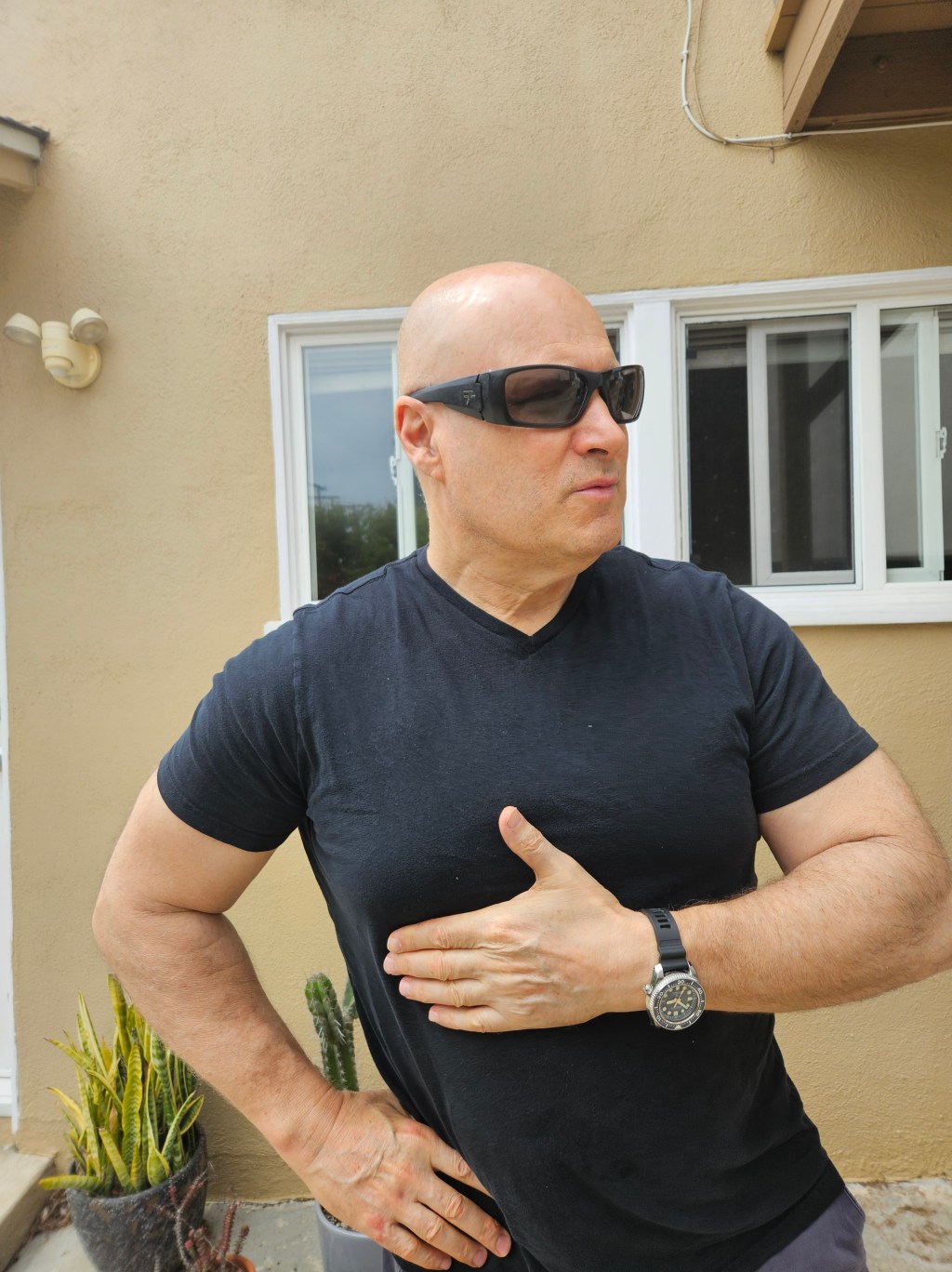
    I take no glory in training through my 60s. At nearly 64, with a lifting life that began in 1974 amid the clang of Olympic barbells and testosterone-choked gyms, I no longer chase records or applause. These days, I chase mobility. I chase not falling apart. A nagging flare of golfer’s elbow—inner right, thank you very much—has made its uninvited return, forcing me to swap kettlebell rows for gentler “lawnmower” pulls and abandon my beloved open-palm curls in favor of reverse curls, the orthopedic equivalent of safe sex.

    There was a time, of course, when I confused self-worth with showing off. I strutted under heavy weights in the ‘70s through the ‘90s like a tragic extra from Pumping Iron, nursing shredded rotator cuffs and wrecked lumbar discs in my quest to impress… well, no one, really. The mirror? My dad? Arnold? These days I tiptoe a tightrope between intensity and injury, trying to silence the reckless ghost of my twenty-year-old self who still believes he’s indestructible.

    This tug-of-war with time reminds me of Neddy Merrill, the doomed protagonist in John Cheever’s “The Swimmer,” who tries to recapture youth by swimming across his neighbors’ pools like a suburban Odysseus, only to arrive at his own foreclosed house—empty, echoing, and final. I see flashes of my own Neddy Merrill alter ego every time I glimpse my neighbor, a sturdy cop in his early 40s, shepherding his twin teenage sons off to jiu-jitsu. I envy them—their youth, their purpose, their untouched joints. But I remind myself that comparison is the mother of misery. I don’t train for glory anymore. I train because the alternative is to surrender to frailty, to collapse into a slow-motion horror film of decay. I train because being strong is still cheaper than therapy, and it’s the only middle finger I can raise at time’s relentless advance.

  • I’ve Become Leery of the Ronnie Coleman Effect in AI Writing

    I’ve Become Leery of the Ronnie Coleman Effect in AI Writing

    My college writing students and I have been collaborating with ChatGPT for over a year now. I’ve often been impressed with this writing platform. Provided I give very specific instructions and make it clear what kind of tone and persona I want, ChatGPT can perform in ways I can’t. It can’t make a turn of phrase and make language sing in ways that dwarf my own solid writing skills. 

    But recently, I’ve been leery of ChatGPT and have been eager to write without it. What I’ve noticed is that it can flex its prose muscles in impressive ways that I call the Ronnie Coleman Effect. Ronnie Coleman was a champion bodybuilder, arguably the best in his era, late 90s to early 2000s. At 290 pounds, his steroidal muscles exploded in ways that made him look impossibly superhuman. I was a natural bodybuilder in my youth. Coleman would blow me off the stage. Coleman’s 290 pounds to my 190 pounds is what my prose is compared to ChatGPT’s: I’m the natural, lean, almost boring bodybuilder while ChatGPT is the flexing, bulging Ronnie Coleman who steals all the attention. I’m simply overpowered by this AI platform. 

    However, there are downsides: AI overwrites, can obscure clarity, can be florid in nonsensical ways, can be grossly inaccurate, and can steal my confidence because it says, “You’re nothing compared to me,” and it can make me lazy because it whispers, “Just jot a few notes. I’ll take care of the rest.” 

    For this reason, I started writing without ChatGPT. I need to get out from under the oppressive Ronnie Coleman Effect and be human again. 

  • I Have No Illusions About Converting My Students to “The Ways of Literacy”

    I Have No Illusions About Converting My Students to “The Ways of Literacy”

    My college students admit that they barely read. They avoid books. They’ll skim an article. Their “cognitive load” is taken up by texting on their phones and watching TikTok and YouTube videos. They don’t have bandwidth for doing deep reading.

    Many of them were in the eighth grade during the pandemic. They lost close to two years of school, spent time on their phones and Chromebooks, and see ChatGPT as a godsend. They can outsource college instructors’ writing assignments and no longer have to worry about grammar or formatting. 

    Teaching college writing, I have to meet students where they are. I have to teach them rhetorical skills, critical thinking skills, and the transforming power of literacy, so I show them powerful arguments, and what makes them persuasive, and people who have found their higher selves through literacy, such as Frederick Douglass and Malcolm X, and the happiness derived from Cal Newport’s notion of “deep work” as an antidote to the despair and nihilism of popular culture’s default setting for cheap dopamine hits, immediate gratification, and meretricious consumer hype. 

    The good news is that my lessons resonate with the students evidenced by their engagement with class discussions. The less than good news is that these philosophical discussions don’t turn them into readers, don’t make them want to trade their phones and social media platforms for a novel or a biography, and don’t make them want to learn the finer points of rhetoric. 

    My students are smart, decent, reasonable, and pragmatic. They learn what they feel is essential to adapt to life’s challenges. Doing a deep dive into reading and writing doesn’t seem that essential to them even though they’ll acknowledge many of the writers and writing samples I present to them are impressive and worthy of admiration. 

    My students seem to appreciate me for giving them an entertaining presentation and for having made the effort to sell literacy as an essential tool for becoming our aspirational selves, but at the end of the day, they focus on getting their homework done as efficiently as possible, working a part-time job to pay the bills, enjoying their friendships, and nurturing their romantic interest. 

    The unspoken agreement between my students and me is that I will be entertaining and enthusiastic about my subject for 90 minutes, but I will not have any delusions about converting them to The Ways of Literacy. That is a teacher’s fantasy, made even more elusive in the AI Age. 

  • The Wellness Racket: Shaming, Scamming, and Selling You Salvation

    The Wellness Racket: Shaming, Scamming, and Selling You Salvation

    In How to Be Well, Amy Larocca vivisects the modern feminine ideal and lays it bare: not the goddess of hearth or harvest, but the “abstracted wellness she-god”—a taut, juiced-up high priestess of turmeric tinctures and lymphatic drainage rituals. This new oracle doesn’t offer wisdom but a curated Amazon storefront. She peddles empowerment with one hand and $128 collagen powder with the other, all while perched atop a Peloton like some neoliberal Delphic seer.

    These wellness influencers don’t just sell products; they sell paranoia dressed in millennial pink. Every scroll of your feed is a sermon in self-improvement with a side of fear: Eat this, not that. Touch this, never that. Microwave? You might as well lick plutonium. Their gospel is a toxic cocktail of pseudoscience, product placements, and shame. You’re not ill, darling—you’re just uninformed and understocked.

    And here’s the trick: they wave the banner of feminism, preaching self-empowerment while quietly mugging you with your own insecurities. They exploit the universal dread that something you ate in 2009 is still lodged in your spleen, slowly killing you. Who doesn’t want to be informed? Who wants to die from an unpronounceable preservative in a childhood granola bar? But the more you try to “be well,” the more you’re trapped in a never-ending scavenger hunt for health hacks, supplements, and contradictions.

    It’s not wellness. It’s a designer panic spiral. And the moment you start shaping your habits, meals, and bank account around their gospel, congratulations—you’re not just a follower. You’ve been converted. And this church doesn’t just ask for tithes. It demands your wallet, your weekends, and your soul.

  • Blessed Are the Gluten-Free: America’s New Spiritual Elite

    Blessed Are the Gluten-Free: America’s New Spiritual Elite

    Reading Amy Larocca’s How to Be Well is like watching Gwyneth Paltrow’s ghost possess a Whole Foods employee mid-mushroom latte. Her book is equal parts riveting and scalpel-sharp, dissecting the strange mutation of fashionistas who’ve traded in Gucci for goop and now drape themselves in wellness jargon like it’s couture. These wellness evangelists don’t just eat clean—they chant it. They speak in tongues made of spirulina, lipospheric vitamin C, Cordyceps, Shilajit resin, and ho shou wu, stringing together syllables like they’re summoning the ghost of Hippocrates.

    What we’re witnessing isn’t self-care—it’s a personality cult with better lighting. The modern wellness priestess has crowned herself a demigod, armed with adaptogens instead of sacraments, waving her magic tincture dropper and pointing lesser mortals toward the True Path of purified, gluten-free, unpasteurized transcendence. It’s not just health—it’s high-performance sanctimony.

    Larocca nails the diagnosis with surgical precision: “I sometimes think of wellness as the project of buying your own body back for yourself.” Translation? Welcome to America’s chicest hostage situation, where the ransom is payable in collagen peptides and oat milk. The goal is to become the luxury-branded version of you—perfect skin, toxin-free bowels, and moral superiority radiating from every overpriced yoga mat. The side effect? It magnifies the gaping inequalities of modern life like a magnifying mirror you didn’t ask to look into.

    Because let’s be honest: none of this comes cheap. These rituals of wellness cost money—bucketloads of it. We’re not talking about a jog around the park and some tap water. We’re talking $12 green juices and $300 infrared saunas. The entire project is rigged to serve the few while gaslighting the many. The wellness priestess doesn’t just ignore that her lifestyle is unattainable for most—she markets that inaccessibility as part of the charm.

    This isn’t health—it’s spiritual cosplay for the affluent.

  • Wristwatches and Wastelands: How Fashion Can Hollow You Out

    Wristwatches and Wastelands: How Fashion Can Hollow You Out

    Amy Larocca, a fashion journalist with twenty years of runway reportage under her belt, understands the psychological scaffolding beneath a well-tailored sleeve. “Fashion,” she writes in How to Be Well, “is about beauty, of course, but it is also about the desire to elevate daily life from its more banal limitations, to consciously and actively share something about how you’d like to be perceived by the rest of the world.”

    And that, my friend, is exactly where the trouble starts.

    Take a stroll through the horological asylum known as the watch community. What starts as an appreciation for precision craftsmanship often spirals into a neurotic fixation. A dive watch isn’t just for telling time—it’s for announcing to the world that you’re rugged, refined, and possibly ready to harpoon something. The desire to “elevate daily life” with just the right wrist candy turns into a slow-motion personality collapse. It becomes a lifestyle audition for an identity you don’t actually inhabit.

    The trap is cunning. At first, fashion promises transformation: a sharper silhouette, a touch of mystique, a sense of control in a chaotic world. But when the performance replaces the person—when dressing well becomes a proxy for purpose—you’re not elevating your life. You’re embalming it in linen and leather.

    The real tragedy isn’t vanity. It’s the way compulsive self-curation smothers empathy. Narcissism isn’t just annoying—it’s lonely. It dislocates you from community, connection, and anything approaching transcendence. A meaningful life, if it’s worth living at all, doesn’t orbit around the mirror.

    To be clear: there’s nothing wrong with looking sharp. Be fit, be stylish, radiate confidence. But when your wardrobe becomes your worldview—when you dress not to express but to impress—you trade depth for dazzle. You don’t become interesting. You become exhausting.

  • Toxins, Teas, and the Tyranny of Self-Care

    Toxins, Teas, and the Tyranny of Self-Care

    In How to Be Well: Navigating Our Self-Care Epidemic, One Dubious Cure at a Time, Amy Larocca introduces us to the “Well Woman”—an aspirational specter of affluent spirituality who floats through Erewhon aisles like a priestess of turmeric. She is non-religious but deeply “spiritual,” an educated, upper-middle-class avatar of intentional living. Her diet? Whole, organic, plant-based. Her skincare? Sourced from the tears of ethically massaged avocados. Her wardrobe? Soft, breathable cottons dyed with herbs. Her soul? Allegedly pure.

    She’s the type who throws around words like “boundaries” and “holding space” while sipping adaptogenic mushroom tea. Fluent in therapy-speak and swaddled in the cozy lexicon of mindfulness, she’s not just living—she’s curating her life, building an identity out of emollients, detoxes, and artisanal spices. And all of it—every mindful, ethically sourced drop—feeds the $5.6 trillion wellness-industrial complex.

    Larocca sees through the yoga-scented fog. The Well Woman, she argues, is just the latest installment in America’s ongoing franchise of unattainable feminine ideals: a new model to aspire to, envy, and—most importantly—buy into. Today’s purity isn’t moral; it’s material.

    Reading Larocca’s opening, I couldn’t help but think of Todd Haynes’s 1995 masterpiece Safe, in which Carol White—a vapid housewife in the chemical-glazed sprawl of the San Fernando Valley—slowly dissolves into the cult of purity. After one too many trips to the dry cleaner, Carol spirals into an obsession with environmental toxins, abandons her friends and family, and ends up exiled to a pastel-drenched wellness commune. There she lives alone in a sterile dome, staring at herself in the mirror, parroting affirmations until there’s nothing left behind her eyes but empty devotion.

    Carol White is the ghost of the Well Woman’s future—a cautionary tale in Lululemon. She doesn’t find peace; she finds a purgatory curated by Goop. And as Larocca peels back the lavender-scented rhetoric of self-care, it’s clear she sees this modern cult of wellness not as healing but as hollowing—a $5.6 trillion seduction that promises salvation and delivers scented self-delusion.

  • Trapped in the AI Age’s Metaphysical Tug-of-War

    Trapped in the AI Age’s Metaphysical Tug-of-War

    I’m typing this to the sound of Beethoven—1,868 MP3s of compressed genius streamed through the algorithmic convenience of a playlist. It’s a 41-hour-and-8-minute monument to compromise: a simulacrum of sonic excellence that can’t hold a candle to the warmth of an LP. But convenience wins. Always.

    I make Faustian bargains like this daily. Thirty-minute meals instead of slow-cooked transcendence. Athleisure instead of tailoring. A Honda instead of high horsepower. The good-enough over the sublime. Not because I’m lazy—because I’m functional. Efficient. Optimized.

    And now, writing.

    For a year, my students and I have been feeding prompts into ChatGPT like a pagan tribe tossing goats into the volcano—hoping for inspiration, maybe salvation. Sometimes it works. The AI outlines, brainstorms, even polishes. But the more we rely on it, the more I feel the need to write without it—just to remember what my own voice sounds like. Just as the vinyl snob craves the imperfections of real analog music or the home cook insists on peeling garlic by hand, I need to suffer through the process.

    We’re caught in a metaphysical tug-of-war. We crave convenience but revere authenticity. We binge AI-generated sludge by day, then go weep over a hand-made pie crust YouTube video at night. We want our lives frictionless, but our souls textured. It’s the new sacred vs. profane: What do we reserve for real, and what do we surrender to the machine?

    I can’t say where this goes. Maybe real food will be phased out, like Blockbuster or bookstores. Maybe we’ll subsist on GLP-1 drugs, AI-tailored nutrient paste, and the joyless certainty of perfect lab metrics.

    As for entertainment, I’m marginally more hopeful. Chris Rock, Sarah Silverman—these are voices, not products. AI can churn out sitcoms, but it can’t bleed. It can’t bomb. It can’t riff on childhood trauma with perfect timing. Humans know the difference between a story and a story-shaped thing.

    Still, writing is in trouble. Reading, too. AI erodes attention spans like waves on sandstone. Books? Optional. Original thought? Delegated. The more AI floods the language, the more we’ll acclimate to its sterile rhythm. And the more we acclimate, the less we’ll even remember what a real voice sounds like.

    Yes, there will always be the artisan holdouts—those who cook, write, read, and listen with intention. But they’ll be outliers. A boutique species. The rest of us will be lean, medicated, managed. Data-optimized units of productivity.

    And yet, there will be stories. There will always be stories. Because stories aren’t just culture—they’re our survival instinct dressed up as entertainment. When everything else is outsourced, commodified, and flattened, we’ll still need someone to stand up and tell us who we are.

  • Why I Don’t Read Happiness Essays (and Neither Should You)

    Why I Don’t Read Happiness Essays (and Neither Should You)

    Arthur Brooks is a best-selling author, a man of clear intellect, solid decency, and enough charm to disarm even a hardened cynic. I read one of his books, From Strength to Strength, which tackles the subject of happiness with insight, elegance, and more than a few glimmers of genuine wisdom. For a week or so, I even took his ideas seriously—pondering the slow fade of professional relevance, the shift from fluid to crystallized intelligence, and the noble art of growing old with grace.

    And then I moved on with my life.

    What I didn’t move on from, unfortunately, was the onslaught of Brooks’ happiness essays in The Atlantic. They appear like clockwork, regular as a multivitamin—each one another serving of cod liver oil ladled out with the same hopeful insistence: “Here, take this. It’s good for you.” The problem isn’t Arthur Brooks. It’s happiness itself. Or rather, happiness writing—that genre of glossy, over-smoothed, well-meaning counsel that now repels me like a therapy dog that won’t stop licking your face during a panic attack.

    Let me try to explain why.

    1. The Word “Happiness” Is Emotionally Bankrupt

    The term happiness is dead on arrival. It lands with the emotional resonance of a helium balloon tied to a mailbox. It evokes cotton candy, county fairs, and the faded joy of children playing cowboys and Indians—an aesthetic trapped in amber. It feels unserious, childish even. I can’t engage with it as a concept because it doesn’t belong in the adult vocabulary of meaning-making. It’s not that I reject the state of being happy—I’m just allergic to calling it that.

    2. It Feels Like Cod Liver Oil for the Soul

    Brooks’ essays show up with the regularity and charm of a concerned mother armed with a spoonful of something you didn’t ask for. I click through The Atlantic and there it is again: another gentle lecture on how to optimize my inner light. It’s no longer nourishment. It’s over-parenting via prose.

    3. Optimizing Happiness Is a Ridiculous Fantasy

    Some of Brooks’ formulas for increasing happiness start to feel like they were dreamed up by a retired actuary trying to convert existential dread into a spreadsheet. As if flourishing could be reduced to inputs and outputs. As if there’s a number on the dial you can crank up if you just follow the steps. It’s wellness-by-algorithm, joy-by-numbers. I’m not a stock portfolio. I’m a human being. And happiness doesn’t wear a Fitbit.

    4. Satire Has Already Broken the Spell

    Anthony Lane, in his New Yorker essay “Can Happiness Be Taught?,”
    dismantled this whole genre with surgical wit. Once you’ve read a masterful takedown of this kind of earnest life-coaching prose, it’s impossible to take it seriously again. Like seeing the zipper on a mascot costume, the magic disappears. You’re just watching a grown-up in a plush suit tell you to breathe and smile more.

    5. I Like Things That Exist in the World

    I’m interested in things with friction and form—things you can grip, build, question, deconstruct. Music. Technology. Communication tools. Exercise. Love. Psychological self-sabotage. You know, the good stuff. Happiness, as a subject, has all the density of vapor. It’s more slogan than substance, and when I see it trotted out as a destination, I start scanning for exits.

    6. It’s a Hot Tub Full of Bromides

    I have no interest in an adult ed class on happiness led by a relentlessly upbeat instructor talking about “mindfulness” and “centeredness” with the fixed grin of someone who has replaced coffee with optimism. I can already hear the buzzwords echoing off the whiteboard. These classes are group therapy in a coloring book—pastel platitudes spoon-fed to the emotionally dehydrated.

    7. It’s Not Self-Help. It’s Self-Surveillance

    Let’s be honest: a lot of happiness literature feels like a soft form of control. Smile more. Meditate. Adjust your attitude. If you’re not happy, it must be something you’re doing wrong. It’s capitalism’s way of gaslighting your suffering. Don’t look outward—don’t question the system, the politics, the institutions. Just recalibrate your “mindset.” In this sense, the language of happiness is more pacifier than pathfinder.

    So yes, Arthur Brooks writes well. He thinks clearly. He’s probably a better person than I am. But his essays on happiness make me recoil—not because they’re wrong, but because they speak a language I no longer trust. I don’t want to be managed, monitored, or optimized. I want to be awake. I want to be challenged. And if I’m lucky, I’ll get to experience the real stuff of life—anger, beauty, confusion, connection—not just a frictionless simulation of contentment.

    Happiness can keep smiling from the other side of the screen. I’ve got kettlebells to swing.

  • Echo-Chamber Fatigue: When Trusted Media Starts to Sound Like Static

    Echo-Chamber Fatigue: When Trusted Media Starts to Sound Like Static

    For years, I counted The Bulwark and The Atlantic among the few media outlets that seemed to keep their heads above water. Thoughtful, principled, and often sharp in their critique, they offered a sense of clarity during a time when the political center felt like it was collapsing under the weight of tribalism. I read The Atlantic with the same reverence people once reserved for the Sunday paper. I tuned into The Bulwark’s podcasts with eagerness, particularly the sparring matches and tag-team lamentations of Sarah Longwell and JVL.

    But lately, something’s shifted.

    I’ve been struggling to name the feeling exactly—disenchantment, disconnection, even a touch of annoyance. It’s not that they’ve suddenly started publishing bad takes (though no one’s immune to that). It’s more that I’ve come to feel like I’m listening to the same looped monologue. Their arguments are often cogent, yes, but increasingly predictable—a chorus of like-minded voices rehearsing the same concerns, circling the same drain.

    Call it echo-chamber fatigue.

    The Bulwark, once a clarion voice of principled conservatism and a fierce watchdog against authoritarianism, now often feels like a room full of smart people endlessly rehashing the same grim diagnosis: American democracy is circling the drain. The problem isn’t that they’re wrong—it’s that I already see the collapse unfolding in real time. Listening to it dissected again and again isn’t cathartic anymore. It’s just salt in the wound.

    The Atlantic, long celebrated for its intellectual breadth, increasingly feels like it’s scanning for moral alignment before publishing an idea. There’s little friction. Little surprise. Just a gentle stroking of reader confirmation bias.

    Meanwhile, I find myself gravitating to media that feels more alive—podcasts like The Gist with Mike Pesca, Blocked and Reported with Katie Herzog and Jesse Singal, The Fifth Column, Ink-Stained Wretches, and even The Remnant with Jonah Goldberg. These shows don’t always align with my politics—and that’s exactly the point. They’re not trying to usher me into ideological safety. They’re wrestling with absurdities across the spectrum. They’re skeptical. Curious. Sometimes contrarian. Always human.

    And that, I think, is the deeper issue: emotional resonance. The Bulwark and The Atlantic haven’t necessarily changed. I have. Or perhaps the times have. I need more than agreement—I need tension, exploration, contradiction. The intellectual monoculture, no matter how principled, starts to feel like a sedative after a while.

    I’ve even considered canceling my subscriptions. But there’s friction there, too: The Atlantic remains a useful classroom resource, and every now and then, The Bulwark sparks a genuinely engaging dialogue that reminds me why I once admired it so much.

    So I stay, for now. But I’ve moved my ears—and increasingly, my attention—toward media that still surprises me. That still thinks out loud, rather than reading from a polished script.

    I’m not rejecting thoughtful media. I’m just bored of watching it slowly turn into liturgy.