Category: Literary Dispatches

  • The Jungle, the Bigfoot, and the Fan Man Cometh

    The Jungle, the Bigfoot, and the Fan Man Cometh

    Last night I dreamed I was deep in the jungle—not metaphorically, mind you, but the kind you’d find on a Nature Channel special narrated by a vaguely concerned Brit. I wasn’t alone. Beside me stood a woman zookeeper in full khaki safari cosplay, complete with binoculars and a steel gaze. We weren’t observing wildlife—we were at war. The prize? A sprawling jungle compound. The opponent? A hulking, glowering Bigfoot-like brute who looked like he’d crawled out of my Neanderthal ancestry with unresolved issues and a gym membership.

    It was a reality show, naturally. Cameras everywhere. High stakes. Death possible. Maybe probable.

    What shocked me wasn’t the premise—it was me. I watched myself morph from suburban dad into a primal tactician, a creature with cunning in his marrow and bloodlust behind his bifocals. The zookeeper and I didn’t stand a chance physically, but we were shrewd, dirty-fighting strategists. While the beast snorted and stomped like a sentient linebacker, we set a trap—an elegant, jungle-engineered booby trap. And it worked. Bigfoot fell. Cue commercial break. Cue confetti.

    Victory was ours.

    But I, ever the responsible homeowner, sold my half of the prize to the zookeeper in exchange for a wad of cash and a sense of capitalist purpose. I left the jungle compound behind and made my triumphant return not to glory—but to shopping.

    I hit the beachside bazaar with missionary zeal, eyes blazing, nostrils flaring with sea air and consumer ambition. My quarry: fans. Tower fans. Desk fans. Oscillating fans. Fans with remotes, timers, and multi-speed whisper motors. Each vendor pitched their product like they were auditioning for Shark Tank. I nodded sagely as an assistant loaded box after box into a truck like I was provisioning for the end times—but with superior airflow.

    I had ventured into the heart of darkness, found my inner beast, won the battle, and returned not with enlightenment or moral clarity—but with high-performance climate control.

    In the dream’s strange logic, it made perfect sense. I had confronted the savage within, and now, armed with cutting-edge ventilation, I would cool the tempers of suburban life.

    This, apparently, is my idea of spiritual integration.

  • The Vegan Martyr of Suburbia

    The Vegan Martyr of Suburbia

    This is a story soaked in irony, clucking with heartbreak. It’s the tale of Ned Pearlman, a 63-year-old man whose conscience became his personal executioner.

    Ned was a lifelong weightlifter, a barrel-chested patriarch with calloused hands and a back catalog of deadlift anecdotes. When egg prices began to flirt with the absurd, his family took the Depression-era route and bought chickens. Backyard livestock as economic strategy.

    They started with a humble flock—a few hens, a rooster, and one poorly socialized silkie that pecked at everyone’s ankles. But something shifted in Ned. The hens began following him around the yard like starstruck interns. The rooster started presenting Ned with tributes: gum wrappers, pocket change, ornamental twigs. It was clear—Ned was the alpha.

    At night, the chickens would nestle beside him in bed, each with its own green velvet pillow like feathery courtiers in a royal suite. Ned, a man once fueled by steaks and protein shakes, looked into their beady eyes and saw innocent souls. Souls that changed him. He went vegan overnight.

    Not just vegan—missionary vegan. He researched. He supplemented. He downed algae-based omega-3s and pea protein smoothies that tasted like damp cardboard soaked in guilt. He clocked in 180 grams of protein a day, but his body, unimpressed by numbers, absorbed barely a fraction. The mighty Ned began to shrink.

    He became fatigued, confused. The barbell mocked him. His once-proud biceps began to resemble disillusioned baguettes. Despite his family’s desperate pleas—“just some yogurt, Ned, or a scoop of whey!”—he remained unwavering. This was a moral epiphany, not a diet. Animal products were betrayal. Flexibility was sin.

    Soon, the man who once bench-pressed lawn furniture was bedridden and showing signs of rapid cognitive decline. His doctor called it malnutrition-induced dementia. Ned called it sacrifice.

    His family, feeling abandoned, visited him rarely—guilt-visitations sprinkled in between Facebook posts and emotional exhaustion. But the chickens stayed. Loyal. Soft. Slightly judgmental. And the geriatric facility, either out of mercy or lack of clear policy, let them roost near him.

    One sunny afternoon, Ned was wheeled onto the grass. The chickens gathered around him, forming a feathered perimeter. In a rare moment of clarity, he looked to the sky and muttered, “Why, dear God, did my health not align with my ethics? Why must my clean conscience kill me and alienate those I love?”

    He received no reply. The clouds rolled by in soft indifference. Ned closed his eyes and died, flanked by his beaked apostles, surrounded by the warm, gentle souls that had rewritten his values—and slowly drained his life.

  • The Apostle, the Fantasist, and the Fallacy of Oversimplification

    The Apostle, the Fantasist, and the Fallacy of Oversimplification

    For decades, I was enthralled by Hyam Maccoby’s The Mythmaker: Paul and the Invention of Christianity—a book that crackled with contrarian flair and gave voice to my suspicions about Paul, the man I once called the theological arsonist of early Christianity. Maccoby offered the ultimate takedown: Paul wasn’t just a problematic apostle; he was a Gentile infiltrator, a second-rate intellect with delusions of rabbinic grandeur, and the architect of a theological Frankenstein stitched together from Jewish scripture and pagan mystery cults. I ate it up.

    But after multiple re-readings and exposure to rigorous critiques—particularly Jaroslav Pelikan’s withering 1986 review in Commentary, “The Real Paul?”—I find myself sobering up from Maccoby’s intoxicating polemic. It’s dawning on me that The Mythmaker didn’t so much reveal Paul as reinforce my own biases. Maccoby flattered the part of me that wanted Paul to be the villain in Christianity’s origin story—the man who hijacked Jesus’ message and replaced it with doctrinal imperialism.

    The prose, which once struck me as prophetic, now reads as grandiose. Maccoby’s tone vacillates between scholarly and shrill, and there’s a whiff of insecurity behind the rhetorical swagger. His portrait of Paul as a self-aggrandizing opportunist is delivered with the juicy intensity of a novelist crafting an antihero, not a historian reconstructing a life. The final chapter, which connects Paul’s theology to the roots of Christian anti-Semitism, still has force—but even there, the execution leans more on indignation than historical rigor.

    Maccoby’s thesis—Paul as a failed would-be rabbi who, thwarted by his mediocrity, built a new religion in his own image—is clever, plausible in parts, and undeniably dramatic. But it’s also marred by speculative psychoanalysis and gaping holes in historical evidence. As Pelikan deftly notes, Maccoby accuses Paul of being a fantasist while committing the same literary sin: manufacturing internal motives and dramatic arcs that aren’t supported by any reliable record. Even the irony is Pauline.

    Pelikan, writing as a Christian scholar, grants that Maccoby’s critique of Paul’s legacy—particularly regarding anti-Semitism—is worthy of serious attention. And he’s right. There’s a case to be made that Pauline theology contributed to the long and bloody shadow Christianity has cast over Jewish identity. But the leap from theological critique to historical assassination is too far, too fast, and too loose with the facts.

    What Maccoby misses—or refuses to see—is Paul’s theological brilliance. In a world obsessed with glory and power, Paul offered something almost unthinkable: a God who descends rather than ascends, who chooses suffering over status, who empties himself in the service of love. Philippians 2 is not the work of a hack. It is a theological Everest. In the image of a humbled God, Paul delivers something transcendent—an inversion of divine power that has echoed through two millennia.

    No, Paul was not a mythmaker in the pejorative sense. He was, for better or worse, a visionary. Flawed, fiery, and yes, sometimes maddening—but never mediocre.

    In the end, Maccoby gives us a Paul who is more caricature than character—more villainous foil than complex man. The truth is harder to pin down, but also more interesting: Paul is neither saint nor saboteur. He is one of the most consequential minds in human history, a man whose theological imagination reshaped the contours of the divine. That kind of mind deserves more than debunking—it demands engagement, even when it provokes discomfort. 

  • Pedagogical Incontinence and Other Nightmares

    Pedagogical Incontinence and Other Nightmares

    Last night, I found myself caught in that classic pedagogical panic dream—the one where you’re supposed to be teaching but haven’t the faintest idea what class you’re in, what subject you’re meant to teach, or whether you’re even wearing pants. In this installment of the recurring nightmare franchise, the setting was not a classroom but a vast beachside arcade—a surreal mash-up of administrative buildings, decrepit apartments, and suspiciously cheerful employees who all seemed to be on the take.

    My only tether to coherence was a middle-aged reentry student named Fred, bald, officious, and inexplicably committed to serving as my personal secretary. Fred wore the expression of a man who once managed a Kinko’s in Bakersfield and had never fully recovered. He trailed me through the maze of kiosks and clammy hallways, reminding me of when my night classes began and which lecture I was supposed to pull out of thin air. He was part calendar app, part parole officer.

    Then Fred vanished. Just like that. I was suddenly alone and bladder-full, desperately seeking a bathroom that refused to stay in one place. The rest of the dream dissolved into a fevered montage of my failed search for a bathroom: dead-ends, hills of ice plant slick with dream-dew, craggy rock climbs worthy of a National Geographic feature on confused professors, and an aquatic plunge into time itself. I dove through the Paleozoic, drifted across the Devonian, waded through the Carboniferous—each era choked with psychedelic fossil-fish and haunting evolutionary whispers. And still, no bathroom. My urgency transcended epochs.

    When I awoke—sweating, humbled, and dry—I was left with one existential question: Was Fred my inner adult, the stoic bureaucrat of my soul? And without him, am I just an overgrown child, lost in a shifting dreamscape, chronically unprepared, and forever in pursuit of a bathroom that may not exist?

  • Dante’s Divine Comedy: Cousteau’s Unholy Expedition

    Dante’s Divine Comedy: Cousteau’s Unholy Expedition


    As narrated by Jacques Cousteau, with field notes from his beleaguered underwater team.


    INFERNO: Into the Abyssal Trench of the Damned

    Jacques Cousteau, voice-over:
    Ah, my friends… today, we descend into the Mariana Trench of morality—the Inferno, a spiraling whirlpool of the damned, where sins marinate for eternity. The pressure here is unbearable—morally and literally. The descent begins at the rim of limbo, a calm zone of disappointed philosophers sipping lukewarm wine and complaining about being born pre-Christ. It is, how you say… le cocktail party from hell.

    Deeper still, through currents of wrath, greed, and heresy, the water grows thick with despair. Lust torpedoes past us—Paolo and Francesca spinning in endless romantic turbulence, like two sock puppets in a malfunctioning jacuzzi. Our cameraman, Jean-Luc, is nearly sucked into the Malebolge whirlpool of fraudulent bureaucrats—an eddy of corporate PowerPoints and forgotten passwords. We tether him to a line made from papal indulgences, which seem to work better here than rope.

    At the center, we find the frozen Lucifer, eternally gnawing Judas like a chew toy. A tragic, teeth-gnashing monument to betrayal, spinning in his own frigid tantrum like a toddler in a cryogenic time-out. We try to interview him. He screams. We leave. The ice is too thick for empathy.


    PURGATORIO: The Great Saltwater Stairmaster of Soul Rehab

    We ascend to warmer, brinier waters—where spirits paddle slowly toward salvation like ghostly otters with existential dread. This is Purgatory: less horror show, more bureaucratic sauna. It is the afterlife’s DMV, but with slightly better views. The sea teems with souls doing cardio for their sins. Slothful monks do underwater burpees. Gluttons run laps in kelp fields, chewing guilt instead of snacks.

    At the gate, the angelic customs officer stamps our passports with the seven-P tattoo—P for peccato, sin. The sinners scrub one off with each level, like exfoliating shame from their spectral pores. It is the spiritual equivalent of CrossFit, with more crying.

    We observe prideful kings carrying boulders of ego on their backs, hunched like philosophical hermit crabs. Further up, the envious have their eyelids sewn shut with wire—no more side-eye, mes amis. My assistant, Pierre, faints from secondhand humility.

    At the summit? Earthly Paradise. A surreal reef of forgotten innocence. There’s an inexplicable breeze, though we are still underwater. Beatrice appears—a celestial dive instructor with zero tolerance for emotional nonsense. She gives me a look that says, “Your flippers are on backward,” and I feel both judged and baptized.


    PARADISO: The Effervescent Champagne Bubble of the Just

    Now we rise through pearlescent thermoclines of virtue—Paradiso, where water becomes light and light becomes choir music with a side of algebra. We are weightless in intellect and awe. My team, reduced to blinking toddlers, floats in spiritual helium.

    We ping upward through nine concentric orbits of moral excellence. The souls here don’t paddle. They vibrate. Saint Thomas Aquinas delivers a lecture on divine justice while juggling galaxies. My microphone melts.

    Each sphere is a graduate seminar in cosmic ethics. Martyrs, mystics, and medieval astronomers buzz like philosophical plankton. Justice twirls with Wisdom in an eternal waltz choreographed by Kepler’s ghost. I try to ask a question, but a flaming eagle-shaped constellation silences me with a single blink.

    At the Empyrean apex, we meet the Divine, disguised as a living diffraction pattern. God is less a being than an epiphany you weren’t quite ready for. My goggles crack, my crew sobs, and I briefly become fluent in Latin before blacking out.

    When we awaken, we are back on our ship. Jean-Luc throws his camera overboard. Pierre writes a sonnet. I, Jacques Cousteau, conclude: the ocean is deep… but not as deep as the soul.

  • The Summer of Nosebleeds

    The Summer of Nosebleeds

    In the summer of 1985, I was leaking blood from my nostrils like a second-string horror movie extra. Were the nosebleeds stress-induced? Psychosomatic? The verdict is still out. But my therapist, Dr. Groves, had a theory. He believed I needed to be exorcised—not of demons, but of belief. A staunch atheist moonlighting as a university shrink, Groves had made it his personal crusade to save me from hell—not the place, but my fear of it. My religious conversion, which had hit me like a brick to the chest six years earlier, was the parasite he hoped to dislodge.

    Groves was a rationalist to a fault—smug in the way only a chain-smoking empiricist with a beard full of Twinkie crumbs can be. He listened to my struggles with hellfire theology with a bemused look, as if I were a case study in gullibility. I tried to explain that, like Melville on Hawthorne, I could neither believe nor be at peace in my unbelief. I feared that rejecting the orthodox view of hell might be my express ticket there. Groves was unmoved. His mission? Deconvert me and install a nice, clean OS of secular humanism.

    The problem? I had a too-lively imagination—not whimsical, but operatic. Dreams, half-dreams, hallucinations, visions, and the deeply unsettling conviction that the Cowardly Lion from The Wizard of Oz was a demonic entity dispatched from the underworld to haunt me in 480p. Every year when the movie aired, I approached it with the same dread most people reserve for colonoscopies. The lion’s twitchy eyes and unsettling facial prosthetics sent me into existential spirals. As a kid, I didn’t think he looked silly. I thought he was what demons actually looked like.

    When I shared this with Groves, he leaned back in his chair, took a drag of his cigarette, and looked at me through the haze like a zoologist observing a talking panda. He’d nod, scratch his beard, and absentmindedly devour another Twinkie. The man exuded the confidence of someone who believed the universe had been definitively explained in a back issue of Scientific American.

    I told him about my panic attacks in class, my fear of women, and my dreams—recurring nightmares where the Cowardly Lion appeared not as a bumbling mascot, but as a harbinger of damnation. Sometimes I’d wake up drenched in sweat, only to discover the nightmare wasn’t over—he was still in the room. Once, I felt him sitting on the bed beside me. My blood iced over. Breathing became an extreme sport.

    Then came the dream that broke the meter. I’d been mainlining Erich Fromm’s Escape from Freedom and You Shall Be As Gods, trying to cram his brand of secular humanism into the same mental real estate as C.S. Lewis’s tart defenses of Christianity. The dream that followed was a Kafka-meets-Freud set piece: I was sprinting across a field toward a ring of fire, symbolic, I assumed, of Frommian liberation. But before I could reach it, the Cowardly Lion materialized like a bouncer at the gates of meaning. I froze. Couldn’t scream. Couldn’t breathe. Then I “woke up” in bed and began to levitate. Yes, levitate—hovering a foot above the mattress in full cosmic ambiguity.

    When I relayed this to Groves, he suggested a buffet of medications and, more disturbingly, that perhaps I needed a girlfriend. Preferably one with therapeutic talents in bed. That was the beginning of the end for our sessions.

    Meanwhile, I was reading Twilight Zone Magazine like it was scripture. The June 1985 issue featured a story called “Jungle Eyes” and a black panther on the cover. That night, I dreamed I was walking through a Norwegian forest. Tigers approached. Instead of mauling me, they licked my face like affectionate Labradors. I woke up with a bloody nose. But instead of panicking, I let the blood flow freely onto a sheet of paper. A tiger’s face emerged from the drips. I titled it “Tiger’s Blood” and pinned it to my bulletin board.

    Only one person ever saw it: Wade Worthington, keyboardist for a punk band then called Faith No Man. He later helped form Faith No More. Wade was a connoisseur of the bizarre and saw the painting as pure artistic expression. Groves would have seen it as further proof I belonged in a padded room. I kept it to myself.

    Eventually, I dropped Groves and started seeing Dr. Moyers, a Jungian analyst and ex-Seventh-Day Adventist whose office was conveniently close to the wine shop where I worked. Moyers treated my levitation dream, tiger portrait, and nocturnal encounters with the seriousness they deserved. He even invoked Jungian synchronicity. Things were going well until he asked me to play in a sandbox—literally. He had toy soldiers and dinosaurs. I was supposed to commune with my unconscious through sandbox choreography. That’s when I walked.

    By 1987, with a Master’s degree in hand and the desire to appear employable, I decided to repress the entire Summer of Nosebleeds. No more tiger blood. No more levitating. No more Cowardly Lion exorcisms. Rationality was the currency of adult life, and I needed benefits.

    And then, decades later, Dale Allison happened. His book Encountering Mystery cracked open the vault. Reading it at age 61, married with twin teenage daughters and semi-retired in suburban Southern California, felt like receiving a long-overdue permission slip. Here was a scholar admitting that people—sane people—have visions, visitations, encounters with the divine and the infernal. Allison references both William James and David Hufford. Light and shadow. The beatific and the demonic. Finally, someone spoke my language.

    I realized I had never truly processed my four heavenly encounters, which had occurred in a tight, surreal cluster from November 1978 to March 1979. Oddly, they all preceded my Christian conversion—which, it should be noted, was motivated not by love but by fear. Specifically, fear of hell. My conversion, in hindsight, was a theological panic purchase: a desperate grab for Hell Insurance.

    The first encounter came on November 27, 1978—Moscone Night. Dan White had just assassinated Mayor George Moscone and Supervisor Harvey Milk. Dianne Feinstein announced the news on live TV. I walked outside to our backyard deck and collapsed into a patio chair. That’s when a Giant Me rose from the earth—muscular, aglow, and radiating kindness. He cradled me and whispered, “Be strong. Be good.” It felt real. Too real. But also, too much like a projection. It lacked the unsettling Otherness of what came next.

    A week later, after a Peter Gabriel concert and little sleep, I awoke and saw heaven. Green. Glorious. Humbling. I whispered, “I need to be like this all the time,” and the vision faded like a tide pulling away. That day, I think I had another nosebleed.

    By February 1979, I was working at Taco Bell in Castro Valley. During a break, still wearing the too-small hat meant for smaller craniums, I felt a flood of warmth and heard a message: “Your sole purpose is to love everyone with a pure heart.” A woman at the counter later whispered to her husband, “That young man is very nice.” Little did she know I was a brooding, angry bodybuilder trying to protect a mother unraveling from divorce and bipolar disorder. What she saw was the glow.

    Then, March. Pop Lit class. A joke of a class where the teacher read pulp novels while we filled out book report forms. I was skimming The Weigher of Souls when, out of nowhere, a wave of divine peace overtook me. I said, “I’m at peace,” again and again. I walked out crying, sat in my car, stunned. I think of Pascal’s “Night of Fire.” I called mine Pop Lit.

    Four encounters. Four months. And then—nothing but the cold machinery of doctrine. My Christian conversion in April 1979 was all about HAZMAT theology: God was radioactive, and Jesus was the suit that made divine proximity survivable. Church felt like a cleanup crew at Chernobyl, urging others to put on their gear or face incineration. Penal Substitutionary Atonement, they called it. I called it spiritual trauma.

    It got worse. Church friends assured me my Jewish relatives—including those murdered in Auschwitz—were in hell. God loves you, they said, and now here’s your cup of theological cyanide. I felt gaslit by the well-meaning faithful.

    Not all Christians horrified me. That same summer, in the university library, I stumbled across Rufus Jones’s Fundamental Ends of Life. His vision of faith was neither rescue mission nor social engineering project. It was a love affair. A search for God the way a lover searches for the beloved, a saint for holiness. Jones made me weep. His God resembled the Being I’d met in those four months before the conversion machinery kicked in.

    I wish I could say I became a Quaker like Jones, but I didn’t. I remain in theological limbo. Part of me still clings to the watermelon analogy: if Christian doctrine has seeds, I don’t get to spit them out and still claim the fruit. And yet, I’ve spent sixty-plus years chasing vanity projects and spiritual junk food only to find that the real task—the only task—is what Paul describes in Philippians: becoming like Christ, not in dogma, but in descent. To serve. To empty. To love.

    Frankl says we don’t get to choose meaning; life assigns it. The question is whether we answer the call. And if that means sitting alone in the cheap seats of faith, far from the pulpit, clutching my Tiger’s Blood painting and memories of Pop Lit, then so be it. At least I still believe in the show.

  • The Shop Foreman of My Own Dysfunction and Other Life Chapters

    The Shop Foreman of My Own Dysfunction and Other Life Chapters

    At 63, I now divide my life into chapters—not by achievements or milestones, but by bone density, hormone decay, and the gradual hardening of the frontal cortex. Think of it as an anatomical calendar, where each page curls with protein shakes, pretension, and the occasional existential crisis.

    Chapter One: The Barbara Eden Years.
    Childhood wasn’t about innocence—it was about Cap’n Crunch. Bowls of it. Oceans of sweetened corn rubble. I dreamed not of firetrucks or baseball cards but of living inside Barbara Eden’s genie bottle—a plush, velvet-lined fever dream of satin pillows and cleavage. If Barbara Eden wasn’t beaming into my imagination, there was always Raquel Welch in fur bikinis or Barbara Hershey smoldering her way across a screen. This was hormonal awakening served with a side of sugar coma.

    Chapter Two: The Strength Delusion.
    By twelve, I was slamming Bob Hoffman’s bulk-up protein like it was communion wine. At Earl Warren Junior High, I became a Junior Olympic Weightlifter—a gladiator-in-training who wanted pecs like dinner plates and the gravitas of a Marvel origin story. This was the age of iron worship and adolescent mythology: I wasn’t building muscle—I was forging armor.

    Chapter Three: The Intellectual Flex.
    In my late teens, I realized I had all the social charm of a wet gym sock. So I went cerebral. I buried myself in Kafka, Nabokov, and classical piano, amassing a CD library of Beethoven and Chopin that could rival the Library of Congress. I worked in a wine shop where I learned to pronounce “Bordeaux” with a nasal twang and described Chablis as “crisp with notes of existential regret.” I didn’t just want to be smart—I wanted to be the human embodiment of a New Yorker cartoon.

    Chapter Four: The Shop Foreman of My Own Dysfunction.
    Marriage and employment hit like a cold bucket of reality. Suddenly, I had to function around other human beings. My inner demons—once delightfully antisocial—were now liabilities. I had to manage them like a foreman supervising a warehouse of unruly toddlers armed with crowbars. Turns out, no one wants to be married to a psychological landfill. I had to self-regulate. I had to evolve. This wasn’t personal growth; it was preventative maintenance, or what other people simply call adulthood.

    Chapter Five: Diver Cosplay.
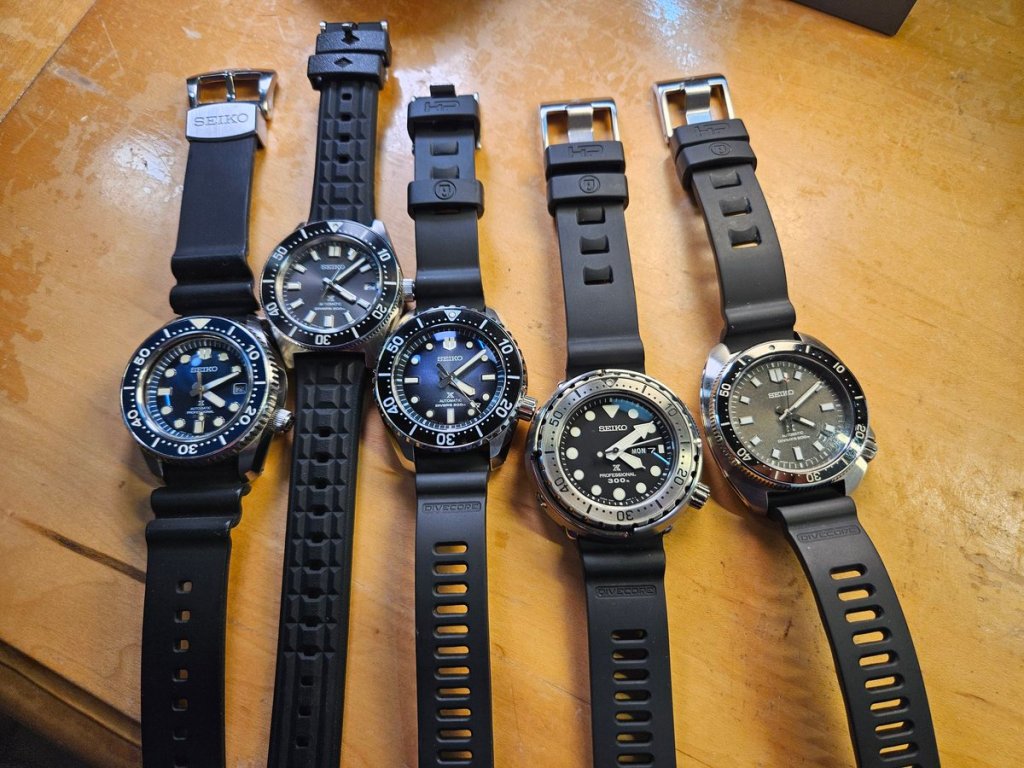
    In my forties, I had just enough disposable income and suburban ennui to start collecting dive watches. Not just one or two. A flotilla. I wanted to be the hero of my own fantasy—a rugged diver-explorer-adventurer who braved Costco parking lots with a Seiko strapped to his wrist. This was less about telling time and more about clinging to the idea that I was still dangerous, or at least interesting. Spoiler: I was neither.

    Chapter Six: The Age of Denial and Delusion.
    These days, the watches still gleam, but now I’m staring down the barrel of cholesterol, visceral fat, and the slow betrayal of my joints. I swing kettlebells five days a week like a garage-dwelling warlock trying to ward off decay. I track my protein like a Wall Street analyst and greet each new biomarker like a hostile corporate audit. Am I aging gracefully? Hardly. I’m white-knuckling my way through geriatric resistance and calling it “wellness.” If I’m Adonis, then somewhere in the attic there’s a Dorian Gray portrait of my pancreas in open revolt.

    I know what’s coming: Chapter Seven. The reckoning. The spiritual compost heap where I either make peace with my body’s betrayal or turn into a bitter relic that grunts through foam-rolling sessions like it’s trench warfare. It’ll be the chapter where I either ascend or unravel—or both.

    And while our chapters differ in flavor, I suspect we’re all reading from the same book. Different fonts, same plot twist: we start with fantasies, build identities, fight the entropy, and eventually, we all kneel before the mirror and ask, “Was that it?

  • Kafka, Not Clenbuterol

    Kafka, Not Clenbuterol

    I’ve never quite gotten over the deaths of the Mentzer brothers—Mike and Ray—whose obsession with perfection and reliance on steroids ultimately hastened their exit. Their physiques were statuesque, yes, but their lives were carved short. That’s the part that lingers.

    I admire Mike Israetel—he’s brilliant, transparent, and still juiced, albeit at what he calls a “low dose.” He concedes he may shave a decade or more off his life for it. That trade-off sticks with me. It’s a Faustian bargain that never appealed to me, even back in the 70s when the bodybuilding bug bit hard. I was tempted to go all in—steroids, competitions, the works—but I veered. I went to college. I fell for Kafka instead of clenbuterol, and bodybuilding became a passion, not a profession.

    And you know what? That’s been enough.

    I never needed steroids to love the grind. The clang of plates, the satisfying fatigue of a well-earned pump—that’s always been sacred to me. It’s a kind of meditation with weight. No enhancement necessary.

    These days, my goal is simple: keep the protein high and the calories hovering just above the edge of a deficit. Lean enough to see the muscle I’ve built, not buried in fluff. I’m not after mass for mass’s sake—I’ve seen that movie, and the ending isn’t great. I’d rather stay lean and defined than bloated and breathless.

    This isn’t about vanity. I just want to see what’s been built underneath, after fifty years under the bar.

  • The Abbot’s Misfits

    The Abbot’s Misfits

    I arrived at the Palos Verdes trails just before ten, and the heat was already doing its best impression of a convection oven. The mountainous trails, baking under the relentless sun, were separated from the street by a chain-link fence that looked like it had given up on life years ago. Inside the confines of this makeshift pen, several dozen goats were having the time of their lives munching on dry grass as if it were the most gourmet hay in existence. Their faces were a mix of innocent curiosity and that absurd kind of adorableness that makes you momentarily consider swearing off lamb chops forever. I made a mental note to “consider veganism” again, a notion I promptly squashed with vivid memories of my O-positive blood rejoicing every time I indulged in a perfectly seared ribeye. Hello, goats—you’re safe because it looks like I’ll stick with beef.

    By the goats, a white tent had been pitched like some sort of mirage, and under it, a circle of chairs was arranged with the precision of a cult meeting—or worse, a corporate team-building exercise. The man who had the audacity to call himself the Abbot greeted me with a grin that suggested we were about to embark on a day of carefree yachting rather than whatever bizarre ritual he had planned. Forget the flowing robes and monastic aura—I was greeted by a fitness model straight out of an overenthusiastic health magazine. Neatly pressed cargo shorts hugged his cycler’s thighs like they had been tailored for the occasion, and his olive T-shirt clung to a body sculpted by what could only be an unholy alliance with a CrossFit gym. 

    A cross-body sling bag was slung over one of his thin yet annoyingly muscular arms, which were covered in veins that seemed to be competing in an under-skin relay race. His jawline could have cut glass, and his neatly sculpted silver hair made him look like he’d stepped out of an L.L.Bean catalog. But it was his eyes that really got me—blazing blue orbs that looked like they belonged on the figurehead of a Viking ship, ready to plunder and pillage. 

    “Graham, come join us,” he said with the kind of enthusiasm that suggested we were minutes away from sipping mimosas on a luxury yacht. “We are just moments away from the interrogation.” The way he said “interrogation” made it sound like a delightful little jaunt instead of, you know, something that involved possible torture or at least a really awkward group discussion.

    The most striking thing about the Abbot wasn’t his absurdly chiseled jawline or his militant posture; it was the overwhelming stench of lavender and rose water that assaulted my senses the moment I got within a hundred yards of him. This man hadn’t just splashed himself with these fragrances—he’d practically marinated in them. It was as if he’d decided to pickle himself in a floral potpourri so potent that it probably had bees tailing him for miles. I half-expected to find petals stuck to his skin.

    As I reluctantly made my way under the tent, I was greeted by the sight of six people slumped in those classic, soul-crushing folding chairs that practically shriek, “We’re only here for the free food.” These weren’t just any ordinary folks. No, these were the future friends, foes, and backstabbers who would weave themselves into the disaster that would soon be my life—though at that moment, they all just looked like they were wondering when the punchline of this bizarre setup was going to drop. Spoiler: It never did.

    Behind them, a table stood like a beacon of false hope. A giant pitcher of cucumber water glistened in the sunlight, promising hydration that would do nothing to wash away the impending madness. But what truly caught my eye was the stack of cakes beside it. They looked innocent enough, these little golden blocks, but I would soon discover that they were the Abbot’s specialty—cornbread cakes made with applesauce, honey, and some vanilla-flavored soy protein powder that tasted suspiciously delicious. These cakes weren’t just a snack; they were a trap, a gateway drug that would soon have me spiraling into a carb-induced dependency I hadn’t seen coming. But let’s not jump ahead—there’s plenty of time to explore how these seemingly harmless cakes would drag me into the Abbot’s world of sweet-smelling insanity.

    For now, let’s just say that in that moment, my biggest mistake wasn’t walking into the tent—it was deciding to stay. But hey, who could resist free “light refreshments”?

    With one arm draped around my back like a used car salesman about to seal a shady deal, the Abbot steered me toward the motley crew assembled under the tent. He flashed a benevolent smile, the kind that makes you wonder if he’s about to offer you enlightenment or swindle you into buying a timeshare in Cancun. “My friends,” he announced with all the pomp of a second-rate cult leader, “Graham has graced us with his presence. He is a college writing instructor with many gifts, though I’ll let him elaborate on those special talents later.” His smile suggested that whatever “gifts” I possessed were about to be squeezed out of me like juice from a lemon.

    He pointed at each member of the ragtag group, starting with Abigail, a woman in her early fifties who looked like she’d been carved out of a block of pale, pasty clay by a very angry sculptor. Her squat frame and monkish haircut didn’t do her any favors, but she smiled with the kind of pride usually reserved for people who’ve just completed their first marathon, despite the fact that she hailed from Gorman—a town so small it might as well not exist—where she’d spent her youth dodging aggressive chickens on her parents’ farm. Abigail proudly raised three fingers, showcasing them as if they were battle scars, and regaled us with tales of surviving on a teeth-rotting diet of PayDay bars and orange Fanta until she discovered The Abbot’s life-altering cornbread cakes. You’d think she’d found the Holy Grail, but instead, it was just some glorified baked goods.

    Next up was Larry, a man in his late forties who had apparently modeled his look on a 1970s mafia reject. His long, slicked-back hair and tinted sunglasses made him look like he was auditioning for the role of “Skeevy Casino Manager” in an off-off-Broadway production. Dressed in black jeans and a too-tight white T-shirt that clung to his muscular upper body like a bad decision, he had the kind of physique that screamed “I skipped leg day,” with spindly legs that looked like they’d snap under the weight of his overly pumped chest. Larry had once been a professional gambler until every casino in the area wisely decided he was bad for business. Now, he managed an upscale Mexican restaurant at Del Amo Mall—a stone’s throw from my house—where he spent his days chain-drinking Red Bull and dreaming of the good old days. “I was probably killing myself drinking all those chemicals and caffeine,” he said, “but thanks to the Abbot and his cornbread cakes, I’m learning the true path.” 

    Larry’s brother Stinky, who looked like he’d just crawled out of the primordial ooze, sat next to him. With shaggy blond hair, deep pockmarks, and a forehead that could have been used as a Neanderthal fossil exhibit, Stinky was the kind of guy who seemed to wear his heartbreak on his sleeve—and his face. In his late thirties and still stuck in a dead-end job at a Costco warehouse, he was the embodiment of a bad country song. His high school sweetheart had skipped town with his engagement ring and now worked as a “hostess” at various questionable establishments in Miami. “Self-pity is my addiction,” he confessed, as if he’d just admitted to a crippling heroin habit. But don’t worry—the Abbot was going to give him a “second shot at life,” presumably with a side of cornbread cakes.

    Maurice shuffled forward, a short, wiry guy with a dark complexion. Looking much younger than his age of forty, his kid’s face was set in a permanent grimace, like he’d just stepped in something nasty and couldn’t shake the stench. He was dressed with the precision of a man who either had nowhere else to go or was meticulously planning his escape. His crisp, white-collared sports shirt and navy blue shorts looked fresh out of the package as if he had bought them specifically for this occasion, only to instantly regret his decision. The sandals on his feet were so spotless they might as well have come with a warning label: “For display purposes only.”

    Maurice radiated the enthusiasm of someone attending a surprise tax audit. If this were a beach day, he’d be the guy hunched under a too-small umbrella, clutching a lukewarm beer like it was his only friend, and glaring daggers at the carefree seagulls circling above, as if they were personally responsible for all the miseries in his life. Every inch of him screamed that he’d rather be anywhere but here, and the irony was that he looked like he was dressed for a casual day out, just not one that involved other human beings.

    To Maurice, this gathering was less of a spiritual intervention and more of a cruel and unusual punishment. His body language said, “I’m here under duress,” and his eyes, narrowed to slits, darted around the group as if calculating the quickest exit. It was clear that Maurice wasn’t here to bare his soul—he was here to endure the ordeal with as much stoic misery as possible. With a degree in computer science and the personality of a dial-up modem, Maurice was the poster child for disillusionment. Recently divorced and demoted from homeowner to condo dweller in Harbor City, he shared this nugget of personal failure with all the enthusiasm of someone recapping their latest colonoscopy. His intro was short, sour, and dripping with enough bitterness to make a lemon blush. You could tell Maurice wasn’t here to find inner peace—he was here because the thought of a one-on-one with the Abbot made him more uncomfortable than the idea of being stuck in a dentist’s chair.

    Sitting next to Maurice was Jason, the group’s designated eye candy. With his languid gray eyes, full lips, and high cheekbones, Jason looked like he’d just stepped off the set of a Calvin Klein ad. But beneath the chiseled exterior was a life insurance salesman and mixed martial arts fighter who’d spent his formative years studying jiu-jitsu and muay thai to protect his siblings from their alcoholic father. His good looks and business success were a smokescreen for the social anxieties and commitment issues that plagued him. “I’m here to find answers,” he said, his voice dripping with the kind of melodrama usually reserved for soap operas.

    Finally, there was Howard Burn, the Abbot’s right-hand man, who looked like he’d been assembled from spare parts left over from a mad scientist’s experiment. Tall and lanky with a head of perfectly coiffed black hair, Howard had the angular, contemplative face of someone who took himself way too seriously. He clutched a notebook in his lap, furiously scribbling notes like a star student at Cult Leader 101. When he introduced himself, it was with all the joy of a man who’d just been informed his house was on fire. “It has been my great pleasure to work for the Abbot for the last three years,” he said, his tone suggesting that “pleasure” was a foreign concept to him. Before joining the Abbot’s merry band of misfits, Howard’s life had been a blur, a meaningless existence spent wandering from one menial job to the next. But the Abbot had changed all that, and for the first time, Howard felt like he had purpose—presumably one that involved handing out a lot of cornbread cakes.

    The Abbot beamed at Howard like a proud father, the kind who gives his kid a pat on the back for finally tying his own shoes. “Well said, my son,” his smile seemed to convey as if the entire room was one big happy family. 

    But then the interrogation began, and any illusion of a cozy kumbaya moment evaporated faster than a politician’s promise after election day.

    The Abbot, who’d suddenly transformed from a benevolent guru into a reality TV judge on a power trip, fixed his steely gaze on Abigail. “We’ll start with you,” he declared, like a dentist about to extract a tooth without anesthesia. “Small-town girl, former fast-food overlord, now a landscaper, and you’re still spiraling from that breakup. Jennifer, wasn’t it? She moved in with someone else—someone you actually considered a friend—and now you’re wallowing in betrayal like a sad country song. All this wallowing has blinded you from your gifts.”

    Abigail blinked, probably wishing she could shrink into her cargo shorts and disappear. “I don’t have any gifts that I know of,” she muttered, clearly hoping that modesty might serve as an escape hatch.

    The Abbot’s smile was as sharp as a guillotine. “Oh, but there’s the matter of your left pinkie, now a charming little hook, thanks to your early attempts at butchering a pumpkin with a serrated knife. What were you, eight years old? Trying to carve a jack-o’-lantern or auditioning for a role in Sweeney Todd?”

    Abigail nodded meekly.

    “Show them,” the Abbot commanded as if this was the grand unveiling of some macabre art piece.

    Obediently, Abigail held out her hand, and there it was: her pinkie, eternally frozen in a grotesque hook. The finger, sliced at the joint below the knuckle, was now more calcified appendage than human flesh—a monument to bad luck and worse kitchen skills.

    “Yes, the hook,” the Abbot intoned, as if he were introducing the world’s eighth wonder. “A marvel, truly. It saved your life during that robbery in Barstow, blinded your would-be thief like a weaponized claw, and has been a godsend for lugging groceries into the house. You’ve even used it to hook tools while landscaping, but you’ve been missing out on its real potential.”

    Abigail stared at the Abbot like he’d just told her she could time travel with her toenails.

    “What you don’t realize,” he continued, his voice dripping with condescension, “is that your little pinkie isn’t just a handy-dandy grocery hook. It’s a supernatural antenna. Whenever you’re near something or someone steeped in dark secrets or supernatural energy, your pinkie will tingle, twitch, or maybe even do the macarena—whatever it does to warn you that you’re in the presence of danger. You’ve got a sixth sense attached to your hand, my dear.”

    The Abbot then motioned for her to stand up. “Go on, stand next to Maurice and wave your pinkie in front of him like you’re dowsing for water. But don’t actually touch him; just let your psychic appendage do its thing.”

    Abigail, clearly wondering what sort of circus act she’d signed up for, obliged. As she moved her pinkie around Maurice’s head, she wrinkled her nose. “There’s something off about his head,” she announced, as Maurice stared ahead with the same enthusiasm as a DMV clerk.

    “Something wrong? With Maurice’s head?” the Abbot said, feigning shock like a bad soap opera actor. “You don’t say! But you’re right. His head is literally messed up.”

    Maurice, looking like he’d just been told his dog died, barely reacted.

    The Abbot turned to Maurice, his tone shifting to that of a doctor delivering a grim prognosis. “Maurice, my boy, you suffer from migraines, but not just any migraines. No, your headaches are like the universe’s cruel joke—they’re precursors to natural disasters, the kind of catastrophes people write disaster movies about. They’re called Black Swan Events. You’ve got the power to sense them before they happen, but until you harness this gift, you’re just a walking, talking barometer of doom. Learn to control it, and you might just be able to save us from the next apocalypse—or at least predict when we’ll need to evacuate.”

    Maurice’s expression remained blank, perhaps pondering whether he’d wandered into a cult or just the world’s weirdest self-help group.

    Abigail, meanwhile, looked at her pinkie like it was a divining rod, realizing that in this absurd reality, even her freakish hook might have its own twisted kind of magic.

    The Abbot, with an air of condescending benevolence, motioned to Abigail to walk toward Stinky. She raised her pinkie—now more hook than finger—over the simian-faced warehouse worker, who stared at it like it was a deranged bumblebee. 

    “His nose,” she declared with the gravitas of someone revealing the cure for cancer. “He can smell things.”

    “Very good,” the Abbot crooned as if speaking to a particularly dim-witted child.

    “But not normal things,” she added, turning to the Abbot for reassurance. “He can smell evil!”

    The Abbot nodded, his eyes twinkling with mock seriousness.

    “He can smell it in people. He knows when they’re lying.”

    “And what does it smell like, pray tell?” The Abbot asked, leaning in as if the answer might be the meaning of life.

    “Ammonia,” she said, wrinkling her nose.

    Stinky chimed in, “I smell ammonia all the time.”

    “Of course, you do,” the Abbot said, as if this were the most natural thing in the world.

    Stinky turned to his brother Larry with a smirk. “When you said you couldn’t loan me that money, I smelled ammonia. You were lying to me!”

    The Abbot, now in full guru mode, said, “Your nose, Stinky, is a lie detector.”

    Stinky’s face twisted into a look of bewildered relief. “All my life, I thought I had some kind of medical condition. When I was a kid, they ran all these tests because I kept saying everything smelled like cleaning supplies.”

    “Of course they found nothing,” the Abbot said, taking a languid sip of cucumber water as if he were above such pedestrian concerns.

    “But if the world is full of evil, why don’t I smell ammonia all the time?” Stinky asked, clearly not understanding the subtlety of his “gift.”

    “Evil, my dear boy, comes in shades,” the Abbot said, like he was explaining quantum physics to a toddler. “You need to fine-tune your nose to detect varying levels of malevolence.”

    He then turned his attention to Larry, who looked like he’d rather be anywhere but here. The Abbot motioned for Abigail to wave her pinkie hook over him, and she did so with all the enthusiasm of someone stirring a pot of gruel. She looked baffled. “I’m not getting anything… wait, there’s a pulse, like a two-four beat.”

    Larry grinned, “That’s ‘Float On’ by The Floaters. I listen to it whenever I’m anxious. Helps me chill.”

    The Abbot’s face soured at Larry as if his disciple’s slow thinking were testing his patience. “You don’t feel pain, do you?”

    “Not really,” Larry said, shrugging. “Last year, I had a root canal. Brought my earbuds and played ‘Float On’ on repeat, and it was like I wasn’t even in the chair.”

    The Abbot sighed, clearly disappointed. “You rely too much on your phone. You must learn to summon the song within your mind. Only then can you truly suppress pain.”

    Larry’s face twisted in confusion. “But isn’t pain a good thing? Like, a warning system?”

    The Abbot’s patience wore thin. “Most humans crumble at the slightest discomfort. Your power allows you to transcend pain, to unlock your full potential. Or would you rather remain a common oaf?”

    Larry still didn’t look convinced, but the Abbot wasn’t one to be deterred by something as trivial as logic. His gaze slid over to Jason, a guy who looked vaguely familiar, like one of those retail cashiers you always see but never remember where. Jason was already fidgeting like a kid caught sneaking candy, his nerves practically screaming “Get me out of here.” 

    “Now, let’s see what our friend Abigail can sense about you,” the Abbot said, leaning in with the kind of enthusiasm usually reserved for people about to tell you you’re in for the deal of a lifetime—if you just hand over your credit card first.

    Abigail, that beacon of confidence, hovered her pinkie in the air like she was trying to tune into Jason’s internal radio. Finally, her pinkie landed somewhere near his waist. “Your back… it’s messed up,” she declared, like she was diagnosing a flat tire.

    Jason winced. “Chronic pain from a car accident two years ago. Acupuncture helps, but it’s still pretty bad.”

    The Abbot sneered like Jason had just admitted to preferring instant coffee. “Acupuncture? Weakness incarnate. Your pain is a gift, Jason. Embrace it, and you’ll become five times stronger than the strongest man alive. Ignore it, and you’ll remain the pathetic creature you are.”

    Jason blinked, trying to process the avalanche of nonsense the Abbot had just unloaded. “So, my back pain is… super strength?” He looked like he was about to ask if this whole thing was an elaborate prank.

    “Precisely,” the Abbot said, with the smug satisfaction of a man who just solved the world’s energy crisis by suggesting we all power our homes with good intentions. “But only if you stop running from it.”

    I realized, with a sudden jolt, that Jason wasn’t just vaguely familiar—I knew him. But from where? Fidgeting in my seat, I blurted out, “Jason, do we know each other?”

    Before Jason could answer, the Abbot’s gaze swung toward me with all the subtlety of a wrecking ball. His nostrils flared like a bull about to charge, and I was suddenly sure he could smell my fear. “You’ll get your turn, but do not speak out of place,” he snapped, like a third-grade teacher reprimanding a kid for talking during recess.

    He turned back to Abigail, clearly eager to get back to his performance of “Mystical Leader Extraordinaire.” “See what you can find out about Graham,” he instructed, as though I were next in line at a spiritual deli counter.

    Abigail moved her magical pinkie over me, her face twisting in confusion like she was trying to figure out a Sudoku puzzle with half the numbers missing. “I’m getting… flapping. Like wings. Bats? No… crows! Huge crows!” She said this with the conviction of someone announcing the discovery of a new planet.

    The Abbot’s eyes gleamed like a kid who just found the last Golden Ticket. “Yes, Graham has an affinity for crows—Gravefeathers, to be exact. They bring him messages from the other side, but he must learn to listen.”

    I raised an eyebrow, now officially in *what the hell* territory. “Gravefeathers? Is this some kind of joke?”

    “Far from it,” the Abbot said with a smile so condescending it could curdle milk. “The Gravefeathers have chosen you. Your task is to decode their messages, to fulfill our mission.”

    “And what exactly is this mission?” I asked, now thoroughly regretting every life choice that had led me to this tent.

    “All in good time,” the Abbot said, his tone so patronizing it was a wonder he didn’t pat me on the head. “For now, you must prepare.”

    As if on cue, Howard Burn—looking like a villainous butler from a B-movie—emerged from the shadows carrying trays covered in tinfoil, like a waiter in some dystopian restaurant. “As a token of your commitment,” the Abbot intoned, “I offer you each a cornbread cake.”

    My skepticism reached new heights. “What’s the catch?” I asked, eyeing the tray like it might contain some kind of mind-control device. “Is this cake magic?”

    The Abbot’s face twisted into that all-too-familiar condescending smirk. “Magic? No. But consuming it is a test of trust, a way to align yourselves with the universe’s energies. And it tastes pretty damn good, too.”

    Howard handed me a slice, and against my better judgment, I took a bite. To my horror, it was delicious. The cake was a golden, moist masterpiece, with a caramelized top that hinted at hidden sweetness. The flavors of honey and vanilla danced with almond and cornmeal, while a subtle cinnamon undertone lingered just long enough to make me question all my life choices up to this point.

    I devoured the cake like a starving man, only to find myself choking on my own gluttony. The Abbot, ever the gracious host, handed me a glass of cucumber water, which I gulped down as if my life depended on it. 

    “I could eat this for breakfast, lunch, and dinner,” I mumbled, wiping crumbs from my face like the classy individual I am.

    Out of the corner of my eye, I noticed a large black crow perched on the gate post, its fiery eyes boring into me with the unmistakable message: Enjoy your cake, you idiot. You’re in for one hell of a ride.

  • Biceps and Biohazards: A Life on Nutritional Alert

    Biceps and Biohazards: A Life on Nutritional Alert

    I’ve been a bodybuilder most of my life. At 63, my muscles still bulge like I’m auditioning for a special forces propaganda reel—but even that doesn’t exempt me from the quiet humiliation of mortality. Lately, I’ve been staring into the abyss not with dread, but with diagnostics. My blood pressure, triglycerides, cholesterol—these numbers have become my new Greek chorus, whispering prophecies of heart disease, kidney failure, and other charming ways the body stages its final betrayal.

    I want to live long. I want to be healthy. I want to be around for my family, not just as a protein-shake-fueled statue, but as someone present, alert, alive. And so I try to eat right. I try to live clean. But in doing so, I’ve become a man who spends his days mentally auditing every almond. I walk through my own kitchen like it’s a minefield, knowing one wrong step—say, a 700-calorie bowl of Shredded Wheat with berries and walnuts—might plunge me into the void.

    This is what vigilance looks like now: standing in front of the fridge at 8 p.m., debating whether two Medjool dates and a dollop of whole milk Greek yogurt is self-care or self-destruction. I’ve got a body that could still turn heads at a funeral, and yet I’m haunted by the nutritional content of a single ounce of bourbon, as if one sip will hurl me into a Roman orgy.

    And so I ask myself: Is this it? Is a healthy life supposed to feel like I’m forever balancing on a dietary razor wire, eyes scanning for invisible enemies made of saturated fat?

    Where’s the joy in this script? Where’s the wonder, the enchantment, the spontaneity that’s supposed to come with vitality? Am I prolonging life or merely stretching the anxiety?

    These are the questions I ask while chewing a forkful of salmon and silently longing for a croissant. Yes, I want to live longer—but must I do it while fearing the yogurt that is staring at me from the refrigerator?