Category: music

  • The Coldplay Apocalypse: Notes from a Smoothie-Drinking Future

    The Coldplay Apocalypse: Notes from a Smoothie-Drinking Future

    Welcome to the future—where the algorithm reigns, identity is a curated filter pack, and dystopia arrives not with a boot to the face but a wellness app and a matching pair of $900 headphones that murmur Coldplay into your skull at just the right serotonin-laced frequency.

    We will all look like vaguely reprocessed versions of Salma Hayek or Brad Pitt—digitally airbrushed to remove all imperfections but retain just enough “authenticity” to keep our neuroses in play. Our playlists will be algorithmically optimized to sound like Coldplay mated with spa music and decided never to take risks again.

    We’ll wear identical headphones—sleek, matte, noise-canceling monuments to our collective disinterest in one another. Not to be rude. Just too evolved to engage. Every journal entry we write will be AI-assisted, reading like the bastard child of Brené Brown and ChatGPT: reflective, sincere, and soul-crushingly uniform.

    Our influencers? They’ll all look the same too—gender-fluid, lightly medicated, with just enough charisma to sell you an oat milk subscription while quoting Kierkegaard. Politics, entertainment, mental health, and skincare will be served up on the same TikTok platter, narrated by someone who once dated a crypto founder and now podcasts about trauma.

    Three times a day, we’ll sip our civilization smoothie: a beige sludge of cricket protein, creatine, nootropic fibers, and a lightly psychoactive GLP-1 variant that keeps hunger, sadness, and ambition at bay. It’s not a meal; it’s a contract with the status quo. We’ll all wear identical sweat-wicking athleisure in soothing desert neutrals, paired with orthopedic sneakers in punchy tech-startup orange.

    We’ll all “take breaks from social media” at the same approved hour—between 5 and 6 p.m.—so we can “reconnect with the analog world” by staring at a sunset long enough to photograph it and post our profound revelations online at 6:01.

    Nobody will want children, because who wants to drag a baby into a climate-controlled apartment where the rent is half your nervous system? Marriage? A relic of a time when humans still believed in eye contact. Romances will be managed by chatbots programmed to simulate caring without requiring reciprocation. You’ll tell the app your love language, it’ll write your messages, and your partner’s app will do the same. Everyone’s emotionally satisfied, no one’s truly known.

    And vacations? Pure fiction. Deepfakes will show us in Bali, Tuscany, or the moon—beaming with digital joy, sipping pixelated espresso. Real travel is for the ultra-rich and the deluded.

    As for existential despair? Doesn’t exist anymore. Our moods will be finely tuned by micro-dosed pharmacology and AI-generated affirmations. No more late-night crises or 3 a.m. sobbing into a pillow. Just an endless, gentle hum of stabilized contentment—forever.

  • Psychedelic Mushrooms and the Art of Saying “Meh”

    Psychedelic Mushrooms and the Art of Saying “Meh”

    People I admire—deep thinkers, seekers, trauma survivors, even that old roommate who once confused a lava lamp for God—swear by magic mushrooms. They describe transcendence, tearful reunions with their inner child, and conversations with the universe where the universe speaks perfect Jungian. Apparently, psilocybin is the shortcut to enlightenment, the divine inbox where angels drop PDFs of your truest self.

    And yet, I remain a bastion of Mushroom Apathy Syndrome (MAS)—a spiritual condition marked by an impenetrable indifference to the fungal fanfare. While others are melting into cosmic unity on some mossy hillside, I’m thinking about whether it’s time to reorganize my spice rack. I don’t want to chew sacred mold to glimpse the divine. If I need an ego death, I’ll just read my old poetry.

    Sure, I’d love to encounter the Divine—maybe Spinoza’s glowing web of pantheistic awe, maybe a seraph with decent taste in jazz. But I just can’t take mystical advice from a guy in a woven beanie yelling about chakras while wearing Crocs. If I want a head trip, I’ll queue up Yes, The Strawbs, or Crosby, Stills & Nash and lie on the floor until my chakras align from sheer harmonic exhaustion. Or better yet, I’ll abstain from sugar for ten months and then unleash nirvana with a single bite of decadent, spice-laced carrot cake.

    My condition is also rooted in a kind of Fungal Nihilism—the belief that no mushroom, no matter how ancient, artisanal, or Amazonian, can fix the howling absurdity of existence. You can’t outrun entropy with a spore. If I want to stare into the abyss and laugh, I’ll binge-watch George Carlin eviscerate modern life with nothing more than a mic, a ponytail, and a pair of skeptical eyebrows.

    Ultimately, I practice Spore Snobbery—a reflexive contempt for the breathless mythologizing of psychedelic fungus. These aren’t sacred portals. They’re glorified mushrooms with a publicist. For some, they offer spiritual clarity. For me, they sound like a gastrointestinal trust fall with no one there to catch you but an ayahuasca-shaman-turned-life-coach named Brad.

  • Chronophony: When a Song Is the Era

    Chronophony: When a Song Is the Era

    Let’s dispense with the polite understatement that certain songs from the past merely “became part of culture.” Please. That phrase is far too meek—like saying the sun is “somewhat bright.” No, these songs didn’t just reflect their era; they colonized it. They became the era, fused with its atoms, and rewired the collective unconscious like musical Jungian code.

    Take 1968: a year boiling over with revolution, hallucination, and existential mood swings. Now drop two sonic spells into that cauldron—Canned Heat’s “Going Up the Country” and The Zombies’ “Time of the Season.” These aren’t just tracks. They’re Chronophonies (chronos + symphony): not songs about time, but songs that are time. They don’t sit on the shelf of nostalgia—they hum, glow, and whisper through the corridors of decades.

    To call them “timeless” is like calling Hendrix “decent with a guitar.” These records feel inevitable, like they were always there—just waiting for someone brave or mad enough to tune into the right frequency and pluck them from the aether. The artists? Vessels. Channels. Promethean thieves snatching divine fire, only to gift us these shimmering hymns that still make the hairs on your arm salute.

    I know it sounds pretentious. I’m fine with that. Some music earns your reverence and dares you to look uncool for saying so.

  • The Curdling Effect: How Great Songs Die in Grocery Stores

    The Curdling Effect: How Great Songs Die in Grocery Stores

    There was a time—long before streaming services, algorithmic playlists, and “sonic branding agencies”—when “Dark Side of the Moon” could take you on a soul-melting trip through space, madness, and time. In high school, Pink Floyd was our sonic sacrament. The cymbals shimmered like cosmic omens, and we let the guitars dissolve our angst into astral vapor.

    Then Circuit City got its grubby corporate mitts on it.

    Some goons in a boardroom decided that Pink Floyd’s transcendent opus would make a great jingle for discount televisions. The song was diced, commodified, and stuffed into every radio and TV break until what once felt like a journey into the abyss became the soundtrack to buying a laser printer. “Dark Side: didn’t just sell out—it was dragged through the spin cycle of capitalism and emerged shriveled and stained, like a silk shirt forgotten in a laundromat dryer.

    Same thing happened to U2. “I Still Haven’t Found What I’m Looking For” once carried a biblical ache, a spiritual yearning that made you want to climb a desert mountain and cry. Then one fateful day in 1989, I was in a fluorescent-lit supermarket, watching the vegetable misting system descend on some limp romaine, when I heard it—Muzak’d into oblivion. Bono’s ache had been lobotomized and looped over damp eggplant. I felt like I’d witnessed a holy relic turned into a toilet brush.

    There’s a name for this: The Curdling Effect. When a song becomes so omnipresent, over-marketed, or backgrounded that it curdles—its soul separating from its sound, leaving only a sentimental sludge.

    Sometimes entire bands curdle. Take Coldplay. They’re talented, sure, but somewhere along the way they became the official band of stadium urinals and car commercials. Every note now drips with forced uplift and corporate synergy. Once they soared; now they slosh around in the shallow end of their own overexposure.

    But here’s the miracle: some songs are immune. Some endure. Some never curdle.

    Take “Fade Into You: by Mazzy Star. It drips with longing, and its beauty doesn’t spoil, even after decades. This morning, driving my twin daughters to school, I heard Victoria Bigelow’s cover. It stopped me. Time slowed. The song had lost none of its haunting gravity. It was still a velvet fog of romance and surrender.

    And then came a moment of musical resurrection. Olivia Dean’s “Touching Toes” played on the car stereo. It reminded me of Maria Muldaur’s “Midnight at the Oasis,” a song I hadn’t thought of in years. Both had that sultry, half-smile sway that drops your blood pressure and restores your faith in kindness. I let people merge in traffic. I was chill. I was enlightened.

    I’m now curating a playlist: Olivia Dean, Maria Muldaur, and any song that keeps me from flipping off fellow drivers. I call it The Chill Driver Playlist—a sonic antidote to the Curdling Effect.

  • Confessions of a Neurotic Audiophile: Bargain Hunting My Way to $89 Sony Headphone Bliss

    Confessions of a Neurotic Audiophile: Bargain Hunting My Way to $89 Sony Headphone Bliss

    Three weeks ago, crammed into a flying aluminum sausage between Los Angeles and Miami, I found myself envying the travelers swanning around with $500 AirPods Max clamped over their smug skulls.
    Meanwhile, I was roughing it with a $10 pair of gas station earbuds, gamely trying to absorb Ty Cobb: A Terrible Beauty on Audible — Charles Leerhsen’s excellent biography about the famously complicated, mercurial baseball legend.

    It wasn’t just the status parade that triggered me. It was the simple, physical longing for some real insulation from the shrieking toddler in 34B and the endless snack cart rattle. Add to that my growing irritation with my usual setup: cheap wireless earpods for napping, which jam into my ears like corks in a wine bottle, utterly ruining my quest for a gentle, dignified snooze while listening to my favorite podcasters.

    When I got back to Los Angeles, I plunged headfirst into the shimmering, self-defeating abyss of headphone reviews.
    After hours of caffeinated obsession, I settled on the Soundcore Q85s — on sale for $99, and allegedly a bargain.
    They arrived dead on arrival. Not just sleepy-dead. Full weekend-at-Bernie’s dead.
    After 24 hours of desperate charging attempts, I admitted defeat, boxed the corpse, and sent it back.

    Then I struck gold — a sale on the Sony WH-CH720N noise-canceling headphones for a criminally low $89.
    I ordered them, and then — naturally — descended into the familiar buyer’s spiral:
    Had I gone too cheap? Should I have splurged on Sony’s crown jewel, the WH-1000XM4s, on sale for $248?
    Was I an idiot forever exiling myself from sonic paradise for a lousy $159 savings?

    Before I could drown in regret, the WH-CH720Ns arrived. I checked the fit–very comfortable for my big head. Then I downloaded the Sony app, dialed in noise-canceling, jacked the equalizer to “Bright,” and hit play.

    First test: Josh Szeps interviewing Facebook whistleblower Frances Haugen on Uncomfortable Conversations.
    I was so blissfully submerged in the sound that 72 minutes evaporated — I barely surfaced in time to stagger into my office hour Zoom call, looking freshly abducted.

    Later, drunk on my own tech triumph, I sampled music on Spotify:
    SZA’s “Good Days,” MorMor’s “Whatever Comes to Mind,” LoMoon’s “Loveless,” Nao’s “Orbit,” and Stephen Sanchez’s “Evangeline.”
    The music sparkled. The instruments had space to breathe.
    The sound was bright, crisp, separate — not the muddy sonic stew I’d suffered through before.

    Which left me wondering: What black magic could the Sony XM4s possibly possess to be worth more than double the price?
    Because right now, $89 felt like grand larceny — I didn’t buy these headphones, I stole them.
    And considering how easy it is to lose or destroy a pair of headphones in an airport stampede, maybe it’s time to quit while I’m ahead and leave the luxury models to the Instagram aristocracy.

  • Beauty Without Performance: The Quiet Legacy of The Sundays

    Beauty Without Performance: The Quiet Legacy of The Sundays

    Harriet Wheeler and David Gavurin of The Sundays gave the world my favorite song of all time: “You’re Not the Only One I Know.”
    I didn’t just fall for that song — I tumbled headfirst into their entire body of work across three albums, each one a quiet masterclass in melancholy and grace. I saw them live twice, but the 1990 show at Slim’s in San Francisco left a scar on my heart that never quite healed. Somewhere between the ringing guitars and Harriet’s bittersweet voice, I understood something about beauty that hurt — the way only true beauty can.
    I bought a Sundays T-shirt that night, and decades later, my teenage daughter wears it like a badge of honor as if carrying the torch for a band she never saw but somehow still feels.

    Wheeler and Gavurin, true to form, refused to play the roles we demanded of them.
    After making their brief, brilliant splash on the music scene, they disappeared — not in disgrace, but in quiet triumph.
    No messy social media fade-outs. No tragic reunion tours at casino amphitheaters. Just two people choosing domestic obscurity over the ceaseless meat grinder of public performance.
    Rumor has it Harriet became a schoolteacher. I hope that’s true. There’s something magnificent about the idea of her trading in the spotlight for a chalkboard, living in the kind of real, unperformed life that fame devours.

    Meanwhile, their fanbase — myself included — obsessed for years, combing through blogs and Reddit threads for any sign of a comeback that never arrived.
    But the more I think about it, the more I admire Wheeler and Gavurin’s refusal to extend the brand of themselves indefinitely.
    The same beauty that made their music shimmer with timeless sadness likely steered them away from the terminal exhibitionism that seems to consume so many artists.
    Their art wasn’t a ladder to fame — it was a lifeboat out of it.

    They should know this much:
    The same Sunday’s T-shirt I once wore to death now lives on, worn proudly by my daughter, proof that real magic — the kind you don’t sell, the kind you don’t explain — doesn’t need an encore.

  • Obscurity Without Shame: The Enduring Beauty of the Trash Can Sinatras’ “Obscurity Knocks”

    Obscurity Without Shame: The Enduring Beauty of the Trash Can Sinatras’ “Obscurity Knocks”

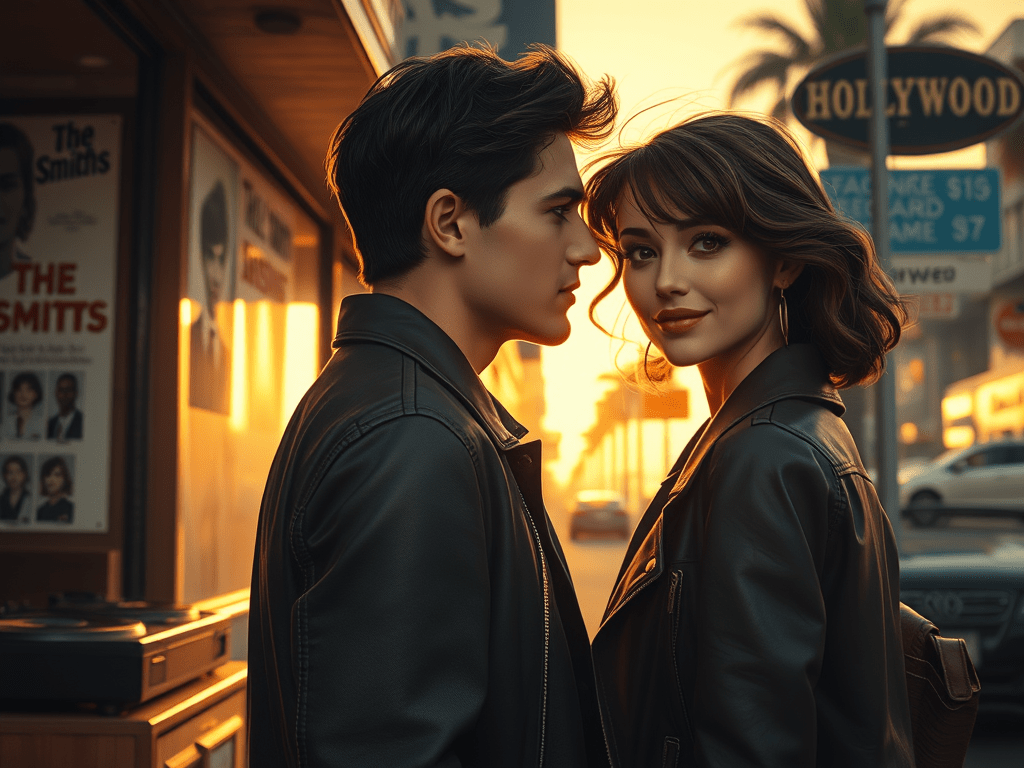
    It was 1990, and there I was — strutting down Hollywood Boulevard with my girlfriend, a walking cliché in a secondhand leather jacket, pretending to be too jaded for the tourists but secretly hoping to be discovered by a roving talent scout. We ducked into some grim little shrine to adolescent misery, shopping for Smiths T-shirts and anything else that might broadcast our manufactured melancholy.

    That’s when the store’s sound system offered up “Obscurity Knocks” by the Trash Can Sinatras — a song I was too full of myself to recognize as a direct warning shot.
    At the time, I was a preening, would-be screenwriter and novelist, drunk on my own imaginary press clippings, convinced that obscurity was a fate reserved for lesser mortals. I didn’t realize that the bright, bittersweet melody washing over those racks of ironic despair was, in fact, my personal horoscope: You, sir, will toil unseen. You will remain a hidden draft in life’s file cabinet. And — shocking plot twist — it will not kill you.

    Decades later, “Obscurity Knocks” still sits at the top of my all-time favorites list, not because it flatters ambition, but because it gently demolishes it.
    It’s a hymn to living for the work itself, to making peace with invisibility, to resisting the cheap, sugary high of external validation.

    It is one of those rare songs that manages to be both wistful and liberating at once — a graceful acceptance letter to a life lived outside the gravitational pull of fame. Far from being a bitter anthem of failure, it’s a clear-eyed celebration of choosing the harder, more honest road: living for one’s art rather than living off it.

    At first listen, the jangly guitars and breezy melody almost betray the lyrical gravity beneath. The music is light, but the words carry the weight of a reckoning. The narrator stands at the border between youthful ambition and mature resignation, surveying the life he has actually lived versus the life he once imagined. And yet, there is no rage, no tantrum, no grasping for lost relevance. Instead, there is something far healthier and more beautiful: an elegy without self-pity, a conscious decision to stay faithful to the things that matter.

    The song’s real bravery lies in its refusal to dress obscurity up as defeat. It suggests that real integrity means loving what you do even when the spotlight points elsewhere — when the record deals dry up, when the critics stop caring, when the audience forgets. In an era addicted to metrics — clicks, likes, views — “Obscurity Knocks” remains a defiant refusal to reduce one’s life to a scoreboard.

    Mortality hums quietly underneath the entire track. It’s not explicit, but it’s there, felt in the weariness behind certain lines, the subtle wear and tear of a life measured not by trophies but by quieter, richer achievements: loyalty to craft, private joy, the bittersweet pleasure of simply carrying on. It accepts the inevitable fading without collapsing into nihilism.

    There is longing, yes — the song aches with it — but it’s a clean, unsentimental kind of longing. It isn’t the longing for public adoration or manufactured relevance; it’s the deeper human longing to matter, to create something true before the clock runs out. In this way, “Obscurity Knocks” isn’t just about a music career. It’s about the universal experience of learning to live meaningfully in a world that will not give you a standing ovation for it.

    The Trash Can Sinatras don’t rage against the dying of the light; they tip their hats to it, shrug, and keep playing. And in that shrug, that beautifully unvarnished acceptance, they find a kind of glory that fame could never offer.

    Do the Trash Can Sinatras have a song more beautiful than “Obscurity Knocks”? Technically, yes — but only one, and finding it is like trying to locate the Holy Grail in a used CD bin. It’s a B-side called “My Mistake,” a painfully perfect little anthem about a young fool so drunk on love he trips over his own heart like it’s a barstool in a dark room.

    It’s a song that captures, with ridiculous precision, the exquisite humiliation of thinking you’re the protagonist in a grand romance when you’re actually just a blip on someone else’s radar — a mistake you won’t stop making until life has finished sanding the delusions off your bones.

    Postscript:

    After writing this post, I felt compelled to listen to “Obscurity Knocks” on YouTube and someone asked in the comment section: “Any other songs like this?” I answered: “Yes, ‘My Finest Hour’ by The Sundays.”