Category: philosophy

  • How Losing 20 Pounds Made Me Rethink My Entire Watch Collection (and My Life)

    How Losing 20 Pounds Made Me Rethink My Entire Watch Collection (and My Life)

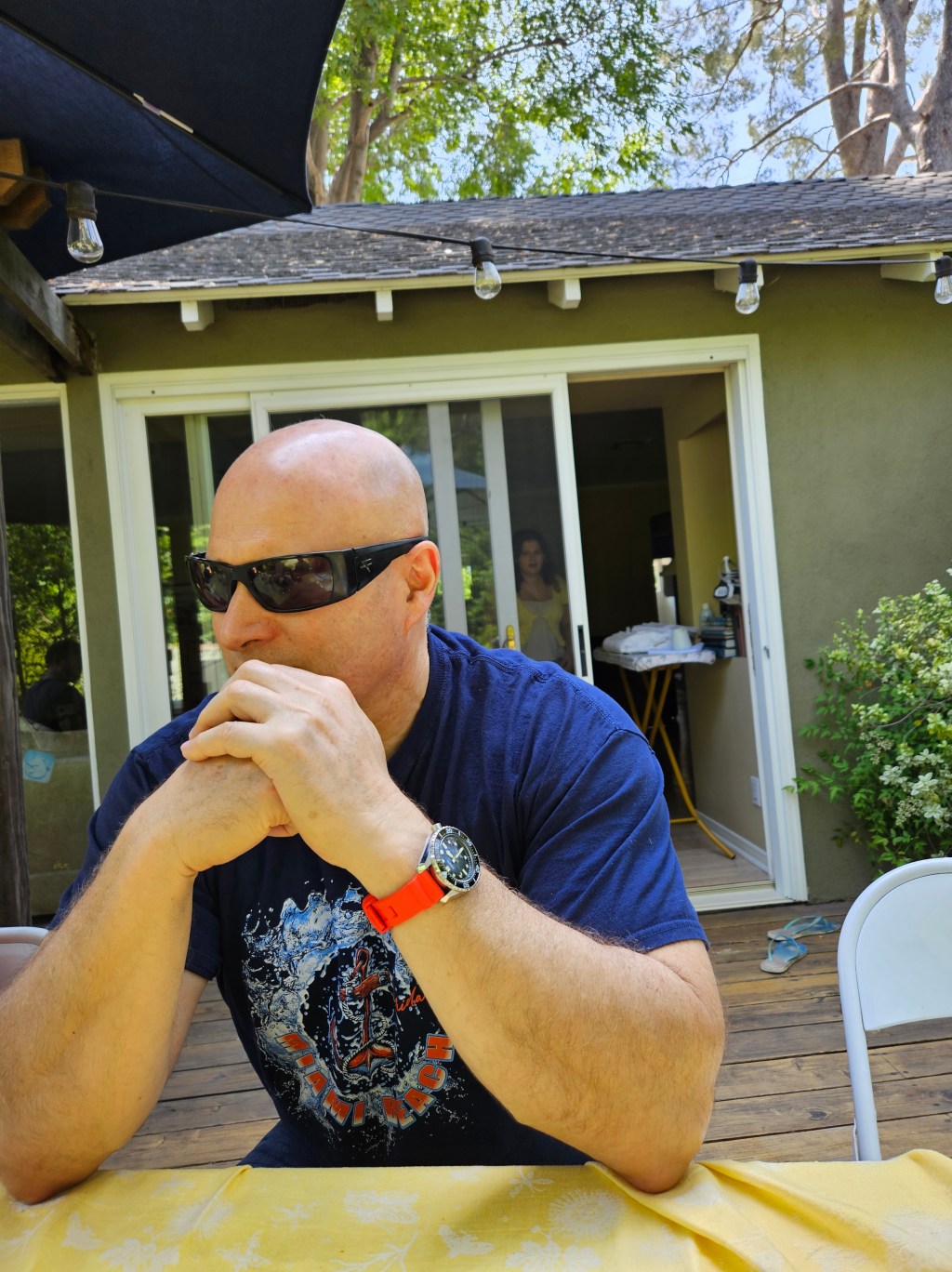
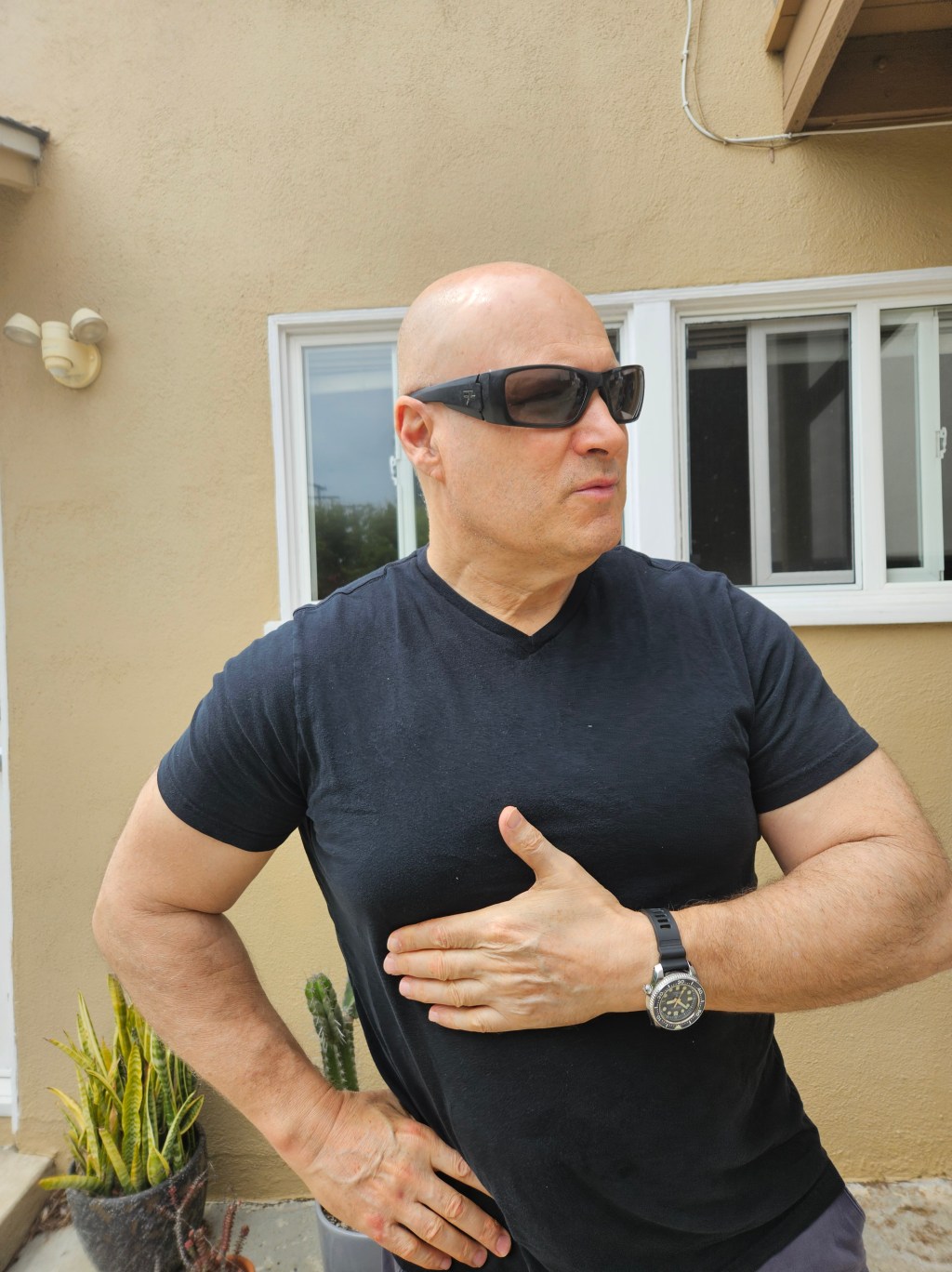
    Yesterday I filmed a 26-minute YouTube video on my main channel—ostensibly about watches. That was the bait. But somewhere between adjusting my camera and admiring my newly lean frame (twenty pounds down since April, thank you very much), I realized I wasn’t really talking about watches at all. I was talking about aging, restraint, identity, and how not to let your inner teenager run the damn show.

    The video was titled something like “My Four Watch Goals at Sixty-Four,” which sounds practical until you realize that my goals weren’t horological—they were existential. The first one? Stop being so maudlin. I actually said the word, spelled it out like a substitute teacher on a caffeine bender, and gave a definition. Maudlin: emotional excess masquerading as depth, the adolescent urge to turn life into performance art just so you can feel something.

    To illustrate, I offered up a formative trauma: being sixteen, watching Bill Bixby in The Incredible Hulk, and weeping—actually weeping—when he transformed into Lou Ferrigno’s green rage monster. It wasn’t just TV. It was catharsis. I was an Olympic weightlifter-slash-bodybuilder-slash-piano prodigy who didn’t know what to do with all the emotion I’d stuffed under my pecs and sonatas. Watching Bixby morph into a snarling demigod gave me permission to feel. In my forties, I channeled that same melodrama into wearing oversized diver watches—big, bold, and absurdly heroic, as if my wrist were auditioning for a Marvel reboot. That, too, was maudlin cosplay. Now I’m trying something radical: maturity.

    Goal two? Quit being an enabler. I admitted that, like it or not, I’m an influencer. I don’t collect in a vacuum. Every time I flex a new piece, it’s like handing out free permission slips to fellow addicts. So I’ve decided to use my powers for good—or at least for moderation.

    Goal three: Stay fit, get bloodwork, be a warrior in plain clothes. The watch isn’t the main course. It’s the garnish. If I’m going to wear something worth noticing, I should have the body and the biomarkers to back it up. Otherwise, I’m just a gilded potato.

    And finally, goal four: Minimalist watch heroes. The quiet monks of the community who own one to three watches and seem perfectly content. They’re my North Stars. They aren’t buying watches out of panic, nostalgia, or identity crises—they’re grounded, self-possessed, wise. I envy them. I aspire to be one of them. I’m not there yet, but I’m squinting in their direction.

    Honestly, I assumed the video would tank. My viewers tend to want horological eye-candy, not existential reflection wrapped in fitness updates. But to my surprise, the response was overwhelming—close to a thousand views on day one, dozens of comments. People thanked me. Some said they were booking doctor appointments. Others said they were starting diets. I’m fourteen years into making YouTube videos, and this might be the one I’m proudest of.

    Because the truth is, most watch YouTubers are just dressing up emotional poverty in brushed stainless steel. They get maudlin about bezels and bracelets, desperate to out-hype each other in a gaudy attention economy. It’s exhausting. What people really want—what they’re starving for—is someone speaking like a human being. No curation. No affectation.

    I ended my video with a confession: I’m still that sixteen-year-old kid. And if you cue up The Lonely Man theme from The Incredible Hulk, the one where David Banner walks down the rainy sidewalk in soft focus, I will—without shame—start crying. Again. Because some emotions don’t age. They just find quieter places to hide.


  • Muhammad Ali and the Rent We Pay for Heaven

    Muhammad Ali and the Rent We Pay for Heaven

    During the chaos of finals week—when my inbox floods with apologetic, last-ditch emails from students begging for an extended deadline—I found solace in something far removed from academia: Antoine Fuqua’s What’s My Name: Muhammad Ali. It’s a two-part documentary, but it feels more like a sermon and a love letter rolled into one. Like Fuqua, I’ve always had a boundless reverence for Ali—the most charismatic athlete to ever live—and watching him slowly succumb to Parkinson’s at just forty-two broke something in me.

    There’s a word for the dark thrill we sometimes feel when others suffer: schadenfreude. But what’s the opposite of that word–the anguish we feel when our heroes fall? When they suffer with such dignity and pride that they won’t accept our sympathy, even though they deserve every ounce of it? We don’t just mourn them—we mourn the version of ourselves that believed they were untouchable. Seeing Ali’s mind remain sharp, his wit flickering through that neurological prison, was unbearable and beautiful all at once.

    In his prime, Ali wasn’t just a boxer—he was a superhero, a shapeshifter, a one-man Broadway show in a heavyweight’s body. He was a sharp observer of American racism, yet never a scold. He wielded humor like a blade—cutting through injustice with charm and rhythm. His facial expressions alone could dismantle a room. And above all, he had soul. He was a poet, an actor, a preacher, and a provocateur.

    His conversion to Islam was not cosmetic. It reshaped him. He carried a sense of divine accountability, speaking of God not as abstraction but as a constant, watchful presence. He lived with the weight of eternity in mind, casually discussing the soul as if he’d already made peace with his fate. One of the final moments in the documentary captures this perfectly: Ali scribbles a note to a fan asking for an autograph—“Service to others is the rent we pay for our room in HEAVEN.” The line made me stop in my tracks and pray that I could live such a life rather than momentarily be inspired by it or tell others about it, because I know from experience that “talk is cheap.”

    The film doesn’t critique Ali—and truthfully, I didn’t want it to. I didn’t want the version of him that stayed too long in the ring. I didn’t want to watch his brilliance dimmed by punches that should’ve stopped years earlier. I found myself irrationally angry with him. I wanted him to become an actor, a comedian, a talk show philosopher—anything but a late-career boxer whose brilliance was traded for one more round. But of course, I’m lying to myself.

    We place athletes like Ali in the realm of myth. They are our Achilles, our Hercules. His greatness was inseparable from the ring. The same inner fire that made him a champion refused to let him leave the stage quietly. That fire gave us the epic—and, inevitably, the tragedy. I only wish that the spiritual clarity that shaped his faith could have overruled the gladiator in him. But maybe that’s the final paradox of Ali: he lived as both prophet and warrior, and the cost of greatness was always going to be high.

  • Nostalgia, Nihilism, and the Need for a North Star

    Nostalgia, Nihilism, and the Need for a North Star

    We live in a state of perpetual performance. Not just for others, but for ourselves. It’s cosplay with consequences—playful on the surface, deadly serious underneath. We obsess over how our performance lands. We evaluate our worth by the reactions we elicit. At stake is not just our reputation, but our very sense of moral character.

    This obsession isn’t new. The philosopher Blaise Pascal put it bluntly: we’d rather appear virtuous than actually be virtuous. It’s easier to sculpt the image than to develop the core. In this way, we’ve become artisans of curation, not content—architects of persona, not people.

    We live, as Shakespeare warned, on a stage. But our thirst for applause is bottomless. The more we receive, the more we crave. We become validation addicts, forever chasing the next fix of approval. And when applause falters or vanishes, anxiety rushes in. To soothe this anxiety, we self-medicate. Not just with likes and follows—but with food, consumption, workouts, and delusion.

    Some of us drown that dread in comfort food. Others sprint in the opposite direction—discipline, clean eating, high-performance regimens. But often, that stoicism is just cosplay too: hunger in a different mask. When that fails, we drift into nostalgia. We reimagine the past—not as it was, but as it flatters us to believe it was. We cast ourselves as the hero, the lover, the misunderstood genius. The story becomes so good, we forget it isn’t true. We live in the fiction and lose our grip on reality.

    This disconnect—between who we pretend to be and who we are—makes us brittle. Maladapted. And so the cycle deepens: more consumption, more self-distraction, more illusion. Consumerism becomes therapy. Hedonism becomes self-care. Nihilism becomes a badge of honor. All of it is cosplay. And all of it is corrosive.

    Philosophy, religion, and therapy exist to confront this masquerade. They offer a language for our delusions, a history of our dysfunction, and a spiritual direction out of the maze. They remind us that cosplay is not identity, and performance is not presence.

    I don’t pretend to have it figured out. But I’ve found insight in thinkers like Phil Stutz, who warns against the seductive ease of instant gratification, and Steven Pressfield, who speaks of resisting the lure of comfort in favor of a purposeful life. I’ve also been challenged—and strangely comforted—by Paul’s doctrine of kenosis: the radical idea that we’re not here to inflate ourselves but to empty ourselves in service of others. In a world obsessed with power and “respect,” that message lands like a thunderclap.

    What unsettles me most is not our ignorance—it’s our awareness. Many of us know the truth. We even live it for a while. But we drift. We relapse. We trade the hard-earned clarity for the cheap thrill of our old scripts. That’s what demoralizes me: not just the fall, but the speed and ease with which it happens.

    Yet I still believe in the power of a North Star. Call it purpose, vision, a calling—whatever name it takes, it’s the gravitational pull that keeps us from floating off into the void of our appetites. I think of Ann Kim, the Korean immigrant told to stay in her lane. She didn’t. She found her voice, expressed it through food, and became a James Beard Award-winning chef.

    The path to a good life, I suspect, doesn’t begin with fear of failure. It begins with a compelling vision of who we are meant to be. And the discipline to never look away from it.

  • From Breakdown to Brand: What Comedians Know That College Students Should

    From Breakdown to Brand: What Comedians Know That College Students Should

    In the Amazon Prime documentary Group Therapy, Neil Patrick Harris plays a surprisingly restrained version of himself as moderator while six comedians—Tig Notaro, Nicole Byer, Mike Birbiglia, London Hughes, Atsuko Okatsuka, and Gary Gulman—dissect the raw material of their lives. The big reveal? That material doesn’t go from trauma to stage in one dramatic leap. No, it must be fermented, filtered, and fashioned into something more useful than pain: a persona.

    Mike Birbiglia delivers the central thesis of the show, and I’ll paraphrase with a bit more bite: You can’t stagger onto stage mid-breakdown and expect catharsis to double as comedy. That’s not a gift—it’s a demand. You’re taking from the audience, not offering them anything. The real craft lies in the slow, deliberate process of transforming suffering into something elegant, pointed, and—yes—entertaining. That means the comic must achieve emotional distance from the wreckage, construct a precise point of view, and build a persona strong enough to carry the weight without buckling. In other words, the chaos must be curated. Unlike therapy, where you’re still bleeding onto the couch, stand-up demands a version of you that knows how to make the bloodstains rhyme.

    This process is a perfect metaphor for what college students must do, and what adulthood means for all of us, whether we realize it or not. College students are not just acquiring credentials—they’re building selves. And that takes more than GPAs and LinkedIn bios. It requires language, history, personal narrative, and a working origin myth that turns their emotional baggage into emotional architecture. And yes, it sounds crass, but the result is a kind of “self-brand”—an identity with coherence, voice, and purpose, forged from pain but presented with polish.

  • Blubberation: The Scourge of Humankind

    Blubberation: The Scourge of Humankind

    Few words in the English language wear such a deceptive mask as maudlin. To the untrained ear, it sounds quaint—maybe even charming—like something involving an embroidered hanky and a soft violin cue. Most people, if they’ve heard it at all, treat maudlin like a minor indulgence in sentiment. But this tepid reaction completely misses the word’s fangs. In truth, maudlin is not merely saccharine—it’s a spiritual sickness. It is the emotional equivalent of soggy pie crust: overbaked, overhandled, and incapable of supporting the weight of anything real.

    Jeffrey Rosen, in The Pursuit of Happiness, opens with a quote from Paracelsus that nails the metaphysical rot at the core of maudlin: “Even as man imagines himself to be, such he is, and he is also that which he imagines.” Most of us don’t realize we’ve built our entire personalities around a grandiose hallucination—an operatic self-image drenched in tragic overtones, straining for gravitas. This isn’t just self-delusion. It’s Blubberation—a term I propose as an upgrade to the soft-focus failure of maudlin. Blubberation is not some quaint emotional hiccup. It’s our default operating system. We cling to our sad little myths and bathe in our own narrative syrup, while Rosen, echoing the Stoics, begs us to snap out of it. Real freedom, the kind Cicero and Jefferson admired, comes not from indulging the lower self with its gaudy tantrums, but from mastering our inner world—our thoughts, emotions, actions, and absurd yearnings for applause.

    Consider Cicero’s ideal: the man who is not tormented by longing, not broken by fear, not drunk on ambition or self-congratulating euphoria. This man, Cicero says, is the happy man. And here’s the kicker: this man is the sworn enemy of Blubberation. The Stoic’s strength lies in composure; Blubberation recoils from it like a vampire from sunlight. Rosen knows this. His book is a case against the lachrymose self—the one addicted to its own melodrama, whose emotional overreach demands constant rewards: a cookie, a compliment, a new Omega Speedmaster.

    Let me be clear. I am not above this. I am its most devout practitioner. In fact, my watch addiction is Blubberation in horological form. I’ve shed actual tears during a wrist rotation cull. I have felt the full agony of “falling out of love” with a diver watch I once swore was “The One.” I’ve experienced the euphoric lift of trimming my collection, only to relapse a week later with trembling hands at a DHL box. We call this collecting. We dress it up as passion. But let’s be honest: it’s the theater of the self. It’s manufactured meaning in a velvet-lined case.

    Maudlin doesn’t cut it anymore. It’s too polite, too antique-shop sad. Blubberation, on the other hand, is a full-body emotional spill. It’s sadness with jazz hands. It’s weeping into your soy latte because someone forgot to like your Reels. It’s mistaking catharsis for wisdom. It’s trying to turn your trauma into TikTok content with the right music filter. And it’s not limited to watches. It infects how we narrate our lives, our diets, our so-called “journeys.” It’s the self crying out, not for help—but for attention.

    Blubberation, in the end, is a trap. It offers the illusion of depth but delivers only the shallows. It promises identity but trades in caricature. The Stoics warned us: without restraint and clarity, we become slaves to our worst performances. We become sentimental hustlers, selling tragedy like perfume. And as long as we keep mistaking our emotional indulgence for authenticity, we’ll never touch happiness—only sniff it through the fog of our own overwrought monologues.

  • Blessed Are the Gluten-Free: America’s New Spiritual Elite

    Blessed Are the Gluten-Free: America’s New Spiritual Elite

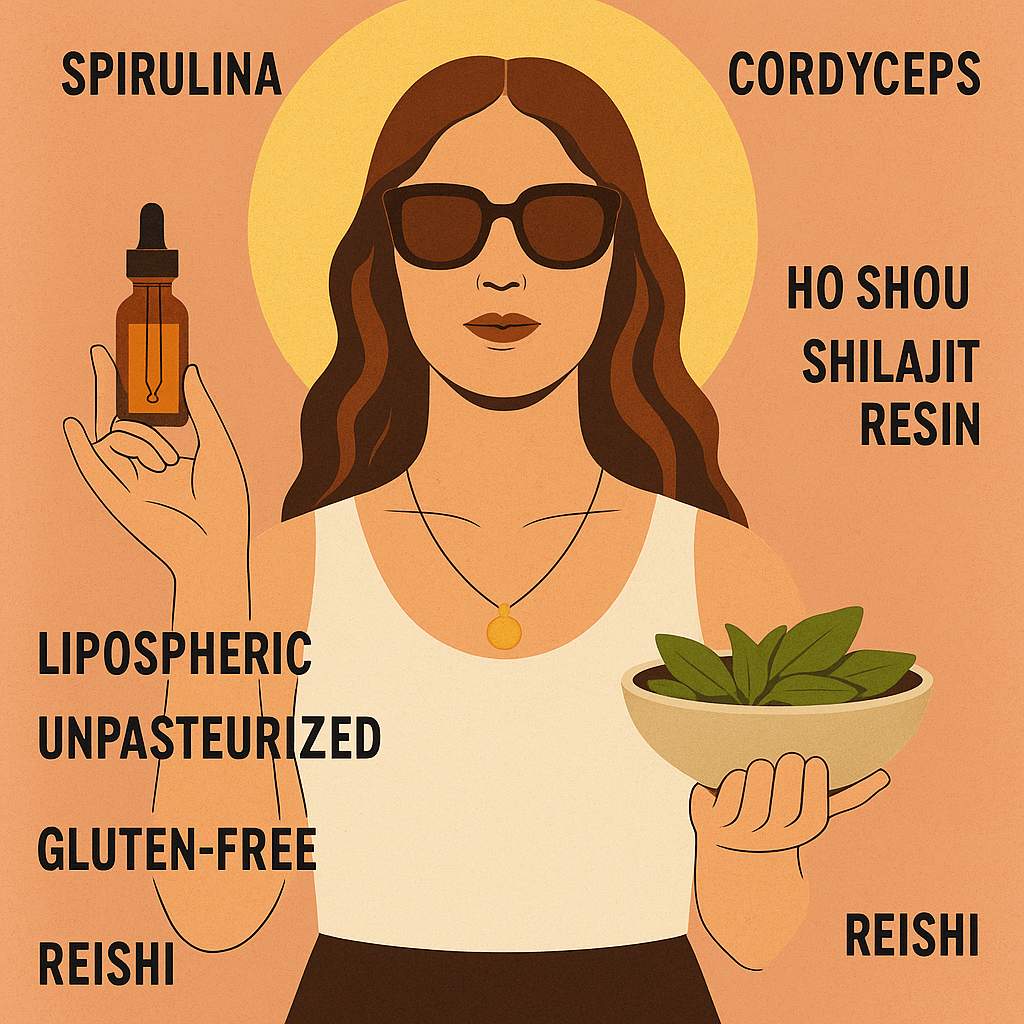
    Reading Amy Larocca’s How to Be Well is like watching Gwyneth Paltrow’s ghost possess a Whole Foods employee mid-mushroom latte. Her book is equal parts riveting and scalpel-sharp, dissecting the strange mutation of fashionistas who’ve traded in Gucci for goop and now drape themselves in wellness jargon like it’s couture. These wellness evangelists don’t just eat clean—they chant it. They speak in tongues made of spirulina, lipospheric vitamin C, Cordyceps, Shilajit resin, and ho shou wu, stringing together syllables like they’re summoning the ghost of Hippocrates.

    What we’re witnessing isn’t self-care—it’s a personality cult with better lighting. The modern wellness priestess has crowned herself a demigod, armed with adaptogens instead of sacraments, waving her magic tincture dropper and pointing lesser mortals toward the True Path of purified, gluten-free, unpasteurized transcendence. It’s not just health—it’s high-performance sanctimony.

    Larocca nails the diagnosis with surgical precision: “I sometimes think of wellness as the project of buying your own body back for yourself.” Translation? Welcome to America’s chicest hostage situation, where the ransom is payable in collagen peptides and oat milk. The goal is to become the luxury-branded version of you—perfect skin, toxin-free bowels, and moral superiority radiating from every overpriced yoga mat. The side effect? It magnifies the gaping inequalities of modern life like a magnifying mirror you didn’t ask to look into.

    Because let’s be honest: none of this comes cheap. These rituals of wellness cost money—bucketloads of it. We’re not talking about a jog around the park and some tap water. We’re talking $12 green juices and $300 infrared saunas. The entire project is rigged to serve the few while gaslighting the many. The wellness priestess doesn’t just ignore that her lifestyle is unattainable for most—she markets that inaccessibility as part of the charm.

    This isn’t health—it’s spiritual cosplay for the affluent.

  • Toxins, Teas, and the Tyranny of Self-Care

    Toxins, Teas, and the Tyranny of Self-Care

    In How to Be Well: Navigating Our Self-Care Epidemic, One Dubious Cure at a Time, Amy Larocca introduces us to the “Well Woman”—an aspirational specter of affluent spirituality who floats through Erewhon aisles like a priestess of turmeric. She is non-religious but deeply “spiritual,” an educated, upper-middle-class avatar of intentional living. Her diet? Whole, organic, plant-based. Her skincare? Sourced from the tears of ethically massaged avocados. Her wardrobe? Soft, breathable cottons dyed with herbs. Her soul? Allegedly pure.

    She’s the type who throws around words like “boundaries” and “holding space” while sipping adaptogenic mushroom tea. Fluent in therapy-speak and swaddled in the cozy lexicon of mindfulness, she’s not just living—she’s curating her life, building an identity out of emollients, detoxes, and artisanal spices. And all of it—every mindful, ethically sourced drop—feeds the $5.6 trillion wellness-industrial complex.

    Larocca sees through the yoga-scented fog. The Well Woman, she argues, is just the latest installment in America’s ongoing franchise of unattainable feminine ideals: a new model to aspire to, envy, and—most importantly—buy into. Today’s purity isn’t moral; it’s material.

    Reading Larocca’s opening, I couldn’t help but think of Todd Haynes’s 1995 masterpiece Safe, in which Carol White—a vapid housewife in the chemical-glazed sprawl of the San Fernando Valley—slowly dissolves into the cult of purity. After one too many trips to the dry cleaner, Carol spirals into an obsession with environmental toxins, abandons her friends and family, and ends up exiled to a pastel-drenched wellness commune. There she lives alone in a sterile dome, staring at herself in the mirror, parroting affirmations until there’s nothing left behind her eyes but empty devotion.

    Carol White is the ghost of the Well Woman’s future—a cautionary tale in Lululemon. She doesn’t find peace; she finds a purgatory curated by Goop. And as Larocca peels back the lavender-scented rhetoric of self-care, it’s clear she sees this modern cult of wellness not as healing but as hollowing—a $5.6 trillion seduction that promises salvation and delivers scented self-delusion.

  • Why I Don’t Read Happiness Essays (and Neither Should You)

    Why I Don’t Read Happiness Essays (and Neither Should You)

    Arthur Brooks is a best-selling author, a man of clear intellect, solid decency, and enough charm to disarm even a hardened cynic. I read one of his books, From Strength to Strength, which tackles the subject of happiness with insight, elegance, and more than a few glimmers of genuine wisdom. For a week or so, I even took his ideas seriously—pondering the slow fade of professional relevance, the shift from fluid to crystallized intelligence, and the noble art of growing old with grace.

    And then I moved on with my life.

    What I didn’t move on from, unfortunately, was the onslaught of Brooks’ happiness essays in The Atlantic. They appear like clockwork, regular as a multivitamin—each one another serving of cod liver oil ladled out with the same hopeful insistence: “Here, take this. It’s good for you.” The problem isn’t Arthur Brooks. It’s happiness itself. Or rather, happiness writing—that genre of glossy, over-smoothed, well-meaning counsel that now repels me like a therapy dog that won’t stop licking your face during a panic attack.

    Let me try to explain why.

    1. The Word “Happiness” Is Emotionally Bankrupt

    The term happiness is dead on arrival. It lands with the emotional resonance of a helium balloon tied to a mailbox. It evokes cotton candy, county fairs, and the faded joy of children playing cowboys and Indians—an aesthetic trapped in amber. It feels unserious, childish even. I can’t engage with it as a concept because it doesn’t belong in the adult vocabulary of meaning-making. It’s not that I reject the state of being happy—I’m just allergic to calling it that.

    2. It Feels Like Cod Liver Oil for the Soul

    Brooks’ essays show up with the regularity and charm of a concerned mother armed with a spoonful of something you didn’t ask for. I click through The Atlantic and there it is again: another gentle lecture on how to optimize my inner light. It’s no longer nourishment. It’s over-parenting via prose.

    3. Optimizing Happiness Is a Ridiculous Fantasy

    Some of Brooks’ formulas for increasing happiness start to feel like they were dreamed up by a retired actuary trying to convert existential dread into a spreadsheet. As if flourishing could be reduced to inputs and outputs. As if there’s a number on the dial you can crank up if you just follow the steps. It’s wellness-by-algorithm, joy-by-numbers. I’m not a stock portfolio. I’m a human being. And happiness doesn’t wear a Fitbit.

    4. Satire Has Already Broken the Spell

    Anthony Lane, in his New Yorker essay “Can Happiness Be Taught?,”
    dismantled this whole genre with surgical wit. Once you’ve read a masterful takedown of this kind of earnest life-coaching prose, it’s impossible to take it seriously again. Like seeing the zipper on a mascot costume, the magic disappears. You’re just watching a grown-up in a plush suit tell you to breathe and smile more.

    5. I Like Things That Exist in the World

    I’m interested in things with friction and form—things you can grip, build, question, deconstruct. Music. Technology. Communication tools. Exercise. Love. Psychological self-sabotage. You know, the good stuff. Happiness, as a subject, has all the density of vapor. It’s more slogan than substance, and when I see it trotted out as a destination, I start scanning for exits.

    6. It’s a Hot Tub Full of Bromides

    I have no interest in an adult ed class on happiness led by a relentlessly upbeat instructor talking about “mindfulness” and “centeredness” with the fixed grin of someone who has replaced coffee with optimism. I can already hear the buzzwords echoing off the whiteboard. These classes are group therapy in a coloring book—pastel platitudes spoon-fed to the emotionally dehydrated.

    7. It’s Not Self-Help. It’s Self-Surveillance

    Let’s be honest: a lot of happiness literature feels like a soft form of control. Smile more. Meditate. Adjust your attitude. If you’re not happy, it must be something you’re doing wrong. It’s capitalism’s way of gaslighting your suffering. Don’t look outward—don’t question the system, the politics, the institutions. Just recalibrate your “mindset.” In this sense, the language of happiness is more pacifier than pathfinder.

    So yes, Arthur Brooks writes well. He thinks clearly. He’s probably a better person than I am. But his essays on happiness make me recoil—not because they’re wrong, but because they speak a language I no longer trust. I don’t want to be managed, monitored, or optimized. I want to be awake. I want to be challenged. And if I’m lucky, I’ll get to experience the real stuff of life—anger, beauty, confusion, connection—not just a frictionless simulation of contentment.

    Happiness can keep smiling from the other side of the screen. I’ve got kettlebells to swing.

  • Psychedelic Mushrooms and the Art of Saying “Meh”

    Psychedelic Mushrooms and the Art of Saying “Meh”

    People I admire—deep thinkers, seekers, trauma survivors, even that old roommate who once confused a lava lamp for God—swear by magic mushrooms. They describe transcendence, tearful reunions with their inner child, and conversations with the universe where the universe speaks perfect Jungian. Apparently, psilocybin is the shortcut to enlightenment, the divine inbox where angels drop PDFs of your truest self.

    And yet, I remain a bastion of Mushroom Apathy Syndrome (MAS)—a spiritual condition marked by an impenetrable indifference to the fungal fanfare. While others are melting into cosmic unity on some mossy hillside, I’m thinking about whether it’s time to reorganize my spice rack. I don’t want to chew sacred mold to glimpse the divine. If I need an ego death, I’ll just read my old poetry.

    Sure, I’d love to encounter the Divine—maybe Spinoza’s glowing web of pantheistic awe, maybe a seraph with decent taste in jazz. But I just can’t take mystical advice from a guy in a woven beanie yelling about chakras while wearing Crocs. If I want a head trip, I’ll queue up Yes, The Strawbs, or Crosby, Stills & Nash and lie on the floor until my chakras align from sheer harmonic exhaustion. Or better yet, I’ll abstain from sugar for ten months and then unleash nirvana with a single bite of decadent, spice-laced carrot cake.

    My condition is also rooted in a kind of Fungal Nihilism—the belief that no mushroom, no matter how ancient, artisanal, or Amazonian, can fix the howling absurdity of existence. You can’t outrun entropy with a spore. If I want to stare into the abyss and laugh, I’ll binge-watch George Carlin eviscerate modern life with nothing more than a mic, a ponytail, and a pair of skeptical eyebrows.

    Ultimately, I practice Spore Snobbery—a reflexive contempt for the breathless mythologizing of psychedelic fungus. These aren’t sacred portals. They’re glorified mushrooms with a publicist. For some, they offer spiritual clarity. For me, they sound like a gastrointestinal trust fall with no one there to catch you but an ayahuasca-shaman-turned-life-coach named Brad.

  • The Lie of 70s Bodybuilding

    The Lie of 70s Bodybuilding

    Nostalgia is a bald-faced liar in gold lamé posing trunks. It flexes in the mirror of your mind, oils itself up in false sentiment, and strikes a heroic pose while whispering sweet nothings about “the good old days.” I used to believe the 1970s were the Golden Age of bodybuilding—when men looked like Greek gods instead of mutant action figures, when steroids were used “responsibly,” like a fine wine instead of a meth pipe. I told myself those days were all about balance and aesthetics: a V-taper here, a bit of Arnold’s smirk there.

    But no—this is revisionist fantasy, gym-bro propaganda. The truth is, those bronzed demigods were gulping down more synthetic hormones than a lab rat in a Monsanto trial. “Moderate” steroid use? Please. Some of those guys had liver enzymes that could strip paint. Many didn’t make it to 50, their organs shriveled like sun-dried tomatoes while their biceps ballooned into oblivion.

    Yes, today’s physiques are grotesque parodies of humanity—more Pixar villain than Apollo—but don’t kid yourself that the ‘70s were some golden, health-conscious utopia. Body dysmorphia was already the unspoken sixth station in the posing routine. The mirrors were just less honest, and the delusion smelled faintly of Brut cologne and Joe Weider’s false promises.