Category: philosophy

  • The Dopamine Dial: Why Your Grail Watch Can’t Make You Happy

    The Dopamine Dial: Why Your Grail Watch Can’t Make You Happy

    To understand the madness of the modern watch addict, you’d do well to consult Dopamine Nation by Stanford psychiatrist Anna Lembke, a book that should be shelved somewhere between philosophy, neuroscience, and quiet screaming. Her central thesis? In an age of relentless indulgence, the line between pleasure and pain is not only blurry—it’s the same neurological pathway. You’re not escaping pain with your latest acquisition. You’re feeding it.

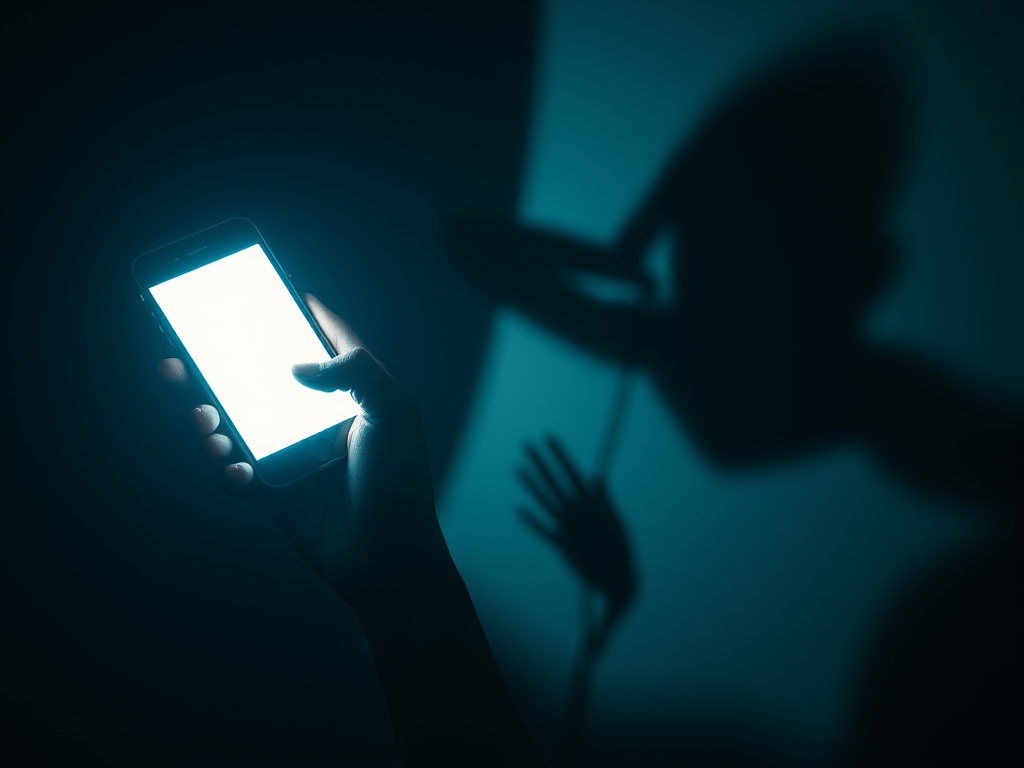
    “The smartphone,” she writes, “is the modern-day hypodermic needle.” And the drug? Dopamine—delivered in neat little parcels: TikToks, tweets, memes, and yes, wrist shots of watches you don’t own (yet). If you haven’t met your poison of choice, don’t worry. It’s just a click away.

    Lembke makes the uncomfortable truth clear: The more dopamine hits we seek, the more our brain adapts by reducing our baseline pleasure response. What once thrilled you—your grail watch, your Rolex Explorer, your Seiko with the Wabi-Sabi patina—now barely registers. You’re not chasing pleasure anymore. You’re just trying to feel something.

    Watch addicts, of course, understand this intimately. The pursuit of horological perfection starts out innocent enough: a G-Shock here, a vintage diver there. But soon you’re tumbling into the abyss of boutique limited editions and message board enablement, haunted by the need to stay relevant. Because here’s the twist: It’s not just about the watches. It’s about being seen. You post, you review, you flex because if you stop, you vanish. No new watches = no new content = digital extinction.

    And extinction, in a social-media world, feels like death.

    Lembke warns us that addiction thrives in secrecy, in the exhausting double life. The watch addict may present as a tasteful minimalist to family and friends, while secretly rotating 19 watches, five straps deep, waiting for the next “drop.” The addiction is fed by access, and we live in an access economy. New releases are no longer annual events—they’re hourly temptations. The vortex is bottomless. The supply creates the demand.

    Even worse, modern society normalizes this behavior. Everyone is scrolling. Everyone is upgrading. Our addiction to novelty is passed off as taste. Our frenzied consumption masquerades as identity. Lembke borrows from Philip Rieff to explain the deeper shift: “Religious man was born to be saved; psychological man is born to be pleased.” The modern watch collector doesn’t believe in salvation. He believes in configuration.

    But here’s the cruel irony: The more you seek to be pleased, the less capable you are of being pleased. In Lembke’s words: “Hedonism, the pursuit of pleasure for its own sake, leads to anhedonia—the inability to enjoy pleasure of any kind.”

    What’s the solution? A dopamine fast. Lembke prescribes it like a bitter medicine: Remove the source. Reset the brain. Let it reestablish homeostasis. For the watch addict, this means one thing: a watch fast.

    And yes—it’s brutal. I’ve been a watch obsessive for over twenty years. My longest fast? Six months. And I nearly went feral. New releases tempt. Friends enable. Algorithms whisper. Strap swaps and vintage reissues beckon like sirens. Even the FedEx truck starts to look like a personal tormentor.

    So you get creative. You stash watches in the safe and “rediscover” them. You buy new straps instead of new watches. You try to redirect the compulsion toward something productive: fitness, music, sourdough, monkish austerity. Anything but another chronograph.

    But the real cure, oddly enough, may be conversation—actual human connection. At watch meet-ups, we start out discussing bezels and spring bars, but within ten minutes we’re talking about life: real estate, parenting, knee surgeries, emotional burnout, dinner recipes. We talk for hours. But barely about watches.

    The truth slips out in these moments: we want to be free. We crave community more than we crave sapphire crystals. What began as a shared obsession has become a trap, and these conversations, paradoxically, offer relief from the very addiction that brought us together.

    Imagine a bunch of watch enthusiasts at a watch meet-up and we’re talking about everything but watches. Wrap your head around that.

  • Don’t Feed the Soul-Hole: 4 Rules for Making YouTube Content Without Losing Your Mind

    Don’t Feed the Soul-Hole: 4 Rules for Making YouTube Content Without Losing Your Mind


    Here’s what I’ve learned while preparing my latest YouTube video essay—”Don’t Confuse a Watch Collector with a Watch-Hoarding Demon”—which, by the way, still sits unrecorded because I haven’t found a quiet moment required to talk to a camera.

    Lesson One: Open with Housekeeping—But Make It Deranged.
    Begin your video not with a dry agenda but with something ridiculous and revealing. Tell your viewers how a simple search for watch straps turned into a midnight rabbit hole of vintage Camry trim packages or why you contemplated buying a Tudor Pelagos just to avoid folding laundry. Let them see your obsessions in their full neurotic bloom. Self-disclosure laced with comedy is more potent than any clickbait title.

    Lesson Two: Stop Feeding the Soul-Hole.
    The point of making videos is not to audition for emotional validation from strangers on the internet. That’s a black hole with no floor and no mercy. Seeking approval from the algorithmic gods only deepens the void. Instead, aim to share something real—stories, absurdities, and small slices of insight—with humility, clarity, and a firm grip on the absurdity of it all. You’re not here to be liked. You’re here to connect.

    Lesson Three: In the Age of Dopamine Overload, Be Useful.
    We live in an attention economy that’s basically a carnival of shrieking hucksters promising eternal youth through vitamin gummies and AI lifehacks. Most of it ends up being digital noise. Your job isn’t to out-scream them; it’s to offer substance. My strength is argumentative essays, so that’s where I stake my claim. Find your strong suit, sharpen it, and share it—preferably without a TikTok dance.

    Lesson Four: Welcome Dissent Like a Grown-Up.
    The comment section should not be a food fight. It should be a place where people can politely disagree without biting each other’s heads off. We live in a culture where disagreement is taken as a personal attack—like someone spit in your oat milk latte. But real disagreement, handled well, is a gift. It forces us to clarify, refine, and rethink. Without opposition, your ideas become flabby and self-congratulatory. Iron sharpens iron—just make sure it’s civil.

  • Spiritual Kitsch and the Muscle Gods of Sedona

    Spiritual Kitsch and the Muscle Gods of Sedona

    In the early 90s, my brother managed a spa restaurant at the Grand Wailea in Maui—a temple of eucalyptus steam and $18 cucumber water. His girlfriend, the head chef, ruled the kitchen with the calm authority of a health-conscious empress. I visited one summer and found myself one morning alone at breakfast, sipping coffee and trying to look like a man deep in thought rather than a tourist waiting on papaya boats.

    At the table next to mine sat a striking brunette with the kind of diamond on her finger that doubles as a paperweight. She started talking. To me. Boldly, intimately, as if we were two old conspirators.

    She was thirty-five, married, and bored. Grew up in Santa Monica. Modeled a little. Dabbled in chaos. Now she was married to a man forty years her senior—a retired Navy officer turned business tycoon currently swimming laps in the resort pool while his wife flirted with the help. She pointed out one of the servers, a freckled boy in his early twenties pouring her orange juice with the dreamy smile of a man about to be devoured.

    “I’m sleeping with him,” she said, as casually as if she were announcing she’d tried the papaya last time and found it too sweet.

    She spoke of her marriage like a real estate deal: mutually beneficial, emotionally vacant, and efficiently managed. Her husband financed her yoga retreats. She provided him with public companionship and discreet absence. After breakfast, she was off to a vegetarian cooking class to learn how to live forever.

    She told me she was researching longevity, obsessed with health, and that she was trying to convince her husband to move to Sedona, Arizona—“the best place in the country to live a long life,” she said.

    Back then, I filed Sedona away in the brain folder labeled someday. That place. The Holy Grail of Health. A desert Shangri-La where your body becomes pure and your soul gets exfoliated.

    I didn’t make it there until a few weeks ago.

    We drove in from Prescott, and I’ll admit it: the landscape is jaw-dropping. Red rock formations that looked carved by gods on steroids. Mountains with biceps. Cliffs that scowl. One ridge looked like Zeus doing a lat spread.

    Then we hit the town.

    One-lane highway. Organic restaurants. Shops selling mystical crystals and dreamcatchers made in China. Every storefront promising to “align your energy” or “awaken your inner light”—assuming you have a functioning credit card.

    We took a bus tour. The guide cheerfully explained that tech billionaires ship their Lamborghinis in on trucks just to drive them through town for a week of synchronized flexing, tantric massages, and moon-circle manifesting.

    The mysticism was so heavy-handed it became farce. At a matcha tea stand, a man with unblinking eyes dropped a sugar butterfly into my daughter’s drink and, with complete sincerity, instructed her to make a wish so the butterfly could “help it manifest.”

    That was the moment.

    That was when I realized I hated Sedona. Not the place—God no. The place is stunning. I hated the idea of Sedona.

    Sedona the place is geology and wonder.
    Sedona the idea is a branded hallucination.

    It’s the lie that you can downshift your soul into first gear while screaming through town in a Lamborghini. It’s the peacock strut of spiritual materialism—buying essential oils and amethyst pendants as if they’ll excuse the $5 million home and the $10 million ego inside it.

    Sedona wants you to believe you can live forever if you just buy enough gluten-free sage bundles and whisper affirmations into your Yeti thermos.

    The sugar butterfly? It’s not a wish. It’s a warning.

  • The Phantom in the Mirror: On Becoming an NPC

    The Phantom in the Mirror: On Becoming an NPC

    The Non-Player Character—or NPC—was born in the pixelated void of video games. It is a placeholder. A background hum. A digital ghost whose job is to stand in a market, repeat a scripted line, or walk in endless circles without complaint. The NPC has no hunger for freedom, no dreams of becoming more. It exists in the half-life of interactivity—a cardboard cutout propped up by code. It’s “there,” but not there. You see it. Then you forget it. And that, in essence, is the horror.

    Somewhere along the way, the term slipped out of the screen and into real life. “NPC” became shorthand for a human who seems hollowed out—emotionally neutralized, culturally sedated, and spiritually declawed. Not stupid. Not evil. Just disengaged. The light behind the eyes? Gone dim. What was once an ironic jab at background characters is now a chilling metaphor for people who’ve surrendered to the most generic, algorithm-approved version of themselves.

    What’s grimly poetic is that NPCs in video games are often controlled by artificial intelligence. And so, too, are many modern humans—nudged by dopamine, entranced by endless scrolls, soothed by the hypnotic rhythms of consumption. The Roman formula of bread and circuses has merely been rebranded. Netflix. DoorDash. TikTok. It’s all the same anesthetic. As therapist Phil Stutz would say, we’re stuck in the “lower channel”—an emotional basement filled with numbing comforts and artificial highs.

    And yet, here’s the twist: even the brilliant can become NPCs. The anxious. The depressed. The overworked. The soul-sick. Sometimes the smartest people are the most vulnerable to emotional collapse and digital retreat. They don’t become NPCs because they’re shallow. They become NPCs because they’re hurting.

    There are, perhaps, two species of NPCs. One is blissfully unaware—sleepwalking through life without a second thought. The other is terrifying: self-aware, but immobilized. The mind remains active, but the body slouches in the chair, feeding on stale memories and reruns of past selves. Think of Lot’s Wife, gazing back at a past she couldn’t let go. She wasn’t punished arbitrarily; she was frozen in time—literally—a statue of salt and sorrow. The original NPC.

    Middle age is particularly fertile ground for NPC-ism. Nostalgia becomes narcotic. We mythologize our former selves—thinner, bolder, brighter—and shrink in the shadow of our own legend. Why live in the present, when the past is easier to romanticize and the future is too much work? Just ask Neddy Merrill from John Cheever’s “The Swimmer,” paddling from pool to pool in a daze, believing in a youth long gone, burning every real connection he had on the altar of delusion. An NPC in swim trunks.

    Today, we’re incentivized to become NPCs. Social media trains us like lab rats, handing out dopamine pellets in the form of likes, follows, and artificial intimacy. The real world—messy, unfiltered, full of awkward silences and genuine risk—is rejected for the smoother contours of algorithmic approval. Our souls are curated, our emotions trimmed to fit the timeline.

    The NPC, then, is not a throwaway gag. It’s a portrait of the modern condition. A spirit trapped in a basement, scrolling for meaning, addicted to memory, afraid of action. A being slowly turning into vapor, still breathing but no longer alive.

    And the true terror? Sometimes I feel it in myself. That quiet moment when I trade meaning for ease, purpose for distraction, vitality for sedation. That’s when I hear the whisper: You’re becoming one of them. That’s when I feel the NPC, not on my screen, but inside my skin.

  • Vacation Nihilism: The Existential Price of That $28 Margarita

    Vacation Nihilism: The Existential Price of That $28 Margarita

    Vacation nihilism is the uniquely modern despair that creeps in when you’re supposed to be relaxing. You’re sprawled on a rental bed, digesting overpriced novelty food, staring at the ceiling fan, and asking yourself: What am I even doing with my life? The break from your daily routine doesn’t recharge you—it exposes you. With your rituals on hold, your ambitions start to look ridiculous, your projects meaningless, and your belief in humanity’s forward march into reason and tech-fueled glory? Laughable.

    You’re not wrong, entirely. The world has gone a bit mad. But your despair isn’t just philosophical—it’s biochemical. You’ve sabotaged your sleep schedule. You’ve eaten five experimental meals in three days and haven’t seen a vegetable since the airport salad bar. Your gut is staging a coup. You’re bloated, irritable, and haven’t had ten consecutive minutes alone since the trip began. Naturally, you begin to suspect your entire existence is a long-running joke with no punchline.

    Then comes the knock: Nihilism, that smug little parasite, invites himself in. And you’re too tired to fight him off. He plops down beside you and begins dismantling your life, piece by piece: your goals, your routines, your little morning affirmations—all reduced to performance art for an indifferent universe.

    For most people, this existential fog lifts after a few days back in the saddle. The routine reboots. Coffee tastes like salvation again. But not always. Sometimes you bring it back with you, like a psychological bedbug infestation. Tiny, persistent thoughts that burrow into your habits. Questions you can’t un-ask. You might look the same on the outside, but internally, the scaffolding is rusting.

    You went on vacation to unwind. Instead, you came back with nihilism spores. And no, TSA does not screen for them.

  • Safe at Home with Tofu: We Need George Carlin Now More Than Ever

    Safe at Home with Tofu: We Need George Carlin Now More Than Ever

    George Carlin once built a whole comedy bit around the contrast between football and baseball. Football, he said, is war—full of blitzes, bombs, and sudden death. Baseball, by contrast, is a pastoral game, a gentle journey home. Safe at home. He could’ve done an equally scathing bit on carnivores versus vegans.

    A carnivore is a Viking. He doesn’t eat dinner; he conquers it. He roasts slabs of meat over open flame, wears elk pelts in July, and believes the phrase “nose to tail” is less a philosophy than a moral imperative. He eats liver because it’s what his ancestors did, despite the fact that his ancestors also died at 38 from dysentery and wolf bites.

    The vegan? A minimalist monk who speaks in the tone one reserves for therapy dogs and endangered turtles. His kitchen smells like soaked lentils and moral superiority. He eats “greens,” plural, as though a vague handful of chlorophyll could power a biped. His hero is the neighborhood spider, which he refuses to squash. Instead, he names it Rumi, places it gently on a compostable bamboo plate, and ushers it into the wild with a whispered prayer and a single tear.

    The carnivore doesn’t own plates. He eats standing up. The vegan has three sets of reusable dishware, made from renewable bamboo and guilt. The carnivore fills his “power bowl” with yolks, red meat, and testosterone. The vegan fills his with quinoa, miso, and the sense that one day we’ll all live on floating gardens of kale, fueled by gratitude and biotin.

    The carnivore laughs when lightning strikes. The vegan winces when the microwave beeps.

    And yet—here’s the kicker—both think they’re saving the world. One by returning to primal wisdom, the other by transcending it. One believes in survival of the fittest; the other believes in surviving without harming a single sentient thing. They are, in essence, two sides of the same self-mythologizing coin: the ancient warrior and the futuristic monk, each clinging to their menu like it’s a worldview. And perhaps that’s what diet is now—a belief system, a theology served with a side of macro tracking. Eat, pray, posture.

  • The Forgiveness Trap: When Healing Becomes a Performance

    The Forgiveness Trap: When Healing Becomes a Performance

    I remember listening to Terry Gross interview Frank McCourt in 1997, right as Angela’s Ashes was climbing every bestseller list like a starving Irish ghost with a publishing deal. At one point, Gross asked the inevitable soft-serve question: had he ever forgiven his drunken, absentee father for drinking away the family’s money and abandoning his wife and children to starvation and shame?

    McCourt didn’t flinch. He dismissed forgiveness as “pompous” and “irrelevant”—as if someone had asked him if he’d made peace with bubonic plague. He wasn’t being cruel; he was being precise. Forgiveness, he seemed to argue, is often a performance—a neat, moral bow tied onto a box of horror that refuses to stay shut.

    I thought of McCourt again this morning while reading Christina Caron’s New York Times piece, “Sometimes, Forgiveness Is Overrated.” It profiles adults who survived childhoods ruled by sadists, addicts, psychopaths, and the emotionally vacant. These were not flawed parents; they were ethical sinkholes, incapable of even the most basic decency. And yet, the self-help gospel continues to hand these survivors a soft-focus script: Forgive, and you will be free.

    Enter Amanda Gregory, therapist and author of You Don’t Need to Forgive: Trauma Recovery on Your Own Terms. Gregory’s argument is refreshingly grounded: forgiveness is not a virtue badge, not a finish line, and certainly not a moral obligation. It’s a slow, private emotional process—if you choose to pursue it. You do not owe a resolution. You do not need to sculpt your rage into affection.

    Gregory’s thesis echoes Sharon Lamb’s earlier work from 2002, which cautioned that pressuring victims to forgive can cause more damage than healing. It’s not just naive—it’s cruel. There are wounds that never close, and forcing someone to say, “It’s okay now,” when it’s absolutely not okay is a kind of spiritual gaslighting. It shifts the burden of transformation onto the person who’s already been broken.

    And what about the offenders? If they’re remorseful, truly remorseful, perhaps forgiveness enters the room. But what if they’re not? What if they’re still rewriting history or refusing to acknowledge it? Then forgiveness becomes a farce—just another round of victim-blaming wrapped in therapeutic jargon.

    In many cases, forgiveness isn’t even the right frame. With time and growth, some of us develop a different emotional posture—not forgiveness, but pity. We see our abusers not as villains to be vanquished or souls to be redeemed, but as feeble, morally bankrupt husks who couldn’t rise above their own dysfunction. We stop hating them because we no longer need to—but let’s not confuse that with forgiveness. That’s not healing; it’s emotional Darwinism.

    Forgiveness has its place, but only when it rests on shared truth and genuine contrition. Otherwise, it’s a forced ritual, a bad-faith moral contract, and a way to sell books or fill up therapy time. The therapeutic industry’s insistence that forgiveness is always the holy grail? Honestly, it’s unforgivable.

  • The Camel, the Needle, and the Man Who Had Too Much

    The Camel, the Needle, and the Man Who Had Too Much

    I like to be financially comfortable—let’s not lie. I like having gravy money: the kind you drizzle over an already-satisfying existence just to make it rich, indulgent, and entirely unnecessary. A decadent dinner, a silly watch, a rare Japanese radio I’ll only use twice—it’s not about need. It’s about comfort laced with a whiff of thrill. But every time I partake, I’m haunted by that grim little proverb: It is easier for a camel to pass through the eye of a needle than for a rich man to enter the kingdom of heaven.

    The older I get, the more I suspect that money is only part of the problem. The real barrier to heaven isn’t wealth—it’s pleasure. Or more precisely, the addiction to pleasure. Call it spiritual insulin resistance: too much sweetness, too often, until nothing satisfies and everything corrupts.

    A more accurate update to the proverb might be: It is easier for a camel to pass through the eye of a needle than for a pleasured man to get into heaven.

    By “pleasured,” I mean a man gorged on delight—hedonistic, unrestrained, swimming in his own self-curated fantasies. A man whose moral compass has rusted from disuse. And when I think of that kind of dissipation, I’m haunted by a story one of my students told me in the early ’90s—an unforgettable parable dressed up as a locker room anecdote.

    This student was a soccer player who spent a season with a club team in Italy. One of his teammates, an American, was almost offensively beautiful: tall, tan, muscular, with a jawline that could slice through marble and hair that obeyed no gravity. When the season ended, he refused to return home. He stayed. He found a nude beach. He became, in every sense of the word, The Stallion.

    Locals called him that without irony. He strutted the shoreline like a marble statue sprung to life. Women adored him, men envied him, and he lived the fantasy to its fullest: a gigolo in linen pants and nothing else. At first, it was all sun-kissed pleasure and consequence-free sex. But then came the rot.

    Somewhere along the way, he crossed an invisible line. He stopped caring about the actual act of intimacy. His addiction mutated. It was no longer about pleasure—it was about being desired. He would stand in clubs in a sheer white shirt, unbuttoned to the naval, chest gleaming, waiting for women to approach. When they did, he would reject them. The proposal was enough. The look in their eyes? That was his fix.

    Eventually, he went mad. His personality fractured like overused glass. When my student returned to Italy months later, he found The Stallion pacing the same beach—sun-kissed, glistening, and vacant. He didn’t recognize his former teammate. He walked past him with a thousand-mile stare, a ghost trapped in flesh, wandering his personal Eden turned hellscape. The pleasure that once adorned his life had hollowed it out from the inside.

    He had reached The Point of No Return.

    And every time I reach for a little unnecessary luxury—something shiny, excessive, self-soothing—I think of him. The Stallion. Proof that there’s such a thing as too much beauty, too much indulgence, too much affirmation. He wasn’t rich. But he was pleasured. And that might be even more dangerous.

  • How Losing 20 Pounds Made Me Rethink My Entire Watch Collection (and My Life)

    How Losing 20 Pounds Made Me Rethink My Entire Watch Collection (and My Life)

    Yesterday I filmed a 26-minute YouTube video on my main channel—ostensibly about watches. That was the bait. But somewhere between adjusting my camera and admiring my newly lean frame (twenty pounds down since April, thank you very much), I realized I wasn’t really talking about watches at all. I was talking about aging, restraint, identity, and how not to let your inner teenager run the damn show.

    The video was titled something like “My Four Watch Goals at Sixty-Four,” which sounds practical until you realize that my goals weren’t horological—they were existential. The first one? Stop being so maudlin. I actually said the word, spelled it out like a substitute teacher on a caffeine bender, and gave a definition. Maudlin: emotional excess masquerading as depth, the adolescent urge to turn life into performance art just so you can feel something.

    To illustrate, I offered up a formative trauma: being sixteen, watching Bill Bixby in The Incredible Hulk, and weeping—actually weeping—when he transformed into Lou Ferrigno’s green rage monster. It wasn’t just TV. It was catharsis. I was an Olympic weightlifter-slash-bodybuilder-slash-piano prodigy who didn’t know what to do with all the emotion I’d stuffed under my pecs and sonatas. Watching Bixby morph into a snarling demigod gave me permission to feel. In my forties, I channeled that same melodrama into wearing oversized diver watches—big, bold, and absurdly heroic, as if my wrist were auditioning for a Marvel reboot. That, too, was maudlin cosplay. Now I’m trying something radical: maturity.

    Goal two? Quit being an enabler. I admitted that, like it or not, I’m an influencer. I don’t collect in a vacuum. Every time I flex a new piece, it’s like handing out free permission slips to fellow addicts. So I’ve decided to use my powers for good—or at least for moderation.

    Goal three: Stay fit, get bloodwork, be a warrior in plain clothes. The watch isn’t the main course. It’s the garnish. If I’m going to wear something worth noticing, I should have the body and the biomarkers to back it up. Otherwise, I’m just a gilded potato.

    And finally, goal four: Minimalist watch heroes. The quiet monks of the community who own one to three watches and seem perfectly content. They’re my North Stars. They aren’t buying watches out of panic, nostalgia, or identity crises—they’re grounded, self-possessed, wise. I envy them. I aspire to be one of them. I’m not there yet, but I’m squinting in their direction.

    Honestly, I assumed the video would tank. My viewers tend to want horological eye-candy, not existential reflection wrapped in fitness updates. But to my surprise, the response was overwhelming—close to a thousand views on day one, dozens of comments. People thanked me. Some said they were booking doctor appointments. Others said they were starting diets. I’m fourteen years into making YouTube videos, and this might be the one I’m proudest of.

    Because the truth is, most watch YouTubers are just dressing up emotional poverty in brushed stainless steel. They get maudlin about bezels and bracelets, desperate to out-hype each other in a gaudy attention economy. It’s exhausting. What people really want—what they’re starving for—is someone speaking like a human being. No curation. No affectation.

    I ended my video with a confession: I’m still that sixteen-year-old kid. And if you cue up The Lonely Man theme from The Incredible Hulk, the one where David Banner walks down the rainy sidewalk in soft focus, I will—without shame—start crying. Again. Because some emotions don’t age. They just find quieter places to hide.

  • Muhammad Ali and the Rent We Pay for Heaven

    Muhammad Ali and the Rent We Pay for Heaven

    During the chaos of finals week—when my inbox floods with apologetic, last-ditch emails from students begging for an extended deadline—I found solace in something far removed from academia: Antoine Fuqua’s What’s My Name: Muhammad Ali. It’s a two-part documentary, but it feels more like a sermon and a love letter rolled into one. Like Fuqua, I’ve always had a boundless reverence for Ali—the most charismatic athlete to ever live—and watching him slowly succumb to Parkinson’s at just forty-two broke something in me.

    There’s a word for the dark thrill we sometimes feel when others suffer: schadenfreude. But what’s the opposite of that word–the anguish we feel when our heroes fall? When they suffer with such dignity and pride that they won’t accept our sympathy, even though they deserve every ounce of it? We don’t just mourn them—we mourn the version of ourselves that believed they were untouchable. Seeing Ali’s mind remain sharp, his wit flickering through that neurological prison, was unbearable and beautiful all at once.

    In his prime, Ali wasn’t just a boxer—he was a superhero, a shapeshifter, a one-man Broadway show in a heavyweight’s body. He was a sharp observer of American racism, yet never a scold. He wielded humor like a blade—cutting through injustice with charm and rhythm. His facial expressions alone could dismantle a room. And above all, he had soul. He was a poet, an actor, a preacher, and a provocateur.

    His conversion to Islam was not cosmetic. It reshaped him. He carried a sense of divine accountability, speaking of God not as abstraction but as a constant, watchful presence. He lived with the weight of eternity in mind, casually discussing the soul as if he’d already made peace with his fate. One of the final moments in the documentary captures this perfectly: Ali scribbles a note to a fan asking for an autograph—“Service to others is the rent we pay for our room in HEAVEN.” The line made me stop in my tracks and pray that I could live such a life rather than momentarily be inspired by it or tell others about it, because I know from experience that “talk is cheap.”

    The film doesn’t critique Ali—and truthfully, I didn’t want it to. I didn’t want the version of him that stayed too long in the ring. I didn’t want to watch his brilliance dimmed by punches that should’ve stopped years earlier. I found myself irrationally angry with him. I wanted him to become an actor, a comedian, a talk show philosopher—anything but a late-career boxer whose brilliance was traded for one more round. But of course, I’m lying to myself.

    We place athletes like Ali in the realm of myth. They are our Achilles, our Hercules. His greatness was inseparable from the ring. The same inner fire that made him a champion refused to let him leave the stage quietly. That fire gave us the epic—and, inevitably, the tragedy. I only wish that the spiritual clarity that shaped his faith could have overruled the gladiator in him. But maybe that’s the final paradox of Ali: he lived as both prophet and warrior, and the cost of greatness was always going to be high.