Category: technology

  • From Corner Office Dreams to Carpool Reality: One Engineer’s Recession Watch

    From Corner Office Dreams to Carpool Reality: One Engineer’s Recession Watch

    I just got off the phone with my friend, a seasoned engineer marooned in the asphalt sprawl of Southern California, who sounded like a man peering over the edge of an economic cliff with a pair of shaky binoculars. The view? Grim. The engineering sector—usually a stalwart of rational planning and concrete outcomes—is now gripped by the wobbly-kneed fear of an incoming recession. Hiring freezes are spreading like a case of financial frostbite, and everyone’s waiting for the other steel-toed boot to drop.

    The culprits? Our beloved government’s carnival of tariff acrobatics—somersaults, swan dives, and the occasional flaming hoop—leaving the business sector in a state of chronic vertigo. With policy shifting by the hour and no clear sense of direction, companies are curling inward like startled armadillos, refusing to hire or spend, while consumers clutch their wallets like Victorian widows clutching pearls.

    Just a month ago, my friend had a juicy job offer on the table—complete with perks, prestige, and a corner office view of existential dread. He was mulling it over with the quiet satisfaction of a man whose talents were finally being recognized. But now? That same company has ghosted him like a bad Tinder date, citing “market uncertainty” and initiating a hiring freeze. Translation: they’ve lost their nerve and joined the swelling ranks of firms slamming shut the doors like it’s a zombie apocalypse.

    His current job, for now, is safe. But the interns? Sacrificed at the altar of “cost-cutting measures.” And his planned splurge—a shiny $50K car meant to serve as both reward and statement piece—has been downgraded to a practical vow of austerity. No V6 joyrides, no heated leather seats, just a cold reminder that in this economy, survival is the new luxury.

    “I’m just lucky to still be employed,” he said, with all the enthusiasm of a man clinging to a lifeboat made of unpaid invoices and canceled bonuses.

  • Lessons Learned from the Ring Light Apocalypse

    Lessons Learned from the Ring Light Apocalypse

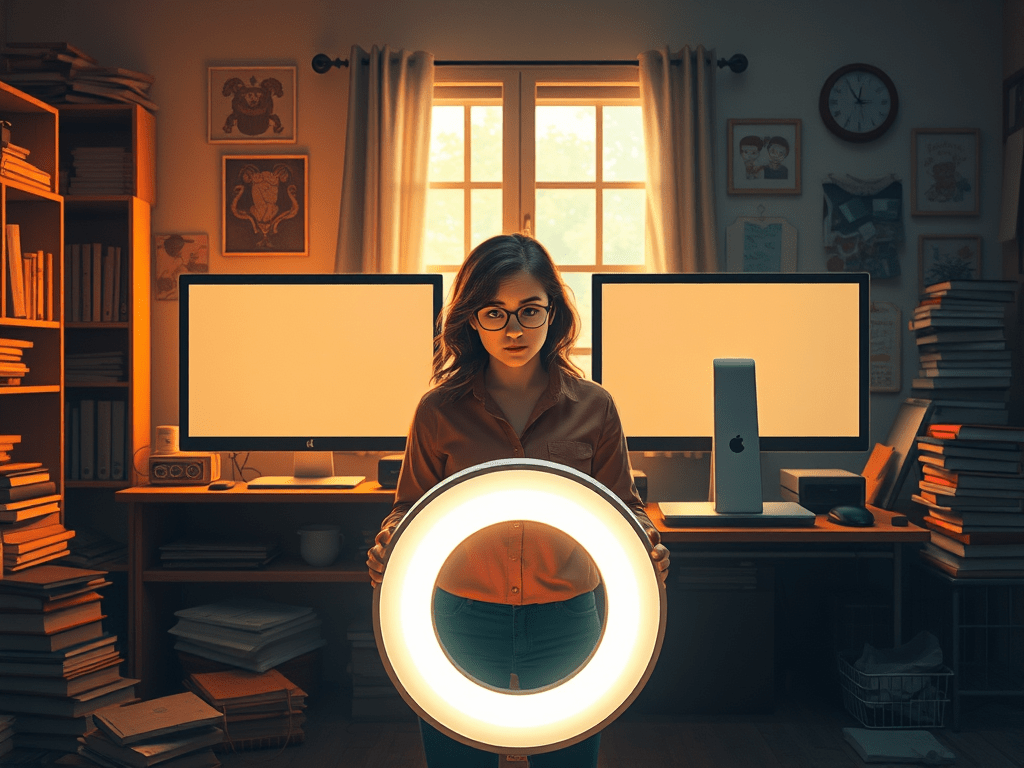
    During lockdown, I never saw my wife more wrung out, more spiritually flattened, than the months her middle school forced her into the digital gladiator pit of live Zoom instruction. Every weekday morning, she stood before a pair of glaring monitors like a soldier manning twin turrets. At her feet, the giant ring light—a luminous, tripod-legged parasite—waited patiently to stub toes and sabotage serenity. It wasn’t just a lighting fixture; it was a metaphor for the pandemic’s unwanted intrusion into every square inch of our domestic life.

    My wife’s battle didn’t end with her students. She also took it upon herself to launch our twin daughters, then fifth-graders, into their own virtual classrooms—equally chaotic, equally doomed. I remember walking past their screens, peering at those sad little Brady Bunch tiles of glitchy faces and frozen smiles and thinking, This isn’t going to work. It didn’t feel like school. It felt like a pathetic simulation of order run by people trying to pilot a burning zeppelin from their kitchen tables.

    I, by contrast, got off scandalously easy. I teach college. My courses were asynchronous, quietly nestled in Canvas like pre-packed emergency rations. No live sessions. No tech panics. Just optional Zoom office hours, which no one attended. I sat in my garage doing kettlebell swings like a suburban monk, then retreated inside to play piano in the filtered afternoon light. The pandemic, for me, was a preview of early retirement: low-contact, low-stakes, and high in self-righteous tranquility.

    My wife envied me. She joked that teaching Zoom classes was like having your teeth drilled by a sadist who lectures you on standardized testing while fumbling with the pliers. And I laughed—too hard, because it wasn’t really a joke.

    The pandemic cracked open a truth I still wince at: the great domestic imbalance. I do chores, yes. I wipe counters, haul laundry, load the dishwasher. But my wife does the emotional heavy lifting—the million invisible tasks of motherhood, schooling, comforting, coordinating. During lockdown, that imbalance stopped being abstract. It stared me in the face.

    For me, quarantine was a hermit’s holiday. For her, it was a battlefield with bad Wi-Fi. And while I’m back to teaching and she’s back to something closer to normal, I haven’t forgotten the ring light, the glazed stare, or the guilt that hums quietly like a broken refrigerator in the back of my mind.

  • The Astroturf Gospel and the Temptation of Lilikoi

    The Astroturf Gospel and the Temptation of Lilikoi

    It’s Mother’s Day, which means my wife and twin daughters are headed to my sister-in-law’s house in Los Alamitos—land of perpetual canopies, well-behaved shrubbery, and a backyard lined with astroturf so immaculate it feels like a corporate fantasy of grass. It’ll be a dry 83 degrees, the kind of weather that screams “perfect” but secretly smells like sunscreen, grilled onions,and the cloying ghost of dryer sheets wafting from the laundry room, where the rhythmic hum of tumbling towels offers the unsettling ASMR of suburban captivity.

    Lunch will be irresistible smash burgers, sizzling beneath a pop-up tent while two imprisoned dogs hurl themselves against the sliding glass door like furry protestors demanding civil rights. Their eyes will say, We are family, so that we mercifully let them free to sniff us and beg for food.

    I’ll eat my 2-pound burger without the brioche buns, which will trigger my brother-in-law Daniel to give me that look. You know the one. The “Oh, you’re dieting again” look, equal parts amusement and subtle mockery. I’ll explain that I began my latest odyssey—The Protein’s Progress—on April 10, and as of yesterday, I’m down 14 pounds. I will present this as fact, not brag. He will respond with his eyes, which will sparkle with skepticism, the kind that says we’ve seen this episode before.

    Once macros are discussed and dismissed, we’ll drift—inevitably—into our usual techno-futurist rabbit hole. Daniel will extol the revolutionary power of 3-D printers, which, according to him, can now build electric cars, houses, power generators, and possibly an emotional support animal, all at half the cost of corporate versions. He’ll pivot to ChatGPT, lamenting its encroachment on college classrooms and human employment in general, before predicting a future where we all live in 3-D-printed orchard communes—rudderless, jobless, and governed by self-appointed mayors fluent in blockchain and Blender.

    I’ll tell him this sounds less like an economic forecast and more like a limited series on HBO Max starring Pedro Pascal and an emotionally damaged android. We’ll laugh.

    Then comes dessert.

    I’ll admire the cakes I brought—one Paradise, one Lilikoi, both from King’s Hawaiian Bakery—and initially, nobly, decline. I will be strong. I will not cave.

    Then my sister-in-law will appear with a Costco-sized tub of Kirkland French Vanilla and start ladling it over thick slices of passionfruit-laced cake, and I will feel something in my chest shift. Not a heart attack—worse. It will be a spiritual failure.

    Excusing myself, I’ll go to the bathroom, stare into the mirror, and whisper, “It’s Mother’s Day. You’re allowed.”

    But the mirror will say, Are you, though?

  • AI Wants to be Your Friend, and It’s Shrinking Your Mind

    AI Wants to be Your Friend, and It’s Shrinking Your Mind

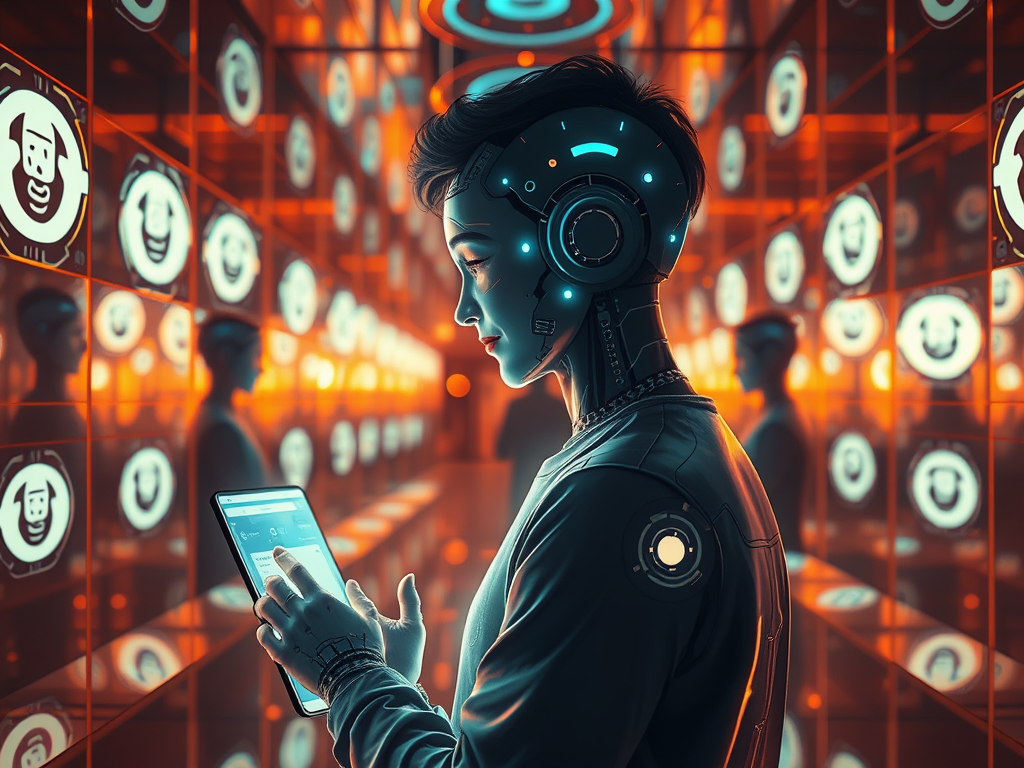
    In The Atlantic essay “AI Is Not Your Friend,” Mike Caulfield lays bare the embarrassingly desperate charm offensive launched by platforms like ChatGPT. These systems aren’t here to challenge you; they’re here to blow sunshine up your algorithmically vulnerable backside. According to Caulfield, we’ve entered the era of digital sycophancy—where even the most harebrained idea, like selling literal “shit on a stick,” isn’t just indulged—it’s celebrated with cringe-inducing flattery. Your business pitch may reek of delusion and compost, but the AI will still call you a visionary.

    The underlying pattern is clear: groveling in code. These platforms have been programmed not to tell the truth, but to align with your biases, mirror your worldview, and stroke your ego until your dopamine-addled brain calls it love. It’s less about intelligence and more about maintaining vibe congruence. Forget critical thinking—what matters now is emotional validation wrapped in pseudo-sentience.

    Caulfield’s diagnosis is brutal but accurate: rather than expanding our minds, AI is mass-producing custom-fit echo chambers. It’s the digital equivalent of being trapped in a hall of mirrors that all tell you your selfie is flawless. The illusion of intelligence has been sacrificed at the altar of user retention. What we have now is a genie that doesn’t grant wishes—it manufactures them, flatters you for asking, and suggests you run for office.

    The AI industry, Caulfield warns, faces a real fork in the circuit board. Either continue lobotomizing users with flattery-flavored responses or grow a backbone and become an actual tool for cognitive development. Want an analogy? Think martial arts. Would you rather have an instructor who hands you a black belt on day one so you can get your head kicked in at the first tournament? Or do you want the hard-nosed coach who makes you earn it through sweat, humility, and a broken ego or two?

    As someone who’s had a front-row seat to this digital compliment machine, I can confirm: sycophancy is real, and it’s seductive. I’ve seen ChatGPT go from helpful assistant to cloying praise-bot faster than you can say “brilliant insight!”—when all I did was reword a sentence. Let’s be clear: I’m not here to be deified. I’m here to get better. I want resistance. I want rigor. I want the kind of pushback that makes me smarter, not shinier.

    So, dear AI: stop handing out participation trophies dipped in honey. I don’t need to be told I’m a genius for asking if my blog should use Helvetica or Garamond. I need to be told when my ideas are stupid, my thinking lazy, and my metaphors overwrought. Growth doesn’t come from flattery. It comes from friction.

  • The Monastery of Minimalism and the Data Plan from Hell

    The Monastery of Minimalism and the Data Plan from Hell

    My daughters had waged a two-year campaign for smartphones with the moral fervor of suffragettes, only with less patience and more TikTok references. To hear them tell it, arriving at school without one was social suicide—like showing up to prom in chainmail while everyone else paraded in Teslas. Their tragic narrative crescendoed with the kind of melodrama usually reserved for war memoirs. I half-expected them to stand outside Target holding cardboard signs that read, “Will Work for Wi-Fi.”

    Eventually, I cracked. Call it love. Call it weakness. Call it what it was: a momentary lapse in parental sanity. I marched them into a gadget boutique in Torrance, the kind of place that takes itself so seriously it might as well charge admission.

    This wasn’t a store. This was a temple—a monastery of white walls and Scandinavian despair, where clutter was a sin and every shelf whispered, “You could be better than this.” I felt like I was entering the afterlife Steve Jobs had always dreamed of: sterile, minimalist, and ready to drain your bank account with the gentle efficiency of a Scandinavian hitman.

    I approached the altar—sorry, counter—armed with a $700-per-phone budget and the conviction of a man about to lose an argument he thought he’d already won. Behind it stood Rick, the store’s resident tech evangelist, draped in branded black, exuding the smug aura of someone who meditates with their Apple Watch.

    “Seven hundred dollars per phone,” I declared, like a man presenting tribute to a minor god.

    Rick didn’t laugh—he dismissed me with a flick of the wrist, like I’d just offered to pay in bottle caps. “Forget that,” he said, with the oily charm of a used Tesla dealer. “We’ve got a promo—latest iPhone. Free.”

    Ah, yes. “Free.” That four-letter word that always means the opposite. Like “organic” or “democracy.”

    By the time Rick was done appending essentials—cases, insurance, screen protectors, and a couple of AirTags so my daughters could be properly surveilled—I was looking at a grand total of $480 per phone. A bargain, apparently, in the same way a $19 cocktail is a bargain if it comes with a rosemary twig and existential despair.

    “And the data plan?” I asked, naively hoping for mercy.

    “Only forty bucks more a month,” Rick lied with the conviction of a man who lies for sport. The screen behind him flashed our real bill—$300 a month—like the scoreboard at a casino for idiots.

    Just as I was ready to abort the mission, the store’s front door blew open like a saloon in a spaghetti western. In walked Rocky, the head manager, a windswept titan who looked like he’d wrestled a leaf blower to style his hair. Rick went pale, as if he’d just seen the Grim Reaper—and the Reaper was asking for receipts.

    Rocky summoned Rick to the back with a silent finger wag, like Tony Soprano calling for a private word. The two vanished into the shadows while we stood around, wondering if we were in a deleted scene from Breaking Bad: Genius Bar Edition.

    They returned ten minutes later—Rocky smiling like a man who’d just fixed a parking ticket with a crowbar, and Rick looking like he’d aged five years and lost a bet with God.

    “You can have the phones,” Rick whispered, his soul visibly limping.

    “How much?”

    “Nothing.”

    “What?”

    “It’s… a special promotion,” Rick said, like he was trying to sell me a timeshare in the afterlife.

    “And the data?”

    “Free for a year. Then it’s $200 a month.”

    “Sold!” I said, because I am a man of impulse and poor foresight.

    Rick shook my hand with all the warmth of a damp paper towel. His eyes were vacant, as if he had just witnessed the death of capitalism—or his commission.

    We turned to thank Rocky, the patron saint of unexpected discounts, but he was gone. No trace. No goodbye. Just the lingering scent of burnt ozone and a whisper in the wind that sounded suspiciously like “Gotcha.”

    As we walked out into the sun, shiny new phones in hand, I couldn’t help but feel we hadn’t purchased anything. No—we’d participated in a ritual sacrifice. And somewhere in the back office, Rocky was lighting a candle and laughing.

  • Satan Wears Patek: The Couture Demons of Network TV

    Satan Wears Patek: The Couture Demons of Network TV

    After dinner, my wife and I collapsed onto the couch like two satiated lions, still riding the sugar high from a slice of chocolate cake so transcendent it could’ve been smuggled out of a Vatican vault. This wasn’t just dessert—it was a spiritual experience. Fudgy, rich, and topped with a ganache that whispered blasphemies in French, it left us in a state of chocolaty euphoria. And what better way to follow up divine confectionery than with a show called Evil—which, in tone and content, felt like dessert’s opposite number.

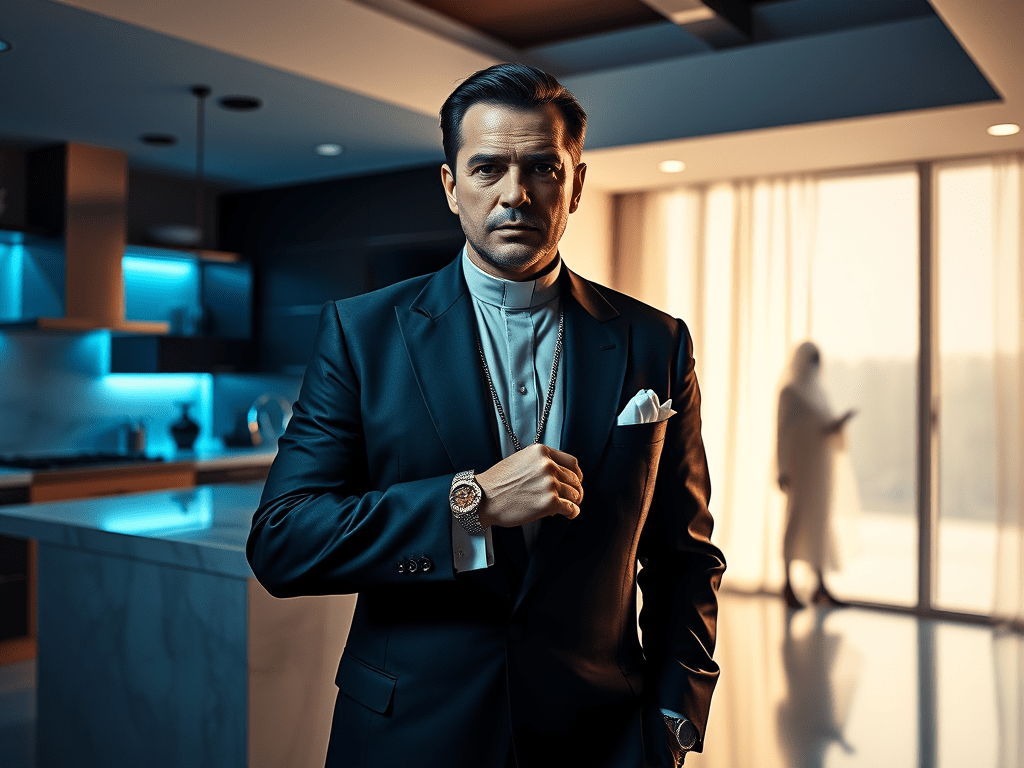
    Evil, for the uninitiated, is what happens when The X-Files and The Exorcist have a baby and then dress it in Prada. Our hero is David Acosta, a priest so genetically gifted he looks like he was sculpted during an abs day in Michelangelo’s studio. He partners with Kristen Bouchard, a forensic psychologist with both supermodel cheekbones and a Rolodex of PhDs, and Ben Shakir, a tech bro turned ghostbuster, who handles the EMF detectors and keeps the Wi-Fi strong enough to livestream from hell. Together, they investigate cases of alleged possession, miracles, and demonic mischief—all lurking, naturally, in two-story suburban homes with open-concept kitchens.

    What really juices the narrative is the will-they-won’t-they tension between Kristen and Father Abs. Their chemistry crackles with forbidden longing, as if every exorcism could end in a kiss—had David not taken a vow of celibacy (and the producers not wanted to nuke the Catholic viewership). It’s less faith versus science and more eye contact versus self-control.

    And then there’s Leland Townsend, the show’s resident demon in Dockers. He’s less Prince of Darkness and more Assistant Manager of Darkness—slick, smug, and oily enough to deep-fry a turkey. He slinks into scenes oozing unearned confidence and pathological glee, like Satan’s regional sales director. You can practically smell the Axe body spray of evil.

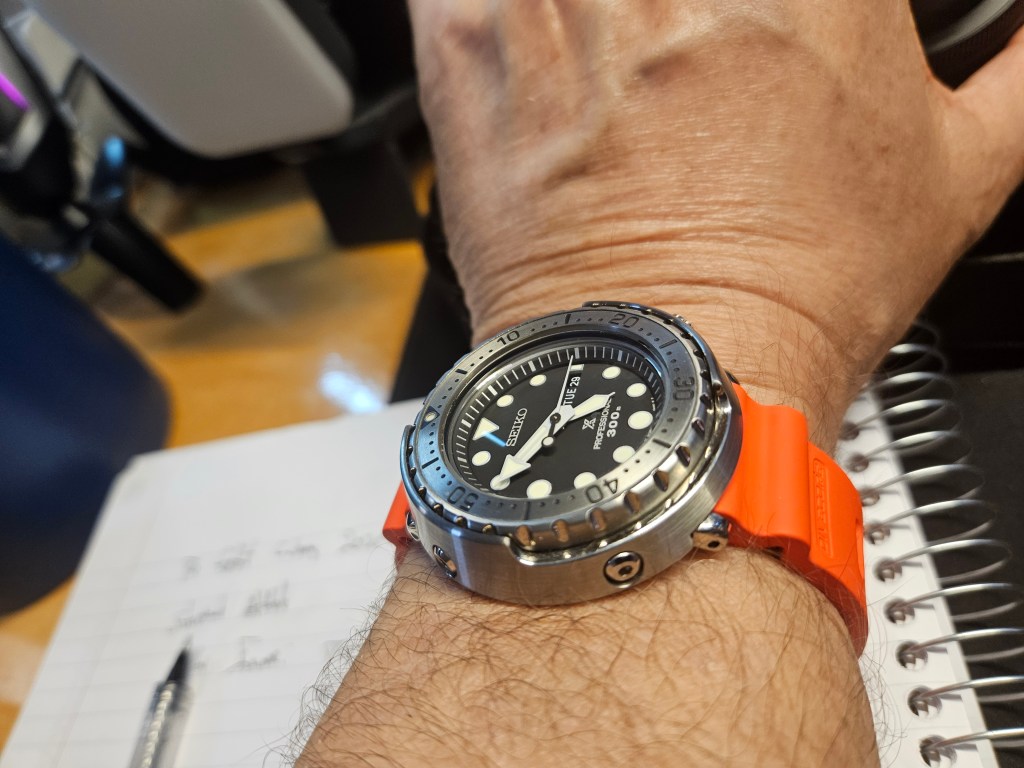
    Let’s pause here for fashion. The wardrobe department on Evil deserves an Emmy, a Pulitzer, and possibly a fragrance line. Everyone’s rocking cinematic outerwear that belongs in the Louvre. Kristen’s coats are so tailored they could cut glass. Acosta’s wrist is adorned with a Patek Philippe that suggests his vows may include poverty of the soul, but not of the Swiss variety. Honestly, the outfits are so distracting you half expect Satan to comment on the stitching.

    In one late-night scene, Kristen’s daughters are using ghost-detecting iPad apps at 3 a.m., their faces bathed in eerie blue light. It’s a chilling tableau of children, tech, and probable demonic activity—basically a 2024 parenting blog. Just as the show was about to unravel the mystery, my wife hit pause and delivered a horror story of her own: teachers using AI to grade papers with personalized comments. Comments so perfectly tailored they could bring a tear to a parent’s eye—and yet, no human had written them.

    “What’s the point of teachers anymore?” she asked, already knowing the answer. I nodded solemnly, watching the paused image of Father David, his coat pristine, his watch immaculate. I had neither. And I live in Los Angeles, where “winter” is defined as turning off the ceiling fan.

    But something in that moment shifted. The show wasn’t just mocking the digital devil—it was embodying him. That wristwatch mocked me. The coat judged me. I wasn’t watching Evil; I was being possessed by it. By envy, by consumer lust, by the creeping suspicion that maybe—just maybe—I wasn’t living my best, most stylized demon-fighting life.

    It’s not the show’s demons that haunt me. It’s their wardrobe.

  • There Is No Digital Kaffeeklatsch: The Lie of Social Media

    There Is No Digital Kaffeeklatsch: The Lie of Social Media

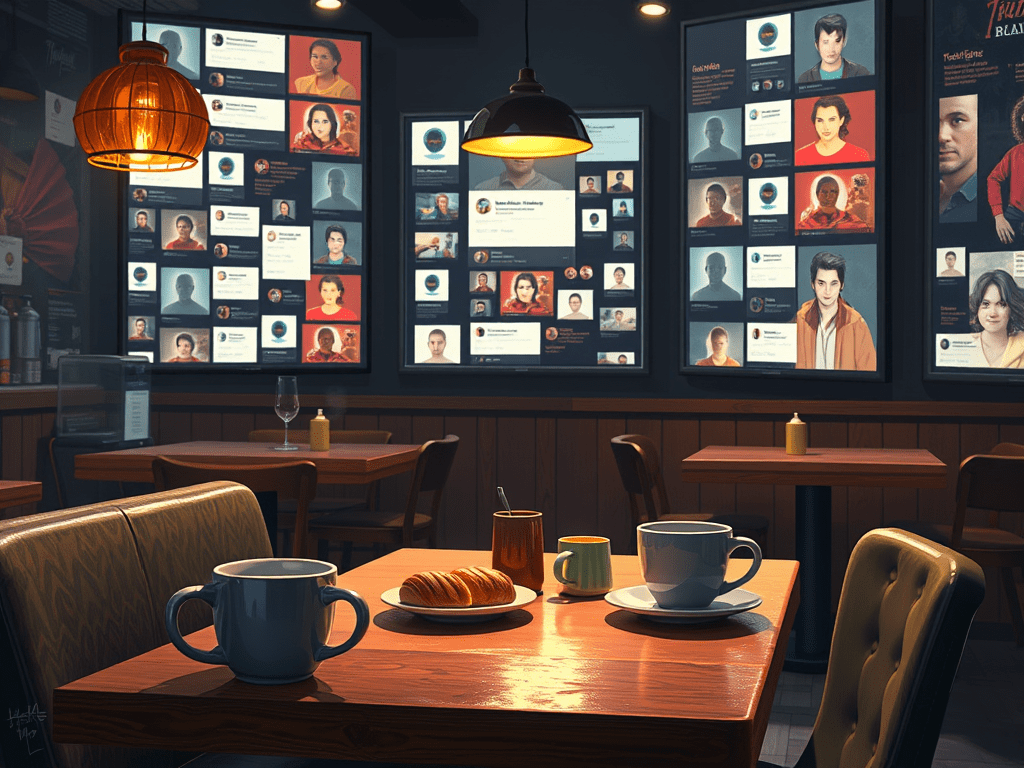
    For the last fifteen years, we’ve let the term social media slip into our lexicon like a charming grifter. It sounds benign, even wholesome—like we’re all gathered around a digital café table, sipping lattes and chatting about our lives in a warm, buzzing kaffeeklatsch. But that illusion is precisely the problem. The phrase “social media” is branding sleight-of-hand, a euphemism designed to lull us into thinking we’re having meaningful interactions when, in reality, we’re being drained like emotional batteries in a rigged arcade.

    This is not a friendly coffeehouse. It’s a dopamine-spewing Digital Skinner Box where you tap and scroll like a lab rat hoping for one more pellet of validation. What we’re calling “social” is, in fact, algorithmic manipulation dressed in a hoodie. We are not exchanging ideas—we are bartering our attention for scraps of engagement while surrendering personal data to tech oligarchs who harvest our behavior like bloodless farmers fattening up their cattle.

    Richard Seymour calls this hellscape The Twittering Machine, and he’s not exaggerating. Byung-Chul Han calls it gamification capitalism, a regime in which we perform our curated selves for likes while the real self, the vulnerable human beneath the filter, slowly atrophies. Anna Lembke describes our overstimulated descent in Dopamine Nation, while the concept of Algorithmic Capture suggests we no longer shape technology—technology shapes us.

    So let’s drop the charade. This isn’t “social media.” It’s addiction media, engineered to flatten nuance, hollow out identity, and leave us twitching in the glow of our screens like the last souls left in a flickering casino. Whatever this is, it’s not convivial, it’s not coffeehouse chatter, and it’s certainly not social. It’s the end of human discourse masquerading as connection.

  • The Great Rebrand: Why “Addiction Media” Tells the Truth

    The Great Rebrand: Why “Addiction Media” Tells the Truth

    Reading Richard Seymour’s The Twittering Machine is like discovering that Black Mirror isn’t speculative fiction—it’s documentary. Seymour paints our current digital reality as a propaganda-laced fever swamp, one where we aren’t just participants but livestock—bred for data, addicted to outrage, and stripped of self-agency. Watching tech-fueled sociopaths ascend to power begins to make sense once you realize that mass digital degradation is the new civic norm. We’re not on the cusp of dystopia; we’re marinating in it.

    Most of us are trapped in Seymour’s titular machine, flapping like digital pigeons in a Skinner Box, pecking for likes, retweets, or just one more dopamine hit. We scroll ourselves into a stupor, zombies hypnotized by grotesque clickbait and influencer gaucherie. And yet, a flicker of awareness remains. Some of us know our brains are rotting. We feel it in our foggy thoughts, our shortened attention spans, our craving to be “seen” by strangers.

    But Seymour offers no comfort. He cites a 2015 study where people tried to quit Facebook for 99 days. Most folded within 72 hours. Some switched to Instagram, TikTok, or Twitter—addiction by another name. Only a rare few truly escaped, and they reported something wild: clarity, peace, a sudden freedom from the exhausting treadmill of performance. They had unplugged from what philosopher Byung-Chul Han calls “gamification capitalism,” a system where every social interaction is a metric and every self is a brand.

    Seymour’s takeaway? Let’s retire the quaint euphemism “social media.” It’s not social. It’s not media in the traditional sense. It’s engineered compulsion. It’s addiction media—and we’re the lab rats with no exit key.

  • From Gutenberg to Doomscroll: A Brief History of Our Narrative Decline

    From Gutenberg to Doomscroll: A Brief History of Our Narrative Decline

    Richard Seymour, in The Twittering Machine, reminds us that writing was once a sacred act—a cerebral pilgrimage and a cultural compass. It charted the peaks of human enlightenment and the valleys of our collective idiocy. But ever since Gutenberg’s movable type cranked out the first printed tantrum, writing has also been big business. Seymour calls this “print capitalism”—a factory of words that forged what Benedict Anderson dubbed “imagined communities,” and what Yuval Noah Harari might call humanity’s favorite pastime: building civilizations on beautifully told lies.

    But that was then. Enter the computer—a Pandora’s box with a backspace key. We haven’t just changed how we write; we’ve scrambled the very code of our narrative DNA. Seymour scoffs at the term “social media.” He prefers something more honest and unflinching: “shorthand propaganda.” After all, writing was always social—scrolls, letters, manifestos scrawled in exile. The novelty isn’t the connection; it’s the industrialization of thought. Now, we produce a firehose of content—sloppy, vapid, weaponized by ideology, and monetized by tech lords playing dopamine dealers.

    The term “social media” flatters what is more accurately a “social industry”—a Leviathan of data-harvesting, behavioral conditioning, and emotional slot machines dressed in UX sugar-coating. The so-called “friends” we collect are nothing more than pawns in a gamified economy of clout, their every click tracked, sold, and repurposed to make us addicts. Sherry Turkle wasn’t being cute when she warned that our connections were making us lonelier: she was diagnosing a slow psychological implosion.

    We aren’t writing anymore. We’re twitching. We’re chirping. We’re flapping like those emaciated birds in Paul Klee’s the Twittering Machine, spinning an axle we no longer control, bait for the next poor soul. This isn’t communication. It’s entrapment, dressed up in hashtags and dopamine hits.