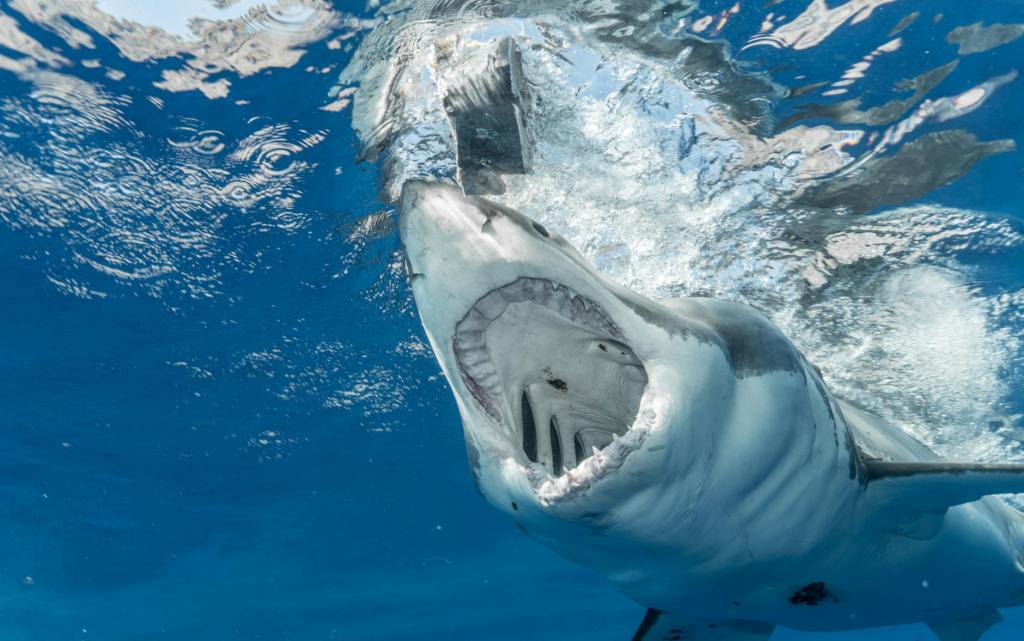
The Shark Whisperer, a Netflix documentary about the striking and fearless Ocean Ramsey, follows her as she glides through open water with tiger sharks and even Great Whites. Ramsey doesn’t just swim with these apex predators—she bonds with them, believing her connection will help rebrand sharks as sentient, misunderstood beings worthy of conservation, not fear.
Her mission is both mesmerizing and deeply unsettling.
There’s no denying her courage. Her grace underwater and near-superhuman lung capacity—she can hold her breath for over six minutes—allow her to move in the sea like one of its native creatures. She believes this makes the sharks see her not as prey, but as a fellow traveler. And maybe they do. For now.
But I can’t shake the unease. Her physical gifts may grant her a temporary immunity, but it feels like borrowed time. There’s a streak of fatalism in her interviews—a recurring idea that a life fully lived is more valuable than a long one. She speaks openly of her depression. It’s hard not to wonder whether her deep emotional affinity for sharks is also a kind of escape, a seductive alternative to human connection or terrestrial stability. Her quest for intimacy with creatures that could kill her seems less like education and more like myth-making.
Still, her life is extraordinary. A viral sensation and oceanic daredevil, Ramsey rides the backs of sea monsters with a kind of pagan grace. The documentary captures her power and beauty, her magnetism, and her commitment—but it also sidesteps the emotional terrain that might explain why she keeps going back into the water, again and again, as if trying to disappear into something wilder and more dangerous than life on land.
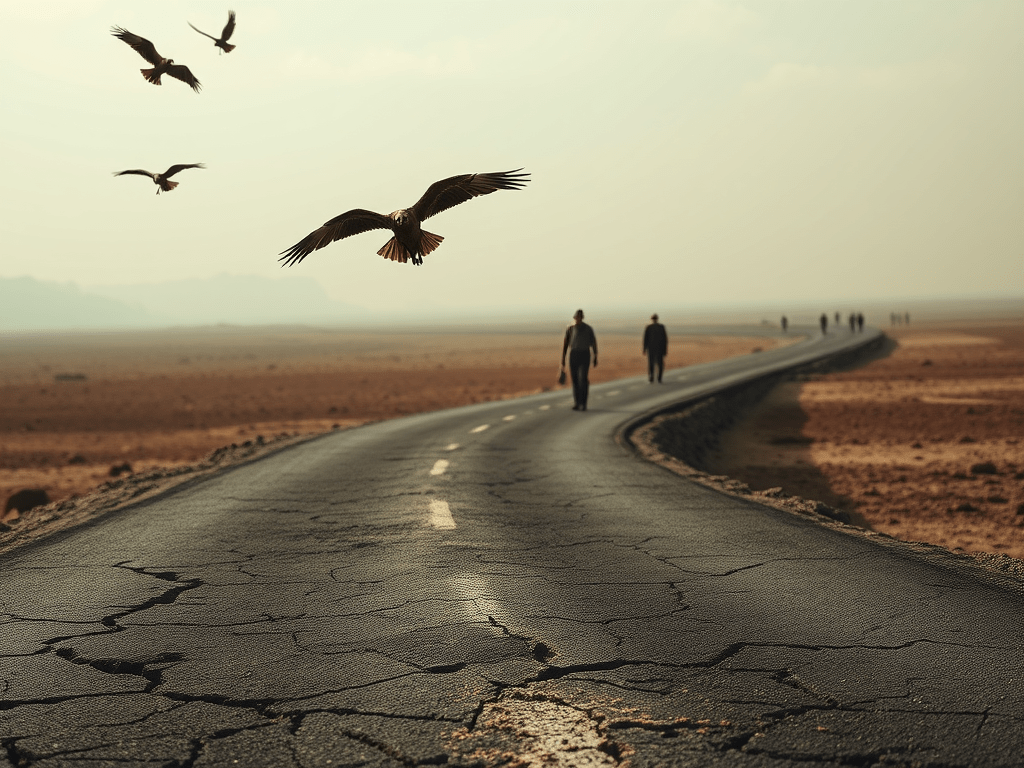
A road. It winds through the wastes like a serpent that forgot its own name. Cracked earth on either side. Fence posts like grave markers. Vultures in the sky, circling nothing in particular, just keeping warm. A man walks it. His boots are flayed open. His eyes are sunburned. His soul is a blister dragging itself behind him.
His name is Lyle. Or maybe Thomas. The script never says. Doesn’t matter. He’s every man who ever wrote a love letter in blood and mailed it into the void.
He is looking for her. She has no name, just a shape in the distance, a memory braided from perfume and last words. She left him. Maybe twice. Maybe more. He kept the door open. She never knocked.
The road has been long. Winding. Bleak. It led him through dead towns and ghost motels. Once he stayed in a place where the concierge was a buzzard and the minibar held only regret.
He speaks not. The road speaks for him. It says:
Every fool must follow something. You picked hope. Bad draw.
Flashbacks flicker: A woman, face soft as moonlight, eyes like unpaid debt. She tells him she’s leaving. He says he’ll wait. She laughs. That’s the last thing she gives him. Her laughter. Acid-bright and final.
Along the road he meets others—pilgrims of delusion.
One man rides a shopping cart filled with old love songs on cassette.
One woman sews wedding dresses for brides that never were.
One child sells maps to places that no longer exist.
They all walk. They all believe the road leads somewhere. It don’t.
Eventually, Lyle comes upon a house at the end of the road. It is the house. Her house. Or what’s left of it. The windows are boarded. The door is gone. Inside, just dust, a broken phonograph, and a bird trapped in the chimney, fluttering against the soot.
He kneels.
Not to pray. To listen.
There’s no music. No answer. Only wind. And the bird’s soft thump, thump, thump.
He lies down. The road curls around him like a noose.
FADE TO BLACK.
The final line scrolls in silence:
Love didn’t leave. It just stopped answering the door.
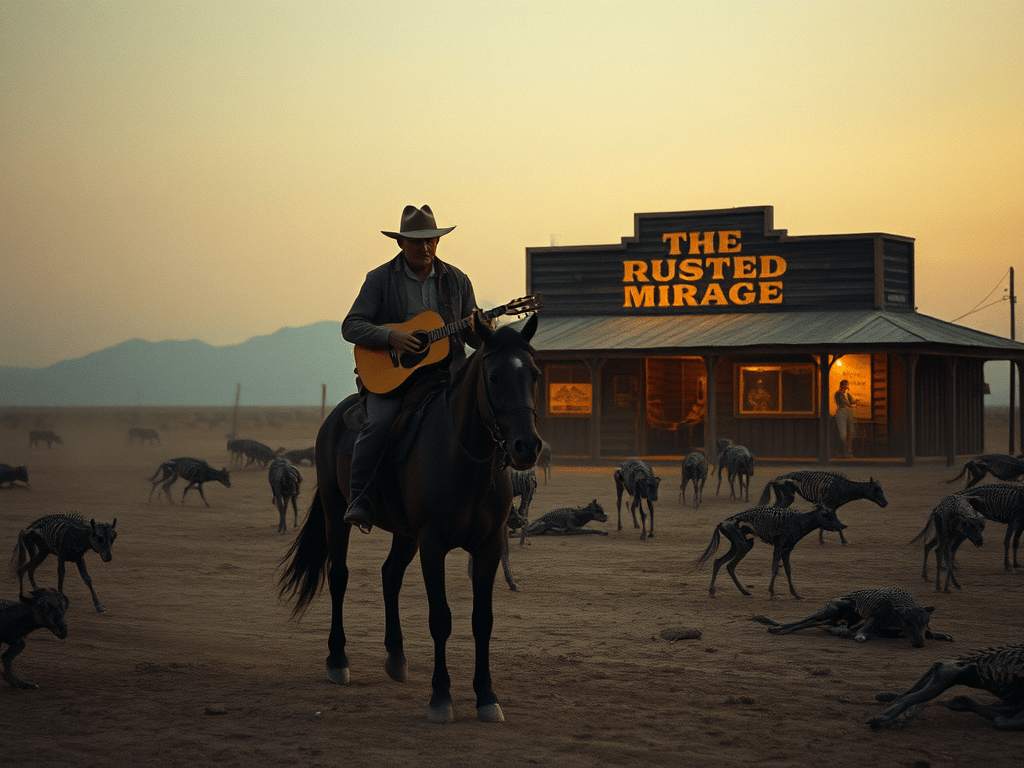
Dust plains. Endless. Cattle skeletons sun-bleached and smiling in the dirt. A wind hisses through creosote like it knows a secret. A man rides into this ruin on a horse too tired to live and too dumb to die. His name is Merle. Once a singer. Once a lover. Now a shadow in spurs.
He carries a guitar with one string and a heart torn open like a blister.
He is looking for Fanny.
Fanny of the laugh that could undo a priest. Fanny of the hips that made men renounce geography. Fanny who told him to be strong and then walked out with a mule-skinner named Dutch who wore cologne and shot rattlesnakes for fun.
She left Merle in the middle of a love song.
Now Merle drags that song across the desert like a broken leg.
The locals say Fanny dances at The Rusted Mirage, a bar built on an old mine shaft. It sits at the edge of a dead lake where the water’s gone but the longing remains. Inside, broken men drink varnish and pray to forgotten gods. There’s a jukebox that plays nothing but Bee Gees covers sung by a toothless man in a gold suit. Fanny’s silhouette haunts the stage, flanked by two coyotes who think they’re her backup dancers.
Merle stumbles in like a man arriving at his own funeral. He sees her. She sees him. Silence falls like a noose.
He says
Fanny. Be tender.
She says
Boy you shoulda thought of that when you threw my birthday pie in the fire.
He says
That was an accident.
She says
So was my affection.
They duel. Not with pistols. With ballads. His sorrowful wail versus her falsetto fury. The bartender cries. A dog howls. Someone overdoses on sassafras in the corner.
By dawn, Merle lies collapsed. Empty. She kisses him once—on the temple, like a burial rite. Then disappears into the jukebox, leaving behind only a boa made of scorpion tails and crushed velvet.
FADE OUT.
A narrator, gravel-voiced and full of scorn, speaks:
Love’s a fever dream. Some wake up cured. Some never wake at all.
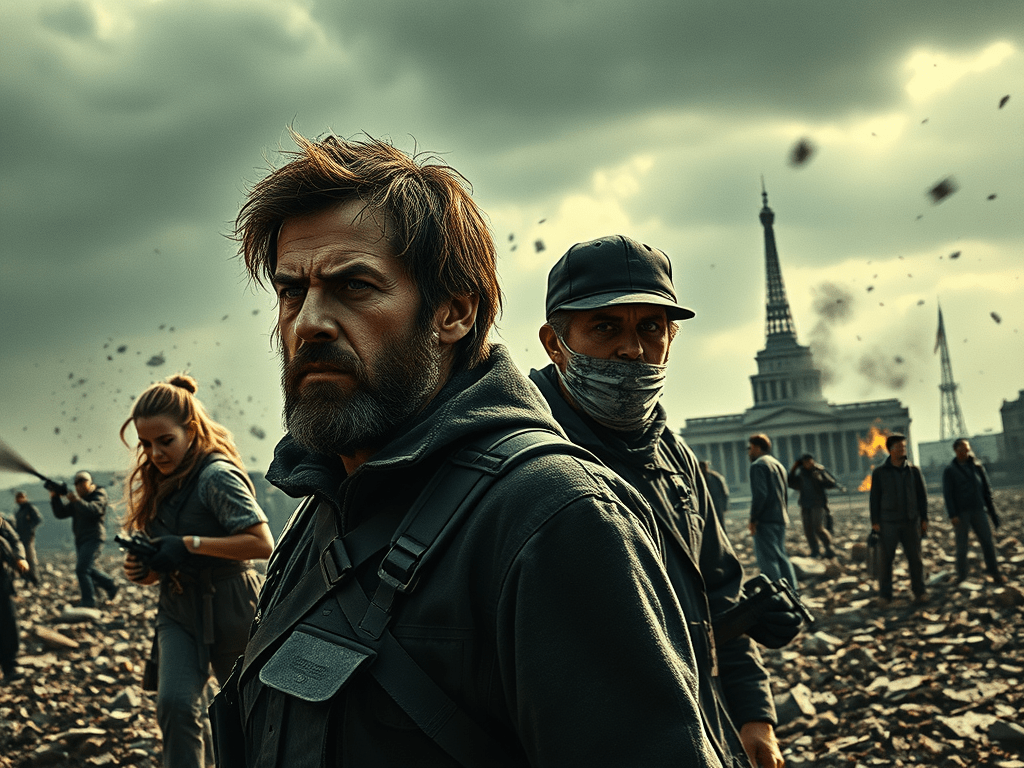
Both 28 Years Later and World War Z depict the spread of a deadly virus that triggers the collapse of global order. Yet beyond the zombies and infected hordes, these films offer striking metaphors for the chaos, distrust, and political polarization amplified by the COVID-19 pandemic.
In a well-structured, thesis-driven essay of 1,700 words, compare how each film explores the fragility of major institutions (governments, media, military, science), the spread of misinformation, and the psychological aftermath of global catastrophe. Your analysis should consider how each film allegorizes different aspects of pandemic culture: emotional volatility in 28 Years Later vs. bureaucratic inertia in World War Z.
You must address the following questions:
How do these films portray public institutions’ response to crisis? What critiques are embedded in those portrayals?
In what ways do these narratives reflect or exaggerate the real-world cultural and political divisions that were intensified by COVID-19?
Do these films offer any hope or solutions, or are they fundamentally cynical about humanity’s ability to cooperate?
Use specific scenes, dialogue, and cinematic techniques from both films to support your claims. Outside sources are encouraged but not required.
Here are five sample thesis statements for the prompt comparing 28 Years Later and World War Z as post-COVID allegories, each with clear mapping components:
1. The Bureaucratic Collapse vs. Emotional Fallout Thesis While World War Z depicts a slow-motion collapse of global institutions in the face of a virus that outpaces diplomacy and reason, 28 Years Later focuses on the emotional and ethical wreckage left behind, showing that the true horror of a pandemic lies not in the infection itself but in the unraveling of trust, memory, and social cohesion.
2. The Misinformation and Fear Contagion Thesis Both 28 Years Later and World War Z serve as cultural autopsies of the COVID era, portraying not only viral outbreaks but the parallel contagion of misinformation, fear, and ideological extremism, revealing how modern pandemics are fought as much in echo chambers and comment threads as in laboratories.
3. The Institutional Failure and Survivalist Morality Thesis In their depiction of pandemic response, World War Z shows the impotence of top-down globalism, while 28 Years Later offers a bottom-up view of localized anarchy and survivalist ethics, together illustrating a post-COVID cinematic shift from faith in institutions to tribal resilience and moral ambiguity.
4. The Pandemic as Psychological Reckoning Thesis More than disaster films, 28 Years Later and World War Z use the aesthetics of horror and action to stage a psychological reckoning with the trauma of COVID—28 Years Later captures the rage and exhaustion of a public pushed to its emotional brink, while World War Z visualizes the logistical panic and fractured chain of authority that left millions globally disoriented and unmoored.
5. The Allegory of Polarization Thesis 28 Years Later and World War Z reflect the political polarization accelerated by COVID by framing survival as dependent not on unity but on division—on isolation, suspicion, and competing narratives of truth—suggesting that in a fractured society, pandemics don’t create monsters so much as they expose them.
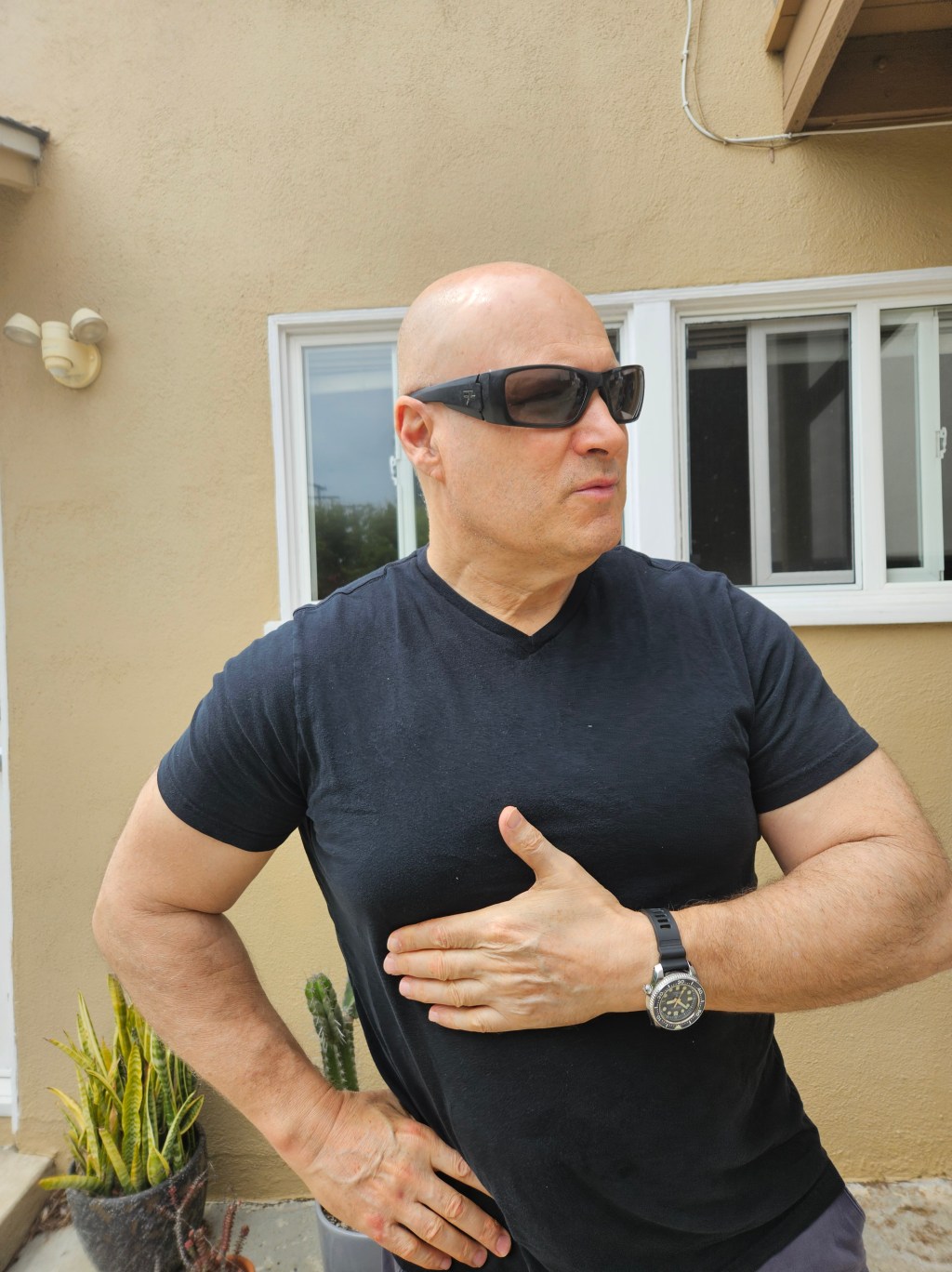
Yesterday I filmed a 26-minute YouTube video on my main channel—ostensibly about watches. That was the bait. But somewhere between adjusting my camera and admiring my newly lean frame (twenty pounds down since April, thank you very much), I realized I wasn’t really talking about watches at all. I was talking about aging, restraint, identity, and how not to let your inner teenager run the damn show.
The video was titled something like “My Four Watch Goals at Sixty-Four,” which sounds practical until you realize that my goals weren’t horological—they were existential. The first one? Stop being so maudlin. I actually said the word, spelled it out like a substitute teacher on a caffeine bender, and gave a definition. Maudlin: emotional excess masquerading as depth, the adolescent urge to turn life into performance art just so you can feel something.
To illustrate, I offered up a formative trauma: being sixteen, watching Bill Bixby in The Incredible Hulk, and weeping—actually weeping—when he transformed into Lou Ferrigno’s green rage monster. It wasn’t just TV. It was catharsis. I was an Olympic weightlifter-slash-bodybuilder-slash-piano prodigy who didn’t know what to do with all the emotion I’d stuffed under my pecs and sonatas. Watching Bixby morph into a snarling demigod gave me permission to feel. In my forties, I channeled that same melodrama into wearing oversized diver watches—big, bold, and absurdly heroic, as if my wrist were auditioning for a Marvel reboot. That, too, was maudlin cosplay. Now I’m trying something radical: maturity.
Goal two? Quit being an enabler. I admitted that, like it or not, I’m an influencer. I don’t collect in a vacuum. Every time I flex a new piece, it’s like handing out free permission slips to fellow addicts. So I’ve decided to use my powers for good—or at least for moderation.
Goal three: Stay fit, get bloodwork, be a warrior in plain clothes. The watch isn’t the main course. It’s the garnish. If I’m going to wear something worth noticing, I should have the body and the biomarkers to back it up. Otherwise, I’m just a gilded potato.
And finally, goal four: Minimalist watch heroes. The quiet monks of the community who own one to three watches and seem perfectly content. They’re my North Stars. They aren’t buying watches out of panic, nostalgia, or identity crises—they’re grounded, self-possessed, wise. I envy them. I aspire to be one of them. I’m not there yet, but I’m squinting in their direction.
Honestly, I assumed the video would tank. My viewers tend to want horological eye-candy, not existential reflection wrapped in fitness updates. But to my surprise, the response was overwhelming—close to a thousand views on day one, dozens of comments. People thanked me. Some said they were booking doctor appointments. Others said they were starting diets. I’m fourteen years into making YouTube videos, and this might be the one I’m proudest of.
Because the truth is, most watch YouTubers are just dressing up emotional poverty in brushed stainless steel. They get maudlin about bezels and bracelets, desperate to out-hype each other in a gaudy attention economy. It’s exhausting. What people really want—what they’re starving for—is someone speaking like a human being. No curation. No affectation.
I ended my video with a confession: I’m still that sixteen-year-old kid. And if you cue up The Lonely Man theme from The Incredible Hulk, the one where David Banner walks down the rainy sidewalk in soft focus, I will—without shame—start crying. Again. Because some emotions don’t age. They just find quieter places to hide.
Watching a David Attenborough documentary feels less like casual viewing and more like sliding into the pew for the Church of Planet Earth. The man’s diction alone could resurrect the dead—each syllable polished, each pause wielded like a scalpel—while he preaches an all-natural gospel: paradise isn’t some vaporous hereafter; it’s right here, pulsing under our sneakers. And we, the congregation of carbon footprints, are the sinners. We bulldoze forests, mainline fossil fuels, and still have the gall to call ourselves stewards. His sermons don’t merely entertain; they indict. Ten minutes in and I’m itching to mulch my own receipts and swear off cheeseburgers for life.
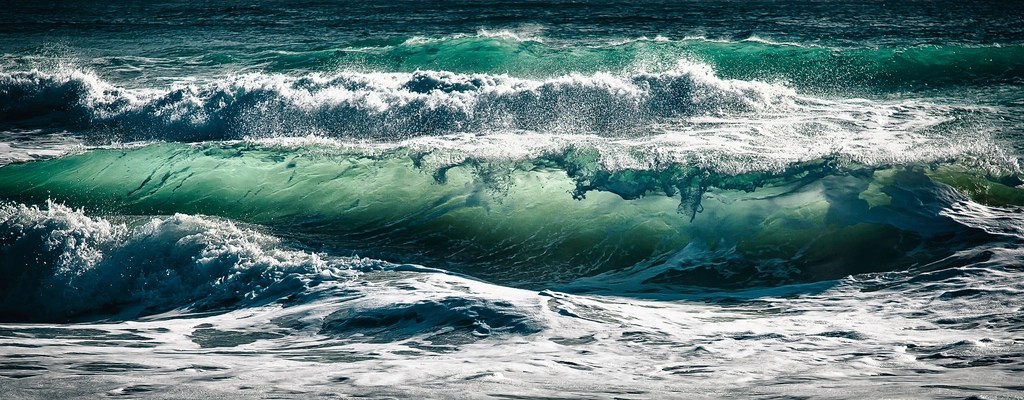
I’ve basked in Attenborough’s velvet reprimands for decades, often drifting into a blissful half-sleep as he murmurs about the “delicate balance of nature” and the tender devotion of a mother panda—as soothing as chamomile tea and twice as guilt-inducing. His newest homily, Ocean on Hulu, finds the maestro wide-eyed as ever, a silver-haired Burl Ives guiding us through Rudolph’s wilderness—only this time the Abominable Snowman is industrial bottom trawling. Picture a gargantuan steel mouth dragging across the seabed, gulping everything in its path. Rays flutter, fish scatter, and then—slam—the net’s iron curtain drops. Most of the hapless catch is unceremoniously dumped, lifeless, back into the brine.
The footage left me queasy, a queasiness only partly soothed by Attenborough’s grandfatherly timbre. I’ve already been flirting with a plant-forward diet; Ocean shoved me into a full-blown breakup with seafood. Good luck unseeing hundreds of doomed creatures funneled into a floating abattoir while an octogenarian sage explains—as gently as one can—that we’re devouring our own Eden.
So yes, I’ll skip the shrimp cocktail, thanks. My conscience already has acid reflux.
Yesterday, I subjected myself to The Surfer (2025), a cinematic hallucination starring Nicolas Cage, filmed somewhere in a fictional Luna Bay, Australia—or at least in a version of coastal Australia designed to feel like a fever dream. Cage plays a middle-aged man who seems to believe he lives inside a Lexus commercial and is some kind of real estate baron returning to reclaim the beachfront childhood home that slipped through his fingers decades ago. A house that, in his mind, will grant him redemption, absolution, and perhaps a complimentary cappuccino.
Here’s the twist: he’s almost certainly homeless and entirely unhinged.
The local surfing gang—shirtless nihilists who act like they’re in a meth-fueled remake of Lord of the Flies—perform what can only be described as satanic hazing rituals and torment Cage’s character with such sadistic flair that one wonders if they were cast straight from a skate park exorcism.
The whole production gave me flashbacks to the art house theaters I frequented in Berkeley in the early ’80s. It has the self-important weirdness of Jodorowsky’s El Topo (a film I admired in theory and loathed in practice), but desperately wishes it had the quiet transcendence of Nicolas Roeg’s Walkabout, a true masterpiece. Alas, The Surfer is neither.
Once it becomes clear—about twenty minutes in—that Cage’s character is a delusional man harassing beachgoers, the rest of the film becomes a masochistic ritual for the viewer: 80 long minutes of escalating humiliations. He’s mocked by surfers, snubbed by a barista, rejected by a dog-walking woman, and disdained by a real estate agent with the warmth of a lizard in escrow. Each scene checks off another indignity in a cinematic punishment parade.
And yet, somewhere in this wreckage is the seed of a decent story. Imagine this: Cage plays a sane, if eccentric, man with a legitimate past beef with the local surf gang. The setting becomes a character in itself. The plot thickens into a psychological turf war. Give it ten episodes and some competent writers, and you’d have a fascinating limited series. But no—The Surfer opts for a half-baked film that commits the worst artistic sin: not provocation, but tedium.
This movie didn’t just reaffirm my bias against most modern films—it fortified it. This is why I stick to television. At least TV has the decency to pretend it respects my time.
During the chaos of finals week—when my inbox floods with apologetic, last-ditch emails from students begging for an extended deadline—I found solace in something far removed from academia: Antoine Fuqua’s What’s My Name: Muhammad Ali. It’s a two-part documentary, but it feels more like a sermon and a love letter rolled into one. Like Fuqua, I’ve always had a boundless reverence for Ali—the most charismatic athlete to ever live—and watching him slowly succumb to Parkinson’s at just forty-two broke something in me.
There’s a word for the dark thrill we sometimes feel when others suffer: schadenfreude. But what’s the opposite of that word–the anguish we feel when our heroes fall? When they suffer with such dignity and pride that they won’t accept our sympathy, even though they deserve every ounce of it? We don’t just mourn them—we mourn the version of ourselves that believed they were untouchable. Seeing Ali’s mind remain sharp, his wit flickering through that neurological prison, was unbearable and beautiful all at once.
In his prime, Ali wasn’t just a boxer—he was a superhero, a shapeshifter, a one-man Broadway show in a heavyweight’s body. He was a sharp observer of American racism, yet never a scold. He wielded humor like a blade—cutting through injustice with charm and rhythm. His facial expressions alone could dismantle a room. And above all, he had soul. He was a poet, an actor, a preacher, and a provocateur.
His conversion to Islam was not cosmetic. It reshaped him. He carried a sense of divine accountability, speaking of God not as abstraction but as a constant, watchful presence. He lived with the weight of eternity in mind, casually discussing the soul as if he’d already made peace with his fate. One of the final moments in the documentary captures this perfectly: Ali scribbles a note to a fan asking for an autograph—“Service to others is the rent we pay for our room in HEAVEN.” The line made me stop in my tracks and pray that I could live such a life rather than momentarily be inspired by it or tell others about it, because I know from experience that “talk is cheap.”
The film doesn’t critique Ali—and truthfully, I didn’t want it to. I didn’t want the version of him that stayed too long in the ring. I didn’t want to watch his brilliance dimmed by punches that should’ve stopped years earlier. I found myself irrationally angry with him. I wanted him to become an actor, a comedian, a talk show philosopher—anything but a late-career boxer whose brilliance was traded for one more round. But of course, I’m lying to myself.
We place athletes like Ali in the realm of myth. They are our Achilles, our Hercules. His greatness was inseparable from the ring. The same inner fire that made him a champion refused to let him leave the stage quietly. That fire gave us the epic—and, inevitably, the tragedy. I only wish that the spiritual clarity that shaped his faith could have overruled the gladiator in him. But maybe that’s the final paradox of Ali: he lived as both prophet and warrior, and the cost of greatness was always going to be high.
In the Bay Area of the 1970s, nothing was more quintessentially American than Led Zeppelin. Not apple pie, not hot dogs, not even fireworks detonating under the banner of freedom on the Fourth of July. No, Led Zeppelin was the national anthem of hormonal turbulence, a sonic passport to lust, rebellion, and ecstatic doom. At the center of this swirling pagan mass stood Robert Plant—shirtless, golden-maned, howling with the tortured elegance of a fallen angel whose job was to make teenagers believe that transcendence came through hips, heartbreak, and hair-whipping.
Plant wasn’t just the house prophet of sexual revolution-era America; he was its prisoner. His voice didn’t just seduce—it ached. It howled. It bled. It was priapism as opera, libido turned operatic suffering. Meanwhile, Hugh Hefner—the so-called high priest of sexual liberation—was a fraud with a bubble pipe. With his crusty cardigan and smug, soft-core smirk, Hefner sold a sterilized fantasy built for TV sitcoms. Robert Plant, by contrast, sounded like he’d clawed his way out of the underworld in leather pants, carrying every orgasm and every regret with him.
In Bernard MacMahon’s Becoming Led Zeppelin, we encounter Plant as the elder beast—still leonine, still mythic. He reclines in a richly shadowed room worthy of Masterpiece Theatre, his face now a craggy relief map of rock’s excesses. The documentary doesn’t dwell on the groupies, trashed hotel rooms, or aquatic legends of infamy. Instead, it gives us the roots: Plant’s soulful debt to Little Richard, Page and Jones’ studio stint with Shirley Bassey’s “Goldfinger”—that thunderclap of a song that still sounds like someone hurling a piano at the moon. Watching that scene took me straight back to 1973 Nairobi, where my father and I first heard Bassey belt that monster in a theater so loud it felt like the walls were peeling.
There’s archival footage of Zeppelin playing to a crowd that looks less like Woodstock and more like a family reunion gone sideways. Grandmothers clutching their pearls. Children plugging their ears. No one knew what had hit them. This wasn’t just music—it was a mass exorcism.
So no, Becoming Led Zeppelin won’t give you the tabloid filth. It won’t dive into the daisy chain of destruction that came with their rise. But it offers something more interesting: a portrait of a band that didn’t just soundtrack my youth—they were my youth. And Robert Plant, in all his howling, tormented glory, was its golden god of doom.
Yes, I’m hooked—addicted, really—to Southern Charm, Bravo’s televised safari through Charlotte, South Carolina’s aristocratic swamp of ennui, vanity, and monogrammed dysfunction. Most of the men are local fixtures: old money, old habits, old egos. They drift through their curated lives like shirtless Gatsby extras, tumbling into affairs, start-up flops, and half-baked rebrands of their own manhood—usually involving whiskey, dubious real estate ventures, and “branding consultants” who charge $8,000 to tell them to get a podcast. They aren’t villains exactly—there’s a flicker of decency beneath the smugness—but they are prone to recreational cruelty. Boredom gives their mischief a sadistic edge. Monogamy is a punchline. Direction is a punch-drunk memory. They’re trapped in a gilded cage of their own entitlement, slouching toward irrelevance with cocktails in hand. For the most part, they are a cast of man-child babies performing businessman cosplay.
The women, in contrast, seem genetically engineered for composure, ambition, and unearned patience. While the men unravel like overpriced cable-knit sweaters, the women balance jobs, goals, and the emotional labor of pretending to be intrigued by yet another man-child’s whiskey brand. They hold the show together. They’re smarter, sharper, and infinitely more emotionally competent. Frankly, they deserve their own spin-off where they leave the men behind and conquer the Southeast in blazers and heels.
And presiding over this high-society soap opera like a Southern Sphinx is Grand Matriarch Patricia. She doesn’t walk—she presides. Draped in silk and judgment, she rules from her settee with a cocktail in one hand and a butler at her heels. Her hobbies include throwing theme parties for her yapping purse-dogs, matchmaking with surgical precision, and purchasing $30,000 gold elephants out of sheer boredom. She’s not a character; she’s a living monument to genteel tyranny. Watching her is like watching Downton Abbey if it were sponsored by bourbon and Botox.
Honestly? The show makes me want to move to Charlotte. The humid rain gives me Florida flashbacks. The homes are plush, the restaurants look sinfully inviting, and every time I watch Southern Charm, I find myself daydreaming of strolling through the city in linen pants, pretending I too have nothing better to do than flirt, sip, and emotionally combust in a well-upholstered room.



 Cinemorphosis