Category: TV and Movies

  • Naked, Unshy, Beautiful: What Happens When the Killjoy Leaves

    Naked, Unshy, Beautiful: What Happens When the Killjoy Leaves

    I screened The Game Changers for my student-athletes, pausing every few minutes like a referee blowing the whistle on another bogus call. The film is a carnival of half-baked studies and overcooked claims about the superiority of a plant-based diet, and I wasn’t about to let it slide. Still, I tried to be generous: a well-planned plant-based diet can be a heart’s best friend. But then we hit my favorite scene, the one I couldn’t resist rewinding. Derrick Morgan, the former Tennessee Titans linebacker, is feasting with teammates on a vegan spread prepared by his wife, Charity. The science was questionable, but the spectacle of love, respect, and camaraderie at that table was undeniable. I told my students, “This—right here—is what eating is about. Not macros, not calculators, not the cold math of nutrition. It’s love.” A volleyball player nodded so hard in agreement, I swear I almost heard her whisper “Amen.”

    Because what is food without community? Nothing but calorie slop shoveled into our mouths like feral beasts at the trough. Food made with love is alchemy: it transforms ingredients into joy, health, and communion. Yet here we are, obsessed with mimicking the hollow thinness of the GLP-1 crowd, mistaking the absence of appetite for virtue. We’ve lost the plot. Food isn’t just fuel; it’s the oldest social technology we have, a medium for bonding, story-telling, and remembering why we bother to sit at a table together in the first place. Strip away the love, and you might as well be gnawing protein paste in solitary confinement.

    Someone with a strong sense of love and bonding is the unnamed Pommeroy brother who narrates the John Cheever short story “Goodbye, My Brother.” He explains that their father was drowned in a sailing accident, which accounts for the family being “very close in spirit.” Their widowed mother taught them that “familial relationships have a kind of permanence” that must be treasured. And so, when the clan gathers at a stately beach house in Laud’s Head, they long for a reunion soaked in sea air and camaraderie. Instead, they get Lawrence—the Puritan gargoyle in their garden party.

    Lawrence is the sort of malcontent who makes wallpaper peel just by standing in a room. He sneers, scolds, and sours the air with his joyless rectitude. A family feast must be stripped of flavor for fear of offending his ascetic palate; a laugh must be stifled, lest he glare with Calvinist disgust. He walks through the beach house like an undertaker taking notes. Even his children, described as thin and timid, seem malnourished by his anti-life, as if he has siphoned out their childhood and replaced it with dour lectures. He is not merely unpleasant—he is a contagion, a slow cancer metastasizing through the family’s shared spirit.

    Cheever’s brilliance is to render Lawrence as the Apollonian impulse run rancid: all order, no play; all restraint, no abandon. The rest of the Pommeroys, by contrast, embody the Dionysian: eager for pleasure, indulgence, the salty joy of swimming naked in the Atlantic. Lawrence cannot let go, cannot laugh, cannot live—and so the family cannot breathe in his presence. Only when the narrator, finally fed up, smacks his brother with a seawater-heavy root, drawing blood, does relief arrive. Lawrence slinks away with his joyless brood, leaving the others to rediscover pleasure, freedom, and even grace. The final image is unforgettable: the narrator’s wife and sister, unencumbered and unclothed, walking out of the ocean like radiant sea-goddesses. It’s as if Lawrence’s exile returned them to the very pulse of life.

    Cheever reminds us that one malcontent can poison the banquet, but also that expelling the killjoy—by violence if necessary—can restore the fragile ecstasy of family. The message is clear: the Dionysian will not be denied, not even by a Puritan scold with a permanent scowl.

  • Food as Storytelling, Not Spreadsheet

    Food as Storytelling, Not Spreadsheet

    I screened The Game Changers for my student-athletes, pausing every few minutes like a referee blowing the whistle on another bogus call. The film is a carnival of half-baked studies and overcooked claims about the superiority of a plant-based diet, and I wasn’t about to let it slide. Still, I tried to be generous: a well-planned plant-based diet can be a heart’s best friend. But then we hit my favorite scene, the one I couldn’t resist rewinding. Derrick Morgan, the former Tennessee Titans linebacker, is feasting with teammates on a vegan spread prepared by his wife, Charity. The science was questionable, but the spectacle of love, respect, and camaraderie at that table was undeniable. I told my students, “This—right here—is what eating is about. Not macros, not calculators, not the cold math of nutrition. It’s love.” A volleyball player nodded so hard in agreement, I swear I almost heard her whisper “Amen.”

    Because what is food without community? Nothing but calorie slop shoveled into our mouths like feral beasts at the trough. Food made with love is alchemy: it transforms ingredients into joy, health, and communion. Yet here we are, obsessed with mimicking the hollow thinness of the GLP-1 crowd, mistaking the absence of appetite for virtue. We’ve lost the plot. Food isn’t just fuel; it’s the oldest social technology we have, a medium for bonding, story-telling, and remembering why we bother to sit at a table together in the first place. Strip away the love, and you might as well be gnawing protein paste in solitary confinement.

  • When the Levees Broke, So Did the Nation

    When the Levees Broke, So Did the Nation

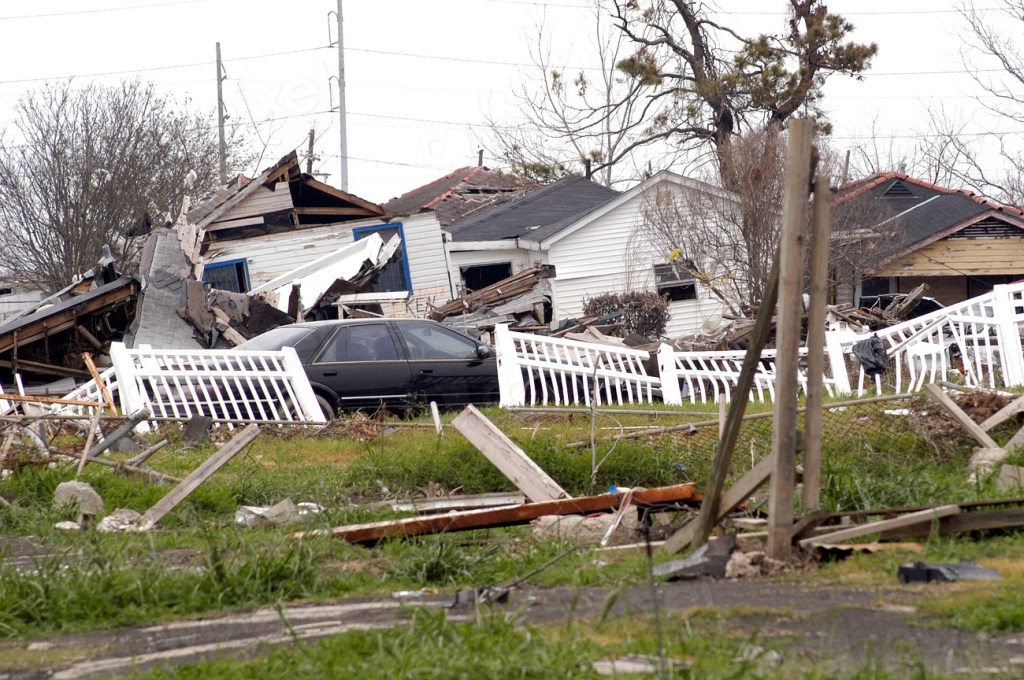
    The documentaries Hurricane Katrina: Race Against Time (Hulu) and Katrina: Come Hell and High Water (Netflix) are searing indictments as much as they are testaments to survival. They tell the story of a singular city—New Orleans, a cultural jewel—betrayed and abandoned by its own nation.

    Told through the voices of those who endured the storm in 2005, these films lay bare a fourfold sin against the people of New Orleans.

    First sin: red-lining. Decades of discriminatory housing policies corralled Black families into neighborhoods below sea level—neighborhoods left exposed to catastrophe—while white families secured higher, safer ground. Yet out of this coerced geography bloomed community, kinship, jazz, art, and a way of life so distinctive that New Orleans became not just a city but a state of mind.

    Second sin: neglect. The protective marshlands were carved away, the levees shoddily built, the safeguards ignored. What should have been natural resilience was dismantled piece by piece, until a storm became a man-made massacre.

    Third sin: abandonment. When the waters rose, thousands of citizens waited for rescue that never came. They suffered hunger, thirst, illness, despair. Bureaucracies paralyzed by incompetence and poisoned by political rivalry left them stranded—leaders too intent on humiliating one another to save lives.

    Fourth sin: defamation. Media outlets, infected with racism, painted Black survivors as looters and criminals while white survivors were depicted as resourceful and brave. Rumors of sniper fire and marauding gangs turned aid missions into militarized standoffs, with the National Guard pointing rifles at the very people they were sent to save. These lies fueled white vigilantes who hunted Black residents as if the collapse of law gave them license to kill.

    This fourfold betrayal is almost unbearable to watch, yet threaded through the grief is a resilient beauty: the music, the food, the language, the humor, the love of place that make New Orleans irreducible. Katrina remains one of America’s most shameful chapters—but also a reminder that the soul of New Orleans is larger than its wounds.

  • The Keystone Habit: How One Change Rewires the Rest of Us

    The Keystone Habit: How One Change Rewires the Rest of Us

    Charles Duhigg’s The Power of Habit: Why We Do What We Do in Life and Business argues that vice, self-indulgence, and addiction operate on a neurological level. If we can deliberately rewire those pathways, we can free ourselves from much of our self-destructive behavior. Written more than a decade ago, the book anticipates the same themes that now surface in places like Reddit’s “Nofap” movement, where porn addicts admit their compulsions damage relationships and stunt growth, so they commit to abstinence—except with their partner. Anna Lembke’s Dopamine Nation makes a similar case, charting how dopamine overload leads to the inevitable crash of pleasure into misery.

    Duhigg opens with Lisa, an addict whose husband left her, likely exhausted by her behavior. When she finally saw how deranged her habits had become, she had the spark to change. She replaced her old compulsions with exercise and healthy eating. It’s the familiar “rock bottom” story: you face yourself stripped of illusions. Or as Marc Maron puts it, “Life hands you your ass on a stick.” Only when pride dissolves are you ready for answers.

    As someone who has wrestled with addictions and grown up with alcoholic parents, I read this story with recognition. The researchers studying Lisa’s brain found something striking: her old neural patterns were still visible, but they had been overridden by new ones. The impulses hadn’t vanished—they’d simply been crowded out. And while she overhauled many habits, it was quitting smoking that made the real difference. Duhigg calls this a “keystone habit.” In his words: “By focusing on one pattern…Lisa had taught herself how to reprogram the other routines in her life, as well.”

    The same principle applies to organizations: find the keystone habit, nurture it, and the ripple spreads across the whole system.

    I learned another useful term from the book: “behavioral inhibition.” It resonates painfully, because from 7 to 10 p.m. I suffer relentless food cravings. By then I’ve usually reached 2,300 calories, and eating more destroys my calorie deficit. But television sabotages my self-control—everywhere I look, people are drinking rosé, eating pizza, ice cream, carrot cake. Triggers, triggers everywhere. If I hid in an igloo, maybe I’d get ripped abs, though the view would be grim.

    Still, I’ve seen the power of a keystone habit. My mornings begin with coffee and buckwheat groats mixed with protein powder. Then I study a book and take notes, as I’m doing now. If I skip this, I get swallowed by the Internet, a dopamine carnival of watches, consumer temptations, and FOMO. I unfollow Instagram “safari” channels that inevitably mutate into half-naked influencers shaking their butts in gym close-ups. Once seen, such images can’t be unseen. Now I choose carefully.

    Replacing bad habits with good—writing, piano, exercise—changes not only my productivity but my temperament. I become friendlier, more patient with my family. But when I binge on Internet dopamine, I snap at people. I become “that guy.”

    The contrast reminds me of something Dallas Cowboys wide receiver Michael Irvin confessed in America’s Team: “We are all imperfect people. And each of us has at least two people in all of us; the person you show everybody and that person you never show to anybody.”

    We curate public personas and believe our own polished lies, all while a darker self hides in the shadows. But once life hands you your ass on a stick, integrity becomes your only way forward. Rewiring the brain isn’t just a neurological project. It’s a moral one.

  • Weight Loss as Blood Sport: The Dark Legacy of a TV Hit

    Weight Loss as Blood Sport: The Dark Legacy of a TV Hit

    I just finished Netflix’s docuseries Fit for TV: The Reality of The Biggest Loser, and let’s be clear: what passed for “inspiration” was little more than a gulag in spandex. Vulnerable, overweight contestants were paraded into a sadistic bootcamp where caffeine pills stood in for nutrition, starvation was the weight-loss plan, and bleeding urine was treated as a milestone. Their bodies were ground down in training regimens that no orthopedic surgeon in their right mind would sanction.

    The cruelty wasn’t a side effect; it was the business model. NBC made hundreds of millions while America shoveled popcorn, mesmerized by the weekly spectacle of people being berated, broken, and publicly humiliated—all in the name of dropping a few pounds on a scale. It wasn’t education. It wasn’t health. It was Schadenfreude masquerading as wellness, a moral strip show where the only thing thinner than the contestants was the producers’ conscience.

    Of course, the spin was that the show “raised awareness” about obesity. The reality? Obesity rates ballooned from 25% to 45% since its debut. The real awareness raised was that Americans harbor a deep hostility toward fat bodies and an insatiable appetite for televised cruelty. We got our fix of humiliation, and then went straight back to our drive-thru dinners.

    Two decades later, the docuseries hands the microphone back to the scarred veterans of that circus. Some regained the weight. Others shed it with Ozempic and other GLP-1s. What unites them isn’t their waistline but their clarity: they now see the show as the exploitation racket it always was. Listening to their hard-won wisdom—painful, sardonic, and damning—was the main reason the docuseries was worth watching.

  • Stepford Dreams and Other Diseases

    Stepford Dreams and Other Diseases

    “Our culture denies the nature of reality,” therapist Phil Stutz declares in one of his chapters from Lessons for Living. In denial, we drift through a fantasy world—a frictionless utopia where everything turns out perfectly with minimal effort, unpleasantness is airbrushed away, and immediate gratification flows like tap water. If you fail to thrive in this Instagram-ready Eden, well, clearly it’s your fault.

    Reading Stutz’s dissection of this mythical paradise—one that entitlement and cleverness supposedly guarantee—I’m reminded of family vacations to Hawaii. The trip’s curated perfection feels ripped straight from pop culture’s catalog of false realities. I start imagining myself as a minor Polynesian god, which makes returning home to laundry, bills, and chores feel like divine demotion.

    Stutz’s mission is to break our addiction to the idea that life is a permanent Hawaiian vacation. His blunt truth: life is pain and adversity, the future is uncertain, real accomplishments require sweat and discipline, and—brace yourself—you are not special enough to escape these rules. These principles don’t expire.

    This is not, Stutz insists, a gospel of misery. Love, joy, surprise, transcendence, and creativity are woven into life’s fabric—but so are conflict, loss, and uncertainty.

    Why, then, do we cling to the fantasy? In part, because the media keeps showing us people who appear to have escaped reality’s terms. Movie stars and influencers are lit like Renaissance portraits, perfectly curated, radiating supreme happiness. Their romances are operatic, their sex lives cinematic. They seem universally adored and gracious enough to share the “secrets” of their bliss. They look as if they’ve broken free of pain, adversity, and doubt—and they promise we can do the same if we just buy the right products and mimic their lifestyle.

    It doesn’t matter where you sit in the social pecking order; the fantasy assures you can ascend to the influencer’s Olympus.

    This is a mass delusion. Stutz writes, “When everyone acts as if a fantasy is real, it begins to seem real.” But for you, it never arrives. Your bank account wheezes. Your waistline ignores your best intentions. Your body refuses to flatter you. Your parenting is a gamble at best. Your life often feels like it’s running you.

    Because you believe in the fantasy, you think you’re defective. You look in the mirror and mutter, “Loser.”

    That’s the invoice for believing in perfection: when it inevitably collapses, you’re left with self-loathing. Stutz warns, “The problem is that the other group has become the standard, and self-esteem starts to depend on being like them. An adverse event feels like something is happening that is not supposed to be happening. The natural experiences of living make you feel like a failure.”

    His solution? Total reorientation. Replace the static images of perfection—what I call “Magical Moments Frozen in Time”—with the truth: life is a messy, moving process. Stutz explains: “The ideal world with the superior people is like a snapshot or a postcard. A moment frozen in time that never existed. But real life is a process; it has movement and depth. The realm of illusion is an image, dead and superficial. Still, these images are tempting. There is no mess in them.”

    If media has brainwashed us into aspiring to be perfect Stepford spouses, how do we reject these static ideals and embrace life in its raw, dynamic, and inconvenient fullness? Stutz says we must accept this: “Life is made up of events. The only real way to accept life is to accept the events that comprise it. And the flow of events never stops. The driving force of the universe reveals itself via the events of our lives.”

    This flow connects us to life’s energy, making us fully alive. The downside? It leaves us feeling small, exposed, and out of control. The false paradise promises to free us from that vulnerability, but in doing so, it severs our connection to life’s current and leaves us in “spiritual death.”

    Mental health, Stutz argues, depends on accepting this unstoppable flow of events. He compares it to good parenting: “It is not good enough to just show up. You need a point of view and a set of tools. It is impossible to deal with events constructively without being prepared.” If you’re clinging to Magical Moments Frozen in Time, you’re unprepared when reality slaps you.

    The preparation, he says, is a philosophy—one that lets you redefine negative events. Stutz writes, “Preparing yourself with a philosophy enables you to change the meaning of a negative event. With a specific philosophy, you can aggressively change your perception of events.” That philosophy rests on three pillars:

    • Adverse events are supposed to happen; they don’t mean you’re broken.
    • Every negative event is a growth opportunity.
    • Spiritual strength matters more than positive outcomes.

    When you accept life as a series of crises, you stop throwing toddler-level tantrums every time something goes wrong. People addicted to Magical Moments tend to overreact to challenges—often making their reaction worse than the original problem.

    Reading this, I recall when my wife and I had twins fifteen years ago. She handled meltdowns with calm; I met a child’s tantrum with one of my own. A therapist told me, “When you get angry, you go zero to ten in under a second, and your body chemistry changes in a way that fills the room with toxic energy. That escalates your children’s tantrums. Your wife, on the other hand, stays calm. She has a calming effect on the twins. You need to learn how to calm down in a crisis.”

    Stutz is right. Being a spiritual person means maturing as a parent. Being a devotee of Magical Moments Frozen in Time means being a spoiled child yourself—an extra in Idiocracy. A society enthralled by fake perfection can’t sustain itself; it’s destined for regression, chaos, and entropy.

  • The French Toast Zone and Other Dangerous Places

    The French Toast Zone and Other Dangerous Places

    Recently, I watched the new King of the Hill, where the gang has aged into the gentle patina of later life. In one scene, Hank, Peggy, and Bobby are seated at the kitchen table, devouring what looked like French toast or chocolate chip pancakes—something golden, sweet, and unapologetically bad for you. It was an ordinary family breakfast, the kind you imagine smelling from three houses away. Watching it felt like slipping into a warm bath of contentment. These were normal people, enjoying themselves, at ease in the sacred space I call the French Toast Zone.

    The French Toast Zone is the place where life is easy, breakfast is decadent, and you’re at peace with your waistline, your arteries, and your eventual mortality. But step into the biomarker minefield—calories counted, protein ratios calibrated, insulin spikes plotted like military campaigns—and you’re in the Restriction Zone. The mood shifts. Every bite is an act of negotiation with your cholesterol, your bathroom scale, and the grim actuarial math of your lifespan.

    Real life, of course, is not an all-inclusive stay in either zone. Most of us shuttle back and forth—half saint, half sinner—forever bargaining between the delights of German chocolate cake and the promise of three extra years of foggy-eyed longevity. Too much denial, and you die having lived as a monk in a bakery you never entered. Too much indulgence, and you’re trapped on the hedonic treadmill, sprinting after pleasures that get smaller the closer you get.

    Some people manage this dance effortlessly. They live in homeostasis, exercising moderation as naturally as breathing. I have never been one of these blessed creatures. As a teenage bodybuilder who saw biceps as salvation from low self-esteem, I learned early that moderation was for other people. My internal wiring is a one-way circuit from obsession to burnout and back again. I am, in short, Extreme Man.

    Extreme Man has his own archetype—a tragic, sweaty figure charging at his chosen folly until he mutates into something grotesque. Then comes the epiphany, the Damascus jolt that scrambles his molecules and sends him hurtling into a new life mission. It could be religion, music, bodybuilding, stamp collecting—doesn’t matter. Once the lightning strikes, moderation becomes an obscenity. He must convert the world.

    When I was a teenage Olympic weightlifter, I preached squats with the fervor of a street-corner prophet, convinced proper form could change lives. My audience—bewildered, politely nodding—failed to share my revelation. Some Extremes get written off as harmless cranks. Others, gifted with charisma, build religions followed by millions.

    The homeostatic types are often immune to these evangelists. They are already content. But for those of us who never knew balance, the siren call of radical change is intoxicating. We cling to the hope that the right transformation will lift us out of our malaise.

    Neither camp is wholly admirable. The balanced can model moderation—or smug mediocrity. The Extremes can inspire reinvention—or display unhinged egotism. The truth is in the messy middle, where both tendencies collide, and if you’re lucky, you learn from both without being consumed by either.

  • Ghosts at Pearl Harbor: A Morning of Reverence and Unease

    Ghosts at Pearl Harbor: A Morning of Reverence and Unease

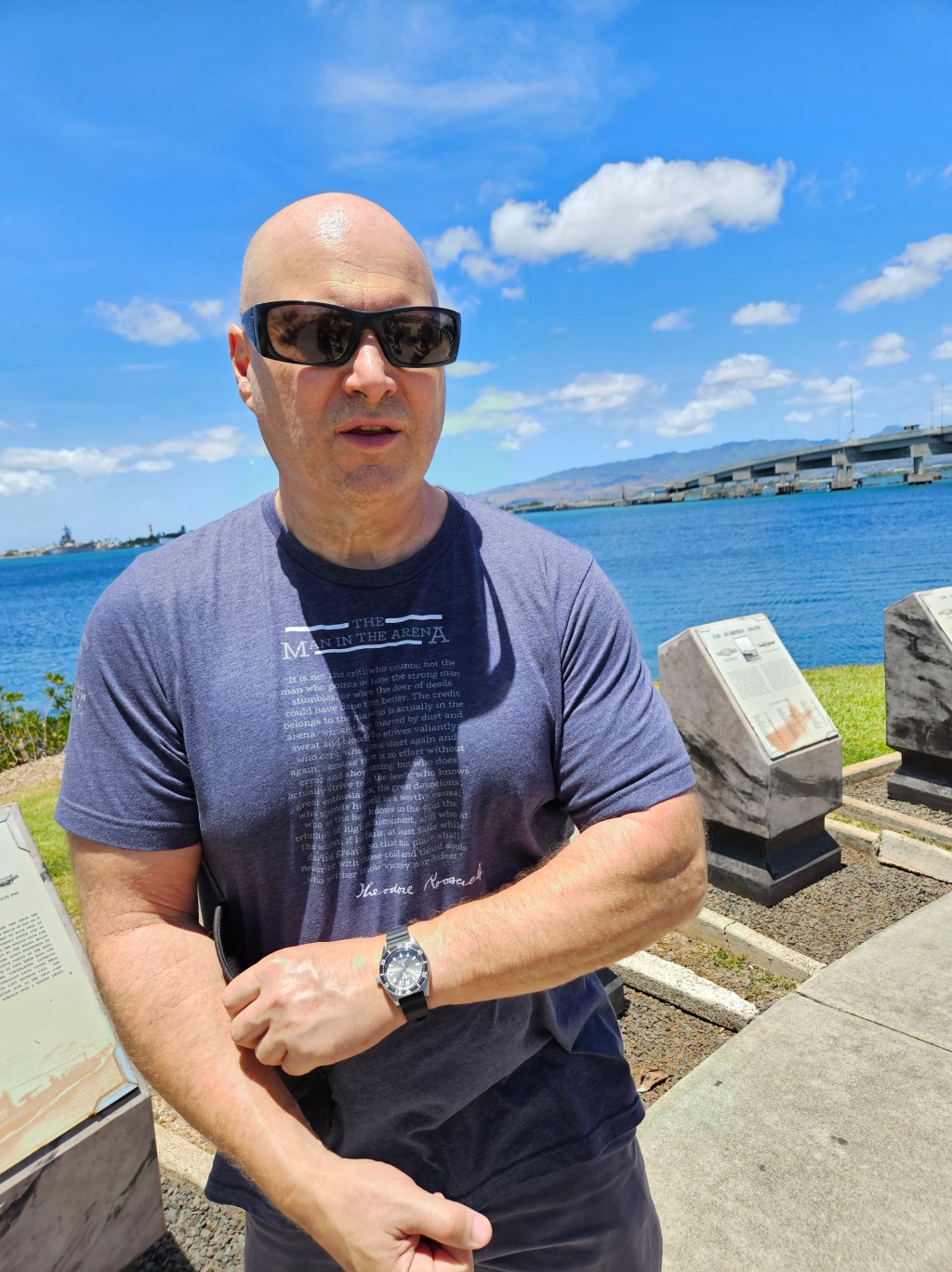
    Yesterday we drove thirty minutes from the Embassy Suites in Waikīkī to the Pearl Harbor Memorial, where solemnity hangs in the air like thick humidity. The journey from beachfront ease to battlefield remembrance felt immediate and irreversible.

    Inside the visitor center’s theater, a National Park spokesperson stood behind a lectern—short, compact, dark-haired, with the confident charisma of someone who has delivered this message a thousand times, and still means every word.

    “You’re not on a must-see tour,” he said, with an edge of reprimand. “You’re visiting a mass military gravesite. This is more than a military tragedy—it’s familial. Thousands of children lost their parents that day. That grief doesn’t expire. It echoes. Please treat this place with respect—not as a TikTok backdrop.”

    I thanked him on the way to the dock. His words stripped away any residue of tourism and replaced it with reverence.

    We boarded a navy-operated boat alongside a quietly murmuring mix of global visitors—Germans, Japanese, mainland Americans, Australians. The boat was packed, but no one jostled or joked. You could feel the history pressing in from all directions.

    At the memorial itself, I tried to read the names etched into white marble. I tried to focus. But I was distracted—haunted—by two figures lingering at the edge of my vision.

    They were brothers, unmistakably. In their thirties, pale as winter ash, with dirty-blond hair and heads shaped like crude pyramids. Their eyes—almond-shaped, off-kilter—glinted with something sharp. Their teeth were crooked and small, the kind that suggest years of silent snarling. They were so wiry, so sunken, that even their frosted skinny jeans hung like surrender flags around their twiggy legs. Nicotine-stained, post-industrial, almost spectral.

    They spoke in rapid whispers—something Slavic, maybe Czech or Slovak—always leaning close, always glancing. They radiated the kind of anxious secrecy that suggested they were either up to something or simply never learned how not to seem that way.

    Everyone avoided them. Even when we were asked to scoot together on the boat to make room, the brothers sat untouched—shunned like they carried some forgotten plague. They were the kind of figures who seem pulled from the margins of a Dostoevsky novel or the casting list of a horror film.

    I can’t stop thinking about them. What drew them to Pearl Harbor? What shadow were they following? Their presence felt less like tourism and more like reconnaissance. In another life, in another medium, they could be characters in a Safdie brothers film—like John the heavy from Uncut Gems, who wasn’t an actor at all, just a force of nature discovered on the street.

    You can’t invent that kind of menace. You can only observe it, marvel at it, and wonder: what story did they bring to the memorial, and what story did they take away? And why in my heart do I see them less as tourists and more as criminals embarking on some kind of scheme? 

  • Your Brain Is the Checkout Aisle Now

    Your Brain Is the Checkout Aisle Now

    Recently, Sam Harris told Josh Szeps something obvious but still worth repeating: since around 2009, social media has been conducting a mass psychological experiment, and the results have been, in a word, catastrophic. The rise of conspiracy junkies, rage-peddling charlatans, and democracy’s steady unraveling isn’t a glitch—it’s the inevitable outcome of letting the world’s worst instincts marinate in an algorithmic stew.

    Just now, while scrolling through YouTube, I found myself wading through a sewer of clickbait: miracle diet hacks, steroid-fueled fitness influencers, and close-up footage of animals devouring each other in 4K. And in that moment, I was struck by a flash of analog nostalgia: the checkout aisle at a 1970s grocery store.

    Remember those? Lined with The Star, The National Enquirer, and Weekly World News. Aliens abducting Elvis. Ten-minute abs. The Pope giving interviews to ghosts. They were grotesque, hilarious, and disposable. Everyone knew they were trash. They were meant for the brain-dead—gossipy or gullible folks who had nothing better to read while waiting for someone to bag their iceberg lettuce.

    But now? Now the tabloids have gone digital, evolved, and metastasized. The checkout aisle never ends. It follows us everywhere, lives in our pockets, and demands not just our attention but our belief. The zombies from the Enquirer covers have entered the bloodstream of public discourse. They’ve traded their tinfoil hats for YouTube channels, Substacks, and monetized paranoia.

    And here we are—standing on the edge, wondering if the culture can somehow hit the brakes, or if we’ve already gone over the cliff in a flaming minivan full of QAnon bumper stickers.

  • Return to the Womb

    Return to the Womb

    I’m three months shy of turning sixty-four, which means I’m old enough to know better and still young enough to entertain delusions. This is a warning to the under-sixties: prepare yourselves. At some point in your late fifties, strange desires start slithering into your psyche like vines through the cracks of a neglected greenhouse. With every new creak of the knees and fresh batch of funeral notices, a part of you will yearn for what I call the Return to the Womb.

    No, not literally—though if you could slide back into a warm amniotic bath and unplug the Wi-Fi, you just might. I’m talking about a psychological regression: the desperate, half-sane longing to be swaddled in tropical heat, to dissolve into mango-scented breezes, and to vanish into a seaside stupor under a drizzle that feels vaguely divine. The dream? To marinate in comfort, far from the cacophony of deadlines and dental appointments, in a climate designed by God for the perpetually tired.

    I was born in Gainesville, Florida in 1961, and to this day I remember the fetid perfume of alligator swamps—a heady, sulfuric funk that now strikes me as oddly comforting. Like Vicks VapoRub for the soul. Is it any surprise that I scroll Zillow listings for barrier islands in South Carolina, Georgian marshlands, and steamy Floridian enclaves? I’m not looking for a home. I’m looking for a feeling—a fetal, lizard-brained feeling that I’ve convinced myself might still be hiding in the heat.

    But here’s the rub: I don’t trust this impulse. This Return to the Womb isn’t a noble call to simplicity. It’s a siren song, crooned by the dark twin of the Life Force—the same demon that tells you to skip your workout, order DoorDash, and stream ten hours of King of the Hill in a comfort-food trance. It whispers of paradise, but it’s peddling paralysis. It’s not vitality. It’s a prelude to decay, dressed in Tommy Bahama and sipping a piña colada.

    Writers like Steven Pressfield and Phil Stutz have been wise to this force for years. Pressfield calls it the Resistance. Stutz names it Part X. Adam Smith, bless his powdered wig, simply called it the need for “self-command”—the daily decision to wrest meaning from entropy, to choose virtue over sloth, action over inertia.

    During the pandemic lockdown, I got a taste of this regression. Sitting masked in my accountant’s office in February 2021, she asked if I was thinking of retirement. Was I thinking of it? Lady, I was living it—in pajamas, in slow motion, surfing real estate listings for stilt houses on Key Biscayne while sipping overpriced Nespresso and pretending buckwheat groats were the secret to immortality. My body had synchronized with the rhythm of a hot tub. I wanted nothing more than to stay submerged.

    Four years later, I still want it. I still want the warm drizzle, the midnight ocean swims, the faint smell of coconuts mingled with chlorine and sea rot. And yet—I know. I know. I know that the moment I submit to this dream of endless hammock-lounging is the moment the soul begins to curdle.

    Phil Stutz, in Lessons for Living, writes about Father Time as a pitiless, judgmental figure—not the kindly old man of greeting cards, but a stern cosmic accountant. He doesn’t care how many steps you walked or how clean your macros were. He wants to know: Did you spend your time on Earth doing something that mattered?

    As someone who’s worshipped at the altar of diver watches for two decades, who has pondered the geometry of bezels and the metaphysics of lume, I took this personally. Time is not just money. Time is judgment. Time is an indictment.

    And the Return to the Womb? It’s a slow lobotomy in paradise. It’s “brain rot” dressed as a beach vacation. It’s the comforting lie that you’ve earned an escape from purpose. But the truth is, the older I get, the stronger this impulse grows. And that, frankly, terrifies me.

    Still—and here’s the kicker—as I type this, I want it. I want the coconuts. I want the warm rain. I want the mangoes. I want the beach walks at twilight where nothing hurts and no one needs anything from me.

    We are mad creatures, aren’t we? Our intellect sees the trap. Our soul feels the pull. And some part of us, no matter how wise or weathered, still wants to disappear into the dream.