Blog

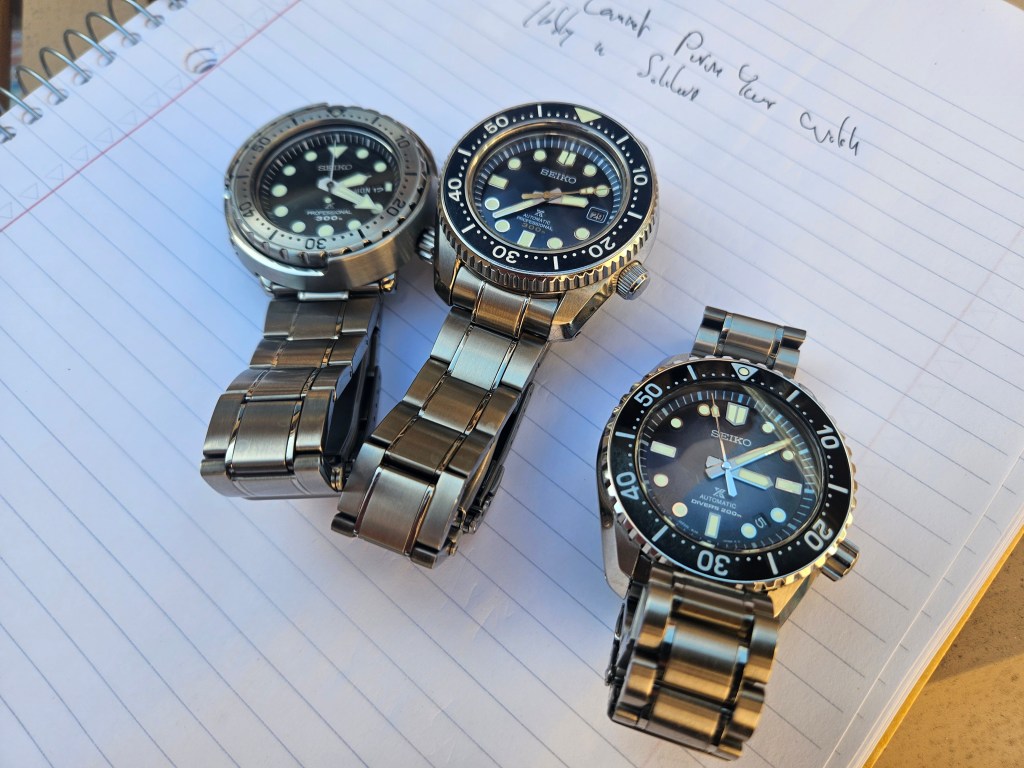
  • The Watch Obsessive’s Imaginary Audience

    The Watch Obsessive’s Imaginary Audience

    Every watch obsessive has asked himself the question.

    If I were on television tonight, what would I wear?

    Not what would he say. Not whether he would be interesting, articulate, or memorable.

    No—the real question is the watch.

    Would it be bold or understated? Steel or titanium? Something iconic enough to signal taste, but restrained enough to suggest confidence? Would the case slip cleanly beneath the cuff? Would the host notice? Would the camera catch the glint at just the right angle?

    And most important: would the watch help create the impression—the myth—that this was a man worth watching?

    There is, of course, a problem with this line of thinking.

    He is not going on television.

    No producer is outside his house. No late-night booker is reviewing his résumé. There is no green room. No makeup artist. No segment titled Author and Cultural Commentator Discusses Bezel Alignment.

    And yet the fantasy persists.

    After decades of watching politicians, actors, and financial pundits subtly brandishing their wrists on camera, the association is burned in: television is the natural habitat of the watch. The wrist, after all, was built for close-ups.

    Soon a strange dissatisfaction sets in. Wearing a watch in ordinary life begins to feel incomplete. The object has no audience. No lighting. No narrative context. A diver at the grocery store. A GMT at the dentist. A chronograph while buying paper towels.

    The stage is missing.

    And still, he plans.

    This is Broadcast Readiness Syndrome—the quiet, persistent conviction that one must remain camera-ready at all times, because a moment of sudden visibility might arrive without warning. Today a faculty meeting. Tomorrow: a viral clip. Tonight, obscurity. Tomorrow, perhaps, Colbert.

    He knows this is irrational. He reminds himself daily.

    You are not on television.
    No one is looking.
    Relax.

    The logic changes nothing.

    The watches are still chosen with an imaginary audience in mind. The cuff is still adjusted. The wrist is still rotated, ever so slightly, as if a camera might be hiding near the coffee machine.

    Then comes the dream.

    He is backstage. The suit is perfect. The lights are warm. The host smiles and gestures him toward the chair. The band plays a tasteful sting.

    He sits.

    The conversation begins.

    Halfway through the first answer, he glances down.

    His wrist is bare.

    No watch.

    This is the true nightmare of the watch obsessive—not public embarrassment, not a failed joke, not an awkward interview.

    Exposure without branding.

    And he wakes up, heart racing, already thinking about what he’ll wear tomorrow.

    Just in case.
  • When Self-Improvement Makes Your Watch Addiction Worse

    When Self-Improvement Makes Your Watch Addiction Worse

    Here is an unpleasant truth about watch addiction: you don’t eliminate it.
    You replace it.

    Let that sit for a moment.

    Now here’s the second unpleasant truth: self-improvement—the very thing you hope will save you—may actually make your watch addiction worse.

    Consider Exhibit A: December, 2017.

    I was at a Christmas party feeling miserable. Two hundred forty-five pounds. Feet aching. Energy low. I found myself talking to a celebrity chef and former powerlifter—the kind of man who treats body composition like a moral philosophy. His advice was simple: lose the weight.

    So I went to war.

    Yogurt for breakfast. Protein and salad for lunch. Protein and vegetables for dinner. At night, a tiny apple—my “satiety apple,” the culinary equivalent of a ration in a survival bunker.

    Eight months later, I was down forty-five pounds.

    At 200, I wasn’t lean so much as economized. Sitting on a piano bench hurt because the butt padding was gone. But I looked sharp. Very sharp.

    And that’s when the trouble began.

    The fitness journey was supposed to quiet my watch obsession. Instead, it fed it. The slimmer I became, the more I noticed how watches looked on my wrist. I wasn’t just wearing timepieces anymore. I was curating a silhouette.

    Health had quietly mutated into performance.

    This is the Identity Optimization Spiral—the moment self-improvement stops being about function and becomes aesthetic management. Body, clothes, watches, posture, lighting—everything coordinated into a single ongoing presentation of the self.

    I told myself I was pursuing discipline.
    What I was really pursuing was approval.

    And approval requires accessories.

    So the watches multiplied—not because I needed them, but because my “new body” deserved the right visual punctuation.

    The story, of course, did not end in triumph. Weight rarely leaves permanently; it negotiates. Mine drifted back upward over time—not all the way, but enough to remind me that maintenance is not a phase. It’s a permanent job.

    And that’s the real parallel between dieting and watch restraint.

    Both run on willpower.
    Both require constant vigilance.
    Both demand energy.

    Imagine riding an exercise bike at full speed, indefinitely. You can do it for a while. You sweat. You grind. You feel heroic.

    Then you slow down.

    Then you stop.

    And the moment you stop pedaling, gravity returns. The diet loosens. The browsing begins. The credit card warms up. Worse, the exhaustion from all that heroic restraint makes the relapse stronger.

    This is the cruel math of self-control: willpower is a fuel tank, not a personality trait.

    The more you burn, the more violently you eventually refuel.

    Looking honestly at addiction—whether to watches, food, or the fantasy of perfect self-management—is humbling. It suggests something most improvement culture refuses to admit:

    We are not systems to be optimized.
    We are appetites trying to manage other appetites.

    Sometimes we succeed.
    Sometimes we substitute one obsession for another.
    And sometimes the search for the cure becomes just another addiction wearing a healthier costume.

  • Life Inside the Watch Relapse Cycle

    Life Inside the Watch Relapse Cycle

    For the watch obsessive, the most seductive experience is not the purchase.
    It’s the quiet and the possibility that his addiction is over.

    Every so often, something strange happens. The mind clears. The forums go unread. The YouTube algorithm loses its grip. The collection—miraculously—feels complete. No gaps. No missing category. No late-night searches for “best travel GMT under $5,000.”

    For a few fragile days, he wonders:

    Is this it?
    Am I… cured?
    Is this what normal people feel like?

    This state—call it Horological Remission—can be triggered by real life intruding. A demanding project at work. A family crisis. A trip to Maui where the ocean is more compelling than ceramic bezel technology. Or simple immersion in a good show—say, Fallout, where Walton Goggins and Kyle MacLachlan are busy navigating the apocalypse while, for once, the obsessive is not thinking about lug widths.

    During these rare intervals, he lives like a civilian. He checks the time without evaluating the watch. He moves through the day unaccompanied by reference numbers. He almost forgets that the phrase “micro-adjust clasp” exists.

    Hope appears.

    It never lasts.

    Because the obsession does not disappear. It waits.

    Somewhere in the unconscious lives the Octopus—patient, silent, its tentacles coiled around the deeper circuitry of attention. All it needs is a spark. A visual. A passing image. A drop of lighter fluid.

    Maybe it’s a scene in Homeland. A lean operative checks his watch. The obsessive leans forward.

    That looks like a Mudman.

    Now the cascade begins.

    Model number search.
    Variant comparison.
    Sapphire or mineral?
    Then: Full Metal series.
    Then: silver vs. black.
    Then: forum threads debating coating durability in “real-world tactical conditions,” most of which involve typing at a desk.

    This is Trigger Cascade—the rapid cognitive chain reaction in which a single exposure detonates into hours of research, comparison, and low-grade acquisition planning.

    Meanwhile, Homeland continues.

    The obsessive has no idea what’s happening.

    He cannot explain the plot, the characters, or the geopolitical stakes. But he now possesses a working knowledge of shock resistance standards across three generations of G-Shock metallurgy.

    This condition is known as Narrative Displacement Syndrome: the loss of engagement with the original activity as attention is hijacked by watch research, resulting in the peculiar outcome of knowing the reference number but not the story.

    At some point, awareness returns.

    He looks up from his phone. The episode is over. The room is quiet. Ten browser tabs glow like evidence.

    The Octopus has him again.

    In that moment, he experiences Relapse Lucidity—the painful clarity of recognizing the pattern while continuing to scroll.

    He may even feel cinematic about it. Like Charlton Heston on the beach at the end of Planet of the Apes, shaking his fist at the ruined monument of his attention span.

    You maniacs! You did it!

    Then another thought appears, calm and practical:

    If this is a relapse, should someone be filming me as I do my Charles Heston impersonation? And if that’s the case, should I be wearing the Black Bay… or the Planet Ocean?

    And just like that, the cycle resets.

  • Why I Bought the G-Shock Frogman

    Why I Bought the G-Shock Frogman

    If you’re buying the G-Shock Frogman GWF-1000-1JF, you need to abandon one illusion immediately: the fantasy that you are a solemn, high-minded “serious watch buyer.”

    Yes, the Frogman is a legitimate tool—ISO-rated, solar-powered, atomic-syncing, built like a bunker. It tracks tides. It handles world time. It could probably survive a minor meteor event.

    But let’s be honest.

    The Frogman is not a symbol of horological gravitas.
    It is a giant, unapologetic wrist toy.

    And that’s the point.

    This is not the watch of a restrained aesthete sipping espresso while discussing movement finishing. This is the watch of a twelve-year-old who never lost his appetite for adventure. The Frogman doesn’t whisper refinement. It shouts, Let’s go break something. It belongs just as comfortably on your wrist while you’re teaching rhetoric as it does while you’re wandering the house in gym shorts and a robe, pretending you might dive into the Pacific at any moment.

    So stop apologizing.

    Look at the thing. Smile.

    You’ve spent years marinating in the mythology of seriousness—heritage, prestige, restraint, the quiet dignity of brushed steel. Enough. Watches were never meant to be solemn artifacts of personal identity. They were meant to delight the eye, engage the hand, and give you a small surge of pleasure every time you check the time.

    What you’re practicing now is Gravitas Shedding—the psychological act of discarding the heavy costume of the “serious collector” and admitting a simple truth: if the hobby isn’t fun, it isn’t sustainable.

    Function still matters, of course. The watch should be well made, reliable, and usable. But once those boxes are checked, joy becomes the real criterion. The worst fate for any watch isn’t inadequacy—it’s boredom.

    Many enthusiasts have told me every collection needs at least one G-Shock for exactly this reason. A pressure valve. A reminder that watches don’t have to be precious.

    So after fifteen years of on-again, off-again longing, I finally did it.

    Last month I checked Sakura and saw the Frogman was out of stock. Prices on eBay were absurd. I assumed the window had closed. Case dismissed. Desire filed away.

    Then it reappeared.

    $440.
    $506 after shipping.

    Decision made.

    Now I have a new assignment: learn the dual-time function and actually use the thing when I travel. If I’m going to own a watch that can track the world, I might as well let it earn its keep.

    And I’ll admit it—I’m looking forward to the arrival more than I expected.

    I own beautiful mechanical divers. But when I picture myself in front of a classroom, talking about argument structure and logical fallacies, I don’t see a polished luxury piece on my wrist.

    I see the Frogman.

    Big. Black. Slightly ridiculous. Completely confident.

    Will it become my daily watch?
    Will it replace the others?
    Will it become my signature?

    That’s the experiment.

    The watch is on the way.

    We’ll see what happens.

  • G-Shock University: Studying for the Frogman Final Exam

    G-Shock University: Studying for the Frogman Final Exam

    My next personal project is to graduate from what I now call G-Shock University. Some people study Spanish. Others learn Italian. I, apparently, am trying to become conversational in Mode Logic.

    This is not my first attempt. Over the past twenty years, I’ve owned half a dozen G-Shocks, and every time the same thing happened: I opened the manual, felt like a tourist staring at a subway map written in hieroglyphics, panicked, and eventually sold or gave the watch away. I didn’t own the G-Shock. The G-Shock owned my anxiety.

    Not speaking the language of modes has been humiliating—like a prizefighter getting knocked out before the announcer finishes his name. But this time I want a comeback. This time I want fluency. Specifically, I want to master the Module 3184, the operating system inside the watch I’ve coveted for more than a decade: the digital Frogman GWF-1000.

    I don’t own the Frogman yet. First, I must earn it. I’m currently studying the operating guide like a nervous graduate student preparing for orals. I suffer from Mode Impostor Syndrome—the uneasy conviction that I am intellectually unqualified to own a feature-rich digital watch, combined with the quiet terror that someone will ask, “How do you switch time zones?” and I’ll freeze like a deer in tactical headlights.

    The interface is simple in theory: four buttons.
    Top left: A.
    Top right: B.
    Bottom left: C.
    Bottom right: D.

    Simple. Elegant. Also, somehow, psychologically menacing.

    Button C scrolls through the modes—the linguistic equivalent of changing verb tenses. My goal is modest. I want Timekeeping Mode set to LAX as my home city. I want World Time Mode so I can toggle easily when traveling to Miami, Cabo, or Maui. Diving logs, tide data, countdown timers, alarms—these are elective courses. I am here for conversational proficiency, not a doctorate.

    The manual’s tone is reassuring. Every complex procedure begins with a comforting phrase: First Thing You Should Do.

    The first thing, apparently, is to sit near a window. Already this feels less like a watch and more like a houseplant.

    From Timekeeping Mode, I hold A until the city code flashes. Then D moves east, B moves west, and eventually I land on LAX. Press A again to exit. Supposedly this locks in the Home City and sets the time.

    Supposedly.

    Here is where my second condition emerges: Mode Anxiety—the persistent fear that one wrong press will erase home time, activate some obscure subroutine, or send the watch into a digital wilderness from which it may never return.

    Page 6 introduces the Dual Time display. Press A to toggle between date and the selected World Time. This raises a terrifying question:
    Am I viewing another city… or accidentally reprogramming my home city to Miami?

    The last thing I need is to wake up in Torrance and discover I’m living psychologically in Florida.

    Manual time setting is even more daunting. Twelve variables: city code, DST, 12/24 format, seconds, minutes, hours, illumination duration, power saving, tone, day, month, year. This is no longer watch ownership. This is municipal governance.

    One setting, however, brings joy: button tone. Silence is essential. In Timekeeping Mode, hold A, press C nine times, toggle to Mute with D, press A to exit. At last, a victory. The watch will no longer beep like a microwave with opinions.

    Other questions remain.
    Do I need to manage DST, or will the radio signal handle it?
    How exactly do I move cleanly between Home and World Time without triggering a digital incident?

    At this point, I suspect what I really need is a one-hour Zoom session with a Professor of G-Shock Studies.

    Because this is no longer about a watch. This is about conquest.

    Like Ahab stalking the whale, I want to master the module and earn the right to wear the Frogman with confidence. What I’m really fighting is Frogman Qualification Anxiety—the belief that ownership of a high-end G-Shock must be earned through technical mastery, as if the purchase were a certification exam rather than a retail transaction.

    If I pass, I won’t just own a watch.

    I’ll finally be fluent.

  • Beauty Isn’t Enough: The Moment Desire Meets Reality

    Beauty Isn’t Enough: The Moment Desire Meets Reality

    We are, most of us, walking around with a quiet fracture. Something missing. Something we believe can be restored if only we find the right object, the right achievement, the right arrangement of circumstances. The trouble is that the very strategies we use to make ourselves whole often deepen the crack.

    Citizen Kane is the classic case study. Charles Foster Kane acquires everything—wealth, art, palaces, influence—only to die alone, whispering “Rosebud” like a man calling into an empty room. For all his possessions, he never possessed what he actually wanted: love. The sled was not valuable. It was a memory of unconditional belonging, the one thing money could not purchase.

    Once the unconscious decides that objects can deliver emotional completion, the trap is set. The shopping becomes symbolic. The acquisition becomes therapeutic. And the disappointment becomes inevitable.

    I would like to believe I’m immune to this logic. I am not.

    I’m not trying to buy love, exactly. What captures me is beauty. A gunmetal sports car. A finely finished watch. Once the image enters my field of vision, it begins to work on me. Beauty has a narcotic quality. It doesn’t argue. It persuades.

    When I was nine, my father and I would slow the car to stare at Corvettes and my personal holy object, the Opel GT. We didn’t own them. That hardly mattered. Looking was enough to induce a quiet intoxication.

    Some forms of beauty age well. Twenty years ago my wife and I bought a framed Botticelli Primavera from an antique store. It hangs in our living room today. I still find myself studying the figures, pulled into the scene as if it were unfolding in slow motion. The painting asks nothing from me except attention.

    Watches work differently.

    A beautiful watch does not merely sit on the wall. It demands a relationship. It asks to be worn, justified, integrated into daily life. And here the problem begins.

    I’m drawn to intricate designs—chronographs, textured dials, bold contrasts, mechanical drama. These pieces photograph beautifully. They mesmerize under good lighting. They whisper, You are a man of taste.

    But then I put them on.

    The dial is busy. The legibility suffers. The weight feels wrong. The watch stays in the box.

    That’s the gap—the quiet but decisive chasm between aesthetic admiration and lived use. Many of the most beautiful watches I’ve owned became box queens: admired, respected, and essentially abandoned.

    A fellow collector once told me he doesn’t mind owning watches he never wears. He thinks of them as wall art. People collect paintings for beauty; he collects watches the same way.

    I can’t do that.

    Unworn watches don’t calm me. They make me uneasy, like unfinished obligations. A watch that isn’t part of daily life feels less like art and more like a small, expensive mistake.

    Years ago, a neighbor let me drive his black Corvette—a childhood Rosebud made real. Within minutes, the spell broke. The cabin was cramped. The ride was harsh. Every bump transmitted directly into my spine. I handed back the keys with relief.

    The car looked magnificent. Living with it would have been miserable.

    That experience clarified something I’ve come to accept across watches, cars, and most objects of desire:

    Beauty alone is not enough.

    At some point, every enthusiast discovers a personal boundary—what might be called a Functional Integrity Threshold. It’s the moment when aesthetic appeal loses its authority because the object fails in comfort, usability, or daily harmony.

    Below that threshold, beauty is intoxicating.
    Beyond it, beauty becomes irrelevant.

    Give me both—form and function in alignment—or give me neither. Anything else is just another Rosebud waiting to disappoint.

  • Bracelet Ambivalence Disorder: When Steel Looks Right But Feels Wrong 

    Bracelet Ambivalence Disorder: When Steel Looks Right But Feels Wrong 

    About two years ago, after more than two decades in the watch hobby, I developed a new condition. It arrived quietly, without warning, sometime around 2024.

    I became ambivalent about bracelets.

    I suspect the trouble began with my Seiko SLA055. It came on Seiko’s chocolate-bar rubber—an arrangement I never learned to love. The sliding metal keeper felt cheap, the rubber looked underdressed, and the whole thing struck me as unworthy of a watch north of three thousand dollars.

    So I did what any rational enthusiast would do. I spent over a thousand dollars chasing the perfect strap.

    Most were disappointments. One survived: the FKM Divecore. For a brief moment, peace. Then came the study about FKM and the whispers of “forever chemicals,” and suddenly my sanctuary felt like a toxic waste site.

    Back to the drawing board.

    I finally bought the Seiko bracelet from the SLA077. Four hundred dollars. And I have to admit: it transformed the watch. Steel gave it authority. Gravity. Presence. The same thing happened with my SLA023 and the Tuna SBBN049. On bracelets, these watches don’t just look good—they look heroic. Complete. Like they’ve put on their uniforms.

    So what’s the problem?

    The obvious answers come first. Bracelets are heavier. Links press into the wrist at odd angles. Sizing becomes a seasonal engineering project as weight and weather shift. All true.

    But none of that explains the deeper resistance.

    Because the truth is, this isn’t about comfort. It’s about identity.

    Straps represent something to me: restraint, practicality, anti-bling minimalism. Being “the strap guy” feels like a moral position. Seven watches on rubber feels orderly. Clean. Controlled. And in the strange psychology of collecting, control is another word for happiness.

    Except the mind doesn’t stay controlled for long.

    After months of strap purity, I start craving variety. Maybe one bracelet. Maybe two. A little diversity. A little steel.

    And that’s when the real problem begins.

    The moment a watch goes on a bracelet, it becomes a box queen.

    I tell myself I’m saving it for special occasions. But special occasions turn out to mean a birthday dinner twice a year. Meanwhile, the watch sits in the box, looking magnificent and doing absolutely nothing.

    This morning, after a post-workout nap, I woke up with a plan. Enough of this. I would remove the bracelets from the three offenders and restore order.

    Then I opened the watch box.

    And there they were—those watches on steel—looking perfect. Finished. Complete. Like museum pieces that had finally been framed correctly.

    I couldn’t do it.

    So here I am typing this while wearing my Seiko Uemura SLA051 on an MM300 waffle, fully aware of a simple truth:

    If this watch were on a bracelet, it would still be sitting in the box.

    At this point, I don’t see a solution. I’ve stopped looking for one. This is simply another occupational hazard of the enthusiast’s life.

    I suffer from Bracelet Ambivalence Disorder—the chronic inability to commit to either straps or bracelets, marked by alternating attraction and avoidance. Bracelets are admired. Straps are worn. The heart wants steel. The wrist wants rubber.

    If anyone else suffers from this condition, please make yourself known.

    Misery, like stainless steel, feels lighter when shared.

  • The Psychology of Watch Regret

    The Psychology of Watch Regret

    Many watch obsessives suffer from a peculiar torment: they cannot live with a certain watch—and they cannot live without it.

    I know men who have bought, sold, and rebought the same Seiko Tuna a dozen times. Some have done the same dance with the MM300. The watch leaves. Relief follows. Then memory begins its quiet revision. The flaws soften. The virtues glow. Soon the search begins again.

    If you stay in this hobby long enough, you may find yourself performing the same ritual.

    First comes infatuation. The watch arrives. For a few weeks it feels inevitable, permanent, right. Then something shifts. It wears too large. Too heavy. Too shiny. Too common. The magic drains out. Now the watch feels like a mistake that must be corrected immediately.

    You list it on eBay. You price it aggressively. You take the loss. You feel lighter, cleaner, restored.

    Three months later you’re browsing photos of the very same model.

    This time it looks perfect.

    You buy it back at full price.

    The cycle repeats. Sell low. Buy high. Repeat until the watch has cost you the price of a small used car. Some collectors eventually place the piece in a safe—not for protection from thieves, but from themselves.

    There is a darker variation.

    You sell the watch. Regret arrives. You go looking for it again.

    But now it’s gone.

    No listings. No used examples. No inventory anywhere. The watch has slipped into the market’s shadow, and your memory transforms it into something mythic. You dream about it. You refresh search pages like a man checking hospital monitors. You wake up with the emotional intensity of a breakup and the soundtrack of the Chi-Lites playing somewhere in your head.

    Have you seen her?

    This condition has a name: The Acquisition Reversal Loop—the compulsive pattern in which a collector sells a watch to escape dissatisfaction, only to experience renewed desire and repurchase the same model, often at repeated financial loss.

    The loop is not about watches. It is about unstable desire.

    A healthy hobby is supposed to add pleasure and structure to your life. The Acquisition Reversal Loop does the opposite. It erodes judgment. Preferences become volatile. Decisions become emotional. The collector begins to resemble a child—grabbing, rejecting, reclaiming, and insisting that this time the object will finally make everything right.

    This is not enthusiasm. It is regression.

    At this point the watches are no longer possessions. They are orbiting objects in a private gravitational field of anxiety and impulse.

    And when a hobby turns into a system that repeatedly empties your wallet, disturbs your peace, and overrides your judgment, it is no longer a pastime.

    It is a small, well-lit prison.

    The question is no longer which watch to buy.

    The question is how—and whether—you intend to leave.

  • Horological Deconversion: When the Romance Finally Breaks

    Horological Deconversion: When the Romance Finally Breaks

    I recently wrote an essay arguing that pursuing mechanical watches in a digital world is a kind of elegant absurdity—an expensive devotion to obsolete technology while the rest of civilization marches toward sensors, satellites, and software. My proposed remedy was simple and slightly heretical: sell the mechanicals and replace them with an atomic or Bluetooth G-Shock. Accuracy, durability, zero drama. Efficiency instead of romance. Sanity instead of ritual.

    The piece was meant to provoke. Not just readers—me. Writing, after all, is less self-expression than self-interrogation. As Kafka put it, it’s the axe for the frozen sea. Sometimes the ice you crack belongs to your own illusions.

    What began as a tongue-in-cheek thought experiment turned into something less comfortable. It forced me to examine the possibility that my love for mechanical watches isn’t love at all—it’s theology.

    Over the years I refined my taste, sold the excess, and curated a tight collection of mechanical divers. Vintage aesthetic. Tool-watch credibility. A faint whiff of James Bond climbing out of the ocean with a harpoon gun and moral certainty. I told myself this evolution reflected discernment, maturity, identity.

    But the thought experiment raised a harder question: Did I discover my taste—or manufacture it?

    Human beings have a habit of building sacred spaces inside a profane world. Perhaps my watches became sacred cows—objects elevated not because they were necessary, but because I needed something to stand against modern life. Mechanical time as resistance. Analog as virtue. Nostalgia as courage.

    In this story, I cast myself as a quiet rebel.

    But what if the story is fiction?

    What if I’m not resisting anything at all? What if I’ve simply joined a small tribe of aging enthusiasts who reassure each other that spending thousands on obsolete machines is an act of character rather than consumerism?

    At that point, the romance starts to look like cosplay.

    Thousands spent on purchase. Thousands more on service. All to reenact a cinematic memory of youth. The whole enterprise begins to resemble those baseball fantasy camps where middle-aged men pay to take batting practice with retired heroes and pretend, for a weekend, that the dream never ended.

    The thought experiment did something dangerous: it planted a fantasy.

    Sell everything.

    Replace the collection with one or two G-Shocks.

    Start over.

    The appeal isn’t the watch. It’s the psychological reset. The possibility of closing a chapter and reclaiming the mental bandwidth the hobby quietly occupies. Change, after all, is the most intoxicating drug available to a restless mind.

    I’ve felt this kind of impulse before.

    In 2005, after three decades of gym culture, I was standing in an LA Fitness in Torrance, wiping someone else’s sweat off a treadmill while pop music pounded overhead and everyone talked about nothing. The thought hit me with sudden clarity: I need to get out of here.

    Within a week I’d left the gym, bought kettlebells, started power yoga in my garage, and never went back. At the time it felt impulsive. In hindsight, it was alignment—something deep finally overriding inertia.

    I sometimes wonder if watch collectors experience the same internal shift—the moment when accumulation feels less like passion and more like weight. The urge to take a wrecking ball to the collection. To simplify. To breathe.

    This moment has a name: Horological Deconversion—the quiet psychological turn when watches stop looking like identity and start looking like artifacts of habit, mythology, and sunk cost.

    I know someone who went through it. A serious collector. Deeply invested. One day he had the overwhelming urge to sell everything and replace the collection with a $20 Casio F-91W. Eventually he did. He told me the move saved his sanity.

    He still reads the forums. Still watches the madness unfold. But now he’s an observer, not a participant. The zoo is still interesting when you’re no longer inside the cage.

    Anyone who sells their mechanical collection, buys a single indestructible digital, and walks away lighter will have my respect. Not because minimalism is virtuous, but because exits are hard. Leaving a closed system always is.

    There’s something quietly heroic about it—the horological version of a Shawshank escape. Crawl through the tunnel. Emerge on the other side. Stand in the rain and realize the prison was partly self-built.

    And somewhere beyond the walls, there’s a small, durable watch keeping perfect time—and a life of freedom and expanding possibilities.

  • Why a G-Shock Frogman Makes More Sense Than a Mechanical Collection

    Why a G-Shock Frogman Makes More Sense Than a Mechanical Collection

    If you come to me and confess that you’re curious about my watch hobby—intrigued, even—and ask for guidance so you can pursue the passion with the same enthusiasm, I won’t welcome you into the brotherhood.

    I’ll stop you at the door.

    If you are currently free from thoughts of watches, I will advise you to remain free. Walk away. Continue your life as a relatively sane and solvent human being. Because the mechanical watch hobby, viewed without romance or nostalgia, makes less and less sense in the modern world.

    You are paying premium money for obsolete technology in an age that worships useful technology. Why spend six thousand dollars on a Swiss machine that tells you the time when a five-hundred-dollar fitness watch can monitor your heart, track your sleep, detect arrhythmias, and quietly send your vital signs to your doctor before you collapse in a parking lot?

    Mechanical watches don’t make you healthier. They make you sentimental.

    The future is not kind to sentiment. As the world moves away from mechanical timekeeping, competent service will become slower, rarer, and more expensive. Your treasured watch will eventually be packed into a padded box and shipped across the country—or the ocean—where it will sit for months awaiting lubrication, regulation, or a gasket replacement. When it returns scratched, delayed, or mysteriously altered, you’ll enter a corporate complaint system so backlogged it feels less like customer service and more like geological time.

    Meanwhile, the social currency that once justified the expense is quietly evaporating.

    There was a time when a fine mechanical watch signaled professional success. Doctors noticed. Lawyers noticed. Bankers noticed. Today, most people don’t know a Rolex from a Fossil, and many don’t notice watches at all. The design language of luxury horology is becoming a private dialect spoken by a shrinking tribe.

    This is where the collector encounters Analog Futility Syndrome: the slow, uncomfortable realization that enormous resources are being poured into a technology that no longer solves a modern problem. The pleasure remains—but it is shadowed by a faint, persistent question: Why am I doing this?

    Meanwhile, the cultural signaling has inverted.

    Show up wearing a $500 solar-powered G-Shock that works everywhere, never needs service, survives abuse, and keeps atomic time, and people read something entirely different. Efficiency. Practical intelligence. Optimization. The G-Shock wearer looks like a person who solves problems, not one who collects them. The same watch works at the office, on a trail, or on a flight across time zones. It whispers competence. It suggests you might belong to MENSA. Or at least that you don’t spend your evenings arguing about bezel fonts.

    So if you ask me how to become a watch enthusiast, I will not guide you toward Swiss luxury and its Ferrari-like maintenance costs. I will point you toward the solar, radio-controlled, GPS-enabled tools that actually serve a modern life.

    A GPS Master of G Rangeman.
    A radio-controlled square.
    The digital Frogman.

    Real time anywhere. Light weight. Near-zero maintenance. Functional serenity.

    Writing this advice to you has caused something strange to happen to me while composing it. The argument has pointed an accusatory finger toward me. What began as guidance for you has become a prosecution of my imbecilic watch hobby.

    The longer I write, the more irritated I become at my own years of horological excess—years spent chasing mechanical romance while quietly accumulating cost, inconvenience, and low-grade anxiety.

    I may have to sell everything.

    I may have to replace the entire collection with a single indestructible digital watch and walk away.

    You think I’m exaggerating. I am not.

    Writing this has triggered a full-blown Horological Renunciation Fantasy: the emotionally charged vision of liquidating every mechanical piece and replacing them with one maintenance-free instrument—liberation not from watches, but from the psychological gravity of owning too many of them.

    The fantasy is seductive. I can’t imagine being happy right now unless I sell all my mechanicals and replace them with a digital Frogman.

    And that should tell you everything you need to know about the hobby.