Blog

  • Retiring the Satyr

    Retiring the Satyr

    I grew up in the 1960s and 1970s, an era that treated recreational sex not merely as pleasure but as a pathway to transcendence. Television, movies, music, magazines, and bestselling novels all sang from the same hymnal. Liberation was the new gospel. Desire was the new sacrament. Happiness, we were told, awaited those bold enough to cast aside restraint and pursue every appetite without apology.

    The adults around me absorbed the message. Parents and their friends attended parties where alcohol flowed freely, clothes disappeared, and the soundtrack from Hair supplied the liturgy. Men’s magazines sat openly on living room coffee tables like decorative centerpieces. Nobody hid them. Nobody seemed embarrassed. They were advertisements for a particular vision of the good life.

    As a teenage boy with raging hormones and a vivid imagination, I absorbed the lesson completely.

    The images and stories convinced me that fulfillment lay in becoming a brazen sexual adventurer. I wanted the muscular body, the effortless charm, the magnetic confidence. I wanted admiration. I wanted conquest. What I did not understand was love. I knew little about devotion, sacrifice, responsibility, or the quiet dignity of caring for another person. Society’s vision of transcendence involved acquiring experiences, not serving people. Other human beings existed primarily as supporting characters in the drama of one’s own desires.

    The consequences of such a worldview are predictable. When people become instruments for self-gratification, hurt feelings, disappointment, alienation, and moral confusion inevitably follow. The bill always arrives, even if it arrives years later.

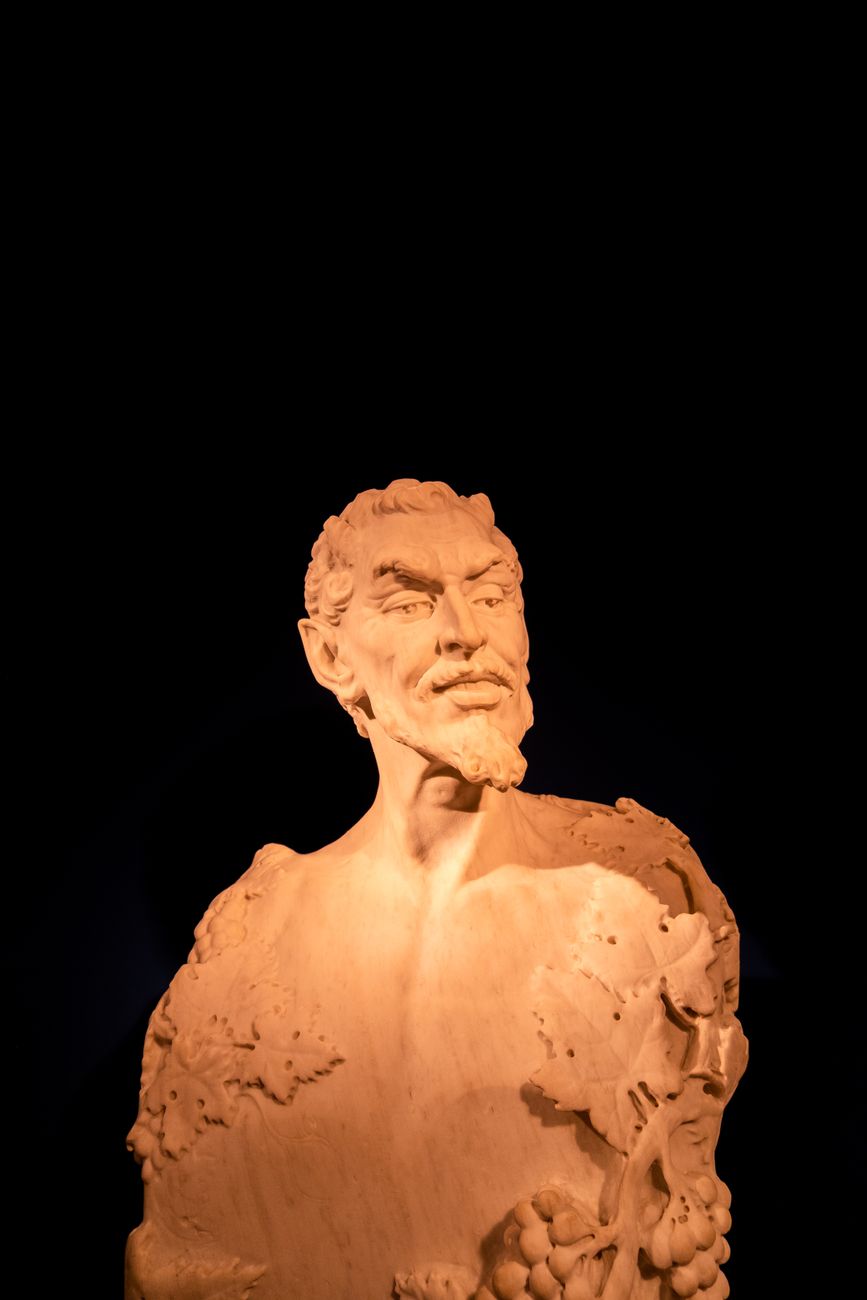
    Yet even after I grew older and recognized the folly of that outlook, a small part of that younger self remained alive inside me. The fantasy did not simply disappear. It lingered like an old song whose melody still occasionally drifts through the mind. The grand vision of endless Bacchanalian delights never entirely surrendered the stage.

    The challenge became learning not to romanticize it.

    There is a temptation to keep looking backward, to imagine that fulfillment was hiding somewhere in those abandoned fantasies. But looking backward can become its own form of captivity. The story of Lot’s wife endures because it captures a permanent human weakness. We long for the places we have outgrown. We become attached to identities that no longer serve us. We mistake fixation for vitality.

    In reality, selfishness, entitlement, and obsession are forms of death. They narrow the soul. They reduce the world to a mirror.

    I suspect this realization is familiar to anyone who has spent time in an addiction recovery program. Every day counselors sit across from people trying to understand the forces that shaped them decades earlier. The challenge is not simply breaking a habit. It is excavating an entire philosophy of life. Somewhere beneath the addiction lies a vision of happiness that proved incapable of delivering what it promised.

    The task of replacing that vision must be overwhelming.

    I cannot speak for addiction counselors. I can only speak from experience.

    A life devoted to unrestrained hedonism eventually exhausts itself. Chaos has a seductive glamour when viewed from a distance, but living inside it is another matter entirely. The endless pursuit of stimulation becomes tiring. The pursuit of novelty becomes repetitive. What initially feels like freedom gradually resembles bondage.

    Eventually reality intervenes.

    You have a career.

    You have a spouse.

    You have children.

    You have obligations and people who depend on you.

    Maintaining a double life becomes increasingly difficult. You cannot simultaneously inhabit the stable world of family and responsibility while pursuing the perpetual turbulence of adolescent fantasy. Domesticity and satyrhood occupy different planets.

    The older I became, the more I understood that fear has its proper place. Not fear of pleasure itself, but fear of the destruction that follows when pleasure becomes life’s highest value. The consequences are not merely moral. They are practical. Relationships fracture. Finances collapse. Trust evaporates. Even those fortunate enough to avoid financial ruin often leave behind a trail of emotional wreckage.

    Such people are not role models.

    They are cautionary tales.

    The challenge, then, is not merely abandoning an old identity. It is discovering a new one.

    The philosopher Kierkegaard wrote that hope is like finding a new garment. I have always loved that image. A garment shapes how we present ourselves to the world. It signals who we believe ourselves to be.

    When the costume of the satyr no longer fits, something else must take its place.

    That search becomes the next great adventure.

    Not the search for another thrill.

    Not the search for another conquest.

    The search for a life worth inhabiting.

  • There Is a Bread That Never Goes Out

    There Is a Bread That Never Goes Out

    When I was five years old and living at the Royal Lanai apartments in San Jose, one of my favorite television shows was Daniel Boone. I was fascinated by Boone’s coonskin cap, especially the raccoon tail dangling from the back. To my young mind, it was the height of frontier elegance. Any man bold enough to wear a dead raccoon as a fashion accessory had to possess uncommon wisdom and imagination. Surely such a man knew secrets unavailable to ordinary people.

    One episode lodged itself permanently in my memory. In it, a destitute man lived alone in the wilderness, gaunt with hunger and desperation. A passerby took pity on him and handed him a loaf of bread. The starving man stood beneath a tree and immediately tore into it. He chewed with the ferocity of a man rescued from the edge of extinction. As he ate, he repeated a single word over and over:

    “Bread.”

    “Bread.”

    “Bread.”

    The word became a prayer, a hymn, a declaration of gratitude. Watching him, I was struck by a revelation that only a child could find astonishing: this man’s happiness came from something as simple as a loaf of bread.

    The next day, life provided me with an opportunity for field research.

    My mother and I had gone shopping at a local plaza. Returning to the car, we loaded our groceries into the back seat, including a fresh loaf of sourdough bread. Before we left, my mother remembered seeing some white divinity and black licorice in a candy store and decided to run back inside.

    “I’ll wait in the car,” I said.

    The moment she disappeared, I launched my experiment.

    I reached into the grocery bag, tore off a chunk of sourdough, and stuffed it into my mouth. Then I began repeating the sacred word from Daniel Boone.

    “Bread.”

    Another bite.

    “Bread.”

    Another bite.

    “Bread.”

    I was trying to recreate the miracle I had witnessed on television. I wanted to understand what it felt like to be so hungry that a loaf of bread seemed like heaven itself. I wanted to know what true satisfaction felt like.

    Nearly sixty years later, I still remember that moment.

    Something about the image continues to haunt me: the idea of profound hunger meeting simple nourishment. No luxury. No extravagance. No abundance. Just an honest need met by an honest gift.

    The proposition remains irresistible.

    The older I get, the more I understand that the episode was never really about bread.

    It was about hunger.

    The famous biblical phrase tells us that “man does not live by bread alone.” Physical hunger is only one of our appetites. Even when our stomachs are full, our mortgages paid, our homes comfortable, and our refrigerators stocked, we remain restless creatures. We hunger for purpose. We hunger for belonging. We hunger for love, friendship, meaning, beauty, and transcendence.

    We hunger for forms of bread that cannot be purchased at a bakery.

    Music is one of those forms.

    I think of There Is a Light That Never Goes Out, one of The Smiths’ most beautiful songs. The narrator is starving for connection. Home does not feel like home. It feels confining, lonely, and emotionally barren. He longs to escape into the world and find kindred souls who possess the warmth and vitality missing from his life. He dreams of a surrogate family, a tribe of fellow travelers who might finally make him feel understood.

    He does not know where such people are.

    He only knows he needs them.

    His longing saturates every line of the song. Beneath the wit and melancholy is a desperate appetite for belonging. He is emotionally famished.

    In that sense, he is not so different from the starving man beneath the tree in Daniel Boone.

    Both are hungry.

    Both are waiting.

    Both are searching for the thing that will finally satisfy them.

    The difference is that one seeks a loaf of bread while the other seeks companionship, love, and meaning.

    Yet the emotional experience is remarkably similar.

    A starving man dreams of bread.

    A lonely man dreams of friendship.

    And when either finally receives what he has been seeking, the response is the same. Gratitude. Relief. Fullness.

    For a brief and precious moment, the hunger stops.

    Solitude is another form of hunger.

    My mother, who struggled with clinical depression throughout her life, would sometimes disappear from the world for days at a time. She would retreat to her bedroom, pull the covers around herself, and consume novels with the same urgency that the starving man in Daniel Boone consumed his loaf of bread. Page after page disappeared into her imagination. The stories fed something that ordinary life could not. Friends would call. Invitations would come and go. My mother often chose the company of books instead. She possessed a strong reclusive streak.

    I inherited some of it.

    At times, I feel the same longing for friendship and belonging that animates “There Is a Light That Never Goes Out.” I understand the desire to find kindred spirits and become part of something larger than oneself. Yet I also understand the opposite impulse. Like my mother, there are days when I want nothing more than to be left alone with my podcasts, my kettlebell workouts, and my piano compositions. A quiet room can feel as nourishing as a crowded gathering. Solitude, when freely chosen, can be its own loaf of bread.

    Hunger takes many forms. Some people ache for companionship. Others ache for silence. Most of us spend our lives moving back and forth between the two, never fully satisfied by either and always searching for the proper measure of both.

    Perhaps religious hunger is the greatest hunger of all.

    I experienced it while watching the 1978 Superman movie. I was a teenage bodybuilder then, full of grandiose dreams and the conviction that I was destined for some undefined greatness. Sitting alone in a dark theater, I watched Superman’s father prepare his son for his mission on Earth. He explained that humanity was a lost and fallen people, wandering in confusion and ignorance. Then came the line that pierced me:

    “They only lack the light to show the way.”

    As those words echoed through the theater, something happened to me. A wave of emotion surged through my body. It felt as if a bright light had been switched on somewhere deep inside me. I began to shake. Tears streamed down my face. I was overwhelmed by a feeling I could neither explain nor resist.

    What moved me was not Superman’s strength. It was his purpose.

    For the first time, I recognized a hunger that had been living inside me all along. I wanted to be a light in the world. I wanted my life to matter. I wanted to help people find their way through confusion, loneliness, and despair. I had no idea how such a calling could be fulfilled. I only knew that the desire burned within me with an intensity I had never experienced before.

    Looking back, I think I was discovering another form of bread.

    Not the bread that fills the stomach, but the bread that nourishes the soul.

    Perhaps this is what people mean by the bread of life: the longing to serve something greater than oneself, to become useful to others, and in that act of service to discover who one truly is. The deepest hunger is not merely to consume. It is to contribute. It is to find a purpose worthy of devotion and, in pursuing it, become fully alive.

  • How My Smart Speaker Became the Dumbest Thing in the House

    How My Smart Speaker Became the Dumbest Thing in the House

    Six years ago, I embraced Alexa speakers with the optimism of a man welcoming the future into his home. These devices promised convenience, intelligence, and a frictionless life in which technology would obediently serve my every whim. Today, that dream lies in ruins.

    As I write this, a giant Alexa Studio speaker sits beneath my bedside table where I no longer have to look at it. It has effectively been placed in witness protection. Another Alexa occupies the primary bathroom, though it rarely speaks because my wife listens to podcasts on her phone. A third lives in the guest bathroom, unplugged and forgotten after my daughters abandoned it in favor of their phones and a portable Bluetooth speaker. Collectively, these devices have become technological tumbleweeds rolling through the corners of our house.

    The mere mention of Alexa now provokes a family-wide eye roll.

    The speakers are perpetually trying to be witty, personable, and charming. Instead, they often resemble a cruise ship comedian trapped inside a plastic cylinder. At their best, they are cheesy. At their worst, they are spectacularly idiotic. Sometimes they spontaneously awaken and begin discussing random subjects as though suffering from a digital nervous breakdown. Other times they interrupt life with yet another urgent beach hazard warning. We understand. The ocean is trying to kill us. Message received.

    The greater offense is that these devices routinely fail at the very task for which they were purchased. Nothing undermines faith in technological progress faster than shouting the same command three times while a glowing hockey puck confidently misunderstands you. Ask for Johann Sebastian Bach and it rewards you with heavy metal. Request a weather forecast and receive a podcast recommendation. Ask it to stop and it behaves as though you’ve spoken ancient Sumerian.

    This is not the Jetsons.

    This is a laboratory experiment in which the guinea pigs have begun filing complaints.

    Over time I discovered a simple truth: the less I interacted with Alexa, the happier I became. Since anger management is an important component of my long-term survival strategy, I gradually demoted the Studio speaker from trusted companion to emergency backup. It now resides beneath the side table like a disgraced cabinet member exiled from public life.

    Its replacement is a Father’s Day gift: a Marshall Stanmore III.

    A few weeks ago, I replaced an Alexa device in the kitchen with a Marshall Acton III. The experience was revelatory. No wake words. No unsolicited commentary. No beach alerts. No attempts at stand-up comedy. Just music delivered immediately and competently from my smartphone to a handsome speaker that understands the revolutionary concept of doing one thing well.

    The Acton impressed me so much that I decided to acquire its larger sibling for the bedroom. The Stanmore delivers more power, richer sound, and, perhaps most importantly, silence when silence is desired.

    I enjoy these Marshall speakers immensely, but I would be lying if I said my motivation was purely audiophile enthusiasm.

    Part of me wanted revenge.

    For years, Alexa interrupted conversations, misheard commands, issued irrelevant warnings, and generally behaved like an overeager intern determined to prove its usefulness. Replacing those speakers with Marshalls felt less like upgrading my audio system and more like terminating an employee whose performance reviews had become impossible to ignore.

    The future arrived, overstayed its welcome, and got reassigned to a dark corner beneath my bedside table.

  • The First 48 and the Search for Truth

    The First 48 and the Search for Truth

    The finest television dramas I have seen over the last twenty years have all revolved around crime. The Wire. Breaking Bad. Better Call Saul. Justified. Fargo. Rectify. That last series remains criminally overlooked. It deserves to stand beside the others in television’s pantheon. In my view, it is one of the greatest shows ever made.

    What these crime dramas share is not merely murder, drug trafficking, corruption, or law enforcement. They share a darker and more unsettling premise: human beings are not naturally reasonable creatures. Left to our own devices, we are capable of astonishing selfishness, cruelty, irrationality, and self-destruction. We require guardrails—family, community, moral codes, social expectations, religion, friendship, duty—to keep us from driving straight into the ditch. Remove those restraints and entropy takes over. The result is a Bosch painting come to life: chaos, degradation, madness, and suffering spreading outward from a single bad decision.

    Crime stories force writers to confront the largest questions human beings can ask. What is justice? Can evil be redeemed? How much corruption can a person tolerate before becoming corrupted himself? Is there a point of no return? How do you preserve your sanity after staring directly into the abyss? How do you maintain faith in the value of human life when surrounded by sociopaths who treat other people as disposable objects?

    Given my immersion in fictional crime, perhaps it was inevitable that I would eventually tumble down the true-crime rabbit hole. Over the past year, I have consumed an embarrassing number of crime documentaries and docuseries. Among them, The First 48 stands apart.

    The premise is simple: homicide detectives in cities such as Atlanta, Tulsa, Miami, Memphis, New Orleans, Cleveland, Minneapolis, Dallas, and Kansas City race against the clock to solve murders during the critical first forty-eight hours after a killing. Some suspects are criminal masterminds. Most are not. Many possess the strategic sophistication of a raccoon trapped in a garbage can.

    The detectives, meanwhile, perform a strange form of civic triage. They comfort grieving families. They persuade reluctant witnesses. They canvas neighborhoods. They interrogate suspects. They sift through surveillance footage. They survive on cold pizza, convenience-store coffee, and whatever fragments of sleep they can steal before the next phone call drags them back into the darkness.

    What strikes me most about these shows is not violence.

    It is truth.

    More precisely, the absence of it.

    Every case begins buried beneath layers of deception. Witnesses lie. Suspects lie. Friends lie. Family members lie. People lie reflexively, habitually, and often for no discernible reason. The default setting seems to be: conceal, evade, distort, deny.

    A detective asks a simple question.

    The witness responds as if he has been asked to surrender state secrets.

    Only when the evidence becomes overwhelming—when the walls close in and every escape route has been blocked—does the truth begin to emerge.

    Watching these detectives, I am struck by the almost spiritual nature of their work. In a world thick with confusion, self-interest, manipulation, and darkness, they devote enormous portions of their lives to pursuing a single objective: finding out what actually happened.

    They sacrifice evenings with their families. They sacrifice sleep. They sacrifice peace of mind. Day after day, they stare directly into humanity’s ugliest impulses and insist that the truth be uncovered, that the dead be given a voice, and that justice be given a chance.

    Perhaps that is why crime stories continue to hold my attention while so much other television feels disposable. The stakes are existential. The conflict is ancient. Truth versus deception. Light versus darkness. Order versus entropy.

    Once you become absorbed in that struggle, it becomes difficult to care very much about who got voted off the island.

  • The Last Voyage of Captain Wrist Presence

    The Last Voyage of Captain Wrist Presence

    As you grow older, some of the things that once enchanted you begin to lose their magic. The familiar tingle of anticipation fades. The objects remain the same, but the spell weakens. If that enchantment is tied to a shared passion—a hobby, a subculture, a tribe—you will eventually find yourself drifting away from the people who still feel its pull. You will resist at first. You will tell yourself that nothing has changed. But something has. Eventually, the separation becomes undeniable.

    You have undergone Hobby Drift: the slow, often involuntary separation from a hobby community that occurs when one’s interests, priorities, and sources of meaning evolve in different directions from those of fellow enthusiasts.

    When I think about Hobby Drift, I think about watches.

    Over the past twenty years, I have forged more friendships through watches than I ever expected possible. Grown men from around the world bonded by steel bracelets, dial colors, lume shots, and the feverish conviction that the perfect collection was only one purchase away. Watch collecting is a peculiar brotherhood. Half support group, half addiction clinic. We compare scars from impulse purchases and premature sales. We confess our relapses. We laugh at our own insanity while secretly browsing for the next acquisition.

    My own horological delirium began in 2005 when I was forty-three years old and convinced that mechanical watches were tiny machines capable of repairing the machinery inside me.

    Twenty years disappeared in a blur of rotating bezels, sapphire crystals, and “just-in-case” divers purchased for adventures that never materialized.

    My attraction to watches is too complicated to reduce to a single cause, but vanity was certainly among the chief conspirators. I was obsessed with what collectors call “wrist presence.” I would see an actor on television wearing an expensive watch and become convinced that the watch was somehow responsible for his confidence, authority, and charisma. I wanted that presence. I wanted that commanding aura. I wanted the illusion of completeness.

    Even then I understood the thought was ridiculous.

    Unfortunately, understanding folly and escaping it are two different things.

    I was an emotional child afflicted with Horological Completionism: the recurring fantasy that one more watch purchase will finally complete one’s collection, identity, or emotional life.

    Then, at sixty-four, mortality tapped me on the shoulder.

    The watch hobby’s siren song did not disappear. It simply became quieter.

    The obsession remained, but something fundamental changed. After two decades, desire finally dimmed beneath the growing awareness that timepieces are no match for time itself. I still wear my watches. I still admire them. But they no longer occupy prime real estate inside my head.

    I have undergone Chronological Surrender: the acceptance that no collection of clocks, watches, calendars, or timekeeping devices can grant mastery over time itself.

    The result was an unexpected misalignment.

    Many younger collectors remained in a state of Horological Messianism: the belief that the next watch will deliver transformation, completion, confidence, status, or personal salvation.

    I do not judge them because I know exactly how it feels.

    I was them.

    Wisdom did not cure me.

    Age did.

    I did not reason my way out of the obsession. I simply reached a point where the obsession could no longer sustain itself. Mortality walked into the room and changed the conversation.

    What frightens me is not losing the hobby.

    What frightens me is losing the community.

    For more than twenty years, watches provided connection, friendship, conversation, and belonging. To drift away from the hobby is, in some sense, to drift away from a part of myself.

    Yet as unsettling as this misalignment is, another one frightens me even more.

    My younger colleagues.

    While I prepare for retirement, they are building careers. They are refining lectures, designing courses, earning tenure, publishing work, and imagining futures that stretch decades ahead of them.

    Their careers are in blossom.

    Mine is entering autumn.

    My final year in the classroom has made me acutely aware of Generational Divergence: the growing separation between individuals at different stages of life, where the same institution simultaneously represents arrival for one generation and departure for another.

    The divergence is occurring in two places at once.

    The watch hobby.

    The college classroom.

    I cannot stop either process.

    The current is too strong.

    I feel less like a participant than a passenger being carried somewhere I did not choose to go.

    At times the sensation resembles exile.

    It reminds me of a scene from Battlestar Galactica. A condemned traitor stands behind a pane of glass as the airlock hisses. He pleads. The crew watches silently. No one is cruel. No one is angry. The decision has simply been made.

    The hatch opens.

    The separation becomes permanent.

    That is what aging sometimes feels like.

    Not tragedy.

    Not injustice.

    Just inevitability.

    There comes a point when those still living inside the warm illusion of endless tomorrows begin, without realizing it, to drift away from those who have glimpsed the shrinking horizon.

    A pane of glass descends.

    Not hostile.

    Not malicious.

    Just real.

    You tap on the glass and wave, hoping to climb back into the cockpit of youth’s ambitions, anxieties, and grand illusions.

    But the hatch has already sealed.

    There is no reentry.

    There is only the quieter work that remains: embracing the season you have been given, building meaning instead of collections, and helping younger travelers navigate a road whose ending they cannot yet see—but inevitably will.

  • The Garage Door That Aged Me

    The Garage Door That Aged Me

    I miss my old Genie garage door opener and the vanished age of competence it represented. The old Genie operated according to a refreshingly primitive philosophy: electricity goes in, button gets pushed, garage door goes up. It demanded nothing more from its owner than a functioning thumb and a basic understanding of cause and effect. It belonged to a world where machines served human beings rather than requiring human beings to audition for the privilege of operating them.

    The new Genie belongs to a different civilization entirely. It greets you like a twenty-year-old Silicon Valley intern conducting a security clearance. Before the garage door will consent to rise six feet into the air, you must download an app, create an account, verify an email address, enable Bluetooth, grant permissions, update firmware, agree to seventeen pages of terms and conditions, and perhaps burn a small offering before the altar of the Cloud. The old Genie made you feel like the master of a machine. The new Genie makes you feel like a bewildered medieval peasant petitioning an invisible digital bureaucracy. Nothing reminds an aging homeowner of his mortality quite like discovering that the garage door now speaks fluent smartphone while he still speaks fluent button.

    Wanting buttons instead of apps is a sign of misalignment. The older I get, the more I recognize this condition. Misalignment occurs when the world quietly changes languages while you continue speaking the old one. It is one of the defining afflictions of the geriatric class. At sixty-four, I found myself replacing the Genie of Old with the Genie of New, and I required assistance from my wife. This was not a proud moment.

    Together we entered the garage. I watched as she climbed a ladder, removed the white plastic cover from the unit, located the Bluetooth button hidden somewhere in its technological intestines, and synchronized our phones. She programmed the second remote I had purchased from Amazon. She solved every problem that had defeated me. When I thanked her, she responded with the kind of observation only a spouse can deliver: gentle in tone, devastating in effect.

    I was, she explained, exactly like one of her sixth-graders. I had no patience. I wanted the universe to suspend operations until my problems were solved. Unfortunately, the universe had declined my request. New problems kept arriving. New technologies kept appearing. My misalignment with the world kept widening.

    At that moment, I realized I had entered a new phase of life. I was no longer merely impatient. I was becoming dependent. My brain still functioned perfectly well, but it no longer possessed the elasticity it once had. Technology evolved like a city rebuilding itself overnight. I evolved with the speed of continental drift.

    In that moment of horror, my thoughts turned to Moria.

    When you’re old, you must prepare for what I call Morian Drift: the gradual sensation that the world has moved on without you, leaving you to wander through the ruins of once-intuitive systems while younger people navigate effortlessly through technological labyrinths you barely understand.

    Moria was once the magnificent underground kingdom of the dwarves, a city of glittering halls, colossal pillars, and staggering wealth. But the dwarves delved too greedily and too deep. They awakened the Balrog, a primordial demon of shadow and fire, and their civilization collapsed into ruin. By the time the Fellowship arrives, Moria has become a haunted tomb filled with darkness, crumbling bridges, and the lingering memory of greatness.

    That is how aging sometimes feels.

    You find yourself standing on the Bridge of Khazad-dûm, staring at a technological Balrog that younger generations dismiss as a routine software update.

    The Balrog itself is one of Tolkien’s great monsters: a towering demon wrapped in shadow and flame, carrying a fiery whip and trailing a serpentine tail. It embodies chaos, power, and the consequences of pursuing progress without restraint. During the battle, Gandalf confronts the beast upon the bridge. He wins. The bridge shatters. The monster falls.

    Then comes the whip.

    As the Balrog plunges into the abyss, its fiery lash coils around Gandalf’s legs and drags him down into the darkness. The injury is not merely physical. It becomes a life-altering ordeal that carries him through the depths of Moria and up the Endless Stair. The battle ultimately kills him. Victory itself becomes the instrument of his destruction.

    That image stayed with me as I stared at the new Genie opener.

    The garage door was my Balrog.

    Not because it was especially difficult. Not because Bluetooth pairing is inherently terrifying. But because it revealed a truth I had been trying not to notice. My accumulated competence had encountered a new reality and failed. The problem was not the garage door. The problem was the widening gap between myself and the world I inhabited.

    The new Genie delivered what I now call a Balrog Moment: the sudden realization that one’s hard-earned expertise no longer guarantees mastery, forcing a confrontation with aging, obsolescence, and the necessity of reinvention.

    After defeating the Balrog, Gandalf dies. Later he explains his experience in a single haunting sentence:

    “I strayed out of thought and time.”

    That line has haunted me for years because it captures something profound about growing older. You wake up one day and discover that the culture, the technology, and the assumptions that once felt natural have drifted away from you. You have not left the world. The world has left you.

    Fortunately, Gandalf does not remain dead. He returns transformed. The old wizard gives way to a new one. He emerges wiser, stronger, and better suited to the task ahead.

    That is the lesson I took from my garage-door apocalypse.

    The new Genie showed me that I had strayed out of thought and time. But it also showed me that the answer is not surrender. The answer is reinvention. The alternative is permanent residence in Moria, wandering among the ruins while the rest of civilization marches onward without you.

  • The Everyday Vampires Who Feed on Chaos

    The Everyday Vampires Who Feed on Chaos

    Olga Khazan’s article “There’s a Name for the People Who Drain You” examines one of the unavoidable pests of human civilization: the hassler. Hasslers are the emotional pickpockets of everyday life. They drain those around them through relentless criticism, selfishness, bitterness, narcissism, cruelty, cynicism, and, in extreme cases, outright sociopathy. They appear everywhere—in workplaces, families, neighborhoods, and friend groups. No community is immune to them.

    The consequences of prolonged exposure are hardly trivial. To spend years trapped in the orbit of one or more hasslers is to live inside a low-grade psychological emergency. Anxiety rises. Cortisol surges. Depression follows. Autoimmune disorders become more likely. The body keeps score while the hassler keeps talking.

    One of the defining characteristics of the hassler is an appetite for friction. Hasslers are rarely content with peace and stability. They stir the pot, manufacture grievances, incite drama, and transform minor disagreements into theatrical productions. To ordinary people, conflict is exhausting. To the hassler, it is entertainment. The discomfort of others becomes a form of nourishment. Their preferred habitat is chaos because chaos guarantees attention, and attention is the oxygen they breathe.

    Unfortunately, hasslers cannot be avoided entirely. If you belong to a family, workplace, church, club, school, or neighborhood, you will eventually encounter one. They emerge with the reliability of weeds breaking through concrete.

    As I read Khazan’s article, I found myself thinking about the horror film Weapons and its sinister figure, Aunt Gladys. Gladys operates less like a conventional villain than a supernatural parasite. She feeds upon the misery of others with such potency that she seems less human than witch-like. Her power lies not in physical force but in her ability to infiltrate the emotional lives of her victims and convert their suffering into sustenance.

    Viewed through Khazan’s framework, Aunt Gladys may be the ultimate hassler.

    What fascinates me about figures like Gladys is that they often appear strangely hollow. They possess no stable center of their own. They are ciphers, vacuums, nonentities. Because they lack an inner life rich enough to sustain them, they must draw energy from the emotional resources of others. To feed, they must first weaken their prey. They create confusion, vulnerability, self-doubt, and dependency. Only then can they begin extracting what they need.

    In this sense, the hassler resembles a vampire. Not the elegant aristocrat in a velvet cape, but a psychological vampire who feeds not on blood but on attention, anxiety, and emotional exhaustion. The vampire drains the body. The hassler drains the spirit.

    Perhaps this is why hasslers appear so frequently in horror stories. They embody a fear that feels immediately recognizable. Most of us have never encountered a werewolf. Few of us have met a ghost. But nearly everyone has known someone who seemed to feed on conflict, manipulate relationships, and leave every room darker than they found it. Horror films merely give supernatural form to a creature we already know.

    The hassler, then, is not merely a difficult person. The hassler is an archetype. Long before horror movies invented monsters lurking in haunted houses, human beings were already living among people who fed on chaos and misery. The monsters came later. The hasslers came first.

  • How a Zip Code Became a Retirement Plan

    How a Zip Code Became a Retirement Plan

    When my students and I discuss wealth inequality in America, I tell them to stop looking at abstract charts and start looking at real estate. Wealth has many hiding places, but its favorite address is prime property in desirable zip codes. If you want to know who has money, look at who owns the houses everyone else wants but cannot afford.

    Some people inherit these advantages. Others stumble into them through timing. My wife and I are not rich, but in 2002 we purchased a house in Southern California for $450,000 in a neighborhood perpetually described by realtors with the same reverential phrase: “a shortage of inventory.” There are always more buyers than homes. The schools receive high ratings. The tax base is stable. Crime exists, as it does everywhere, but burglaries and auto thefts are footnotes rather than defining features of daily life.

    Over the years, that shortage of inventory became a wealth-generation machine. Today our house could sell for roughly three times what we paid for it. My wife is fifty. I am sixty-four. In about a year, our mortgage will disappear entirely. We did not achieve this outcome through extraordinary brilliance. We happened to buy at a particular moment in history and then stayed put. Age, timing, and geography worked together like silent business partners.

    That reality grants us a degree of financial power that younger generations often do not possess. We are not unusual. Millions of older Americans are sitting atop appreciating assets that have quietly transformed them into members of an accidental property aristocracy.

    The disparity between older and younger Americans has become so pronounced that it may represent the deepest fault line in contemporary American life. This tension forms the backdrop of Joshua Rothman’s essay “Are Americans Too Old?” in which he examines historian Samuel Moyn’s provocative argument that the defining conflict of our era is not between left and right, labor and capital, or urban and rural Americans, but between the young and the old.

    In Gerontocracy in America, Moyn argues that the nation’s character is increasingly shaped not by people in their youth or prime but by those in the final third of life. A less academic translation of the title might simply be: Rule of the Old.

    The demographic trends are difficult to ignore. Americans are having fewer children. People are living longer. The traditional age pyramid is slowly morphing into what Rothman describes as a “top-heavy trapezoid.” In 1920, fewer than five percent of Americans were over sixty-five. By 2060, roughly one-quarter of the population will be.

    Meanwhile, many of the most visible positions of political power remain occupied by people old enough to remember rotary phones, three-network television, and cigarette ads featuring physicians. Younger Americans often feel as though they have been handed a bill for a party they never attended.

    The American Dream once followed a familiar script: go to college, get a job, buy a house, build a family, accumulate wealth. For many Boomers, that script worked remarkably well. To younger generations, however, it can seem as though the ladder was pulled up immediately after the Boomers reached the roof. Young adults today face soaring housing costs, burdensome debt, delayed family formation, and a labor market that often demands far more while offering far less.

    Yet Rothman identifies an irony at the heart of this story. Economically, America increasingly resembles a gerontocracy. Culturally, however, it remains obsessed with youth. The people who hold much of the wealth spend billions attempting not to look old. Every wrinkle is treated as a design flaw. Every gray hair becomes a problem to be solved. We celebrate youthful energy, youthful innovation, youthful disruption, and youthful beauty while entrusting enormous economic and political power to people collecting Social Security.

    The contradiction is almost comic. The nation is governed by senior citizens while being marketed to adolescents.

    Still, Rothman is skeptical of reducing America’s problems to a generational battle. He points to writer Nathan J. Robinson, who argues that Moyn is making a category mistake. The true divide is not primarily between old people and young people. It is between rich people and everyone else.

    Robinson notes that a relatively small slice of older Americans controls a disproportionate share of the nation’s wealth. Most seniors are not oligarchs lounging atop mountains of stock certificates. Wealth is not concentrated among the elderly as a class. It is concentrated among the wealthy as a class.

    That distinction matters.

    The retired schoolteacher living on a modest pension has little in common economically with a billionaire hedge-fund manager, even if both qualify for senior discounts at Denny’s.

    In the end, Rothman lands somewhere between the two positions. He agrees that older generations wield disproportionate political influence and that this imbalance deserves scrutiny. Yet he rejects the idea that America’s future should be framed as a generational war.

    After all, every generation is heading in the same direction. The young become middle-aged. The middle-aged become old. Time drafts all of us into the same army eventually.

    The challenge, then, is not to pit generations against one another but to create a society in which each generation can realistically pursue the promises that define the American Dream: economic security, good health, meaningful work, and a hopeful future.

    Otherwise, the dream becomes something stranger and far less noble—a competition to see who can pull the ladder up fastest.

  • Waterbed Dreams (a short story)

    Waterbed Dreams (a short story)

    In the 1960s, while attending backyard pool parties as a child, I witnessed a ritual that today would likely end the gathering, the marriage, and perhaps someone’s standing in the neighborhood Facebook group.

    The scene always began the same way. The wives lay stretched across poolside loungers like contented seals basking on a warm rock. Their skin glistened with tanning oil. Some drifted in and out of sleep beneath oversized sunglasses. Others were absorbed in paperback novels such as Valley of the Dolls, lost in worlds more glamorous than the suburban tract homes surrounding them.

    Relaxation, however, was a dangerous condition. The husbands regarded it almost as an invitation.

    I would see them gathering in small clusters, exchanging mischievous glances and whispered instructions. Then, with all the stealth of burglars planning a jewel heist, two or three men would creep toward the unsuspecting target. One grabbed the arms. Another grabbed the ankles. Before the woman could register what was happening, she was airborne.

    Splash.

    The victim surfaced in a burst of profanity and shock, treading water while trying to understand why the people closest to her had just transformed her into the afternoon’s entertainment.

    The husbands, meanwhile, doubled over with laughter. They laughed with the self-congratulatory delight of men convinced they had just performed comedy worthy of prime-time television. What they had actually performed was a public reminder of who possessed the power and who was expected to absorb the indignity.

    Eventually the woman climbed from the pool, dripping and annoyed. She would shake her head, towel herself dry, and wait for the laughter to burn itself out. Then came the final act of the ritual: she was expected to be a good sport. Boys will be boys. No hard feelings. Back to the lounge chair. Back to the conversation. Back to the novel.

    And so the party continued.

    No sociology professor is required to decode what was happening. The message was delivered with all the subtlety of a brick through a window. The prank was never merely a prank. It was a small public demonstration of dominance disguised as horseplay. The husbands enjoyed a privilege that permitted them to humiliate; the wives were expected to absorb the humiliation gracefully.

    You rarely see such scenes today because the cultural lens has changed. What once passed for harmless male shenanigans is now recognized for what it often was: a form of casual cruelty. The laughter remains the same. What has changed is our willingness to mistake it for innocence.

    Whenever I think about those afternoons, I am reminded of Mad Men. One of the show’s great insights is that the madness of mid-century masculinity was not simply its sexism but its astonishing lack of boundaries. Entitlement flourished because it was rarely challenged. And entitlement is inherently abusive because it operates as a zero-sum arrangement. One person enjoys the privilege of acting on every impulse; another person is expected to accommodate those impulses without complaint.

    The tragedy of entitlement is that it does not merely diminish the subordinate. It corrodes the entitled as well. When a culture teaches people that every whim deserves immediate gratification, it quietly exempts them from the responsibilities of adulthood. Why develop self-command when the world conspires to indulge your impulses? Why grow up when you can remain a child and still be handed the privileges of a man?

    Looking back, what strikes me most about those thirty-something husbands was not their authority but their immaturity. They were not imposing patriarchs so much as oversized boys wandering through a civilization that mistook self-indulgence for masculinity.

    The culture celebrated this condition. It built monuments to it.

    Consider the bachelor pad, that sacred temple of male self-mythology. Magazine spreads presented it as a technological wonderland and erotic paradise. The walls were covered in rich wood paneling. A bear rug lounged dramatically on the floor. Intricate models of futuristic cities sat on shelves like trophies from an imagined age of progress. With the clap of a hand, a television descended from the ceiling. A hidden panel slid open to reveal a gleaming liquor cabinet stocked with enough bourbon to anesthetize an elephant.

    The bachelor pad promised that its owner was no ordinary man. He was sophisticated. Connected. Mysterious. He knew where the best restaurants were, which stocks to buy, and which jazz records proved his superior taste. He was always three steps ahead of everyone else and at least five steps ahead of the poor fools living in split-level homes.

    Yet all the razzle-dazzle could not conceal the obvious truth. Behind the secret compartments, imported scotch, and carefully groomed mustache often stood a man-child. The gadgets were sophisticated. The owner was not. The bachelor pad frequently resembled a twelve-year-old boy’s fantasy that had been granted an unlimited expense account.

    Even as a child, I sensed that something was off.

    The world of the 1960s projected confidence, prosperity, and order, but beneath the polished surface ran a current of instability. The adults were supposed to be creating safety and predictability. Too often, they generated turbulence instead. The atmosphere felt less like responsible adulthood than a perpetual fraternity party conducted by people with mortgages.

    Children notice these things.

    We notice who gets to laugh.

    We notice who becomes the punchline.

    We notice who is expected to absorb the humiliation and pretend it never happened.

    Most of all, we notice the gap between what adults claim to be and what they actually are. Long before we possess the vocabulary to describe entitlement, narcissism, or arrested development, we can feel their effects. We can sense when the people entrusted with maintaining order are, in fact, manufacturing chaos.

    And that was the contradiction at the heart of the era: a generation that possessed unprecedented authority often behaved as though authority itself exempted them from maturity.

    Perhaps that is why so many of us flocked to The Brady Bunch every Friday night. The show offered a fantasy of domestic civilization. Here was a blended family that somehow functioned as a cooperative unit. Problems were discussed instead of weaponized. Nobody humiliated anyone for sport. Lessons were learned. Conflicts were resolved. The adults behaved like adults.

    Compared to the poolside kingdoms of suburban entitlement, the Bradys looked less like a sitcom family than a utopian experiment.

    Longing for the Brady family’s utopian world seeped into my dreams and shaped my childhood. Let me take you back to the blistering summer of 1971, when I was nine. My family and four others staked their claim to a slice of rugged paradise on Mount Shasta. For two weeks, we fished, water-skied, dodged hornets, and lazed under the drone of a massive battery-operated radio pumping out The Doors, Paul McCartney, Carole King, and Three Dog Night. It should have been idyllic. Should have been.

    One morning, as the other families fried pancakes and bacon and prepped their fishing gear, I was still in my tent, cocooned in the greatest dream of my life. I wasn’t just sleeping—I was transcending. In my dream, I had met The Brady Bunch in San Francisco, by a gleaming red cable car downtown. Their faces were radiant, practically angelic, and their smiles said it all: I had been chosen. I was going to be the newest Brady kid. Mike and Carol had already signed the adoption papers at some conveniently nearby government office. It was official.

    Questions swirled in my nine-year-old brain: Would I get my own room in their split-level utopia, or would I have to bunk with Greg? And most importantly, how soon would I appear on the show? But just as I was about to find out, reality crashed in like a rude kid on a trampoline. Mark and Tosh, my two so-called friends, yanked me out of my reverie, insisting it was time to go fishing. Fishing? Fishing?! I had just been adopted by The Brady Bunch, and now I had to slum it with worms and hooks?

    I sulked like the overgrown toddler I was. The rest of the day, I stomped around with the scowl of someone who’d been exiled from paradise, my unspoken dream stuck inside me like a splinter. I couldn’t tell anyone. What was I supposed to say? “Sorry, I can’t fish; I was about to move into a Technicolor utopia where no problem is bigger than a 30-minute episode”? Yeah, right.

    “Get with the program,” my dad bellowed, his military tone slicing through the air. “We’re living in the wild.” The wild? I didn’t want the wild. I wanted the Brady kitchen, with its avocado-green appliances and unending love. Instead, I got Mount Shasta, yellowjackets hovering over our food supplies, a fishing pole, and a crushing dose of reality. I was not a Brady, and the sting of it stuck with me longer than the mosquito bites.

    That sulky kid camping on Mount Shasta believed his Brady Bunch fantasy was a rare, precious portal out of his chaotic childhood. Turns out, it was about as unique as a Hallmark card on Valentine’s Day. Like millions of Americans, I grew up dreaming I’d be adopted by the Bradys—soaking up the avocado-colored bliss of choreographed family harmony. But here’s the cosmic joke: while we were glued to the screen, escaping into 30-minute morality plays, the actors’ personal lives were raging dumpster fires. Addiction, affairs, infighting—it was chaos so apocalyptic it made our own messy lives look like spa weekends.

    Should we really expect actors’ off-screen lives to match the squeaky-clean fantasy they sell us? Of course not. Hollywood isn’t built on truth; it’s built on glossy façades. The Brady Bunch is proof. They served us perfectly scripted family bliss, while behind the scenes, they were stuck in their own soap opera. The gap between their TV utopia and reality is as wide as the Grand Canyon—yet we still crave the fantasy. Once you’ve tasted Brady-level wholesomeness, it’s like emotional junk food: artificial but irresistibly comforting.

    In my prepubescence, I not only dreamed I was a member of the Brady family; I dreamed  that my face was in one of the squares on the show’s opening theme song. I’m looking around at my family members, my cheeks bright and cherubic, an eternal youth pumped with a sense of joy and belonging, blind to the off-screen train wrecks that contradicted the Brady’s Edenic wonderland.

    Adolescence put an end to my Brady Bunch fantasies. By then, the Brady family seemed so wholesome, so relentlessly well-adjusted, that they bordered on the monastic. Nobody lusted after anybody. Nobody drank too much. Nobody made catastrophically bad decisions. Every problem was solved in twenty-two minutes and accompanied by a moral lesson. It was a civilization without appetite.

    What I wanted instead was sensuality.

    That is where the Boone’s Farm Apple Wine commercials entered my life. These advertisements took impossibly attractive young women, dressed them in gingham dresses, deposited them in sun-dappled meadows, and surrounded them with rugged, guitar-strumming men who looked as if they had wandered out of a folk album cover. Everyone smiled. Everyone flirted. Everyone appeared to be one sip away from achieving perfect harmony with nature, romance, and themselves.

    Who needed the Brady Bunch when a bottle of apple wine could transport you directly to Eden?

    The commercials were selling more than wine. They were marketing an emerging vision of life that was spreading across America in the early 1970s—a curious blend of sexual liberation, political consciousness, environmentalism, health food evangelism, and openness to alternative realities. This counterculture promised liberation from the buttoned-down conventions embodied by shows like The Brady Bunch. Why settle for suburban order when you could pursue cosmic enlightenment, organic nutrition, and attractive people frolicking through fields?

    The fullest expression of this worldview existed in my hometown at a grocery store called Co-Op.

    Calling Co-Op a supermarket would be like calling Woodstock a music festival. Technically accurate, perhaps, but hopelessly incomplete.

    This was a store “owned by the people.” The employees were unfailingly friendly. The men often sported beards substantial enough to shelter migratory birds and wore survival gear purchased from Co-Op’s adjoining Wilderness Supply Store. Every employee seemed to occupy a different point on the Hippy Spectrum, ranging from mildly eccentric nature enthusiast to someone who appeared capable of receiving stock tips from houseplants.

    Co-Op pioneered innovations that now seem ordinary. It had the town’s first daycare center for shoppers’ children and its first recycling center. Long before environmentalism became corporate branding, Co-Op treated recycling as a sacred civic duty.

    The store’s modest book section served as a literary roadmap to alternative consciousness. There sat Robert Pirsig’s Zen and the Art of Motorcycle Maintenance, Peter Tompkins’ The Secret Life of Plants, Erich von Däniken’s Chariots of the Gods, Laurence J. Peter’s The Peter Principle, and, towering above them all like scripture atop an altar, Frances Moore Lappé’s Diet for a Small Planet, the vegetarian bible of the movement.

    The food selection was equally revelatory. Customers could purchase carob honey ice cream, wheat germ, granola, tofu, brown rice, Japanese yams, and alfalfa sprout-growing kits complete with mason jars. For many Americans, Co-Op served as their first introduction to foods that were not beige.

    With its wilderness store, organic produce, alternative literature, and health-food evangelism, Co-Op was more than a place to buy groceries. It was a sanctuary for those rebelling against The Man. Every purchase carried ideological significance. A bowl of granola sweetened with organic honey was not merely breakfast. It was a declaration of independence.

    Unfortunately, every revolution contains its contradictions.

    The counterculture replaced the Bachelor Pad with the Co-Op Halo: the cognitive illusion in which any food purchased at a cooperative grocery store is presumed incapable of causing weight gain, metabolic dysfunction, or excessive calorie consumption. Under the protective glow of the Co-Op Halo, honey ceases to be sugar, granola ceases to be dessert, and a thousand calories of nuts become an act of political resistance. 

    As a child shopping alongside my parents, I observed these earnest Co-Op revolutionaries lumbering through the aisles. They battled corporate food tyranny one overflowing bowl of granola at a time, their expanding waistlines advancing steadily alongside their moral certainty. They looked like freedom fighters who had accidentally launched an insurgency against their own belt buckles.

    What fascinated me was not their hypocrisy but their humanity. The very people striving hardest to improve themselves remained vulnerable to the same blind spots that afflict everyone else. Their intentions were admirable. Their convictions were sincere. Yet their growing girth served as a reminder that even the noblest movements can become intoxicated by their own righteousness.

    It is no surprise that during the Co-Op Revolution, many of its adherents abandoned conventional beds for waterbeds. The traditional spring mattress belonged to the Mad Men era in the same way the gray flannel suit, the martini cart, and the executive desk belonged to it. It was firm, structured, predictable, and unapologetically patriarchal. You slept on top of it, not with it. It reflected a culture organized around hierarchy, discipline, and the assumption that somewhere in the house a father figure knew what he was doing.

    The waterbed represented an entirely different cosmology.

    The spring mattress was Father.

    The waterbed was Mother.

    More specifically, it was Mother Earth, Mother Ocean, Mother Nature, and Mother Womb rolled into a giant vinyl sack filled with heated water.

    The waterbed arrived as part of the Co-Op Halo revolution. It rejected rigidity in favor of flow, conformity in favor of experimentation, and straight lines in favor of psychedelic undulation. If the spring mattress said, “Get a job, mow the lawn, and report to work on Monday,” the waterbed said, “Relax, brother. Time is a capitalist construct.”

    One belonged in Don Draper’s paneled den beside a hidden liquor cabinet and a collection of imported scotch. The other belonged in a room scented with patchouli, illuminated by a lava lamp, and stocked with dog-eared copies of Diet for a Small Planet and Zen and the Art of Motorcycle Maintenance. The spring mattress supported the patriarchy. The waterbed floated a rebellion against it.

    At around thirteen years old, I was fully indoctrinated into waterbed ideology.

    After trying the waterbeds owned by friends and neighbors, I became a true believer. The warm vinyl surface felt exotic and futuristic. The gentle waves suggested depths of wisdom unavailable to those unfortunate souls sleeping on ordinary mattresses. I became convinced that immersion in the Great Aquatic Womb was essential to human fulfillment. Sleeping on a conventional mattress suddenly seemed as spiritually primitive as cooking over a campfire.

    Eventually my parents surrendered to the pressure.

    For a brief moment, I believed paradise had arrived.

    Then reality arrived.

    The first warning sign was the algae.

    The water inside the mattress developed its own ecosystem. Before long my bedroom smelled less like a sanctuary of cosmic consciousness and more like a stagnant swamp in which an alligator might reasonably be expected to surface.

    Then there was the simple act of turning over in bed.

    Waterbed enthusiasts described this as floating.

    In practice it felt more like wrestling a small ocean.

    Every movement encountered resistance. Rolling from one side to the other required planning, momentum, and perhaps a permit from the Coast Guard. A careless shift of position could generate enough counterforce to threaten a shoulder, strain a back, or create waves capable of disturbing neighboring counties.

    The temperature was another ongoing adventure.

    The bed was either too cold or too hot.

    One night I was sleeping in what felt like the North Atlantic. The next night I appeared to be poaching myself. I became a full-time regulator of aquatic climate conditions, endlessly adjusting the temperature dial in pursuit of a mythical state known as comfort.

    But the unforgivable sin was the leaking.

    Waterbeds leaked with the determination of a Greek tragedy fulfilling its prophecy.

    Water leaked onto the floor. Water seeped into places water was never intended to go. The flooring suffered. Mildew flourished. Black mold appeared like an invading army. The very object that had promised harmony with nature was now actively introducing nature into my bedroom.

    My dreams of aquatic enlightenment collapsed.

    My rebellion against The Man had become a battle against a giant bag of malfunctioning water.

    The waterbed was not Mother Ocean.

    It was not the Womb.

    It was not a portal to higher consciousness.

    It was a sea monster.

    A damp, bloated, vinyl sea monster that occupied my bedroom, consumed my patience, and robbed me of sleep. The Co-Op Revolution had promised liberation. Instead, I found myself trapped in an endless maritime disaster unfolding six inches above the floor.

    The waterbed craze of the 1970s eventually collapsed for the same reason most utopian experiments collapse: reality refused to cooperate. The waterbed promised liberation from the stiff, joyless conventions of the Mad Men era. Why sleep on a rigid mattress when you could drift upon a warm, undulating sea of consciousness? Why settle for furniture when you could experience a lifestyle? The problem, of course, was that consumers eventually discovered that sleeping on a giant sack of water came with certain drawbacks, including leaks, mold, algae, temperature fluctuations, and the unsettling sensation of spending every night inside an aquarium.

    Its demise symbolized the fading of a larger countercultural fantasy. The waterbed embodied the belief that freedom could be achieved by rejecting structure in favor of flow, spontaneity, experimentation, and vibes. But markets teach lessons with merciless efficiency. Most people did not want to sleep inside a social movement. They wanted a good night’s sleep. The waterbed had promised transcendence and delivered plumbing problems.

    Ironically, while the culture around me chased one New Age revelation after another, I was becoming increasingly indifferent to all of it. That same year I was competing in Junior Olympic weightlifting meets. I was training hard, taking protein supplements, eating aggressively, and building a life around discipline. By the end of the day I was so exhausted that I could have slept comfortably on a sheet of plywood. The waterbed’s promises of cosmic fulfillment meant nothing to me. Just give me a gym, two hundred grams of protein a day, and leave me alone. I had little patience for the endless parade of theories, lifestyles, and consciousness-expanding schemes emerging from the great 1970s Fever Dream. Every month seemed to produce a new revelation that would supposedly transform humanity. I was far more interested in perfecting my squat.

    Then, in 1978, my muscular future was threatened by something far more alarming than a leaking waterbed.

    One morning, while eating a bowl of Wheaties fortified with a scoop of protein powder and a cup of milk, I opened The San Francisco Chronicle and was seized by a profound sense of dread. The article described the predictions of futurists who believed that Earth’s growing population and dwindling resources would eventually force humanity into space. According to the piece, future generations might abandon the planet altogether, traveling by lunar shuttle to enormous solar-powered colonies orbiting the Earth.

    The article highlighted the work of Princeton physicist Gerard K. O’Neill, who would later publish these ideas in The High Frontier. Humanity, it explained, might someday live in “artificial, closed-ecology habitats in free orbit,” deriving energy from massive solar arrays.

    The accompanying illustrations by artist Don Davis were breathtaking. They depicted lush green hills, cozy cottages, sparkling fountains, rolling meadows, and smiling citizens living in apparent harmony. It looked like a cross between Disneyland, a nature preserve, and Heaven.

    Yet one detail disturbed me.

    Everyone looked skinny.

    Not healthy skinny. Fragile skinny.

    The men looked as though they had never touched a barbell in their lives.

    Suddenly a terrifying possibility entered my mind.

    What if there were no gyms in space?

    What if the absence of gravity eliminated weight resistance altogether?

    What if there were protein shortages?

    What if the future consisted of floating through a giant space cylinder with the physique of an underfed accountant?

    I imagined my hard-earned muscles slowly dissolving until I resembled what bodybuilders of the era called “a tomato with toothpicks sticking out of it.”

    For a sixteen-year-old weightlifter, this was not merely a concern. It was an existential crisis.

    Around that same time, a high-school sophomore named Mary Claybourne developed a crush on me. One afternoon she approached my locker and handed me a birthday card. On the front it read:

    “If It Feels Good, Do It!”

    Inside she had written a sweet note inviting me to ask her out.

    Mary was adorable. She deserved my attention. She deserved my affection.

    Unfortunately, I was preoccupied with the possibility that civilization might soon abandon Earth and relocate to a giant orbiting habitat where progressive overload would be impossible.

    How could I focus on romance when the future of resistance training itself hung in the balance?

    How could I build a physique I could be proud of if humanity was destined to become a race of floating string beans?

    This was my problem with life. Nothing stayed put.

    One fad arrived promising salvation, only to collapse under its own absurdity. Then another emerged wearing different clothes but making the same promises. Every certainty seemed temporary. Every revelation carried an expiration date.

    I longed for permanence.

    Years later in college, I encountered Alfred North Whitehead’s Religion in the Making. Whitehead suggested that religion arises from humanity’s search for permanence in a world defined by impermanence.

    The idea haunted me because it perfectly described what I had been seeking all along.

    I kept thinking about that waterbed.

    For a brief, glorious moment, I believed I had discovered paradise. I floated in the warm womb, suspended in perfect comfort, convinced I had found a superior way of living. Then the vinyl ruptured. Suddenly I was tangled in torn plastic, immersed in a lukewarm swamp, watching paradise drain onto the carpet.

    I abandoned the waterbed and embraced the self-reliance of weight training. Iron never leaked. Barbells never developed algae. A squat rack did not require water treatment tablets.

    Yet even weightlifting failed to provide the permanence I sought.

    According to the futurists, the planet itself might become uninhabitable. Earth could implode under the weight of its own success, forcing me into exile aboard some gigantic orbiting satellite. There I would drift through the heavens as a refugee from gravity itself, searching for a place to perform deadlifts.

    The waterbed had taught me that comfort could disappear overnight. The space-colony article taught me that even the ground beneath my feet might not be permanent.

    And so the search for permanence continued.

    While other boys pursued girls, I pursued certainty. Unfortunately, certainty proved harder to find than girls.

    By sixteen, I had already sacrificed one potential romance because I was busy calculating how to maintain my biceps after humanity evacuated Earth.

  • Restraint Is the Superpower You Need

    Restraint Is the Superpower You Need

    In a few months I will turn sixty-five, and at first glance I appear to be doing everything right. I swing kettlebells. I pedal my Schwinn Airdyne with the determination of a man trying to escape a prison camp. I accumulate sweat at an industrial scale. My workouts are filled with muscle, stamina, grit, and a willingness to suffer that borders on the theatrical.

    Yet I deserve no bragging rights.

    In fact, I deserve a large serving of Humble Pie with a side dish of Contrition.

    Why?

    Because after decades of lifting, pedaling, sweating, straining, and pretending to be a rugged disciple of physical culture, I somehow missed the memo about the true superpower of fitness.

    The superpower is restraint.

    Not deadlifts. Not kettlebells. Not interval training. Not grit.

    Restraint.

    The real challenge arrives not during a workout but fifteen minutes before one, when a tiny twinge of hunger appears and whispers seductive nonsense into your ear.

    “Perhaps a small snack?”

    The suggestion seems harmless enough. Maybe some apple slices. A few crackers. A little hummus. Nothing excessive. Nothing worthy of a confession.

    But this is where adulthood enters the arena.

    The inner child says, “I’m hungry.”

    The inner adult replies, “You’ll survive.”

    The child says, “Let’s eat something.”

    The adult says, “No. This feeling is temporary.”

    The child says, “But I’m uncomfortable.”

    The adult says, “A little discomfort is not an emergency.”

    The child says, “What if I starve?”

    The adult says, “You weigh 230 pounds. Starvation is not currently on the agenda.”

    The child says, “I need fuel.”

    The adult says, “You need self-control.”

    The child says, “You’re mean.”

    The adult says, “Finish your workout.”

    This conversation, repeated thousands of times over a lifetime, turns out to matter far more than any exercise program.

    Unfortunately, while I spent decades cultivating muscle and stamina, I neglected to cultivate authority over my rapacious inner child. The result is that I carry roughly thirty extra pounds around like a monument to unfinished business.

    My doctor wants me to get my annual blood work done—cholesterol, triglycerides, glucose, and the rest of the alphabet soup. But I find myself reluctant.

    Why?

    Because the last time I took the test I weighed 230 pounds.

    A year later, I still weigh 230 pounds.

    Why spend money confirming what I already know?

    Part of me wants to send my doctor a message:

    “Dear Doctor,

    I am currently too fat to appreciate another blood test. The numbers will simply inform us that I remain exactly as fat as I was last year. Instead, I am attempting to acquire the superpower of restraint. Once I possess it, I shall happily report for blood work so that both of us may enjoy the pleasant novelty of improved results.”

    The power of restraint is difficult to overstate.

    Right now I train six days a week and hover around 230 pounds. I suspect I consume something close to 3,000 calories a day.

    If I consistently reduced that intake to around 2,200 calories, I could probably eliminate half my training volume. I could abandon hours of cardio, keep a few weekly kettlebell sessions, and gradually become a lean, muscular 200-pound version of myself.

    That realization is both liberating and humiliating.

    For years I treated exercise as the hero of the story.

    Exercise is important, but restraint is the executive producer.

    Exercise burns calories.

    Restraint prevents them from arriving in the first place.

    Exercise can strengthen your body.

    Restraint changes your body.

    Exercise can improve your health.

    Restraint determines whether the improvements are visible.

    Training can carry you only so far. At some point you arrive at a fork in the road where sweat stops being the limiting factor and appetite takes over.

    That is where the battle is won or lost.

    Restraint is the exit sign leading away from adiposity and self-reproach.

    Restraint is the quiet force that makes training matter.

    Restraint is what allows effort to cash its check.

    And so, as I prepare for today’s workout, there will be no pre-exercise snack. No crackers. No apple slices. No hummus.

    Just a tall glass of Contrition.

    And perhaps, if I am fortunate, a small sip of adulthood.