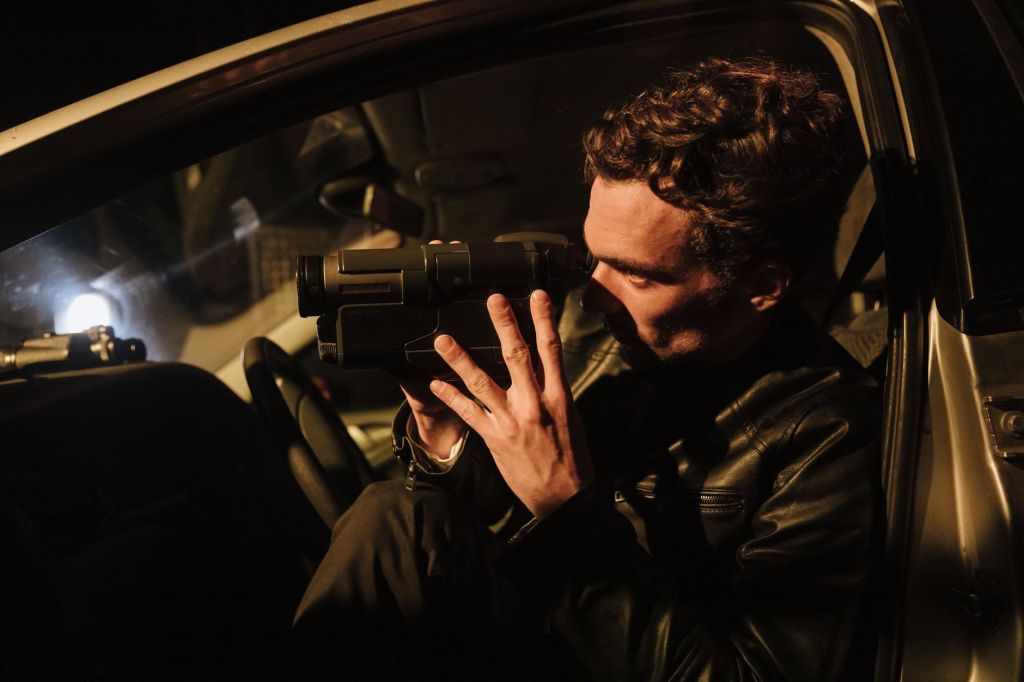
The finest television dramas I have seen over the last twenty years have all revolved around crime. The Wire. Breaking Bad. Better Call Saul. Justified. Fargo. Rectify. That last series remains criminally overlooked. It deserves to stand beside the others in television’s pantheon. In my view, it is one of the greatest shows ever made.
What these crime dramas share is not merely murder, drug trafficking, corruption, or law enforcement. They share a darker and more unsettling premise: human beings are not naturally reasonable creatures. Left to our own devices, we are capable of astonishing selfishness, cruelty, irrationality, and self-destruction. We require guardrails—family, community, moral codes, social expectations, religion, friendship, duty—to keep us from driving straight into the ditch. Remove those restraints and entropy takes over. The result is a Bosch painting come to life: chaos, degradation, madness, and suffering spreading outward from a single bad decision.
Crime stories force writers to confront the largest questions human beings can ask. What is justice? Can evil be redeemed? How much corruption can a person tolerate before becoming corrupted himself? Is there a point of no return? How do you preserve your sanity after staring directly into the abyss? How do you maintain faith in the value of human life when surrounded by sociopaths who treat other people as disposable objects?
Given my immersion in fictional crime, perhaps it was inevitable that I would eventually tumble down the true-crime rabbit hole. Over the past year, I have consumed an embarrassing number of crime documentaries and docuseries. Among them, The First 48 stands apart.
The premise is simple: homicide detectives in cities such as Atlanta, Tulsa, Miami, Memphis, New Orleans, Cleveland, Minneapolis, Dallas, and Kansas City race against the clock to solve murders during the critical first forty-eight hours after a killing. Some suspects are criminal masterminds. Most are not. Many possess the strategic sophistication of a raccoon trapped in a garbage can.
The detectives, meanwhile, perform a strange form of civic triage. They comfort grieving families. They persuade reluctant witnesses. They canvas neighborhoods. They interrogate suspects. They sift through surveillance footage. They survive on cold pizza, convenience-store coffee, and whatever fragments of sleep they can steal before the next phone call drags them back into the darkness.
What strikes me most about these shows is not violence.
It is truth.
More precisely, the absence of it.
Every case begins buried beneath layers of deception. Witnesses lie. Suspects lie. Friends lie. Family members lie. People lie reflexively, habitually, and often for no discernible reason. The default setting seems to be: conceal, evade, distort, deny.
A detective asks a simple question.
The witness responds as if he has been asked to surrender state secrets.
Only when the evidence becomes overwhelming—when the walls close in and every escape route has been blocked—does the truth begin to emerge.
Watching these detectives, I am struck by the almost spiritual nature of their work. In a world thick with confusion, self-interest, manipulation, and darkness, they devote enormous portions of their lives to pursuing a single objective: finding out what actually happened.
They sacrifice evenings with their families. They sacrifice sleep. They sacrifice peace of mind. Day after day, they stare directly into humanity’s ugliest impulses and insist that the truth be uncovered, that the dead be given a voice, and that justice be given a chance.
Perhaps that is why crime stories continue to hold my attention while so much other television feels disposable. The stakes are existential. The conflict is ancient. Truth versus deception. Light versus darkness. Order versus entropy.
Once you become absorbed in that struggle, it becomes difficult to care very much about who got voted off the island.
 Cinemorphosis
Leave a comment