Blog

  • How Soon Is Theft?

    How Soon Is Theft?

    In 1990, I was in my late twenties, a newly minted college writing instructor drifting through life with the ethereal soundtrack of The Smiths, the Cocteau Twins, The Trash Can Sinatras, and The Sundays rattling in my head. One afternoon on Hollywood Boulevard with my girlfriend, I did what any self-respecting young melancholic would do: I bought Smiths T-shirts and posters like sacred relics. The crown jewel was my “How Soon Is Now” poster, a portrait of an angst-drenched youth in a gray cable-knit sweater, gazing downward as if staring into the abyss. I taped it proudly to my office door, a shrine to my tribe. Within a week, it was gone—stolen.

    The theft still smolders decades later. It wasn’t just the insult of having something ripped from my door; it was the betrayal of the faith I placed in The Smiths’ congregation. Their music was heartbreak bottled into beauty, sadness transmuted into community. To love The Smiths, I believed, was to be incapable of theft. Fans were supposed to be fellow pilgrims on the same road to melancholy salvation. You don’t rob your brother of his relics. You light a candle with him and hum “There Is a Light That Never Goes Out.”

    But there it was: my poster ripped away not by a barbarian from the outside, but by a fellow initiate. The irony was unbearable. If The Smiths could not protect us from base impulses, if their music could not ennoble even their most ardent listeners, then what was art worth? Wasn’t it supposed to make us better, kinder, less brutish? The theft of that poster wasn’t just petty larceny. It was the murder of a principle.

    To this day, I remember the empty rectangle of tape marks left on my office door, staring back at me like a smirk from the abyss. The thief didn’t just pocket a poster; they handed me a lesson in nihilism, gift-wrapped in Morrissey’s sorrowful croon. And I’ve been suspicious of beauty ever since, knowing it can inspire devotion and betrayal in the same breath.

  • The University as Hospice, the Gym as Cathedral

    The University as Hospice, the Gym as Cathedral

    In Jordan Castro’s scabrous novel Muscle Man, the protagonist, English professor Harold, concludes that the American university is dead. It’s only alive in a creepy, sad sort of way–zombification–manifest in online posts for events that no one goes to. These events are announced in emails as “exciting,” “excited,” and “please join.” No one joins. Other emails announce “calls to action,” and no one acts. They just remain lizard-eyed and stolid. These events are exercises in soul-crushing banality. Rather than a place to nurture young minds, the American university is so encumbered by bureaucratic speak and irrelevant, esoteric academic theories, it is an impotent institution and a graveyard where people go to die. 

    Perhaps Harold just needs a hug. Or perhaps he has cracked the code. He sees in the constant flood of college email announcements a desperate plea to be heard and to be irrelevant while being buried by its own fecklessness.

    The state of the college, especially the humanities, seems especially imperiled and moribund in the A.I. Age where students outsource writing, creativity, and “critical thinking” to machines and instructors are too feeble to stop the tsunami of these disrupting, revolutionary information and language tools.  

    As higher education looks more and more like a forlorn dinosaur and clings to stale identitarian platitudes and “progressive pedagogies” to cling to relevance, Harold surely must fret his own irrelevance and seek sanctuary in his bodybuilding dreams–curling iron as the cathedral of meaning and protein shakes as sacrament. In a world where the humanities have become the walking dead, at least the pump feels alive.

  • Bench Pressing the Bureaucracy

    Bench Pressing the Bureaucracy

    By the time we get to Chapter 3 in Jordan Castro’s Muscle Man, we get the sense that its protagonist English professor and aspiring bodybuilder Harold is having a sort of mental breakdown. His disconnection from colleagues and students alike has caused him to retreat into his self-created bodybuilding ecosystem where he soothes himself with fitness apps, macros, and hypertrophic training phases. In this regard, Harold is following the footsteps of Samuel Wilson Fussell’s descent into madness, acute anxiety, and misanthropic paranoia, which was chronicled in Fussell’s 1991 memoir Muscle: Confessions of an Unlikely Bodybuilder.  

    In Harold’s case, department meetings are particularly odious and affect him like kryptonite. After a meeting, his gym workouts are like purgations of the silly meeting indoctrination and in his best workouts he exorcises the academia demons from his system and enjoys temporary relief before returning to the academic hellscape. 

    Part of the hellscape is the constant flow of campus emails informing him of “investigations” and “alerts” for a myriad of on-campus crimes. Violence, theft, random deaths, and perversion is chronicled in these emails so that the campus is less of an academic institution and more of an abandoned bus stop in the Land of Nowhere.

    To add to the absurdity, Harold receives follow-up emails about violent crimes on campus that use the violence as an opportunity to explore systemic causes of violence and “to consider new ways of thinking about how we might better relate to and understand one another.” 

    The students’ illiterate emails add to the hellscape. The students never ask for ways to improve their work. Rather, they demand higher grades in typo-laden emails that contain no punctuation or coherent sentence structure.

    Harold is inundated with a flood of thousands of emails that overwhelm him and expose the fact there is no such thing as free time, but a life imprisoned to bureaucratic thought manifest in a deluge of meaningless and absurd emails that demand attention and guarantee that your life will be squandered and rendered into nihilism. 

    The campus is less an educational sanctuary and more of a manifestation of comedian George Carlin’s famous observation that when you’re born, you get a free front-row ticket to the freak show. 

    For Harold, that freak show has all the bruising force of a compound fracture. His only painkiller is the gym: the curling bar as Percocet, the glute bridge as Prozac. Without the dumbbell’s cold salvation, Harold would drown in the bureaucratic sewage of his academic nightmare.

  • The Bodybuilding Gollum of Shepherd College

    The Bodybuilding Gollum of Shepherd College

    In Jordan Castro’s Muscle Man, paranoia has a name: Harold, a disgruntled English professor who stalks the halls of Shepherd College convinced his masculinity is shriveling under fluorescent lights and academic jargon. The place is no sanctuary of learning but a mausoleum of joyless theory—an institution where semiotics and power structures reign supreme, while Harold dreams of biceps, protein macros, and shredded abs. To him, the Priests of the Intellect are laughable scarecrows, their bodies soft as tomatoes skewered on toothpicks, their credibility dissolving with every Oreo they dunk between papers on Derrida.

    Banished to a basement classroom without sunlight, Harold becomes a musclebound Gollum snarling at his colleagues above, who bask in daylight and collegial belonging. Faculty meetings are his personal hell: an ordeal as odious as wisdom-teeth extractions performed by a dentist with no anesthetic and no soul. While his peers pontificate about “backward design” and “cohorts,” Harold visualizes his metabolism torching fat, each fiber of muscle flexing like a Renaissance sculpture coming alive.

    What makes Harold truly unhinged is Shepherd College itself—a cult in mortar and brick, built on the deranged philosophy of the late R.K. Mort, who declared that architecture should “infect” and “haunt” its inhabitants. Mort’s disciples fawn over his absurdities as if he were an academic messiah, turning the college into a dehumanizing theme park of theory. It’s Severance with faculty ID cards.

    As a lifelong bodybuilder trapped in academia myself, I relate to Harold’s plight more than I’d like to admit. Yet I nearly hurled the book across the room when Harold showed up to his interminable meeting without food. A man obsessed with protein who forgets to pack a meal? Unforgivable. In my forty years of teaching, I never once forgot to bring my Tupperware of chicken breast or Greek yogurt to the institutional trenches. I wanted to shout at the page: “Get in the game, Harold! Respect the gains!” Still, his misfit rage and comic pathos hook me. Harold may be a wreck, but he’s my kind of wreck.

    I’m only two chapters in but eager to consume the entirety of this delicious satire.

  • How I Bribed My Students Into Talking on Canvas Discussion Boards

    How I Bribed My Students Into Talking on Canvas Discussion Boards

    Yesterday’s meeting featured the usual bureaucratic chestnut: making sure our online writing classes don’t devolve into glorified correspondence courses. The mandate was clear—students must get quick feedback from us, know how to contact us, have a tech-support lifeline, understand what materials to buy (not a $3,000 MacBook Pro?), and, above all, know the bare minimum of interaction they’ll have with their online peers.

    That interaction lives on the Canvas Discussion Board, which we’re told is the beating heart of digital education. From hard experience, I know this: if I don’t attach points, those boards become ghost towns. Students treat “attendance only” discussions like spam mail. The secret motivator is points—no matter how meager. Even the stingiest point values light up student survival instincts. They’d rather wrestle with a tedious prompt than lose three points.

    So here’s my new math for online classes:

    • Three 1,700-word essays: 220 points each.
    • Six building blocks (a.k.a. formative assignments): 50 points each.
    • Eight Discussion Board prompts: 5 points each.

    That’s the full enchilada: 1,000 points. Students stay engaged, the boards don’t wither, and I can claim my class is more than digital pen pals swapping files in the void.han digital pen pals swapping files in the void.

  • The Shock Jock Who Forgot to Pivot

    The Shock Jock Who Forgot to Pivot

    I still tune in to Howard Stern now and then, but most of what I hear these days sounds like a half-hearted reprise of his old shtick—sophomoric gags, body-function chatter, and adolescent innuendo that once jolted the airwaves but now just sag. In his prime, Stern was combustible: he blended pranks, irreverence, and enough genuine insight to keep his circus from collapsing. He earned his Radio Hall of Fame status by kicking down doors no one else dared touch.

    Now, as rumors of his retirement bubble and I endure his weary, autopilot banter with Robin, three thoughts claw at me. First: they don’t sound like they’re having fun anymore. This is a zombie act, plodding through the motions. Second: filling three hours of airtime every single day is a Sisyphean curse—nobody has that much worth saying without stuffing the sausage with sawdust. Third: we all have a shelf life. Relevance expires, and dignity demands a graceful exit.

    Stern’s curse is worse than most. His career persona—edgy, raunchy, forever pandering to prurience—has gone stale, but he’s trapped in it. The irony is brutal: a man smart enough to evolve chose to calcify. A decade ago, he could have pivoted, shed the shock-jock skin, and re-emerged as the wise veteran with conversations that mattered. Instead, while podcasts multiplied like caffeinated rabbits, he let himself be left behind.

    But maybe it isn’t too late. Imagine Howard 2.0: no longer the carnival barker of Sirius, but the philosopher-in-residence of his own café, sipping coffee and musing about culture, mortality, and meaning. Not fifteen hours of filler a week, but four hours of distilled insight—an hour twice a week, sharp and substantive. Podcasting is radio’s heir, and radio is in his DNA. Reinvention is the only antidote to irrelevance, and if he can summon the nerve, Stern could still surprise us.

  • The Man Who Always Waved

    The Man Who Always Waved

    When my twins were born in 2010, I spent years pacing the sidewalks of my Torrance neighborhood with them—first in a stroller, then a wagon, and eventually on their own unsteady feet. Along those same sidewalks shuffled old couples with dogs, walkers, and time to spare. Sometimes one half of a pair would vanish, leaving the other to walk alone, and soon enough that figure too disappeared from the neighborhood stage. I never knew most of their names, yet I felt tethered to them; they would smile at my daughters, wave with fragile hands, and in that exchange I saw the cycle of life laid bare: the beginning in my stroller, the ending in their absence.

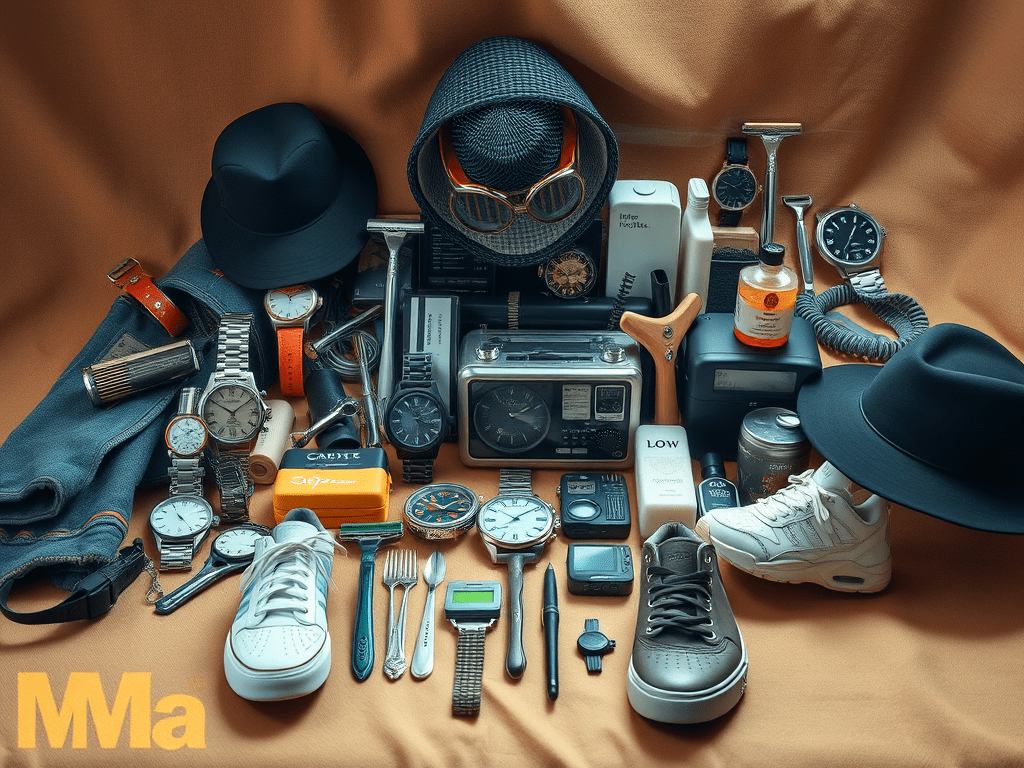
    One man I did know by name—Frank. I don’t recall how we met, but I remember the details: his beige Volvo station wagon, the clever mirror nailed to the tree behind his house so he could back out with precision. Frank looked to be in his late sixties in 2010. He walked the neighborhood with brisk efficiency, always in uniform—olive shorts, white T-shirt, glasses perched on his nose, a beige bucket hat shading his face, and a small wristwatch on a leather band, which he consulted like a man keeping an appointment with life itself.

    He reminded me of a restrained Ned Ryerson from Groundhog Day: perhaps square at first glance, but steady, decent, reliable. No matter how intent he was on his route, he never failed to lift a hand in greeting. The wave was never exuberant, never perfunctory—it was graceful, automatic, the gesture of a man who seemed stitched together with quiet goodness. His wife matched him in cheer, and though I never learned her name, she radiated authenticity. They were a pair who seemed to exist outside of fashion, untouched by fads or pretensions.

    Over time, I realized they had become more than neighbors to me. They were a balm against my cynicism, proof that stability, kindness, and simple decency still existed in a world that seemed allergic to all three. Which is why, six months ago, while lifting weights in my garage, I felt a chill: What happened to Frank? I hadn’t seen him in ages. He would be in his eighties now. Surely he hadn’t slipped away unnoticed?

    Then, this morning, as I turned into my neighborhood after dropping my daughters at high school, I saw him. Frank, unchanged, same outfit, same bucket hat, same little watch. I raised my hand. He raised his. And before I knew it, a tear streaked my cheek.

  • The Tabloid Mind Vs. The Thoughtful Mind

    The Tabloid Mind Vs. The Thoughtful Mind

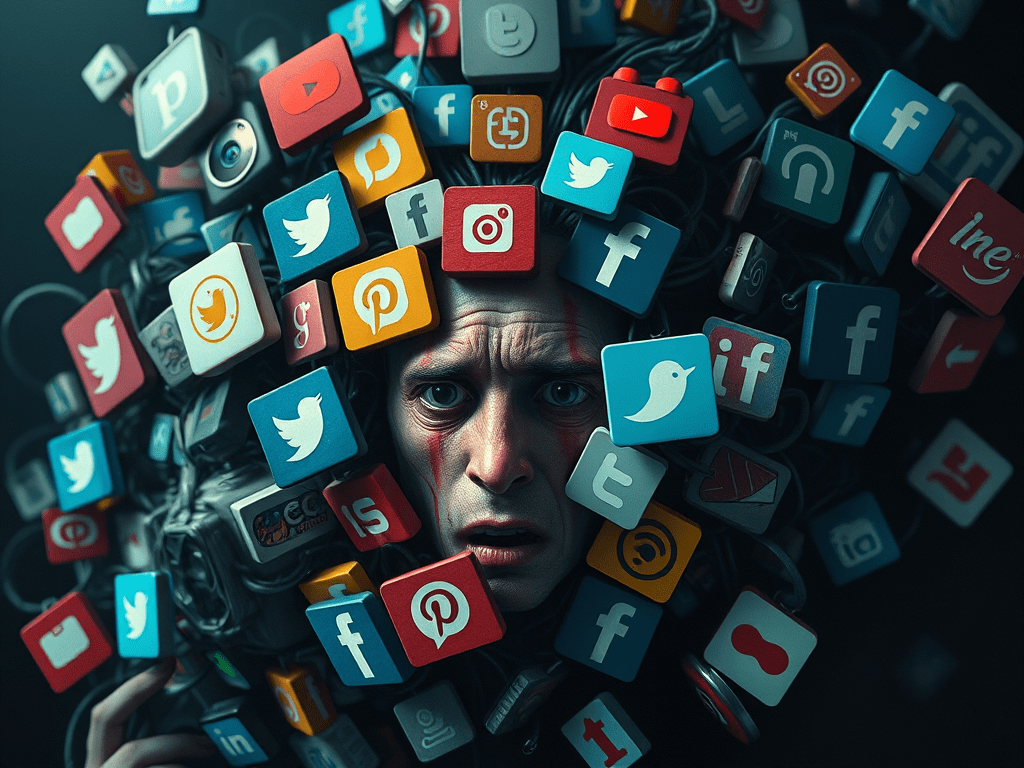
    The verdict is in: after fifteen years of running their experiment on us, social media has mangled the human psyche. It has sandblasted away nuance, turned civility into snarling, and left us performing as shrill tribal mascots. The trouble begins with its essence: an Attention Machine. Every scroll is a sugar hit for the brain—quick spike, hard crash. We learn the trick ourselves, spitting out content like human Pez dispensers, packaging our thoughts as candy for the feed.

    Belonging is rationed out in likes and retweets, and the cost is subtlety. To win attention, you don’t weigh both sides—you crank the volume, you caricature, you inflame. What begins as a hook metastasizes into belief. We develop the Tabloid Mind: the reflex to turn every notion into a screaming headline. And once we inhabit the Tabloid Mind, we degrade, becoming not better humans but better performers for the algorithm.

    The Thoughtful Mind never stood a chance. A Tabloid platform attracts tens of millions; the Thoughtful Mind, if lucky, limps along with scraps. Yet the difference is stark. The Thoughtful Mind asks, listens, considers contradictions, and cools the room so clarity can thrive. The Tabloid Mind, by contrast, thrives on panic and rage, reducing discourse to a lizard-brain cage match where opponents are demons and the fire must never go out.

    A culture enthroned by the Tabloid Mind breeds paranoia, extremism, conspiracy, and violence. And violence doesn’t need to be shouted—it can be winked into existence by the constant drip of toxic adrenaline.

    I know the alternative exists because I live it daily in the classroom. When my students wrestle with bro culture, influencer fakery, or the cultural fallout of GLP-1 drugs, they do so with humor, nuance, and critical thought. The Thoughtful Mind lives there, in the room, face to face. No one is frothing at the dopamine mouth. No one is shitposting for clout. We disagree, we wrestle, we laugh—but we think.

    The Tabloid Mind is not sustainable. It’s a toxin, and unchecked, it will kill us. Our survival depends on choosing the Thoughtful Mind instead. The fight between them—clickbait versus clarity, heat versus light—is not just cultural noise. It’s the defining battle of our age.

  • Margaritaville for the Damned

    Margaritaville for the Damned

    Last night I dreamed I was marooned in Prescott, Arizona, summering not in a cabin or hotel but in a public park. The grass was cartoonishly green, a kind of chlorophyll utopia, and families sprawled across it like they’d been carefully arranged for a Chamber of Commerce brochure. My suitcase sat at my side like a misplaced airport refugee, and I couldn’t help but wonder: why Prescott? Why not Denver, or somewhere less suffocatingly wholesome, less postcard-perfect?

    Then I looked up. Looming above the park was a billboard—a monstrosity of sun-bleached cheer—featuring a leathery couple in their seventies. They were bronzed like overcooked turkeys, grinning wide, basking in the eternal glow of some Florida condo where “Margaritaville” played on an endless loop. This was not their first rodeo: it was their fifth marriage each, the residue of decades spent riding the carousel of lust, liquor, and litigation. Their message was plastered across the sky: hedonism may lead to divorce court, bankruptcy, and sun-damaged skin, but look—if you just keep grinning, it’s practically a lifestyle brand.

    I felt an almost religious revulsion at the billboard. It was hollow cheer dressed up as wisdom, a glossy ad for despair masquerading as joie de vivre. Pulling my luggage closer, I glanced at my watch and felt relief that my wife and daughters would be joining me soon. The counterfeit joy overhead only made me hunger more for the real life that I have.

  • I’m in a YouTube Video Slump and I Don’t Know Why

    I’m in a YouTube Video Slump and I Don’t Know Why

    My WordPress dashboard tells me I’ve posted on Cinemorphosis for 152 days in a row, as if it’s awarding me the Blogging Olympics medal for “Most Neurotic Streak.” I don’t post daily out of discipline so much as survival. Writing is my mental hygiene—my daily scrub against chaos. Free therapy without the billable hours.

    YouTube, however, is another story. I haven’t made a video essay in over two weeks, and the gap feels like a cyst growing on my confidence. The longer I wait, the heavier the silence becomes, like trying to deadlift after skipping the gym for a month. I want to post, but not just to feed the beast. I don’t want to churn out recycled monologues about my watch obsession or let YouTube’s algorithm turn me into a carnival barker with clickbait headlines and fake urgency.

    It’s not as if I lack material. College just started, and I’m teaching the entire athletic department. A room full of goal-driven athletes who actually follow instructions? For a writing professor, that’s better than tenure. And as a relic from the muscle era of the 70s—Olympic lifts, protein shakes, and the occasional posing oil—I feel a strange kinship with them. We’ve already launched into our first essay assignment: the crisis of masculinity and how Bro influencers like the Liver King peddle snake oil dressed in bison liver. These guys exploit the anxieties of young men the way payday lenders exploit the broke. Can’t buy a house? Don’t worry, kid, buy abs. Tongue-tied around women? No problem, creatine is your Cyrano de Bergerac. The students are eating it up, and for once, their feedback has been better than protein pancakes.

    So why can’t I translate this into a video essay? Maybe because my brain recently short-circuited over something ridiculous: watch straps. I fell down the rabbit hole of FKM rubber straps after reading a study claiming they leach chemicals into your skin. My beloved Divecore straps—once the apex of wrist comfort—suddenly looked like toxic bracelets. I agonized for days, debating whether to bin them, keep them, or wrap my wrists in cheesecloth. The obsession drained me like a bad relationship. In protest, my mind and body staged a walkout, shutting down further watch chatter. For now, I’m taking a mental break. I’m grateful for the watches I have, but I don’t want to rejoin the strap wars or churn out videos about my latest dive into consumer madness.

    So here I am, taking a mental breather, trying to avoid the treadmill of compulsive content. It’s humbling to admit that the blogging streak hides a creative stall. But I know the video essays will return. They always do. Once I shake off the chemical paranoia and algorithm anxiety and process my thoughts, I’ll be back in the groove—hopefully with something worth watching.