Tag: addiction

  • Buy Now, Cry Later: A Watch Addict’s Morning Routine

    Buy Now, Cry Later: A Watch Addict’s Morning Routine

    This morning, I sprang from bed at 5:50 like a man trying to outrun his own restlessness. Coffee in one hand, buckwheat groats in the other—my monkish morning ritual. By 6:20, I was deep into David Brooks’ New York Times lament over the death of the novel, parsing his elegy like a coroner looking for signs of life in a genre comatose under TikTok’s reign.

    I then pivoted to writing a YouTube essay on how to discover your watch identity without torching your bank account or your sanity. This required revisiting my own horological spiral, which could be summarized as: “I bought all the watches so you don’t have to.”

    Then, somewhere between the second paragraph and the first pangs of self-loathing, a thought struck me with the force of a stale TED Talk: I despise one-word-title books. You know the type—Grit, Blink, Regret, Drive, Trust—as if a single syllable can carry the weight of human experience. These are not books; they are glorified blog posts wearing a lab coat. They stretch one mediocre insight across 300 pages like butter scraped over too much toast. Malcolm Gladwell may not have invented this genre, but he certainly weaponized it.

    To be fair, a few have earned their keep: Testosterone, Breathe, and Dopamine Nation didn’t insult my intelligence. But the rest? They’re just placebo pills for the terminally curious.

    By 8:30, my family was still asleep, and I had hit the boredom wall with a dull thud. To numb the ennui, I began configuring a Toyota Camry online—my version of sniffing glue. I checked Southern California inventory as if I were a buyer, even though I won’t be pulling the trigger for at least a year. Classic FOMO, no doubt stirred by my best friend’s recent $70K Lexus purchase. His automotive flex triggered my inner consumer gremlin.

    Next came the Seiko browsing—Astrons, King Seikos, shiny little lies I tell myself in stainless steel form. I’m a man pushing into his 60s. I should be downsizing my neuroses, not accessorizing them.

    Right on cue, a depression fog rolled in. The psychic hangover of retail fantasy. I remembered a dream I’d had the night before: I was adding tofu to someone’s salad to increase their protein. They devoured it like they hadn’t eaten in days. Later in the same dream, I was at a party, where a couple asked me to mentor their autistic daughter. I smiled politely, feeling like a fraud. Me? A mentor? I can barely manage my own dopamine addiction.

    That’s when the epiphany hit like a steel bracelet to the skull: the urge to buy a watch hits hardest when you’re bored, self-pitying, or both. In those moments, a $2,000 watch becomes emotional currency—a metal antidepressant disguised as self-expression. And like all impulsive purchases, it cures nothing but your momentary discomfort.

    I hovered over the “Buy Now” button. Then, mercy. I pulled back.

    At 9:00, one of my twin daughters wandered into the kitchen and asked what happened to the leftover buttermilk pancakes from yesterday. I told her the truth: she’d left the door open when she went to ask the neighbors about babysitting their granddaughter, and a massive fly invited itself in. I saw it licking the pancakes like a dog at a water bowl. Into the trash they went. She laughed. I suggested Cheerios with a scoop of strawberry protein powder. She agreed. In that small, domestic exchange—an absurd fly, a ruined pancake, a shared laugh—I found myself re-entering the land of the living.

    Gratitude, not consumption, had done the trick.

    So now, I prepare for my kettlebell workout, towel in hand, wondering which podcast will offer the most delicious repartee to sweat by. My soul has steadied, for now.

  • DeDopaminification: Breaking Up with the Machine That Loves You Too Much

    DeDopaminification: Breaking Up with the Machine That Loves You Too Much

    DeDopaminification is the deliberate and uncomfortable process of recalibrating the brain’s reward circuitry after years—sometimes decades—of synthetic overstimulation. It’s what happens when you look your phone in the face and whisper, “It’s not me, it’s you.” In a culture addicted to frictionless pleasure and frictionless communication, DeDopaminification means reintroducing friction on purpose. It’s the detox of the soul, not with celery juice, but with withdrawal from digital dopamine driplines—apps, feeds, alerts, porn, outrage, and validation loops disguised as “engagement.”

    In Alone Together, Sherry Turkle diagnosed the psychic fragmentation wrought by constant digital interaction: we’ve become people who talk less but text more, who perform connection while starving for authenticity. In one of her most haunting observations, she notes how teens feel panicked without their phones—not because they’re afraid of missing messages, but because they fear missing themselves in the mirror of others’ attention. Turkle’s world is one where dopamine dependency isn’t just neurological—it’s existential. We’ve been trained to outsource our worth to the algorithmic gaze.

    Anne Lembke’s Dopamine Nation picks up this thread like a clinical slap to the face. Lembke, a Stanford psychiatrist, makes it plain: the modern world is engineered to overstimulate us into oblivion. Pleasure is no longer earned—it’s swipeable. Whether it’s TikTok, sugar, or digital outrage, our brains are being rewired to expect fireworks where there used to be a slow-burning candle. Lembke writes that to reset our internal reward systems, we must embrace discomfort—yes, want less, enjoy silence, and learn how to sit with boredom like it’s a spiritual practice.

    DeDopaminification is not some puritanical rejection of pleasure. It’s the fight to reclaim pleasure that isn’t bankrupting us. It’s deleting TikTok not because you’re better than it, but because it’s better than you—so good it’s lethal. It’s deciding that your attention span deserves a tombstone with dignity, not a death-by-scroll. It’s not heroic or Instagrammable. In fact, it’s boring, slow, sometimes lonely—but it’s also real. And that’s what makes it revolutionary.

  • The Dopamine Dumpster Fire: How I Went from Literary Scholar to Algorithm Addict

    The Dopamine Dumpster Fire: How I Went from Literary Scholar to Algorithm Addict

    In 1979, I went to college—back when students still read entire books and didn’t skim Nietzsche between TikTok scrolls. By 1986, I had a master’s degree in English and a reading habit so fierce it could scare a librarian. This was the Pre-Digital, Pre-Illiterate Age, and I was both smarter and, dare I say, happier. Then came the internet, like a radioactive vending machine of constant stimulation, and within a decade my attention span was fried, my dopamine receptors scorched, and my brain felt like a squirrel on meth.

    Reading Anna Lembke’s Dopamine Nation: Finding Balance in the Age of Indulgence was like holding a mirror up to my own cognitive and emotional decline—except the mirror was cracked and buzzing with notification pings. Lembke, a Stanford psychiatrist with a scalpel-sharp intellect, writes that we live in a world of “overwhelming abundance,” where the smartphone is the modern hypodermic needle, delivering micro-hits of dopamine at all hours like a dealer with unlimited supply and no off switch. Her message is clear: addiction isn’t a fringe problem—it’s the central operating system of modern life.

    Lembke’s insight that “pleasure and pain are processed in the same part of the brain” makes you rethink every moment of scrolling, snacking, shopping, and spiraling. The more dopamine you chase, the more pain you invite in through the back door. It’s like sprinting on a treadmill made of banana peels—every gain is followed by a crash. According to Lembke, addiction rewires your brain to seek shortcuts, and in the process, you become a hollowed-out shell of your former self, one push notification away from an existential crisis.

    I didn’t need convincing. Twenty-five years of living online has made my mind a junk drawer of fragmented thoughts and snack-sized emotions. Lembke explains that many addicts live a double life, a private underworld of shame and secrecy that eats away at their integrity. That rang uncomfortably true. She points to risk factors like having a parent with addiction or mental illness. Bingo. Both my parents were alcoholics, and my mother had bipolar disorder—my genetic cocktail came shaken, stirred, and garnished with a panic attack.

    But the biggest risk factor, Lembke argues, is access. We’re all mainlining the internet every day. The supply has become the demand. The dopamine economy, she says, thrives on overconsumption, normalized by the fact that everyone else is doing it. If your entire community is obsessed with likes, outrage, and FOMO-fueled consumerism, it starts to feel… reasonable. Normal. Even patriotic.

    Social media isn’t just a distraction; it’s a full-blown Outrage Machine, built to keep our emotional hair on fire 24/7. We are like feral raccoons pawing at glowing rectangles, convinced that salvation lies in another dopamine hit—another comment, another package, another numbing episode of low-stakes content. Our collective descent is so absurd it would be funny if it weren’t so bleak.

    Lembke leans on the wisdom of cultural critic Philip Rieff, who observed that we’ve moved from “religious man” to “psychological man”—from seeking salvation to chasing pleasure. Add to that Jeffrey Rosen’s The Pursuit of Happiness, which reminds us that classical philosophy defined happiness not as feeling good, but as being good—the moral life, not the moist towelette of consumer satisfaction.

    But that idea, in our current therapeutic culture, sounds about as appealing as a cold shower in February. We’ve been taught to medicate our moods, sedate our angst, and wrap our trauma in soft blankets of “self-care” that often amount to binge-watching and overeating. Our modern mantra is: “If it hurts, scroll faster.” The result? A crisis of meaning, a society allergic to discomfort, and a spiritual vacuum that smells faintly of Axe Body Spray.

    Lembke calls this the paradox of hedonism: the more you chase pleasure, the less capable you become of feeling it. Hedonism leads to anhedonia—a state in which nothing satisfies. You eat the cake, buy the thing, get the like, and feel… nothing. It’s like winning a prize that turns into a cockroach when you unwrap it.

    Ever since reading Dopamine Nation, I’ve been haunted by a single, searing thought: Maybe I shouldn’t try to feel good. Maybe I should try to be good. But this, in a consumer culture built on instant gratification, feels like a betrayal of the social contract. We’re not just addicted—we’re indoctrinated.

    So here I am, a relic of the Pre-Digital Age, nursing my overstimulated brain, trying to claw my way out of the dopamine pit with a few dog-eared paperbacks and a shortwave radio. Because the real question isn’t how to feel better—but how to live better in a world that confuses stimulation for meaning and pleasure for purpose.

    And if that makes me sound like a cranky monk with Wi-Fi, so be it. I’d rather be a lucid cynic than another dopamine casualty with a glowing screen and dead eyes.

  • 30 Years of Teaching College Writing in the Greatest City in the World

    30 Years of Teaching College Writing in the Greatest City in the World

    Yesterday, in my college critical thinking class, I played a clip from Liza Treyger’s Night Owls set, where she spirals into a monologue about her addiction to animal videos. The class erupted in recognition—Treyger’s bit was less comedy, more collective confession. We then compared the insidious grip of food addiction to the death grip of smartphones, two habits nearly impossible to break because, unlike more glamorous vices, they’re baked into the daily human experience. You have to eat. You have to communicate. And thanks to Pavlovian conditioning, the mere buzz of a notification or the scent of a cheeseburger can hijack your willpower before you even know what hit you.

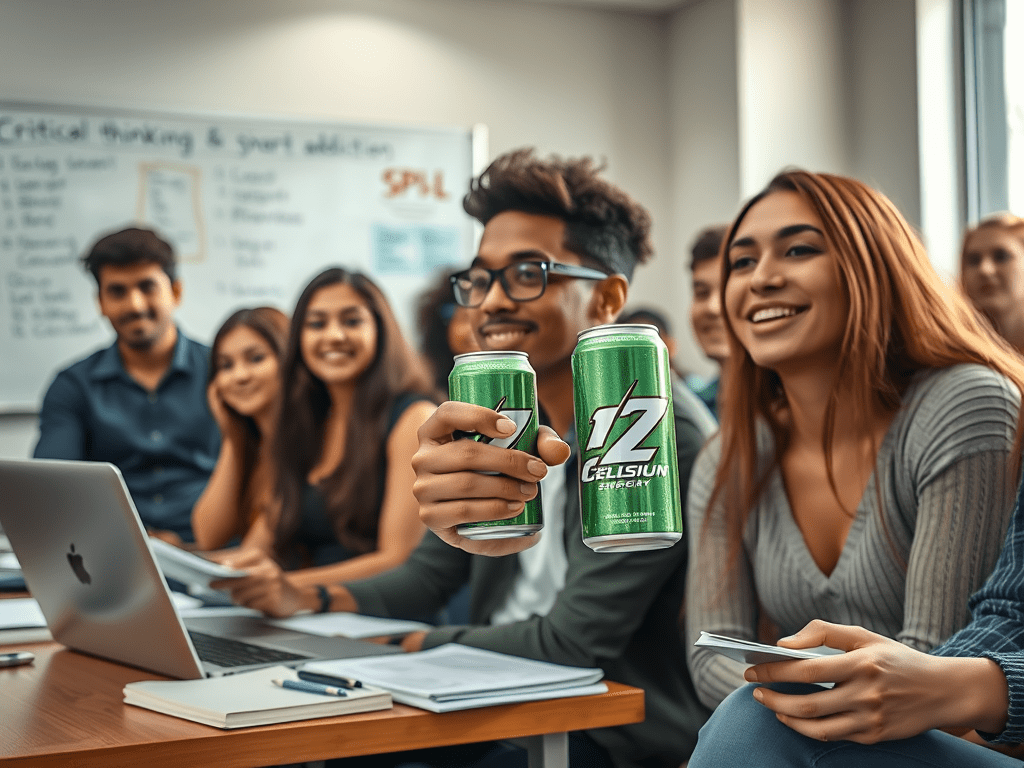
    At one point, I noticed one of my students—a professional surfer—had a can of Celsius energy drink perched on his desk like a talisman of modern endurance. I mentioned that my daughters practically mainline the stuff, to which he casually replied that he was transitioning to Accelerator, as if he were upgrading his addiction to something with a more explosive name. This led us down a delightful rabbit hole about the marketing committee responsible for naming that monstrosity, the raw aggression of Costco shoppers jostling for bulk energy drinks, and how smartphones are turning my students into exhausted zombies. They shared their chosen comfort foods, each confession tinged with equal parts nostalgia and shame.

    The discussion was sharp, lively, and deeply engaging. And yet, in a moment of brutal self-awareness, I admitted to them that I felt pathetic. Here I was, sitting among the chillest students in the world, having a profound conversation about addiction—and all I could think about was ditching class to speed down to Costco and buy a case of Accelerator. They cracked up, and we carried on dissecting addiction for their essay on weight management and free will.

    After thirty years of teaching in Los Angeles, I’m convinced I’ve won the academic lottery. There’s no better place to teach, no better students to challenge my tomfoolery, and no better city to fuel my own ridiculous, completely relatable compulsions.