Tag: art

  • The Cult of Cool: How Fashion Brands Turned Insecurity Into Gold

    The Cult of Cool: How Fashion Brands Turned Insecurity Into Gold

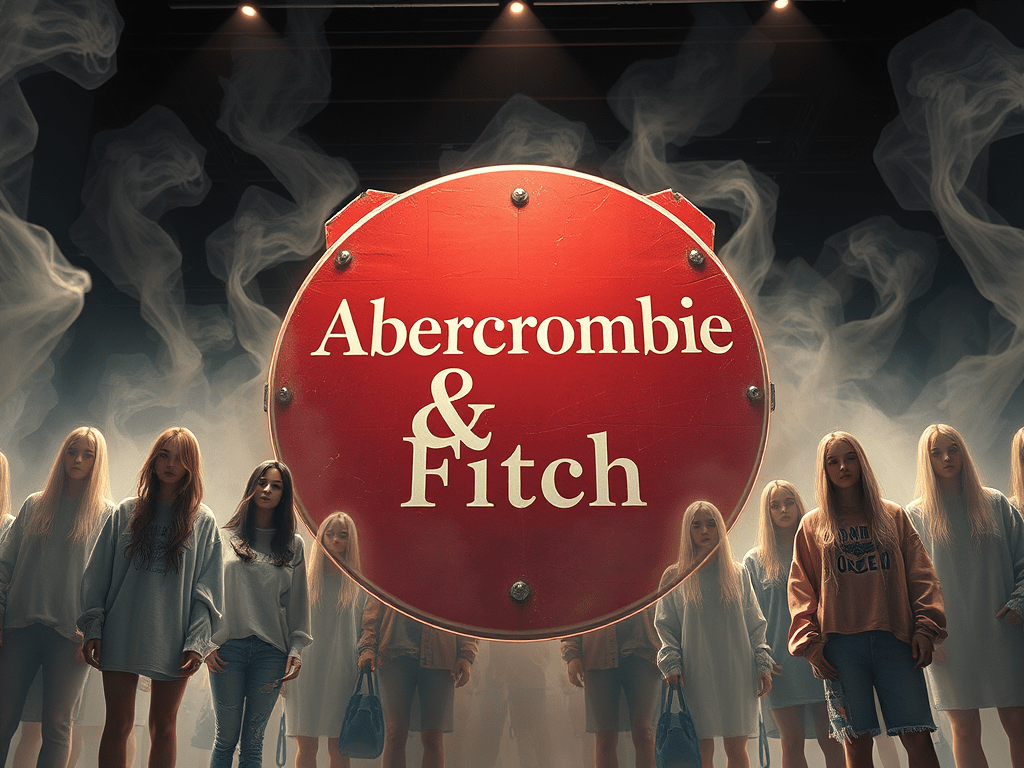
    Three documentaries—White Hot: The Rise & Fall of Abercrombie & Fitch, Brandy Hellville and the Cult of Fast Fashion, and Trainwreck: The Cult of American Apparel—reveal a sobering truth: some of the most iconic youth fashion brands haven’t just sold clothes; they’ve trafficked in identity, manipulated insecurity, and run full-scale psychological cons dressed up as marketing.

    These brands built empires on seductive illusions—creating tight-knit aspirational worlds where beauty, desirability, and social status were pre-packaged into a logo and sold at a premium. The catch? Entry required blind conformity to a narrow aesthetic, behavioral uniformity, and uncritical loyalty. This wasn’t fashion—it was Groupthink in skinny jeans. And behind it all pulsed the emotional engine of modern consumer culture: FOMO, the fear of being left out, unseen, unchosen.

    White Hot, reviewed by Ben Kenigsberg, focuses on Abercrombie’s marketing of “aspirational frattiness”—a euphemism for white exclusivity wrapped in khaki shorts and cologne. It was a smug, muscular nostalgia trip to a sanitized, all-white upper-class fantasy where thinness, wealth, and preppy arrogance were the unspoken requirements for membership.

    At the helm was CEO Mike Jeffries, a marketing savant whose obsession with aesthetic purity bordered on cultic. Under his reign, the company embraced racist T-shirts, discriminatory hiring practices, and a toxic definition of “cool.” His executive team mirrored his vision so fully they might as well have been in a bunker, smiling and nodding as the walls caught fire. Groupthink didn’t just enable the brand’s rise—it ensured its blindness to its own downfall.

    Why revisit Abercrombie now? Because its story is a pre-Instagram case study in the mechanics of cult marketing: how insecurity is mined, branded, and sold back to consumers at 400% markup. My students in the 90s already saw through the ruse—complaining the shirts fell apart in the armpits within a week. What mattered wasn’t the clothing but the illusion of status sewn into every threadbare seam.

    Ultimately, White Hot offers a rare glimpse of justice: a cool brand undone by its own arrogance, its aesthetic no longer aspirational but pitiful. The Abercrombie collapse isn’t just a business story—it’s a warning. When branding becomes religion and coolness becomes a weapon, consumers become disciples in a theology of self-erasure.

  • Truth or Hustle: Performing the Self in the Age of Spectacle (College Essay Prompt)

    Truth or Hustle: Performing the Self in the Age of Spectacle (College Essay Prompt)

    Essay Prompt:

    In the HBO Max special Mike Tyson: Undisputed Truth, Tyson delivers a raw, emotionally charged monologue in which he recounts the highs and lows of his life—abuse, addiction, fame, disgrace, and grief—with moments of striking self-awareness and brutal candor. The performance walks a fine line between personal catharsis and public spectacle.

    In contrast, the Netflix documentary Untold: The Liver King exposes Brian Johnson—a self-styled primal lifestyle influencer—as a constructed persona built on lies, steroid use, and performative masculinity. Johnson’s brand sells authenticity while hiding calculated deception, ultimately revealing the blurred line between self-expression and grift.

    In a 1,700-word essay, analyze and compare how these two figures—Tyson and Johnson—use storytelling as performance, and to what extent their narratives can be seen as acts of truth-telling versus brand management.

    Consider the following questions to shape your argument:

    • What makes storytelling feel “authentic,” and how is that authenticity earned or staged?
    • How do vulnerability and confession function differently in Tyson’s monologue vs. Johnson’s documentary revelation?
    • To what extent are both men grifters—selling pain, performance, or redemption to maintain relevance or profit?
    • Where does the audience’s complicity come into play? Are we consuming truth, or just another curated persona?

    Support your argument with close analysis of both documentaries, and engage at least two secondary sources on authenticity, performance, media, or masculinity.

    Three Sample Thesis Statements (with Mapping Components):


    1. Performance vs. Persona

    While Mike Tyson: Undisputed Truth offers a raw, emotionally grounded form of storytelling that embraces contradiction and vulnerability, Untold: The Liver King reveals a carefully curated identity rooted in deception and spectacle, showing how authenticity can be performed—and faked—for commercial gain.

    Mapping:

    • Tyson’s emotional transparency and narrative arc
    • Liver King’s constructed masculinity and hidden steroid use
    • The commodification of pain and image in public life

    2. Redemption as Product

    Both Tyson and the Liver King use storytelling to shape redemptive narratives, but where Tyson uses confession to reconcile with past chaos, Johnson’s confession serves primarily to preserve his brand—revealing how vulnerability, when monetized, can become just another form of grift.

    Mapping:

    • Redemption arc as performance
    • Strategic confession vs. genuine self-reckoning
    • The role of audience sympathy in validating narrative authenticity

    3. The Grift We Applaud

    Tyson and Johnson exemplify the thin line between storyteller and hustler in modern media culture, where charisma and spectacle blur truth. Ultimately, both rely on the audience’s desire to believe in transformation—whether real or manufactured—making us complicit in their self-mythologies.

    Mapping:

    • The myth of the fallen hero vs. the primal guru
    • Audience complicity in enabling the performance
    • Spectacle as the currency of truth in influencer culture

    Suggested Reading List


    On Authenticity & Performance:

    1. Erving Goffman – The Presentation of Self in Everyday Life
      Classic text on how individuals perform identity for social audiences.
    2. Lionel Trilling – Sincerity and Authenticity
      A deeper philosophical look at how authenticity has evolved as a moral and aesthetic concept.
    3. Andrew Potter – The Authenticity Hoax
      A critique of how “authenticity” has been commodified and repackaged as lifestyle branding.

    On Grift, Media, and Branding:

    1. Chris Hedges – Empire of Illusion
      Sharp cultural critique on how entertainment has replaced reality, and spectacle has displaced truth.
    2. Naomi Klein – No Logo (selections)
      On the rise of personal branding and the corporatization of identity—relevant to the Liver King’s monetization of lifestyle.
    3. Alissa Quart – Branded: The Buying and Selling of Teenagers
      Helps contextualize how audiences, especially younger ones, are trained to consume personality as product.

    On Masculinity and Image:

    1. Susan Faludi – Stiffed: The Betrayal of the American Man
      Explores how modern men feel disconnected from authentic purpose and turn to performance and power narratives.
    2. Michael Kimmel – Guyland: The Perilous World Where Boys Become Men
      Useful for analyzing the Liver King’s appeal to adolescent masculine ideals rooted in tribalism, strength, and dominance.

  • Borderline Strauss Disorder: A Dream of Intellectual Despair

    Borderline Strauss Disorder: A Dream of Intellectual Despair

    Last night, around 2 a.m., just as Jonah Goldberg of The Remnant podcast was deep in philosophical flirtation with Yale’s Steven Smith over Leo Strauss, I passed out—headphones still in, brain still humming.

    And then the dream began.

    I found myself in my grandfather’s old house in San Pedro, a stuccoed mid-century bunker that always smelled faintly of pipe smoke and baked ziti. Inside the library—yes, he had a library—Goldberg and Smith were now with me, and the three of us were doing what all good podcasters and aging humanities majors dream of doing: pulling crumbly tomes off dusty shelves, quoting Epictetus, Hobbes, and Plato as if our curated selections might finally bring Western Civilization back from the brink.

    Each book we grabbed opened, magically, to the exact passage we were about to reference—as if we were wielding Philosopher’s Stones bound in cracked leather. This was not casual reading. It was apocalypse-proof intellectual spelunking.

    Then I noticed something troubling.

    Through the window, I saw a teenage blonde girl in a baby-blue station wagon idling at the curb. She looked like a cross between a cheerleader and a Bond villain’s niece—beautiful, yes, but with the dead-eyed calm of someone about to burn down your ideas with surgical precision. Turns out she was an operative, dispatched by some shadowy organization convinced that our late-night Straussian exegesis was a threat to human progress.

    Naturally, I sprinted outside, confronted her, and commandeered the station wagon—which, of course, was loaded with weapons. Jonah, ever the podcast professional, called “his people” to secure the contraband.

    But there was a cost.

    Simply standing too close to the weapons cache scrambled the circuitry of my brain. My synapses went sideways, and a mysterious doctor appeared—seemingly conjured from a BBC miniseries and a Jungian archetype—with a scroll. Not a Kindle, not a clipboard. A scroll.

    He began to read aloud. Stories, essays, fragments—some of it fiction, some of it possibly academic, none of it optional. He read in a solemn, droning cadence, pausing only to gesture that I join in. At times, we performed the text together like an absurd Socratic duet. This was not medicine. It was literary waterboarding.

    The treatment drew attention.

    Soon, Goldberg turned the whole ordeal into a dinner party. Somehow, he located several of my retired faculty colleagues and invited them, with their long-suffering wives, to my grandfather’s house. I wanted to talk to them—reconnect, reminisce—but the doctor stuck to me like a parasite with tenure. Wherever I went, he followed, reading, always reading.

    My colleagues grew irritated and drifted off one by one, muttering about boundaries and bad acoustics. I tried to hide in the bean bag room—yes, this house apparently had a bean bag room—but the doctor found me, unfurled his accursed scroll, and picked up where he left off.

    I realized, in that moment, I was trapped. Pinned inside a philosophical purgatory where the punishment wasn’t fire or ice, but relentless interpretation. Eternal footnotes. Bibliographic water torture. I would never leave. Not until I understood the real meaning of the text. Or until a full bladder awakened me.

    Thankfully, the latter came first.

  • College Essay Prompt: Performance, Collapse, and the Hunger for Validation

    College Essay Prompt: Performance, Collapse, and the Hunger for Validation

    In the Black Mirror episode “Nosedive,” Lacie Pound carefully curates her public persona to climb the social ranking system, only to experience a spectacular breakdown when her performative identity collapses. Similarly, in the Netflix documentary Untold: The Liver King, Brian Johnson (aka the Liver King) constructs a hyper-masculine brand built on ancestral living and self-discipline, but his digital persona unravels after his steroid use is exposed—calling into question the authenticity of his entire identity.

    Drawing on insights from The Social Dilemma and Sherry Turkle’s TED Talk “Connected, but alone?”, write an 8-paragraph essay analyzing how both Lacie Pound and the Liver King experience breakdowns caused by the pressure to perform a marketable self online. Consider how their stories reveal broader truths about the emotional and psychological toll of living in a world where self-worth is measured through digital validation.

    Instructions:

    Your essay should have a clear thesis and be structured as follows:

    Paragraph 1 – Introduction

    • Briefly introduce Lacie Pound and the Liver King as case studies in digital performance.
    • State your thesis: What common psychological or social dynamic do their stories reveal about life in the attention economy?

    Paragraph 2 – The Rise of the Performed Self

    • Explain how Lacie and the Liver King construct public identities tailored for approval.
    • Use The Social Dilemma and/or Turkle to support your claim about the pressures of online self-curation.

    Paragraph 3 – The Collapse of Lacie Pound

    • Analyze the arc of Lacie’s breakdown.
    • Show how social scoring leads to isolation and emotional implosion.

    Paragraph 4 – The Unmasking of the Liver King

    • Describe how his confession undermines his brand.
    • Discuss the role of digital audiences in both elevating and dismantling him.

    Paragraph 5 – The Role of Tech Platforms

    • How do algorithms and platforms reward performance and punish authenticity?
    • Draw from The Social Dilemma for evidence.

    Paragraph 6 – The Illusion of Connection

    • Use Turkle’s TED Talk to explore how both characters are “connected, but alone.”
    • Consider their emotional lives behind the digital façade.

    Paragraph 7 – A Counterargument

    • Could it be argued that both Lacie and the Liver King benefited from their online identities, at least temporarily?
    • Briefly address and rebut this view.

    Paragraph 8 – Conclusion

    • Reaffirm your thesis.
    • Reflect on what their stories warn us about the future of identity, performance, and mental health in the digital age.

    Requirements:

    • MLA format
    • 4 sources minimum (episode, documentary, TED Talk, and one external article or scholarly source of your choice)
    • Include a Works Cited page

    Here are 7 ways Lacie Pound (Black Mirror: Nosedive) and the Liver King (Untold: The Liver King) were manipulated by social media into self-sabotage, drawn through the lens of The Social Dilemma and Sherry Turkle’s TED Talk “Connected, but alone?”:


    1. They Mistook Validation for Connection

    Turkle argues we’ve “sacrificed conversation for connection,” replacing real intimacy with digital approval.

    • Lacie chases ratings instead of relationships, slowly alienating herself from authentic human bonds.
    • The Liver King builds a global audience but admits to loneliness and insecurity beneath the performative bravado.

    2. They Became Addicted to the Performance of Perfection

    The Social Dilemma explains how platforms reward idealized personas, not authenticity.

    • Lacie’s entire life becomes a curated highlight reel of fake smiles and forced gratitude.
    • The Liver King obsessively maintains his primal-man image, even risking credibility and health to keep the illusion intact.

    3. They Were Trapped in an Algorithmic Feedback Loop

    Algorithms feed users what keeps them engaged—usually content that reinforces their current identity.

    • Lacie’s feed reflects her desire to be liked, pushing her deeper into a phony aesthetic.
    • The Liver King is incentivized to keep escalating his primal stunts—eating raw organs, screaming workouts—not because it’s healthy, but because it gets clicks.

    4. They Confused Metrics with Meaning

    The Social Dilemma reveals how “likes,” views, and follower counts hijack the brain’s reward system.

    • Lacie sees her social score as a measure of human worth.
    • The Liver King sees followers as a proxy for legacy and success—until the steroid scandal exposes the hollowness behind the numbers.

    5. They Substituted Self-Reflection with Self-Branding

    Turkle notes that in digital spaces, we “edit, delete, retouch” our lives. But that comes at the cost of honest self-understanding.

    • Lacie never pauses to ask who she is outside the algorithm’s gaze.
    • The Liver King becomes his own brand, losing sight of the person beneath the loincloth and beard.

    6. They Were Driven by Fear of Being Forgotten

    Both characters fear digital invisibility more than real-world failure.

    • Lacie’s panic when her rating drops is existential; she’s no one without her score.
    • The Liver King’s confession comes only after public exposure threatens his empire—because relevance, not truth, is the ultimate currency.

    7. They Reached a Breaking Point in Private but Fell Apart in Public

    The Social Dilemma highlights how tech is designed to capture our attention, not care for our well-being.

    • Lacie breaks down in front of an audience, her worst moment recorded and shared.
    • The Liver King’s undoing is broadcast to the same crowd that once idolized him—turning shame into spectacle.

    Three Sample Thesis Statements

    1. Basic (Clear & Focused):

    Both Lacie Pound and the Liver King suffer emotional breakdowns because they become trapped by the very social media systems they believe will bring them success, as shown through their obsession with validation, performance, and visibility.


    2. Intermediate (More Insightful):

    Lacie Pound and the Liver King, though separated by fiction and reality, both represent victims of an attention economy that rewards curated identities over authentic living—ultimately leading them to sacrifice mental health, integrity, and human connection for the illusion of approval.


    3. Advanced (Nuanced & Sophisticated):

    As Lacie Pound and the Liver King spiral into public self-destruction, their stories expose the way digital platforms—backed by algorithmic manipulation and cultural hunger for spectacle—transform the self into a brand, connection into currency, and identity into a high-risk performance that inevitably collapses under its own artifice.

  • Out of the Sunken Place: Literacy, Identity, and Resistance in American Media and History: A College Essay Prompt

    Out of the Sunken Place: Literacy, Identity, and Resistance in American Media and History: A College Essay Prompt

    Essay Prompt:

    In Jordan Peele’s Get Out, the “Sunken Place” is a haunting metaphor for racial oppression, psychological erasure, and the paralysis of learned helplessness. In Childish Gambino’s “This Is America,” we witness the chaos and spectacle that distract from—and contribute to—that same systemic dehumanization. Across both works, the Sunken Place is not just a cinematic device—it is a chilling representation of the Black American experience under white supremacy, media manipulation, and cultural exploitation.

    Meanwhile, in Narrative of the Life of Frederick Douglass and Spike Lee’s movie Malcolm X, we see two historical figures who not only diagnosed their own versions of the Sunken Place but fought like hell to escape it—and to pull others out with them. Both men confront the dehumanizing force of racism, the danger of false identity imposed by the dominant culture, and the urgent need for self-definition through education, oratory, and rhetorical power.

    Your Task:

    Write a well-structured, argumentative essay in which you compare and analyze how the Sunken Place operates as a metaphor for racial oppression in Get Out and “This Is America,” and then examine how Frederick Douglass and Malcolm X function as heroes because they:

    • Identified and articulated the psychological and cultural dimensions of the Sunken Place,
    • Used literacy and self-education to transform their consciousness and identity,
    • Embraced self-reinvention to reject the roles society had written for them,
    • And wielded rhetoric, public speech, and writing as tools of resistance and uplift.

    Your Essay Should:

    • Develop a clear thesis that connects all four texts and takes a position on why Douglass and Malcolm X are essential in the larger conversation about the Sunken Place.
    • Use specific evidence from the film Get Out, the music video “This Is America,” Narrative of the Life of Frederick Douglass, and Spike Lee’s Malcolm X.
    • Analyze how self-reinvention and literacy act as tools of resistance in both historical and contemporary contexts.
    • Explore the power of rhetoric and performance—whether in speeches, writing, or visual media—as a means of disrupting oppression.
    • Consider how media, identity, and oppression intersect across the past and present.

    Length: 1,700–2,000 words

    Format: MLA, double-spaced, 12-point Times New Roman

    Sample 9-Paragraph Essay Outline: Out of the Sunken Place

    I. Introduction

    • Hook: A striking image or quote from Get Out or Douglass’s memoir that captures the feeling of being silenced, erased, or controlled.
    • Context: Briefly introduce the concept of the Sunken Place and how it serves as a metaphor for racial oppression in both modern media and historical reality.
    • Thesis: Jordan Peele’s Get Out and Childish Gambino’s “This Is America” depict the Sunken Place as a form of psychological and cultural imprisonment, while Frederick Douglass and Malcolm X represent heroic resistance through literacy, self-reinvention, and rhetoric—tools they used to break free from the false identities imposed by a racist society and to help others escape as well.

    II. Paragraph 1: The Sunken Place as Metaphor in Get Out

    • Analyze the concept of the Sunken Place in Peele’s film as a visual and psychological metaphor for helplessness, erasure, and loss of agency.
    • Discuss how the character of Chris embodies this forced subjugation.
    • Connect the visual metaphor to systemic racism and cultural silencing.

    III. Paragraph 2: Spectacle and Distraction in “This Is America”

    • Analyze how Childish Gambino’s video presents Black suffering behind the mask of American entertainment and spectacle.
    • Examine the use of chaos, dance, and violence as metaphorical distractions from systemic oppression.
    • Connect to the Sunken Place as a cultural state where truth is obscured by media performance.

    IV. Paragraph 3: Douglass Diagnoses and Escapes the Sunken Place

    • Show how Douglass identifies slavery not just as physical bondage but as psychological erasure.
    • Analyze how literacy becomes his path out of the Sunken Place.
    • Use key moments from the memoir (e.g., learning to read, confrontation with Covey).

    V. Paragraph 4: Malcolm X and the Power of Self-Reinvention

    • Explore how Malcolm X’s transformation (Malcolm Little → Detroit Red → Malcolm X) illustrates his escape from imposed identity.
    • Discuss how the prison-to-platform arc parallels Douglass’s journey.
    • Emphasize the role of reading, writing, and faith in his transformation.

    VI. Paragraph 5: Literacy and Rhetoric as Weapons of Resistance

    • Compare how both men use writing and oratory as tools of liberation.
    • Show how speeches, autobiographies, and essays were used to expose racism and awaken others.
    • Draw parallels to how modern media (like Get Out) also aims to awaken.

    VII. Paragraph 6: Counterargument & Rebuttal

    • Acknowledge the claim that historical figures and modern entertainers operate in fundamentally different spaces.
    • Rebut by showing that both use performance and storytelling to fight cultural amnesia and reclaim Black identity.

    VIII. Paragraph 7: Synthesis of Past and Present Resistance

    • Tie together the works: How Douglass and Malcolm X laid the rhetorical groundwork that Peele and Gambino build on.
    • Emphasize the continuity of struggle and evolution of the Sunken Place.

    IX. Conclusion

    • Reaffirm the thesis with renewed emphasis.
    • Reflect on what it means to escape the Sunken Place in today’s cultural landscape.
    • End with a powerful final thought about the ongoing power of education, identity, and resistance.

  • What Am I Even Teaching Anymore? Enduring Understandings, Fleeting Trends, and the Ever-Shifting Ground of Freshman Composition

    What Am I Even Teaching Anymore? Enduring Understandings, Fleeting Trends, and the Ever-Shifting Ground of Freshman Composition

    After four decades of teaching college writing, you’d think I’d have my units and essay prompts locked in, shrink-wrapped, and ready to microwave. Not quite. The world moves fast. Prompts that feel brilliant on Tuesday can feel dated by Friday. TikTok didn’t exist when I started teaching. Neither did smartphones, influencers, or GLP-1 agonists. So instead of clinging to yesterday’s prompts like a hoarder clutching expired coupons, I chase the deeper prize: Enduring Understandings—those sticky, soul-level questions that live beyond the classroom and follow students into the messiness of real life. (Hat tip to Grant Wiggins and Jay McTighe, who gave this idea a name and a purpose.)

    This fall, my freshman comp class includes the college football team, which means our opening unit now tackles (yes, pun intended) the sport that defines American spectacle and denial. But this isn’t your uncle’s barstool rant about “kids these days.” We’ll use football as a lens to examine risk, consent, identity, and systemic power—big stuff disguised in helmets and shoulder pads.

    Whether my students wear cleats or Converse, I want them grappling with questions that matter: Why do we chase short-term glory when the long-term cost might be our body, our brain, or our soul? What do we sacrifice on the altar of performance—on the field, online, or in life?

    Here’s how the year breaks down:


    Freshman Composition and Critical Thinking

    Freshman Composition Class

    Unit 1: Gladiators in Pads: Risk, Consent, and the Business of Football
    Is football a sacred rite of passage or a meat grinder in cleats? Students will write about acceptable risk, consent, glory, money, and whether football is a path to opportunity—or exploitation wrapped in pageantry.

    Unit 2: Heroism and Resistance to the Sunken Place
    From Frederick Douglass to Malcolm X, from Get Out to Black Panther, students will explore how marginalized figures resist dehumanization and transform themselves. We’ll examine what it means to climb out of the “Sunken Place”—and why it matters.

    Unit 3: The Loneliness of the Digitally Depressed
    With help from Black Mirror (“Nosedive” and “Fifteen Million Merits”), students will explore the connection between online performance and psychological breakdown. Are we curating ourselves into oblivion?


    Critical Thinking Class

    Unit 1: Willpower Is Not a Weight-Loss Strategy
    Ozempic is here, and the willpower gospel is wobbling. Students will unpack the moral panic surrounding weight-loss drugs and debate what happens when biotech and body image collide.

    Unit 2: The Mirage of Self-Reinvention
    From Fitzgerald’s doomed dreamers to Black Mirror’s algorithmic puppets, we’ll examine how the myth of personal reinvention can go horribly wrong—and why losing control of your narrative is the ultimate modern horror.

    Unit 3: Culinary Code-Switching or Cultural Betrayal?
    Food as survival, as art, as compromise. We’ll trace the tangled line between adaptation and erasure in the Americanization of Chinese and Mexican cuisines. When is fusion a celebration—and when is it a sellout?


    Teaching writing in this century means teaching students how to think clearly while the world gaslights them with dopamine and distraction. These units won’t solve that problem, but they’ll make sure we’re asking the right questions while we’re still allowed to.

  • The Algorithmic Self and the Death of Authenticity: 3 College Essay Prompts

    The Algorithmic Self and the Death of Authenticity: 3 College Essay Prompts

    Here are three essay prompts, each suitable for a 9-paragraph essay, that ask students to engage with the concept of Ozempification through comparisons of Black Mirror episodes “Joan Is Awful” and “Rachel, Jack and Ashley Too”, along with Sherry Turkle’s TED Talk “Connected, but alone?”. Each prompt encourages analysis of algorithmic identity, performative selfhood, and the psychological costs of living under constant digital surveillance.

    Ozempification Defined:

    Ozempification is the cultural phenomenon in which individuals pursue algorithmic self-optimization—not to become their most authentic selves, but to conform to marketable standards of desirability, productivity, and social approval. Named after the weight-loss drug Ozempic, this term captures a broader societal shift: the reduction of human identity into a curated, data-driven performance designed to appease commercial algorithms and social metrics. In the Ozempified world, people aren’t living—they’re auditioning, endlessly tweaking their appearance, output, and persona to fit a digital ideal that is polished, palatable, and profoundly hollow. It’s not transformation; it’s conformity, sanitized for mass consumption.


    Prompt 1: The Algorithmic Self and the Death of Authenticity

    In “Joan Is Awful” and “Rachel, Jack and Ashley Too,” characters are forced to live as flattened versions of themselves, manipulated by media systems that extract their identity for profit and spectacle. Sherry Turkle, in her TED Talk “Connected, but alone?” warns that technology fosters performative connection while eroding genuine intimacy and self-awareness.
    Write a 9-paragraph argumentative essay exploring how the concept of Ozempification applies to these characters’ journeys. Are they victims of algorithmic self-optimization? Do they regain any sense of authentic identity by the end? What does Turkle add to our understanding of how technology shapes or distorts the self?


    Prompt 2: Visibility as a Trap—Fame, Surveillance, and the Marketable Self

    Both “Joan Is Awful” and “Rachel, Jack and Ashley Too” present a dystopian vision of fame as a form of imprisonment, where visibility is not freedom but a carefully curated trap. Sherry Turkle argues that our digital lives are making us increasingly lonely, even as we present more of ourselves to others online.
    Write a 9-paragraph essay in which you argue whether the kind of fame and “connection” offered in these stories reflects the pressures of Ozempification—the transformation of identity into a commercially viable product. How do metrics, surveillance, and public performance erode the characters’ freedom? Can one opt out of this system?


    Prompt 3: Rebellion Against the Algorithm—Is Escape Possible?

    In both “Joan Is Awful” and “Rachel, Jack and Ashley Too,” the protagonists attempt to break free from the algorithmic systems that control their identities. Sherry Turkle, however, suggests that even our resistance to digital life often happens within the confines of digital culture.
    Write a 9-paragraph essay arguing whether rebellion against Ozempification is truly possible in these stories—or if the system simply absorbs and repackages dissent. Do Joan and Ashley succeed in reclaiming their humanity, or are they still trapped in a commodified feedback loop? Use Turkle’s ideas to complicate or support your position.


    Here are three 9-paragraph essay outlines based on your Ozempification framework, integrating Black Mirror episodes “Joan Is Awful”, “Rachel, Jack and Ashley Too”, and Sherry Turkle’s TED Talk “Connected, but alone?”. Each outline includes a clear argumentative structure that aligns with your concept of algorithmic self-optimization and cultural conformity.


    Prompt 1: The Algorithmic Self and the Death of Authenticity

    Thesis: In “Joan Is Awful” and “Rachel, Jack and Ashley Too”, the characters are dehumanized by systems that algorithmically flatten their identities into commercial products; Sherry Turkle’s critique of digital connection clarifies how this algorithmic distortion is not just fictional, but a reflection of how real people now perform identity rather than live it.

    Paragraph Outline:

    1. Introduction
      • Define Ozempification
      • Introduce texts
      • Thesis statement
    2. Joan’s Performance of Self
      • How the algorithm reduces her life into a marketable soap opera
      • Her lack of agency, exaggerated identity
    3. Ashley Too and the Pop Persona
      • Ashley O’s identity is hijacked for mass consumption
      • The robot version is more marketable than the real person
    4. Turkle’s Argument on Performed Identity
      • Turkle’s concept of “presentation anxiety”
      • How we curate selves for approval rather than authenticity
    5. Comparison: Technology As Identity Sculptor
      • Link between Joan, Ashley, and Turkle’s view of digital selfhood
      • All three show erosion of real, messy, human identity
    6. The Cost of Algorithmic Identity
      • Mental/emotional collapse in Joan and Ashley
      • Loneliness, confusion, loss of interiority
    7. Turkle’s Critique of Connection vs. Intimacy
      • Illusion of closeness vs. real vulnerability
      • Joan and Ashley are both isolated in their “hyper-connected” worlds
    8. Can Authenticity Be Reclaimed?
      • How characters begin reclaiming their voices
      • Turkle’s call for conversation and solitude
    9. Conclusion
      • Restate thesis
      • Argue that resisting Ozempification requires withdrawing from metrics-based identity altogether

    Prompt 2: Visibility as a Trap—Fame, Surveillance, and the Marketable Self

    Thesis: Fame in “Joan Is Awful” and “Rachel, Jack and Ashley Too” is a form of algorithmic imprisonment, where surveillance and social approval shape identity; Turkle’s TED Talk shows how this kind of fame is not reserved for celebrities—social media has trapped all of us in a system of constant performance and commodified selfhood.

    Paragraph Outline:

    1. Introduction
      • Define Ozempification
      • Preview arguments about fame, surveillance, and identity
      • Thesis statement
    2. Fame as Surveillance in “Joan Is Awful”
      • Joan’s life as a surveillance feed
      • Her every move shaped by the anticipation of how it will be broadcast
    3. Ashley O’s Prison of Pop Stardom
      • Her body and voice controlled by algorithms
      • Her personality repackaged into Ashley Too
    4. Turkle’s View of the “Performance Trap”
      • Social media makes everyone a brand
      • We feel we must be “on” all the time
    5. Comparison: Hyper-Visibility = Powerlessness
      • Joan and Ashley lose control of their own stories
      • Turkle: even non-famous people suffer from this kind of digital exposure
    6. Ozempification as the Engine of Spectacle
      • All three texts show how commercial systems reward polished surfaces, not depth
      • Discuss how likes/followers/ratings become forms of surveillance
    7. Psychological Toll of Perpetual Performance
      • Joan’s breakdown; Ashley’s coma
      • Turkle: tech gives illusion of control, but creates anxiety
    8. Is Escape Possible?
      • Ashley rebels with help; Joan finds the real Joan
      • Turkle: only through conversation and reflection can we break the cycle
    9. Conclusion
      • Restate thesis
      • Argue that visibility, once seen as power, is now a form of algorithmic control

    Prompt 3: Rebellion Against the Algorithm—Is Escape Possible?

    Thesis: While “Joan Is Awful” and “Rachel, Jack and Ashley Too” present rebellion as a satisfying arc, Sherry Turkle’s analysis suggests that true resistance to Ozempification is far more difficult, because even acts of rebellion are easily absorbed and commodified by the very platforms that create the problem.

    Paragraph Outline:

    1. Introduction
      • Define Ozempification
      • Frame question of resistance or rebellion
      • Thesis
    2. Joan’s Attempt to Reclaim Herself
      • Joan fights back against Streamberry
      • Meta-narrative twist that undercuts total victory
    3. Ashley Too’s Escape from the Algorithm
      • Ashley regains voice and control over career
      • Raises question: is she still a product?
    4. Turkle’s Warning About the Limits of Digital Resistance
      • Even our rebellion is curated, staged
      • Tech systems are designed to profit from outrage and performance
    5. Are Joan and Ashley Truly Free?
      • Streamberry continues
      • Ashley now performs a new persona—still being sold
    6. The Platform Always Wins
      • Ozempification is flexible: it absorbs critique and sells it
      • Turkle: self-optimization continues under different branding
    7. Resistance Must Be Non-Digital
      • Turkle: real escape involves stepping away from screens
      • Joan and Ashley don’t fully reject the system—they tweak it
    8. What Would Real Resistance Look Like?
      • Total rejection of metrics, brands, performative identity
      • Vulnerability, slowness, non-digital community
    9. Conclusion
      • Restate thesis
      • The real threat of Ozempification is its adaptability; rebellion must be deeper than aesthetic defiance

  • 3 College Essay Prompts for the Theme of the Erasure of the Real Self in Black Mirror

    3 College Essay Prompts for the Theme of the Erasure of the Real Self in Black Mirror

    Prompt 1:

    The Algorithm Made Me Do It: Ozempification and the Erasure of the Authentic Self in Black Mirror

    Prompt:
    Ozempification, a term drawn from the meteoric rise of the weight-loss drug Ozempic, refers not merely to physical transformation, but to the cultural obsession with algorithmic self-optimization—a reduction of the self into something that fits marketable templates of desirability, productivity, and visibility. In this sense, Ozempification is not about becoming one’s “best self,” but about conforming to the statistical average of social approval—a bland, performative version of humanity sculpted by metrics, surveillance, and commercial algorithms.

    In Black Mirror’s “Joan Is Awful” and “Rachel, Jack and Ashley Too,” examine how the process of Ozempification is portrayed as a crisis of identity and autonomy. How do these episodes dramatize the pressure to optimize or streamline one’s personality, body, or narrative to fit the expectations of corporate systems, streaming audiences, or digital avatars? And what is lost when the self is outsourced to algorithms or AI proxies?

    Sample Thesis Statement:
    While “Joan Is Awful” explores Ozempification through the algorithmic flattening of a woman’s messy humanity into a sanitized, marketable character, “Rachel, Jack and Ashley Too” presents a pop star whose real self is chemically sedated and algorithmically exploited to maintain a corporate-friendly brand—together, the episodes argue that Ozempification is not just an aesthetic pressure but a moral one, in which authenticity is sacrificed for compliance with machine-readable norms.


    Prompt 2:

    Plastic People: Ozempification, Femininity, and the Commodification of Pain

    Prompt:
    Ozempification, in its broader cultural usage, reflects a condition in which human identity is compressed into a palatable, profitable, and programmable version of itself, often mediated by AI, performance metrics, or pharmaceutical enhancements. Particularly for women, Ozempification demands that not only the body but also emotions, voice, and even pain must be flattened into consumable, cheerful data.

    Compare “Joan Is Awful” and “Rachel, Jack and Ashley Too” through the lens of Ozempification and its gendered implications. How are the women in these episodes coerced into performing streamlined versions of themselves for media systems that extract value from emotional trauma? How is rebellion framed—not as a revolution—but as a glitch in the system?

    Sample Thesis Statement:
    Both “Joan Is Awful” and “Rachel, Jack and Ashley Too” depict Ozempification as a uniquely gendered assault, in which female characters are turned into content-producing avatars that erase the messiness of their real emotions; the episodes critique a culture that demands women’s suffering be aestheticized, compressed, and sold back to audiences as inspirational entertainment.


    Prompt 3:

    Terms and Conditions Apply: Ozempification and the Surrender of Consent

    Prompt:
    In its metaphorical use, Ozempification speaks to a larger cultural trend in which people willingly or unknowingly sign away their depth, contradictions, and agency to systems that promise optimization. Whether through weight-loss drugs, algorithmic recommendations, or AI-generated personas, this phenomenon signals a loss of human autonomy dressed up as empowerment.

    In Black Mirror’s “Joan Is Awful” and “Rachel, Jack and Ashley Too,” analyze how Ozempification is less about force and more about engineered consent. How do these characters end up surrendering their identities to systems that claim to liberate them? What role does illusion—of control, of relevance, of success—play in facilitating that surrender?

    Sample Thesis Statement:
    Through Joan’s unwitting agreement to a soul-stripping user license and Ashley O’s drug-induced compliance with her brand’s transformation, both episodes reveal Ozempification as a process that cloaks dispossession in the illusion of choice, suggesting that in the age of algorithmic consent, autonomy is not taken—it’s given away in exchange for belonging.

  • The Slurpee, the Sirens, and the Rabbit That Never Was

    The Slurpee, the Sirens, and the Rabbit That Never Was

    It was a warm California afternoon in 1973, the kind where time stretched lazily and everything smelled like fresh-cut grass, asphalt, and melted sugar. After sixth-grade let out, we piled off the school bus at Crow Canyon Road and made the mandatory pilgrimage to 7-Eleven, where a cherry Slurpee was both a status symbol and a life force.

    Inside, I was mid-slurp, soaking in the neon buzz of the store, when “Brandy, You’re a Fine Girl” crooned from the radio—a song about a sailor who refuses love for the sea, a detail I should have paid more attention to. Because, right then, the Horsefault sisters walked in.

    They were freckled, long-legged, and dangerously charismatic, their mischievous blue eyes glinting with some hidden scheme. One was in eighth grade, the other a high school sophomore, but their combined power far exceeded their individual ages. They lived in a farmhouse behind the 7-Eleven and approached me with an offer that, in retrospect, should have triggered immediate alarm:

    “Do you wanna see a rabbit in a cage?”

    I did not want to see a rabbit in a cage. But they had high cheekbones and figures that activated my deeply ingrained Barbara Eden fixation, so naturally, I announced that I was deeply invested in seeing this rabbit.

    I followed them out of the store, Slurpee in hand, as we walked about a hundred yards down a trail littered with dry horse dung, the sun casting long shadows over the tall grass. This was, in hindsight, my first mistake.

    At the end of the trail stood a large, ominous cage. The door hung slightly ajar, a thick chain lock dangling menacingly from the latch. I peered inside, expecting my promised rabbit. Instead, I saw nothing but the dark void of impending doom.

    Before I could process the cold realization that no rabbit existed, the sisters cackled like witches, grabbed me, and began dragging me toward the cage. The plan was clear: shove me in, slam the door, lock me up, and leave me to contemplate my poor life choices.

    But I was too strong, too desperate, too unwilling to be some kind of farm-boy prisoner. I fought back, and in the ensuing struggle, we tumbled into the dirt, rolling in a cloud of dust and hay, limbs flailing like a low-budget Western bar fight. Nearby, chickens screeched and flapped in terror, as if foreseeing my imminent imprisonment.

    Sweaty and defeated, the sisters finally let go. I scrambled to my feet and bolted, leaving behind my half-finished Slurpee—a tragic casualty of war.

    The Horsefault sisters had nearly claimed me as their caged trophy, but I had escaped. Barely. I never saw the rabbit. I doubt it ever existed. But I did learn an important lesson that day: if two gorgeous, devious girls invite you to see something in a cage, you are probably the attraction.