Tag: blog

  • A Nostalgic Ode to the Tecsun PL-660

    A Nostalgic Ode to the Tecsun PL-660

    20250123_150400

    Against every shred of common sense I possess, I’ve joined several Tecsun radio forums—a decision akin to a sugar addict moving into Willy Wonka’s Chocolate Factory and sleeping under the chocolate river. It’s not just unwise; it’s a slow, delicious path to ruin. Within minutes, the forum zealots were chanting in unison: “You must own a PL-660 or PL-680! These are relics from the Pre-DSP Glory Era, back when Tecsun radios were free from the infernal chuffing, muting, and choppy tuning that plague DSP models. Think smooth analog cruising versus a hyper-caffeinated, turbocharged sports car.” Naturally, I bit the bait.

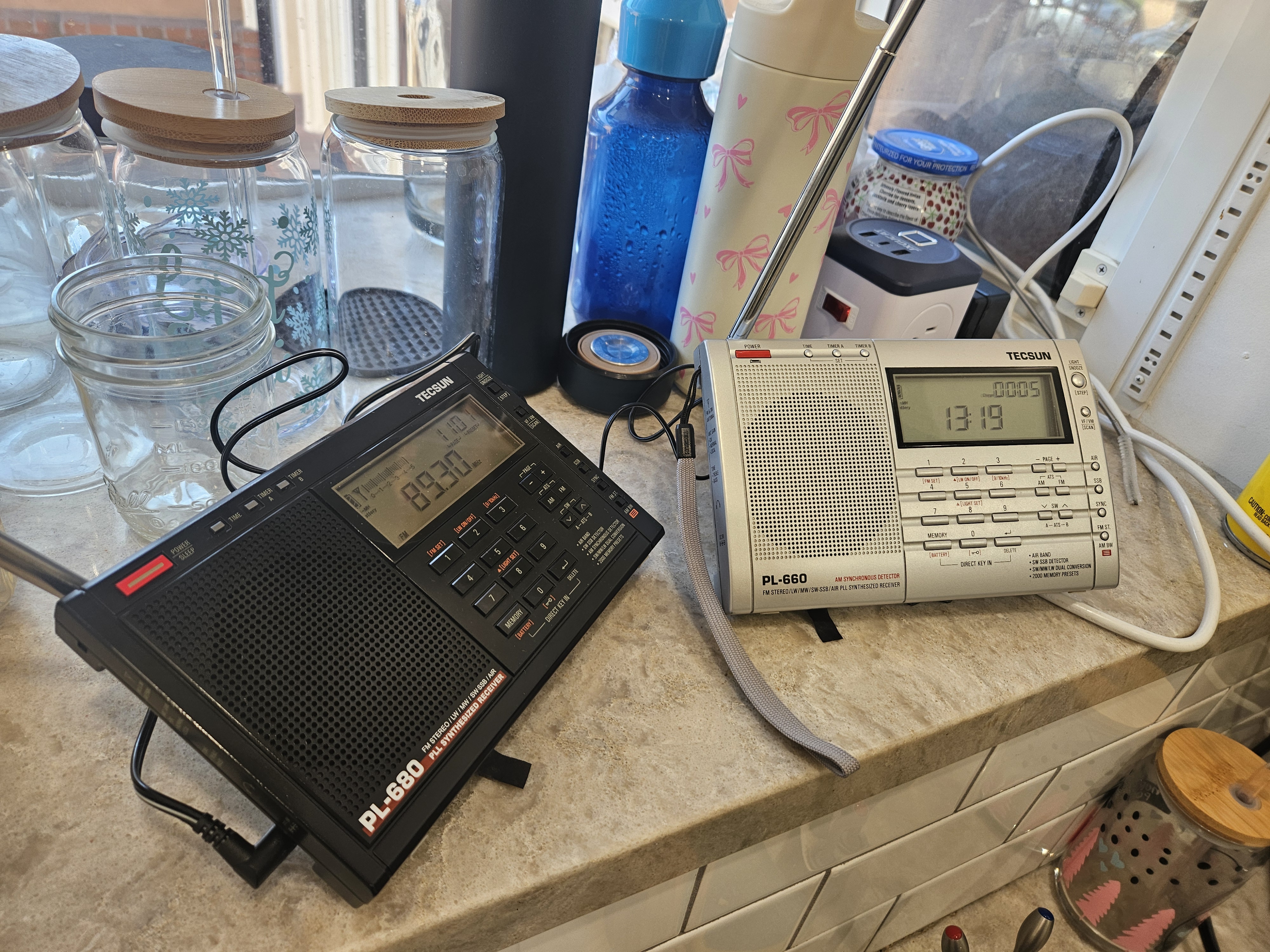
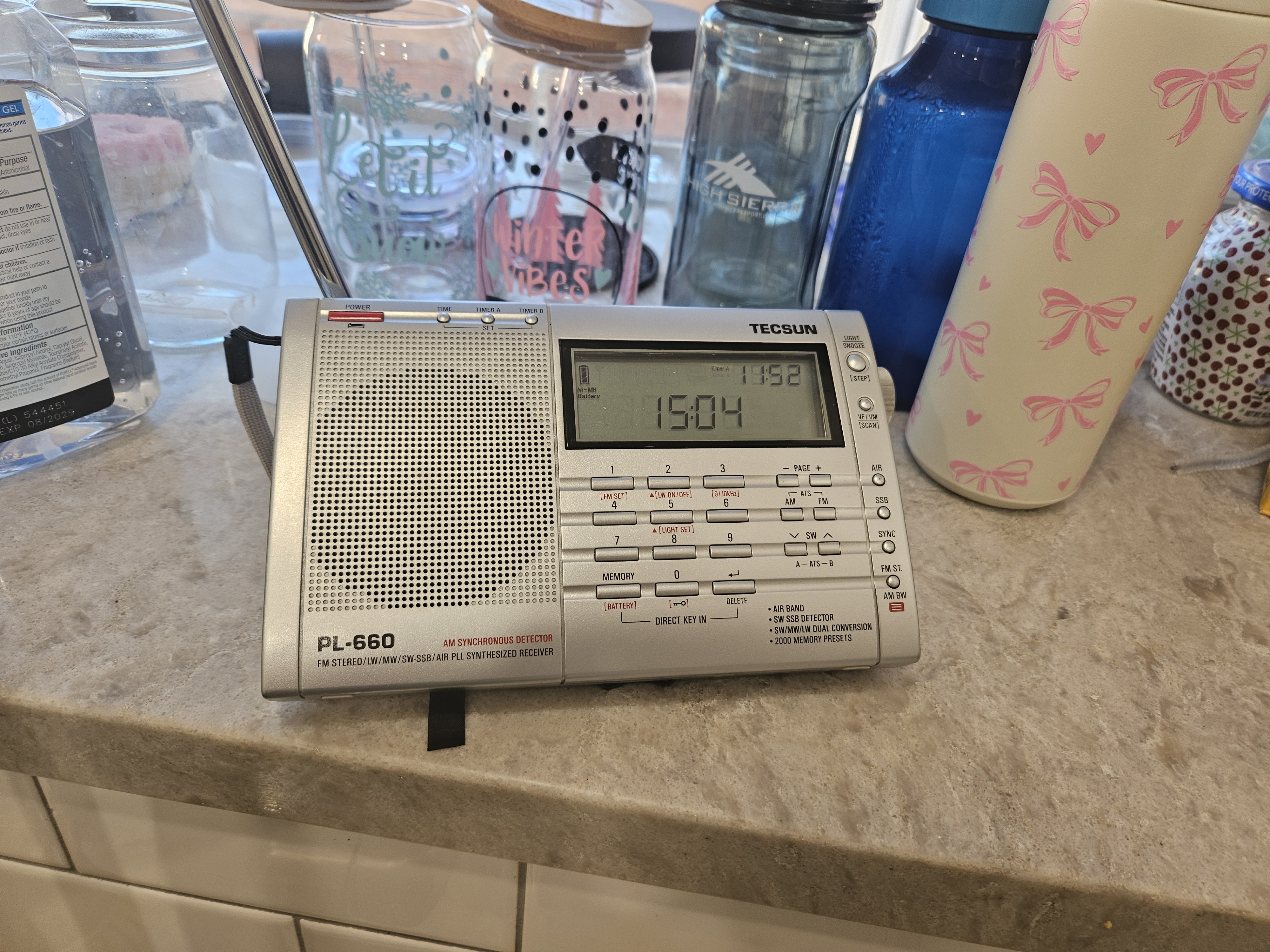
    The timing was serendipitous—or dangerous, depending on your perspective. During the height of my radio obsession, circa 2008, I owned a black Tecsun PL-660, and it was the crown jewel of my collection. But, as is the curse of all obsessions, I sold it during a fleeting moment of sanity, a decision that haunted me. When the January 2025 Los Angeles Fires reignited my passion for radios—because what better time to tinker with antennas than during a climate apocalypse?—the one radio I truly mourned was the PL-660.

    Enter eBay, the Pandora’s box of impulse purchases. I tracked down a silver PL-660 from a seller in Canada. At $68, it felt like a steal. Add $30 for shipping, tax, a Tecsun adapter from Anon-Co, and four AA rechargeable batteries, and suddenly my “steal” was a $140 splurge. But what’s money when you’re reuniting with a long-lost love?

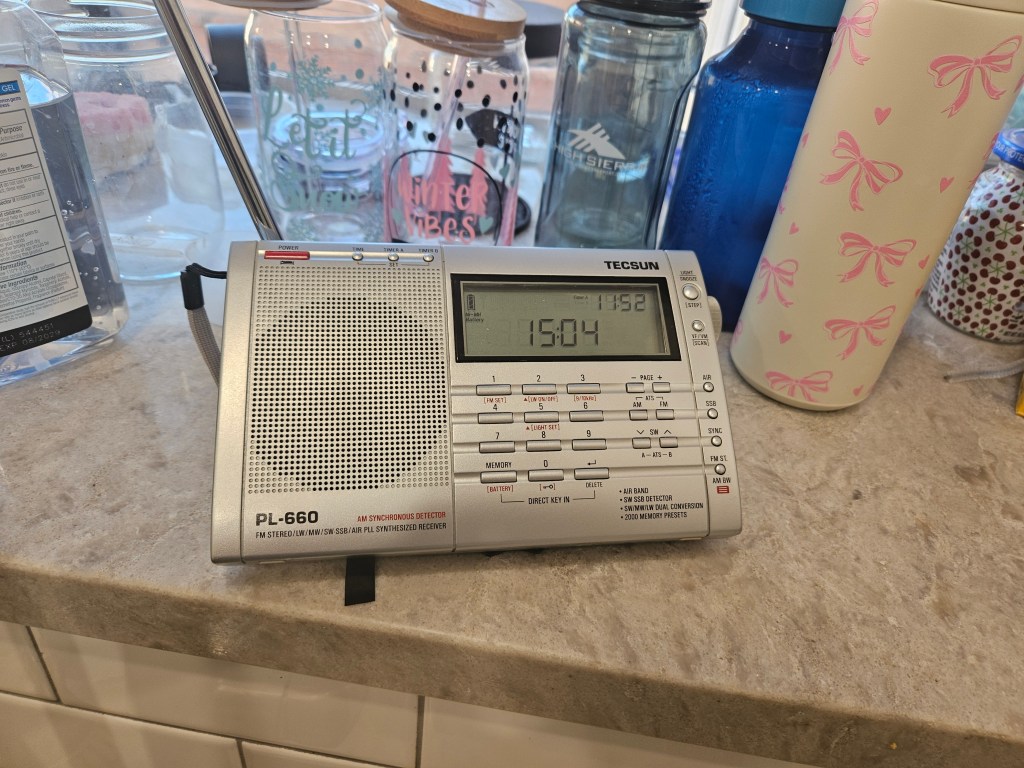
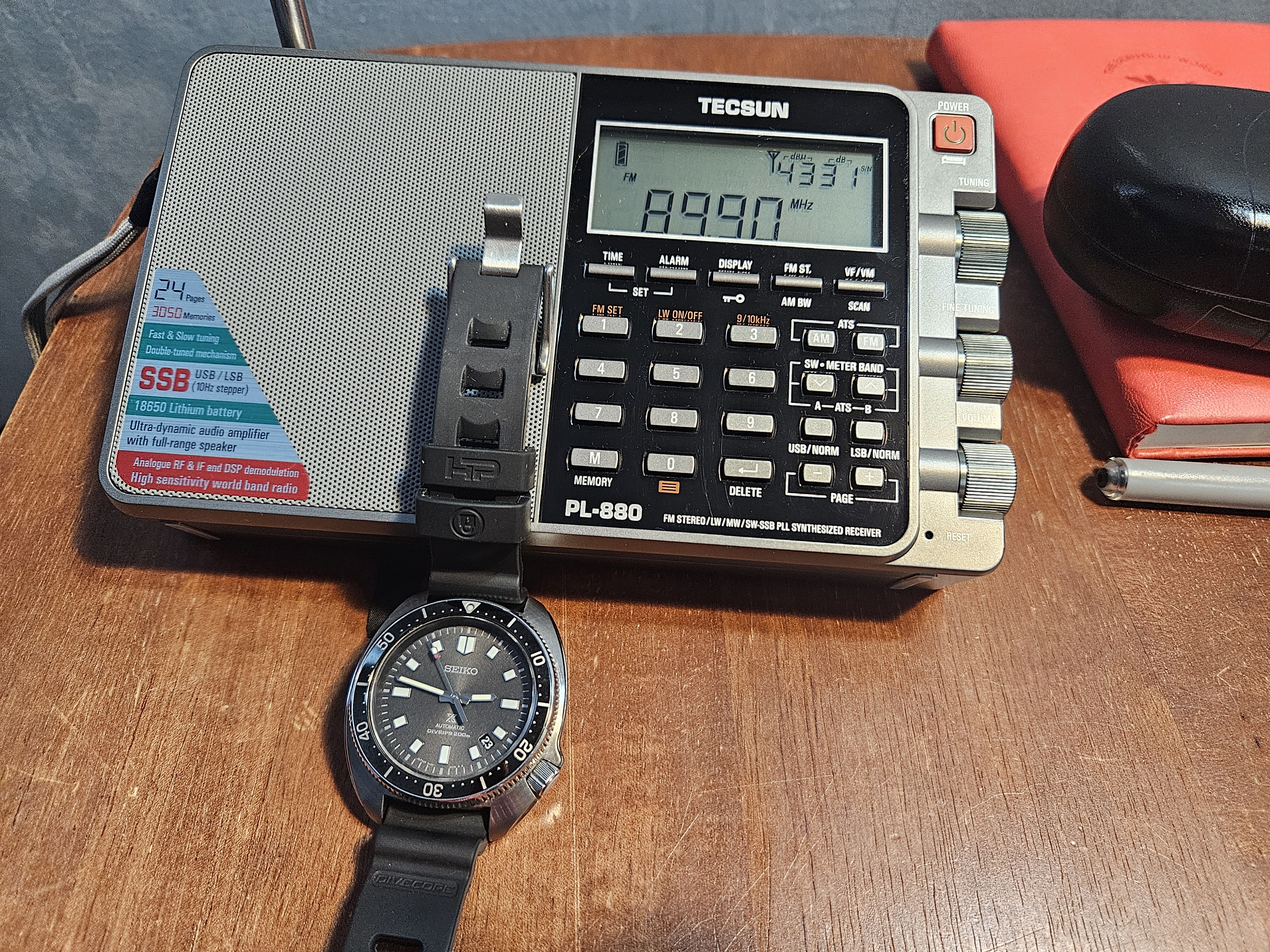
    When the silver PL-660 arrived, it was nearly pristine, as if frozen in time. The box, manual, and accessories were all there, minus the adapter. I tested its AM and FM performance and, unsurprisingly, found it nearly indistinguishable from my PL-880—a radio I’d been coddling like a newborn in my bedroom. Sure, the 880’s speaker has a richer timbre, but the 660 holds its own. AM reception? The 660 might edge out the 880, but given the ever-shifting electrical interference in my house, testing it felt like comparing snowflakes in a blizzard. FM? Practically identical.

    And yet, here’s the kicker: I prefer the PL-660. Why? Nostalgia, for starters. It’s been 15 years since I last held one, and its reunion felt like meeting an old friend who hasn’t aged a day. But it’s more than sentimentality. The PL-660 exudes Pre-DSP mystique, wearing its analog pedigree like a hero’s badge of honor. Add to that the rumors swirling on the forums about the PL-680 taking its final lap before extinction, and I developed a textbook case of FOMO.

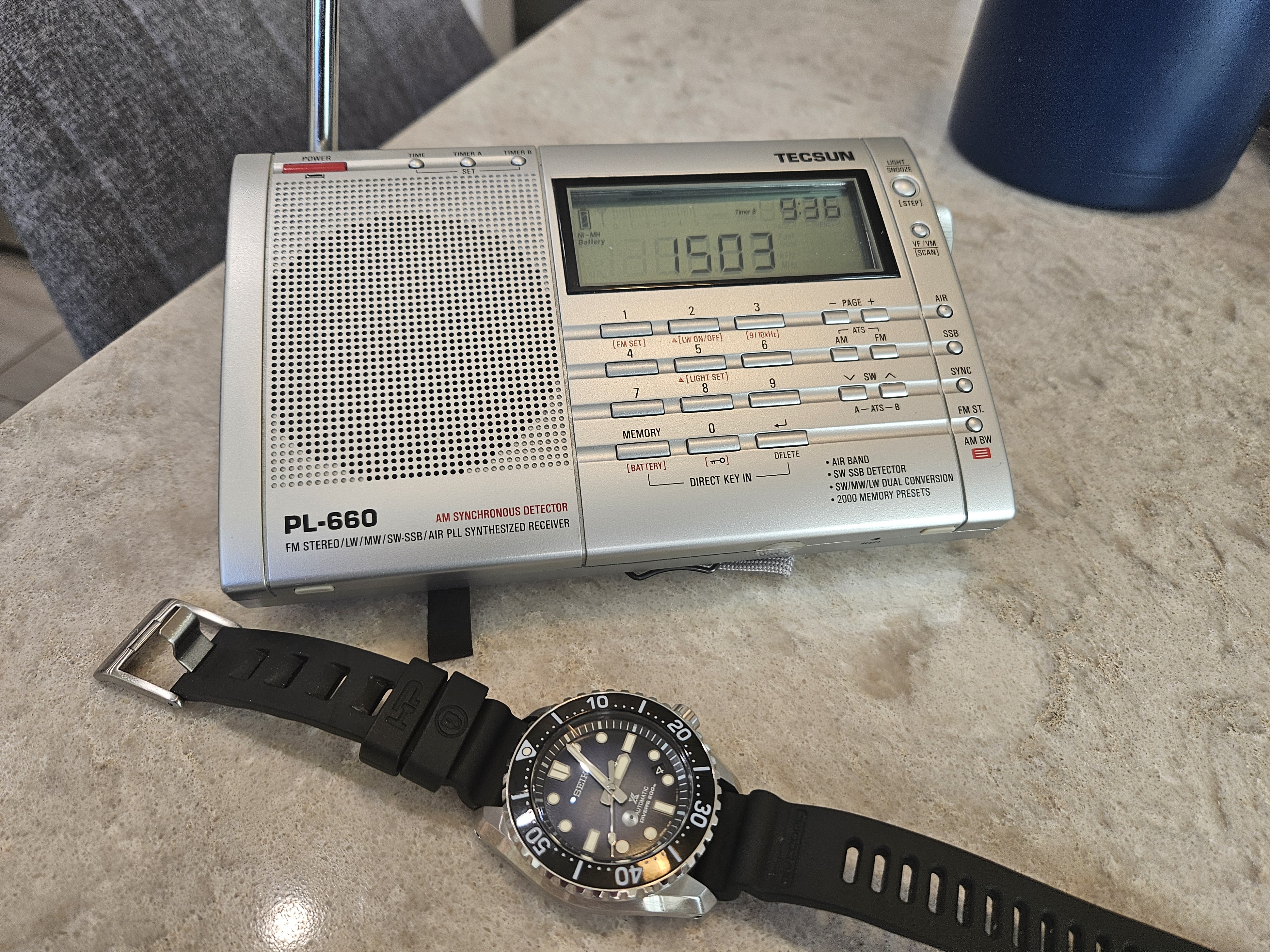
    Aesthetically, the 660 is a triumph. The PL-880, while a solid performer, looks like it was designed by two committees: one in charge of the radio chassis, the other tasked with slapping on an oversized speaker as an afterthought. In contrast, the PL-660 feels like it was forged from a single, unified block of silver (or black, if you’re lucky enough to find one). It’s monolithic, almost talismanic, with a heft that whispers, “This is not a toy.” Holding it feels like gripping a miniature obelisk of radio perfection.

    PL 880 & Uemura 1

    Naturally, I’m already scheming to buy a second PL-660 or perhaps its sibling, the PL-680, to keep as a “backup”—because if you love a radio enough, redundancy becomes an art form. And, because I can never leave well enough alone, I know I’ll spend the coming weeks obsessively swapping locations, putting the 660 in the bedroom, then the kitchen, then back again, until my brain short-circuits. Who needs stability when you can have perpetual indecision?

    In fact, I barely made it to my office to write this without feeling pangs of longing for the 660, which I’d left momentarily in the kitchen. Thirty minutes apart, and I was already waxing poetic about its brilliance, muttering, “Dude, you really love radios.” And it’s true—I do. Probably too much. But that’s the magic of radios: they’re not just devices; they’re companions, time machines, and portals to a world that feels more tactile and real than anything on your smartphone.

    Do I still love my PL-880? Of course. It’s a marvel of engineering, a steady presence in my life. But the PL-660? That’s my muse, my reminder of why I fell in love with radios in the first place. The 660 isn’t just a radio; it’s a reflection of who I am—an overthinking, signal-chasing, nostalgia-driven mess. And I wouldn’t have it any other way.

  • Qodosen DX-286: Purchased Twice, an Update

    Qodosen DX-286: Purchased Twice, an Update

    (originally posted on my Herculodge blog (on the defunct Typepad platform. I’m including an update on this post.)

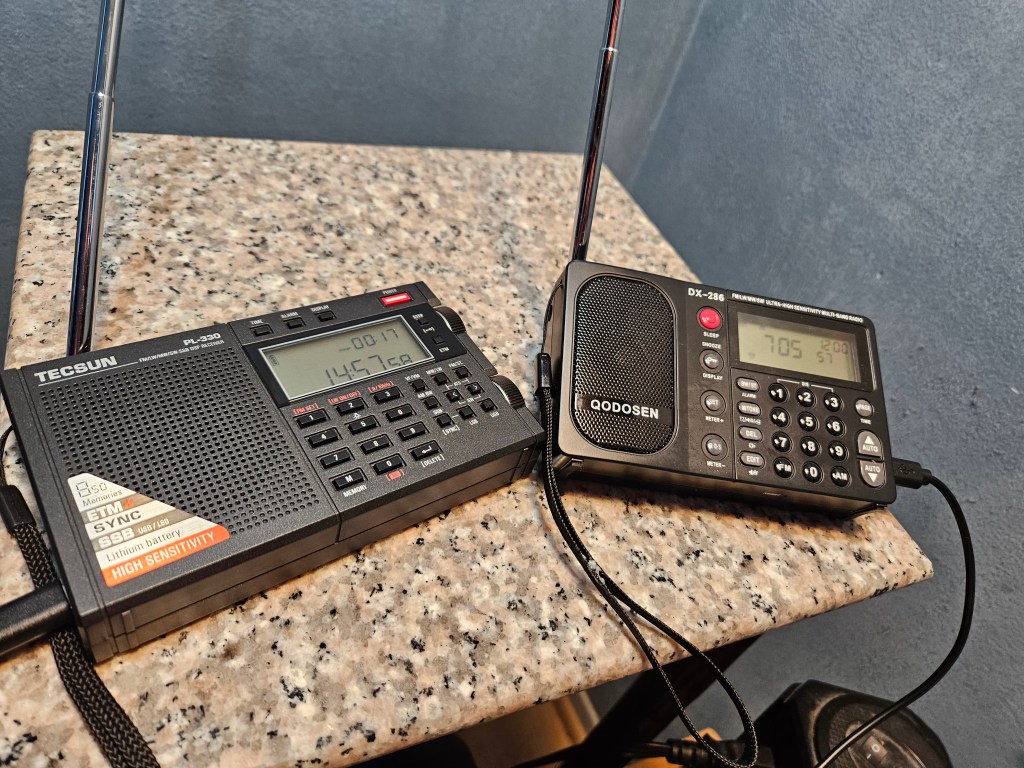
    The Qodosen DX-286 arrived last Sunday, Day 5 of the Los Angeles Fires, and I wasted no time putting it under the microscope. I scrutinized its build quality, tested its FM and AM performance, and after some thoughtful listening, I decided it was going back.

    To be fair, music sounded pleasant enough on the small mono speaker—soft, inoffensive, like background noise in a coffee shop. But voices? Hollow, thin, and oddly distant. It quickly became clear that this radio would only be tolerable if tethered to a pair of headphones. As for the physical design, the kickstand and battery door felt flimsy, as if one wrong move would snap them clean off. They inspired about as much confidence as a paper umbrella in a hurricane.

    AM reception? Surprisingly solid. FM? Good but not amazing. Despite all the hype about the Qodosen’s so-called super-powerful radio chip, it was no better than the Degen/Kaito 1103 I had over a decade ago. Sure, it effortlessly locked onto 89.3 from Pasadena, but it fumbled with the weaker college station 88.9, struggling like a kid lifting his first dumbbell.

    That’s when it hit me: I was never going to fall in love with this pint-sized radio. It felt like driving a rattling Mazda Miata through a wind tunnel—fun in theory, but exhausting in practice. So, I packed up the Qodosen and sent it back. I don’t blame Qodosen. I blame my unrealistic expectations and my failure to realize I didn’t want a radio this small for my bedroom. 

    In its place? The Tecsun PL-990X. Seven and a half glorious inches of luxury radio, a true cruiser compared to the jittery compact Qodosen. Don’t get me wrong—the DX-286 is a decent radio. I just realized I wanted something bigger, smoother, and built for the long haul. 

    Update:

    I rebought the Qodosen about a month after writing my original Herculodge review. I realized the speaker is excellent, its AM is superior to my Tecsun radios, and that it’s a keeper. One issue: The kickstand broke, so I play it flat on its back.

  • Typepad, R.I.P.: Obituary for a Dinosaur

    Typepad, R.I.P.: Obituary for a Dinosaur

    In 2006, I wandered into the Wild West of self-publishing and signed up with Typepad. Back then, blogs felt like a revolution: you could pour your obsessions straight into the digital void without begging gatekeepers for approval. I created three: Herculodge, where I indulged my radio fixation; The Breakthrough Writer, course content for my freshman comp class; and The Critical Thinker, the companion for my critical thinking students. Typepad cost me about $150 a year—a fair price for a soapbox in the dawn of the Blog Era.

    But by April 2025, my soapbox had turned into a rickety stool. Typepad was wheezing like a geriatric dinosaur stumbling into an unfamiliar world: constant downtime, glacial load times, the unmistakable stink of neglect. Research confirmed my suspicion—it had been sold, stripped for parts, and left to rot. I canceled my subscription. Out of nostalgia, I kept Herculodge in basic mode, mainly because its archive of radio reviews was still linked to Thomas Witherspoon’s venerable SWLing Post, a site that embodies everything good about radio: community, continuity, and voices across the airwaves.

    But in truth, Herculodge had gone dormant long ago. After the 2025 wildfires in Los Angeles, I went on a spree, bought a dozen radios, reviewed them all, and then, slowly, stopped. The flame flickered, and I moved on.

    Yesterday the official death notice arrived: “We have made the difficult decision to discontinue Typepad, effective September 30, 2025.” Translation: pull the plug, bury the dinosaur.

    This little obituary for Typepad drags me back to the Blog Era, when voices as sharp as Andrew Sullivan’s rose to the level of public intellectuals, while hobbyists like me tinkered in the shadows of niche obsessions, broadcasting to niche audiences. Blogs felt cozy, almost literary: you in a robe, cat on your lap, coffee steaming, ruminating about Virginia Woolf before hitting “publish.” Compare that to today’s Hot Take Era: dopamine-charged combatants spewing rage, preening for likes, and mistaking tribal points for thought.

    The end of Typepad is the end of that quieter world.

    I’ve since migrated to WordPress, which works better, loads faster, and hasn’t collapsed into irrelevance. I have mixed feelings about AI image generators: sometimes they hit the mark, but mostly they’re garish clip art pretending to be art. Still, I pay two hundred bucks a year to carve out a little order from the chaos, and it’s worth every cent. Cheaper than therapy, and with fewer platitudes.

    Typepad’s death isn’t tragic—it’s just the final shovel of dirt on an era already gone.

  • Hulk Couture: The Fashion Crimes of a Musclebound Child

    Hulk Couture: The Fashion Crimes of a Musclebound Child

    Whether you admit it or not, a part of you still wants to Hulk out like a fever-dream escapee from a 1970s television set. Watching the gentle, tortured soul of Bill Bixby morph into Lou Ferrigno’s snarling green colossus wasn’t just entertainment—it was therapy without the deductible. You didn’t want to trudge through life as a tightly wound ball of quiet despair. No, you wanted to erupt, transcend, and become an unstoppable force against loud chewers, bullies, and the guy curling in the squat rack.

    As a budding bodybuilder, you didn’t need gamma rays—just iron. And lots of it. Your transformation wasn’t just about building muscle; it was a sartorial revolution. You hacked off your sweatshirt sleeves, butchered the legs of your sweatpants, and stomped through the gym like a deranged fashion anarchist. You weren’t lifting weights—you were channeling rage into reps, morphing into a DIY Hulk with every guttural breath and dripping bead of sweat.

    But your Hulk obsession started long before puberty. You were a pint-sized fanatic, glued to the 1960s cartoon version of the green juggernaut. What captivated you most was the metamorphosis: how Bruce Banner’s clothes tore away, leaving only ragged dignity and raw power. So one fateful Saturday morning, with a level of creative genius only a six-year-old could summon, you took a brand-new pair of slacks from Mayberry’s and turned them into Hulk couture—frayed, slashed, and ruined. Then you stomped into your parents’ bedroom flexing, growling, “HULK SMASH!” Lucky for you, your mother’s laughter outweighed her rage.

    This was your first known case of Ferrigno Fever: the compulsive need to emulate Lou Ferrigno’s Hulk physique and fashion sense, typically culminating in destroyed clothing and inflated delusions of grandeur.

    As a teenager, your obsession graduated to the live-action Incredible Hulk. After the chaos subsided and Ferrigno’s beast melted back into Bixby’s sorrowful wanderer, you were left with “The Lonely Man Theme”—Joe Harnell’s melancholic piano elegy—as your personal anthem. It became the soundtrack to your self-pity and your deeply misguided belief that the world had wronged you by not immediately recognizing your divine potential.

    You weren’t just lifting at the gym; you were sculpting a mythic figure, trapped in a fluorescent-lit purgatory of men who looked like overripe tomatoes with toothpick limbs. They didn’t understand. They didn’t see the epic. But you did. You were a tragic hero, a lone star bench-pressing against the gravity of a cruel, indifferent world.

    Eventually, you realized that self-pity is seductive—like opium, but cheaper and twice as cringe. It whispers lies, paints you the tragic lead in a play no one else is watching, and delays the actual work of growing up. It took years, maybe decades, to hush that voice. But for a long time, the Hulk was your muse, your fashion icon, and your excuse.

  • How Losing 20 Pounds Made Me Rethink My Entire Watch Collection (and My Life)

    How Losing 20 Pounds Made Me Rethink My Entire Watch Collection (and My Life)

    Yesterday I filmed a 26-minute YouTube video on my main channel—ostensibly about watches. That was the bait. But somewhere between adjusting my camera and admiring my newly lean frame (twenty pounds down since April, thank you very much), I realized I wasn’t really talking about watches at all. I was talking about aging, restraint, identity, and how not to let your inner teenager run the damn show.

    The video was titled something like “My Four Watch Goals at Sixty-Four,” which sounds practical until you realize that my goals weren’t horological—they were existential. The first one? Stop being so maudlin. I actually said the word, spelled it out like a substitute teacher on a caffeine bender, and gave a definition. Maudlin: emotional excess masquerading as depth, the adolescent urge to turn life into performance art just so you can feel something.

    To illustrate, I offered up a formative trauma: being sixteen, watching Bill Bixby in The Incredible Hulk, and weeping—actually weeping—when he transformed into Lou Ferrigno’s green rage monster. It wasn’t just TV. It was catharsis. I was an Olympic weightlifter-slash-bodybuilder-slash-piano prodigy who didn’t know what to do with all the emotion I’d stuffed under my pecs and sonatas. Watching Bixby morph into a snarling demigod gave me permission to feel. In my forties, I channeled that same melodrama into wearing oversized diver watches—big, bold, and absurdly heroic, as if my wrist were auditioning for a Marvel reboot. That, too, was maudlin cosplay. Now I’m trying something radical: maturity.

    Goal two? Quit being an enabler. I admitted that, like it or not, I’m an influencer. I don’t collect in a vacuum. Every time I flex a new piece, it’s like handing out free permission slips to fellow addicts. So I’ve decided to use my powers for good—or at least for moderation.

    Goal three: Stay fit, get bloodwork, be a warrior in plain clothes. The watch isn’t the main course. It’s the garnish. If I’m going to wear something worth noticing, I should have the body and the biomarkers to back it up. Otherwise, I’m just a gilded potato.

    And finally, goal four: Minimalist watch heroes. The quiet monks of the community who own one to three watches and seem perfectly content. They’re my North Stars. They aren’t buying watches out of panic, nostalgia, or identity crises—they’re grounded, self-possessed, wise. I envy them. I aspire to be one of them. I’m not there yet, but I’m squinting in their direction.

    Honestly, I assumed the video would tank. My viewers tend to want horological eye-candy, not existential reflection wrapped in fitness updates. But to my surprise, the response was overwhelming—close to a thousand views on day one, dozens of comments. People thanked me. Some said they were booking doctor appointments. Others said they were starting diets. I’m fourteen years into making YouTube videos, and this might be the one I’m proudest of.

    Because the truth is, most watch YouTubers are just dressing up emotional poverty in brushed stainless steel. They get maudlin about bezels and bracelets, desperate to out-hype each other in a gaudy attention economy. It’s exhausting. What people really want—what they’re starving for—is someone speaking like a human being. No curation. No affectation.

    I ended my video with a confession: I’m still that sixteen-year-old kid. And if you cue up The Lonely Man theme from The Incredible Hulk, the one where David Banner walks down the rainy sidewalk in soft focus, I will—without shame—start crying. Again. Because some emotions don’t age. They just find quieter places to hide.

  • Wristwatches and Wastelands: How Fashion Can Hollow You Out

    Wristwatches and Wastelands: How Fashion Can Hollow You Out

    Amy Larocca, a fashion journalist with twenty years of runway reportage under her belt, understands the psychological scaffolding beneath a well-tailored sleeve. “Fashion,” she writes in How to Be Well, “is about beauty, of course, but it is also about the desire to elevate daily life from its more banal limitations, to consciously and actively share something about how you’d like to be perceived by the rest of the world.”

    And that, my friend, is exactly where the trouble starts.

    Take a stroll through the horological asylum known as the watch community. What starts as an appreciation for precision craftsmanship often spirals into a neurotic fixation. A dive watch isn’t just for telling time—it’s for announcing to the world that you’re rugged, refined, and possibly ready to harpoon something. The desire to “elevate daily life” with just the right wrist candy turns into a slow-motion personality collapse. It becomes a lifestyle audition for an identity you don’t actually inhabit.

    The trap is cunning. At first, fashion promises transformation: a sharper silhouette, a touch of mystique, a sense of control in a chaotic world. But when the performance replaces the person—when dressing well becomes a proxy for purpose—you’re not elevating your life. You’re embalming it in linen and leather.

    The real tragedy isn’t vanity. It’s the way compulsive self-curation smothers empathy. Narcissism isn’t just annoying—it’s lonely. It dislocates you from community, connection, and anything approaching transcendence. A meaningful life, if it’s worth living at all, doesn’t orbit around the mirror.

    To be clear: there’s nothing wrong with looking sharp. Be fit, be stylish, radiate confidence. But when your wardrobe becomes your worldview—when you dress not to express but to impress—you trade depth for dazzle. You don’t become interesting. You become exhausting.

  • The Driveway Diaries: A Confession from the Curb

    The Driveway Diaries: A Confession from the Curb

    I live in Southern California’s golden triangle of suburban prestige: safe streets, sky-high property values, and public schools so highly rated they practically demand tuition. But on weekends and holidays, my block transforms into a theme park of inflatable bounce castles, fold-out chairs, and off-brand DJ booths—all courtesy of neighboring homeowners hosting backyard fiestas for their tiny heirs.

    With festivity comes the scourge: street congestion. Cars squeeze themselves into curbside crevices like sardines in a midlife crisis. They stack and cram and sidle up so tight to my house you’d think we were giving away parking validation and carne asada.

    Every so often, a guest parks with their bumper edging an inch—an inch—into the edge of my newly repaved driveway. A driveway I paid for myself because city bureaucracy shrugged and pointed to tree roots like they were an Act of God. That innocent slab of concrete cost me $5,500. Every time a Honda Pilot sniffs it without permission, I feel like I’m watching someone use my toothbrush.

    Still, I try to be Zen. I tell myself: “People want to be here. This isn’t intrusion. It’s affirmation. I am so blessed to live in a place so desirable, others will risk a petty homeowner’s wrath just to brush against my apron.”

    Then there’s the nightly ritual across the street. My neighbors, bless them, have adopted my driveway as part of their sacred reverse-entry protocol. They swing into my drive like a fighter pilot locking onto a carrier, headlights blazing through my living room window while I’m watching a true crime doc with my wife. Then they shift into reverse and back into their own driveway like they’re starring in a Ford commercial for backing-in bravado.

    Again, I resist the pettiness. I whisper: “What an honor to share my $5,500 slab of artisanal pavement. The city may have abandoned me, but I haven’t abandoned my commitment to grace.”

    But some nights, I spiral. I see my empty driveway (because my Honda is parked dutifully inside the garage like a respectable introvert) and I grow suspicious. “They’re circling,” I think. “Someone’s going to claim this space. They’re going to park smack in the middle of my private driveway, right under the basketball hoop I haven’t used since 2008.”

    In my darkest moments, I fantasize about war. “Let them try it,” I growl internally. “I’ll tow them. I’ll call the police. I’ll lawyer up. I’ll blog about it to my three dozen loyal followers and publicly shame their license plate into eternity.”

    And just when I think I’ve shaken off my paranoia, the sirens come. Always the sirens. I live wedged between two hospitals, so I’m serenaded hourly by ambulance howls and the Doppler wail of emergency response. It’s like being reminded every ten minutes that death is always trending.

    The crowded streets don’t help. It’s not just congestion—it’s existential compression. The world is full. There’s no more room. Civilization is a Jenga tower one move away from collapse.

    And still, I try to be kind. I try to be sane. “I’m not petty,” I tell myself. “I’m not paranoid. I’m just emotionally literate.”

    So I do what I’ve always done: I go to the piano. I sit and play one of the hundreds of songs I’ve written since I was sixteen. The music softens the beast. It wraps my dread in a velvet ribbon of minor chords. Unfortunately, all my songs sound vaguely identical—like clones from the same melancholy womb. But I take what I can get.

    If twenty minutes of recycled piano sadness gives me peace in the suburbs, then I’ll sit at that bench and bleed quietly into the keys. No apologies.

  • WordPress: My Kettlebell Gym of the Mind

    WordPress: My Kettlebell Gym of the Mind

    I launched my WordPress blog on March 12, evicting myself from Typepad after it was sold to a company that treats blogs the way landlords treat rent-controlled tenants: with bored disdain. Typepad became a ghost town in a bad neighborhood, so I packed up and moved to the gated community of WordPress—cleaner streets, better lighting, and fewer trolls.

    For the past ten weeks, I’ve treated WordPress like a public journal—a digital sweat lodge where I sweat out my thoughts, confessions, and pedagogical war stories from the frontlines of college teaching. I like the routine, the scaffolding, and the habits of self-control. Blogging gives me something I never got from social media or committee meetings: a sense of order in a culture that’s spun off its axis.

    But let’s not kid ourselves. WordPress isn’t some utopian agora where meaningful discourse flourishes in the shade of civility. It’s still wired into the dopamine economy. The minute I start checking likes, follows, and view counts, I’m no longer a writer—I’m a lab rat pressing the pellet button. Metrics are the new morality. And brother, I’m not immune.

    Case in point: I can craft a thoughtful post, click “Publish,” and watch it sink into the abyss like a message in a bottle tossed into a septic tank. One view. Maybe. Post the same thing on Reddit, and suddenly I’m performing for an arena full of dopamine-addled gladiators. They’ll upvote, sure—but only after the professional insulters have had their turn at bat. Reddit is where clever sociopaths go to sharpen their knives and call it discourse.

    WordPress, by contrast, is a chill café with decent lighting and no one live-tweeting your every existential sigh. It’s a refuge from the snarling hordes of hot-take hustlers and ideological bloodsport. A place where I can escape not only digital toxicity, but the wider derangement of our post-shame, post-truth society—where influencers and elected officials are often the same con artist in two different blazers.

    Instead of doomscrolling or screaming into the algorithmic void, I’ve taken to reading biographies—public intellectuals, athletes who aged with dignity, tech pioneers who are obsessed with taking over the world. Or I’ll go spelunking into gadget rabbit holes to distract myself from the spiritual hangover that comes from living in a country where charisma triumphs over character and truth is whatever sells ad space.

    In therapy-speak, my job on WordPress is to “use the tools,” as Phil Stutz says: to strengthen my relationship with myself, with others, and with the crumbling world around me. It’s a discipline, not a dopamine drip. Writing here won’t make me famous, won’t make me rich, and sure as hell won’t turn me into some cardigan-clad oracle for the digital age.

    What it will do is give me structure. WordPress is where I wrestle with my thoughts the way I wrestle kettlebells in my garage: imperfectly, regularly, and with just enough sweat to keep the madness at bay.

  • The Beautiful Unwearable

    The Beautiful Unwearable

    Do you own a Beautiful Unwearable? If so, you already know the cruel paradox: the watch that steals your breath every time you look at it, yet somehow never makes it onto your wrist.

    Picture this: you’re hypnotized by a $2,000 Seiko Astron—a stunner whose build quality punches well above its weight class, easily rivaling watches priced four digits higher. Every gleam of that GPS-synced, zirconia ceramic bezel sends a little burst of dopamine through your bloodstream. So you do what any horological romantic would do: you pull the trigger. A week later, it’s in your hands, fresh from Japan, glinting like a Bond villain’s cufflink.

    And then… nothing.

    You stare at it. You admire it. You photograph it from five angles under different lighting conditions. But when it’s time to choose a watch to wear—on a walk, to the store, or even to teach class—it’s always your rugged dive watch that gets the call. The Astron? It’s too dressy, too refined, too… aspirational. Like buying a tuxedo when your calendar is a wasteland of Costco runs and Zoom meetings.

    So it sits. Day after day. In its cushioned little coffin, gorgeous and neglected, whispering, “You’re not worthy of me.” Unlike wall art, it can’t be displayed; unlike a tool watch, it doesn’t beg to be worn. It becomes horological purgatory—a $2,000 museum piece trapped in a drawer.

    Personally? I’ve never bought an Astron. Why? Because I’ve already mentally lived this scenario. I’ve played out the whole Shakespearean arc in my head: love at first sight, the impulsive purchase, the honeymoon glow… followed by guilt, alienation, and silent shame. I don’t need a Beautiful Unwearable in my collection to know it would haunt me like a luxury ghost.

  • Pedagogical Incontinence and Other Nightmares

    Pedagogical Incontinence and Other Nightmares

    Last night, I found myself caught in that classic pedagogical panic dream—the one where you’re supposed to be teaching but haven’t the faintest idea what class you’re in, what subject you’re meant to teach, or whether you’re even wearing pants. In this installment of the recurring nightmare franchise, the setting was not a classroom but a vast beachside arcade—a surreal mash-up of administrative buildings, decrepit apartments, and suspiciously cheerful employees who all seemed to be on the take.

    My only tether to coherence was a middle-aged reentry student named Fred, bald, officious, and inexplicably committed to serving as my personal secretary. Fred wore the expression of a man who once managed a Kinko’s in Bakersfield and had never fully recovered. He trailed me through the maze of kiosks and clammy hallways, reminding me of when my night classes began and which lecture I was supposed to pull out of thin air. He was part calendar app, part parole officer.

    Then Fred vanished. Just like that. I was suddenly alone and bladder-full, desperately seeking a bathroom that refused to stay in one place. The rest of the dream dissolved into a fevered montage of my failed search for a bathroom: dead-ends, hills of ice plant slick with dream-dew, craggy rock climbs worthy of a National Geographic feature on confused professors, and an aquatic plunge into time itself. I dove through the Paleozoic, drifted across the Devonian, waded through the Carboniferous—each era choked with psychedelic fossil-fish and haunting evolutionary whispers. And still, no bathroom. My urgency transcended epochs.

    When I awoke—sweating, humbled, and dry—I was left with one existential question: Was Fred my inner adult, the stoic bureaucrat of my soul? And without him, am I just an overgrown child, lost in a shifting dreamscape, chronically unprepared, and forever in pursuit of a bathroom that may not exist?