Tag: blog

  • The Day I Failed the Ishihara Color Blindness Test

    The Day I Failed the Ishihara Color Blindness Test

    For years, I harbored a vague but nagging suspicion that peanut butter was green. Why? No clue—until 1971, when the grim truth revealed itself under the fluorescent doom of Independent Elementary’s nurse’s office.

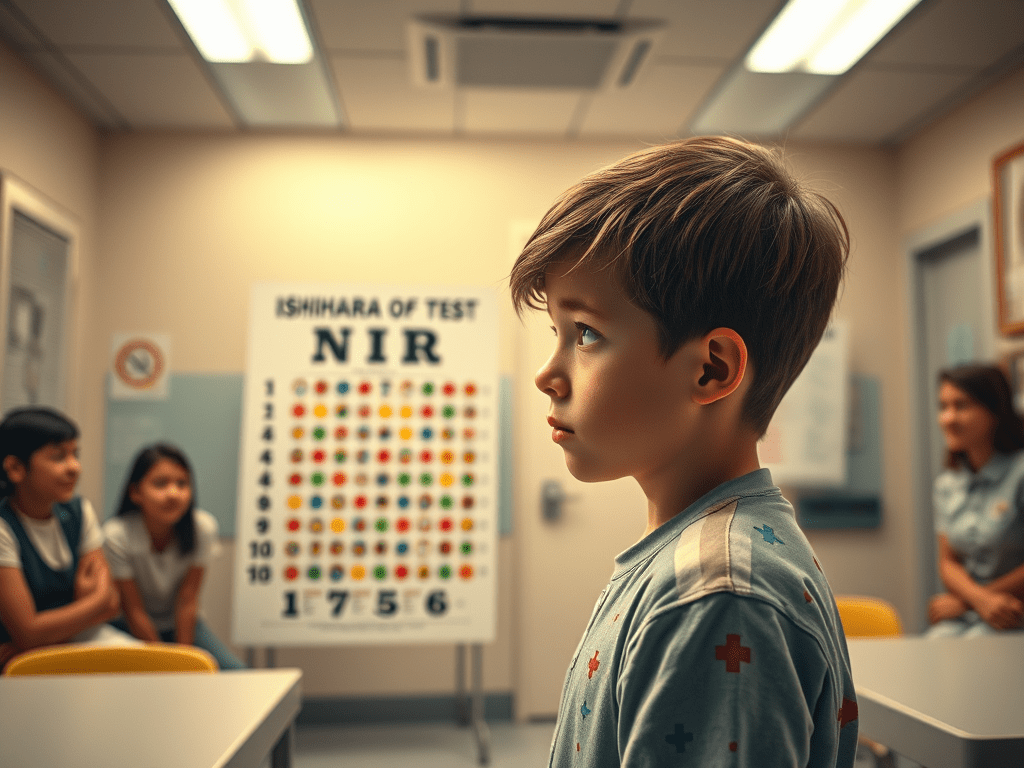
    It was the day of the Ishihara Color Blindness Test, a supposedly routine exercise in humiliation where each fifth grader took turns peering into an illuminated contraption to identify numbers and shapes hidden in a field of colored dots. My classmates breezed through it like game show contestants, rattling off answers with the breezy confidence of children who’d never questioned their own eyesight.

    Then it was my turn.

    I stared into the glowing abyss. Saw nothing. Blinked. Still nothing.

    The nurse grew impatient. “Well? Can’t you see anything?”

    I could not.

    The room erupted in laughter. Congratulations—I was officially hopelessly color-blind, a medical outcast, a social leper. For the remainder of the morning, my classmates regarded me like a rare museum specimen. This boy thinks peanut butter is green. Proceed with caution.

    But fate, as it turns out, is not without a sense of humor.

    During lunch recess, the hierarchy of fifth-grade cruelty shifted. Kickball—a sport where raw physical dominance could overwrite even the most damning personal defect—offered me an unexpected shot at redemption. As the ball rolled toward me, I summoned the might of my tree-trunk leg, swung with the force of a caffeinated mule, and launched that red rubber sphere over everyone’s heads. It sailed past the outfield, past the schoolyard, and over the fence—finally splashing down into the backyard swimming pool of a bewildered suburbanite several blocks away.

    For a brief, glorious moment, I was no longer the kid who saw peanut butter in the wrong spectrum. I was a legend. The freakishly strong fifth grader with the foot of an Olympian and the trajectory of a human cannon.

    Lesson learned: You may be ridiculed for believing peanut butter is green, but if you channel your inner Herman Munster and kick a ball into another ZIP code, nobody gives a damn about your defective eyeballs. Heroism comes in many shades—even if you can’t see them.

  • Selling Out, Buying In: The Savage Brilliance of Matt LeBlanc in Episodes

    Selling Out, Buying In: The Savage Brilliance of Matt LeBlanc in Episodes

    Originally unleashed on Showtime in 2011, Episodes ran for five seasons of razor-sharp satire, skewering the soulless machinery of Hollywood with a precision so brutal it felt like watching a vivisection—if vivisections were hilarious. It remains one of my all-time favorite comedies, a savage yet oddly affectionate takedown of the industry’s relentless appetite for mediocrity.

    The setup is fiendishly simple: Sean and Beverly Lincoln, a charmingly acerbic British writing duo, are lured to Los Angeles with promises of creative control and prestige. What they get instead is an artistic hostage situation. Their critically beloved, whip-smart series is promptly shoved through the Hollywood meat grinder, emerging as an insipid, laugh-tracked monstrosity. Worse, they are forced to resurrect the career of Matt LeBlanc, who plays a delightfully monstrous version of himself—a washed-up sitcom relic clinging to his former Friends glory.

    LeBlanc, padding around in a haze of regret, is a masterclass in self-loathing charisma. He’s paunchier, jowlier, and carries the heavy-lidded exhaustion of a man who has realized, too late, that charm has an expiration date. The sad creases around his eyes whisper, How come the world doesn’t love me the way it used to? He’s a man-child accustomed to zero boundaries, collateral damage in his wake—including an estranged wife and an industry that has moved on. His interactions with the Lincolns are electric: he resents their moral standards, mocks their dignity, and yet, slowly, insidiously, starts craving their approval like a lost toddler looking for parental validation.

    The Lincolns, meanwhile, aren’t just losing creative control—they’re losing themselves. Forced to dumb down their art while simultaneously parenting an emotionally stunted former sitcom star, they begin to absorb some of LeBlanc’s gleeful nihilism, just as he, in turn, starts to thaw under their reluctant affection. The show’s central tension becomes a delicious question: Who will corrupt whom first? By the end, they’ve all been irrevocably changed, bound by a bizarre, dysfunctional, and strangely touching camaraderie.

    LeBlanc’s slow, grudging evolution is nothing short of a masterpiece. Stephen Mangan and Tamsin Greig, as Sean and Beverly, deliver a spectacular performance of unrelenting exasperation, their bewildered expressions a constant gauge of Hollywood’s never-ending barrage of crassness. The result is a show so brilliant, so deftly written, that watching it once wasn’t enough—I devoured it twice, only to appreciate it even more the second time around. Beneath its cynical wit and industry grotesquerie, Episodes is ultimately about the absurd yet undeniable bonds that form when people are forced to suffer together. And in that suffering, something close to love—however warped—takes shape.

  • TEACHING COLLEGE WRITING IN THE AGE OF OZEMPIFICATION

    TEACHING COLLEGE WRITING IN THE AGE OF OZEMPIFICATION

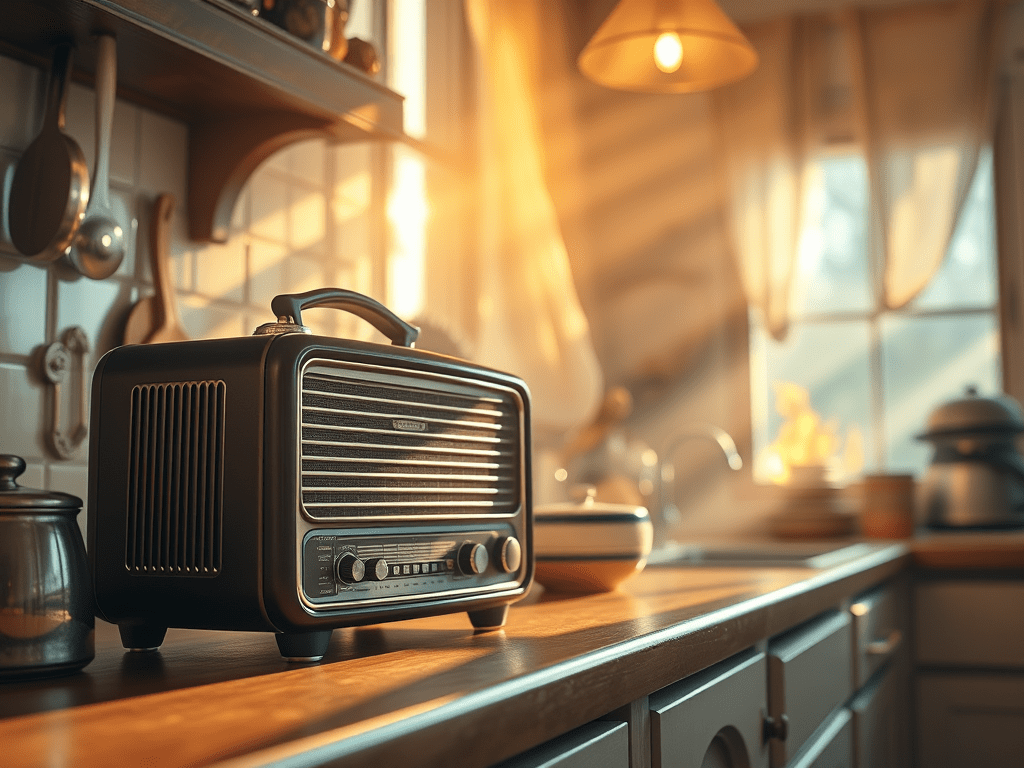
    The 2025 Los Angeles wildfires, blazing with apocalyptic fury, prompted me to do something I hadn’t done in years: dust off one of my radios and tune into live local news. The live broadcast brought with it not just updates but an epiphany. Two things, in fact. First, I realized that deep down, I despise my streaming devices—their algorithm-driven content is like an endless conveyor belt of lukewarm leftovers, a numbing backdrop of music and chatter that feels canned, impersonal, and incurably distant. Worst of all, these devices have pushed me into a solipsistic bubble, a navel-gazing universe where I am the sole inhabitant. Streaming has turned my listening into an isolating, insidious form of solitary confinement, and I haven’t even noticed.

    When I flipped on the radio in my kitchen, the warmth of its live immediacy hit me like a long-lost friend. My heart ached as memories of radio’s golden touch from my youth came flooding back. As a nine-year-old, after watching Diahann Carroll in Julia and Sally Field in The Flying Nun, I’d crawl into bed, armed with my trusty transistor radio and earbuds, ready for the night to truly begin. Tuned to KFRC 610 AM, I’d be transported into the shimmering world of Sly and the Family Stone’s “Hot Fun in the Summertime,” Tommy James and the Shondells’ “Crystal Blue Persuasion,” and The Friends of Distinction’s “Grazing in the Grass.” The knowledge that thousands of others in my community were swaying to the same beats made the experience electric, communal, alive—so unlike the deadening isolation of my curated streaming playlists.

    The fires didn’t just torch the city—they laid bare the fault lines in my craving for connection. Nostalgia hit like a sucker punch, sending me down an online rabbit hole in search of a high-performance radio, convinced it could resurrect the magic of my youth. Deep down, a sardonic voice heckled me: was this really about better reception, or just another pitiful attempt by a sixty-something man trying to outrun mortality? Did I honestly believe a turbo-charged radio could beam me back to those transistor nights and warm kitchen conversations, or was I just tuning into the static of my own existential despair?

    Streaming had wrecked my relationship with music, plain and simple. The irony wasn’t lost on me either. While I warned my college students not to let ChatGPT lull them into embracing mediocre writing, I had let technology seduce me into a lazy, soulless listening experience. Hypocrisy alert: I had become the very cautionary tale I preached against.

    Enter what I now call “Ozempification,” inspired by that magical little injection, Ozempic, which promises a sleek body with zero effort. It’s the tech-age fantasy in full force: the belief that convenience can deliver instant gratification without any downside. Spoiler alert—it doesn’t. The price of that fantasy is steep: convenience kills effort, and with it, the things that actually make life rich and rewarding. Bit by bit, it hollows you out like a bad remix, leaving you a hollow shell of passive consumption.

    Over time, you become an emotionally numb, passive tech junkie—a glorified NPC on autopilot, scrolling endlessly through algorithms that decide your taste for you. The worst part? You stop noticing. The soundtrack to your life is reduced to background noise, and you can’t even remember when you lost control of the plot.

    But not all Ozempification is a one-way ticket to spiritual bankruptcy. Sometimes, it’s a lifeline. GLP-1 drugs like Ozempic can literally save lives, keeping people with severe diabetes from joining the ranks of organ donors earlier than planned. Meanwhile, overworked doctors are using AI to diagnose patients with an accuracy that beats the pre-AI days of frantic guesswork and “Let’s Google that rash.” That’s Necessary Ozempification—the kind that keeps you alive or at least keeps your doctor from prescribing antidepressants instead of antibiotics.

    The true menace isn’t just technology—it’s Mindless Ozempification, where convenience turns into a full-blown addiction. Everything—your work, your relationships, even your emotional life—gets flattened into a cheap, prepackaged blur of instant gratification and hollow accomplishment. Suddenly, you’re just a background NPC in your own narrative, endlessly scrolling for a dopamine hit like a lab rat stuck in a particularly bleak Skinner box experiment.

    As the fires in L.A. fizzled out, I had a few weeks to prep my writing courses. While crafting my syllabus and essay prompts, Mindless Ozempification loomed large in my mind. Why? Because I was facing the greatest challenge of my teaching career: staying relevant when my students had a genie—otherwise known as ChatGPT—at their beck and call, ready to crank out essays faster than you can nuke a frozen burrito.
  • I Had to Choose to Either be a Thief Or Superman

    I Had to Choose to Either be a Thief Or Superman

    When I was six years old in 1968, I lived for a year with my grandparents in Belmont Shore. One day after school, a distraught neighbor, a 79-year-old widow named Mrs. Davis, said she locked herself out of her house. Could she borrow me to climb through her bedroom window and unlock the front door for her? With my grandmother’s approval, I did just that. I pretended to be a cat burglar, slithered through the ajar window, and walked through her house. With great curiosity, I examined the interior of the living room.  The floor was covered with a plush, floral-patterned rug. The centerpiece of the room was a large, floral-patterned couch. It was flanked by two wingback chairs, upholstered in a velvety red fabric. Each chair had a lace doily draped over the backrest. A coffee table with spindly legs sat in front of the couch, its surface crowded with an assortment of knickknacks: a porcelain figurine of a ballerina, a small crystal bowl filled with wrapped candies, and a couple of framed photos. The walls were adorned with family portraits, framed cross-stitch samplers, and a large, oval mirror with a gold frame. A grandfather clock ticked methodically in the background, its pendulum swinging with a steady rhythm that made me feel lost in time. Something came over me. Being alone, I felt possessed with a transgressive spirit, and I lifted the candy jar’s lid and stuffed a butterscotch candy in my pocket before opening the front door for Mrs. Davis. I felt guilty for my act of theft because Mrs. Davis proclaimed me to be her newly-minted hero and handed me a crisp one-dollar bill, which I would later spend on Baby Ruth and Almond Joy Bars. I had difficulty sleeping that night. I worried that Mrs. Davis might feel inclined to take inventory of her candies and discover that one was missing, prompting her to demote me from hero to villain. My career as a thief had come to a quick end. On the other hand, I had a glimpse of what it was like to be a superhero entering houses and saving people in distress. I convinced myself that my career as Superman was just beginning.