Tag: book-reviews

  • Hot Pockets, CliffNotes, and the Death of Deep Reading

    Hot Pockets, CliffNotes, and the Death of Deep Reading

    Before the Internet turned my brain into a beige slush of browser tabs and dopamine spikes, I used to read like a man possessed. In the early ’90s, I’d lounge by the pool of my Southern California apartment, sun-blasted and half-glossed with SPF 8, reading books with a kind of sacred monastic intensity. A. Alvarez’s The Savage God. Erik Erikson’s Young Man Luther. James Twitchell’s Carnival Culture. James Hillman and Michael Ventura’s rant against the therapy-industrial complex–We’ve Had a Hundred Years of Psychotherapy – and the World’s Getting Worse. Sometimes I’d interrupt the intellectual ecstasy to spritz my freshly tanned abs with water—because I was still vain, just literate.

    Reading back then was as natural as breathing. As Joshua Rothman points out in his New Yorker essay, “What’s Happening to Reading?”, there was a time when the written word was not merely consumed—it was inhaled. Books were companions. Anchors. Entire weekends were structured around chapters. But now? Reading is another tab, sandwiched between the news, a TikTok video of a dog on a skateboard, and an unopened Instacart order.

    Rothman nails the diagnosis. Reading used to be linear, immersive, and embodied—your hands on a book, your mind in a world. Now we shuttle between eBooks, PDFs, Reddit threads, and Kindle highlights like neurotic bees skimming data nectar. A “reading session” might include swiping through 200-word essays while eating a Hot Pocket and half-watching a documentary about narco penguins on Netflix. Our attention is fractured, our engagement ritualized but hollow. And yes, the statistics back it up: the percentage of Americans who read at least one book a year dropped from 55% to 48%. Not a cliff, but a slow, sad slide.

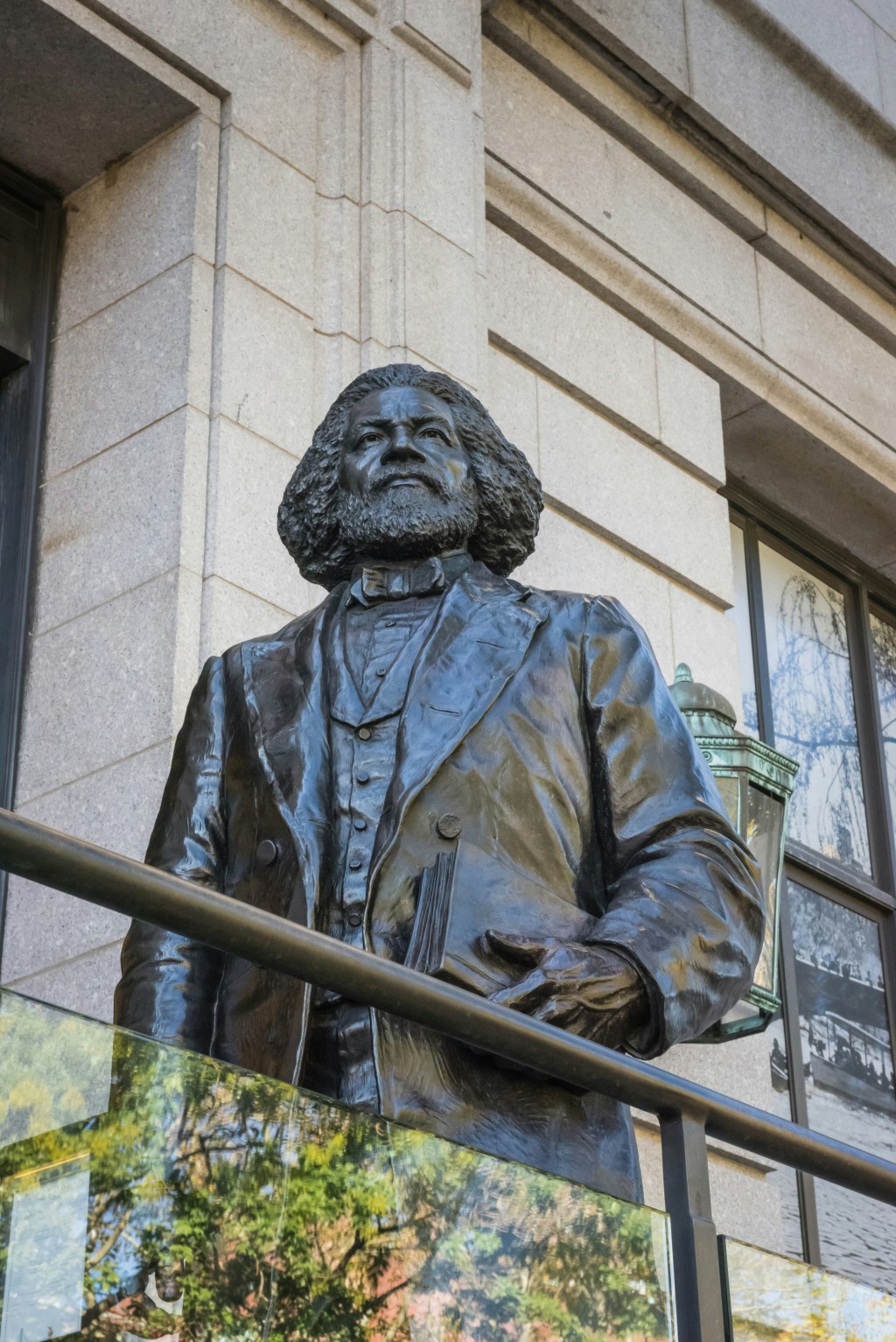
    Some argue it’s not worth panicking over—a mere 7% drop. I disagree. As a college instructor, I’ve seen the change up close. Students don’t read long-form books anymore. Assign Frederick Douglass and half the class will disappear into thin air—or worse, generate AI versions of Douglass quotes that never existed. Assign a “safe” book and they might skim the Wikipedia entry. We’ve entered an age where the bar for literacy is whether someone has read more than one captioned infographic per week.

    Rothman tries to be diplomatic. He argues that we’re not consuming less—we’re just consuming differently. Podcasts, YouTube explainers, TikTok essayists—this is the new literacy. And fine. I live in that world, too. I mainline political podcasts like they’re anti-anxiety meds. Most books, especially in the nonfiction space, do feel like padded TED Talks that should have stayed 4,000 words long. The first chapter dazzles; the next nine are a remix of the thesis until you feel gaslit into thinking you’re the problem.

    But now the reading apocalypse has a new beast in the basement: AI.

    We’ve entered the uncanny phase where the reader might be an algorithm, the author might be synthetic, and the glowing recommendation comes not from your friend but from a language model tuned to your neuroses. AI is now both the reader and the reviewer, compressing thousand-page tomes into bullet points so we can decide whether to fake-read them for a book club we no longer attend.

    Picture this: you’re a podcaster interviewing the author of a 600-page brick of a book. You’ve read the first 20 pages, tops. You ask your AI: “Give me a 5-page summary and 10 questions that make me sound like a tortured genius.” Boom—you’re suddenly a better interviewer than if you’d actually read the book. AI becomes your memory, your ghostwriter, your stand-in intelligence. And with every assist, your own reading muscles atrophy. You become fit only for blurbs and bar graphs.

    Or take this scenario: you’re a novelist. You’ve published 12 books. Eleven flopped. One became a cult hit. Your publisher, desperate for cash, wants six sequels. AI can generate them faster, better, and without your creative hand-wringing. You’re offered $5 million. Do you let the machine ghostwrite your legacy, or do you die on the sword of authenticity? Before you answer, consider how often we already outsource our thinking to tools. Consider how often you’ve read about a book rather than the book itself.

    Even the notion of a “writer” is dissolving. When I was in writing classes, names like Updike, Oates, Carver, and Roth loomed large—literary athletes who brawled on live television and feuded in magazines. Writers were gladiators of thought. Now they’re functionally obsolete in the eyes of the market, replaced by a system that values speed, virality, and AI-optimized titles.

    Soon, we won’t pick books. AI will pick them for us. It will scan our history, cross-reference our moods, and deliver pre-chewed summaries tailored to our emotional allergies. It will tell us what to read, what to think about it, and which hot takes to regurgitate over brunch. We’ll become readers in name only—participants in a kind of literary cosplay, where the act of reading is performed but never truly inhabited.

    Rothman’s essay is elegant, insightful, and wrong in one key respect: it shouldn’t be titled What’s Happening to Reading? It should be called What’s Happening to Reading, Writing, and the Human Mind? Because the page is still there—but the reader might not be.


  • Breaking Up with the Big Apple: Lena Dunham’s Urban Exorcism

    Breaking Up with the Big Apple: Lena Dunham’s Urban Exorcism

    Lena Dunham once burst onto the pop culture scene like a glitter bomb in a library—loud, impossible to ignore, and slightly out of place. As the wunderkind creator and star of Girls, she personified a certain species of early-2010s Brooklynite: neurotic, navel-gazing, and armed with a liberal arts degree and a vape pen. Her character, Hannah Horvath, declared herself the voice of her generation—or at least a voice of a generation—and we believed her, for better or worse. Adam Driver rode shotgun to stardom on the back of that HBO juggernaut, but Dunham, after a brief and blazing ascent, seemed to evaporate into a fog of personal crises, health issues, and public backlash.

    And then—poof—she was gone.

    Now, Dunham reappears in the pages of The New Yorker with a lyrical breakup letter to New York City, a place that once ran through her veins like overcaffeinated blood. Titled “Why I Broke Up With New York,” the essay chronicles her disillusionment with the urban cathedral she once helped mythologize. Born to an artsy Manhattan clan, she was baptized in brownstones and indie bookstore readings. But the signs of incompatibility showed early: by fourth grade, she needed therapy and anti-anxiety meds. The city wasn’t just fast—it was feral. The subway was a sensory mugging. Noise, chaos, and crowds ganged up on her nervous system. Her sanctuary was a loft bed, stacked high with books and lined with silence.

    That Dunham became the face of NYC hipsterdom is an irony she doesn’t miss. Girls was a love letter to New York in the same way a therapy session is a love letter to your absentee father. After the show ended, so did her patience. She fled to Los Angeles, then Wales—yes, Wales—and finally landed in London, which offered just enough cosmopolitan energy without the aggressive swagger of Manhattan. London was like New York after a long exhale.

    What Dunham’s essay ultimately embraces is self-acceptance. Breaking up with New York doesn’t mean she failed. It just means she outgrew a place that never really fit. And for those who see New York as a mythic proving ground for artists, she offers a bracing rebuttal: it’s also a place that can grind your soul into subway soot. There’s no shame in walking away from an abusive relationship—even if that relationship is with a city that other people treat like a religion.

  • The Perpetual Orgy of Reading and Writing

    The Perpetual Orgy of Reading and Writing

    After five decades of failed novels, it’s time to liberate myself from this grand folly. And in reading Mario Vargas Llosa’s love letter to Flaubert, The Perpetual Orgy, I’ve unearthed a few useful clues to explain my literary shipwreck.

    What I’ve learned is that Flaubert didn’t love novels—not the world-building, the character arcs, the intricate plots. To him, all that was humbug, a necessary evil. But he needed those scaffolds to reach his true fix—the lapidary, almost erotic thrill of wordcraft itself.

    I get that. I share Flaubert’s delight in sculpting sentences so precise, so gleaming, they feel like they’ve been pried from a pirate’s treasure chest. To witness language arranged with clarity and purpose is a divine experience—a moment where we no longer see the world through a glass darkly, but in all its lucid, dazzling glory.

    The problem? Flaubert had patience. I don’t.

    For him, painstakingly chiseling a 400-page novel into perfection was ecstasy. For me, it’s the literary equivalent of being handed a toothbrush and a can of Comet and told to scrub the entire Pacific Coast Highway from Los Angeles to San Francisco.

    That’s the difference. Well, that—and his staggering genius versus my conspicuous lack of it.

    As I pondered my crippling lack of patience, it dawned on me that while I love many books, what I might love even more—perhaps a little too much—are the flap copy descriptions wrapped around them like literary hors d’oeuvres.

    Take Emmanuel Carrère’s The Kingdom, for example. I am obsessed with the novel, but I am no less obsessed with its book flap, which, in a few taut sentences, delivers a hit of pure linguistic euphoria.

    One paragraph, in particular, hit me like a lightning bolt:

    Shouldering biblical scholarship like a camcorder, Carrère re-creates the climate of the New Testament with the acumen of a seasoned storyteller. In the shoes of Saint Paul and Saint Luke, he plumbs the political, social, and mystical circumstances of their time, chronicling Paul’s evangelizing journeys around the Mediterranean and animating Luke, the self-effacing and elusive author of pivotal parts of the New Testament.

    That word—“plumb”—sent a shiver up my spine. A single verb, perfectly placed, evoking depth, mystery, excavation. It gave me the same adrenaline rush that my family gets from riding Harry Potter and the Forbidden Journey at Universal Studios. I, however, despise amusement parks. My idea of a white-knuckle thrill ride? Loitering in a bookstore all day, devouring book jackets like a literary junkie.

    In this, at least, I share Flaubert’s reverence for language—the obsessive need to get every word exactly right, to make prose sing. What I don’t share is his patience.

    Which is why he wrote masterpieces, and I’m still standing in the bookstore, reading the packaging like a man afraid to unwrap the gift.

  • Comparing Resistance to the Sunken Place in the Movie Get Out and the Life of Frederick Douglass: 3 Essay Prompts

    Comparing Resistance to the Sunken Place in the Movie Get Out and the Life of Frederick Douglass: 3 Essay Prompts

    Here are three argumentative essay prompts suitable for a 9-paragraph essay that explore how Narrative of the Life of Frederick Douglass and Jordan Peele’s Get Out use the concept of the Sunken Place—whether literal or metaphorical—to reveal how racism dehumanizes, and how resistance can lead to liberation and agency.


    Prompt 1: The Fight to Reclaim the Self

    Essay Prompt:
    Both Narrative of the Life of Frederick Douglass and Get Out explore how slavery and racism rob people of their autonomy and identity, trapping them in a psychological “Sunken Place.” Write an argumentative essay analyzing how Douglass and Chris struggle to reclaim their personhood. Whose escape from the Sunken Place carries a more powerful message for modern audiences, and why?

    Key Themes to Consider:

    • Psychological captivity and dehumanization
    • Literacy and perception as tools of resistance
    • Voice vs. voicelessness
    • Breaking free—literal and symbolic escapes

    Prompt 2: Racism as Psychological Warfare

    Essay Prompt:
    Jordan Peele’s Get Out introduces the Sunken Place as a metaphor for the paralyzing effects of racism. Frederick Douglass’s memoir reveals how slavery functioned similarly—as a system designed to psychologically disarm and silence Black people. Write a 9-paragraph essay comparing how each text shows racism operating not just physically, but psychologically, and argue which representation is more effective in showing the true depth of racial oppression.

    Key Themes to Consider:

    • Mind control and learned helplessness
    • Surveillance, control, and social “hypnosis”
    • The role of silence and invisibility
    • Liberation through consciousness and rebellion

    Prompt 3: Resistance as a Path Out of the Sunken Place

    Essay Prompt:
    In both Narrative of the Life of Frederick Douglass and Get Out, the protagonists face overwhelming systems of control—but both find ways to resist. Write an argumentative essay analyzing how Douglass and Chris resist oppression and reclaim power. Which character’s resistance offers a more effective model for overcoming systemic injustice today?

    Key Themes to Consider:

    • Subversion, deception, and rebellion
    • Education vs. survival instinct
    • Heroism and moral courage
    • The journey from victimhood to agency

    Here are three argumentative essay prompts designed for a 9-paragraph essay that compares themes in Malcolm X (1992) and Black Panther (2018). Each prompt invites students to explore how the two films depict Black identity, resistance, and leadership while allowing room for critical thinking, comparison, and rebuttal:


    Prompt 1: Heroism and Resistance

    Essay Prompt:
    Both Malcolm X and Black Panther present Black protagonists who wrestle with systems of oppression and redefine what it means to be a hero. Write an argumentative essay comparing how Malcolm X and T’Challa evolve in their views on resistance and justice. Which film presents a more compelling vision of heroism in the face of racial oppression?

    Guiding Themes:

    • Radical vs. diplomatic resistance
    • Personal transformation as political awakening
    • The burden and responsibility of leadership
    • Sacrifice and moral complexity in defining heroism
  • Applause Fatigue and Other Addictions

    Applause Fatigue and Other Addictions

    Once The Confessions of a Recovering Writing Addict hits bookstores, I’ll be contractually obligated to endure the book tour circuit. My ideal stop? The Dick Cavett Show. Never mind that it no longer exists—I refuse to let reality get in the way of my delusions of grandeur.

    There I’ll be, perched in a velvet chair, resplendent in a custom-tailored suit that exudes effortless literary gravitas. Cavett, ever the urbane host, will hold up my book and, in his signature droll tone, read my opening line: “I’ve been given the most self-defeating assignment imaginable: I must write a book about my recovery from compulsive writing so that the telling of my recovery violates the terms of my sobriety.”

    He’ll pause, shaking his head in slow-motion admiration, as if momentarily overwhelmed by the sheer genius of what he’s just read. Then, locking eyes with me, he’ll say, “Mr. McMahon, I can say with the utmost confidence that this is the most stunning opening line in the history of literature. I just can’t tell you what a privilege it is to have you here this evening.”

    Not missing a beat, I’ll flash a knowing smile and reply, “Why thank you, Mr. Cavett, it is a pleasure to be here.”

    And that, my friends, will be the apotheosis of my existence. At last, I will be whole, and I will never need to write anything again. 

    Of course, this will never happen. Cavett is 88 years old and long retired, and I have about as much chance of appearing on his show as I do of discovering a lost Hemingway manuscript in my garage. But what’s the point of being a recovering writing addict if I can’t indulge in the occasional vanity-fueled fever dream?

    There’s something to be said for vanity. It fuels ambition, sharpens our skills, and occasionally tricks us into believing we’re on the brink of something great. 

    But there’s also a fine line between vanity and outright intoxication—the kind of fevered delusion that warps reality and blinds us to our own foolish pursuits. That line, precarious and often ignored, is summed up with brutal clarity by Lester Freamon in The Wire when he delivers a verbal gut punch to Jimmy McNulty, a cop too drunk on his own self-importance to see the inevitable crash ahead. Lester doesn’t sugarcoat it: “A parade? A gold watch? A shining Jimmy-McNulty-day moment, when you bring in a case so sweet everybody gets together and says, ‘Aw, shit! He was right all along. Should’ve listened to that man.’ The job won’t save you, Jimmy. It won’t make you whole, it won’t fill your ass up.”

    Freamon’s words aren’t just for McNulty—they’re a public service announcement for every poor soul who believes that work, achievement, or applause will stitch together the holes in their existence. The writing demon, in particular, suffers from this same pathology. It whispers the same lie to every desperate novelist: that one book, the book, will be the great reckoning, the masterpiece that finally justifies the years of toil, obscurity, and rejection. That single, seismic literary triumph will be the author’s redemption arc, a vindication of every abandoned manuscript, every humiliating book-signing with three attendees (one of whom just needed to use the bathroom). The magnitude of this delusion is staggering.

    Of course, if we define religion as an artist imposing their will on the culture so forcefully that they alter it for generations, then yes—certain artists have effectively founded religions. Take Sly Stone, whose music from the early ’70s didn’t just change the sound of funk, soul, and rock—it rewired the DNA of modern music entirely. His influence still echoes today, pulsing through the beats and harmonies of artists who weren’t even alive when There’s a Riot Goin’ On dropped. But did this cultural omnipresence make Sly Stone whole? Far from it. As Questlove’s documentary Sly Lives! (aka The Burden of Black Genius) reveals, Sly Stone’s genius was too expansive and untamed to be neatly packaged. Yet, when the world saw him as a prophet, they tried to shackle him to their own expectations.

    Every political movement, every special interest group wanted to claim a piece of his vision, to make him their voice. But Sly wasn’t a mascot—he was an artist, too grand and complex to be hijacked by anyone’s agenda. The weight of that expectation crushed him.

    And that’s the thing about cultural prophets—whether they’re musicians, writers, or even McNulty-level workaholics. The world cheers them on when they’re building their temples, but those same temples can become cages. The parade never comes. The gold watch doesn’t arrive. The moment of glorious, all-encompassing validation? It’s a mirage. And the writing demon, ever hungry, never learns.

  • Confessions of a Recovering Writing Addict

    Confessions of a Recovering Writing Addict

    I’ve been given the most self-defeating assignment imaginable: I must write a book about my recovery from compulsive writing so that the telling of my recovery violates the terms of my sobriety.

    The first symptoms of my affliction emerged in 1984, when I made the catastrophic mistake of reading A Confederacy of Dunces. John Kennedy Toole’s masterpiece introduced me to Ignatius J. Reilly—a bloated, hot dog–devouring medievalist in a world that had tragically moved on from the 14th century. With the conviction of a deranged prophet, Ignatius stomped through New Orleans, denouncing modernity as if civilization itself were a personal affront. His absurdity was electrifying, a revelation. That was the moment I became possessed.

    This wasn’t some harmless creative itch. This was a full-blown psychosis, the kind that whispers in your ear late at night and tells you this is your purpose. Worse, it took root at the exact moment I was an impressionable young man, inflated with the kind of intellectual vanity that only a 23-year-old can achieve. Watching Ignatius clash with reality, I had an epiphany—comedy wasn’t just entertainment; it was a weapon, a higher calling.

    And then came the real disaster: I became convinced that I was meant to be a satirical novelist. Not in a vague, “wouldn’t that be cool” way, but in a divinely ordained, words-branded-into-my-flesh-with-a-cattle-prod kind of way. It was not a career choice. It was fate.

    And so began my decades-long descent into literary madness.

    ***

    To understand the bloated sense of self-importance that fueled my literary delusions, we need to revisit my place of employment—a temple of pretension where my ego found fertile ground. In the early 1980s, I funded my college education by peddling fine wines and imported beers at Jackson’s Wine & Spirits in Berkeley, conveniently nestled just up the street from the Claremont Hotel on Ashby Avenue. It was the perfect setting for a young man to marinate in delusions of grandeur—surrounded by cork-sniffing sophisticates, armchair sommeliers, and the kind of clientele who believed a well-aged Bordeaux could double as a personality.

    My coworkers were the sort of intellectual show-offs who could reduce an Oxford don to a stammering fool. They held advanced degrees in everything from literature to linguistics, chemistry to musicology, and they wore their academic pedigrees like badges of honor, brandishing them in a booze emporium as if the walls were lined with first editions rather than bottles of Chianti. They’d read Flaubert in the original French and sneered at English translations with the kind of disdain usually reserved for bad table wine. To them, working for any corporation that might dare to track their time was an act of existential surrender. Instead, they peddled fine spirits with an elitism so thick you could bottle it, cork it, and slap a vintage label on it. Their motto? “Service with a smirk.” 

    I wanted to fit in, so I read voraciously, parroting these cultural heavyweights who could debate the nuances of two French Beaujolais for an entire shift while tossing out quotes from Kierkegaard or Camus. Soon enough, I was well on my way to becoming a full-blown snob, the kind who could turn a simple idea into a verbal labyrinth designed to impress rather than clarify. Slow hours found us planted by the registers dissecting the finer points of Nietzsche’s existential dread, Wagner’s bombastic compositions, and Kafka’s literary conundrums. I became intoxicated with my own intellect (mostly because I couldn’t afford the good wine) and used every fifty-dollar word in the book to convince myself I was superior to anyone with a steady paycheck. Working alongside this oddball crew was comfortable and, let’s face it, easy, but it lulled me into a delusion: I might not be wealthy or gainfully employed, but I was intellectually rich, or so I told myself.

    By my mid-twenties, I was perfectly content to be the Nerf football-throwing, Borges-quoting slacker clerk who waxed poetic about the existential themes of Alberto Moravia and the tragic pessimism of Miguel de Unamuno while restocking shelves with Chianti. 

    To further swell my already bloated ego, I spent my early twenties teaching college writing part-time, fancying myself some sort of literary prodigy destined for greatness. Whether I was regaling my students with pompous insights—laced with Nabokovian verbosity—or delivering the same drivel to wine store customers, I reveled in the delusion that I was the gravitational center of the universe. Every word I uttered, every pretentious quip, felt like a gift to the world—never mind that no one had asked for it.

    Thus mired in a fever swamp of self-regard, I began my holy quest, an epic pilgrimage of delusion. Throughout the ’80s and ’90s, I churned out novels at a terrifying speed, convinced that sheer productivity equaled genius. Wow, I must be good at this! I thought, mistaking volume for talent, like a man believing that eating more hot dogs makes him a Michelin-star chef.

    The novels blur together now, a vast landfill of ambition outpacing execution, but three stand out for their sheer absurdity.

    In 1989, I wrote Herculodge, a dystopian satire in which being overweight or displaying cellulite was illegal. This premise, better suited for a five-minute SNL skit, somehow sprawled into a 60,000-word novella, proving that even bad ideas can be tediously stretched to novel length.

    In 1991, I produced Omnivore, the tragic tale of a man who could never find satisfaction eating his own food, forcing him to break into houses and devour leftovers from strangers’ refrigerators. Only through cat burglary could he achieve satiety—a premise that sounds brilliantly unhinged in a John Cheever short story but unbearable at novel length. Unfortunately, I chose the latter, cramming 10 percent story into 90 percent padding, like an overstuffed burrito of literary excess.

    In 1992 while teaching college in the California desert, I lived next to a man who was less a neighbor and more an anthropological oddity—a legal brief-reading, Kenny G-blasting exhibitionist who pranced around the apartment pool in custom-print Speedos while slowly tanning himself into a deep mahogany hue. He became the unwitting inspiration for The Man Who Stopped Dating, my novel about an uncouth playboy who receives a vengeful fruit basket from one of his scorned lovers. A single bite from a deliquescing mango leaves him cursed with a permanent stench, a condition suspiciously similar to fish odor syndrome (trimethylaminuria, for the medically inclined). His hero’s journey becomes a desperate quest to rid himself of the smell, find redemption, and maybe—just maybe—salvage his soul.

    Convinced I had spun pure gold, I went all in—I adapted the story into a screenplay and shelled out a cool two grand to have Hollywood script guru Linda Seger take a scalpel to it. Her verdict? Great premise. Catastrophic structure. Apparently, my masterpiece wasn’t so much a movie as a sprawling narrative train wreck, gasping for subplots, character depth, and the basic bones of a coherent story.

    But did that deter me? Of course not. In my fevered delusion, the mere act of consulting with Hollywood’s premier script doctor meant I was practically in—one fortuitous lunch meeting away from a bidding war over my genius. I could already hear studio execs brawling over my brilliance, assuming they could hold their breath long enough to endure a script about a man who smells like low tide.

    In reality, I wasn’t Hemingway. I wasn’t even a second-rate Elmore Leonard. I was Rupert Pupkin, the delusional failure from The King of Comedy, rehearsing for a fame that was never coming. The difference? At least he had the decency to keep his fantasies in his mother’s basement.

  • Magical Thinking #6: The Delusion of Spectacular Victimhood

    Magical Thinking #6: The Delusion of Spectacular Victimhood

    (or, Why Some People Think Suffering Makes Them Superior)

    Some people wear their victimhood like a crown, believing their suffering elevates them above mere mortals. In their minds, they aren’t just unlucky—they are too special for the ordinary rules of life to apply. While the rest of the world trudges along, accepting the brutal facts of existence (life is finite, love is messy, and rejection is part of the deal), they remain frozen in their own tragic grandeur, convinced their suffering makes them exceptional.

    Enter Dexter Green, the self-pitying protagonist of F. Scott Fitzgerald’s short story, “Winter Dreams,” who refuses to move forward because his longing for Judy Jones is just too profound, too sacred, too cosmic. He isn’t just some guy—he is a tormented artist of heartbreak, a misunderstood genius of unfulfilled desire.

    Of course, in reality, he’s just a narcissist trapped in a time warp of his own making. His delusion? That his suffering is so grand, his craving so exquisite, that he is somehow above the pedestrian business of healing and moving on.

    Dexter isn’t merely sad—he is bitter, self-indulgent, and wholly consumed by his own perceived tragedy. He wallows in his loss, believing it sets him apart from the dull masses who go on to live their lives, find new love, and accept the passage of time.

    And what exactly is the great, defining tragedy that makes Dexter a card-carrying member of the Victim Elite?

    He will always love Judy Jones, yet he can never have her.

    That’s it. That’s the whole catastrophe.

    Not war, not famine, not betrayal—just the fact that the universe won’t bend to his will and deliver him a dream woman who never actually existed.

    His suffering isn’t noble. It isn’t romantic. It’s a self-inflicted prison, built from narcissism and self-pity. And like all magical thinkers, Dexter is convinced he is too special to follow the laws that govern everyone else. He should be able to have what he wants. He should be able to break the rules of time, fate, and human nature.

    But life doesn’t work that way. And no amount of self-mythologizing will change that.

  • Magical Thinking #2: If You Fantasize Hard Enough, Reality Will Magically Obey

    Magical Thinking #2: If You Fantasize Hard Enough, Reality Will Magically Obey

    (or, The Art of Procrastinating in Style)

    One of the great lies we tell ourselves is that thinking about something long enough is basically the same as doing it. This is a core tenet of magical thinking—the belief that if you mentally marinate in a fantasy long enough, the sheer force of your yearning will bend the universe to your will.

    It won’t.

    Take, for example, the 10-year hostage situation between me and a pair of skinny jeans. For a full decade, those pants lurked in my closet, whispering false hope: One day, you’ll fit into us. Just wait. And so I did. I waited. I waited through countless failed diets, through the betrayal of metabolism, through years of magical thinking that the mere presence of those jeans in my home would, somehow, sculpt my body into compliance.

    Eventually, I accepted the truth: those jeans weren’t a beacon of future success—they were a fabric monument to my delusion. I finally threw them away, but not before they had spent ten years mocking me from the hanger.

    This same delusion infects all sorts of people in all sorts of ways.

    • A man keeps a fisherman’s hat tucked away in a drawer, convinced that someday he’ll own a boat, sail through the Caribbean, and live off the sea. Never mind that he gets seasick on ferries and can’t tell port from starboard. The hat is proof of intent, and that’s enough—for now.
    • A woman buys an aspirational vegan cookbook, proudly displaying it on her shelf. She has never gone a single day without cheese, but surely, just owning the book puts her on the path to righteousness.
    • I strap a big, chunky superhero-esque watch to my wrist, as if its sheer presence will one day grant me the power to save myself. It won’t. It just makes my wrist hurt.

    Magical thinking is the art of replacing action with aesthetics. It’s an elegant way to do nothing while convincing yourself you’re making progress. And it works—right up until the moment reality finally calls your bluff.

  • Revisiting Alan Judd’s The Devil’s Own Work

    Revisiting Alan Judd’s The Devil’s Own Work

    As a recovering member of Write-a-holics Anonymous, I am contractually obligated—by my own neuroses—to scrutinize my bad habits and the deep-seated delusions that keep them alive. If you’re unfamiliar with my affliction, allow me to introduce myself: I am Manuscriptus Rex, an evolutionary dead-end of the literary world, a creature that compulsively transforms mundane existence into unsolicited book proposals. Where others see a casual conversation, I see Chapter One. Where others experience a fleeting moment of anxiety, I draft a preface. Writing isn’t just a passion; it’s my go-to coping mechanism, my panic button, my self-inflicted curse. While normal people unwind with a drink, I relax by plotting out a three-act structure. Some people journal. I accidentally draft trilogies.

    There’s ongoing debate over whether people like me willingly morph into Manuscriptus Rex—the scowling failed writer pacing his lawn and muttering about “kids these days”—or if the transformation is as unavoidable as hair loss and rising cholesterol. Maybe it’s some grim milestone on the aging checklist, or maybe it sneaks up, the natural side effect of realizing your cultural currency has expired while the youth livestream their way into the future. I’ll leave that existential puzzle for the philosophers to untangle.

    Desperate for rehabilitation, I revisited Alan Judd’s The Devil’s Own Work, a novella that reads like a cautionary tale for every starry-eyed writer who thinks talent alone will crack open the literary Olympus. The story follows Edward, a smug, silver-spooned upstart who barters his soul for literary greatness, only to discover that selling out isn’t nearly as effective as selling your soul. Judd’s cynicism is deliciously savage, peeling back the genteel façade of the literary world to expose it for what it truly is—a brutal, Darwinian circus where desperate souls claw their way up the ladder of editors, columnists, and curators, schmoozing with all the grace of a used car salesman at an estate auction.

    These hopefuls cling to the delusion that if they just network hard enough, flatter the right people, and craft the perfect blend of self-importance and faux humility, they’ll eventually ascend to greatness. But Judd knows better. The truth is, most of them will age out of relevance, their grand ambitions reduced to a handful of bitter op-eds, a smattering of unpaid guest lectures, and an attic full of unpublished manuscripts that smell faintly of despair. In the end, The Devil’s Own Work isn’t just a novella—it’s a scalpel, slicing through the bloated corpse of literary ambition to reveal the grotesque machinery inside.

    Edward is not your typical literary striver. While others claw and hustle their way up the greasy pole of literary success, he lounges at the base of it, certain that greatness will fall into his lap simply because he exists. He radiates a kind of effortless entitlement, convinced that the universe has preordained his ascent to literary immortality. Unlike the desperate social climbers around him, who at least put in the work, Edward is a narcissist of the purest strain—so enamored with his own exceptionalism that he sees ambition as beneath him.

    But Edward’s arrogance isn’t just about believing he’s destined for greatness—it’s about redefining what that greatness should look like. He is determined to strip his writing of any moral compass, crafting fiction that exists in a vacuum of pure, detached aestheticism. No lessons, no redemptions, no conscience. Just words untethered from anything resembling a soul.

    Meanwhile, the legendary O.M. Tyrrel, the region’s most revered novelist, is preparing to publish his final work before slipping into retirement. His magnum opus? A variation on the Faustian myth—a fitting coincidence, given the dark turn Edward’s life is about to take. In an act of staggering hubris, the insufferable upstart Edward pens a blistering review of Tyrrel’s novel, a hit job so scathing it should have burned any bridge between them. But instead of outrage, Tyrrel extends an invitation—dinner at his lavish villa in the south of France. There, over fine wine and literary banter, Tyrrel hands Edward a manuscript of ominous origin.

    What follows is a shortcut to literary fame that quickly warps into a descent into madness. Edward’s name skyrockets into the literary stratosphere, but his triumph is laced with terror. First, a persistent scratching sound haunts him whenever he writes—like something clawing its way out of the pages. Then, a malignant presence begins to stalk him, whispering the truth he’s been trying to drown in champagne and self-congratulation: he is a fraud. He has built his career on stolen words, and now those words have turned against him.

    By the time he realizes his fame is nothing but a gilded curse, it’s too late. Whatever twisted deal he unknowingly made, it has hollowed him out, leaving behind a man unrecognizable even to himself. His success is a mockery, his genius a sham, and his fate—a lifetime of torment, forever pursued by the spectral condemnation of the very thing he sought: greatness.

    As I sifted through the grim moral reckonings of The Devil’s Own Work, trying to extract some life lesson from Edward’s Faustian bargain, my inner writing demon—never one to miss an opportunity to heckle—chimed in.

    “Nice try, pal,” it sneered. “But this book won’t cure you. First off, you’re not Edward. He’s a smug layabout with a superiority complex. You, on the other hand, actually believe in morality tales. Second, Edward expects success to land in his lap like a butler delivering his morning tea. You, meanwhile, obsess over your subjects like a madman, descend into your characters’ fever dreams, and suffer through their torments just to wring out a halfway decent paragraph. Admit it—you’re a real novelist.”

    What a load of self-aggrandizing nonsense. Even if all that were true, there are plenty of people who observe the human condition with a keener eye than mine, and they don’t write novels. They work construction. They write poetry, fables, children’s books. They tell stories in bars, on factory floors, in courtrooms. Insight alone doesn’t make one a novelist.

    But damn that writing demon—it had a point. I wasn’t Edward. The novella didn’t apply to me. And if The Devil’s Own Work didn’t condemn me to a fate of fraudulent literary fame, then maybe—just maybe—I wasn’t doomed to failure either.

    Clearly, the writing demon still lives inside of me. My rehabilitation must continue. 

  • Where my literary delusions were born

    Where my literary delusions were born

    To understand the bloated sense of self-importance that fueled my literary delusions, we need to revisit my place of employment—a temple of pretension where my ego found fertile ground. In the early 1980s, I funded my college education by peddling fine wines and imported beers at Jackson’s Wine & Spirits in Berkeley, conveniently nestled just up the street from the Claremont Hotel on Ashby Avenue. It was the perfect setting for a young man to marinate in delusions of grandeur—surrounded by cork-sniffing sophisticates, armchair sommeliers, and the kind of clientele who believed a well-aged Bordeaux could double as a personality.

    My coworkers were the sort of intellectual show-offs who could reduce an Oxford don to a stammering fool. They held advanced degrees in everything from literature to linguistics, chemistry to musicology, and they wore their academic pedigrees like badges of honor, brandishing them in a booze emporium as if the walls were lined with first editions rather than bottles of Chianti. They’d read Flaubert in the original French and sneered at English translations with the kind of disdain usually reserved for bad table wine. To them, working for any corporation that might dare to track their time was an act of existential surrender. Instead, they peddled fine spirits with an elitism so thick you could bottle it, cork it, and slap a vintage label on it. Their motto? “Service with a smirk.” 

    I wanted to fit in, so I read voraciously, parroting these cultural heavyweights who could debate the nuances of two French Beaujolais for an entire shift while tossing out quotes from Kierkegaard or Camus. Soon enough, I was well on my way to becoming a full-blown snob, the kind who could turn a simple idea into a verbal labyrinth designed to impress rather than clarify. Slow hours found us planted by the registers dissecting the finer points of Nietzsche’s existential dread, Wagner’s bombastic compositions, and Kafka’s literary conundrums. I became intoxicated with my own intellect (mostly because I couldn’t afford the good wine) and used every fifty-dollar word in the book to convince myself I was superior to anyone with a steady paycheck. Working alongside this oddball crew was comfortable and, let’s face it, easy, but it lulled me into a delusion: I might not be wealthy or gainfully employed, but I was intellectually rich, or so I told myself.

    By my mid-twenties, I was perfectly content to be the Nerf football-throwing, Borges-quoting slacker clerk who waxed poetic about the existential themes of Alberto Moravia and the tragic pessimism of Miguel de Unamuno while restocking shelves with Chianti. 

    To further swell my already bloated ego, I spent my early twenties teaching college writing part-time, fancying myself some sort of literary prodigy destined for greatness. Whether I was regaling my students with pompous insights—laced with Nabokovian verbosity—or delivering the same drivel to wine store customers, I reveled in the delusion that I was the gravitational center of the universe. Every word I uttered, every pretentious quip, felt like a gift to the world—never mind that no one had asked for it.

    Thus mired in a fever swamp of self-regard, I began my holy quest, an epic pilgrimage of delusion. Throughout the ’80s and ’90s, I churned out novels at a terrifying speed, convinced that sheer productivity equaled genius. Wow, I must be good at this! I thought, mistaking volume for talent, like a man believing that eating more hot dogs makes him a Michelin-star chef.

    The novels blur together now, a vast landfill of ambition outpacing execution, but three stand out for their sheer absurdity.

    In 1989, I wrote Herculodge, a dystopian satire in which being overweight or displaying cellulite was illegal. This premise, better suited for a five-minute SNL skit, somehow sprawled into a 60,000-word novella, proving that even bad ideas can be tediously stretched to novel length.

    In 1991, I produced Omnivore, the tragic tale of a man who could never find satisfaction eating his own food, forcing him to break into houses and devour leftovers from strangers’ refrigerators. Only through cat burglary could he achieve satiety—a premise that sounds brilliantly unhinged in a John Cheever short story but unbearable at novel length. Unfortunately, I chose the latter, cramming 10 percent story into 90 percent padding, like an overstuffed burrito of literary excess.

    In 1992 while teaching college in the California desert, I lived next to a man who was less a neighbor and more an anthropological oddity—a legal brief-reading, Kenny G-blasting exhibitionist who pranced around the apartment pool in custom-print Speedos while slowly tanning himself into a deep mahogany hue. He became the unwitting inspiration for The Man Who Stopped Dating, my novel about an uncouth playboy who receives a vengeful fruit basket from one of his scorned lovers. A single bite from a deliquescing mango leaves him cursed with a permanent stench, a condition suspiciously similar to fish odor syndrome (trimethylaminuria, for the medically inclined). His hero’s journey becomes a desperate quest to rid himself of the smell, find redemption, and maybe—just maybe—salvage his soul.

    Convinced I had spun pure gold, I went all in—I adapted the story into a screenplay and shelled out a cool two grand to have Hollywood script guru Linda Seger take a scalpel to it. Her verdict? Great premise. Catastrophic structure. Apparently, my masterpiece wasn’t so much a movie as a sprawling narrative train wreck, gasping for subplots, character depth, and the basic bones of a coherent story.

    But did that deter me? Of course not. In my fevered delusion, the mere act of consulting with Hollywood’s premier script doctor meant I was practically in—one fortuitous lunch meeting away from a bidding war over my genius. I could already hear studio execs brawling over my brilliance, assuming they could hold their breath long enough to endure a script about a man who smells like low tide.

    In reality, I wasn’t Hemingway. I wasn’t even a second-rate Elmore Leonard. I was Rupert Pupkin, the delusional failure from The King of Comedy, rehearsing for a fame that was never coming. The difference? At least he had the decency to keep his fantasies in his mother’s basement.